Tag: fiction

  • The Guardian of the Butt Crack

    The Guardian of the Butt Crack

    I grew up believing my father was a superhero in a gray IBM suit—equal parts Clark Kent and Anthony Nelson from I Dream of Jeannie. He carried a leather briefcase that smelled like pipe tobacco and was filled with mysterious implements of tech sorcery: slide rules, mechanical pencils, drafting rulers, protractors. To my wide-eyed, baklava-smeared face, he wasn’t just an engineer—he was The Engineer, an astronaut of logic and slide-calculation who probably held dominion over the machines of the future.

    There’s a particular memory that still shimmers with childhood awe: we were at an IBM science exhibit, and there was a robot—yes, a real robot—shaking hands with people like it was running for mayor of Tomorrowland. My father and the robot exchanged pleasantries, and even at seven years old, I could tell who was in charge. The robot was the help. My dad was management.

    On the ride home from a Greek deli, sitting shotgun in my father’s red MGB convertible (a car that felt like a rocket ship with leather seats), I asked him how far the Earth was from the sun. “Ninety million miles,” he replied without hesitation, as if he’d just returned from measuring it himself. “How’d you know that?” I asked. “I’m your father. Fathers know everything.” And I believed him. I believed him.

    So deeply did I believe, in fact, that I told every kid at our apartment playground that my dad could attach rocket boosters to the jungle gym and take us to Mars. We camped out in the carport like cult followers awaiting a prophet. And when that red MGB finally purred into its space—the exhaust trailing behind it like a comet—we erupted into cheers. Mars was within reach.

    But when I presented our request, my father, ever the civic-minded Boy Scout, informed us that launching a rocket ship from the Royal Lanai Apartments without FAA clearance would be a federal offense. “I could go to prison,” he said gravely. Naturally, we accepted this logic. What was Mars compared to civic responsibility?

    Then came the cracks.

    First, the red MGB started overheating. Constantly. It preferred fog to sunshine and finally coughed its last in a Jiffy Lube parking lot. He traded it in for a turquoise Chrysler Newport—the vehicular equivalent of orthopedic shoes. I watched that red convertible vanish into memory like a fallen deity. The myth of my father’s invincibility began to wobble.

    Next came the toast. One morning, I watched him mangle a slice of Wonder Bread with a cold slab of butter and curse under his breath, “There are three things I hate in this life: death, taxes, and hard butter.” The man who could explain orbital mechanics couldn’t conquer spreadability. It was a blow.

    Then he tried to cook. Once. His chicken cacciatore effort triggered the smoke alarm, three fire trucks, and the sincere question of whether we were insured for “chef-related catastrophe.”

    But the real unraveling happened when we moved to Venado Court, a suburban cul-de-sac so idyllic it could have been sketched by Norman Rockwell and pressure-washed by a Stepford wife. While other dads were grilling in polo shirts and dockers, mine was shirtless in the front yard, yanking weeds from the juniper bushes in low-slung Army jeans with his butt crack on full display. He had an Army tattoo on one arm and the defiant posture of a man who didn’t care if you judged his lower lumbar. And I, poor fool, tried to save him.

    “Dad, your butt crack is showing,” I whispered with the urgency of someone reporting a biohazard spill. He just grunted. Again. And again.

    Eventually, I gave up on words and assumed a new role in our family drama: The Guardian of the Butt Crack. I stood behind him like a human modesty panel, my small frame casting a loyal shadow over his defiant anatomy. I lived in fear of pedestrians. If a neighbor approached, I shifted like a Secret Service agent guarding state secrets. I was prepared to dive in front of scandal.

    But deep down, I knew the truth: my father didn’t care. He was a country boy from Michigan who grew up wrestling snakes in Florida swamps. He’d survived Army barracks and IBM corporate life. No HOA newsletter was going to break him. And eventually, I had to let go. The crack would remain, and the world would keep spinning.

    He was still my dad. Maybe not a superhero—but certainly a super character.

  • Moses Meets the App Store in My Descent to Hell

    Moses Meets the App Store in My Descent to Hell

    Five years ago, I had a dream that still clings to me like the stench of sulfur on an unwashed sinner. In it, I found myself suspended over a chasm so vast and foreboding it made Dante’s Inferno look like a weekend at Lake Tahoe. This wasn’t just your garden-variety pit of despair. No, this one was styled by some deranged horror set designer who clearly had unresolved issues with gravity and geometry. The rocks jutted out like they’d been forged in spite, sharp enough to slice light itself. Below me? Nothing but an infinite abyss—pitch black, indifferent, and curling with smoke as if Hell had sprung a leak.

    My right hand clutched a pulley system that seemed to have been engineered by Torquemada during a particularly creative phase. It squealed and groaned like it hated me personally. Each tug upward felt like hauling an anchor through molasses with a rotator cuff made of stale bread. My muscles howled, my fingers cramped into arthritic claws, and I could practically hear my body whispering, “Let’s just give up and fall dramatically.”

    Above me, a shaft of light flickered—not a beacon of salvation, but more like someone had dropped a flashlight into a well and forgot about it. It promised hope the way a gas station burrito promises nutrition: with cruel intent.

    Now here’s where the dream leaned hard into surrealism. In my left hand, I held a tablet—equal parts Moses and Steve Jobs. One moment it gleamed with digital sleekness, the next it was stone, chiseled with ancient script and glowing like radioactive guilt. It was a device caught in an existential crisis, flipping between iPad and Ten Commandments with the kind of indecision reserved for suburban dads browsing Netflix.

    On one side of this metaphysical gadget was a tableau of indulgence—a pulsating carousel of temptation: flesh, flames, laughter, madness. The orgy of excess, curated in high definition. On the other side? A searing Divine Light—pure, unblinking, and full of that holy judgmental glow that makes you instinctively cover your bits.

    As I strained upward—toward gray light, away from that unholy carnival—I had the sinking realization that I might not make it. My body was mutinying. My mind, riddled with indecision. And I knew, deep in my marrow, that if I let go, I’d drop—not just into the pit, but into a punchline told by angels over drinks: “Remember that guy who thought he could have both salvation and the sex party?”

    I hung there, torn between moral clarity and high-def carnality, between stone tablet and glowing screen, between self-destruction and self-delusion. And all I could do was pray that I’d wake up before gravity made the decision for me.

  • Flex, Regret, Repeat: My Midlife Crisis, Sponsored by Conor McGregor

    Flex, Regret, Repeat: My Midlife Crisis, Sponsored by Conor McGregor

    My life as an aspiring narcissist hit a new low when my wife and I got home, plopped down on the couch, and decided to indulge in the cinematic masterpiece Road House. This film, if you can call it that, stars a Jake Gyllenhaal so chiseled that he looks like Michelangelo got bored and decided to make an action hero. In this gripping tale, Gyllenhaal plays a tough-as-nails fighter scraping a living in a Key West bar, doing what any self-respecting muscle mountain would do—protecting the bar and its lovely owner, played by Jessica Williams, from corrupt mob bosses. Naturally, this leads to the inevitable showdown with their number-one heavy, played by none other than a bulked-up, foaming-at-the-mouth Conor McGregor, who looks like he’s been subsisting on a diet of raw meat and anabolic steroids.

    The plot is thinner than a strand of dental floss—a Western rehash where an outsider rides into town to clean up the mess. But let’s be real: the story is just window dressing for the film’s true agenda, which is to showcase sweaty, glistening muscles and fight montages that could double as a fitness competition highlight reel. The camera lingers on every bulging bicep and rock-hard ab like a love-struck teenager, turning what should be an action movie into a high-budget commercial for protein powder, creatine, and whatever the hell UFC fighters are injecting these days.

    As Gyllenhaal and McGregor flexed and fought their way through scene after scene, I found myself reaching for my phone, not to check the time—oh no—but to Google “What is Conor McGregor’s diet?” Because watching this movie is less about enjoying a plot and more about realizing you’re a gelatinous blob compared to the human marble statues parading around on screen. Road House isn’t so much a movie as it is a two-hour reminder that you’re one donut away from needing a forklift to get off the couch.

    When the credits finally rolled, and I managed to peel my eyes away from the testosterone-soaked spectacle, I turned to my wife, feeling more deflated than a balloon at a porcupine convention. “I wish I could lose forty pounds and look the way I did when I entered Mr. Teenage San Francisco,” I lamented as if my sad sack of a body was just a protein shake away from making a comeback. I had the muscle once, I swear! But now it’s hidden under layers of adiposity that could cushion a fall from a ten-story building. If they ever invented an advanced generation of Ozempic that came in a pill form, had no side effects, and was covered by my insurance, I’d be the first in line, elbowing grannies out of the way to get my hands on it.

    My wife, however, had zero interest in my nostalgic waxing about the “great body” of my youth. This was not her first rodeo. In fact, she could probably recite my entire “glory days” speech from memory, down to the last calorie of the diet I used to follow. Rolling her eyes with the practiced ease of a wife who’s heard it all before, she suggested we watch a rerun of Northern Exposure—her go-to escape from my never-ending lament about the “Greek god” I used to be. But the seafood restaurant ordeal had left me more drained than a used dishrag, and I waved the white flag of surrender. “Nope, I’m hitting the sack,” I muttered, retreating to the bedroom like a defeated warrior, leaving my wife to her beloved reruns while I dreamed of a time when I was ripped, instead of just ripping on myself.

  • The Stall Wars: A Faculty Restroom Horror Story

    The Stall Wars: A Faculty Restroom Horror Story


    There I was—distinguished professor of literature, credentialed purveyor of syntax and suffering—perched atop the porcelain throne in the sacred stillness of the faculty restroom, savoring the last vestiges of a sugarless lemon-honey lozenge and the sweet, unbroken silence that comes only from locking the world out, one stall door at a time. Beside me: Erich Fromm’s Escape from Freedom. Above me: fluorescent lighting dimmer than the future of American democracy. Around me: peace, solitude, and the faint illusion of control.

    Then came the talcum fog.

    That distinct olfactory offense, paired with the telltale wheeze of a Marlboro-ravaged trachea, shattered the silence. I didn’t have to peek between the stall doors. I knew. It was her. Scary Mary. The tenured temp. The mythological grievance machine. The student who had, for over a decade, haunted our campus like a poltergeist with an administrative appeal form.

    “Mary,” I barked from my vulnerable perch, “this is the men’s room. Leave now, or campus police will be called.”

    “But Professor,” came the whine, pitched somewhere between a toddler’s tantrum and a chainsmoker’s aria, “I need to talk to you about my grade.”

    I tried reason. I tried logic. But Mary had the persistence of a nicotine-stained Terminator. “Not until you explain why I got a C.”

    “I read your essay,” I sighed. “Your catering hustle was impressive. One hundred smoked salmon crostini in thirty minutes? Brava. But yes, it was larded with grammatical errors.”

    “You used the word larded,” she moaned. “Do you know how that hurts my self-esteem?”

    Self-esteem? I was pants-down in a toilet stall having a mid-thesis debate with a woman violating Title IX, and she wanted to discuss feelings?

    But Mary was just revving up. Her stubby fingers suddenly curled over the stall partition like something out of The Ring, and soon, her jaundiced head and magnified, frantic eyes emerged over the top. She looked like an unhinged librarian perched in a crow’s nest.

    “I can’t afford to flunk this class again!” she gasped, dangling from her makeshift luggage tower like a cirque-de-sociopath act.

    I stood up—pants restored, dignity in tatters—and let it rip: “You want honesty? Your essay reads like it was written by a sleep-deprived raccoon using predictive text. It made me reconsider the entire purpose of education. It gave me a migraine and a minor crisis of faith.”

    Mary recoiled. “You’re a monster!” she shrieked. “The worst professor in higher education!”

    Then physics intervened.

    Mary, all 250 pounds of her, teetered from her wobbly platform and hit the floor with the grace of a collapsing filing cabinet. She screamed. Something about her shoulder.

    I emerged, washed my hands, and surveyed the carnage.

    “You’ll be fine,” I said flatly. “Ice it.”

    “Aren’t you going to help me?”

    Something cracked open in me—some cocktail of guilt, absurdism, and overcaffeinated bravado. “I can fix it,” I said. “My brother dislocated his shoulder in high school. I saw the coach pop it back in.”

    Before she could object, I grabbed her wrist and yanked like a man possessed. There was a meaty clunk and then—a miracle—relief.

    “You’re amazing,” she whispered.

    “I know.”

    She stood up, rubbing her newly aligned limb. “Now that I’m not your student… can we be friends?”

    “Absolutely not,” I said, “but I can offer career counseling.”

    “No hard feelings?”

    “None. Now kindly exit the men’s room.”

    I returned home expecting a hero’s welcome, only to find my family gathered around a platter of French Dip, their eyes glued to gravy-soaked baguettes.

    “Sit down and eat,” my wife ordered, shoveling horseradish onto a sandwich with military precision.

    And so I did.

    And let me tell you, that sandwich could have ended wars. The beef was so tender it practically recited poetry on your tongue. The bread straddled that holy line between crisp and pillowy. And the au jus? It was less of a sauce and more of a religious experience. As I dipped, the day’s trauma melted like Swiss cheese under a broiler.

    In that moment, I understood: some stories deserve to be told. Others should be swallowed with gravy.

  • The Monster with a Tail: A Southern Gothic Confession

    The Monster with a Tail: A Southern Gothic Confession

    I’ve never forgotten the story one of my students told me in the fall of 1998. She was a re-entry student, a nurse in her early forties juggling UCLA coursework with night shifts at the hospital, and the kind of woman you remember: short, sturdy, bespectacled, with tired eyes that had seen too much and lips that knew how to tell a good story. Most afternoons after class, she’d linger and share dispatches from her Louisiana backwoods childhood or from the VIP wing of her hospital job—tales that ping-ponged between the hilarious and the horrifying.

    But one story chilled me to the marrow and stuck in my head like a burr under the skin. It wasn’t about celebrity patients or ER gore. It was about a monster.

    She and her cousin Carmen were unsupervised children raised in the heat-choked, school-optional outskirts of rural Louisiana. Left to their own devices, the two girls played what she called “mean games”—tormenting frogs and bugs, and doing other things she refused to describe. They were feral, wild, borderline Lord of the Flies with hair ribbons.

    And then came the visitor.

    It was an average swampy afternoon when he arrived. The girls were inside an old ramshackle house, probably scheming new atrocities, when the porch door creaked open and in walked a man. Except he wasn’t a man. He had a tail—thick, heavy, and grotesquely alive. It coiled behind him like a muscular question mark, flicking as he made his way into the living room. His body was matted with bristly fur. His voice was low, scratchy, and deeply wrong. He didn’t yell. He didn’t threaten. He spoke, calmly and with dreadful precision, cataloging every evil thing the girls had done to the frogs and insects. Every cruelty committed under the sweltering sun. He ended with a promise: Keep going, and I’ll recruit you.

    The thing sat in their house for three hours, its tail twitching as it detailed their future in hell’s internship program. The girls were petrified. When it finally left, slinking back into the thick air and cicada scream of Louisiana summer, they sat in silence. Eventually, Carmen whispered, “Did you see that?” My student nodded, mute.

    From that day on, they reformed. Sunday School. Prayer. Fear-based virtue. They never spoke of it again. But the thing had done its job.

    My student wasn’t a flake or a mystic. She was a veteran nurse—sharp, sane, and not prone to flights of fantasy. That’s what made it worse. She wasn’t selling me a ghost story. She was delivering testimony.

    To this day, I can’t shake the image: two children, alone in a creaky house, visited by a thing with a tail and an agenda. Whether it was a literal demon, a shared hallucination, or a supernatural PSA sent by the universe, I’ll never know. But I do know this: after that story, I never looked at childhood mischief—or Louisiana—in quite the same way again.

  • Return to Purgatory: A Packing Dream from Hell

    Return to Purgatory: A Packing Dream from Hell

    Last night, I found myself trapped in a sprawling compound of crumbling houses that looked like they were built during the Carter administration and never cleaned since. A communal frenzy was underway: the packing of thousands—yes, thousands—of food items and random clothing for a temporary exodus. Why the mass exodus? Unclear. Fumigation? Apocalypse? A reboot of The Grapes of Wrath? Whatever the reason, it was purgatorial.

    The mood? Moronic cheer. My fellow inmates—let’s not flatter them by calling them neighbors—were sipping drinks, cackling, and treating this Herculean labor like a godforsaken block party. Meanwhile, I hovered at the edge of the scene, paralyzed by the Sisyphean logistics of it all. Every cabinet I opened unleashed another avalanche of expired beans and mismatched Tupperware lids. The collective merriment felt obscene, as if they were toasting the Titanic’s elegant descent into the sea.

    And just when I thought salvation had arrived—in the form of a 2 a.m. bathroom break—I awoke, staggered to the toilet, and stumbled back to bed hoping to reset my brain. No such luck. The dream resumed exactly where I left off, like I’d hit pause on Netflix and walked back into my own streaming nightmare. There I was again, back in the compound, surrounded by half-drunk revelers blissfully ignoring the sheer futility of their packing, while I stood, a one-man FEMA unit, dreading every box and can like they were symbols of existential despair.

    I suppose, in some Jungian corner of my subconscious, this was meant to be cathartic. Maybe a soul purge. Maybe a late-night psychological CrossFit session designed to wring out my nervous system like a filthy sponge. All I know is, I woke up feeling like I’d done emotional burpees for eight hours straight—but to my surprise, I was eager to get out of bed, made a pot of coffee like it was a holy sacrament, and gleefully planned a one-hour kettlebell workout. 

  • Breaking Up with the Big Apple: Lena Dunham’s Urban Exorcism

    Breaking Up with the Big Apple: Lena Dunham’s Urban Exorcism

    Lena Dunham once burst onto the pop culture scene like a glitter bomb in a library—loud, impossible to ignore, and slightly out of place. As the wunderkind creator and star of Girls, she personified a certain species of early-2010s Brooklynite: neurotic, navel-gazing, and armed with a liberal arts degree and a vape pen. Her character, Hannah Horvath, declared herself the voice of her generation—or at least a voice of a generation—and we believed her, for better or worse. Adam Driver rode shotgun to stardom on the back of that HBO juggernaut, but Dunham, after a brief and blazing ascent, seemed to evaporate into a fog of personal crises, health issues, and public backlash.

    And then—poof—she was gone.

    Now, Dunham reappears in the pages of The New Yorker with a lyrical breakup letter to New York City, a place that once ran through her veins like overcaffeinated blood. Titled “Why I Broke Up With New York,” the essay chronicles her disillusionment with the urban cathedral she once helped mythologize. Born to an artsy Manhattan clan, she was baptized in brownstones and indie bookstore readings. But the signs of incompatibility showed early: by fourth grade, she needed therapy and anti-anxiety meds. The city wasn’t just fast—it was feral. The subway was a sensory mugging. Noise, chaos, and crowds ganged up on her nervous system. Her sanctuary was a loft bed, stacked high with books and lined with silence.

    That Dunham became the face of NYC hipsterdom is an irony she doesn’t miss. Girls was a love letter to New York in the same way a therapy session is a love letter to your absentee father. After the show ended, so did her patience. She fled to Los Angeles, then Wales—yes, Wales—and finally landed in London, which offered just enough cosmopolitan energy without the aggressive swagger of Manhattan. London was like New York after a long exhale.

    What Dunham’s essay ultimately embraces is self-acceptance. Breaking up with New York doesn’t mean she failed. It just means she outgrew a place that never really fit. And for those who see New York as a mythic proving ground for artists, she offers a bracing rebuttal: it’s also a place that can grind your soul into subway soot. There’s no shame in walking away from an abusive relationship—even if that relationship is with a city that other people treat like a religion.

  • Siri, Am I Losing My Mind? Asking for Jia Tolentino

    Siri, Am I Losing My Mind? Asking for Jia Tolentino

    In her essay “My Brain Finally Broke,” New Yorker writer Jia Tolentino doesn’t so much confess a breakdown as she performs it—on the page, in real time, with all the elegance of a collapsing soufflé. She’s spiraling like a character in a Black Mirror episode who’s accidentally binge-watched the entire internet. Reality, for her, is now an unskippable TikTok ad mashed up with a conspiracy subreddit and narrated by a stoned Siri. She mistakes a marketing email from Hanna Andersson for “Hamas,” which is either a Freudian slip or a symptom of late-stage content poisoning.

    The essay is a dispatch from the front lines of postmodern psychosis. COVID brain fog, phone addiction, weed regret, and the unrelenting chaos of a “post-truth, post-shame” America have fused into one delicious cognitive stew. Her phone has become a weaponized hallucination device. Her mind, sloshing with influencer memes, QAnon-adjacent headlines, and DALL·E-generated nonsense, now processes information like a blender without a lid.

    She hasn’t even gotten to the fun part yet: the existential horror of not using ChatGPT. While others are letting this over-eager AI ghostwrite their résumés, soothe their insecurities, and pick their pad thai, Tolentino stares into the abyss, resisting. But she can’t help wondering—would she be more insane if she gave in and let a chatbot become her best friend, life coach, and menu whisperer? She cites Noor Al-Sibai’s unnerving article about heavy ChatGPT users developing dependency, loneliness, and depression, which sounds less like a tech trend and more like a new DSM entry.

    Her conclusion? Physical reality—the sweaty, glitchy, analog mess of it—isn’t just where we recover our sanity; it’s becoming a luxury few can afford. The digital realm, with its infinite scroll of half-baked horror and curated despair, is devouring us in real time. Tolentino isn’t predicting a Black Mirror future. She is the Black Mirror future, live and unfiltered, and her brain is the canary in the content mine.

  • If You Only Watch One Black Mirror episode, Let It Be “Joan Is Awful”

    If You Only Watch One Black Mirror episode, Let It Be “Joan Is Awful”

    If you only watch one episode of Black Mirror, let it be Joan Is Awful—especially if you have a low tolerance for tech-dystopian fever dreams involving eye-implants, social scores, or digital consciousness uploaded to bees. This one doesn’t take place in a dark tomorrow—it’s about the pathology of right now. It skewers the Curated Era we already live in, where selfhood has been gamified, privacy is casually torched, and we’re all trapped in the compulsion to turn our lives into content—often awful, but clickable content.

    Joan, the title character, is painfully ordinary: a mid-level tech worker trying to swap out one man (her manic ex) for another (her milquetoast fiancé) and coast into a life of retail therapy and artisanal beverages. Her existence—Instagrammable, calibrated, aggressively average—is exactly the kind of raw material the in-universe Netflix clone Streamberry is looking for. They turn her life into a show called “Joan Is Awful,” starring a CGI deepfake Salma Hayek version of Joan, who reenacts her life with heightened melodrama and algorithmically-optimized awfulness.

    This isn’t speculative fiction. It’s just fiction.
    Streamberry’s vision of a personalized show for everyone—one that amplifies your worst traits and pushes them out for mass consumption—is barely an exaggeration of what Instagram, TikTok, and YouTube are already doing. We’ve all become our own showrunners, stylists, and publicists. Every TikTok tantrum and curated dinner plate is an audition for relevance, and the platforms reward us for veering into the grotesque. The more unhinged you become, the more “engagement” you earn.

    “Joan Is Awful” works both as a laugh-out-loud satire and as a metaphysical gut-punch. It invites us to contemplate the slippery nature of selfhood under surveillance capitalism. At its core is the concept of “Fiction Level 1”: the dramatized version of Joan’s life generated by AI, crafted from data scraped from her phone, her apps, her browsing history. Joan doesn’t write the script. She doesn’t even get to protest. She’s just the original dataset—fodder for narrative extraction. Her real self is mined, exaggerated, and repackaged for mass appeal.

    Sound familiar?

    In the real world, we all star in our own low-budget version of “Joan Is Awful,” plastered across social media feeds. These platforms don’t need deepfakes. We willingly create them, editing ourselves into marketable parodies. We offer up a polished persona while our actual selves starve for air—authenticity traded for audience, spontaneity traded for algorithmic approval.

    You can enjoy “Joan Is Awful” as slick satire or you can unpack its metafictional mind games—it rewards both approaches. Either way, it’s easily one of Black Mirror’s top-tier episodes, alongside “Nosedive,” “Rachel, Jack and Ashley Too,” and “Smithereens.” It’s not science fiction. It’s just a very well-lit mirror.

  • Headphone Mode: How We Rewired Ourselves to Escape Reality

    Headphone Mode: How We Rewired Ourselves to Escape Reality

    In the summer of 2023, during a family odyssey through Las Vegas and the Grand Canyon — a trip defined by heat, dehydration, and regrettable buffet choices — I noticed my then-13-year-old daughter entering what I can only describe as her Headphone Phase.
    Once she slipped on her wireless headphones, she ceased to be a participant in family life and transformed into a sealed capsule of teenage autonomy.

    The headphones weren’t just streaming music — they were constructing a perimeter, a force field against the chaos of the outside world and the more treacherous chaos within.
    Wearing them allowed her to filter reality through a private soundtrack, to shrink the overwhelming noise of adolescence into something manageable and rhythmic.
    For those six months, she was rarely spotted without them, a small island of basslines and daydreams moving among us.

    By fifteen, she abandoned the habit. Now the headphones make rare appearances, the way childhood toys do after the magic has leaked out of them.
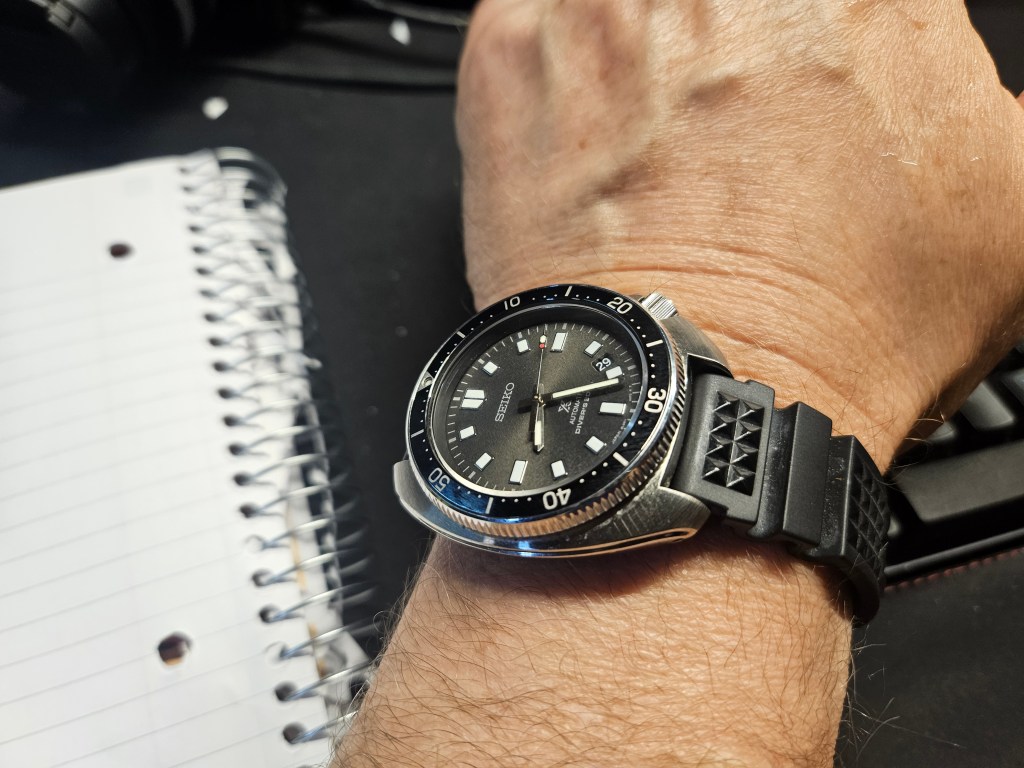
    But that long season of constant headphone use stuck with me — especially yesterday, when I slipped on my own new pair of Sony noise-canceling headphones for a nap.
    The experience was ridiculous: pure luxury, pure oblivion. I was catapulted into a faraway world of softness and distance, so relaxed I half-expected to wake up with a boarding pass to another galaxy.
    I understood at last how Headphone Mode could become addictive — not just helpful, but a crutch, or worse, a replacement for unmediated existence.

    This thought kept circling as I recently lost hours reading headphone reviews online.
    At first, I encountered the usual suspects — audiophiles earnestly parsing treble decay, bass extension, and soundstage geometry.
    But then I fell into a stranger subculture: headphone reviews written not as technical evaluations, but as love letters to support animals.
    Some reviewers described wearing their headphones all day, every day, as if they had permanently grafted the devices to their skulls, forming a new biological organ.
    These weren’t mere tech accessories anymore — they were portable cocoons.

    The reviews lavished obsessive praise on tactile details: the pillowy yield of the earcups, the tension of the headband, the specific heat footprint generated after six hours of wear.
    Weight, texture, elasticity — it read less like consumer advice and more like audition notes for adopting a service animal that hums quietly in your ear while you disappear from the world.

    It made me think of my old satin blanket from toddlerhood, a filthy, beloved scrap of fabric I once clung to so fiercely my father eventually hurled it out the car window during a drive past the Florida swamps.
    He didn’t consult me. He simply decided: enough.
    I wonder if some of these headphone obsessives are at the same crossroads — but with no father figure brave enough to wrest their adult security blanket away.
    They may have crossed a threshold where life without permanent auditory sedation has become not merely unpleasant, but unthinkable.