Tag: god

  • Master Po vs. My Perfect Alibi

    Master Po vs. My Perfect Alibi

    In 1972, on the dust-choked battlefield otherwise known as the Independent Elementary playground, Miguel Torres and I were locked in a holy war over an alleged clipping penalty. Gary Kauffman—self-appointed referee, rules committee, and prophet of doom—had flagged me during tag football, a call that would hand my team the loss. Words got hot. “Cheater” ricocheted between us like a stray bullet. Then Miguel’s fists did the talking—left, right, a percussion solo on my jaw.

    I cried—not because I stood there like a department-store mannequin while his knuckles composed a sonata on my face, but because I was blind. I hadn’t read the storm system building in my friend—barometric pressure falling, hostility rising—and I was stunned that my protest could yank that much fury out of someone who’d traded Twinkies with me at lunch.

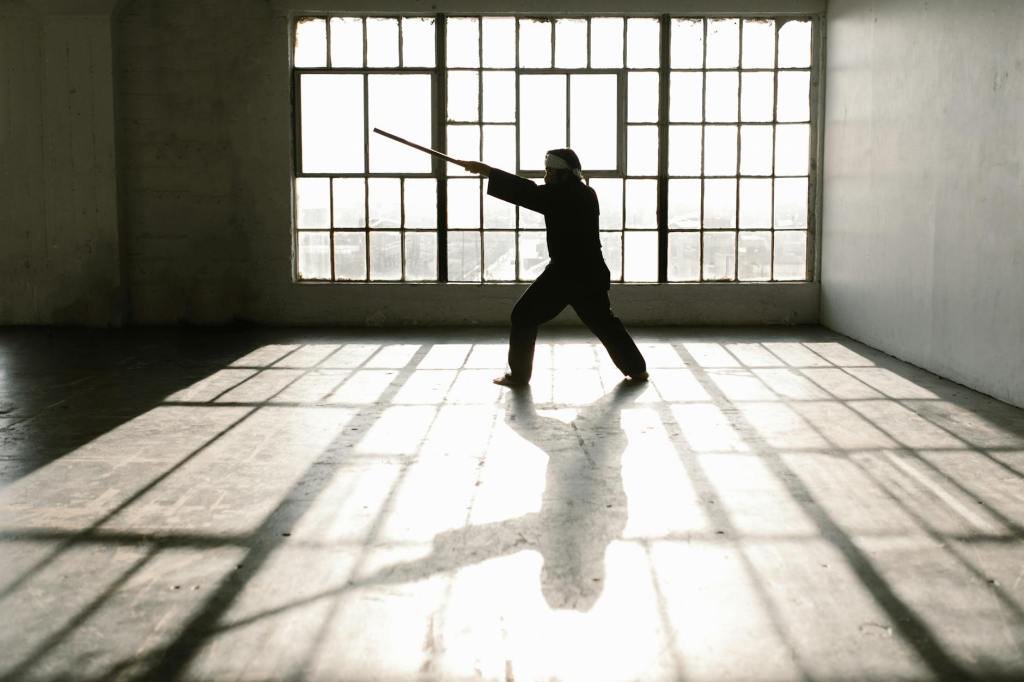
    The recess bell shrieked. We jogged back to class, me sniffling, my face a throbbing geography lesson. Mrs. Eckhart opened My Side of the Mountain, but I heard only the drumbeat in my skull and the soft crush of my pride underfoot. I retreated inward to the place my imagination had been furnishing for months: a quiet stone courtyard outside the Shaolin Temple, the same one that glowed from our black-and-white TV. The river whispered nearby. Incense drifted like daydreams. And there stood my spiritual guide, Master Po—blind as justice, sharp as a scalpel.

    “Master Po,” I said, still tasting the copper of humiliation, “you once taught me that weakness prevails over strength and gentleness conquers. Yet my team lost, my friend rearranged my face, and I stood there helpless. Where was gentleness then?”

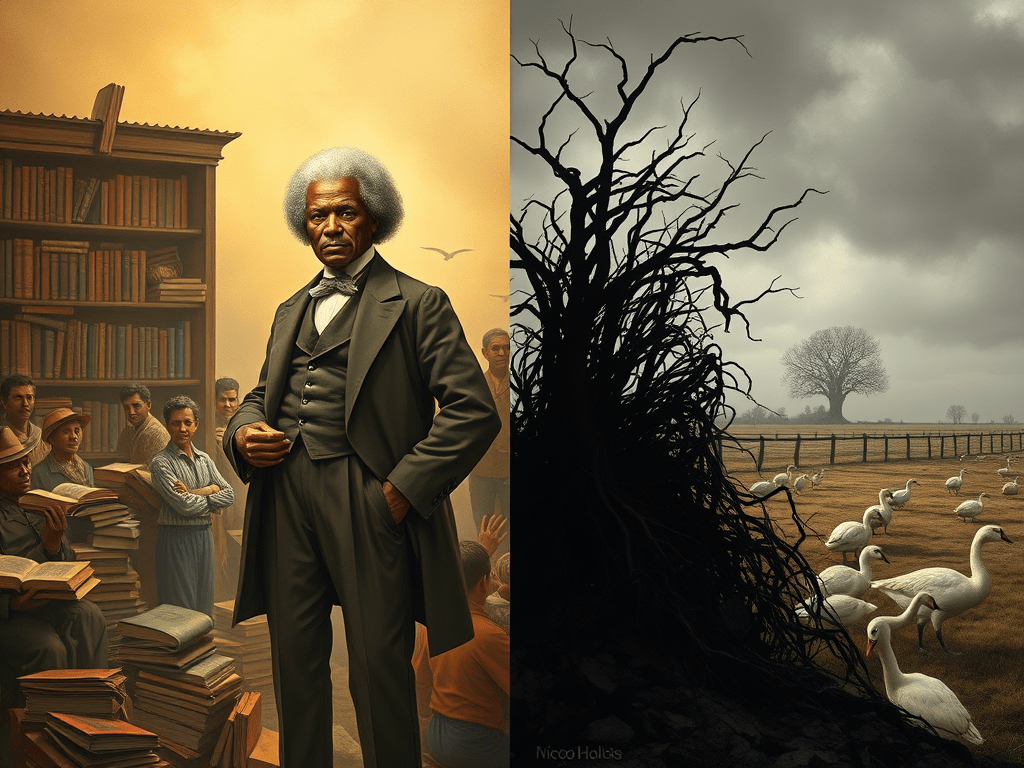
    “Grasshopper,” he said, “you mistake stubbornness for virtue. You are the rigid branch that neither sees the distant hills nor hears the cooling wind—and so you snap. Begin by seeing. Begin by listening.”

    “What am I not seeing? What am I not hearing?”

    He tilted his head. “For one, you did not hear the expletives cannoning from your mouth—shrapnel of spit landing on your friend’s cheeks. For two, you did not see your own finger spearing his chest, drilling his solar plexus as if mining for a confession.”

    “So I was ticking off Miguel without even knowing it?”

    “Precisely, Grasshopper. You cherry-pick facts to star in your favorite film—You, the Noble Victim—while everyone else auditions for Villain. Myth-making is a miraculous tool for preserving self-esteem. It is also the shortest road away from The Way.”

    “I don’t myth-make.”

    He raised an eyebrow in the patient way only the blind can. “When you were six, you slept at your aunt and uncle’s and wet the bed. Instead of accepting the weather report from your own bladder, you blamed…the Pee Fairy.”

    I winced. “I remember. It was quick thinking.”

    “What else do you remember?”

    “That I repeated the lie until it became embroidered truth. I argued anyone who doubted me into silence. The Pee Fairy did it. Obviously.”

    “Exactly,” he said. “When you muddle truth long enough, you lose your own outline. You become your costume.”

    “How do I follow The Way?”

    “Do not costume yourself. Do not curate a personality for the world like outfits for the first day of school. Let time carve you. Emerge by erosion, not construction.”

    “I’m eleven,” I said. “Time carves slowly. Also, if I don’t finish my social-studies questions by sixth period, I’ll be carving them in detention.”

    He smiled. “By doing nothing, everything is done.”

    “Try that on Mrs. Eckhart.”

    “You have much to learn, Grasshopper.”

    Back in the fluorescent glare of fifth grade, Mrs. Eckhart’s voice returned, turning pages into wind through trees. I pressed a cool palm to my cheekbone, felt the ache, and wondered if wisdom always arrived late—long after the bell, after the punch, after you realize you were yelling at a friend and mistook your echo for righteousness. Maybe gentleness isn’t an instant shield; maybe it’s a habit you grow, a small current under the noise, the kind that keeps a rigid branch from snapping when the playground becomes a courtroom and you’ve already sentenced yourself to innocence.

  • My Doppelganger in Dark Sweats

    My Doppelganger in Dark Sweats

    Last night I dreamed that a baby had been abandoned in the flower garden outside my San Francisco apartment. His thin wail rose above the city hum, but no one seemed to hear it but me. The world went on—cars passing, neighbors coming and going—while I alone stood transfixed by that cry. I lifted the baby from the dirt, his skin warm and impossibly soft, and held him against my chest. Standing at the threshold of the apartment I rented with my wife and our stray orange cat, I prayed for holiness and wept, as though the infant had been dropped from heaven for me alone to fail or redeem.

    Inside, the apartment felt like an expensive tomb—luxurious, dim, deliberately shadowed, as if light itself were rationed. I fed the child and watched him feed, marveled at the smallness of his breaths. When his parents arrived, both scientists, I confronted them. They were calm, rational, and convinced me of their legitimacy with clinical precision. Their excuse was airtight, their affect detached, and in the end, I surrendered the baby, though my faith in their explanation felt paper-thin.

    Then the parents and the baby were gone. At this point, my role inside the apartment was clear: My wife and I were educators using the apartment to host seminars on DNA and algorithms for college students. The air smelled faintly of coffee and ozone. During one of these sessions, the true apartment owner appeared: my thirty-year-old doppelgänger, tall, lean, dressed in the sleek anonymity of wealth—dark designer sweats, minimalist sneakers. He admired the apartment I had borrowed as though validating his own taste: the kitchen gadgets gleamed like relics, the food neatly arranged, the DVDs alphabetized. His presence was eerie—a reflection of my own mind rendered in a sharper resolution. We talked about the future buyer of the apartment, another iteration of us—older, familiar, running on the same mysterious algorithm encoded in our shared DNA.

    When the lecture ended, my wife and I returned the keys to my younger self and walked hand in hand along the apartment’s tennis courts. The sky had the bruised hue of evening. I told her that everything—the baby, the double, the science lectures—had overwhelmed me. I broke down, crying again for the purity I had felt when I prayed over the abandoned child. That moment at the doorstep remained the still point of the dream: holiness in the act of holding something utterly helpless, something untouched by algorithm or ownership.

  • His Last Words: “Too Much Trouble”

    His Last Words: “Too Much Trouble”

    No one wants the following carved into their headstone:
    “He really liked convenience.”
    Or:
    “He really knew how to wind down after a long day.”
    Or the ultimate in mediocrity:
    “He was quite the expert at calmly not answering the door when strangers knocked.”

    Yet I can’t lie—those epitaphs could summarize me with cruel efficiency. I should be ashamed. If the highlight reel of my life is craving convenience and dodging conflict, then I’m a sloth, a coward, and a comfort-zone junkie. Guilty as charged.

    Of course, apologists for my particular brand of laziness will insist there’s wisdom in centering life on convenience: you save time, conserve resources, and maximize efficiency. But let’s not kid ourselves. “Optimization” is just a euphemism for avoiding reality. And then come the even shinier euphemisms: “life hacks.” If all you’ve done is engineer a way to dodge effort, that’s not a hack—it’s a confession.

    Not that every convenience is unworthy. I won’t step foot in a gym: too expensive, too crowded, too germy, and far too drenched in bad pop music. I prefer my garage—cheap iron, good podcasts, and zero chance of catching COVID off the lat pulldown machine. That’s not clever; it’s survival.

    Same with my diet: when I’m home alone, dinner is steel-cut oats or buckwheat groats with protein powder and soy milk. It’s not innovation; it’s five minutes of apathy in a bowl. To call it a “hack” would be grandiose.

    The pandemic hardened this streak. Three-fourths of my classes went online in 2020, and they’ve never returned to campus. Everything lives on Canvas now. I barely drive 3,000 miles a year. Efficiency became narcotic. Once you’ve tasted it, going back to inefficiency feels like shoving rocks in your shoes for nostalgia’s sake.

    Even my piano habit has become infected. Cecil, my seventy-eight-year-old tuner, has warned me: when he’s gone, so is my piano’s soul. Skilled tuners are rare. My solution? Buy an electric keyboard. Sure, the sound won’t have the magical sound of my acoustic Yamaha, but it’ll move easily from room to room and never need Cecil. Convenience conquers music too.

    I’m also a poor excuse for a parent in the Uber era. Driving my teen daughters to football games, birthday parties, and amusement parks feels like sacrilege to my convenience creed. Honestly, if I were truly committed to convenience, I never would’ve had children. Or cats. Litter boxes, flea treatments, vet visits—each one an affront to my principles of time-saving and efficiency.

    Convenience can metastasize into pathology. Violations of my “policies” breed resentment. Aging itself infuriates me because it’s inconvenient. Doctor appointments and funerals snarl my schedule. Death doesn’t just terrify; it inconveniences.

    Routine is the bride to the groom of convenience, and together they dominate. 

    Even my relationship to religion is seen through the lens of convenience. I wish I could slam the door on doubt and join the ranks of militant atheists—or zealous believers. Either extreme would be neat, clean, convenient. Instead, I’m stuck in agnostic purgatory, forced to read philosopher Elizabeth Anderson’s critiques of scripture, Saint Paul, and every thinker in between. Anderson reduces morality to evolution; Paul calls us fractured, fallen souls, a mirror I dislike but recognize. I want a bow on the present of certainty, but instead, I get the knot of doubt.

    Jesus, of course, preached a gospel of uncompromising inconvenience. His very life was a rebuke to comfort. Following him means picking up a cross, not a La-Z-Boy. For disciples of the gospel of ease, his way is impossible—requiring nothing less than a Damascus-level conversion to set a new course.

    When I think of convenience, I think of Chris Grossman, my co-worker at a Berkeley wine shop in the 1980s. He was the store’s golden boy—popular with customers, armed with quick wit and easy charm—and utterly allergic to human entanglements. Girlfriends, he explained, weren’t worth the trouble. Not because of their flaws, but because the whole enterprise of romance reeked of inconvenience: compromise, obligation, scheduling. He lived alone, ate the same meals on repeat, and once a year drove his Triumph to Carmel for a car show. I adored him. He was my kind: a fellow monk in the Church of Convenience.

    Some of us are more diseased than others, and the infection corrodes standards. I loathe factory farming, dream of veganism, but recoil at the social cost. Every vegan I’ve spoken with admits the hardest part isn’t the kale; it’s the cold shoulder. I already wear the family badge of black sheep. If I imposed tofu bakes on my wife and daughters, I’d be ostracized. They want meat; I want peace. When I mention plant-based dinners, they shoot me a side-eye sharp enough to slice seitan. Push it further, and I can see my tenuous connection with them unravel thread by thread until exile is complete. And clawing my way back into their good graces would be the most inconvenient penance imaginable.

    I’m already a neurotic who alienates people more often than I’d like. Rebuilding broken ties is grueling work—humiliating, exhausting, inconvenient. So I stay walled up in my fortress of convenience, half-proud, half-ashamed, imagining my epitaph chiseled in granite: He preferred the easy way.

  • False Neutrality: Reading Armand Nicholi’s Debate

    False Neutrality: Reading Armand Nicholi’s Debate

    I’m about a third of the way through the Audible of Armand Nicholi’s The Question of God: C. S. Lewis and Sigmund Freud Debate, in which Nicholi argues that the single largest life decision — whether to accept or reject belief in God — carries the heaviest consequences. He paints Lewis as modest, serene, and living in a state of grace (the fruits of the spirit, if you like), while he casts Freud as intoxicated with his own genius, dismissing God as a childish projection.

    I have several objections. First, Nicholi leans on a rhetorical pose I find disingenuous: “I’m not trying to persuade anyone — just look at the facts.” He presents himself as a neutral referee while quietly aligning with Lewis. The result is a parade of straw-man treatments that caricature Freud and flatten the debate into tidy contrasts the evidence doesn’t support.

    Second, Nicholi’s central frame is an either/or fallacy: you either believe in God or you don’t. That binary elides the vast internal variety within religious traditions. One person’s God can be another person’s devil — and not across religions but within the same text. Christianity alone supplies wildly different conceptions: the Calvinist God versus a Universalist God; a God who offers post-mortem purgatorial salvation versus one who does not. Even accounts of the Crucifixion diverge: some Christians see it as substitutionary atonement, others categorically reject that reading. As Jerry Walls notes, the God who plans substitutionary atonement is not the God who doesn’t.

    Nicholi also ignores how different beliefs about God imply different beliefs about human nature. Are we, as Paul suggests in Romans, depraved and helpless? Or, as Hyam Maccoby argues from a Jewish perspective, did God create us with the capacity to meet Him halfway? The kind of God you endorse carries with it a theory of human wiring — and Nicholi refuses to engage that complexity.

    Those omissions aren’t accidental; they’re convenient. Reducing belief to a binary choice lets Nicholi render one side salutary and the other contemptible without wrestling with the theological and anthropological thickets that make the question genuinely hard.

    The tone of the book compounds the problem. A Harvard psychiatrist writing in a creamy, intellectual register, posing as an impartial guide through this existential choice, slides easily into what feels like a polished little tract. The surface civility—measured analysis, calm diction—camouflages rhetorical sleights of hand that, to my mind, undermine the work’s seriousness.

    I want to be fair. I’m trying. But once you notice the frauds and fallacies — the imposture of neutrality, the forced binary, the flattened portrayals — they don’t unsee themselves. So I’m forcing my way through the remaining two-thirds of the book, partly out of duty and partly to see whether Nicholi can salvage his argument when he has to meet the harder questions he’s been avoiding.

  • Religion Is No Kevlar Vest Against the Fear of Death

    Religion Is No Kevlar Vest Against the Fear of Death

    My mother’s people were Ashkenazi Jews from Poland; my father’s, Roman Catholics from Scotland and Ireland. Yet both treated religion like a dusty attic trunk filled with moth-eaten lace. When a TV preacher with the face of a sour prune croaked on about sin, my parents would smirk, as if watching a vaudeville relic wheeze out his final act.

    I wasn’t so quick to sneer. At Castro Valley High, a white-haired Mrs. Hanson, seventy if a day, handed us the Book of Job, and I was caught like a fish. God, suffering, celestial wagers—it was grotesque, terrifying, delicious. I’d drive my Ford Maverick to the gym, sunrays slicing through storm clouds, and briefly imagine a divine presence scanning my biceps. I didn’t know biblical doctrine from dog food, but I felt sure there was an afterlife waiting—an enchanting lounge where the velvet ropes always parted. For a short stretch of adolescence, I even stopped fearing death.

    Then came my Christian classmates, thrusting paperback apocalypse manuals into my hands. Rapture. Beasts. Eternal torment. Overnight my buoyant heaven curdled into a horror show where my Jewish relatives burned forever. Some Christians reassured me that such cruelty wasn’t “real Christianity.” But the deeper I read, the more Paul’s letters stood like theological battering rams against Jews who wouldn’t bend the knee. Supersessionism, they called it—a polite term for spiritual eviction.

    The Church Fathers weren’t gentler. Augustine’s take on eternal damnation? Justice, pure and simple. Billions in flames, and he shrugs: they had their chance. Forgive me if I don’t find that a winning sales pitch.

    Which is why I keep returning to Dale Allison’s Night Comes. Barely 200 pages, but packed with the force of a midnight storm. A Christian, Allison treats hell not as a theological curiosity but as a moral obscenity that collapses under its own weight. He doesn’t stitch loopholes into doctrine—he pokes holes until the absurdity gushes out.

    His stories haunt me. His teenage daughter found annihilation worse than hell; she feared nothingness more than flames. His son, in an email of raw honesty, mourned the idea that “the museum of his mind will be closed.” Not death, but the erasure of memory—the bulldozing of everything tender and beloved—that was the real terror.

    As a teen I believed our cherished moments had permanent residence in some cosmic vault. Allison doesn’t smash that hope, but he makes it more fragile, more complicated. He notes—accurately, grimly—that saints and mystics, when Death shows up in the doorway, often beg and claw like the rest of us. Religious devotion, it seems, is no Kevlar vest.

    And so, in old age, I sit with a religious ambivalence as stubborn as arthritis: no doctrine, no creed, no “blessed assurance” makes the thought of extinction less ghastly. Maybe the fear of death is not a flaw to be cured but a mirror—one that forces us to stop pretending we’re eternal and finally face the finite with our eyes wide open.

  • Old Age and Father Time’s Frenemies

    Old Age and Father Time’s Frenemies

    I often think back to the summer of 2019 when my wife and twin daughters were vacationing in Maui. There, on the beach, I spotted a short, compact man in his mid-seventies parading around in dark-blue Speedos with a woman at least fifty years his junior — a striking Mediterranean beauty in her twenties. The guy was trim, well-manscaped, scampering confidently on the sand like a millionaire who spends half his life in boardrooms and the other half trying to outrun the Grim Reaper. He dove into the waves with the vigor of someone convinced that as long as he keeps moving, Father Time can’t catch him.

    You could smell the wealth on him. He was probably a CEO with a portfolio big enough to buy the illusion of eternal youth. He worked hard and played harder, to borrow Hugh Hefner’s mantra. Now, I’m not here to pass moral judgment on a man who chooses a partner young enough to be his granddaughter — that’s his business. What fascinates me is the fantasy: money, discipline, and a little manscaping used as talismans against aging, as if youth were a rare potion you could sip to stay forever young.

    The whole tableau, though, felt wrong. He and his youthful companion were mismatched puzzle pieces jammed together by brute will. It was as if two jagged halves of a broken mirror had been glued into place; every forced smile and awkward embrace chipped another sliver off, until all that remained was a pile of glittering shards — the perfect image for the futility of trying to cheat time.

    This rich, fit man is Father Time’s frenemy — the one who insists they’re on friendly terms while secretly plotting a hostile takeover. He may have sold himself a “perfect picture,” but the public sees the mismatch as plainly as a traffic cone in a tuxedo. The spectacle exposes his poverty: an inability to relinquish something that no longer belongs to him, a clinging to youth that reveals fear rather than confidence. That fear, in turn, sabotages his aspiration to curate an enviable life; the attempt to perform eternal youth only underlines the loss he refuses to admit.

    I’m reminded, uncomfortably, of Joe Ferraro from Netflix’s Mafia: Most Wanted. Born in Ecuador in 1962 and raised in Toronto, Ferraro turned to bodybuilding, gambling, and organized crime as a teenager, hungry for money, women, clothes, and respect. He got it all — a Rolex Daytona, gold necklaces, designer sunglasses large enough to require their own zip code — until seven months in prison and eventual deportation stripped him of his infrastructure. In his sixties, he’s a sculpted caricature: tank top, ostentatious sport coat draped like a cape, and penetrating melancholy eyes that reveal he knows the score. He says he wants his life back, but knows he’s too old for the young man’s game and can’t look away from it.

    Both the rich man in Maui and Ferraro in exile put me in mind of Lot’s wife. They cannot relinquish the lifestyle that defines them; youth is their identity, and the thought of being disconnected from it registers as a kind of death. Unable to let go, they calcify into pillars of salt — frozen monuments to a self that no longer exists.

  • Beyond Believers and Unbelievers

    Beyond Believers and Unbelievers

    In Reflections on the Existence of God, Richard E. Simmons insists on a binary vision of reality: you either believe in God through the Judeo-Christian tradition, or you reject God altogether, joining the ranks of atheists in the mold of Freud or the New Atheists. A committed Christian, Simmons even agrees with atheist Sam Harris that “atheism and Christianity compete on the same playing field.” In this framing, the contest is nothing less than a duel for human souls, with consequences both temporal and eternal. As Simmons puts it: “The question of God’s existence, in my opinion, is the most significant issue in all of life.”

    Drawing on Armand Nicholi’s The Question of God, which stages a philosophical match between C.S. Lewis and Sigmund Freud, Simmons argues that if Lewis is wrong, then Freud must be right: the universe is empty, silent, and loveless. In that case, we are forced to embrace this “harsh reality,” stripping away “false hopes and unrealistic expectations.”

    But Simmons’ stark either/or feels more like caricature than clarity. Not all who reject Christianity are Freud’s disciples. Many non-Christian seekers believe in benevolent spiritual forces larger than themselves. Phil Stutz in The Tools and Steven Pressfield in The War of Art both describe transcendent realities—love, creativity, solace—that hardly resemble Freud’s existential bleakness.

    Even within Christianity, belief is hardly monolithic. The theology of a Calvinist and that of a Universalist are galaxies apart. To affirm substitutionary atonement is to worship a very different God than the believer who rejects it. The label “believer” is too blunt to capture these divergences. Hyam Maccoby, the Jewish scholar who wrote The Mythmaker: Paul and the Invention of Christianity, is a believer in God, yet he spends his book dismantling Paul, another believer. Sometimes believers are harsher with each other than with atheists.

    Framing the world as a cosmic battlefield of believers versus unbelievers oversimplifies both camps. Reality is more complex, and spiritual life cannot be reduced to an either/or ultimatum.

  • How Selfishness Accidentally Invented Kindness

    How Selfishness Accidentally Invented Kindness

    Morality is one of those words that makes people recoil. It has the stale odor of an HR training video, the medicinal burn of cod liver oil, the joyless bulk of broccoli shoveled onto your plate, or the dead-eyed banality of inspirational refrigerator magnets. Nothing about the word screams adventure—it screams paperwork.

    The topic itself feels penitential and airless, full of clichés, and as lively as a Soviet staff meeting in the Kremlin basement. Take Adam Smith’s The Theory of Moral Sentiments. The title alone could euthanize a graduate seminar.

    And yet economist Russ Roberts opened this dusty tome and found himself not nodding off, but utterly hooked. So hooked that he wrote How Adam Smith Can Change Your Life: An Unexpected Guide to Human Nature and Happiness. Roberts argues that Smith’s insight—that even our selfishness requires us to make others happy—isn’t boring at all. On the contrary, it’s deliciously counterintuitive: the truly selfish person learns that generosity is the best form of selfishness. The helper outpaces the sloth.

    This paradox gives Smith’s argument fizz. What looks like a grim penal code of moral duty turns out to be startlingly original and surprisingly human. For Roberts, the book became a companion, a talisman. He lugged it everywhere, scribbled notes in the margins, and evangelized to anyone who would listen. The book stopped being just a book and became, as Kafka once demanded, an axe for the frozen ocean of the soul.

    I admit, I almost left Roberts’ book untouched. The title had the whiff of self-help, and I vowed long ago to steer clear of the genre’s swamp of clichés. But Nabokov was right: it’s not the what but the how. A book brimming with insight and originality can transcend its category. Roberts’ take on Smith is philosophy dressed as self-help, but in the best sense: witty, sharp, and unafraid to wrestle with misery, selfishness, and the false idol of money.

    Good philosophers, like good teachers, are also salesmen. Roberts sells Smith not as piety in a powdered wig, but as a guide for how to live with honesty, courage, and—yes—even happiness. Against all odds, I’m sold.

  • The Gospel of the Liver King

    The Gospel of the Liver King

    Brian Johnson, better known as the Liver King, is a steroidal cartoon who tried to sell himself as a prophet of “ancestral living.” In reality, he was just another hustler juicing his body with over a hundred grand a year in growth hormones and anabolic steroids. He strutted around Instagram in animal skins, bellowing like a berserk Viking, gnawing raw liver on camera, and flogging overpriced supplements. His entire empire collapsed the moment it was revealed that his shredded physique was less the fruit of caveman purity and more the handiwork of pharmacy-grade science.

    Instead of bowing out in disgrace, he doubled down. Unable to detach from the narcotic glow of internet celebrity, he documented his own unraveling in real time—YouTube became his padded cell, each video another entry in the world’s strangest public diary. He wanted to be remembered as a leader, a liberator from modern malaise, but he became a parody of himself, a sideshow Rambo gone rancid.

    Raw meat became his metaphor—masculinity, toughness, a primal rejection of processed life. But it was also cosplay, a carnival act built for the algorithm, because nothing feeds clicks like a maniac tearing into a bull testicle with his teeth. And young men, starving for meaning, saw not a fraud but a messiah: the steroidal savior who would flex them into the promised land.

    This was kayfabe 2.0. Vince McMahon taught wrestlers never to break character, and Liver King took that gospel straight to Instagram. Only he forgot the cardinal rule: kayfabe consumes you. Live in the gimmick long enough and the gimmick swallows the man. By the end, Liver King wasn’t selling a mask—he was the mask, devoured whole by his own performance.

    His collapse is bigger than one delusional influencer. It’s a commentary on the culture itself: a society so anesthetized by spectacle that it mistakes bombast for wisdom. Idiocracy predicted a wrestler-president peddling electrolytes; we got a shirtless Texan chewing raw liver and pushing HGH cocktails disguised as authenticity. Mike Judge wasn’t satirizing the future—he was reporting it early.

    And yet, there is something deeply American in the Liver King’s fall: the grift, the spectacle, the refusal to relinquish the stage even when the show is over. His tragedy is that of a man who wanted love, found instead an algorithm’s approval, and now cannot escape the cage of his own creation.

  • From Dopamine to Divinity: The Case for Transmutational Motivation

    From Dopamine to Divinity: The Case for Transmutational Motivation

    In Lessons for Living, Phil Stutz recounts his refusal to prescribe Prozac to a patient. The patient wanted the pill as he wanted everything else—romance, fame, applause, alcohol: all shortcuts to happiness. Stutz wasn’t buying it. He writes:

    “Believing that things outside you will make you happy is a false hope. The Greeks considered it the ‘doubtful gift from the gods.’ In reality, there can only be two outcomes. Either the hoped-for thing does not happen, or it does and its effect quickly wears off. Either way, you are worse off than before because you have trained yourself to fixate on outer results.”

    When the outer world filters through imagination, it becomes a chimera. We don’t pursue things for what they are, but for what we fantasize they’ll be. I feel this pull myself: I’m nearly sixty-four, inching toward retirement, and browsing real estate in Orlando—dreaming of a second life in a faux-tropical paradise. A $600K “mansion” with a community pool, an hour from the beach, safe from hurricanes (mostly). Yet what I imagine as paradise may in fact be a barcalounger-sized sarcophagus—3,000 square feet of embalmed leisure.

    Stutz warns against such chimeras. They must be replaced by action—behavior that connects us to our true nature: the spiritual self. He writes:

    “We are spiritual beings and can be emotionally healthy only when we are in touch with a higher world. We need higher forces just as we need air. This is not an abstract philosophy, it is a description of our nature.”

    But here’s the rub: staying in touch with higher forces requires constant work, and it’s in our nature to avoid work. Life, then, is a perpetual battle with ourselves. Stutz’s description amounts to the purpose of religion: the angel conquering the demon. Yet in our therapeutic age—where religion is dismissed as a fairy tale—misalignment between spiritual thirst and materialist fixation manifests as depression. Conventional psychiatry treats depression with drugs. Stutz reframes it as a teacher, a reminder that the answer is spiritual life:

    “This awareness is the first step in overcoming depression.”

    His point calls to mind Katie Herzog’s mention of Laura Delano’s memoir Unshrunk, a story of misdiagnosis and drug therapy that deepened rather than cured suffering. It also echoes Philip Rieff’s famous distinction in The Triumph of the Therapeutic:

    “Religious man was born to be saved; psychological man is born to be pleased.”

    Stutz insists that pleasing ourselves with material trinkets is a false and destructive path. Real responsibility means behaving in ways that connect us with our spiritual core. Judaism frames this as God meeting us halfway; Pauline Christianity insists we are helpless, depraved, and must be remade entirely. I’d be curious to know where Stutz lands on this divide.

    Either way, his therapy unsettles his patients. A man clinging to Prozac, money, and fame stares at Stutz as though he’s lost his mind. Why? Because society has brainwashed us into believing happiness comes from external outcomes.

    So what’s the alternative? Relentless self-monitoring. Stutz writes:

    “Taking responsibility for how you feel isn’t an intellectual decision. It requires monitoring yourself every moment. This is the most freeing thing a person can do, but also the most tedious. Your connection to the higher world must be won in a series of small moments. Each time you become demoralized, depressed, or inert, you must counteract it right then.”

    This isn’t entirely secular advice. Proverbs tells us to hang wisdom notes around our necks. Today, that might be post-its urging us to choose virtue over distraction. Still, Paul’s lament in Romans—that his darker nature sabotages his noblest intentions—remains apt. If Paul were not a Christian convert, would he be able to successfully use Stutz’s tools to connect with his Higher Powers, or would his dark side undermine the mission over and over? 

    Stutz’s counsel is pragmatic: notice when you sever your connection to the higher world, and fight back. If I’m meant to write or practice piano but instead scroll the Internet’s dopamine-drenched rabbit holes, that’s the moment to act. As Stutz puts it:

    “If your habit is to look outside yourself for stimulation or validation, then each time you fail to get it, you’ll become depressed. But if you assume inner responsibility for your own mood and take action to connect yourself to higher forces at the moment you feel yourself going deep into a hole, you will develop habits that put you on a new level of energy and aliveness.”

    In darkness, we don’t have to surrender. The “inner tools” give us armor. Stutz writes:

    “The only way to achieve this confidence is to take a tool and actually experience how it works. Only then will you be willing to do what is required, which is to use it over and over, sometimes many times within one day.”

    One such tool is “transmutational motivation.” The exercise: picture yourself demoralized after indulging temptation. Then imagine a higher power above you. Visualize yourself taking forward motion—meditation, writing, exercise—and rising into “the jet stream.” Stutz writes:

    “Now you are going to fly straight up into this picture by feeling yourself take action and imagining this feeling causes you to ascend. Tell yourself that nothing else matters except taking the action. As you feel yourself rise, sense the world around you falls away. There is nothing except the action itself. Rise high enough to enter the picture. Once inside, tell yourself that you have a purpose. You will feel a powerful energy. To end the exercise, open your eyes and tell yourself that you are determined to take the pictured action. This time you will feel the picture above you pull you effortlessly up into itself. You will feel expanded and energized.”

    With practice, the ritual takes fifteen seconds. Done daily, it rewires despair into life force.

    But is this just Part X renamed? Steven Pressfield’s Resistance? Pauline sin? Or all of the above? Does Christianity accuse Stutz of diluting prayer into self-help? Do secularists argue his method is religion without the dogma? The questions multiply.

    Anna Lembke’s Dopamine Nation frames it as neuroscience. Charles Duhigg’s The Power of Habit frames it as cognitive-behavioral reprogramming. Stutz straddles both: science and soul. And looming above it all is the Internet—the Great Temptor of our age. A bottomless pit of pornography, consumerism, and status-chasing, piped directly into our dopamine circuits.

    And here’s the meta-question: what’s the point of rewiring your habits without a greater frame of meaning? Is Stutz peddling spirituality without religion—or is he smuggling in a stripped-down religion we secretly crave? Would Sam Harris nod approvingly at this secularized toolkit? Or would Dale Allison, the careful Christian scholar, recoil and insist that while Stutz offers clever strategies for habit change, he misses the essence of true spirituality—the self-giving sacrifice patterned after Christ in Philippians?

    Unanswered questions aside, Stutz’s message is stark: life is high-stakes. We are fighting, every day, between dark and light forces. We don’t just change habits to “optimize” our brains. We change them to keep our souls alive.