Tag: healing

  • The Myth of the Inner Circle

    The Myth of the Inner Circle

    It’s wired into the species—not just the desire to belong, but the craving to belong intensely, to slip past the outer ring of acquaintances and take a seat inside the inner ring, the secret hearth where the real warmth allegedly lives. Decades ago, I convinced myself I had secured that coveted spot within my friend group. Then came the day I wasn’t invited to what I imagined was a grand, festive gathering. One tiny exclusion detonated my entire reality. I felt betrayed, humiliated, and terrified. Had I been exiled? Had I never belonged at all? What kind of fool mistakes polite laughter for fellowship? The hurt settled in for years. I saw myself as a wounded wolf limping away from the pack, nipped at the heels, slipping into the freezing brush alone—shivering, haggard, staring back at the others as I wondered what was left for me now.

    Three decades later, the story has taken on different contours. If I’m honest, I suspect I was never part of anyone’s inner circle; I was the victim of my own wishcasting. My glum tendencies—funny in small doses, exhausting in larger ones—probably nudged me to the periphery from the start. And in a twist more humbling than any imagined exile, I eventually learned the friend group didn’t have an inner circle at all. After one member retired, another admitted they rarely saw each other, that their camaraderie had been built on workplace convenience, not tribal loyalty. My grand narrative of being cast out by a cabal of insiders evaporated. There had been no cabal—just ordinary friendships and my own melodramatic imagination.

    So now the task is simple and difficult at once: forgive myself for the fears and delusions that shaped the story. Reclaim myself. Return to the only inner circle that was ever guaranteed—my own. Maybe that hunger for return is the quiet power of religion: the promise that we can wander, fall apart, and still be welcomed home. The myth of my “expulsion from the inner circle” now feels biblical in scale, a parable of longing not just for belonging, but for wholeness, acceptance, and the grace of being taken back as I am.

  • Confessions of a Nine-O’Clock Man

    Confessions of a Nine-O’Clock Man

    Forgive me, but I’m still trying to figure out where I fit in this digitized circus we call life. I’ll be sixty-four in a few days, and you’d think by now I’d have achieved some level of ontological clarity—but no. I’m still ensnared by the shimmer of online browsing, the algorithmic promise that I might finally become “somebody” by curating a virtual persona. Mostly, the internet feels like a tease: a hall of mirrors where everyone’s reflection looks happier, thinner, and better lit.

    I tell myself I want to contribute, to engage, to share some original thought. But then I open the news and wonder what I could possibly add to the churning doomscroll—what fresh moral insight could come from a man who still double-checks whether he unplugged the toaster?

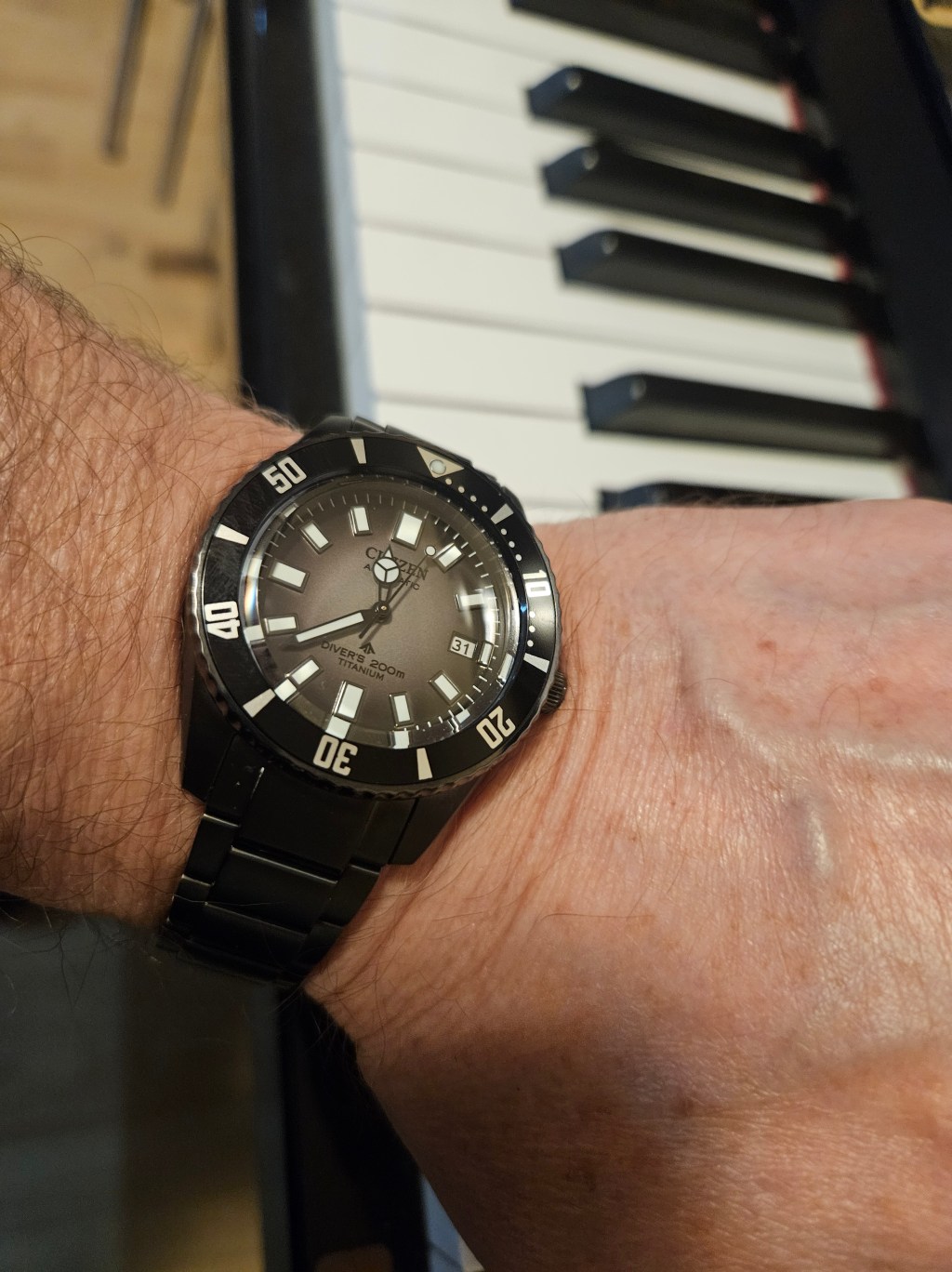
    It would be laughable for me to preach self-control. I can barely keep my own appetites in check. Apart from my morning kettlebell rituals—five days a week of grunting and penance—I’m an introverted “cozy boy.” I stay home, binge true crime docuseries on Netflix, and rotate my diver watches like a museum curator with OCD. I make my monkish meals: buckwheat groats, Japanese yams, steel-cut oats, tofu glazed in teriyaki and moral superiority. I am a herbivore surrounded by carnivores. My family mocks me gently while gnawing ribs.

    Sometimes, in a fit of ambition, I record a two-minute piano piece for my neglected YouTube channel. It receives twelve views, one of them mine, and a comment that reads, simply, “Lovely.” The algorithm yawns and moves on.

    I am obsessed with the rituals of minor luxury—fine organic whole-bean coffee that accompanies me in my morning writing jaunts, triple-milled soap redolent of rose and citrus, podcast playlists curated for insomniac philosophers. My life is the slow burn of scent and sound, a long intermission between existential crises.

    By nine o’clock, I’m done. My wife and daughters laugh as I shuffle off to bed, a middle-aged Sisyphus retiring his rock for the night. I read for twenty minutes, then fall asleep to the soothing drone of Andrew Sullivan or Sam Harris debating civilization’s decay. It’s my lullaby of reason and despair.

    Forgive me if this sounds paltry. I’m still trying to figure it all out—how to live, how to matter, how to grow up before the credits roll.

  • Comparison Is the Mother of Misery

    Comparison Is the Mother of Misery

    The mother of misery is comparison. In fourth grade I plunged into despair because I couldn’t draw like Joseph Schidelman, the illustrator of Charlie and the Chocolate Factory. About the same time, baseball humbled me: my bat speed wasn’t in the same galaxy as Willie Mays, Dick Allen, or Henry Aaron. In my teenage bodybuilding years, I had muscles, but nothing like that of Arnold Schwarzenegger, Sergio Oliva, and Frank Zane; I wisely retired the fantasy of becoming Mr. Universe and managing a gym in the Bahamas. In college, as an aspiring intellectual, I flogged myself for lacking Vladimir Nabokov’s wit and velocity. My chances of becoming a famous novelist were equal to my odds of winning Mr. Olympia. Later, when I flirted with composing and singing, I heard Jeff Buckley’s soul pour through the speakers and realized my voice would mainly trigger a neighborhood dog-barking contest and a chorus of angry neighbors. Decades passed. My classroom persona faced a generation handcuffed to smartphones and ChatGPT. I scrambled for “edutainment” tricks to dodge irrelevance, but the gap widened no matter how I danced.

    The sting doubled when I watched Earthquake (Nathaniel Stroman) flatten an audience with a preacher’s cadence and bulletproof wisdom. His special Joke Telling Business left me muttering, “If I had Earthquake’s power, I could resuscitate my teaching career and stroll into old age with a shred of dignity.”

    Meanwhile, fresh incompetencies arrived like junk mail. I broke two Samsung TVs in one day. I failed to sync my new garage door opener to my phone. My wife had to rescue me from my own maladroit tech spiral. The result was predictable: I was condemned to the Shame Dungeon.

    Down in the basement of depression, I noticed another casualty: my YouTube channel. I usually post once a week and have for over a decade—mostly about my obsession with diver watches. But as sanity demanded I stop flipping watches, I ran out of new divers to discuss. I tried pivoting—open with a little watch talk, then segue to a wry misadventure with a morsel of human insight. If I nailed the landing, I’d get a few thousand views and enough comment energy to believe the enterprise mattered.

    But with my sixty-fourth birthday closing in, the doubts got loud. I don’t want to do “watch talk,” and I’m too mortified to perform a perky, self-deprecating monologue about my misalignment with the universe.

    I keep hearing Mike Birbiglia in my head: you must process your material before you present it; the set has to be a gift, not your live catharsis. The healing happens before you step onstage. You speak from the far shore, not mid-drowning. Otherwise, you’re asking the audience to be your therapist.

    So I’m stuck at a fork: Will this current fear and anxiety about age and disconnection pass through the refinery of my psyche and emerge as something worthy? Or will I remain in the Shame Dungeon, comparing myself to Earthquake, and decide that with talent like his prowling the earth, my best move is to hide under a rock?

    Here’s the dilemma plain: Hiding isn’t viable; it starves the soul. But serving the world a plate of unprocessed mediocrity is just as unforgivable. If I’m going to tell a story about breaking two TVs and my garage-opener meltdown, I have to deliver it with Earthquake’s power and confidence. Otherwise I’ll stay home, mope on the couch, and binge crime documentaries—losing myself in bigger, cleaner tragedies than my own.

  • The Forgiveness Trap: When Healing Becomes a Performance

    The Forgiveness Trap: When Healing Becomes a Performance

    I remember listening to Terry Gross interview Frank McCourt in 1997, right as Angela’s Ashes was climbing every bestseller list like a starving Irish ghost with a publishing deal. At one point, Gross asked the inevitable soft-serve question: had he ever forgiven his drunken, absentee father for drinking away the family’s money and abandoning his wife and children to starvation and shame?

    McCourt didn’t flinch. He dismissed forgiveness as “pompous” and “irrelevant”—as if someone had asked him if he’d made peace with bubonic plague. He wasn’t being cruel; he was being precise. Forgiveness, he seemed to argue, is often a performance—a neat, moral bow tied onto a box of horror that refuses to stay shut.

    I thought of McCourt again this morning while reading Christina Caron’s New York Times piece, “Sometimes, Forgiveness Is Overrated.” It profiles adults who survived childhoods ruled by sadists, addicts, psychopaths, and the emotionally vacant. These were not flawed parents; they were ethical sinkholes, incapable of even the most basic decency. And yet, the self-help gospel continues to hand these survivors a soft-focus script: Forgive, and you will be free.

    Enter Amanda Gregory, therapist and author of You Don’t Need to Forgive: Trauma Recovery on Your Own Terms. Gregory’s argument is refreshingly grounded: forgiveness is not a virtue badge, not a finish line, and certainly not a moral obligation. It’s a slow, private emotional process—if you choose to pursue it. You do not owe a resolution. You do not need to sculpt your rage into affection.

    Gregory’s thesis echoes Sharon Lamb’s earlier work from 2002, which cautioned that pressuring victims to forgive can cause more damage than healing. It’s not just naive—it’s cruel. There are wounds that never close, and forcing someone to say, “It’s okay now,” when it’s absolutely not okay is a kind of spiritual gaslighting. It shifts the burden of transformation onto the person who’s already been broken.

    And what about the offenders? If they’re remorseful, truly remorseful, perhaps forgiveness enters the room. But what if they’re not? What if they’re still rewriting history or refusing to acknowledge it? Then forgiveness becomes a farce—just another round of victim-blaming wrapped in therapeutic jargon.

    In many cases, forgiveness isn’t even the right frame. With time and growth, some of us develop a different emotional posture—not forgiveness, but pity. We see our abusers not as villains to be vanquished or souls to be redeemed, but as feeble, morally bankrupt husks who couldn’t rise above their own dysfunction. We stop hating them because we no longer need to—but let’s not confuse that with forgiveness. That’s not healing; it’s emotional Darwinism.

    Forgiveness has its place, but only when it rests on shared truth and genuine contrition. Otherwise, it’s a forced ritual, a bad-faith moral contract, and a way to sell books or fill up therapy time. The therapeutic industry’s insistence that forgiveness is always the holy grail? Honestly, it’s unforgivable.

  • From Wreckage to Branding: The Art of Curating Your Chaos

    From Wreckage to Branding: The Art of Curating Your Chaos

    In the Amazon Prime documentary Group Therapy, Neil Patrick Harris plays a surprisingly restrained version of himself as moderator while six comedians—Tig Notaro, Nicole Byer, Mike Birbiglia, London Hughes, Atsuko Okatsuka, and Gary Gulman—dissect the raw material of their lives. The big reveal? That material doesn’t go from trauma to stage in one dramatic leap. No, it must be fermented, filtered, and fashioned into something more useful than pain: a persona.

    Mike Birbiglia delivers the central thesis of the show, and I’ll paraphrase with a bit more bite: You can’t stagger onto stage mid-breakdown and expect catharsis to double as comedy. That’s not a gift—it’s a demand. You’re taking from the audience, not offering them anything. The real craft lies in the slow, deliberate process of transforming suffering into something elegant, pointed, and—yes—entertaining. That means the comic must achieve emotional distance from the wreckage, construct a precise point of view, and build a persona strong enough to carry the weight without buckling. In other words, the chaos must be curated. Unlike therapy, where you’re still bleeding onto the couch, stand-up demands a version of you that knows how to make the bloodstains rhyme.

    This process is a perfect metaphor for what college students must do, whether they realize it or not. They’re not just acquiring credentials—they’re building selves. And that takes more than GPAs and LinkedIn bios. It requires language, history, personal narrative, and a working origin myth that turns their emotional baggage into emotional architecture. And yes, it sounds crass, but the result is a kind of “self-brand”—an identity with coherence, voice, and purpose, forged from pain but presented with polish.

    We see this high-wire act pulled off masterfully in Mike Tyson: Undisputed Truth and Chris Rock: Tamborine. Both men dive headfirst into their demons—not to wallow, but to narrate. They show us the bruises and the blueprint. Their stories aren’t cries for help; they’re lessons in how to survive the spectacle, reclaim the mic, and turn personal damage into public insight. And that’s the point I want to bring to my freshman composition class: that the most powerful voice you’ll ever write in is the one you’ve built—not from scratch, but from salvage.

  • Rewind, Delete, Regret: The Cost of Editing Love

    Rewind, Delete, Regret: The Cost of Editing Love

    Eternal Sunshine of the Spotless Mind and Black Mirror’s The Entire History of You are thematically bound by a shared anxiety: the dangerous seduction of technological control over memory. In Eternal Sunshine, memory erasure is marketed as emotional liberation—a clean slate for the brokenhearted. Similarly, in “The Entire History of You,” the brain-implanted “grain” promises perfect recall, total clarity, and the ability to replay moments with photographic precision. Both stories probe a fundamental question: if we could edit our pasts—delete pain, scrutinize joy, control the narrative—would we be better off, or would we unravel?

    Both works reveal that tampering with memory doesn’t resolve emotional suffering; it distorts and magnifies it. In Eternal Sunshine, Joel and Clementine attempt to erase each other, only to circle back into the same patterns of love, longing, and dysfunction. Their emotional chemistry survives the purge, suggesting that memory is not simply data but something embedded in identity, instinct, and the soul. “The Entire History of You” flips the dynamic: instead of forgetting, the characters remember too much. Liam’s obsessive rewinding of moments with his wife becomes a self-inflicted wound, each replay deepening his paranoia and unraveling his sense of reality. The technology doesn’t heal him—it traps him in a recursive loop of doubt and resentment.

    The irony in both narratives is that the human mind, with all its flaws—forgetfulness, bias, emotional haze—is actually what allows us to forgive, to grow, to love again. Eternal Sunshine presents memory loss as a form of mercy, but ultimately asserts that pain and connection are inseparable. The Entire History of You warns that perfect memory is no better; it turns love into surveillance, and intimacy into evidence. In both cases, technology doesn’t enhance humanity—it reveals its brittleness. It offers a fantasy of control over the uncontrollable: the messiness of relationships, the ambiguity of feelings, the inevitability of loss.

    Thus, Eternal Sunshine serves as a philosophical and emotional precursor to “The Entire History of You.” Where one is melancholic and lyrical, the other is clinical and chilling—but both reach the same conclusion: to be human is to remember imperfectly. Whether we erase the past or obsessively relive it, we risk losing what actually makes relationships meaningful—our capacity to feel, forget, forgive, and fumble our way forward. Memory, in both stories, is less about accuracy than emotional truth—and trying to mechanize that truth leads only to alienation.