Tag: health

  • Biceps and Biohazards: A Life on Nutritional Alert

    Biceps and Biohazards: A Life on Nutritional Alert

    I’ve been a bodybuilder most of my life. At 63, my muscles still bulge like I’m auditioning for a special forces propaganda reel—but even that doesn’t exempt me from the quiet humiliation of mortality. Lately, I’ve been staring into the abyss not with dread, but with diagnostics. My blood pressure, triglycerides, cholesterol—these numbers have become my new Greek chorus, whispering prophecies of heart disease, kidney failure, and other charming ways the body stages its final betrayal.

    I want to live long. I want to be healthy. I want to be around for my family, not just as a protein-shake-fueled statue, but as someone present, alert, alive. And so I try to eat right. I try to live clean. But in doing so, I’ve become a man who spends his days mentally auditing every almond. I walk through my own kitchen like it’s a minefield, knowing one wrong step—say, a 700-calorie bowl of Shredded Wheat with berries and walnuts—might plunge me into the void.

    This is what vigilance looks like now: standing in front of the fridge at 8 p.m., debating whether two Medjool dates and a dollop of whole milk Greek yogurt is self-care or self-destruction. I’ve got a body that could still turn heads at a funeral, and yet I’m haunted by the nutritional content of a single ounce of bourbon, as if one sip will hurl me into a Roman orgy.

    And so I ask myself: Is this it? Is a healthy life supposed to feel like I’m forever balancing on a dietary razor wire, eyes scanning for invisible enemies made of saturated fat?

    Where’s the joy in this script? Where’s the wonder, the enchantment, the spontaneity that’s supposed to come with vitality? Am I prolonging life or merely stretching the anxiety?

    These are the questions I ask while chewing a forkful of salmon and silently longing for a croissant. Yes, I want to live longer—but must I do it while fearing the yogurt that is staring at me from the refrigerator?

  • “Abandon Ego, All Ye Who Enter Here.”

    “Abandon Ego, All Ye Who Enter Here.”

    Since hitting emotional rock bottom in a Miami hotel—where my subconscious, speaking through a spectral figure named Dangerfeld, lambasted me for my morbid overweight state—I’ve taken up the old, gristly religion of high-protein austerity. No refined carbs, no snacks, no joy. Just eggs, meat, and the low-humming despair of monk-like discipline. And lo, it worked. In 25 days, I descended from 247 to 232 pounds, a veritable shedding of sin through sweat and chicken thighs.

    Each day, I did kettlebells in the garage, then mounted the Schwinn Airdyne—known in the underworld as The Misery Machine—and burned over 900 calories while it shrieked like a mechanical banshee exorcising my demons through cardio. After one particularly grueling ride, I stepped onto the scale, breathless and giddy: fifteen pounds exorcised in under a month. A triumph. A cleansing. A sacrament.

    But then, from the smoky alcove of my brain where melancholy likes to lounge, came a voice. Calm, sorrowful, smug.

    “Sir,” it said, with bureaucratic precision, “I perceive that Mother’s Day is a mere three days away. There will be cake. There will be pastries. There will be family members wondering why you’re eating celery like a punishment stick while everyone else feasts. Surely, your in-laws will expect you to partake in the merriment. Surely, you understand the risk of catastrophic relapse.”

    And just like that, joy curdled into dread.

    How grotesquely narcissistic, I thought, that this sacred holiday devoted to mothers now existed as a threat to my calorie ceiling. How utterly solipsistic that I, the anti-glutton, could twist a moment of familial celebration into an existential crisis about frosting. The very thought of smiling through a family brunch while calculating the caloric impact of a Danish was enough to send me into a spiral of metaphysical nausea.

    I was ready to crucify my Inner Glutton in the name of bodily salvation, only to discover I’d built a second altar to my own dietary narcissism. I wasn’t conquering vice. I was simply trading one obsession for another—an endless, pathetic game of Morality Whack-a-Mole, where each virtue is a vice in disguise wearing protein powder as a wig.

    This, friends, is the loathsome absurdity of the human condition: Man cannot simply enjoy a scone. He must attach his eternal worth to it.

    And so I found myself lost once again—not in the forest, but in the pastry section—searching for a well-lit EXIT sign that read: “Abandon Ego, All Ye Who Enter Here.”

  • Protein’s Progress: A Pilgrimage through the Valley of Temptation

    Protein’s Progress: A Pilgrimage through the Valley of Temptation

    We’ve all heard the sacred chant of the well-meaning weight-loss evangelists: “It’s not a diet, it’s a lifestyle change.” A phrase so smugly optimistic it should be etched in cursive on a Whole Foods tote bag. These earnest cheerleaders—your friends, your doctor, that co-worker who jogs during lunch—deliver this wisdom as if they’ve just returned from Mount Sinai with the tablets of low-carb enlightenment. What they’re really doing is slapping a bow on a bear trap. Same deprivation, different branding.

    As someone who’s been up and down the scale like a yo-yo on a caffeine bender, let me be clear: no amount of euphemistic jargon will make weight loss feel like a spa day. The tipping point comes when you hate your own fatness more than you love cheddar popcorn and couch inertia. That’s what I call the Snacknnihilation Point—the exact moment your belly button starts to resemble a sinkhole of self-loathing and you realize it’s time to evacuate the disaster zone. There are no affirmations, no kale smoothies, no artisanal detox teas that can sugarcoat this reckoning. It’s a psychological come-to-Jesus via stretch marks and lab results.

    And no, you are not embarking on a seamless “lifestyle change.” You are entering a prolonged tango with productive suffering. There is anguish. There is withdrawal. But there’s also a strange, masochistic joy. Welcome to Pangagement—the evolutionary trick of finding satisfaction in a stomach’s complaint. That slight rumble used to send you diving headfirst into the pantry like a Navy SEAL in search of Oreos. Now? It’s your battle cry. It means you’re winning. It means you’re burning fat like a heretic at the metabolic stake.

    You learn Snaccrifice—the heroic act of denying yourself a sleeve of Chips Ahoy in exchange for a slightly less tragic reflection in the mirror. It’s martyrdom with macros. And soon, you taste Hungerphoria—that monk-like clarity that arrives when your body realizes it’s not dying, it’s detoxing from decades of mindless munching. The hunger stops feeling like an emergency and starts feeling like moral superiority.

    This isn’t some quaint reinvention of your morning routine with lemon water and yoga quotes. This is Protein’s Progress—your odyssey out of the Land of Lazy Indulgence, past the Sirens of Pizza, across the River of Family Potlucks, clutching your meal-prep Tupperware like a sacred relic.

    This isn’t a lifestyle change. It’s a war. And your abs are the battlefield.

  • I Need to Talk to You About Neighborplexity

    I Need to Talk to You About Neighborplexity

    Sumatra coffee is my bad boy of the coffee world—dark, mysterious, and utterly unapologetic. It doesn’t just wake me up; it smacks me across the face, throws me out of bed, and chases me down the street while I’m still in my pajamas. Imagine if a tropical thunderstorm decided to moonlight as a barista, bottling up its fury in a cup. That’s Sumatra—every sip as intense as being caught in a downpour while you’re half-asleep and regretting every life choice that led you to this point.

    Sure, I’m probably guzzling more Sumatra dark roast than is recommended by anyone with a functioning heart, but let’s be real: I’m an overworked college writing professor, buried under an Everest of student assignments that multiply like rabbits on caffeine. Add to that the never-ending demands of being an author of coffee table humor books—books that, according to my editors, need constant revision and expansion to “stay relevant” and “generate a healthy revenue stream.” Translation: “Jeff, we need you to keep churning out content until your fingers bleed and your soul shrivels up like a raisin.”

    But let’s not get ahead of ourselves with the self-pity party. I could give you a long-winded lecture about how the digital age was supposed to bring us more convenience and free time, only to morph into a merciless sociopath that steals our time faster than you can say “work-life balance.” But instead, let me start my story before the Sumatra kicks in too hard, and I start ranting like a madman on a caffeine bender. Buckle up, because this ride is about to get bumpy.

    My tale begins with the Pattersons, my dear, respectable neighbors. For years, I lived in blissful harmony with these upstanding citizens—the kind of people who proudly displayed their New Yorker subscriptions and NPR tote bags like badges of intellectual honor. We had an unspoken pact, a mutual understanding that we were members of the Smart People’s Society, where the TV was reserved for documentaries, award-winning dramas, and the occasional indie film that required subtitles and a dictionary to understand.

    But then, one evening, as I casually glanced out my window—just a harmless peek, really—I saw something so grotesque, so utterly incomprehensible, that it shook me to my core. There, through the open window of my once-revered neighbors, I saw them glued to the screen—not just any screen, but one streaming a TV show so mind-numbingly lowbrow it made reality itself seem like a parody. My brain went into full-blown meltdown. Could it be? Were they actually watching Love Island?

    I blinked, hoping I’d misinterpreted the scene, but no—the horror was all too real. My neighbors, those paragons of taste and intellect, were indulging in what could only be described as televised garbage. I was struck down by a case of Neighborplexity: that gut-wrenching, mind-twisting moment when you realize you might not know the people next door at all. Suddenly, my world was flipped upside down. Had they always been this way? Were those book club meetings just a ruse, a clever cover-up for their secret love affair with trash TV? I felt like I’d just discovered that the Michelin-starred chef who lived down the block actually preferred dining on Spam straight out of the can.

    I thought we were united in our disdain for anything that wasn’t at least 95% fresh on Rotten Tomatoes. But now? Now, I wasn’t so sure. How could they betray me like this? Was every dinner party, every casual chat about the latest literary masterpiece, just a well-orchestrated charade? My mind spun as I tried to reconcile the image of these seemingly cultured, well-spoken people with the reality of them willingly watching—gasp—that show.

    What do I do now? How do I move forward? Can I ever look them in the eye again, or will I be forever haunted by this dark revelation, this unraveling of the fabric of my once-idyllic neighborhood? All because of one dreadful, unforgivable act of poor taste on TV. Love Island, of all things. The horror! The betrayal! The absolute audacity! I might need more Sumatra just to get through this.

  • From Gutenberg to Doomscroll: A Brief History of Our Narrative Decline

    From Gutenberg to Doomscroll: A Brief History of Our Narrative Decline

    Richard Seymour, in The Twittering Machine, reminds us that writing was once a sacred act—a cerebral pilgrimage and a cultural compass. It charted the peaks of human enlightenment and the valleys of our collective idiocy. But ever since Gutenberg’s movable type cranked out the first printed tantrum, writing has also been big business. Seymour calls this “print capitalism”—a factory of words that forged what Benedict Anderson dubbed “imagined communities,” and what Yuval Noah Harari might call humanity’s favorite pastime: building civilizations on beautifully told lies.

    But that was then. Enter the computer—a Pandora’s box with a backspace key. We haven’t just changed how we write; we’ve scrambled the very code of our narrative DNA. Seymour scoffs at the term “social media.” He prefers something more honest and unflinching: “shorthand propaganda.” After all, writing was always social—scrolls, letters, manifestos scrawled in exile. The novelty isn’t the connection; it’s the industrialization of thought. Now, we produce a firehose of content—sloppy, vapid, weaponized by ideology, and monetized by tech lords playing dopamine dealers.

    The term “social media” flatters what is more accurately a “social industry”—a Leviathan of data-harvesting, behavioral conditioning, and emotional slot machines dressed in UX sugar-coating. The so-called “friends” we collect are nothing more than pawns in a gamified economy of clout, their every click tracked, sold, and repurposed to make us addicts. Sherry Turkle wasn’t being cute when she warned that our connections were making us lonelier: she was diagnosing a slow psychological implosion.

    We aren’t writing anymore. We’re twitching. We’re chirping. We’re flapping like those emaciated birds in Paul Klee’s the Twittering Machine, spinning an axle we no longer control, bait for the next poor soul. This isn’t communication. It’s entrapment, dressed up in hashtags and dopamine hits.

  • Contagion of Fear: World War Z and the Collapse of Global Order: A College Essay Prompt

    Contagion of Fear: World War Z and the Collapse of Global Order: A College Essay Prompt

    Essay Prompt:

    In World War Z, a global pandemic rapidly spreads, unleashing chaos, institutional breakdown, and the fragmentation of global cooperation. Though fictional, the film can be read as an allegory for the very real dysfunction and distrust that characterized the COVID-19 pandemic. Using World War Z as a cultural lens, write an essay in which you argue how the film metaphorically captures the collapse of public trust, the dangers of misinformation, and the failure of collective action in a hyper-polarized world. Support your argument with at least three of the following sources: Jonathan Haidt’s “Why the Past 10 Years of American Life Have Been Uniquely Stupid,” Ed Yong’s “How the Pandemic Defeated America,” Seyla Benhabib’s “The Return of the Sovereign,” and Zeynep Tufekci’s “We’re Asking the Wrong Questions of Facebook.”

    This essay invites you to write a 1,700-word argumentative essay in which you analyze World War Z as a metaphor for mass anxiety. Develop an argument that connects the film’s themes to contemporary global challenges such as:

    • The COVID-19 pandemic and fear of viral contagion
    • Global migration driven by war, poverty, and climate change
    • The dehumanization of “The Other” in politically polarized societies
    • The fragility of global cooperation in the face of crisis
    • The spread of weaponized misinformation and conspiracy

    Your thesis should not simply argue that World War Z is “about fear”—it should claim what kind of fear, why it matters, and what the film reveals about our modern condition. You may focus on one primary fear or compare multiple forms of crisis (e.g., pandemic vs. political polarization, or migration vs. misinformation).

    Use at least three of the following essays as research support:

    1. Jonathan Haidt, “Why the Past 10 Years of American Life Have Been Uniquely Stupid” (The Atlantic)
      —A deep dive into how social media has fractured trust, created echo chambers, and undermined democratic cooperation.
    2. Ed Yong, “How the Pandemic Defeated America” (The Atlantic)
      —An autopsy of institutional failure and public distrust during COVID-19, including how the virus exposed deep structural weaknesses.
    3. Seyla Benhabib, “The Return of the Sovereign: Immigration and the Crisis of Globalization” (Project Syndicate)
      —Explores the backlash against global migration and the erosion of human rights amid rising nationalism.
    4. Zeynep Tufekci, “We’re Asking the Wrong Questions of Facebook” (The New York Times)
      —An analysis of how misinformation spreads virally, creating moral panics and damaging collective reasoning.

    Requirements:

    • Use MLA format
    • 1,700 words
    • Quote directly from World War Z (film dialogue, plot events, or visuals)
    • Integrate at least two sources above with citation
    • Present a counterargument and a rebuttal

    Here’s a 9-paragraph outline and three sample thesis statements to guide students toward deep, layered analysis of World War Z as metaphor.

    Three Sample Thesis Statements

    World War Z presents zombies not just as flesh-eating threats but as avatars of global panic—embodying fears of pandemics, mass migration, and social collapse. Through its globe-hopping narrative and relentless spread of infection, the film critiques a world increasingly unprepared to manage the fallout of interconnected crises, echoing Haidt’s concerns about fractured public trust and Yong’s analysis of institutional fragility.

    In World War Z, the zombie outbreak functions as a metaphor for weaponized misinformation and the breakdown of global cooperation, dramatizing how societies consumed by fear and tribalism respond not with solidarity, but with suspicion and violence. The film anticipates the moral failures detailed by Haidt and Tufekci, making it less about monsters than about our inability to face crisis without self-destructing.

    Far from a typical horror film, World War Z is a global parable of dehumanization and displacement, where zombies symbolize both contagious fear and the faceless masses of migration and poverty. As Benhabib argues, the return of nationalism and the fear of the “Other” has shattered international solidarity—anxiety the film visualizes through barricades, lockdowns, and apocalyptic border control.

    9-Paragraph Outline

    Paragraph 1 – Introduction

    • Hook: Use an arresting visual to frame our world’s current instability.
    • Context: Introduce World War Z as more than a thriller—it’s an allegory of global collapse.
    • Thesis: State your central argument about how the zombies symbolize a deeper, contemporary fear (e.g., pandemic panic, social polarization, migration anxiety, misinformation, etc.).

    Paragraph 2 – The Metaphorical Function of Zombies

    • Discuss the symbolic role of zombies in film generally (fear of the masses, disease, mindlessness).
    • Explain how World War Z updates the metaphor to reflect 21st-century global anxieties.

    Paragraph 3 – Global Crisis and Institutional Collapse

    • Analyze scenes showing governments falling apart, the UN being sidelined, the world reduced to reactive chaos.
    • Connect to Ed Yong’s argument about institutional failure during COVID-19.

    Paragraph 4 – Fear of Migration and the Dehumanized Other

    • Examine the treatment of human mobs, refugees, and zombies in border scenes (e.g., Jerusalem wall, flight panic).
    • Use Seyla Benhabib’s piece to discuss the rising fear of displacement and the collapse of asylum ethics.

    Paragraph 5 – The Spread of Misinformation and Breakdown of Truth

    • Point to the conspiracy theories and media confusion in the film’s early scenes.
    • Use Tufekci’s argument to show how misinformation spreads like a virus—and how that’s reflected in the zombie metaphor.

    Paragraph 6 – The Psychology of Polarization and Fear

    • Explore the emotional tone of the film: anxiety, distrust, hyper-individualism.
    • Connect to Haidt’s claim that polarization has eroded rational cooperation and heightened mass irrationality.

    Paragraph 7 – Counterargument

    • Some may argue that World War Z is just a fast-paced action flick with no real political message.
    • Rebut by showing how even its structure—a global chase from chaos to cure—mirrors real-world anxieties about global crisis management and ethical triage.

    Paragraph 8 – Deeper Implications of the Metaphor

    • Push the metaphor further: zombies as collapsed selves, media-driven mobs, people stripped of identity.
    • Reflect on how the film doesn’t just diagnose fear—it reflects our inability to reckon with complexity in a globalized age.

    Paragraph 9 – Conclusion

    • Reaffirm your thesis.
    • Leave the reader with a provocative final thought: maybe the zombies aren’t the dead—they’re us, stripped of cooperation, overwhelmed by fear, and marching blindly toward collapse.

  • Kettlebells, Groats, and the Ghost of Cardiac Doom

    Kettlebells, Groats, and the Ghost of Cardiac Doom

    I’m 63, and my body is a museum of movement trends. I’ve done Olympic weightlifting, bodybuilding, power yoga, and for the last 12 years, kettlebells—because nothing says “midlife stability” like swinging a cannonball on a handle five days a week while trying not to herniate a disk. I eat well—if by “well” you mean “like a disciplined wolf at a cheat-day buffet.” Animal products still feature in my diet, usually in portions that would make a cardiologist raise one eyebrow and reach for their prescription pad. I’m a good 30 pounds overweight and have cut back recently but perhaps not enough. 

    Lately, I’ve started worrying about the future: namely, a heart stent. The idea of threading a balloon through my groin to unclog a bacon-clogged artery isn’t my preferred retirement plan. So I’m contemplating a semi-vegan diet—not for virtue-signaling, but for vascular survival. Greek yogurt and whey powder will stay, though. I refuse to shrivel into a human twig for the sake of purity. Sarcopenia can go pound tempeh.

    My dream breakfast resembles a Pinterest board curated by a monk with delusions of grandeur: steel-cut oats, yogurt, whey, berries, walnuts, and dark roast coffee. Lunch is the same symphony with the oatmeal swapped for buckwheat groats, in honor of my Polish great-great grandmother who, I’m certain, could crush a man’s spirit with one glance and a bowl of groats. Dinner? A nutritional yeast-drenched, spice-blasted tempeh tableau, with beans, roasted vegetables, and maybe a solemn scoop of cottage cheese followed by an apple—the dessert equivalent of a tax deduction.

    Snacks? Don’t speak to me of snacks. They are the sneaky saboteurs of caloric creep, the grinning goblins that ruin otherwise virtuous intentions. Between meals, I’ll drink water, and maybe a diet soda or two to convince myself I’m still living on the edge.

    Of course, this plan risks collapsing under the crushing weight of its own monotony. Worse, I dread becoming that guy at family events—the joyless dietary specter haunting the buffet table with his lentil sermon. I don’t want pity, nor do I want to be admired for abstaining from Costco sheet cake while others live in reckless, frosted bliss.

    To preserve my sanity and prevent my relatives from staging a flavor intervention, I may allow one restaurant meal a week—a carefully sanctioned culinary parole. A sanity-saving bite of indulgence before I return to the tofu mines.

  • My Early Days as a Peacock

    My Early Days as a Peacock

    I had no clue back then, but my tragic fashion choices as a young professor in the desert in the early ‘90s were the desperate impulses of a kid who’d missed his shot at feeling special and was clawing to reclaim a glory he’d fumbled away when he was a teenage bodybuilder. Flashback eight years: I was working a job loading parcels at UPS in Oakland, on a low-carb diet that shredded me down to the bone. I was this close to contending for the Mr. Teenage San Francisco title. With a perfectly bronzed 180-pound frame, my clothes started hanging off me like a bad costume. That meant one thing: new wardrobe. Enter a fitting room at a Pleasanton mall, where I was trying on pants behind gauzy curtains when I overheard two attractive young women debating who should ask me out. Their voices escalated, full of hunger and competition, as if I was the last slice of pizza at a frat party. I pictured them throwing down on the store carpet, pulling hair and clawing at each other’s throats, all for the privilege of walking out with the human trophy that was me.

    It was the golden moment I’d always dreamed of, my chance to bask in the attention and seize my shot at feeling like a demigod. So, what did I do? I froze like a deer in headlights, slapping on a look of such exaggerated indifference it was like laying out a welcome mat that said “Stay Away.” They took one look at my aloof facade and staggered off, probably mumbling about how stuck-up I seemed. But here’s the truth: I wasn’t a man full of myself—I was a coward hiding behind muscle armor.

    For a short, fleeting period—from my mid-teens to early twenties—I was the kind of guy who could’ve sent Cosmopolitan’s “Bachelor of the Month” candidates sobbing into their pillows. But my personality was still crawling in the shallow end of the pool while my body was busy competing for gold medals. I had sculpted a physique that would make Greek gods nod in approval, but socially? I was like a houseplant that wilts if you talk too loudly. Gorgeous women practically threw themselves at me, and I responded with the warmth and enthusiasm of a mannequin. Behind all that bronzed, chiseled muscle was a scared little boy trapped in a fortress of self-doubt.

    The frustration that consumed me as I stood there, watching those two retail employees squabble over me, was the same frustration that hit me like a truck a week later at the contest. I entered Mr. Teenage San Francisco as a “natural”—which is just a polite way of saying I didn’t juice and therefore shrank down to a point where I looked more like a wiry special-ops recruit than a bodybuilder. At six feet and 180 pounds, I had the lean, aesthetic “Frank Zane Look” just well enough to snag runner-up. But the guy who beat me was a golden-haired meathead pumped full of steroids and Medjool dates, which gave him muscles that looked inflated by a bike pump and a gut that seemed ready to explode from cramping. 

    The day after the contest, I was laid out at home, basking in the almost-victory and recovering from the Herculean effort of flexing through a nightmare lineup. Then the calls started pouring in. Strangers who’d gotten my number from the contest registry wanted me to model for their sketchy fitness magazines. Some sounded more like basement-dwelling creeps than actual photographers. I turned them down with all the enthusiasm of a nightclub bouncer dealing with fake IDs. But then one call stood out—a woman claiming to be an art student from UCSF, asking me to pose for her portfolio. Tempting, sure, but I politely declined. 

    Why? The reasons were as predictable as they were pathetic. First, I was drained from cutting down to 180 pounds and just wanted to curl up in a hole. Second, I was lazy. The thought of expending energy to meet a stranger sounded about as fun as a root canal. But the main reason? I was a professional neurotic, a certified worrywart who avoided human interaction like it was an airborne disease. The idea of meeting this mysterious woman in a San Francisco coffee shop filled me with a dread so profound that I felt like a cat eyeing a room full of rocking chairs.

    By turning down those offers, I was throwing away the golden advice handed down in the Bodybuilder’s Bible, Arnold Schwarzenegger’s Arnold: The Education of a Bodybuilder. According to the Gospel of Arnold, I should’ve been leveraging my physique into acting gigs, business ventures, and political fame. But here’s the thing—I didn’t have Arnold’s larger-than-life charisma, his zest for adventure, or his shameless drive to turn everything into a money-making opportunity. While Arnold was out charming Hollywood and turning flexing into fortune, I was content to crawl under a rock and avoid all forms of adventure and new connections. If there had been a way to market my body without ever leaving my room, I would’ve been the undisputed king of the fitness world.

    Instead, I took a different path—one paved with introversion and leading straight to a career as a college writing instructor in the California desert. By the time I hit twenty-seven, I was finally catching up socially—just in time to fantasize about all the chances I’d blown. Strutting around the desert in flamboyant outfits like a peacock trying to reclaim lost glory, I was determined to make up for all the opportunities I’d wasted, finally embracing the ridiculousness of who I’d become.

  • New Yorker’s Remorse Syndrome

    New Yorker’s Remorse Syndrome

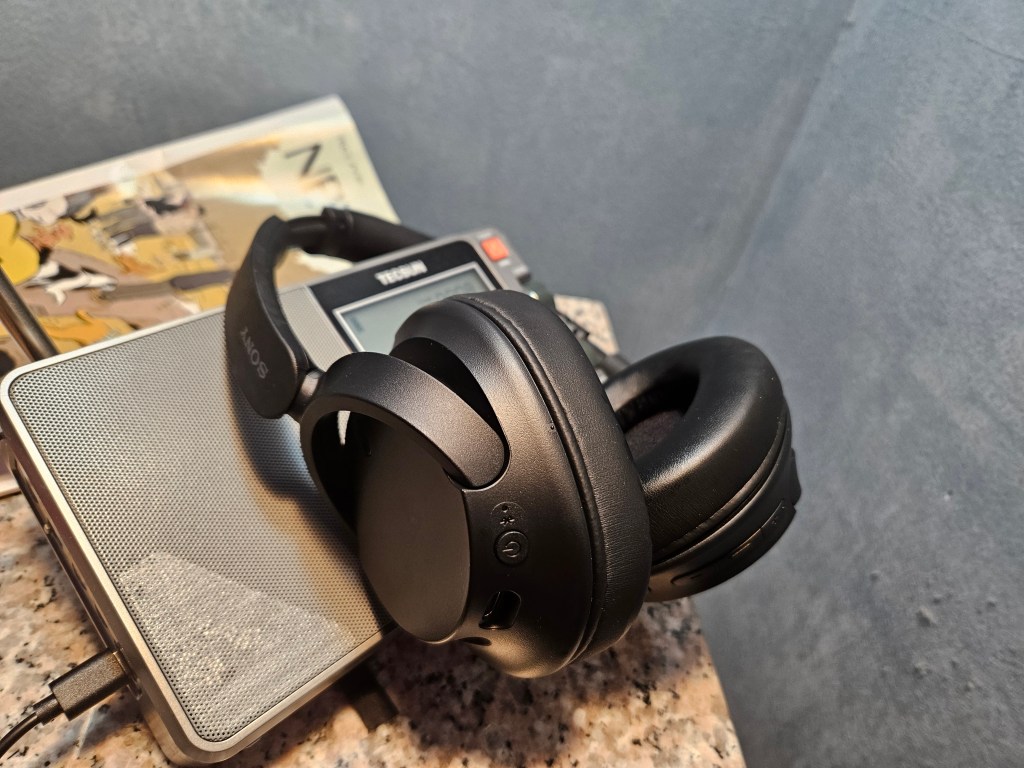
    It’s a charming form of cosplay, really — striding around as a “well-informed citizen” while sinking ungodly hours into consumer research. Watches, radios, headphones, laptops, Chromebooks, mechanical keyboards, high-end sweatshirts, orthopedic luxury sneakers, protein powders, protein bars, athletic-grade water bottles — an entire temple of optimized living, curated with clerical devotion.

    Meanwhile, out in the real world, society is fraying like an ancient flag in a hurricane. Yeats’ prophecy is no longer a chilling warning — it’s a project status update.
    The center isn’t holding. The center left the chat months ago.
    But instead of reckoning with the slow dissolve of civil society, it’s so much easier, so much kinder to the blood pressure, to compare toaster ovens with touchless air fryer settings.

    Yes, yes, I know — one must be informed. George Carlin gave us front-row tickets to the Freak Show. We owe it to the species, or at least to our own dim dignity, to bear witness.
    But honestly? Some days, it feels like sanity demands partial withdrawal. A news podcast here. A curated briefing there. Enough to feign civic engagement at parties without having to call a therapist immediately afterward.

    This brings me to the shrine of guilt at the center of my living room: the great, unread New Yorker stack.
    I have subscribed since 1985, back when Reagan was doing his best kingly impression and nobody had heard of an iPhone.
    The stack now functions less as reading material and more as a kind of grim altar — a silent accusation in glossy print.
    Friends glance at it and nod approvingly, as if my very possession of these magazines implies moral seriousness.
    I let them believe.
    Inside, I know better.
    I know that I am a fallen monk, a heretic of intellectual duty, choosing the velvet lure of consumer escapism over the weighty gospels of sociopolitical collapse.

    I have a diagnosis: New Yorker’s Remorse Syndrome — a condition in which one publicly performs allegiance to Enlightenment values while privately seeking refuge among comparison charts and Amazon star ratings.
    The mind knows what it ought to do.
    The heart, however, prefers shopping for the perfect water bottle while Rome burns quietly in the background.

  • Riding the Misery Machine: How Not Looking Became My Superpower

    Riding the Misery Machine: How Not Looking Became My Superpower

    Sixteen days ago, bloated at a mortifying 247 pounds, I decided enough was enough.
    On April 10th, I gave my calorie binges the boot, hacking my intake down to around 2,400 calories a day while shoving 160 grams of protein down my gullet like a man training for a hostage rescue mission.
    I also added a sixth workout to my weekly five kettlebell sessions: a brutal appointment with what I now lovingly call the Misery Machine.

    What’s the Misery Machine, you ask?
    It’s the Schwinn Airdyne—a sadistic stationary bike crossed with a medieval torture rack.
    It has pedals for your legs and levers for your arms, ensuring that no muscle group escapes unscathed. Your pecs, shoulders, triceps, forearms, glutes, quads—all dragged into the inferno.
    And because Schwinn engineers apparently hate human joy, the faster you go, the more resistance it throws at you.
    It’s not a workout; it’s a trial by fire.

    My first two rides were pathetic: 59 minutes of flailing, barely burning 600 calories.
    Today, though, I hit 706 calories in the same time—an improvement, and not just physically.

    Part of the success came from a psychological gambit: don’t look at the odometer.
    Staring at the screen, counting every miserable calorie and every sadistic second, makes the workout feel endless, like some gym-rat version of waterboarding.
    So today, I swore: I will not look.
    My secret weapon would be ignorance. Eyes forward. Mind blank. Focus on breathing, moving, surviving.

    Did it work?
    Mostly.
    I cheated about six times, sneaking guilty glances at the odometer—still, better than the constant obsessive checking that turns my bike rides into psychological horror shows reminiscent of my endless, soul-crushing drives up the I-5 from Los Angeles to San Francisco.

    But the real goal—the Holy Grail—is zero looks.
    Like Lot’s wife, ordered not to turn back lest she turn into a pillar of salt, I know: if I glance back at the numbers, I’ll be punished with despair.

    Today, post-shower, the scale gave me a small nod: 239 pounds.
    Only 39 pounds to go until I reclaim something resembling dignity.

    Lucky me.
    Nothing but time, pain, and the Misery Machine standing between me and the man I intend to be.