Tag: health

  • The Unwritten Rules of the Iron Temple (and How You Broke Them All)

    The Unwritten Rules of the Iron Temple (and How You Broke Them All)

    One of the twisted pleasures of training at Walt’s Gym in the mid-70s was sweating it out beside the Big Time Wrestling stars you once watched religiously after school on Channel 44. For two straight years, those hulking, cartoonish men had been etched into your imagination, and suddenly—there they were, no longer trapped in your Zenith TV, but flesh-and-blood titans grunting beside you as you tried to make a name for yourself as a thirteen-year-old Olympic weightlifter.

    You couldn’t believe your luck. Kinji Shibuya, Pedro Morales, Hector Cruz—icons of your adolescent screen time were now regulars at your crusty little training temple. But with awe came idiocy. You were built for your age, sure, but common sense hadn’t caught up to your biceps.

    Take the time you ran cable lat rows next to Hector Cruz. Somewhere between rep six and seven, you decided to open your mouth and muse aloud whether wrestling—dare you say it—might be fake. Cruz turned, his forehead looking like tectonic plates mid-quake, and fixed you with a death glare. “Look at these scars on my face! Do they look fake to you?” he growled. You nodded dumbly, suddenly aware that your joke had been the conversational equivalent of lighting yourself on fire.

    Then came Towelgate. You spotted a sweat towel draped across the calf machine and figured, hey, free towel. You wiped your pubescent brow and basked in your temporary coolness—until a mountain of muscle barreled off the bench press and accused you of theft. With twitching biceps and a voice that rumbled like thunder, he threatened to rearrange your face if you ever touched his towel again. That was the day you learned: gym towels are sacred. More sacred than communion wafers. More sacred than your own dignity.

    But nothing topped the screaming incident. You thought your loud, primal grunts gave your lifts an air of badassery. They didn’t. One day, a competitive bodybuilder who looked like an enraged Renaissance statue cornered you between sets and snarled, “Kid, if you don’t cut the screaming, someone’s going to shut you up permanently. And they’ll get a standing ovation for it.”

    That was your education. Walt’s Gym wasn’t just about the weight on the bar. It was about knowing the tribal codes, reading the room, and shutting the hell up before your next breath became your last. You didn’t just lift—you survived. And sometimes, that was the heavier feat.

  • Charlie the Frog at the Temple of Gains

    Charlie the Frog at the Temple of Gains

    By the time you hit fourteen, your sacred sanctuary wasn’t some air-conditioned suburban rec center with eucalyptus towels and Wi-Fi. No, your Mecca was Walt’s Gym in Hayward, California—a rusting cathedral of iron that began life as a chicken coop in the 1950s and never quite shook the poultry vibe. This was not a gym—it was a festering biome of bacteria and dreams, a living organism teeming with unclassified fungi, incurable athlete’s foot, and possibly several sentient strains of black mold. Members spoke of a frog named Charlie who allegedly roosted in the shower stalls—a fat, warty mascot celebrated by the resident pro wrestlers. You never saw Charlie, but you believed. In a place like this, hallucinations could be considered part of the membership plan.

    The locker room? It doubled as a noir film set. Every day, you’d see some bankrupt divorcé in a velour tracksuit and a ship-anchor gold chain, chained to the payphone like it was his last lifeline, ranting to his lawyer about alimony, DUIs, or some tragic time-share dispute in Reno. You listened in. How could you not?

    Out back was a pool—or what used to be a pool. Now it was a soup of moss, dead rats, and unspeakable broth. Walt himself, the gym’s proprietor and part-time pest undertaker, would emerge every so often with a pool skimmer, fish out some bloated rodent corpse, and hold it aloft like it was Simba on Pride Rock. The regulars would cheer. Walt would bow. Then he’d fling the cadaver into the dumpster like he was doing Shakespeare in the Parking Lot.

    Inside, the circus only expanded. You had Wally—an ancient gym relic who claimed to be the anatomical model for some early caveman medical scroll. He’d been there since Eisenhower, possibly since the Carboniferous Period. Wally was a fixture. He corrected your form whether you asked or not. He’d bench the bar, monologue about arthritis, and tell sweeping tales of deadbeat cousins, glamorous ex-lovers, and Eisenhower’s America. His workouts lasted longer than most wars. And when he was done, he’d vanish into the sauna, then reemerge drenched in talcum powder like a ghost summoned by a seance in a health spa. You often thought a foghorn would erupt every time he crossed your field of vision.

    The soundtrack of this chaos? The gym’s radio had a three-song memory: Elvin Bishop’s “Fooled Around and Fell in Love,” The Eagles’ “New Kid in Town,” and Norman Connors’ “You Are My Starship.” These songs looped like some cosmic punishment for crimes you hadn’t yet committed. Yet somehow, they became the anthem of your adolescence.

    And you were the perfect age—old enough to build biceps, too young to pay taxes. You didn’t know what a mortgage was, but you knew how to crank out supersets. While grown men wept about tuition and liver spots, you were curling barbells and escaping into bliss. The gym wasn’t just a place—it was your church, your escape hatch, your sweaty Shangri-La.

    As Arnold wrote in The Education of a Bodybuilder, the gym was where it all clicked. You felt it too—that moment of transcendence, when iron became religion and sweat became baptism. For you, that epiphany happened in the rot-ridden, bacteria-flecked walls of Walt’s Gym, 1976 edition. A paradise of tetanus and testosterone. A perfect hellhole. The best place on Earth.

  • The Gospel According to Arnold

    The Gospel According to Arnold

    At thirteen, you weren’t just growing—you were bulking. You launched yourself headfirst into the gladiatorial quest for muscle supremacy, wolfing down 200 grams of protein a day in four frenzied “feedings,” as if you were a ravenous prehistoric beast on a cutting-edge strength cycle. While other kids were figuring out how to talk to girls without combusting from nerves, you were busy calculating amino acid ratios and chasing the elusive state of protein-muscle synthesis like it was the Holy Grail.

    Your kitchen became a makeshift laboratory of gains. You blended protein shakes with powders hawked by the beefy prophets in Strength and Health magazine—chalky concoctions that tasted like regret mixed with drywall. You drank them anyway. Satiety was sacred.

    After a year of racking up Junior Olympic Weightlifting trophies—hoisting iron like a Cold War super-soldier on state-sponsored hormones—your well-meaning mother tried to support your calling. On your fourteenth birthday, she handed you what you assumed would be a Soviet-tier weightlifting manual. Instead, it was Pumping Iron—a glossy coffee-table tome filled with baby-oiled men in banana hammocks. Bodybuilders. Flexing. Posing. Pouting.

    You had to sit her down.

    “Mom,” you said, as diplomatically as a hormonal adolescent can, “weightlifters move heavy things. Bodybuilders pose in sequined underwear and shave their armpits.”

    To you, weightlifters were Spartans. Bodybuilders were Vegas lounge acts with glutes.

    Still, curiosity got the better of you. You flipped through Pumping Iron with a mixture of revulsion and wonder. The men on those pages didn’t look human. They looked like sculptures that got bored and decided to bench press.

    You imagined them living in their parents’ houses, drinking protein sludge while their heat-addled mothers babbled to parakeets and dabbed their foreheads with cold washcloths. They were carnival beasts. You, however, were a noble practitioner of Olympic Weightlifting—a sport so pure it belonged in the actual Olympics, unlike the oiled-up beauty pageants you now held in low regard.

    Your hero was Vasily Alekseyev, the 350-pound Russian colossus who looked like he ate livestock for brunch. You watched him waddle onto the platform, glare at a loaded barbell like it owed him money, and launch it overhead like a man tossing furniture in a domestic dispute. When that barbell hit the floor, it echoed through your ribcage. That, you told yourself, was true strength.

    But then… Arnold happened.

    You’d seen him before, sure. But when you saw Pumping Iron—saw him—something shifted. It wasn’t just admiration. It was conversion. Arnold wasn’t a man. He was a solar flare with biceps. A deity with an accent.

    Soon, you were hanging around Walt’s Gym, where the walls smelled like testosterone and chalk dust, and where the guys wore cutoffs like they were Roman togas. One afternoon, you spotted a bodybuilder straight out of central casting: a tall, tanned fireman who had just placed in the Mr. California competition. Blond hair, thick broom-handle mustache, horn-rimmed glasses that screamed “Clark Kent just deadlifted a Buick.”

    He bench-pressed over 300 pounds, stood up, and stared into the mirror like Narcissus on creatine. “The first time I saw Arnold,” he said with reverence, “I felt I was in the presence of the Lord. I said to myself, ‘There stands the Messiah. There stands God Almighty, come to bring good cheer to this world.’”

    And you believed him.

    Because Arnold wasn’t just jacked—he was divine. He was the Pied Piper of Pecs, leading you out of your ordinary life and into a new religion: Bodybuilding Fever. There was no vaccine. No mercy. Just the cure: protein shakes, gym mirrors, and relentless flexing.

    You no longer lifted just to be strong. You lifted to be seen. To be admired. To become an icon. You drank from the sacred chalice of the dumbbell and chased the gleam of your own reflection. You weren’t just lifting—you were becoming.

  • Micky Dolenz, Dave Draper, and the Death of a Boy’s Dreams

    Micky Dolenz, Dave Draper, and the Death of a Boy’s Dreams

    By the time you hit kindergarten, you were already a zealous convert to the gospel of hard work, marinated in a diet of children’s books and those absurdly persuasive Charles Atlas bodybuilding ads found in comic books. Your tiny brain was hardwired to believe that with enough elbow grease and grit, you could bend the universe to your will. You marched through life armed with Captain Kangaroo’s treacly aphorisms and the motivational war cries of The Little Engine That Could. “I think I can” became your toddler mantra, your creed, your caffeinated Kool-Aid.

    Then came October 16, 1967. The day optimism died.

    You were just twelve days shy of your sixth birthday, nestled into your evening ritual of watching The Monkees, when the episode “I Was a 99-lb. Weakling” detonated your reality. There on the screen was your scrappy hero Micky Dolenz, getting demolished on the beach by a slab of muscle named Bulk—played by none other than Mr. Universe Dave Draper. Bulk, a bleach-blonde Hercules with pecs that looked weaponized, snatched away Brenda, the beach goddess, without breaking a sweat.

    Crushed but hopeful, Micky sought salvation through Weaklings Anonymous. His training montage was nothing short of existential punishment: lifting weights the size of Volkswagens, chugging fermented goat milk curd (which may as well have been bottled regret), and pawning off his drum set—essentially amputating his soul—to finance this fever dream of redemption.

    And then came the final betrayal.

    After all that sweat, sacrifice, and putrid curd, Brenda dumped Bulk and hooked up with some Proust-reading dandy who probably thought cardio was a character in Les Misérables. Your six-year-old heart imploded. You sat there slack-jawed, betrayed by TV, by Micky, by Brenda, and most of all, by the myth that hard work would win the day. Goat curd couldn’t save you. Pop-Tarts couldn’t save you. Even a twin-pack of Ding Dongs barely numbed the existential sting.

    You wandered the next few years like a ghost of your former self, disillusioned, cynical, nursing your wounds in sugary snacks and quiet rage. Not until Arnold Schwarzenegger stormed into your life via Sports Illustrated and Pumping Iron did your faith in the bodybuilding gospel return. But by then, the damage was done. You knew the truth: sometimes, life crowns the guy reading Proust—and leaves the guy drinking protein shakes in the dust.

  • Dorian Gray Wears a Diver

    Dorian Gray Wears a Diver

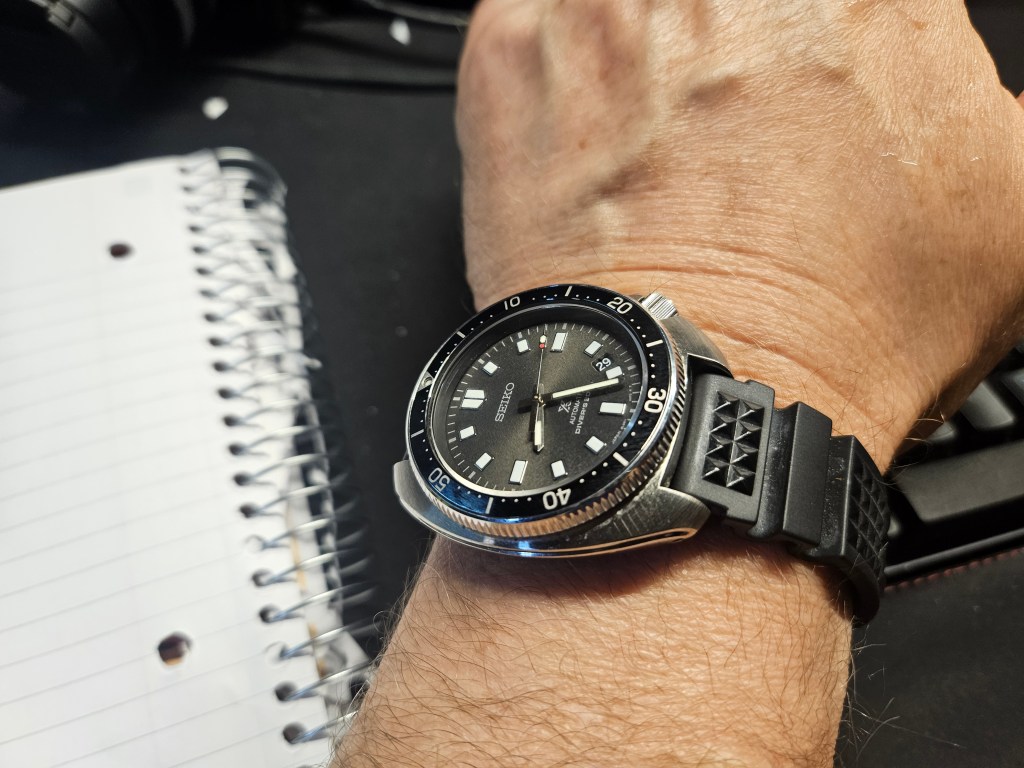
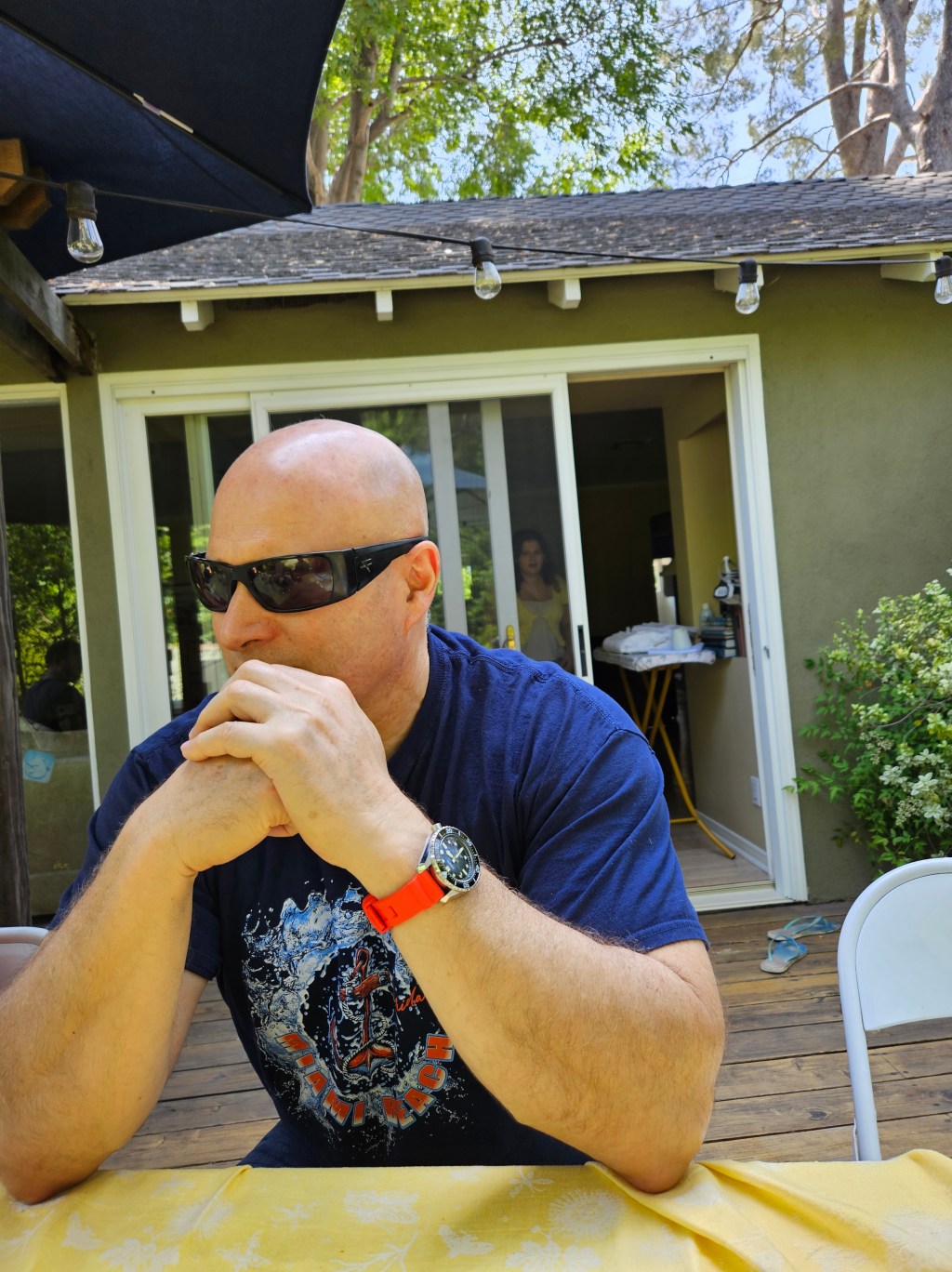
    I turn 64 this October. By all logic—and illogic—I should reward myself with a seventh watch. Something different. Something elegant. Something that whispers, you’re still in the game. Not another diver—I already have six of those aquatic symbols of masculine resolve. Maybe a sleek Grand Seiko. Or a snotty, sapphire-dialed Euro snob with just enough heritage to make me feel like I matter. Or more likely, a Citizen Satellite Wave Attesa Chronograph.

    But here’s the rub: I don’t have time.
    Literally.

    Buying another timepiece at this stage of life feels like auditioning for a band that stopped playing decades ago. The idea of adding yet another horological trophy to my drawer feels less like celebration and more like denial—of mortality, of limits, of the inconvenient truth that, like it or not, I’m on the back nine. The dopamine buzz of acquiring another shiny object is no longer innocent. It reeks of delusion. It’s a middle-aged man’s sugar pill. A form of spiritual Botox.

    Desire at this age should mellow. Shouldn’t it? Shouldn’t I have graduated to some Zen-like state of detachment, where I sip tea and listen to birdsong and chuckle softly at the foolishness of wanting things?

    Instead, I find myself lusting after lacquered dials and ceramic bezels with the unbridled thirst of a teenage boy at a mall kiosk. It makes me feel like Dorian Gray—but in reverse. I strap youth onto my wrist while the portrait in the basement, the one of my soul, grows grotesque. Not just wrinkled, but warped. A decaying ghoul of greed and vanity, clutching a watch roll and whispering, just one more.

    Another sobering thought: Getting another beautiful watch won’t make me happy. It will make me bitter because as pleasurable as it will be to behold it on my wrist, I will know deep down that this pleasure pales in comparison to the dopamine-rush I get from watching it displayed on YouTube videos. Much of the pleasure is in my head, not on my wrist. 

    These are not healthy thoughts for a birthday.

    And yet, here we are. When you’re a consumer with a conscience, you live in a state of cognitive dissonance. You want the toy. You hear the whisper of death. You long to be mature. You also want the damn Seiko. Buying stuff, especially beautiful, useless stuff, is supposed to be fun—frivolous, even. But once you’ve glimpsed the truth—the metaphorical rot in the basement—you can’t unsee it.

    That’s the thing about aging: it doesn’t always give you peace. Sometimes it just gives you clarity. And clarity can be a buzzkill.

  • Buy Now, Cry Later: A Watch Addict’s Morning Routine

    Buy Now, Cry Later: A Watch Addict’s Morning Routine

    This morning, I sprang from bed at 5:50 like a man trying to outrun his own restlessness. Coffee in one hand, buckwheat groats in the other—my monkish morning ritual. By 6:20, I was deep into David Brooks’ New York Times lament over the death of the novel, parsing his elegy like a coroner looking for signs of life in a genre comatose under TikTok’s reign.

    I then pivoted to writing a YouTube essay on how to discover your watch identity without torching your bank account or your sanity. This required revisiting my own horological spiral, which could be summarized as: “I bought all the watches so you don’t have to.”

    Then, somewhere between the second paragraph and the first pangs of self-loathing, a thought struck me with the force of a stale TED Talk: I despise one-word-title books. You know the type—Grit, Blink, Regret, Drive, Trust—as if a single syllable can carry the weight of human experience. These are not books; they are glorified blog posts wearing a lab coat. They stretch one mediocre insight across 300 pages like butter scraped over too much toast. Malcolm Gladwell may not have invented this genre, but he certainly weaponized it.

    To be fair, a few have earned their keep: Testosterone, Breathe, and Dopamine Nation didn’t insult my intelligence. But the rest? They’re just placebo pills for the terminally curious.

    By 8:30, my family was still asleep, and I had hit the boredom wall with a dull thud. To numb the ennui, I began configuring a Toyota Camry online—my version of sniffing glue. I checked Southern California inventory as if I were a buyer, even though I won’t be pulling the trigger for at least a year. Classic FOMO, no doubt stirred by my best friend’s recent $70K Lexus purchase. His automotive flex triggered my inner consumer gremlin.

    Next came the Seiko browsing—Astrons, King Seikos, shiny little lies I tell myself in stainless steel form. I’m a man pushing into his 60s. I should be downsizing my neuroses, not accessorizing them.

    Right on cue, a depression fog rolled in. The psychic hangover of retail fantasy. I remembered a dream I’d had the night before: I was adding tofu to someone’s salad to increase their protein. They devoured it like they hadn’t eaten in days. Later in the same dream, I was at a party, where a couple asked me to mentor their autistic daughter. I smiled politely, feeling like a fraud. Me? A mentor? I can barely manage my own dopamine addiction.

    That’s when the epiphany hit like a steel bracelet to the skull: the urge to buy a watch hits hardest when you’re bored, self-pitying, or both. In those moments, a $2,000 watch becomes emotional currency—a metal antidepressant disguised as self-expression. And like all impulsive purchases, it cures nothing but your momentary discomfort.

    I hovered over the “Buy Now” button. Then, mercy. I pulled back.

    At 9:00, one of my twin daughters wandered into the kitchen and asked what happened to the leftover buttermilk pancakes from yesterday. I told her the truth: she’d left the door open when she went to ask the neighbors about babysitting their granddaughter, and a massive fly invited itself in. I saw it licking the pancakes like a dog at a water bowl. Into the trash they went. She laughed. I suggested Cheerios with a scoop of strawberry protein powder. She agreed. In that small, domestic exchange—an absurd fly, a ruined pancake, a shared laugh—I found myself re-entering the land of the living.

    Gratitude, not consumption, had done the trick.

    So now, I prepare for my kettlebell workout, towel in hand, wondering which podcast will offer the most delicious repartee to sweat by. My soul has steadied, for now.

  • Trader Joe’s and the End of the World (One Tofu Block at a Time)

    Trader Joe’s and the End of the World (One Tofu Block at a Time)

    With my wife and twin daughters making the long drive home from San Francisco, I realized someone had to restock the household pantry. That someone was me. So by 8 a.m., I was wandering the fluorescent aisles of Trader Joe’s, still half-asleep, in search of tempeh, oat milk, and maybe a reason to keep going.

    Twenty seconds in, I spotted Eliot—a jazz musician in his early forties who’s worked there forever and knows every spice rack and frozen entrée by memory. I hadn’t seen him in a while. He asked if I’d retired from teaching at the local college yet.

    “Two more years,” I said, adding, “but who knows what’s happening to writing classes in the Age of ChatGPT. Everyone talks like they know. They don’t.”

    He asked how I’m handling it in the classroom.

    “I’m not sure I am,” I told him. “I can teach. I can perform. I can entertain. But grading online essays? That’s an existential crisis wrapped in a PDF. I’m dancing in quicksand.”

    Eliot nodded grimly. “This generation doesn’t read.”

    “My daughters don’t,” I said. “Their friends don’t. They’re sweet kids, empathetic and funny, but they don’t seem built for a world that requires deadlines, grit, or employment.”

    Eliot, without hesitation: “We’re screwed.”

    “And there’s no going back,” I said. “CNN gets out-watched by Joe Rogan. Most people get their facts from guys yelling into ring lights while drinking protein shakes.”

    We stared into the epistemic abyss together, nodded, and parted ways before we started crying in the chip aisle.

    Twenty minutes later, I made it to the checkout line, where I was greeted by Megan—the tall, soft-spoken vegan cashier who’s known me for years. She had just broken up with her boyfriend and noticed the mountain of super-firm tofu in my cart.

    We exchanged tofu recipes, talked about the protein digestibility scale, and mourned the impossibility of plant-based love in a society fueled by backyard barbecue. Her breakup, as it turns out, was partly due to meat incompatibility. “He grilled like it was a belief system,” she said.

    We also touched—briefly—on factory farming, which always makes me want to cry or scream or stop eating altogether. But just like I couldn’t solve the collapse of literacy and truth with Eliot, I couldn’t solve the meat-industrial complex with Megan.

    All I could do was pay for my groceries and accept the fact that I’m a limited man in a crumbling culture, armed with tofu, oat milk, and a Costco-sized tub of almond butter.

    I loaded the trunk with the small consolation that I had, at the very least, fed my family.

  • Too Good to Sip: My Toxic Romance with Coffee

    Too Good to Sip: My Toxic Romance with Coffee

    I should probably quit drinking coffee—not because it’s bad for me, but because it’s too good, like a lover who ruins you for everyone else.

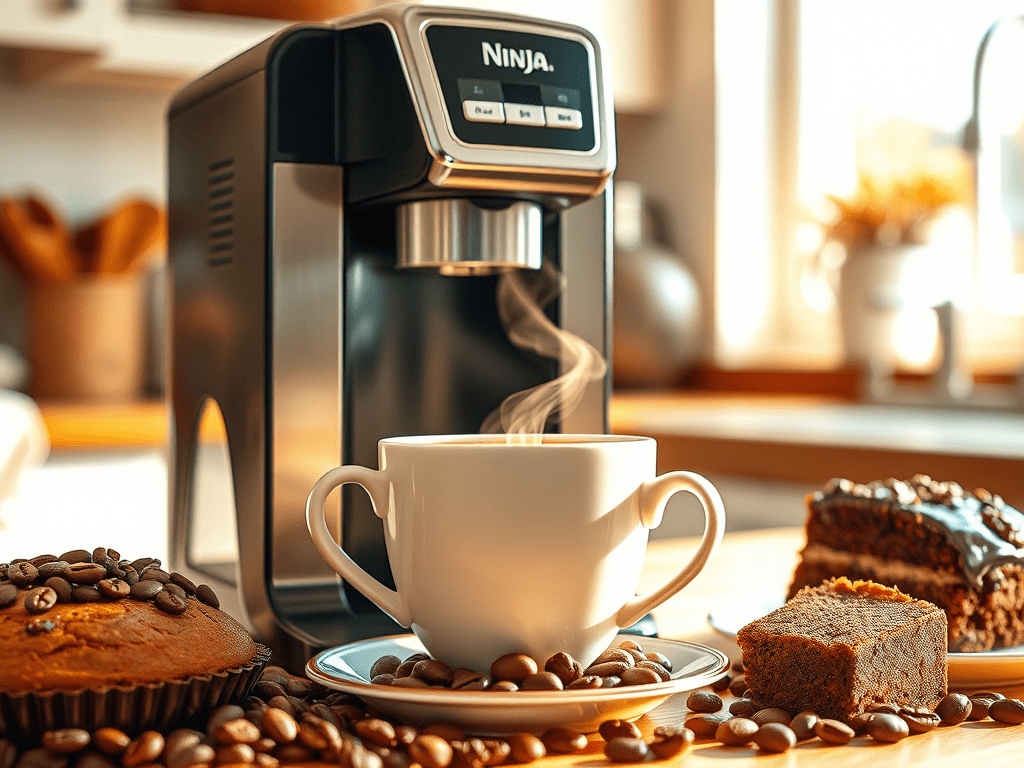
    This revelation smacked me in the face after a visit to my in-laws in Prescott Valley. There, in the quiet altitude of Arizona suburbia, I encountered coffee nirvana via a Ninja coffee maker—a machine that makes my Keurig taste like it was brewed through a gym sock. The Ninja’s brew was hotter, stronger, bolder. It had the depth of a Russian novel and the intensity of a Quentin Tarantino monologue. I immediately bought one for myself, eager to elevate my mornings into spiritual events. And elevate them I did—too far.

    Now my life has become tragically front-loaded. The coffee is too exquisite. It’s an overachiever. Nothing that follows—emails, errands, workouts, social obligations—can match its rich, scalding glory. My day peaks at 7:12 a.m., and everything after is a slow descent into lukewarm mediocrity. My existence has become a parade of yawns between two cups of perfection.

    This isn’t living. It’s a caffeine cult. And I’m the high priest.

    So what am I to do? Only one solution remains: renounce coffee. Banish the beans. Crawl out of this roasted rut and reinvent myself as a man unshackled from the tyranny of joy. I will become someone who experiences life itself—not just life plus Arabica.

    Or so I’d like to believe. Because deep down, I know I’ll just replace one ritual with another. Like that British expat novelist who lives in Tunisia, the one with the butler who brings him tea and a giant slab of cake every afternoon. That’ll be me. Earl Grey at four, carrot cake on Monday, German chocolate on Tuesday, and so on. I’ll swap a vice, rename it “ritual,” and carry on.

    Coffee may be gone, but the cravings will simply find new costumes.

  • The Gospel of Iron: How Weightlifting Became My Religion

    The Gospel of Iron: How Weightlifting Became My Religion

    In 1974, at the age of thirteen, I began weightlifting under the guidance of Lou Kruk, my junior high P.E. teacher and Junior Olympic weightlifting coach. Lou wasn’t just teaching kids to hoist iron—he was shaping futures. He handed me a barbell and lit the fuse. Soon, I was consuming protein powders and flipping through Strength & Health and Muscle Builder, the gospel according to Bob Hoffman and Joe Weider.

    From garage gyms to commercial ones, from clunky bench presses to rusted barbells, I trained. I flirted briefly with gimmicks—a Bullworker here, a Power Yoga phase there—but nothing kept me grounded like the iron. Eventually, I found kettlebells: odd, compact, brutally effective. And fifty-one years later, I’m still at it. The protein, the lifting—they’re no longer habits; they’re rituals.

    I don’t work out to chase aesthetics or to stave off decay. I train because not training feels like suffocating. My routine gives shape to my days, the way grammar gives shape to language. Without it, life would collapse into chaos. I marvel at those who drift through their hours without structure, snacking at whim, binge-watching shows, darting between texts and chores like pinballs. A life without scaffolding feels not just unsatisfying—it feels dangerous.

    Sometimes I wonder: what if I’d never met Lou Kruk? What if weightlifting had never entered my life? Would I have found some other sacred structure to cling to, or would I have been swallowed by drift? Yes, I play piano. Yes, I write. But I’m no professional writer unless you count me as a “professional navel-gazer.” These activities are merely sidelines—dilettante pursuits. It’s the iron that makes me whole.

    Maybe weightlifting saved my life. Maybe it still does. I could psychoanalyze this, wax poetic about addiction to ritual and the fear of entropy. Or I could walk into the garage, chalk my hands, and get lost in goblet squats and Turkish Get-Ups until the world makes sense again. I think you already know what I’m going to choose.

  • When It comes to Swim Briefs the Size of a Hotel Mint, Maybe Opt Out

    When It comes to Swim Briefs the Size of a Hotel Mint, Maybe Opt Out

    Today’s New York Times article, titled “Skimpy Men’s Swimming Briefs Are Making a Splash,” offers a solemn dispatch from the front lines of GLP-1 drugs, but I would guess that men—having exhausted every form of visible self-optimization—are now expressing their Ozempic-enabled slenderness via tiny, Lycra-clad declarations of status. We’re talking male bikinis, or what I like to call the ego sling.

    Apparently, if you’re dropping $18,000 a year to chemically suppress your appetite and shed your humanity one subcutaneous injection at a time, you deserve the privilege of looking like a Bond villain’s pool boy. I suppose this is the endgame: pay to waste away, then wrap what’s left in a luxury logoed banana peel.

    Luxury houses, never ones to miss a chance to monetize body dysmorphia, are now marketing these second-skin briefs not as mere swimwear, but as power statements. To wear them is to say: “I’ve defeated fat, joy, modesty, and comfort in one fell swoop.”

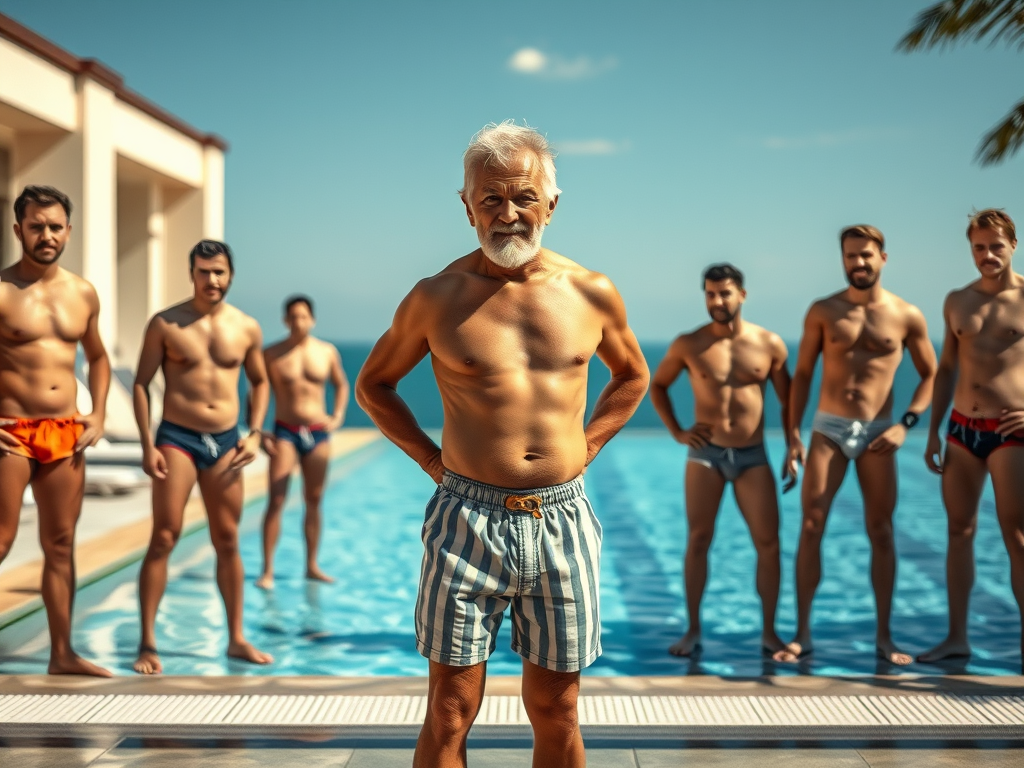
    I’m almost 64. My aspirations remain high—ideally, I’d like to look like a special-ops operator on vacation in Sardinia. But I know my place. I wear boxer-style swim trunks, the cloth of the pragmatic and the semi-dignified. They’re not exciting, but neither is seeing a sun-leathered septuagenarian adjust a spandex slingshot over a suspicious tan line.

    There’s a difference between being aspirational and being delusional. The former means striving for vitality, strength, and energy. The latter means stuffing yourself into a satirical undergarment and pretending you’re 28 with a sponsorship deal.

    To my fellow older men: sculpt your body like it’s your spiritual obligation—but when it comes to swim briefs the size of a hotel mint, maybe opt out. Not every part of youth is worth reliving. Some of it deserves to be left in the chlorine-stained past, right next to Axe body spray and Ed Hardy tank tops.