Tag: history

  • Ghosts at Pearl Harbor: A Morning of Reverence and Unease

    Ghosts at Pearl Harbor: A Morning of Reverence and Unease

    Yesterday we drove thirty minutes from the Embassy Suites in Waikīkī to the Pearl Harbor Memorial, where solemnity hangs in the air like thick humidity. The journey from beachfront ease to battlefield remembrance felt immediate and irreversible.

    Inside the visitor center’s theater, a National Park spokesperson stood behind a lectern—short, compact, dark-haired, with the confident charisma of someone who has delivered this message a thousand times, and still means every word.

    “You’re not on a must-see tour,” he said, with an edge of reprimand. “You’re visiting a mass military gravesite. This is more than a military tragedy—it’s familial. Thousands of children lost their parents that day. That grief doesn’t expire. It echoes. Please treat this place with respect—not as a TikTok backdrop.”

    I thanked him on the way to the dock. His words stripped away any residue of tourism and replaced it with reverence.

    We boarded a navy-operated boat alongside a quietly murmuring mix of global visitors—Germans, Japanese, mainland Americans, Australians. The boat was packed, but no one jostled or joked. You could feel the history pressing in from all directions.

    At the memorial itself, I tried to read the names etched into white marble. I tried to focus. But I was distracted—haunted—by two figures lingering at the edge of my vision.

    They were brothers, unmistakably. In their thirties, pale as winter ash, with dirty-blond hair and heads shaped like crude pyramids. Their eyes—almond-shaped, off-kilter—glinted with something sharp. Their teeth were crooked and small, the kind that suggest years of silent snarling. They were so wiry, so sunken, that even their frosted skinny jeans hung like surrender flags around their twiggy legs. Nicotine-stained, post-industrial, almost spectral.

    They spoke in rapid whispers—something Slavic, maybe Czech or Slovak—always leaning close, always glancing. They radiated the kind of anxious secrecy that suggested they were either up to something or simply never learned how not to seem that way.

    Everyone avoided them. Even when we were asked to scoot together on the boat to make room, the brothers sat untouched—shunned like they carried some forgotten plague. They were the kind of figures who seem pulled from the margins of a Dostoevsky novel or the casting list of a horror film.

    I can’t stop thinking about them. What drew them to Pearl Harbor? What shadow were they following? Their presence felt less like tourism and more like reconnaissance. In another life, in another medium, they could be characters in a Safdie brothers film—like John the heavy from Uncut Gems, who wasn’t an actor at all, just a force of nature discovered on the street.

    You can’t invent that kind of menace. You can only observe it, marvel at it, and wonder: what story did they bring to the memorial, and what story did they take away? And why in my heart do I see them less as tourists and more as criminals embarking on some kind of scheme? 

  • Love in the Time of Warm Beer

    Love in the Time of Warm Beer

    In 1984, while you were still in college, your grandfather—a card-carrying Marxist who frequented Russia and Cuba and claimed to have befriended Fidel Castro—decided to pay your way for a Soviet-sponsored “Sputnik Peace Tour.” He wanted you to see the Soviet Union through his rose-colored glasses. Maybe, just maybe, you’d come home singing the Soviet anthem with a crimson flag tattoo stretched across your 52-inch chest.

    You joined a group of about a dozen college students from across the country, a few professors from Arkansas and Tennessee, and a Soviet-appointed tour guide named Natasha. The plan was to travel mostly by train—from Moscow to Kyiv, Odessa, Novgorod, Leningrad, and back to Moscow.

    To prep you for the two-week summer adventure, your grandfather handed you a copy of Mike Davidow’s Cities Without Crisis: The Soviet Union Through the Eyes of an American. According to Davidow, the USSR was a society in bloom—happy children with “rose-colored cheeks” played in utopian cities unblemished by the chaos and violence of capitalist America.

    Out of gratitude, you gave the book a fair chance. But by the halfway point, the propaganda wore you down. It was a slog—repetitive, dull, and deaf to irony. You ditched Davidow for A Clockwork Orange, a dystopian acid bath from Anthony Burgess that, had your grandfather caught you reading it, would’ve gotten you labeled a reactionary.

    You carried that subversive novel on the Aeroflot flight from New York to Moscow. That’s when Jerry Gold—a fellow tourist and law student at Brown—noticed it and leaned in with a warning: “They’ll probably confiscate that at the airport,” he said. “They’ll mark you as a troublemaker and keep tags on you. Look over your shoulder. And if anyone offers you good money for your jeans, it’s probably KGB. Black-market trading will land you in prison.”

    You laughed nervously, but the real threat onboard was not the KGB—it was the in-flight food. Small foil-wrapped cheeses, off-color cold cuts, wilted lettuce, and soggy carrot slices—all served by demure flight attendants in drab uniforms. The Aeroflot menu was a direct contradiction to Davidow’s utopia. A lack of good food was a crisis, and pretending otherwise was its own crisis.

    Jerry, peeling the foil off his sad cheese triangle, folded his industrial-grade napkin and pocketed it. “This might be the only toilet paper you get on this trip,” he advised.

    “That’s disgusting.”

    “You ever used an Eastern European toilet?”

    You hadn’t.

    “A hole in the ground. Deep knee bend. Free Jack LaLanne workout. Things can be primitive.”

    You asked why, with all his doom-saying, he’d signed up.

    “College credit. Exotic street cred. How many Americans get to say they’ve been to the USSR?” He bit his cheese like it was a dare. “What about you?”

    “My grandfather wants to convert me. He’s a communist.”

    “So he sent you to paradise.” Jerry pinched a cold cut and gave it a good stare.

    “The food’s not a winning argument,” you said. “Neither is the lack of toilet paper.”

    Jerry smirked. “In the Soviet Union, if you see a line, you stand in it. It means something’s for sale.”

    A week later, you stood sweating in a Kyiv market watching babushkas queue for wrinkled, fly-covered chickens. You thought, Cities without crisis? Bullshit. Sixty-two miles away sat Chernobyl. Two years later, the reactor would blow. Cities without crisis indeed.

    But in 1984, as you encountered shortages, queues, and squat toilets, one detail stirred something close to admiration: classical music playing everywhere—train stations, parks, museums. Rachmaninoff, Shostakovich, Prokofiev streamed from speakers like sonic incense. Was it cultural enrichment or state-sponsored propaganda—a rebuke to Western vulgarity? You wanted to believe it was the former. Your grandfather would’ve insisted it was.

    No one confiscated your Burgess novel at the airport, but the following day, at the Moscow Zoo, you saw a silverback gorilla pounding his chest while a Rachmaninoff piano piece played. Then she appeared: a stunning woman in an elegant black dress, black hat, and pearls. She smiled and told you, “You look very Russian.”

    She wasn’t wrong. Your mother’s family hailed from Belarus and Poland. Even your fellow tourists said you looked native. She added, “Russian men are strong. You are weightlifter, yes?”

    You were. Before bodybuilding, you’d competed in Olympic weightlifting and idolized Vasily Alekseyev.

    “Russian women love strong men,” she purred.

    You blushed and beamed. Then Natasha grabbed your arm and marched you behind some bushes. She said the woman was probably KGB. A honey trap. Kompromat. Whatever the game was, Natasha wanted it shut down.

    But you couldn’t stop thinking about her. You had been awkward and monkish in college, more comfortable with piano, Nietzsche, and protein powder than dating. Now you felt unshackled, lusty, hungry for connection. Natasha had ruined your chance—or so you believed.

    The next morning, you found a grand piano in the lobby of the Moscow Olympic Hotel. You played a sad piece you’d composed. Your fellow tourists gathered, impressed. Truth was, you were a sloppy pianist who overcompensated with melodrama. But you had flair.

    At a nearby table, Soviet military officers drank warm beer. The Commander—tall, square-jawed, festooned in medals—watched you. Then you saw her again: the woman from the zoo, standing by the piano. Before you could approach her, the Commander locked eyes with her, leered, and sent her fleeing.

    He turned to you and mimicked your piano-playing with theatrical finger waggles. His men laughed. He invited you to his table, poured you warm beer, and barked, “Drink!”

    Three times he commanded. You complied. It was the price of being a charlatan. A dandy. A fraud. Russians trained their children in piano. You were a ham with no chops. He knew. They all knew.

    When you got back to your room and twisted the sink’s cold-water knob, the entire unit came off the wall and slashed your chest. You bled, cursed, and lifted your shirt the rest of the day to show off your injury as proof that Russia itself was trying to kill you.

    The Commander popped up again—on the train to Novgorod. He laughed when he saw you. Jerry speculated he was keeping tabs on you. CIA paranoia, or just Soviet protocol?

    You weren’t sure. But by the time you arrived in Novgorod, you had a fever. Natasha insisted on a doctor. Soon, a stunning, no-nonsense woman in a white coat examined you, declared it a cold, and ordered you to drop your pants for a Soviet “remedy.”

    The shot felt like hot tar. Your fellow tourists watched, delighted.

    At a barn lecture the next day, the Commander showed up again, reinforcing that you were always being watched. Jerry managed to prank him with a piece of hay, brushing his neck like a mosquito. The Commander slapped himself silly. Your group stifled laughter. You limped away, your ass sore, your ego tattered.

    Later, at a toy factory near the forest, you saw buses of children arriving. When you asked Natasha if they were starting a shift, she had them shooed away. One boy even got a boot to the backside. You had glimpsed a truth they didn’t want captured.

    That night, North Korean kids in uniforms got the best dinner service at the hotel. You and your group got leftovers, like stray dogs. You were done with Novgorod. You needed Leningrad.

    The next evening, you were sitting in a Leningrad discotheque, still nursing a sore ass, and talking to a cute Finnish girl named Tula. It turned out you had a lot in common. You were both in your early twenties. You both shared a passion for Russian literature and the music of Rachmaninoff. As you conversed under the glittering gold disco ball, the Bee Gees’ “Too Much Heaven” blared across the club. Through your mutual confessions, it became clear that neither of you had any real romantic experience. Tula was short, diminutive, bespectacled, and elfin, with short sandy blond hair. At one point, she said, “I will never marry. I have, what do you say in English? Melancholy. Yes, I have melancholy. You know this word?”

    “Yes, I was no stranger to melancholy,” you said.

    “I am so much like that,” she told you.

    “That explains your love of Rachmaninoff,” you said.

    She clasped her hands and almost became teary-eyed. “How I love Rachmaninoff. Just utter his name, and I will break down weeping.”

    You thought you were a depressive, but in the presence of Tula, you had the perkiness of Richard Simmons leading an aerobics class.

    She asked what you were doing in Russia. You explained that your grandfather was a card-carrying communist, a friend of Fidel Castro, and a supporter of the Soviet Union. He used a shortwave radio in his San Pedro house to communicate with Soviet sailors on nearby ships and submarines. He visited Cuba whenever he could, bringing medical supplies that were in demand. One of his friends, a Hollywood writer, had lived in exile in Nicaragua after being arrested in France by Interpol for driving a Peugeot station wagon filled with illegal weapons. Your grandfather had wanted you to fall in love with the Soviet Union and become a champion of its utopian vision, so he paid for you to go on a peace tour.

    Had you fallen in love with Russia the way your grandfather had hoped? Not really. So far, you had been approached at the Moscow Zoo by a striking woman in black and pearls—whom Natasha, your tour guide, claimed was a KGB agent trying to frame you for soliciting a prostitute. You had been washing your hands at the newly built Olympic Hotel in Moscow when the sink fell out of the wall and gashed your torso. You’d caught a fever in Novgorod, prompting a beautiful, stern-faced doctor to give you a shot in the ass. You’d been approached by young men on the subway asking if you wanted to sell your American jeans—just as Jerry Gold had warned—most likely a KGB setup for black-market entrapment. And everywhere you went—hotels, trains, restaurants—grim chamber music poured from loudspeakers, as if the Soviet authorities were saying, “Try not to be too happy while you’re here.”

    Tula listened to your long-winded tale for a couple of hours, wide-eyed, touching your shoulder. “I need to see you again,” she said.

    You agreed to meet the next day at the Peterhof Royal Palace by the Samson Fountain. The place was enormous—a garden the size of multiple football fields, full of gold statues and fountains shooting jets of water into the air. You and Tula sat on the hot concrete steps in the near-ninety-degree heat, flanked by golden naked statues posed around a spectacle known as the Grand Cascade. She wore a short white dress. Eventually, the heat got to you both, and you decided to get ice cream.

    On your way to the ice cream bar, a gypsy suddenly tried to hand you a baby—like a quarterback executing a handoff. Before the infant could land in your arms, a Russian police officer swooped in, seized the baby, returned it to the gypsy, and shouted at her. You thought for sure she’d be arrested, but the officer merely berated her. She shriveled under the scolding and slinked away with the child.

    You returned to Tula with the ice cream and recounted the bizarre scene.

    She nodded. “Things like that happen all the time here.”

    “But what was I supposed to do with the baby?”

    “Perhaps adopt it? Buy it? Save it from a life of misery? There is so much tragedy here.”

    “So I was supposed to fly back to the States with a baby? Go through customs and everything?”

    “I know. It’s crazy.”

    “I don’t think I could be a parent. I don’t have the hardwiring for it.”

    “Me either. I’m too sad to be a parent. Sadness is a full-time job that leaves me with little energy for much else.”

    She finished her ice cream and smiled at you, then said, “You and I are like two kindred spirits meeting each other in this strange world.”

    “It’s hotter than hell out here,” you said.

    “So will you marry someday?”

    You shrugged. “I doubt anyone will take me.”

    “Don’t be so hard on yourself. If I were the marrying type, I would come to America and spend my life with you. We could live in California and be sad together. Wouldn’t that be lovely?”

    And oddly, it did sound lovely—living in shared sadness with Tula, marinating in Rachmaninoff’s Second Symphony, discussing the existential torment of Tolstoy and Dostoyevsky. What other kind of life was there?

    She stood up and said she had to catch her plane back to Finland. She gave you a chaste kiss on the cheek.

    “I really hope you find happiness. You are such an outstanding person.”

    “Outstanding?” you repeated, unable to hide your skepticism. The word struck you as hollow—like describing a house beside train tracks as “charming.” You echoed the adjective with a trace of sarcasm and said goodbye. You never saw her again, but you never forgot the vanilla ice cream—it remained the best you’d ever tasted.

    Nine months later, you were back in your Bay Area routine of working out, playing piano, and slogging through college assignments. You were living with your mother, standing beside the loquat tree in your front yard, holding a letter with a Finnish return address. Mexican parrots shrieked from a neighbor’s dogwood tree. It was a warm May. You walked under the porch light and opened the envelope.

    Dear Jeff,
    So much has happened since I met you. I took your recommendation and read A Confederacy of Dunces. I laughed my ass off, but the book was so sad. I keep the book on my shelf and always think of you when I see it. You won’t believe this. I’m getting married! I have you to thank for this. I never thought I was the marrying type, but those two days I spent with you in Russia changed me. When I got back to Finland, I was restless, I thought about you constantly, and even at one time I had this mad idea that I should arrange to visit you, but a high school friend Oliver came into my life, and we began seeing each other, not as friends but as lovers. I have you to thank for this. Meeting you awakened a part of my soul that I had never known before. I hope that you don’t forsake love, as I had planned to do, that you too will find someone special in your life. You deserve it. You are an amazing man!
    Love Always,
    Tula

    You stood there, staring at the letter, listening to the parrots cackling in the distance.

    So that was your role—you were the guy who helped a sweet-souled depressive fall in love. Not with you. You weren’t the recipient of her love. You were the lighter fluid, the spark, the kindling that got her fire started. You’d made a difference.

    You went inside, sat at your ebony Yamaha upright, and played something sad. You tried to imagine Tula as your audience, but her image was pushed out by the Russian Commander. You could see him sneering.

    “You are a charlatan,” he said in your mind. “An American charlatan in Russia. You must always be put in your place. You must drink warm beer until you puke your guts out. Only then can you redeem your vain self.”

    Over the years, the Commander had become a constant voice in your head—a reminder that you were pretentious, fraudulent, self-regarding. And maybe that wasn’t a bad thing. Maybe you needed him. He was the unexpected gift of a trip designed to make you a Communist but instead taught you to keep your inner ham in check.

    Because an American charlatan in Russia was still a charlatan everywhere else.

  • The Cult of Cool: How Fashion Brands Turned Insecurity Into Gold

    The Cult of Cool: How Fashion Brands Turned Insecurity Into Gold

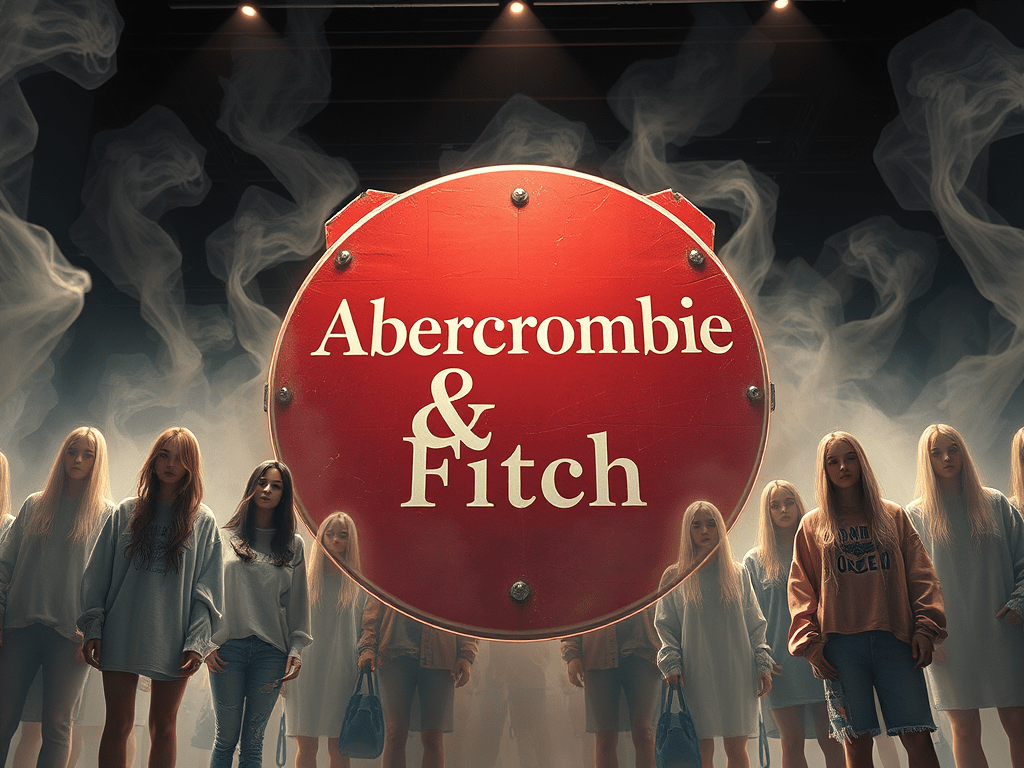
    Three documentaries—White Hot: The Rise & Fall of Abercrombie & Fitch, Brandy Hellville and the Cult of Fast Fashion, and Trainwreck: The Cult of American Apparel—reveal a sobering truth: some of the most iconic youth fashion brands haven’t just sold clothes; they’ve trafficked in identity, manipulated insecurity, and run full-scale psychological cons dressed up as marketing.

    These brands built empires on seductive illusions—creating tight-knit aspirational worlds where beauty, desirability, and social status were pre-packaged into a logo and sold at a premium. The catch? Entry required blind conformity to a narrow aesthetic, behavioral uniformity, and uncritical loyalty. This wasn’t fashion—it was Groupthink in skinny jeans. And behind it all pulsed the emotional engine of modern consumer culture: FOMO, the fear of being left out, unseen, unchosen.

    White Hot, reviewed by Ben Kenigsberg, focuses on Abercrombie’s marketing of “aspirational frattiness”—a euphemism for white exclusivity wrapped in khaki shorts and cologne. It was a smug, muscular nostalgia trip to a sanitized, all-white upper-class fantasy where thinness, wealth, and preppy arrogance were the unspoken requirements for membership.

    At the helm was CEO Mike Jeffries, a marketing savant whose obsession with aesthetic purity bordered on cultic. Under his reign, the company embraced racist T-shirts, discriminatory hiring practices, and a toxic definition of “cool.” His executive team mirrored his vision so fully they might as well have been in a bunker, smiling and nodding as the walls caught fire. Groupthink didn’t just enable the brand’s rise—it ensured its blindness to its own downfall.

    Why revisit Abercrombie now? Because its story is a pre-Instagram case study in the mechanics of cult marketing: how insecurity is mined, branded, and sold back to consumers at 400% markup. My students in the 90s already saw through the ruse—complaining the shirts fell apart in the armpits within a week. What mattered wasn’t the clothing but the illusion of status sewn into every threadbare seam.

    Ultimately, White Hot offers a rare glimpse of justice: a cool brand undone by its own arrogance, its aesthetic no longer aspirational but pitiful. The Abercrombie collapse isn’t just a business story—it’s a warning. When branding becomes religion and coolness becomes a weapon, consumers become disciples in a theology of self-erasure.

  • Muhammad Ali and the Rent We Pay for Heaven

    Muhammad Ali and the Rent We Pay for Heaven

    During the chaos of finals week—when my inbox floods with apologetic, last-ditch emails from students begging for an extended deadline—I found solace in something far removed from academia: Antoine Fuqua’s What’s My Name: Muhammad Ali. It’s a two-part documentary, but it feels more like a sermon and a love letter rolled into one. Like Fuqua, I’ve always had a boundless reverence for Ali—the most charismatic athlete to ever live—and watching him slowly succumb to Parkinson’s at just forty-two broke something in me.

    There’s a word for the dark thrill we sometimes feel when others suffer: schadenfreude. But what’s the opposite of that word–the anguish we feel when our heroes fall? When they suffer with such dignity and pride that they won’t accept our sympathy, even though they deserve every ounce of it? We don’t just mourn them—we mourn the version of ourselves that believed they were untouchable. Seeing Ali’s mind remain sharp, his wit flickering through that neurological prison, was unbearable and beautiful all at once.

    In his prime, Ali wasn’t just a boxer—he was a superhero, a shapeshifter, a one-man Broadway show in a heavyweight’s body. He was a sharp observer of American racism, yet never a scold. He wielded humor like a blade—cutting through injustice with charm and rhythm. His facial expressions alone could dismantle a room. And above all, he had soul. He was a poet, an actor, a preacher, and a provocateur.

    His conversion to Islam was not cosmetic. It reshaped him. He carried a sense of divine accountability, speaking of God not as abstraction but as a constant, watchful presence. He lived with the weight of eternity in mind, casually discussing the soul as if he’d already made peace with his fate. One of the final moments in the documentary captures this perfectly: Ali scribbles a note to a fan asking for an autograph—“Service to others is the rent we pay for our room in HEAVEN.” The line made me stop in my tracks and pray that I could live such a life rather than momentarily be inspired by it or tell others about it, because I know from experience that “talk is cheap.”

    The film doesn’t critique Ali—and truthfully, I didn’t want it to. I didn’t want the version of him that stayed too long in the ring. I didn’t want to watch his brilliance dimmed by punches that should’ve stopped years earlier. I found myself irrationally angry with him. I wanted him to become an actor, a comedian, a talk show philosopher—anything but a late-career boxer whose brilliance was traded for one more round. But of course, I’m lying to myself.

    We place athletes like Ali in the realm of myth. They are our Achilles, our Hercules. His greatness was inseparable from the ring. The same inner fire that made him a champion refused to let him leave the stage quietly. That fire gave us the epic—and, inevitably, the tragedy. I only wish that the spiritual clarity that shaped his faith could have overruled the gladiator in him. But maybe that’s the final paradox of Ali: he lived as both prophet and warrior, and the cost of greatness was always going to be high.

  • Truth or Trick Play? Storytelling, Sanity, and Self-Mythology in Mike Tyson: Undisputed Truth and Charlie Hustle (College Essay Prompt)

    Truth or Trick Play? Storytelling, Sanity, and Self-Mythology in Mike Tyson: Undisputed Truth and Charlie Hustle (College Essay Prompt)

    In an era where image can be engineered and confession can be weaponized, two notorious sports figures—Mike Tyson and Pete Rose—offer radically different approaches to self-narration. Both were cultural titans who became cautionary tales. Both became pariahs in the eyes of the institutions that once celebrated them. And both—decades later—attempted to reclaim their stories in front of the camera. But what emerges in Mike Tyson: Undisputed Truth and Charlie Hustle: & the Matter of Pete Rose is not just a comparison of reputations; it’s a clash of narrative strategies, a psychological autopsy of fame, and a meditation on how the public consumes redemption, performance, and illusion.

    Tyson’s Undisputed Truth is a one-man show where he delivers a raw, often disturbing monologue infused with comedy, trauma, confession, and defiance. It is part therapy session, part theater, and part media rebrand. In contrast, Rose’s portrayal in Charlie Hustle is built on decades of resistance to public apology—anchored in charm, denial, and a lingering fantasy that he alone controls the narrative of his life. Where Tyson leans into pain and absurdity, Rose leans into myth and markets nostalgia.

    This essay asks you to compare and contrast how these two men use storytelling to carve out a space of sanity and coherence in a world of media distortion, scandal, and moral judgment. The assignment also challenges you to explore not just how these men present themselves—but how we, the audience, respond. What does the public hunger for? Clean redemption arcs or messy truth? Fallen heroes who confess, or ones who remain defiant?


    Your essay should address the following key tensions:

    1. Storytelling as a tool for reclaiming identity

    How does each documentary attempt to make sense of a chaotic life? In what ways does storytelling create clarity, coherence, or at least a coping mechanism?

    2. Confession vs. Self-Mythology

    Mike Tyson uses confession—vulgar, honest, sometimes performative—to humanize himself. Pete Rose, by contrast, clings to a self-mythologizing script, resisting vulnerability. What are the psychological and rhetorical consequences of each approach?

    3. Managing public and personal perception

    To what extent are these documentaries efforts to manage not just what the public thinks—but how the subject thinks about himself? Is the audience being let into a sacred, unfiltered truth—or another polished, marketable persona?

    4. Audience complicity

    Why do we crave redemption stories? Are we looking for truth—or the performance of truth? How does our cultural addiction to authenticity (or its simulation) shape how these figures present themselves? Are we, as an audience, demanding an impossible paradox: icons who are real?

    5. Cultural expectations and iconography

    Both Tyson and Rose were lionized and then demonized. But is our relationship with their downfall really about justice—or spectacle? How does American culture cycle through its icons? And what does it mean that these men are now trying to write their own endings?


    Requirements:

    • 1,700 words
    • Comparative structure: you must analyze both documentaries with balanced insight
    • Engage in close reading of scenes, quotes, tone, and structure from both films
    • Present a clear thesis and develop it through specific evidence and thoughtful reasoning
    • Address at least one counterargument: for instance, what if Tyson’s confessions are also just theater? What if Rose’s refusal to confess is, in its own way, honest?

    Five Sample Thesis Statements (with Mapping Components)

    1. While both Mike Tyson and Pete Rose attempt to reclaim their stories from the wreckage of fame, Tyson succeeds through painful confession and theatrical vulnerability, while Rose fails by clinging to self-mythology and denial—revealing how authenticity, when filtered through media, is less about truth than about the performance of control.
    2. Undisputed Truth and Charlie Hustle reveal a striking contrast in narrative self-management: Tyson embraces chaos through emotional honesty and humor, while Rose constructs a sanitized legacy rooted in nostalgia and evasion, exposing how audiences both demand and sabotage authenticity in their fallen icons.
    3. Tyson’s raw confessional style and Rose’s curated nostalgia campaign expose two opposing strategies of narrative control, but both are shaped—and warped—by an audience that demands vulnerability while punishing imperfection, consuming not truth but the illusion of redemption.
    4. Though both documentaries attempt to create a space of inner clarity against a backdrop of public spectacle, Tyson’s open confrontation with his demons reveals the healing potential of narrative, while Rose’s mythmaking underscores the psychological toll of refusing vulnerability in a culture that fetishizes both punishment and repentance.
    5. In exploring Tyson’s emotionally chaotic confessional and Rose’s carefully guarded image-building, these documentaries show that the battle between public perception and private truth is not fought on the field or in the ring, but in the slippery terrain of storytelling—where authenticity is always suspect and the audience is never innocent.
  • The Abbot’s Misfits

    The Abbot’s Misfits

    I arrived at the Palos Verdes trails just before ten, and the heat was already doing its best impression of a convection oven. The mountainous trails, baking under the relentless sun, were separated from the street by a chain-link fence that looked like it had given up on life years ago. Inside the confines of this makeshift pen, several dozen goats were having the time of their lives munching on dry grass as if it were the most gourmet hay in existence. Their faces were a mix of innocent curiosity and that absurd kind of adorableness that makes you momentarily consider swearing off lamb chops forever. I made a mental note to “consider veganism” again, a notion I promptly squashed with vivid memories of my O-positive blood rejoicing every time I indulged in a perfectly seared ribeye. Hello, goats—you’re safe because it looks like I’ll stick with beef.

    By the goats, a white tent had been pitched like some sort of mirage, and under it, a circle of chairs was arranged with the precision of a cult meeting—or worse, a corporate team-building exercise. The man who had the audacity to call himself the Abbot greeted me with a grin that suggested we were about to embark on a day of carefree yachting rather than whatever bizarre ritual he had planned. Forget the flowing robes and monastic aura—I was greeted by a fitness model straight out of an overenthusiastic health magazine. Neatly pressed cargo shorts hugged his cycler’s thighs like they had been tailored for the occasion, and his olive T-shirt clung to a body sculpted by what could only be an unholy alliance with a CrossFit gym. 

    A cross-body sling bag was slung over one of his thin yet annoyingly muscular arms, which were covered in veins that seemed to be competing in an under-skin relay race. His jawline could have cut glass, and his neatly sculpted silver hair made him look like he’d stepped out of an L.L.Bean catalog. But it was his eyes that really got me—blazing blue orbs that looked like they belonged on the figurehead of a Viking ship, ready to plunder and pillage. 

    “Graham, come join us,” he said with the kind of enthusiasm that suggested we were minutes away from sipping mimosas on a luxury yacht. “We are just moments away from the interrogation.” The way he said “interrogation” made it sound like a delightful little jaunt instead of, you know, something that involved possible torture or at least a really awkward group discussion.

    The most striking thing about the Abbot wasn’t his absurdly chiseled jawline or his militant posture; it was the overwhelming stench of lavender and rose water that assaulted my senses the moment I got within a hundred yards of him. This man hadn’t just splashed himself with these fragrances—he’d practically marinated in them. It was as if he’d decided to pickle himself in a floral potpourri so potent that it probably had bees tailing him for miles. I half-expected to find petals stuck to his skin.

    As I reluctantly made my way under the tent, I was greeted by the sight of six people slumped in those classic, soul-crushing folding chairs that practically shriek, “We’re only here for the free food.” These weren’t just any ordinary folks. No, these were the future friends, foes, and backstabbers who would weave themselves into the disaster that would soon be my life—though at that moment, they all just looked like they were wondering when the punchline of this bizarre setup was going to drop. Spoiler: It never did.

    Behind them, a table stood like a beacon of false hope. A giant pitcher of cucumber water glistened in the sunlight, promising hydration that would do nothing to wash away the impending madness. But what truly caught my eye was the stack of cakes beside it. They looked innocent enough, these little golden blocks, but I would soon discover that they were the Abbot’s specialty—cornbread cakes made with applesauce, honey, and some vanilla-flavored soy protein powder that tasted suspiciously delicious. These cakes weren’t just a snack; they were a trap, a gateway drug that would soon have me spiraling into a carb-induced dependency I hadn’t seen coming. But let’s not jump ahead—there’s plenty of time to explore how these seemingly harmless cakes would drag me into the Abbot’s world of sweet-smelling insanity.

    For now, let’s just say that in that moment, my biggest mistake wasn’t walking into the tent—it was deciding to stay. But hey, who could resist free “light refreshments”?

    With one arm draped around my back like a used car salesman about to seal a shady deal, the Abbot steered me toward the motley crew assembled under the tent. He flashed a benevolent smile, the kind that makes you wonder if he’s about to offer you enlightenment or swindle you into buying a timeshare in Cancun. “My friends,” he announced with all the pomp of a second-rate cult leader, “Graham has graced us with his presence. He is a college writing instructor with many gifts, though I’ll let him elaborate on those special talents later.” His smile suggested that whatever “gifts” I possessed were about to be squeezed out of me like juice from a lemon.

    He pointed at each member of the ragtag group, starting with Abigail, a woman in her early fifties who looked like she’d been carved out of a block of pale, pasty clay by a very angry sculptor. Her squat frame and monkish haircut didn’t do her any favors, but she smiled with the kind of pride usually reserved for people who’ve just completed their first marathon, despite the fact that she hailed from Gorman—a town so small it might as well not exist—where she’d spent her youth dodging aggressive chickens on her parents’ farm. Abigail proudly raised three fingers, showcasing them as if they were battle scars, and regaled us with tales of surviving on a teeth-rotting diet of PayDay bars and orange Fanta until she discovered The Abbot’s life-altering cornbread cakes. You’d think she’d found the Holy Grail, but instead, it was just some glorified baked goods.

    Next up was Larry, a man in his late forties who had apparently modeled his look on a 1970s mafia reject. His long, slicked-back hair and tinted sunglasses made him look like he was auditioning for the role of “Skeevy Casino Manager” in an off-off-Broadway production. Dressed in black jeans and a too-tight white T-shirt that clung to his muscular upper body like a bad decision, he had the kind of physique that screamed “I skipped leg day,” with spindly legs that looked like they’d snap under the weight of his overly pumped chest. Larry had once been a professional gambler until every casino in the area wisely decided he was bad for business. Now, he managed an upscale Mexican restaurant at Del Amo Mall—a stone’s throw from my house—where he spent his days chain-drinking Red Bull and dreaming of the good old days. “I was probably killing myself drinking all those chemicals and caffeine,” he said, “but thanks to the Abbot and his cornbread cakes, I’m learning the true path.” 

    Larry’s brother Stinky, who looked like he’d just crawled out of the primordial ooze, sat next to him. With shaggy blond hair, deep pockmarks, and a forehead that could have been used as a Neanderthal fossil exhibit, Stinky was the kind of guy who seemed to wear his heartbreak on his sleeve—and his face. In his late thirties and still stuck in a dead-end job at a Costco warehouse, he was the embodiment of a bad country song. His high school sweetheart had skipped town with his engagement ring and now worked as a “hostess” at various questionable establishments in Miami. “Self-pity is my addiction,” he confessed, as if he’d just admitted to a crippling heroin habit. But don’t worry—the Abbot was going to give him a “second shot at life,” presumably with a side of cornbread cakes.

    Maurice shuffled forward, a short, wiry guy with a dark complexion. Looking much younger than his age of forty, his kid’s face was set in a permanent grimace, like he’d just stepped in something nasty and couldn’t shake the stench. He was dressed with the precision of a man who either had nowhere else to go or was meticulously planning his escape. His crisp, white-collared sports shirt and navy blue shorts looked fresh out of the package as if he had bought them specifically for this occasion, only to instantly regret his decision. The sandals on his feet were so spotless they might as well have come with a warning label: “For display purposes only.”

    Maurice radiated the enthusiasm of someone attending a surprise tax audit. If this were a beach day, he’d be the guy hunched under a too-small umbrella, clutching a lukewarm beer like it was his only friend, and glaring daggers at the carefree seagulls circling above, as if they were personally responsible for all the miseries in his life. Every inch of him screamed that he’d rather be anywhere but here, and the irony was that he looked like he was dressed for a casual day out, just not one that involved other human beings.

    To Maurice, this gathering was less of a spiritual intervention and more of a cruel and unusual punishment. His body language said, “I’m here under duress,” and his eyes, narrowed to slits, darted around the group as if calculating the quickest exit. It was clear that Maurice wasn’t here to bare his soul—he was here to endure the ordeal with as much stoic misery as possible. With a degree in computer science and the personality of a dial-up modem, Maurice was the poster child for disillusionment. Recently divorced and demoted from homeowner to condo dweller in Harbor City, he shared this nugget of personal failure with all the enthusiasm of someone recapping their latest colonoscopy. His intro was short, sour, and dripping with enough bitterness to make a lemon blush. You could tell Maurice wasn’t here to find inner peace—he was here because the thought of a one-on-one with the Abbot made him more uncomfortable than the idea of being stuck in a dentist’s chair.

    Sitting next to Maurice was Jason, the group’s designated eye candy. With his languid gray eyes, full lips, and high cheekbones, Jason looked like he’d just stepped off the set of a Calvin Klein ad. But beneath the chiseled exterior was a life insurance salesman and mixed martial arts fighter who’d spent his formative years studying jiu-jitsu and muay thai to protect his siblings from their alcoholic father. His good looks and business success were a smokescreen for the social anxieties and commitment issues that plagued him. “I’m here to find answers,” he said, his voice dripping with the kind of melodrama usually reserved for soap operas.

    Finally, there was Howard Burn, the Abbot’s right-hand man, who looked like he’d been assembled from spare parts left over from a mad scientist’s experiment. Tall and lanky with a head of perfectly coiffed black hair, Howard had the angular, contemplative face of someone who took himself way too seriously. He clutched a notebook in his lap, furiously scribbling notes like a star student at Cult Leader 101. When he introduced himself, it was with all the joy of a man who’d just been informed his house was on fire. “It has been my great pleasure to work for the Abbot for the last three years,” he said, his tone suggesting that “pleasure” was a foreign concept to him. Before joining the Abbot’s merry band of misfits, Howard’s life had been a blur, a meaningless existence spent wandering from one menial job to the next. But the Abbot had changed all that, and for the first time, Howard felt like he had purpose—presumably one that involved handing out a lot of cornbread cakes.

    The Abbot beamed at Howard like a proud father, the kind who gives his kid a pat on the back for finally tying his own shoes. “Well said, my son,” his smile seemed to convey as if the entire room was one big happy family. 

    But then the interrogation began, and any illusion of a cozy kumbaya moment evaporated faster than a politician’s promise after election day.

    The Abbot, who’d suddenly transformed from a benevolent guru into a reality TV judge on a power trip, fixed his steely gaze on Abigail. “We’ll start with you,” he declared, like a dentist about to extract a tooth without anesthesia. “Small-town girl, former fast-food overlord, now a landscaper, and you’re still spiraling from that breakup. Jennifer, wasn’t it? She moved in with someone else—someone you actually considered a friend—and now you’re wallowing in betrayal like a sad country song. All this wallowing has blinded you from your gifts.”

    Abigail blinked, probably wishing she could shrink into her cargo shorts and disappear. “I don’t have any gifts that I know of,” she muttered, clearly hoping that modesty might serve as an escape hatch.

    The Abbot’s smile was as sharp as a guillotine. “Oh, but there’s the matter of your left pinkie, now a charming little hook, thanks to your early attempts at butchering a pumpkin with a serrated knife. What were you, eight years old? Trying to carve a jack-o’-lantern or auditioning for a role in Sweeney Todd?”

    Abigail nodded meekly.

    “Show them,” the Abbot commanded as if this was the grand unveiling of some macabre art piece.

    Obediently, Abigail held out her hand, and there it was: her pinkie, eternally frozen in a grotesque hook. The finger, sliced at the joint below the knuckle, was now more calcified appendage than human flesh—a monument to bad luck and worse kitchen skills.

    “Yes, the hook,” the Abbot intoned, as if he were introducing the world’s eighth wonder. “A marvel, truly. It saved your life during that robbery in Barstow, blinded your would-be thief like a weaponized claw, and has been a godsend for lugging groceries into the house. You’ve even used it to hook tools while landscaping, but you’ve been missing out on its real potential.”

    Abigail stared at the Abbot like he’d just told her she could time travel with her toenails.

    “What you don’t realize,” he continued, his voice dripping with condescension, “is that your little pinkie isn’t just a handy-dandy grocery hook. It’s a supernatural antenna. Whenever you’re near something or someone steeped in dark secrets or supernatural energy, your pinkie will tingle, twitch, or maybe even do the macarena—whatever it does to warn you that you’re in the presence of danger. You’ve got a sixth sense attached to your hand, my dear.”

    The Abbot then motioned for her to stand up. “Go on, stand next to Maurice and wave your pinkie in front of him like you’re dowsing for water. But don’t actually touch him; just let your psychic appendage do its thing.”

    Abigail, clearly wondering what sort of circus act she’d signed up for, obliged. As she moved her pinkie around Maurice’s head, she wrinkled her nose. “There’s something off about his head,” she announced, as Maurice stared ahead with the same enthusiasm as a DMV clerk.

    “Something wrong? With Maurice’s head?” the Abbot said, feigning shock like a bad soap opera actor. “You don’t say! But you’re right. His head is literally messed up.”

    Maurice, looking like he’d just been told his dog died, barely reacted.

    The Abbot turned to Maurice, his tone shifting to that of a doctor delivering a grim prognosis. “Maurice, my boy, you suffer from migraines, but not just any migraines. No, your headaches are like the universe’s cruel joke—they’re precursors to natural disasters, the kind of catastrophes people write disaster movies about. They’re called Black Swan Events. You’ve got the power to sense them before they happen, but until you harness this gift, you’re just a walking, talking barometer of doom. Learn to control it, and you might just be able to save us from the next apocalypse—or at least predict when we’ll need to evacuate.”

    Maurice’s expression remained blank, perhaps pondering whether he’d wandered into a cult or just the world’s weirdest self-help group.

    Abigail, meanwhile, looked at her pinkie like it was a divining rod, realizing that in this absurd reality, even her freakish hook might have its own twisted kind of magic.

    The Abbot, with an air of condescending benevolence, motioned to Abigail to walk toward Stinky. She raised her pinkie—now more hook than finger—over the simian-faced warehouse worker, who stared at it like it was a deranged bumblebee. 

    “His nose,” she declared with the gravitas of someone revealing the cure for cancer. “He can smell things.”

    “Very good,” the Abbot crooned as if speaking to a particularly dim-witted child.

    “But not normal things,” she added, turning to the Abbot for reassurance. “He can smell evil!”

    The Abbot nodded, his eyes twinkling with mock seriousness.

    “He can smell it in people. He knows when they’re lying.”

    “And what does it smell like, pray tell?” The Abbot asked, leaning in as if the answer might be the meaning of life.

    “Ammonia,” she said, wrinkling her nose.

    Stinky chimed in, “I smell ammonia all the time.”

    “Of course, you do,” the Abbot said, as if this were the most natural thing in the world.

    Stinky turned to his brother Larry with a smirk. “When you said you couldn’t loan me that money, I smelled ammonia. You were lying to me!”

    The Abbot, now in full guru mode, said, “Your nose, Stinky, is a lie detector.”

    Stinky’s face twisted into a look of bewildered relief. “All my life, I thought I had some kind of medical condition. When I was a kid, they ran all these tests because I kept saying everything smelled like cleaning supplies.”

    “Of course they found nothing,” the Abbot said, taking a languid sip of cucumber water as if he were above such pedestrian concerns.

    “But if the world is full of evil, why don’t I smell ammonia all the time?” Stinky asked, clearly not understanding the subtlety of his “gift.”

    “Evil, my dear boy, comes in shades,” the Abbot said, like he was explaining quantum physics to a toddler. “You need to fine-tune your nose to detect varying levels of malevolence.”

    He then turned his attention to Larry, who looked like he’d rather be anywhere but here. The Abbot motioned for Abigail to wave her pinkie hook over him, and she did so with all the enthusiasm of someone stirring a pot of gruel. She looked baffled. “I’m not getting anything… wait, there’s a pulse, like a two-four beat.”

    Larry grinned, “That’s ‘Float On’ by The Floaters. I listen to it whenever I’m anxious. Helps me chill.”

    The Abbot’s face soured at Larry as if his disciple’s slow thinking were testing his patience. “You don’t feel pain, do you?”

    “Not really,” Larry said, shrugging. “Last year, I had a root canal. Brought my earbuds and played ‘Float On’ on repeat, and it was like I wasn’t even in the chair.”

    The Abbot sighed, clearly disappointed. “You rely too much on your phone. You must learn to summon the song within your mind. Only then can you truly suppress pain.”

    Larry’s face twisted in confusion. “But isn’t pain a good thing? Like, a warning system?”

    The Abbot’s patience wore thin. “Most humans crumble at the slightest discomfort. Your power allows you to transcend pain, to unlock your full potential. Or would you rather remain a common oaf?”

    Larry still didn’t look convinced, but the Abbot wasn’t one to be deterred by something as trivial as logic. His gaze slid over to Jason, a guy who looked vaguely familiar, like one of those retail cashiers you always see but never remember where. Jason was already fidgeting like a kid caught sneaking candy, his nerves practically screaming “Get me out of here.” 

    “Now, let’s see what our friend Abigail can sense about you,” the Abbot said, leaning in with the kind of enthusiasm usually reserved for people about to tell you you’re in for the deal of a lifetime—if you just hand over your credit card first.

    Abigail, that beacon of confidence, hovered her pinkie in the air like she was trying to tune into Jason’s internal radio. Finally, her pinkie landed somewhere near his waist. “Your back… it’s messed up,” she declared, like she was diagnosing a flat tire.

    Jason winced. “Chronic pain from a car accident two years ago. Acupuncture helps, but it’s still pretty bad.”

    The Abbot sneered like Jason had just admitted to preferring instant coffee. “Acupuncture? Weakness incarnate. Your pain is a gift, Jason. Embrace it, and you’ll become five times stronger than the strongest man alive. Ignore it, and you’ll remain the pathetic creature you are.”

    Jason blinked, trying to process the avalanche of nonsense the Abbot had just unloaded. “So, my back pain is… super strength?” He looked like he was about to ask if this whole thing was an elaborate prank.

    “Precisely,” the Abbot said, with the smug satisfaction of a man who just solved the world’s energy crisis by suggesting we all power our homes with good intentions. “But only if you stop running from it.”

    I realized, with a sudden jolt, that Jason wasn’t just vaguely familiar—I knew him. But from where? Fidgeting in my seat, I blurted out, “Jason, do we know each other?”

    Before Jason could answer, the Abbot’s gaze swung toward me with all the subtlety of a wrecking ball. His nostrils flared like a bull about to charge, and I was suddenly sure he could smell my fear. “You’ll get your turn, but do not speak out of place,” he snapped, like a third-grade teacher reprimanding a kid for talking during recess.

    He turned back to Abigail, clearly eager to get back to his performance of “Mystical Leader Extraordinaire.” “See what you can find out about Graham,” he instructed, as though I were next in line at a spiritual deli counter.

    Abigail moved her magical pinkie over me, her face twisting in confusion like she was trying to figure out a Sudoku puzzle with half the numbers missing. “I’m getting… flapping. Like wings. Bats? No… crows! Huge crows!” She said this with the conviction of someone announcing the discovery of a new planet.

    The Abbot’s eyes gleamed like a kid who just found the last Golden Ticket. “Yes, Graham has an affinity for crows—Gravefeathers, to be exact. They bring him messages from the other side, but he must learn to listen.”

    I raised an eyebrow, now officially in *what the hell* territory. “Gravefeathers? Is this some kind of joke?”

    “Far from it,” the Abbot said with a smile so condescending it could curdle milk. “The Gravefeathers have chosen you. Your task is to decode their messages, to fulfill our mission.”

    “And what exactly is this mission?” I asked, now thoroughly regretting every life choice that had led me to this tent.

    “All in good time,” the Abbot said, his tone so patronizing it was a wonder he didn’t pat me on the head. “For now, you must prepare.”

    As if on cue, Howard Burn—looking like a villainous butler from a B-movie—emerged from the shadows carrying trays covered in tinfoil, like a waiter in some dystopian restaurant. “As a token of your commitment,” the Abbot intoned, “I offer you each a cornbread cake.”

    My skepticism reached new heights. “What’s the catch?” I asked, eyeing the tray like it might contain some kind of mind-control device. “Is this cake magic?”

    The Abbot’s face twisted into that all-too-familiar condescending smirk. “Magic? No. But consuming it is a test of trust, a way to align yourselves with the universe’s energies. And it tastes pretty damn good, too.”

    Howard handed me a slice, and against my better judgment, I took a bite. To my horror, it was delicious. The cake was a golden, moist masterpiece, with a caramelized top that hinted at hidden sweetness. The flavors of honey and vanilla danced with almond and cornmeal, while a subtle cinnamon undertone lingered just long enough to make me question all my life choices up to this point.

    I devoured the cake like a starving man, only to find myself choking on my own gluttony. The Abbot, ever the gracious host, handed me a glass of cucumber water, which I gulped down as if my life depended on it. 

    “I could eat this for breakfast, lunch, and dinner,” I mumbled, wiping crumbs from my face like the classy individual I am.

    Out of the corner of my eye, I noticed a large black crow perched on the gate post, its fiery eyes boring into me with the unmistakable message: Enjoy your cake, you idiot. You’re in for one hell of a ride.

  • Contagion of Fear: World War Z and the Collapse of Global Order: A College Essay Prompt

    Contagion of Fear: World War Z and the Collapse of Global Order: A College Essay Prompt

    Essay Prompt:

    In World War Z, a global pandemic rapidly spreads, unleashing chaos, institutional breakdown, and the fragmentation of global cooperation. Though fictional, the film can be read as an allegory for the very real dysfunction and distrust that characterized the COVID-19 pandemic. Using World War Z as a cultural lens, write an essay in which you argue how the film metaphorically captures the collapse of public trust, the dangers of misinformation, and the failure of collective action in a hyper-polarized world. Support your argument with at least three of the following sources: Jonathan Haidt’s “Why the Past 10 Years of American Life Have Been Uniquely Stupid,” Ed Yong’s “How the Pandemic Defeated America,” Seyla Benhabib’s “The Return of the Sovereign,” and Zeynep Tufekci’s “We’re Asking the Wrong Questions of Facebook.”

    This essay invites you to write a 1,700-word argumentative essay in which you analyze World War Z as a metaphor for mass anxiety. Develop an argument that connects the film’s themes to contemporary global challenges such as:

    • The COVID-19 pandemic and fear of viral contagion
    • Global migration driven by war, poverty, and climate change
    • The dehumanization of “The Other” in politically polarized societies
    • The fragility of global cooperation in the face of crisis
    • The spread of weaponized misinformation and conspiracy

    Your thesis should not simply argue that World War Z is “about fear”—it should claim what kind of fear, why it matters, and what the film reveals about our modern condition. You may focus on one primary fear or compare multiple forms of crisis (e.g., pandemic vs. political polarization, or migration vs. misinformation).

    Use at least three of the following essays as research support:

    1. Jonathan Haidt, “Why the Past 10 Years of American Life Have Been Uniquely Stupid” (The Atlantic)
      —A deep dive into how social media has fractured trust, created echo chambers, and undermined democratic cooperation.
    2. Ed Yong, “How the Pandemic Defeated America” (The Atlantic)
      —An autopsy of institutional failure and public distrust during COVID-19, including how the virus exposed deep structural weaknesses.
    3. Seyla Benhabib, “The Return of the Sovereign: Immigration and the Crisis of Globalization” (Project Syndicate)
      —Explores the backlash against global migration and the erosion of human rights amid rising nationalism.
    4. Zeynep Tufekci, “We’re Asking the Wrong Questions of Facebook” (The New York Times)
      —An analysis of how misinformation spreads virally, creating moral panics and damaging collective reasoning.

    Requirements:

    • Use MLA format
    • 1,700 words
    • Quote directly from World War Z (film dialogue, plot events, or visuals)
    • Integrate at least two sources above with citation
    • Present a counterargument and a rebuttal

    Here’s a 9-paragraph outline and three sample thesis statements to guide students toward deep, layered analysis of World War Z as metaphor.

    Three Sample Thesis Statements

    World War Z presents zombies not just as flesh-eating threats but as avatars of global panic—embodying fears of pandemics, mass migration, and social collapse. Through its globe-hopping narrative and relentless spread of infection, the film critiques a world increasingly unprepared to manage the fallout of interconnected crises, echoing Haidt’s concerns about fractured public trust and Yong’s analysis of institutional fragility.

    In World War Z, the zombie outbreak functions as a metaphor for weaponized misinformation and the breakdown of global cooperation, dramatizing how societies consumed by fear and tribalism respond not with solidarity, but with suspicion and violence. The film anticipates the moral failures detailed by Haidt and Tufekci, making it less about monsters than about our inability to face crisis without self-destructing.

    Far from a typical horror film, World War Z is a global parable of dehumanization and displacement, where zombies symbolize both contagious fear and the faceless masses of migration and poverty. As Benhabib argues, the return of nationalism and the fear of the “Other” has shattered international solidarity—anxiety the film visualizes through barricades, lockdowns, and apocalyptic border control.

    9-Paragraph Outline

    Paragraph 1 – Introduction

    • Hook: Use an arresting visual to frame our world’s current instability.
    • Context: Introduce World War Z as more than a thriller—it’s an allegory of global collapse.
    • Thesis: State your central argument about how the zombies symbolize a deeper, contemporary fear (e.g., pandemic panic, social polarization, migration anxiety, misinformation, etc.).

    Paragraph 2 – The Metaphorical Function of Zombies

    • Discuss the symbolic role of zombies in film generally (fear of the masses, disease, mindlessness).
    • Explain how World War Z updates the metaphor to reflect 21st-century global anxieties.

    Paragraph 3 – Global Crisis and Institutional Collapse

    • Analyze scenes showing governments falling apart, the UN being sidelined, the world reduced to reactive chaos.
    • Connect to Ed Yong’s argument about institutional failure during COVID-19.

    Paragraph 4 – Fear of Migration and the Dehumanized Other

    • Examine the treatment of human mobs, refugees, and zombies in border scenes (e.g., Jerusalem wall, flight panic).
    • Use Seyla Benhabib’s piece to discuss the rising fear of displacement and the collapse of asylum ethics.

    Paragraph 5 – The Spread of Misinformation and Breakdown of Truth

    • Point to the conspiracy theories and media confusion in the film’s early scenes.
    • Use Tufekci’s argument to show how misinformation spreads like a virus—and how that’s reflected in the zombie metaphor.

    Paragraph 6 – The Psychology of Polarization and Fear

    • Explore the emotional tone of the film: anxiety, distrust, hyper-individualism.
    • Connect to Haidt’s claim that polarization has eroded rational cooperation and heightened mass irrationality.

    Paragraph 7 – Counterargument

    • Some may argue that World War Z is just a fast-paced action flick with no real political message.
    • Rebut by showing how even its structure—a global chase from chaos to cure—mirrors real-world anxieties about global crisis management and ethical triage.

    Paragraph 8 – Deeper Implications of the Metaphor

    • Push the metaphor further: zombies as collapsed selves, media-driven mobs, people stripped of identity.
    • Reflect on how the film doesn’t just diagnose fear—it reflects our inability to reckon with complexity in a globalized age.

    Paragraph 9 – Conclusion

    • Reaffirm your thesis.
    • Leave the reader with a provocative final thought: maybe the zombies aren’t the dead—they’re us, stripped of cooperation, overwhelmed by fear, and marching blindly toward collapse.

  • Astroganda

    Astroganda

    When I was five, I was the proud herald of my father’s superhuman abilities. I told the other kids at the Royal Lanai apartments playground that my dad, an IBM engineer, was basically Tony Stark with a day job. I pointed to the giant playground spaceship and swore that when he got home, he’d slap rocket launchers on it and we’d all blast off to Mars. Naturally, the kids, hungry for cosmic adventure, followed me to the carport, where my dad’s red MGB was parked like the space shuttle awaiting launch. We munched on Pillsbury Space Food Sticks—because apparently, astronaut snacks were the pinnacle of pre-launch cuisine—as we waited in breathless anticipation.

    When the MGB finally roared into the carport, we erupted like we’d just seen the second coming of the space shuttle. But my father, in his somber gray suit that made him look like a budget Bond villain, crushed our dreams faster than a meteorite. “Sorry, kids,” he declared, “but flying to Mars without FAA clearance would land me in the slammer.” Our little faces fell as we imagined Dad in prison for attempting to breach the celestial airspace. Our sense of civic duty suddenly made us feel like unsung heroes, following the rules by not flying to Mars. The thrill of not going to Mars was almost as exhilarating as the thought of actually going there.

    The real blow to my father’s godlike status wasn’t his failure to launch us into space. No, it was his red MGB. This flashy little convertible was more temperamental than a teenager with a broken phone. It had a pathological aversion to warm weather and its engine seemed to overheat if you so much as looked at it sideways. Frustrated by its chronic hot flashes, my father finally traded it for a turquoise Chrysler Newport. The MGB’s breakdowns were like a public confession that there were engineering limits even he couldn’t defy. If he couldn’t conquer a car, how could he possibly conquer the cosmos?

    Meanwhile, we ate our Space Sticks, hoping these chewy abominations might turn us into astronauts. Those days introduced me to the food industry’s sugary, astronaut-themed scam that sold space-age wonder in chewy, shrink-wrapped form. The term for this manipulation is Astroganda–The slick marketing tactic that wrapped ordinary snacks—like Pillsbury Space Food Sticks—in a shimmering cloak of interstellar cool, convincing kids that chewing one made them honorary astronauts. A hybrid of “astro” and “propaganda,” Astroganda is the strategy of linking mass-produced consumer goods with galactic ambition, NASA prestige, and the promise that you too could eat like Buzz Aldrin while sitting in your corduroy overalls.

    Space Food Sticks were less about nutrition and more about narrative—chewy cocoa logs of powdered optimism, packaged for Earth-bound dreamers with moonshot imaginations. They didn’t just taste like chocolate; they tasted like potential.

    Victims of Astroganda could often be found in carports, licking space dust off their fingers, eyes fixed on a dented MGB convertible, waiting for liftoff and quietly ignoring the radiator steam as a mere launch delay.

    It wasn’t food—it was future cosplay in a wrapper. And we bought it. Literally and figuratively.

  • Contagion of Fear: World War Z and the Collapse of Global Order: A College Essay Prompt

    Contagion of Fear: World War Z and the Collapse of Global Order: A College Essay Prompt

    Essay Prompt:

    In the film World War Z, the zombie apocalypse is more than a cinematic spectacle—it’s a fast-moving allegory for the collective anxieties plaguing our 21st-century world. As the undead swarm across borders and institutions collapse in real time, the movie confronts viewers with deep-rooted fears about globalization, pandemics, migration, misinformation, and the breakdown of social trust. The zombies are not just monsters—they are metaphors.

    This essay invites you to write a 1,700-word argumentative essay in which you analyze World War Z as a metaphor for mass anxiety. Using at least two of the research essays listed below, develop an argument that connects the film’s themes to contemporary global challenges such as:

    • The COVID-19 pandemic and fear of viral contagion
    • Global migration driven by war, poverty, and climate change
    • The dehumanization of “The Other” in politically polarized societies
    • The fragility of global cooperation in the face of crisis
    • The spread of weaponized misinformation and conspiracy

    Your thesis should not simply argue that World War Z is “about fear”—it should claim what kind of fear, why it matters, and what the film reveals about our modern condition. You may focus on one primary fear or compare multiple forms of crisis (e.g., pandemic vs. political polarization, or migration vs. misinformation).

    Use at least two of the following essays as research support:

    1. Jonathan Haidt, “Why the Past 10 Years of American Life Have Been Uniquely Stupid” (The Atlantic)
      —A deep dive into how social media has fractured trust, created echo chambers, and undermined democratic cooperation.
    2. Ed Yong, “How the Pandemic Defeated America” (The Atlantic)
      —An autopsy of institutional failure and public distrust during COVID-19, including how the virus exposed deep structural weaknesses.
    3. Seyla Benhabib, “The Return of the Sovereign: Immigration and the Crisis of Globalization” (Project Syndicate)
      —Explores the backlash against global migration and the erosion of human rights amid rising nationalism.
    4. Zeynep Tufekci, “We’re Asking the Wrong Questions of Facebook” (The New York Times)
      —An analysis of how misinformation spreads virally, creating moral panics and damaging collective reasoning.

    Requirements:

    • Use MLA format
    • 1,700 words
    • Quote directly from World War Z (film dialogue, plot events, or visuals)
    • Integrate at least two sources above with citation
    • Present a counterargument and a rebuttal

    Here’s a 9-paragraph outline and three sample thesis statements to guide students toward deep, layered analysis of World War Z as metaphor.


    Three Sample Thesis Statements

    World War Z presents zombies not just as flesh-eating threats but as avatars of global panic—embodying fears of pandemics, mass migration, and social collapse. Through its globe-hopping narrative and relentless spread of infection, the film critiques a world increasingly unprepared to manage the fallout of interconnected crises, echoing Haidt’s concerns about fractured public trust and Yong’s analysis of institutional fragility.

    In World War Z, the zombie outbreak functions as a metaphor for weaponized misinformation and the breakdown of global cooperation, dramatizing how societies consumed by fear and tribalism respond not with solidarity, but with suspicion and violence. The film anticipates the moral failures detailed by Haidt and Tufekci, making it less about monsters than about our inability to face crisis without self-destructing.

    Far from a typical horror film, World War Z is a global parable of dehumanization and displacement, where zombies symbolize both contagious fear and the faceless masses of migration and poverty. As Benhabib argues, the return of nationalism and the fear of the “Other” has shattered international solidarity—anxiety the film visualizes through barricades, lockdowns, and apocalyptic border control.


    9-Paragraph Outline

    Paragraph 1 – Introduction

    • Hook: Use an arresting visual to frame our world’s current instability.
    • Context: Introduce World War Z as more than a thriller—it’s an allegory of global collapse.
    • Thesis: State your central argument about how the zombies symbolize a deeper, contemporary fear (e.g., pandemic panic, social polarization, migration anxiety, misinformation, etc.).

    Paragraph 2 – The Metaphorical Function of Zombies

    • Discuss the symbolic role of zombies in film generally (fear of the masses, disease, mindlessness).
    • Explain how World War Z updates the metaphor to reflect 21st-century global anxieties.

    Paragraph 3 – Global Crisis and Institutional Collapse

    • Analyze scenes showing governments falling apart, the UN being sidelined, the world reduced to reactive chaos.
    • Connect to Ed Yong’s argument about institutional failure during COVID-19.

    Paragraph 4 – Fear of Migration and the Dehumanized Other

    • Examine the treatment of human mobs, refugees, and zombies in border scenes (e.g., Jerusalem wall, flight panic).
    • Use Seyla Benhabib’s piece to discuss the rising fear of displacement and the collapse of asylum ethics.

    Paragraph 5 – The Spread of Misinformation and Breakdown of Truth

    • Point to the conspiracy theories and media confusion in the film’s early scenes.
    • Use Tufekci’s argument to show how misinformation spreads like a virus—and how that’s reflected in the zombie metaphor.

    Paragraph 6 – The Psychology of Polarization and Fear

    • Explore the emotional tone of the film: anxiety, distrust, hyper-individualism.
    • Connect to Haidt’s claim that polarization has eroded rational cooperation and heightened mass irrationality.

    Paragraph 7 – Counterargument

    • Some may argue that World War Z is just a fast-paced action flick with no real political message.
    • Rebut by showing how even its structure—a global chase from chaos to cure—mirrors real-world anxieties about global crisis management and ethical triage.

    Paragraph 8 – Deeper Implications of the Metaphor

    • Push the metaphor further: zombies as collapsed selves, media-driven mobs, people stripped of identity.
    • Reflect on how the film doesn’t just diagnose fear—it reflects our inability to reckon with complexity in a globalized age.

    Paragraph 9 – Conclusion

    • Reaffirm your thesis.
    • Leave the reader with a provocative final thought: maybe the zombies aren’t the dead—they’re us, stripped of cooperation, overwhelmed by fear, and marching blindly toward collapse.

  • Devotion and Deliverance: Frederick Douglass as Prophet of the Sunken Place

    Devotion and Deliverance: Frederick Douglass as Prophet of the Sunken Place

    Frederick Douglass was the first great American voice to name what Jordan Peele would later visualize as the Sunken Place—that paralyzing state of voicelessness, invisibility, and psychological captivity experienced by African Americans. Though Peele dramatizes the horror of this condition in his film Get Out, Douglass lived it. As an enslaved child denied literacy and identity, Douglass endured what he later described as a living death, a soul frozen beneath the surface of white supremacy’s illusion of order. His fight to reclaim his voice, his mind, and his humanity was nothing less than a jailbreak from the original Sunken Place—and once free, Douglass didn’t just climb out. He turned around and lit the way for others.

    Douglass’s genius wasn’t just in naming the horror but in refusing to let his people be forgotten. In his Narrative, he writes not only for white readers’ moral awakening but for Black readers’ spiritual survival. He wants them to know: I see you. I know what you’re going through. I made it out—and you can, too. His commitment was not just to truth-telling, but to emotional rescue. He becomes the voice for the voiceless, and more importantly, a memory for the disappeared. In every speech, every book, Douglass is saying to his people: You are not crazy. You are not alone. You are not invisible. I love you.

    This radical love—this refusal to forget or abandon the oppressed—is not only the essence of Douglass’s mission but the throughline of the African-American church and the great soul artists who emerged from its sanctuary. Aretha Franklin’s demand for “Respect” is not merely about gender or music—it is about soul-level recognition, the same Douglass demanded when he taught himself to read and stood before an audience to declare, I am a man. Marvin Gaye’s “What’s Going On?” is a lament and a prayer, echoing Douglass’s own grief at watching America devour its conscience while pretending to be virtuous.

    Earth, Wind, and Fire’s “Devotion” is a gospel-soaked anthem of uplift, a promise to stay true, stay grounded, and stay together. That’s the same spiritual contract Douglass wrote with his people: no matter how far he rose—dining with Lincoln, traveling to Europe—he never abandoned the struggle, never stopped fighting for those still trapped in the Sunken Place. The Commodores’ “Zoom” imagines flight from pain and confinement, a kind of cosmic exodus—but not a selfish escape. The dream is to rise and return with wisdom, strength, and hope. This is Douglass in every sense.

    Jordan Peele gave us the Sunken Place in high-definition horror, but Frederick Douglass mapped it out with ink and fire long before the screen could flicker. He understood that the greatest tragedy of oppression is not physical bondage but spiritual erasure. And he devoted every breath of his free life to pulling others out—through rhetoric, through writing, through relentless love.

    In the voices of Aretha, Marvin, Maurice White, and Lionel Richie, we hear Douglass’s echo: not just survival, not just resistance, but a deeply rooted refusal to abandon anyone to silence. These aren’t just songs. They are gospel calls to rise, to remember, and to remain devoted. In that sacred tradition, Douglass stands as the first great prophet of the Sunken Place—and the first to vow, with soul-deep conviction, I will not leave you there.