As you grow older, some of the things that once enchanted you begin to lose their magic. The familiar tingle of anticipation fades. The objects remain the same, but the spell weakens. If that enchantment is tied to a shared passion—a hobby, a subculture, a tribe—you will eventually find yourself drifting away from the people who still feel its pull. You will resist at first. You will tell yourself that nothing has changed. But something has. Eventually, the separation becomes undeniable.
You have undergone Hobby Drift: the slow, often involuntary separation from a hobby community that occurs when one’s interests, priorities, and sources of meaning evolve in different directions from those of fellow enthusiasts.
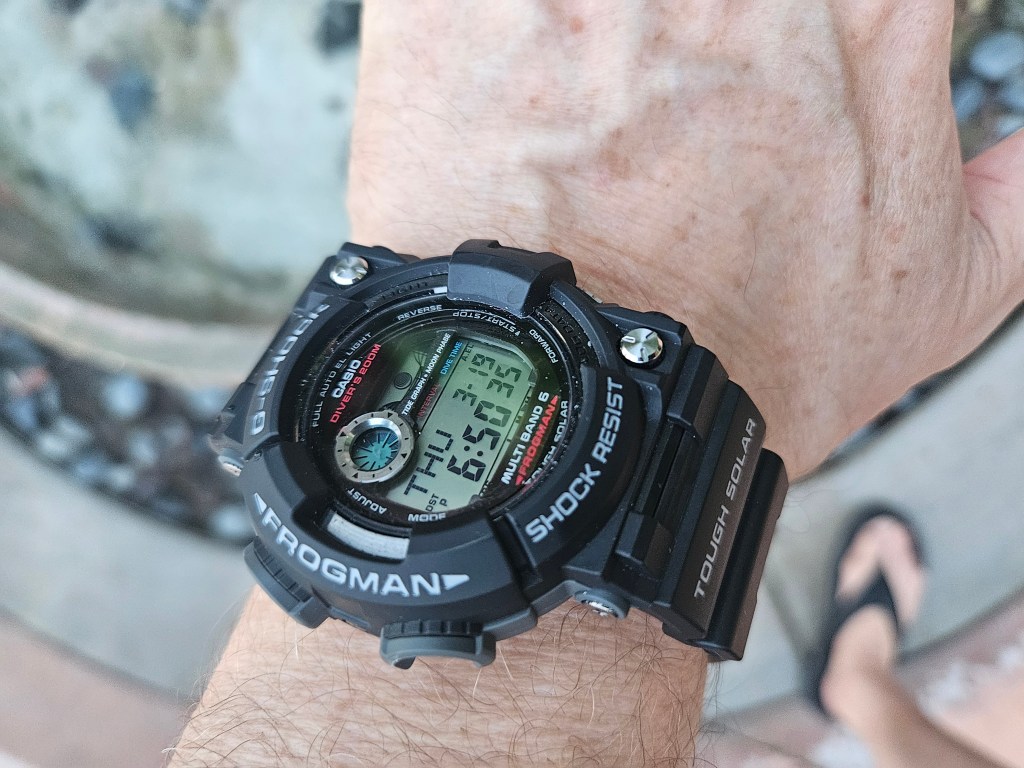
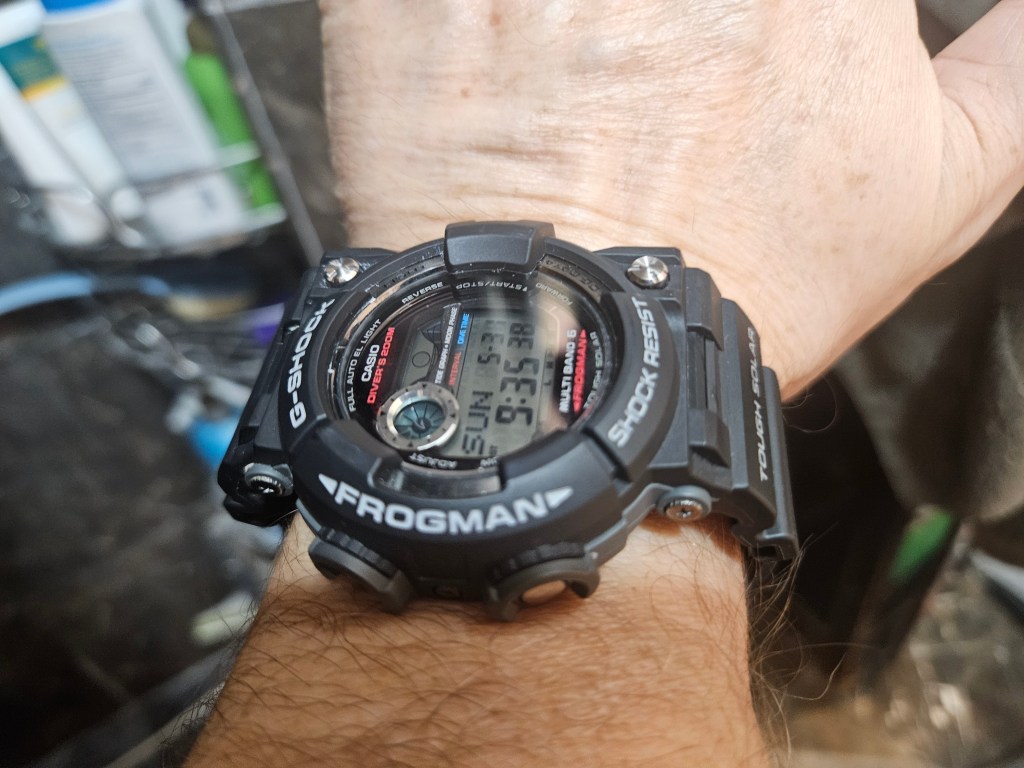
When I think about Hobby Drift, I think about watches.
Over the past twenty years, I have forged more friendships through watches than I ever expected possible. Grown men from around the world bonded by steel bracelets, dial colors, lume shots, and the feverish conviction that the perfect collection was only one purchase away. Watch collecting is a peculiar brotherhood. Half support group, half addiction clinic. We compare scars from impulse purchases and premature sales. We confess our relapses. We laugh at our own insanity while secretly browsing for the next acquisition.
My own horological delirium began in 2005 when I was forty-three years old and convinced that mechanical watches were tiny machines capable of repairing the machinery inside me.
Twenty years disappeared in a blur of rotating bezels, sapphire crystals, and “just-in-case” divers purchased for adventures that never materialized.
My attraction to watches is too complicated to reduce to a single cause, but vanity was certainly among the chief conspirators. I was obsessed with what collectors call “wrist presence.” I would see an actor on television wearing an expensive watch and become convinced that the watch was somehow responsible for his confidence, authority, and charisma. I wanted that presence. I wanted that commanding aura. I wanted the illusion of completeness.
Even then I understood the thought was ridiculous.
Unfortunately, understanding folly and escaping it are two different things.
I was an emotional child afflicted with Horological Completionism: the recurring fantasy that one more watch purchase will finally complete one’s collection, identity, or emotional life.
Then, at sixty-four, mortality tapped me on the shoulder.
The watch hobby’s siren song did not disappear. It simply became quieter.
The obsession remained, but something fundamental changed. After two decades, desire finally dimmed beneath the growing awareness that timepieces are no match for time itself. I still wear my watches. I still admire them. But they no longer occupy prime real estate inside my head.
I have undergone Chronological Surrender: the acceptance that no collection of clocks, watches, calendars, or timekeeping devices can grant mastery over time itself.
The result was an unexpected misalignment.
Many younger collectors remained in a state of Horological Messianism: the belief that the next watch will deliver transformation, completion, confidence, status, or personal salvation.
I do not judge them because I know exactly how it feels.
I was them.
Wisdom did not cure me.
Age did.
I did not reason my way out of the obsession. I simply reached a point where the obsession could no longer sustain itself. Mortality walked into the room and changed the conversation.
What frightens me is not losing the hobby.
What frightens me is losing the community.
For more than twenty years, watches provided connection, friendship, conversation, and belonging. To drift away from the hobby is, in some sense, to drift away from a part of myself.
Yet as unsettling as this misalignment is, another one frightens me even more.
My younger colleagues.
While I prepare for retirement, they are building careers. They are refining lectures, designing courses, earning tenure, publishing work, and imagining futures that stretch decades ahead of them.
Their careers are in blossom.
Mine is entering autumn.
My final year in the classroom has made me acutely aware of Generational Divergence: the growing separation between individuals at different stages of life, where the same institution simultaneously represents arrival for one generation and departure for another.
The divergence is occurring in two places at once.
The watch hobby.
The college classroom.
I cannot stop either process.
The current is too strong.
I feel less like a participant than a passenger being carried somewhere I did not choose to go.
At times the sensation resembles exile.
It reminds me of a scene from Battlestar Galactica. A condemned traitor stands behind a pane of glass as the airlock hisses. He pleads. The crew watches silently. No one is cruel. No one is angry. The decision has simply been made.
The hatch opens.
The separation becomes permanent.
That is what aging sometimes feels like.
Not tragedy.
Not injustice.
Just inevitability.
There comes a point when those still living inside the warm illusion of endless tomorrows begin, without realizing it, to drift away from those who have glimpsed the shrinking horizon.
A pane of glass descends.
Not hostile.
Not malicious.
Just real.
You tap on the glass and wave, hoping to climb back into the cockpit of youth’s ambitions, anxieties, and grand illusions.
But the hatch has already sealed.
There is no reentry.
There is only the quieter work that remains: embracing the season you have been given, building meaning instead of collections, and helping younger travelers navigate a road whose ending they cannot yet see—but inevitably will.