Tag: horror

  • Weapons of Fear: Epistemic Collapse in Eddington and Weapons (college writing prompt)

    Weapons of Fear: Epistemic Collapse in Eddington and Weapons (college writing prompt)

    Over the last decade, American culture has undergone a profound crisis of shared reality—what scholars call an epistemic collapse. In the vacuum created by fractured institutions, algorithm-driven outrage, political opportunism, and a populace trained to distrust expertise, communities have turned inward, building their own private universes of truth. Two recent films—Ari Aster’s Eddington (2024) and Zach Cregger’s Weapons (2025)—stand at the center of this cultural conversation. While their genres differ—Eddington as a neo-Western political drama and Weapons as a folk-horror anthology—both films dramatize the same underlying catastrophe: when people no longer agree on what is real, they become dangerously easy to manipulate, divide, and weaponize.

    In Eddington, the small New Mexico town is already fractured before the plot begins. The COVID-19 pandemic becomes the spark that exposes deep fault lines: anti-mask sheriff Joe Cross stokes resentment and paranoia, pro-mandate Mayor Ted Garcia attempts to preserve public health in a community that no longer trusts him, and the town’s institutions melt under the weight of political rage, conspiracy theories, and personal vendettas. Masks, lockdowns, land rights, and municipal policy become symbols of existential war. Citizens drift into echo chambers where identity outweighs truth and where “freedom” can be invoked to justify violence. Through these tensions, Eddington examines how tribal politics, misinformation, and fear transform ordinary people into agents of chaos—into what the film metaphorically frames as “weapons.”

    Weapons begins in a seemingly different register—a folk-horror narrative involving children, trauma, and community superstition—but it ultimately reveals itself as a story about the same phenomenon: collective panic filling the void left by failed institutions. When mysterious events shake the town, people reach not for evidence, reason, or communal deliberation, but for myths. Rumors calcify into “truth,” grief mutates into paranoia, and the community turns against itself in a desperate search for someone to blame. In this atmosphere, children, grief-stricken parents, and unstable townspeople all become susceptible to narratives that promise clarity and purpose, even at the price of cruelty. Like Eddington, Weapons suggests that the human need for certainty can be exploited, turning vulnerable people into instruments of violence.

    Both films take place in communities that feel abandoned—by government, by truth, by stability, by the social contract. In Eddington, the pandemic reveals a town already primed for collapse: neighbors distrust each other, public servants abuse their power, and media ecosystems churn conspiracies at a devastating pace. In Weapons, the terror centers on mysterious disappearances and supernatural dread, but the underlying cause is similar: when people feel unmoored, they grasp at stories—however irrational—that make sense of suffering. In both cases, the crisis is not just external; it is psychological, emotional, and cultural. These films argue that a society that no longer shares a framework of truth inevitably begins producing its own monsters.

    Your task is to write a comparative, argumentative essay that analyzes how both Eddington and Weapons depict the collapse of shared reality and the transformation of ordinary individuals into “weapons”—tools of fear, ideology, grief, or superstition. You will argue how each film uses different storytelling techniques to illuminate the same cultural trauma: a nation where trust in institutions has eroded, where truth is increasingly privatized, and where communities respond to uncertainty with tribalism, scapegoating, and paranoia.

    To frame your argument, consider the following thematic questions:

    1. Epistemic Crisis: What happens when communities no longer share the same reality?

    In Eddington, the pandemic becomes a catalyst for unraveling collective trust. Sheriff Joe Cross exploits the crisis for personal power, leveraging fear and resentment to undermine public-health directives. Misinformation spreads faster than illness, and political theater replaces governance. In Weapons, suspicion and folk belief dominate; characters construct supernatural explanations for grief they cannot otherwise process. How do these fictional communities illustrate the broader national struggle to maintain a shared understanding of truth?

    2. Scapegoating and Manufactured Monsters

    Both films show societies that create monsters when reality becomes intolerable. In Weapons, grief and superstition lead to scapegoating—outsiders, children, even supernatural entities become symbols of community anxiety. In Eddington, “the monster” is political: masks, mandates, immigrants, liberals, conservatives—whatever the tribe defines as the existential threat. Analyze how each film uses its respective genre (horror vs. political drama) to critique the human impulse toward blame when confronted with collective fear.

    3. The Weaponized Individual: When people become instruments of chaos

    Sheriff Cross turns himself into a political weapon; Vernon weaponizes conspiracy thinking; Brian transforms a viral video into a career. Meanwhile, characters in Weapons become pawns of rumor and superstition. How do the films examine the way individuals can be radicalized or repurposed by fear, trauma, or ideological narratives?

    4. Institutional Failure and the Vacuum It Creates

    In Eddington, institutions collapse under pressure: public health, municipal leadership, local law enforcement, media, and even basic civic trust. In Weapons, institutions either fail or play no meaningful role, leaving individuals to fill the void with folklore and violent improvisation. Compare how each film portrays the consequences of institutional breakdown—and how that vacuum shapes community behavior.

    5. The Loss of Humanity in a Post-COVID World

    Even though Weapons is not explicitly a pandemic film, its emotional landscape reflects post-COVID anxieties: loneliness, grief, mistrust, and the longing for clear explanations. Eddington addresses the pandemic head-on, depicting how fear strips people of empathy and connection. In both films, humanity erodes as people prioritize survival, identity, or belonging over compassion. Analyze how each story portrays this transformation.

    6. The Role of Media, Algorithmic Influence, and Storytelling

    Eddington explicitly critiques media spectacle and algorithmic manipulation; Weapons does so more subtly through mythmaking and rumor. Compare how each film reveals the power of narrative—factual or fictional—to shape belief, identity, and behavior. What does each film suggest about the modern American hunger for stories that confirm our fears, validate our tribal loyalties, or simplify our grief?

    7. The Nietzschean Last Man: A Society Without Higher Purpose

    For extra depth, you may choose to integrate the concept of Nietzsche’s “Last Man”—the individual who seeks comfort over purpose, safety over meaning, distraction over responsibility. Which characters in each film exemplify this drift toward nihilism? Does each film suggest that the Last Man is a symptom of cultural decay—or part of its cause?


    Write a comparative essay of 1,800–2,200 words that argues how Eddington and Weapons portray the following intertwined themes:

    • the breakdown of shared reality
    • the rise of tribalism and paranoia
    • the transformation of ordinary people into “weapons”
    • the creation of monsters—psychological, political, or supernatural—to fill the void left by institutional failure
    • the erosion of humanity in a culture defined by fear, spectacle, and algorithmic influence

    Your thesis must make a clear, debatable claim about what these films reveal about post-COVID American society. You must support your analysis with close reading of key scenes, comparison of cinematic techniques, and sustained argumentation.

    Your essay must also include:

    1. A Counterargument

    Acknowledge at least one opposing view—for example, the claim that Eddington is primarily about political extremism while Weapons is primarily about horror and grief, and therefore the comparison is forced. Then rebut that view by showing that genre differences sharpen, rather than undermine, the thematic parallels.

    2. A Rebuttal

    Explain why your central claim still holds. You may argue that both films are ultimately parables about epistemic breakdown and human vulnerability in the absence of trusted institutions.

    3. A Conclusion That Opens Outward

    Discuss what these films suggest about where American culture may be heading if fragmentation, mistrust, and weaponized narratives continue.

    Your writing should demonstrate:

    • analytical depth
    • clarity
    • engagement with cinematic detail
    • strong comparative structure
    • thoughtful paragraph organization
    • precise sentence-level control

    This essay invites you not only to compare two compelling films, but also to reflect on the cultural moment that shaped them—and the uncertain landscape we now inhabit.
  • The Monster in the Ravine and the Moon Over the Suburbs

    The Monster in the Ravine and the Moon Over the Suburbs

    Last night I dreamed I was wandering through a house I didn’t recognize. The world outside was pitch black. A small family dog pressed its nose to the sliding glass door and barked toward the backyard, desperate to escape. I opened the door and watched the little creature trot behind the bushes to relieve itself. That’s when a monster rose out of the ravine—some hulking mastiff with the skull of a bull, as if a guard dog from the underworld had crawled up to inspect the living. It ignored the pet and fixed its gaze on me. Without hesitation, it entered the house and began to contort into different shapes of malice. At first, I trembled. Then anger boiled in me like a furnace. This thing wasn’t just ugly; it was the source of suffering and rot in the world. I begged God to purify me so I could destroy it, but heaven stayed silent. What I received instead was a strange consolation: a feeling that at least my rage was righteous, and that I still knew where my moral compass pointed.

    Eventually the creature disappeared and daylight arrived. I made a long trek back toward what I understood to be “home.” Across the street, my neighbors were ecstatic, pointing skyward. Hovering above their house was a massive white dome—like a camper shell the size of a Costco, a fallen moon with decorative crenellations. Soon crowds formed. It was a city attraction, a spectacle engineered to “bring excitement.” Snowflakes—artificial, slow-motion confetti—drifted through the air. People gasped, laughed, and posed for photos, thrilled by the distraction.

    The beast was gone, but the problem of evil remained unsolved. In its place, my city embraced pageantry, gimmicks, and civic cheerleading. I touched my aching left shoulder, the one crippled by a three-month rotator cuff tear, and wondered what I would become—a broken man, a burden, a questionable member of society. Fake snow drifted onto the jubilant crowd, and their rosy smiles suggested that change, or at least the illusion of it, was already underway.

  • Rising From the Sunken Place: Heroism, History, and the Evolution of the Black Quarterback

    Rising From the Sunken Place: Heroism, History, and the Evolution of the Black Quarterback

    Essay Prompt: 

    Drawing on Jordan Peele’s concept of the Sunken Place in Get Out, write a 1,700-word essay examining the heroic effort required not only to lift oneself out of the Sunken Place, but to help others rise as well—an arc vividly captured in the three-part docuseries The Evolution of the Black Quarterback. What does it mean for Black quarterbacks to break the race barrier in the NFL? What forces tried to hold them back, and how do these forces echo the Sunken Place? Consider also the story of Wilbur Dungy—Tony Dungy’s father—who served as a war hero only to return home to the indignities of Jim Crow. How did his dignity, endurance, and moral clarity shape his son’s rise as both an athlete and a coach?

    Your essay will be divided into two major sections.

    Part I (Four Paragraphs): Define the Sunken Place
    Write a four-paragraph definition of the Sunken Place, with each paragraph offering a different lens:

    1. The Sunken Place as depicted in Get Out
    2. The Sunken Place through the writings of Frederick Douglass
    3. The Sunken Place as represented in the Jim Crow Museum, curated by David Pilgrim
    4. The Sunken Place as reflected in The Evolution of the Black Quarterback

    Each paragraph should show how the Sunken Place functions as a metaphor for psychological confinement, social domination, and the struggle for agency.

    Part II (Four Paragraphs): Rising From the Sunken Place
    After your definition section, pivot to your thesis. Explain how early Black quarterbacks in the NFL rose from the Sunken Place and built a legacy that opened doors for future generations. In four paragraphs, analyze their courage and composure in the face of rejection, demoralization, racist taunts, structural exclusion, and even death threats. Show how their resilience and excellence expanded the possibilities for Black athletes who followed.

    Conclusion:
    Close by addressing the broader implications. What life lessons can we draw from these trailblazing quarterbacks? How does their story speak to endurance, leadership, and the ongoing work of lifting others out of the Sunken Places they confront?

    Include a Works Cited page in MLA format with at least four sources.

  • In Defense of Watching True Crime

    In Defense of Watching True Crime

     A couple of weeks ago my wife DMed me an Instagram reel: one reviewer, dozens of true-crime docuseries. I pressed play and fell down the shaft. I binged everything—some episodes like gravel in the throat, others slick as a thriller—and realized I was hooked the way novels used to hook me: late nights, one more chapter, living on cliffhangers and bad coffee.

    A year ago I would’ve dismissed the whole genre as tabloid embalming fluid: pain turned into programming. That was the lazy take, the one you reach for when you haven’t looked long enough. The better work in this space isn’t cheap; it’s meticulous. At its best, it has social value.

    Watch the detectives. The strong series showcase minds like scalpels—profilers knitting together motive and method, investigators reconstructing a life from fibers and timestamps. The good ones don’t myth-make; they interrogate reality. Their craft can outstrip a screenwriter because the stakes aren’t applause—they’re truth and, sometimes, prison.

    Credit the pursuit, too. The suspect is slippery, the evidence thin, and still the chase continues—phone records, shoe tread, the geography of a lie. You can see how the work rewires them. They read a face like a ledger. They separate panic from performance. They carry that calibration into ordinary life, for better and worse.

    But the badge isn’t a halo. Some episodes show coercive interrogations, tunnel vision, a theory clung to past its sell-by date while exculpatory facts stack up in the corner. Those missteps belong in the record. A genre that can praise tenacity should also indict certainty when it curdles.

    What keeps me watching, beyond craft and cautionary tales, is the way communities assemble under pressure—search parties in neon vests, casseroles and candles, volunteers mapping creek beds while the cameras spin. These stories remind you how much ordinary goodness survives the worst day a town can have.

    Then there are the perpetrators, often undone by their own theater. The vanity is operatic: cryptic boasts, trophies kept, shoplifting while on the run because entitlement feels bulletproof. Not all are violent; some are artists of fraud whose lies cascade through bank accounts, marriages, and nervous systems. The harm is quieter, not smaller.

    The hardest stretch is the parents—the permanent gray in the eyes, the architecture of a life collapsed on one missing pillar. They stay decent, they organize scholarships and vigils, they become advocates—but you can see the subtraction. A part of them is gone, and the camera can’t restore it.

    I do feel the moral splinter: I’m consuming narratives built from someone else’s worst night. There’s a voice that hisses, How dare you. And a voice that answers: Then look harder. Don’t watch for spectacle; watch to learn—about procedure, about predation, about how to be a better neighbor and a sharper juror. The difference between voyeur and witness is attention and intent.

    So here I am, converted, with reservations. The good series map the borderlands between justice and error, courage and vanity, community and collapse. They don’t restore innocence; they invoice it. If I keep watching, it’s because the genre—at its best—insists on seeing clearly, and because clarity, though it stings, is a civic skill worth practicing.

  • The Intruder from the Cypress Gloom

    The Intruder from the Cypress Gloom

    Sometimes you hear stories of horror and the supernatural, and you don’t know what to do with them, especially if the person telling the story seems sane and credible. As a result, the story lingers and haunts you for all your life. For example, I’ve never forgotten a story one of my college students told me back in the fall of 1998. She was a re-entry student—a nurse in her early forties—juggling coursework at UCLA with overnight hospital shifts. The kind of woman who sticks in your memory: short, sturdy, glasses perched low on her nose, with the weary, perceptive eyes of someone who’d seen too much and lips that knew how to pace a punchline.

    Most afternoons, after class let out, she’d linger by my desk and recount episodes from her Louisiana backwoods childhood or from the fluorescent netherworld of her hospital’s VIP wing. Her stories ricocheted between absurdity and horror—tales told with the calm authority of someone who could handle arterial spray with one hand and chart notes with the other.

    But one story gripped me by the spine and never let go. It wasn’t about dying celebrities or ER gore. It was about something far worse. A visitation. A monster.

    She and her cousin Carmen were feral children, raised in the lawless heat of rural Louisiana, where school attendance was optional and adult supervision was more myth than fact. Left to their own devices, the two girls invented what she called “mean games”—they tortured frogs, pulled wings off insects, and hinted at darker cruelties she refused to name. Lord of the Flies in sundresses.

    And then one afternoon, the visitor arrived.

    They were holed up in a decaying house, conspiring over their next cruelty, when the porch door creaked open and something stepped inside. It looked like a man. But it wasn’t. Over six feet tall, it had a tail—thick, muscled, and disturbingly animate. It moved with a will of its own, curling and flicking behind him like a fleshy metronome. His body was bristled with wiry hair. His voice? Low, hoarse, and calm in the most terrifying way. He didn’t threaten. He simply listed.

    Sitting in a rocking chair, the creature, a sort of rat-man, described, in brutal detail, everything the girls had done—every frog mutilated, every insect dissected. Nothing vague. He named the acts like he had them on file. And then he made his offer: Keep going, he said, and I’ll recruit you.

    He stayed for three hours. Just sat there. Breathing. Flicking that tail. Describing their path toward damnation with the steady tone of a bureaucrat explaining retirement benefits. When he finally left, dissolving into the heat shimmer of the Louisiana dusk, the girls were too stunned to move. Carmen whispered, “Did you see that?” My student just nodded.

    They never spoke of it again. But they changed. Overnight. Sunday school. Prayer. Kindness, enforced not by conscience but by fear. The kind that settles in your bones and never leaves. Whatever that thing was, it did its job.

    And this is the part that haunts me: she wasn’t a kook. She wasn’t mystical, manic, or given to exaggeration. She was a nurse—clear-eyed, grounded, more familiar with death than most people are with taxes. She wasn’t telling a ghost story. She was giving a deposition.

    To this day, I see those two girls, wide-eyed and paralyzed, staring down a thing that knew them intimately and promised them a future in hell’s apprenticeship program. Whether it was a demon, a shared psychotic break, or some mythological construct formed by childhood guilt and Southern humidity, I don’t know. But I do know what it meant.

    The creature’s message was brutal in its simplicity: Keep practicing cruelty, and you’ll lose the ability to stop. You’ll become it.

    That’s not just folklore. That’s biblical. The idea that if you repeat your wickedness long enough, God—or whatever you believe in—stops interrupting you. He doesn’t smite you. He simply steps aside and says, Go ahead. This is the life you’ve chosen.

    No wonder Kierkegaard was obsessed with working out your salvation with fear and trembling. There’s nothing more terrifying than the idea that damnation is self-inflicted, not by a thunderbolt, but by repetition. That the road to hell is paved with muscle memory.

  • This Is the Life You Have Chosen

    This Is the Life You Have Chosen

    I’ve never forgotten a story one of my college students told me back in the fall of 1998. She was a re-entry student—a nurse in her early forties—juggling coursework at UCLA with overnight hospital shifts. The kind of woman who sticks in your memory: short, sturdy, glasses perched low on her nose, with the weary, perceptive eyes of someone who’d seen too much and lips that knew how to pace a punchline.

    Most afternoons, after class let out, she’d linger by my desk and recount episodes from her Louisiana backwoods childhood or from the fluorescent netherworld of her hospital’s VIP wing. Her stories ricocheted between absurdity and horror—tales told with the calm authority of someone who could handle arterial spray with one hand and chart notes with the other.

    But one story gripped me by the spine and never let go. It wasn’t about dying celebrities or ER gore. It was about something far worse. A visitation. A monster.

    She and her cousin Carmen were feral children, raised in the lawless heat of rural Louisiana, where school attendance was optional and adult supervision was more myth than fact. Left to their own devices, the two girls invented what she called “mean games”—they tortured frogs, pulled wings off insects, and hinted at darker cruelties she refused to name. Lord of the Flies in sundresses.

    And then one afternoon, the visitor arrived.

    They were holed up in a decaying house, conspiring over their next cruelty, when the porch door creaked open and something stepped inside. It looked like a man. But it wasn’t. It had a tail—thick, muscled, and disturbingly animate. It moved with a will of its own, curling and flicking behind him like a fleshy metronome. His body was bristled with wiry hair. His voice? Low, hoarse, and calm in the most terrifying way. He didn’t threaten. He simply listed.

    Sitting in a rocking chair, the creature described, in brutal detail, everything the girls had done—every frog mutilated, every insect dissected. Nothing vague. He named the acts like he had them on file. And then he made his offer: Keep going, he said, and I’ll recruit you.

    He stayed for three hours. Just sat there. Breathing. Flicking that tail. Describing their path toward damnation with the steady tone of a bureaucrat explaining retirement benefits. When he finally left, dissolving into the heat shimmer of the Louisiana dusk, the girls were too stunned to move. Carmen whispered, “Did you see that?” My student just nodded.

    They never spoke of it again. But they changed. Overnight. Sunday school. Prayer. Kindness, enforced not by conscience but by fear. The kind that settles in your bones and never leaves. Whatever that thing was, it did its job.

    And this is the part that haunts me: she wasn’t a kook. She wasn’t mystical, manic, or given to exaggeration. She was a nurse—clear-eyed, grounded, more familiar with death than most people are with taxes. She wasn’t telling a ghost story. She was giving a deposition.

    To this day, I see those two girls, wide-eyed and paralyzed, staring down a thing that knew them intimately and promised them a future in hell’s apprenticeship program. Whether it was a demon, a shared psychotic break, or some mythological construct formed by childhood guilt and Southern humidity, I don’t know. But I do know what it meant.

    The creature’s message was brutal in its simplicity: Keep practicing cruelty, and you’ll lose the ability to stop. You’ll become it.

    That’s not just folklore. That’s biblical. The idea that if you repeat your wickedness long enough, God—or whatever you believe in—stops interrupting you. He doesn’t smite you. He simply steps aside and says, Go ahead. This is the life you’ve chosen.

    No wonder Kierkegaard was obsessed with working out your salvation with fear and trembling. There’s nothing more terrifying than the idea that damnation is self-inflicted, not by a thunderbolt, but by repetition. That the road to hell is paved with muscle memory.

  • Canyon High School’s Mythic Bruiser

    Canyon High School’s Mythic Bruiser

    You had just stepped onto the concrete plaza of Canyon High School, a fourteen-year-old bodybuilder armed with a cafeteria tray loaded with a burger, a salad, and a milk carton—your pathetic nod to nutritional balance. You devoured your lunch in monk-like solitude, your pockets clinking with ten Argentine beef liver tablets, swallowed like they were Tic Tacs of the gods. The cafeteria’s noise faded as you retreated to the shade of the overhangs, the lockers looming behind you like post-apocalyptic filing cabinets.

    Then came the charging beast.

    A teenage mass of muscle and menace barreled toward you like a linebacker with a vendetta. His head was absurdly wide, shaped more like a boulder than a skull. His black sweatshirt sleeves were rolled up, revealing forearms that looked like they’d been sculpted out of poultry—two Thanksgiving turkeys in full flex. His hands were sausages wrapped in leather, his calluses more rugged than your self-esteem.

    “Hey, shit sack.”

    You flinched. This was Falco Labroni—the school’s mythic bruiser. You’d heard the tales. Now you were living one.

    You managed a nod.

    He eyed you like you were a science experiment gone wrong. “You look like a sad excuse for a bodybuilder.”

    “Sorry,” you muttered, like a kid caught microwaving a fork.

    “So, you work out, huh?”

    You nodded again, trying not to visibly shrivel.

    Falco snorted. “You look like you should be running track, not pushing iron. You’re doing everything wrong. You need to check into a hospital, get fed through a tube, and save your calories with an electric wheelchair before you can rejoin humanity. You might be the worst thing to happen to bodybuilding since pink dumbbells.”

    You looked down at your frame. Okay, maybe you were a bit slim. But still…

    “I wear extra-large shirts,” you offered.

    “Who cares about your damn shirts? You’re a disgrace to the international bodybuilding community. What’s your diet?”

    You recited your list like a desperate catechism: eggs, steak, chicken, brown rice, bananas, peanut butter, whey, fruits, veggies.

    Falco looked like you’d just admitted to eating cat food. “Forget the steak—eat the fat. Open a can of fruit cocktail, toss the fruit, chug the syrup. That’s the path to greatness.”

    He zeroed in on your neck.

    “Why’s your neck so scrawny?”

    “No clue.”

    “You ever try trap squeezes?”

    “No.”

    Falco then described a sadistic exercise involving sky-staring and daily two-hour neck contractions. You gave a half-hearted nod, already certain you’d never do it.

    “Who’s your favorite bodybuilder?”

    “Arnold Schwarzenegger.”

    “Good. Anyone else?”

    “Frank Zane.”

    Falco recoiled. “Frank Zane? That elegant pencil-neck? He’s not a bodybuilder—he’s a decorative lamp.”

    “But his proportions—”

    “Remarkable proportions? Jesus. Don’t ever say that again.”

    You stood your ground. “He’s in my top three. Serge Nubret, too.”

    Falco leaned in. “You know who I am?”

    “I think so.”

    “Then don’t throw these artsy names at me.”

    “You strike me as more of a Sergio Oliva guy.”

    His eyes lit up. “Now you’re talkin’. But I want to be bigger than Sergio. I want to evolve beyond humanity. Grow gills. Be the Creature from the Black Lagoon. I want people to faint when I take off my shirt.”

    The bell rang.

    You grabbed your books, feeling like Atlas with a paperwork burden.

    Falco looked at you like he was almost amused. “You one of those students?”

    “Trying to keep up a GPA.”

    “So you’re one of those assholes.”

    You nodded. “Apparently.”

    “Cool. Meet you here tomorrow.”

    Thus began your strange friendship with the school’s resident man-beast. Freshman Rick Galia later gave you a full hour-long tutorial on how to survive high school under the gaze of Falco Labroni. You took notes.

  • Viral Nations: How Pandemic Cinema Reflects a World (a College Essay Prompt)

    Viral Nations: How Pandemic Cinema Reflects a World (a College Essay Prompt)

    Both 28 Years Later and World War Z depict the spread of a deadly virus that triggers the collapse of global order. Yet beyond the zombies and infected hordes, these films offer striking metaphors for the chaos, distrust, and political polarization amplified by the COVID-19 pandemic.

    In a well-structured, thesis-driven essay of 1,700 words, compare how each film explores the fragility of major institutions (governments, media, military, science), the spread of misinformation, and the psychological aftermath of global catastrophe. Your analysis should consider how each film allegorizes different aspects of pandemic culture: emotional volatility in 28 Years Later vs. bureaucratic inertia in World War Z.

    You must address the following questions:

    1. How do these films portray public institutions’ response to crisis? What critiques are embedded in those portrayals?
    2. In what ways do these narratives reflect or exaggerate the real-world cultural and political divisions that were intensified by COVID-19?
    3. Do these films offer any hope or solutions, or are they fundamentally cynical about humanity’s ability to cooperate?

    Use specific scenes, dialogue, and cinematic techniques from both films to support your claims. Outside sources are encouraged but not required.

    Here are five sample thesis statements for the prompt comparing 28 Years Later and World War Z as post-COVID allegories, each with clear mapping components:


    1. The Bureaucratic Collapse vs. Emotional Fallout Thesis
    While World War Z depicts a slow-motion collapse of global institutions in the face of a virus that outpaces diplomacy and reason, 28 Years Later focuses on the emotional and ethical wreckage left behind, showing that the true horror of a pandemic lies not in the infection itself but in the unraveling of trust, memory, and social cohesion.


    2. The Misinformation and Fear Contagion Thesis
    Both 28 Years Later and World War Z serve as cultural autopsies of the COVID era, portraying not only viral outbreaks but the parallel contagion of misinformation, fear, and ideological extremism, revealing how modern pandemics are fought as much in echo chambers and comment threads as in laboratories.


    3. The Institutional Failure and Survivalist Morality Thesis
    In their depiction of pandemic response, World War Z shows the impotence of top-down globalism, while 28 Years Later offers a bottom-up view of localized anarchy and survivalist ethics, together illustrating a post-COVID cinematic shift from faith in institutions to tribal resilience and moral ambiguity.


    4. The Pandemic as Psychological Reckoning Thesis
    More than disaster films, 28 Years Later and World War Z use the aesthetics of horror and action to stage a psychological reckoning with the trauma of COVID—28 Years Later captures the rage and exhaustion of a public pushed to its emotional brink, while World War Z visualizes the logistical panic and fractured chain of authority that left millions globally disoriented and unmoored.


    5. The Allegory of Polarization Thesis
    28 Years Later and World War Z reflect the political polarization accelerated by COVID by framing survival as dependent not on unity but on division—on isolation, suspicion, and competing narratives of truth—suggesting that in a fractured society, pandemics don’t create monsters so much as they expose them.

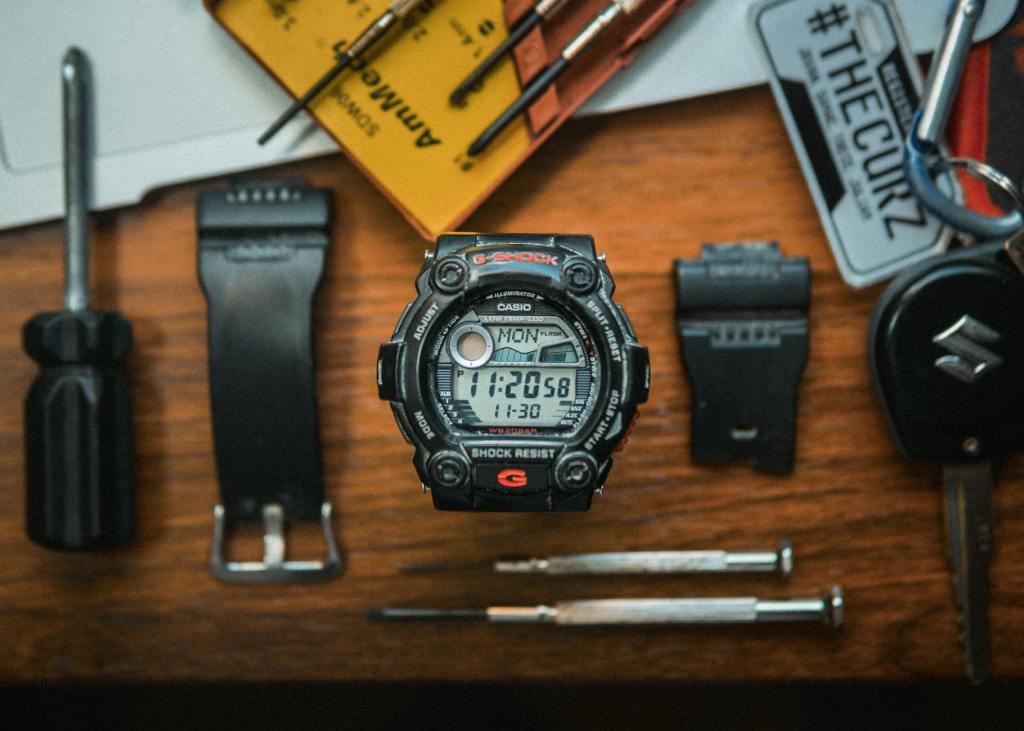
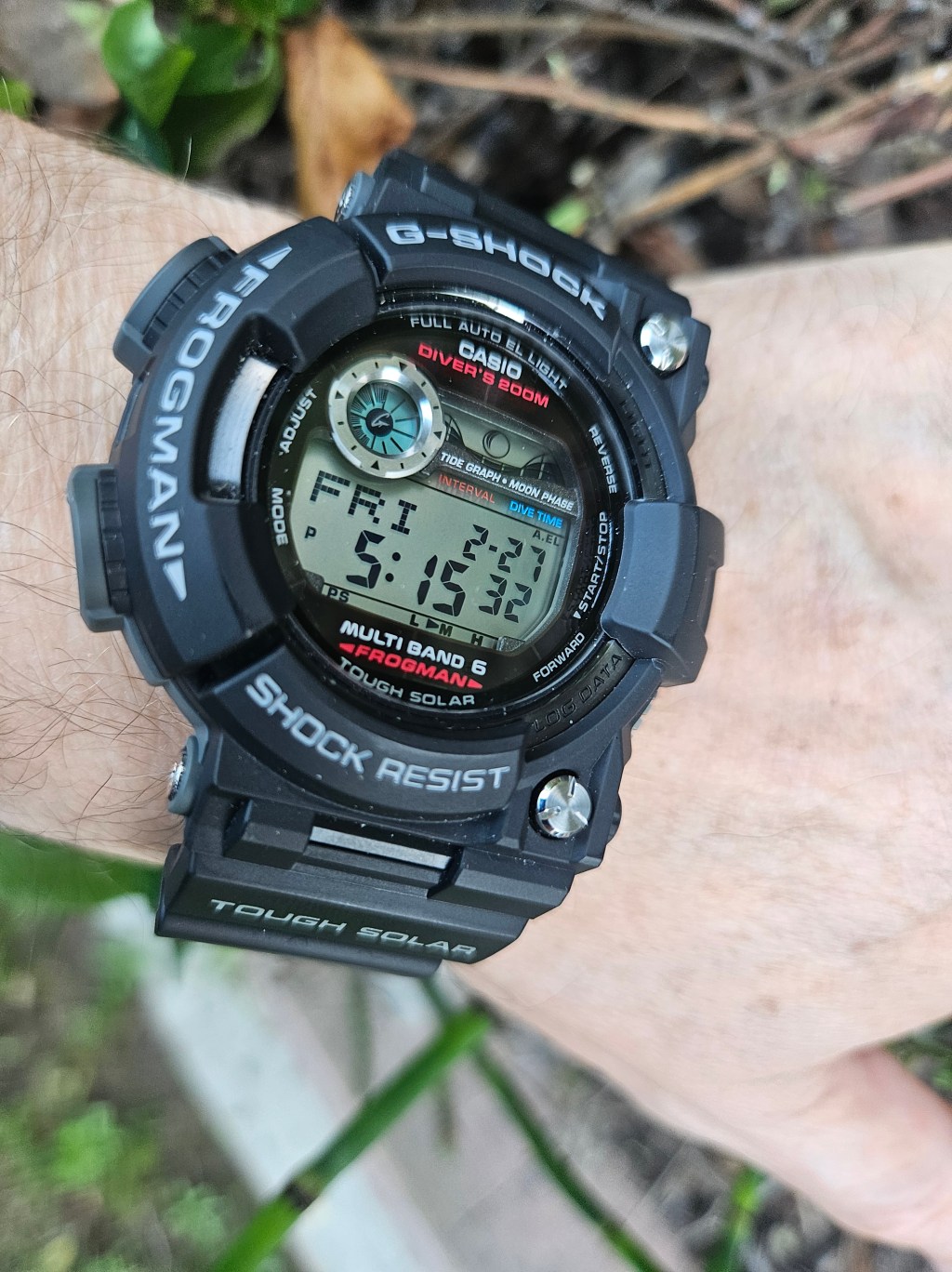
  • Hugh Hefner’s Watchbox from Hell

    Hugh Hefner’s Watchbox from Hell

    Chapter Three from The Watch Whisperer of Redondo Beach


    When I got home, I collapsed into a dream-heavy sleep—the kind you don’t choose but fall into like a trapdoor.

    I dreamed I was back with the Watch Master, only this time we were in a cave—his new lair, apparently—where flickering monitors lined the stone walls like cursed flat-screens. Each displayed a parallel universe, a version of me shaped entirely by my watch collection.

    One screen showed me with a massive, vulgar collection: gold bezels, diamond indices, stainless steel bracelets so chunky they could anchor a yacht. In that reality, I was obese. Bloated. A Las Vegas lounge lizard with a double chin, a sprayed-on tan, and a wig styled into a pompadour so high it had its own zip code. A gold-plated microphone dangled from my sweaty fingers as I crooned like Elvis, Tom Jones, and Michael Bolton—simultaneously. Around my neck: ropes of gold. On my wrist: a diamond-studded Rolex that practically screamed for an exorcism.

    When I opened my mouth to speak, no words came out—just a guttural, distorted sound, like a demon gargling battery acid. I had abandoned my family. I lived in a velvet-curtained grotto that looked like Hefner’s afterlife man-cave. I wasn’t just a parody of myself. I was a possession.

    That’s when I woke up—slick with sweat, lungs full of dread. But the nightmare wasn’t over. I could still feel him—it—the beast version of me, 300 pounds of ego and regret, pressing down on my mattress. The sag was real. I swear it. My bed bowed like I was hosting a sumo wrestler from the spirit world.

    Later that night, I sat at the Watch Master’s kitchen table and told him the whole thing while he sipped from a chipped mug under the soft glow of moonlight. His gaunt face lit up with delight. He laughed—not cruelly, but knowingly.

    “Textbook,” he said. “You’re a classic case. A fractured soul, split by overexposure to bezel lust. Watch addiction creates avatars. You’ve conjured a grotesque mirror of your worst impulses. The doppelgänger is real, and he’s hungry.”

    “What do I do?” I asked, sounding more like a haunted child than a man who once justified paying four figures for a dive watch he never actually dove with.

    The Master leaned back and cracked his neck like a man preparing to file a warranty claim on your soul. “You ever hear the saying, ‘You’ve got to go to hell before you get to heaven?’”

    I nodded.

    “Well,” he said, rising slowly, “That’s where you are. Right on schedule.”

    “Can you be more specific?”

    “Later. Right now, just hearing your dream has worn me out. It’s not just the nightmare—it’s you. Your whole aura is exhausting. You radiate crisis. Come back tomorrow, same time. We’ll discuss logistics.”

    And just like that, he disappeared down a hallway, leaving me with my own haunted watch box, and the question of whether I was still awake—or just in a deeper layer of the dream.

  • Lot’s Wife Was Human—And So Are You

    Lot’s Wife Was Human—And So Are You

    The story of Lot’s wife is usually trotted out as a biblical “gotcha”—a cautionary tale about disobedience, attachment, and the fatal cost of looking back. But really, it’s much darker, much richer. It’s about the soul-crushing gravity of nostalgia, the seductive pull of the past, and how the refusal to fully commit to forward motion—spiritually, morally, existentially—can leave us frozen, calcified, halfway between escape and surrender.

    Lot’s wife is never named in the Genesis account. She’s just “Lot’s wife,” a narrative afterthought, a supporting character reduced to a cautionary statue. And yet her fate is more memorable than her husband’s, etched into the landscape as a monument to hesitation.

    Fortunately, Midrashic literature gives her a name—Ado, or more memorably to my ear, Edith. Maybe it’s the residue of All in the Family, but Edith conjures a kind of moral warmth: a woman who feels deeply, who wants to do right, but is also tragically susceptible to emotion and memory. I prefer Edith to “Lot’s wife” not for historical accuracy, but for dignity. Edith feels human, conflicted, real.

    I don’t think Edith turned around because she was vain or shallow. I think she turned because she was haunted. She turned because the past was more than rubble—it was love, memories, people. Her heart was a complex web of longing, and it snagged her. The salt wasn’t a punishment. It was a crystallization of what happens when our nostalgia outweighs our conviction.

    And let’s be honest: Who among us doesn’t have some briny lump of regret weighing us down? Some internal salt pillar we’ve built in the shape of a younger self we can’t stop worshiping?

    Our culture is Edith’s playground. Social media, advertising, and even the algorithms know exactly how to pander to the Edith within. I can’t scroll without being invited into some “Golden Age of Bodybuilding” time warp: vintage photos of Arnold, Zane, Platz, Mentzer; protein powder reboots; playlists that reek of adolescent testosterone and gym chalk. Jefferson Starship and Sergio Oliva, side by side. It’s like being invited to embalm my past and celebrate its eternal youth. I can join message boards and talk shop with other proud monuments to vanished glory, all of us reenacting the same ritual: remembering what life used to feel like. Not what it is.

    This, I suspect, is what it means to turn to salt. Not just to long for the past, but to despise the present. To dig our heels into a world that no longer fits and spit at progress as if it betrayed us. To canonize a version of ourselves that no longer exists, then try to live in its shadow.

    But maybe Edith’s not just a warning. Maybe she’s a mirror. A deeply flawed, deeply human figure who reminds us that the instinct to look back isn’t evil—it’s inevitable. And maybe we don’t conquer that instinct so much as we recognize it, name it, and learn when to say: Enough. That life was real, and it was mine. But I’m walking forward now.

    Or at least trying to.