Tag: lifestyle

  • I Am the Last Hands-Free Professor

    I Am the Last Hands-Free Professor

    The twins are home today—the high school’s closed for Veterans Day while my college closes for it tomorrow—so I left the house fifteen minutes early, a small luxury that spared me the traffic gauntlet. As I crossed campus, I spotted two young professors striding toward the Science Building. They could have been clones: mid-thirties, tall, lean, the same curated beard, and that monochrome uniform of urban intellect—black derby jackets, black jeans, black everything. It was as if an algorithm had dressed them.

    Each hand was occupied. Their left hands dangled a thermos and a lunch case like matching luggage; their right hands gripped identical strapped tech bags, no doubt cradling laptops and a faint sense of self-importance. Watching their synchronized march, I realized something about myself. After thirty-five years of teaching, I’ve never once looked professorial. My fatal flaw? Free hands. I move from car to office unburdened, thanks to my trusty backpack—functional, roomy, and entirely devoid of aesthetic ambition. It says less “professor” than “Wyoming park ranger with tenure.” But practicality has its own dignity.

    Until this morning, I’d never questioned my need to be unencumbered. Why not juggle a thermos, lunch case, and tech bag like everyone else? The answer reached back decades—to the zoo trips of childhood, when my mother insisted I bring a sweater “just in case.” I never needed it. I only needed freedom. That sweater haunted every outing, tied around my waist, falling in the dirt, collecting dust like a symbol of parental over-preparation. My whole day was spent managing it. Somewhere between those early years and now, the sweater evolved into the backpack—my lifelong protest against needless carrying.

    I could, I suppose, upgrade to a minimalist tech-sleek backpack that would make me blend in with the black-jacket brigade. But I won’t. I’ve made peace with my pack. It’s my declaration of independence—my refusal to let adulthood turn into perpetual sweater management.

  • Taco Nation: How a Humble Street Food Became Mexico’s Superpower (College Essay Prompt)

    Taco Nation: How a Humble Street Food Became Mexico’s Superpower (College Essay Prompt)

    Essay Prompt:

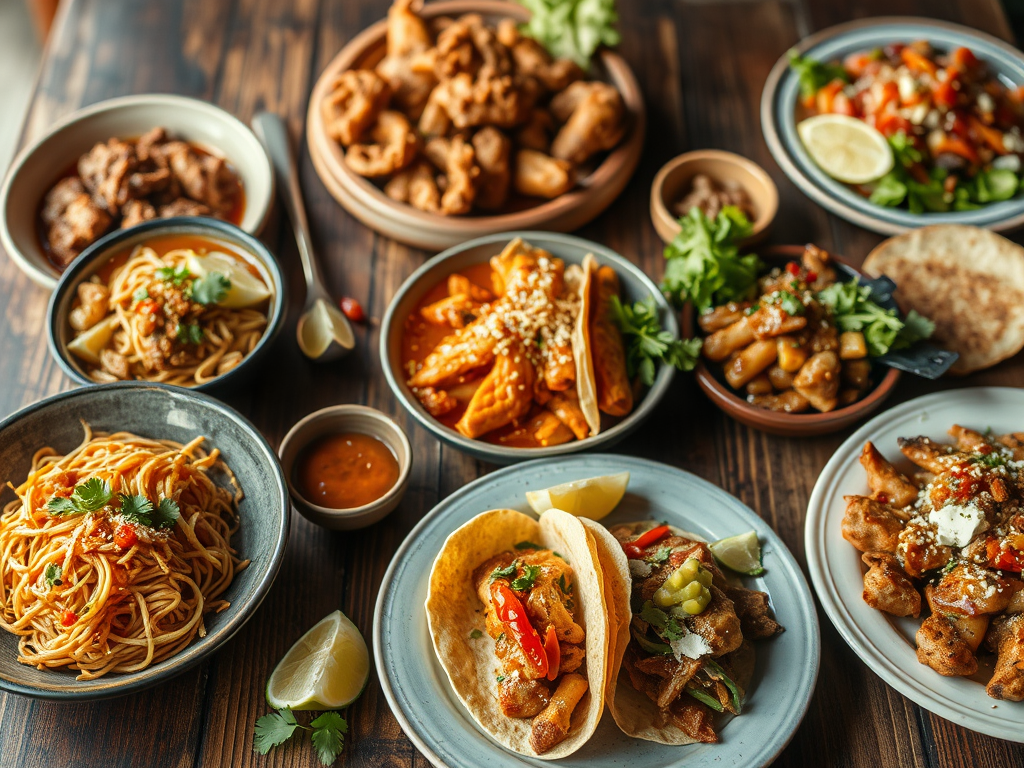
    In the Netflix docuseries The Taco Chronicles, the taco is not portrayed as a mere food item but as a cultural force—an edible emblem of Mexico’s resilience, creativity, and soul. The series argues that the taco is a kind of Mexican superfood—not only for its nutritional versatility, but also for its power to break down cultural and class barriers, foster community, and rejuvenate the communal spirit through the sacred staple of corn. It is both deeply traditional and endlessly innovative, enchanting the people who eat it and the taqueros who make it.

    Write a 1,700-word argumentative essay that responds to the claim that the taco functions as a Mexican superfood with transformative social and cultural power. Consider how the taco transcends boundaries—economic, racial, culinary, and geographic—while also preserving deep-rooted traditions. You may also explore counterarguments: Is the global popularity of the taco watering down its identity? Is the romanticization of street food masking deeper inequalities?

    Support your argument with examples from The Taco Chronicles and incorporate at least two additional sources (journalistic, scholarly, or culinary writing) that offer insights into food culture, globalization, or Mexican identity.

    Sample Thesis Statements:


    1. The Taco as Cultural Bridge
    While often seen as humble street food, the taco stands as a powerful symbol of cultural resilience, breaking barriers of class and race, rejuvenating communities through the ancestral force of corn, and reinventing itself across borders without losing its soul.

    Mapping components:

    • Symbol of cultural resilience
    • Rejuvenation through corn
    • Innovation without cultural loss

    2. A Superfood for the Soul
    Far from just a culinary trend, the taco operates as a Mexican superfood by nourishing the body, connecting diverse communities across social divides, and reviving cultural heritage through its balance of tradition and modern flair.

    Mapping components:

    • Nourishment and accessibility
    • Cross-class and cross-cultural unity
    • Reinvention of tradition

    3. Romantic or Real? Interrogating the Taco’s Power
    Though The Taco Chronicles portrays the taco as a superfood capable of healing social divisions and celebrating tradition, its growing global appeal risks cultural dilution, commodification, and the masking of labor inequities behind its charm.

    Mapping components:

    • Healing and communal unity
    • Risk of global commodification
    • Invisible labor and exploitation

    Here are three counterarguments with rebuttals, each addressing a core claim from the prompt about the taco’s cultural and communal power:


    Counterargument 1: “The Taco Has Been Commercialized Beyond Recognition”

    As the taco gains global popularity, it’s often stripped of its cultural context and repackaged as a trendy, overpriced novelty in upscale restaurants. The soul of the taco gets lost in translation, turning it into an Instagram prop rather than a communal or ancestral food.

    Rebuttal:
    While some global versions of the taco are divorced from tradition, The Taco Chronicles shows that innovation and authenticity can coexist. From suadero in Mexico City to cochinita pibil in Yucatán, the taco is continually reinvented without losing its cultural core. Rather than being erased, the taco’s story is being exported—sometimes imperfectly, but often with respect and curiosity.


    Counterargument 2: “Romanticizing the Taco Ignores Labor Exploitation”

    Celebrating the taco as a symbol of love and unity risks whitewashing the harsh labor realities faced by many taqueros, many of whom work long hours in informal economies with little pay or security.

    Rebuttal:
    Yes, romanticizing food can blur the realities of labor, but The Taco Chronicles doesn’t shy away from this. It honors the taquero not just as a cook but as a craftsman, keeper of tradition, and community anchor. Elevating their work brings visibility and dignity—not erasure. Recognizing tacos as cultural capital can be the first step toward advocating for fair labor practices in the food industry.


    Counterargument 3: “The Taco Doesn’t Break Class Barriers—It Reinforces Them”

    Although tacos are accessible, their new gourmet incarnations often exclude working-class eaters, turning a people’s food into a luxury experience and reinforcing class divides rather than dismantling them.

    Rebuttal:
    The taco’s genius lies in its dual identity. It can be both a 10-peso street meal and a $15 chef’s experiment without collapsing under the weight of either role. Its roots in affordability and improvisation mean that it retains its cultural identity even when elevated. More importantly, the street taco is still thriving—in Mexico and beyond—resisting erasure by holding its own against the forces of culinary elitism.

  • Wristwatches and Wastelands: How Fashion Can Hollow You Out

    Wristwatches and Wastelands: How Fashion Can Hollow You Out

    Amy Larocca, a fashion journalist with twenty years of runway reportage under her belt, understands the psychological scaffolding beneath a well-tailored sleeve. “Fashion,” she writes in How to Be Well, “is about beauty, of course, but it is also about the desire to elevate daily life from its more banal limitations, to consciously and actively share something about how you’d like to be perceived by the rest of the world.”

    And that, my friend, is exactly where the trouble starts.

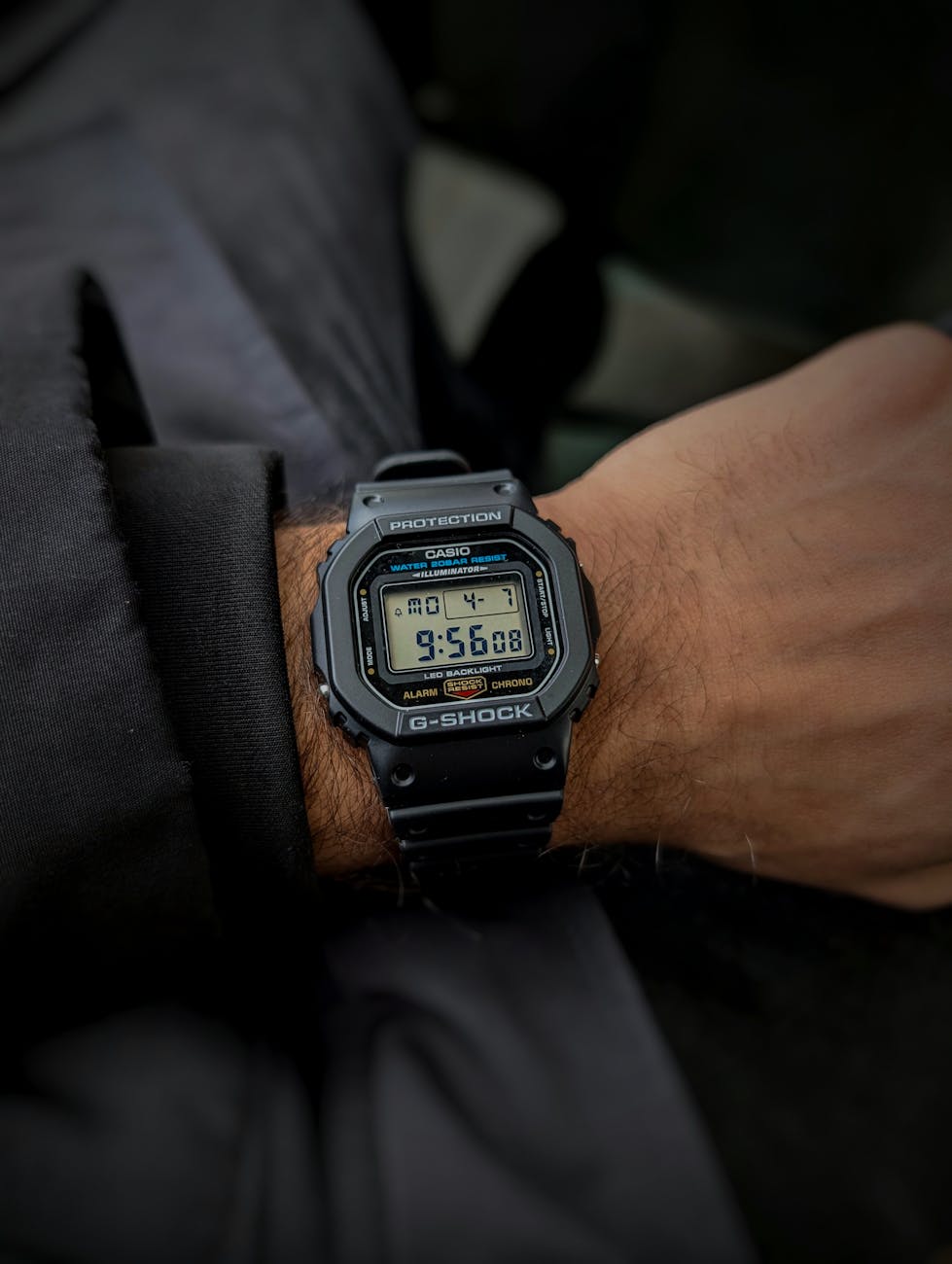
    Take a stroll through the horological asylum known as the watch community. What starts as an appreciation for precision craftsmanship often spirals into a neurotic fixation. A dive watch isn’t just for telling time—it’s for announcing to the world that you’re rugged, refined, and possibly ready to harpoon something. The desire to “elevate daily life” with just the right wrist candy turns into a slow-motion personality collapse. It becomes a lifestyle audition for an identity you don’t actually inhabit.

    The trap is cunning. At first, fashion promises transformation: a sharper silhouette, a touch of mystique, a sense of control in a chaotic world. But when the performance replaces the person—when dressing well becomes a proxy for purpose—you’re not elevating your life. You’re embalming it in linen and leather.

    The real tragedy isn’t vanity. It’s the way compulsive self-curation smothers empathy. Narcissism isn’t just annoying—it’s lonely. It dislocates you from community, connection, and anything approaching transcendence. A meaningful life, if it’s worth living at all, doesn’t orbit around the mirror.

    To be clear: there’s nothing wrong with looking sharp. Be fit, be stylish, radiate confidence. But when your wardrobe becomes your worldview—when you dress not to express but to impress—you trade depth for dazzle. You don’t become interesting. You become exhausting.

  • College Essay Prompt: Beyond Authentic: How Evolving Cuisines Tell Stories of Survival, Adaptation, and Identity

    College Essay Prompt: Beyond Authentic: How Evolving Cuisines Tell Stories of Survival, Adaptation, and Identity

    Overview:

    Write a 1,700-word argumentative essay examining whether dishes like birria ramen, orange chicken, Korean tacos, or Tex-Mex fajitas should be dismissed as inauthentic or embraced as culturally rich, adaptive expressions of immigrant creativity. Using the evolution of Mexican and Chinese food in the U.S. as your focus, evaluate how culinary “impurity” may reflect resilience more than betrayal.

    This assignment challenges the simplistic binary of cultural appropriation vs. cultural preservation by exploring how food evolves through migration, racism, class, capitalism, and the human need to survive—and thrive.


    Central Claim to Defend, Refute, or Complicate:

    Criticizing American Chinese and modern Mexican cuisine as “inauthentic” oversimplifies the historical, cultural, and economic forces that drive culinary evolution.


    Required Sources (Use at least 4, MLA format):

    • Gustavo Arellano – “Let White People Appropriate Mexican Food”
    • The Search for General Tso (dir. Ian Cheney, 2014)
    • Charles W. Hayford – “Who’s Afraid of Chop Suey?”
    • Cathy Erway – “More Than ‘Just Takeout’”
    • Kelley Kwok – “‘Not Real Chinese’: Why American Chinese Food Deserves Our Respect”
    • Jiayang Fan – “Searching for America with General Tso”

    Focus Questions to Consider:

    • What is gained or lost when immigrant cuisines adapt to mainstream tastes?
    • How have Mexican and Chinese-American dishes reflected creative survival strategies in the face of xenophobia or marginalization?
    • Is culinary “authenticity” a meaningful cultural value or an exclusionary myth?
    • How do evolving cuisines challenge stereotypes and redefine American identity?
    • Should food be judged by origin or by impact?

    Essay Requirements:

    • Length: 1,700 words
    • Format: MLA (12 pt font, double-spaced, Times New Roman)
    • Sources: At least 4 from the required list
    • Tone: Academic and analytical, but open to personal insight or cultural experience
    • Structure: Use the suggested outline below or build your own coherent structure

    Suggested Structure:

    Intro (200–300 words):

    • Open with the “authenticity” debate in food culture
    • Present the evolution of Mexican and Chinese cuisine as a case study
    • Clearly state your thesis: whether you defend, challenge, or complicate the rejection of “inauthentic” foods

    Section 1: Culinary Evolution as Cultural Power (400–500 words)

    • Use Arellano’s “adaptability” argument and The Search for General Tso
    • Explore how adaptation expands—not erases—culinary traditions

    Section 2: Food as a Tool of Survival (400–500 words)

    • Use Jiayang Fan and Cathy Erway to show how these cuisines offered paths to economic mobility and belonging
    • Address how racism shaped what was “acceptable” for the mainstream palate

    Section 3: Rethinking Authenticity (400–500 words)

    • Use Kelley Kwok and Hayford to interrogate what we even mean by “authentic”
    • Acknowledge that tradition matters—but argue that hybridity is the tradition of diaspora

    Section 4: Counterargument & Rebuttal (300–400 words)

    • Address critics who claim fusion or Americanized food dilutes culture
    • Rebut: show how adaptation often preserves a culture’s essence in new form

    Conclusion (200–300 words)

    • Reaffirm your thesis: evolving cuisine reflects the ingenuity, creativity, and endurance of immigrant communities
    • Reflect on how accepting culinary adaptation challenges us to redefine American identity itself

    Final Notes to Students:

    This essay isn’t just about food—it’s about the stories food tells. Let your argument reflect that complexity. Engage deeply with your sources, and don’t be afraid to explore tensions: pride vs. commodification, tradition vs. survival, innovation vs. erasure.

  • The Fisherman’s Stew Massacre: One Man’s Descent into Bibless Madness

    The Fisherman’s Stew Massacre: One Man’s Descent into Bibless Madness

    I still feel the stink of embarrassment from three years ago when we celebrated our twin daughters’ birthday by venturing to an upscale seafood joint—the kind of place where the prices are more bloated than the waitstaff’s sense of self-importance. As usual, I asked the waiter for his recommendation. His eyes lit up with the kind of zeal you usually reserve for cult leaders and pyramid scheme recruiters. He practically waxed poetic about the Fisherman’s Stew, describing it as if it had been lovingly ladled straight from a beautiful peasant’s cauldron of culinary magic in some idyllic coastal Italian village. Like a sucker, I bought into the fantasy, completely unaware that I’d just ordered a one-way ticket to an all-you-can-eat nightmare served with a heaping side of public humiliation.

    When the dish finally arrived, I didn’t get the warm, comforting bowl of seafood nirvana I’d envisioned. Instead, I was presented with what can only be described as a DIY surgery kit. This wasn’t silverware—they handed me actual surgical tools. A scalpel? Check. Serrated forceps? Check. Shell-crusher and lancet knife? Double check. At that moment, I wasn’t sure if I was supposed to eat the meal or perform an emergency appendectomy on a crab.

    Naturally, I asked for a bib because even gladiators need armor before going into battle. But no, they were fresh out of bibs. So there I was, defenseless and metaphorically naked, staring down a bowl that looked like it had been dredged up from the deepest, darkest corner of the ocean—probably after losing a fight with Cthulhu. The stew was a boiling pit of doom, brimming with spiky, hostile shellfish that seemed to have a stronger will to live than I did at that moment.

    What followed wasn’t so much a meal as a desperate struggle for survival. I found myself locked in mortal combat with crabs that clung to their shells like they were auditioning for a role in Jurassic Park: The Seafood Edition. I stabbed at shrimp with the precision of a neurosurgeon on his fifth Red Bull, and I tried to crush lobster claws that mocked my feeble human strength. Sweat poured down my face, mingling with brine, cioppino sauce, and random bits of squid that had escaped their doomed fate. By the end, I looked like I’d just gone twelve rounds with a giant squid—and lost every single one of them.

    The waiter, blissfully oblivious to the war zone he’d created, strolled over and had the audacity to ask how my meal was going. With my face and bald head smeared in a ghastly mix of perspiration, tomato sauce, and assorted shellfish shrapnel, I told him I’d be happy to provide feedback as soon as I finished the American Gladiators obstacle course that apparently came with my entrée. I then kindly asked him to fetch me a spare pair of pants, a T-shirt, a power drill, and some safety goggles, because clearly, I had gravely underestimated the intensity of this dining experience.

    Meanwhile, my daughter—bless her little heart—had commandeered my wife’s phone and was gleefully documenting my descent into madness. She snapped photos like some twisted paparazzo, each one capturing another level of my mental disintegration. Naturally, these shots were uploaded to Snapchat in real-time, complete with captions that probably read, “Watch Dad Lose His Dignity, One Crab Claw at a Time.”

    The whole point of taking your family out to dinner is to relax, to enjoy a pleasant evening, right? Wrong. Instead, I found myself in what felt like a cage match with an octopus that had no intention of going down without a fight. By the end of it all, I wasn’t just exhausted—I was a shell-shocked survivor of the Great Seafood Massacre of 2024, wondering how what was supposed to be a simple dinner had turned into an episode of Survivor: Shellfish Edition.

    But the true coup de grâce of the evening? My daughter proudly showed me the photos she’d posted online. In every shot, my face looked like it had been smeared with an abstract painting made entirely of sauces and cheeses. My chin had tripled, my eyes were glazed over like a stale doughnut, and I resembled nothing less than a bloated corpse that had washed ashore after a particularly rough night. The image I once held of myself as a halfway decent human being? Long gone. In its place, a digital monstrosity for all the world to see.

  • Snackjection

    Snackjection

    When I was five, my father constructed a treehouse that stood like a beacon of childhood ambition in the Flavet Villages Apartments in Gainesville, Florida. It was a fortress, a palace, a skyscraper reaching for the heavens—at least in my young mind. In this realm of wood and nails, I sought to assert my dominion, and what better way than with the power of Sun-Maid raisins? One fateful day, I lured Tammy Whitmire to ascend the tree’s wooden slats by brandishing the ultimate weapon: a box of Sun-Maid raisins. This wasn’t just any box; it featured the Sun-Maiden herself, a radiant figure holding a colossal tray of grapes. Her red bonnet and the halo of yellow light marked with white triangles around her head made her look like the Great Raisin Angel, a deity of dried fruit. Tammy, captivated by the angelic glow of the Sun-Maiden, climbed up to join me. Victory seemed imminent until Zane Johnson, lurking in a nearby tree, emerged from a leafy cluster and shattered my triumph. With a smug grin, he declared he had something far superior to my measly raisins: Captain Kangaroo Cookies. These weren’t just cookies; they were double-fudge, cream-centered cookie sandwiches, the culinary equivalent of Excalibur. In the brutal marketplace of childhood affections, my raisins didn’t stand a chance. Tammy, seduced by the allure of Zane’s superior snacks, descended my tree faster than a squirrel on espresso and sprinted to Zane’s treehouse. There, they feasted on the decadent cookies, leaving me alone with my pitiful box of raisins. My reign had ended before it began. Crushed by the betrayal, I reclined in my treehouse and sobbed myself to sleep. But the universe wasn’t done with me yet. I awoke hours later to a stinging horror: my body was swarmed by red fire ants, drawn to the sweet raisins. My skin felt like it had been lashed by a thousand stinging nettles. In agony, I bolted to my apartment where my mother, horrified, gave me a scalding bath to rid me of the ants. In the battle between Sun-Maid Raisins and Captain Kangaroo Cookies, the cookies had won, and I had learned a painful, itchy lesson about the power of snacks and the fickleness of friends.

    This traumatic memory was my introduction to Snackjection–the  soul-bruising humiliation that occurs when your lovingly curated snack—especially one featuring wholesome packaging like a bonneted raisin maiden—is publicly rejected in favor of a rival’s more brand-name, sugar-slicked treat. Often inflicted during the high-stakes snack diplomacy of childhood, Snackjection delivers a one-two punch: the collapse of your social standing and the realization that Captain Kangaroo cookies wield more romantic sway than your dried fruit ever will.

    Symptoms may include:

    • Sudden loss of confidence in your snack brand identity
    • Emotional exile to a solo treehouse
    • Uncontrollable sobbing followed by an insect siege
    • Existential questioning of why the Sun-Maid looks holy but delivers only heartbreak

    Snackjection is the snacktime equivalent of being left at the altar for someone with a lunchbox full of TV tie-in sugar bombs.

  • The Man Who Loved Podcasts Too Much

    The Man Who Loved Podcasts Too Much

    Last night, I was in my kitchen, casually sharing shrimp, cocktail sauce, and champagne with public intellectuals Andrew Sullivan and Reihan Salam. As one does. We dove headfirst into the big topics: public policy, identitarianism, the collapse of critical thinking in echo chambers, and the shaky health of democracy. Between bites of shrimp and sips of champagne, we reveled in our status as lifelong learners, trading stories about childhood, lost pets, first crushes, and bouts of existential despair. The shrimp bowl magically replenished itself, and the champagne glasses never emptied. It was glorious—three intellectual heavyweights, solving the world’s problems, toasting to friendship and intellectual curiosity. For a fleeting moment, I felt like I’d reached peak existence: camaraderie, enlightenment, and a deeply inflated sense of self-worth, all in one glorious, shrimp-fueled evening.

    Only it didn’t happen.

    I was dreaming, my subconscious hijacked by The Dishcast. This is my nocturnal routine: When I go to bed at night, I fall asleep to a podcast and, before long, I’m the star guest. There I am, delivering profound manifestos about the human condition, my opinions urgently needed and universally admired.

    When I woke up, the camaraderie still lingered, as if Andrew and Reihan had just slipped out the back door, leaving only a faint echo of laughter.

    This happens all the time. In my dreams, I’m not just a listener—I’m part of the podcast universe, slapping backs, sipping champagne, and dropping truths no one dared to utter. Reality, by comparison, is disappointingly quiet.

    Clearly, podcasts are taking too much bandwidth in my brain. I’m not alone. Like millions of others, I’ve practically taken up residence in the world of podcasts. My life runs on a steady soundtrack of conversations and monologues, piped directly into my ears while I swing kettlebells, pedal my exercise bike, grade uninspired writing assignments, cook, eat, and scrub the kitchen into submission. Podcasts are my companions for post-workout naps, my co-pilots on the commute, and my salvation during middle-of-the-night insomnia—the kind where you wake up at 2 a.m., stare at the ceiling, and hope a familiar voice can lull you back to sleep before dawn.

    In total, I must rack up over a hundred hours of podcast listening every week. I spend more time in the podcast multiverse than in the real one, and inevitably, these voices have taken up permanent residency in my brain. Some of these parasocial relationships I welcome with open arms; others, I tolerate with the resigned grumbling of a bad roommate. And then there are the hosts who commit unforgivable sins—becoming smug, tedious, or worse, preachy—earning themselves a one-way ticket to oblivion. In this universe, the delete button is my only weapon, and I wield it without mercy.

    Living in the podcast world as I do—where most of my waking and sleeping hours are dominated by disembodied voices—I’ve started asking some uncomfortable questions. Have I, like millions of others, surrendered my brain to the podcasters, letting them hijack my mental real estate to my own detriment? Am I so immersed in podcast life that I’ve lost all perspective, like a fish in water, oblivious to how wet it is?

    What am I really after here? Entertainment? Wisdom? A surrogate friend? Or just noise to drown out the endless chatter in my own head? Why do some podcasts stick while others fall by the wayside? Are my favorites truly brilliant, or just slightly less irritating than their competition? Is it their buttery voices, sharp wit, or the fact that they don’t seem to realize they’ve become permanent fixtures in my inner monologue?

    Could I live without podcasts? Would the silence reveal things about myself I’m not ready to confront? What do I call that blissful, cozy state when I’m wrapped in the warmth of a trusted voice? Podcastopia? Earbud Nirvana? Sonic Solace? And is it possible to “love” a podcaster too much, like when I know their pet’s name but can’t remember my sibling’s birthday?

    Am I escaping something? Is this obsession a creative pursuit or an elaborate scheme to avoid existential dread? And most importantly, does this insatiable consumption mean something is deeply, hilariously wrong with me? Or does it point to something more profound—a need for a new word to describe the bottomless, soul-deep immersion of chasing episode after episode like a digital hunter-gatherer?

    Yeah, I’ve got questions. But it might be too late. I may already be The Man Who Loved Podcasts Too Much.

    After waking up from my dream of hanging out with Andrew Sullivan and Reihan Salam, I crept into the kitchen for breakfast–a self-inflicted atrocity of overnight oats. Not just any overnight oats, mind you, but a Trader Joe’s variety touting “ancient grains,” as if the endorsement of long-dead civilizations could somehow redeem the experience. Spoiler: it didn’t. Despite my best attempts at culinary CPR—vanilla protein powder, a smattering of berries, and a dusting of pumpkin spice—the result was still cold, gluey sludge, the breakfast equivalent of a wet handshake.

    Each spoonful felt like a personal affront, a betrayal by my own hands, as though I had willingly prepared the kind of gruel Dickensian orphans would revolt over. The texture was an abominable mix of paste and gravel, and the cold temperature screamed “punishment” rather than “sustenance.” By the end, I wasn’t just eating; I was enduring. Mental note: next time, boil this nonsense into something remotely edible—or toss it and make a proper breakfast for a self-respecting adult.