Tag: love

  • Farewell to the High-Flame Watch Obsession

    Farewell to the High-Flame Watch Obsession

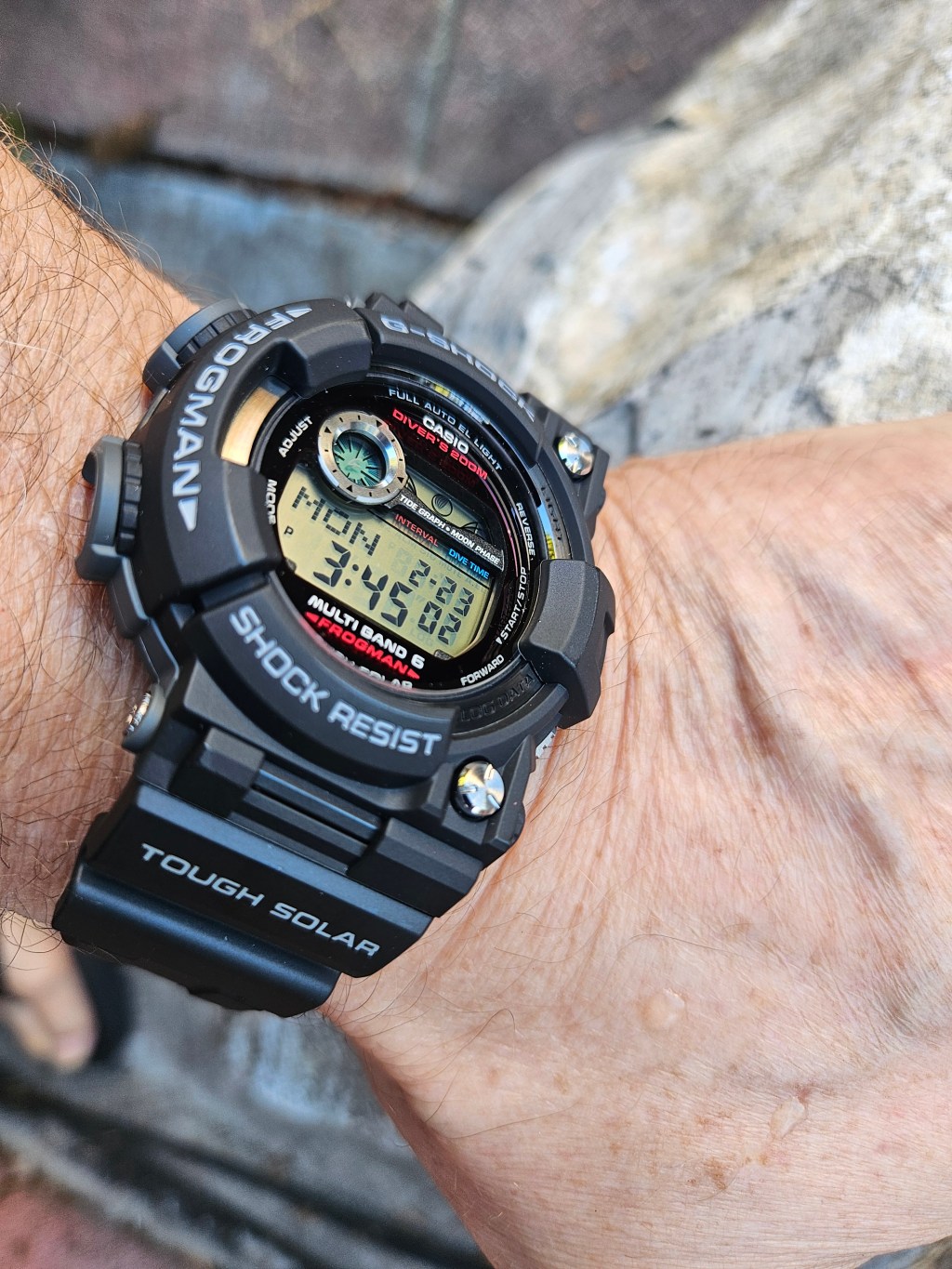
    If someone asks, “Are you still into watches?” the honest answer is yes—but only in the slow-cooker sense of the word. The blaze that once roared is now a gentle simmer. I still enjoy my small, modest collection, but the thermonuclear fervor that once powered my YouTube monologues has cooled to something approaching sanity. For a decade I curated my watch fixation online with the zeal of a man possessed. That’s part of the job: intensity, enthusiasm, obsession on command. You don’t just talk about watches; you produce engagement about the engagement, feeding the ouroboros of social media in which people watch reaction videos about reaction videos reacting to the initial spark. It’s performance art—performance about performance.

    But those days are over. I am retired from the high-flame watch world. Age has something to do with it—priorities recalibrate whether you consent or not. At sixty-four, the thrill of “wrist presence” and the quiet barbarism of masculinity farming with a steel hockey puck strapped to my arm don’t summon the same dopamine. The fantasy of a watch transforming me into a rugged Alpha Male now feels like cosplay designed by an exhausted algorithm.

    The bigger shift, though, is psychological. I haven’t bought a watch in five months. I no longer spray Instagram with daily wrist shots. I no longer agonize over whether to vaporize five grand on this dial or that bezel or which “ultimate rotation” best aligns with my personal mythology. The absence of that noise feels like relief—a weight lifted, a gratitude bordering on spiritual.

    Low-flame mode offers a different kind of bandwidth. I can sit at my desk in the morning with no cravings, no micro-desires, no consumer fantasies tugging at my neurons. I can actually face the quiet—deal with the emptiness directly rather than embalming it with luxury steel. That absence is clarifying. It demands something of me besides swiping a credit card.

    Does low-flame mode mean I’ve quit watches? No—it means I’ve quit a particular orientation toward watches. This essay grew out of a small revelation I had yesterday: you don’t retire from X entirely, and X doesn’t retire from you entirely either. Instead, you negotiate a polite breakup. You acknowledge each other’s contributions, exchange your things, and move on. The High-Flame Watch Obsession and I have parted ways. We won’t be seen in public together again.

    Do I mourn this? Not really. I have complicated feelings, sure, but I don’t feel like Lot’s Wife, craning my neck for one last look at the fever swamp of my own compulsions. Mostly, I feel relieved. Mostly, I feel curious—what will life look like now that my brain is no longer a storage unit for lug widths, torque tolerances, and bracelet micro-adjustments? The quiet is unsettling, but it’s also promising. I finally have room for something else.

  • Flashback to Tony Banks’ “Afterglow”

    Flashback to Tony Banks’ “Afterglow”

    The podcast conversation between Andrew Sullivan and George Packer left me with a kind of Boomer melancholia: the sense that the world is shifting beneath our feet while we stand rooted in place. The young don’t believe in our institutions, our democracy, or our economic promises. We no longer share a common reality; instead, we inhabit digital bunkers curated by conspiracy brokers who can elevate grifters to national power. Boomers—myself included—feel sidelined, stunned, and a little ghostlike as a new world rises and shrugs us off. I carry that heaviness alongside the throb of my torn rotator cuff, which still jerks me awake at two in the morning. My shoulder and my generation feel similarly compromised: stiff, unreliable, and unable to perform the way they once did.

    These thoughts ambushed me this afternoon as I walked into my bedroom to grab my things before picking up my daughters from high school. Out of nowhere, a song from my teens surfaced—Genesis’s “Afterglow,” written by Tony Banks. It appears on A Trick of the Tail, but the definitive version is Phil Collins’s live performance on Seconds Out, where the ache in his voice makes the song feel like a confession. The narrator wakes from a spiritual coma to realize the world he trusted is gone and he’s broken along with it. In that ruin, he yearns to surrender himself to something higher—love, purpose, the purifying clarity of devotion. It reminded me of Nick Cave’s conversation on Josh Szeps’s Uncomfortable Conversations, where Cave describes his own devotional temperament and his hunger for transformation. “Afterglow” feels like the soundtrack to that kind of awakening.

    But not everyone hungers for that kind of epiphany. I’m not sure my heroes Larry David, George Carlin, or Fran Lebowitz would ever have an Afterglow Moment, and I don’t think they should be judged for it. Some people thrive without chasing transcendence. I know that I, like Nick Cave, feel broken in a broken world and remain open to whatever cleansing revelation might come. But I don’t mistake that for a universal template. If I ever had an Afterglow Moment and found myself at dinner with Fran Lebowitz, I’d keep the whole thing to myself. There’s no reason to evangelize the converted—or the happily unconcerned.

  • The Cruel Irony in Tatiana Schlossberg’s Fight to Live

    The Cruel Irony in Tatiana Schlossberg’s Fight to Live

    A few nights ago, I was tired of screens from setting up my Mac Mini desktop all day, so in bed, I put my laptop aside, reached for a print copy of The New Yorker, and read Tatiana Schlossberg’s essay “A Battle with My Blood.” On May 25, 2024, she gave birth to her daughter; on that same day she was diagnosed with acute myeloid leukemia, complicated by an especially cruel mutation called Inversion 3. She had to take in her newborn and her mortality in the same breath. Since then she has endured chemo, transfusions, and CAR-T-cell therapy—the same therapy that saved my brother from Burkitt lymphoma—while living under a prognosis that predicts she has a single year left at age thirty-four. The essay lodged itself in me, and I can’t let it go.

    Before reading her piece, I knew nothing about Schlossberg, except now I know she is the cousin of Robert F. Kennedy Jr., the newly appointed Secretary of Health and Human Services. It would be high satire if it weren’t real: she fights for her life while her cousin, a former heroin addict and tireless distributor of vaccine misinformation, dismantles the very funding streams that support leukemia research. Her mother even wrote to the Senate to block his confirmation, pointing out that he has never worked in medicine, public health, or government. It didn’t matter. He was confirmed anyway, as if spite were a qualification.

    Schlossberg wants to live long enough for her children to remember her. Her cousin’s policies seem engineered to ensure the opposite—not just for her, but for countless patients who depend on the research he’s busy defunding. Her fight is intimate; his carelessness is national. And it’s impossible not to feel the cruelty of that collision.

  • For Twenty Years, Regret Drove My Watch Hobby

    For Twenty Years, Regret Drove My Watch Hobby

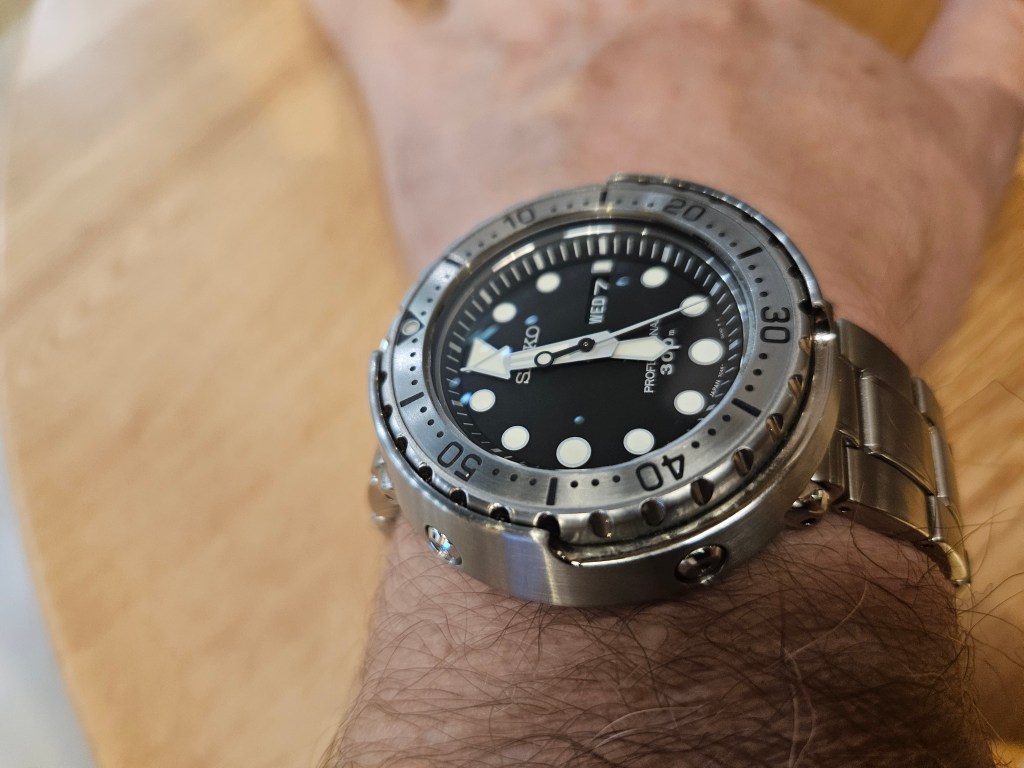
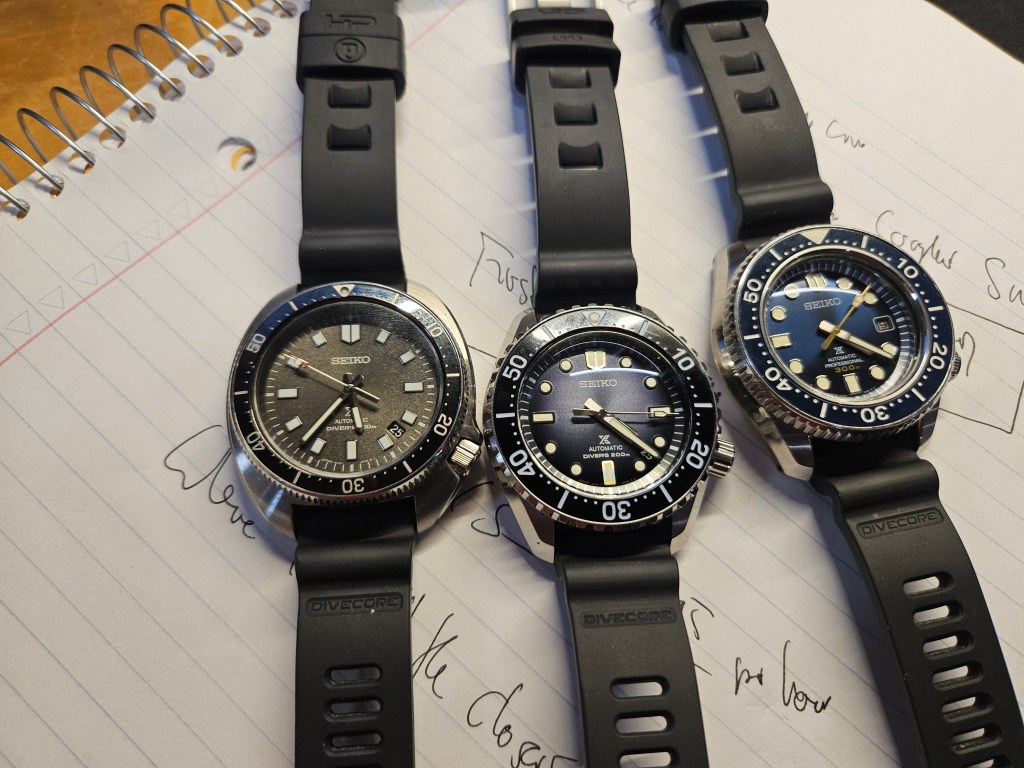
    I’m four months into shoulder rehab for a torn rotator cuff, and I’m sad to report that after laying off Motrin for 36 hours, the pain and inflammation came roaring back in my left shoulder. Not surprisingly, during these last four months of shoulder obsession, my watch obsession has taken a back seat. About a month ago, I did a brief experiment with my collection: I put bracelets on three of my Seiko divers. That lasted less than a week. All seven of my divers are back on straps.

    I’m not currently buying or selling watches, and I don’t have much left to say about my collection that I haven’t already said. But my all-consuming watch obsession has transferred to healing my shoulder, and that distance from the hobby has given me a few insights I didn’t have before. I realized I’m not just a watch addict. If I peel back the layers beneath the shiny timepieces, what I’m really addicted to is regret. For twenty years, regret drove my watch hobby. The thrill wasn’t owning a new diver; it was convincing myself I’d bought the wrong one. I always needed something better, so I’d sell the old one and replace it with a new model. Then one of two things would happen: I’d miss the old one or want to replace the new one with something even newer. Either way, regret was the engine. I was constantly second-guessing myself and spinning my wheels. My watch hobby became a soap opera with the same tired plot: What Could Have Been.

    Regardless of the purchase, I was overwhelmed with regret. I bought watches that were too big, too small, too dressy, too blinged-out—each one a personalized regret grenade.

    Letting the collection creep past seven was another fiasco. Anything over that number triggered what I call “Watch-Rotation Anxiety,” a condition where choosing a wristwatch feels like negotiating a hostage release.

    When the regret overwhelmed me, I tried to smother it with another purchase. A new watch fed my brain with fresh dopamine and adrenaline, but it was just a band-aid. Regret always returned.

    As I descended into this regret-feedback loop, I entered a phase I call Gollumification. Gollum didn’t turn into a demon overnight—his soul disintegrated over centuries. Like a Holy Grail diver watch, the Ring promised specialness, superiority, and shortcuts to power. He committed desperate acts to keep it. He murdered and then lied to himself about why. Clinging to the Ring as his last scrap of identity, he withered into a sad, lonely creature.

    That’s why Gollumification resonates today—it’s a slow-motion collapse. You don’t need the Ring to become Gollum. Any addiction will do. Isolate yourself, feed an obsession, and treat your desires as the only truth that matters. Eventually, the human being disappears and Gollum takes over.

    So has this distance from watches cured me of my inner Gollum? No, not really.

    I’m still addicted to the soap opera of regret.

    Regret addiction is very real for me. I’m going through it right now, but not with watches—this time it’s computers. I spent six months researching a desktop to replace my seven-year-old Windows laptop. Recently, I bounced back and forth between a small form factor Windows machine and a Mac Mini. I ended up buying two Mac Minis—one for me and one for my wife. She’s fine with hers because she’s used Mac OS for the last decade, but I’ve been on Windows.

    For the last three days, I’ve hated my life. The Mac Mini is a great computer, but I miss Windows. I miss the way Windows accepts all my peripherals—mechanical keyboards, printers—without any fuss. I don’t feel at home on Mac OS at all. I’m actually using Google Chrome on my Mac Mini. Why? Because I’m homesick for Windows. It’s like the American who goes to Paris and misses home so much he goes to McDonald’s just to feel normal again.

    That’s where I’m at. I’m overcome with regret.

    Here’s how bad it is: Yesterday, after my workout, I wanted to get on a computer for fifteen minutes before taking a nap, and I didn’t want to use the Mac Mini. I resented it. So instead I went into my room and used my old Windows laptop—just to get a taste of home.

    My engineering friend Pedro is coming over this weekend to help me connect my peripherals to the Mac Mini and teach me how to use the command keys on my mechanical keyboard so I can feel more comfortable. He assures me the regret is temporary, a necessary transition that will fade as I acclimate to the Mac Mini.

    We shall see. The thing is: I think I’m addicted to regret.

    All of us are. Go on watch-message boards and you’ll see watch obsessives crying for help—paralyzed by indecision, regret, self-doubt, and lost Holy Grails.

    I suspect the watch hobby is just a proxy for the human hunger for high stakes. If you’re full of regret, the drama makes you feel like you’re in a meaningful battle. You’re a man living too comfortably inside the cave with your WiFi, your Internet, your Netflix, and your Cocoa Puffs. You need adventure. You need a deep-sea diver on your wrist while navigating Google just to feel like you’re sailing the Seven Seas.

    Regret is the soap opera of suburban man. He’s trapped in his cave and wants to escape, but he also wants to avoid traffic—so he’s stuck. To escape his confinement, he creates soap operas in his mind. And in doing so, he discovers that regret is a powerful tool. It fuels his watch addiction, and when that addiction quiets down, the hunger for regret leaks into other decisions: Windows or Mac, Honda Accord or Toyota Camry, Thai or sushi.

    Regret makes inconsequential decisions feel consequential. When we confront this truth, we see how ridiculous we are.

    It’s time to turn the page and move on to the next chapter. I just hope the next chapter is one without a sore shoulder.

    That’s it. I can’t go on anymore. I’m overcome with regret.

  • Misaligned with the Modern World

    Misaligned with the Modern World

    My torn rotator cuff was a warning of something I should have seen coming: creeping toward your mid-sixties is less a rite of passage than a crisis of competence. Or, to be precise, it’s a progressive misalignment with the modern world. You drop references to Danish Go-Rounds, Screaming Yellow Zonkers, Tooter Turtle, Super Chicken, and All in the Family and watch blank faces stare back at you. You still assume that appliances are built with the sturdiness of yesteryear, only to find that today’s models disintegrate if you breathe on them sideways. This misalignment breeds a special kind of incompetence—egregious, preventable, humiliating.

    You can swallow vats of triglyceride omega-3 fish oil, but the short-term memory still slips away without mercy. You forget where you parked your socks (on the couch), that you meant to watch the final episode of that crime docuseries on Netflix, that a Costco-sized case of 12-gallon trash bags lurks in the garage, or that you already ground tomorrow’s coffee beans. The indignities pile up like unopened mail.

    These lapses, coupled with your fossilized references to extinct foods and beloved TV shows, render you a creature out of phase with the universe—an alien with wrinkles, blinking in confusion, flashing your unearned senior discount at the box office like it’s a badge of relevance.

    You can flex all you want against this verdict. Wolf down 200 grams of protein daily, clang kettlebells in the garage, and polish yourself into the semblance of a beaming bodybuilder who could pass for forty-four instead of sixty-four. But that delusion ends the second you get behind the wheel at night. Your depth perception is a cruel joke. The glare of headlights and streetlamps slices into your worn irises like laser beams, reminding you that biology—not discipline—is running the show.

    Like it or not, you’re aging in real time, a public spectacle of decline, the unwelcome prophet of mortality who shatters the younger generation’s illusion that time is indefinite. To them, you are as pleasant a presence as a neighbor’s dog barking at a squirrel at six a.m.—loud, unnecessary, and impossible to ignore.

    Congratulations–you’ve become the world’s unwanted alarm clock.

    My sense of misalignment with the world—along with the creeping incompetence that tags along with it—hit me square in the jaw in late September 2025, one month shy of my sixty-fourth birthday.

    It happened on a Saturday evening. My wife, a spring chicken at fifty, had night-driving duty, which now includes chauffeuring our teen daughters to and from Knott’s Berry Farm at closing time. She can handle glare and depth perception; my irises, however, are shot, so I stay home.

    Before leaving, she reminded me she’d be back in ninety minutes with not only our daughters but two of their friends, who would pile into the living room for a horror movie called Weapons. My task was humble: BLTs for the horde. She had assembled the sourdough, bibb lettuce, mayonnaise, and beefsteak tomatoes. All I had to do was bake two packages of turkey bacon. I asked when to start. She told me: cook it at five, eat my dinner alone, and she’d prep sandwiches for herself and the kids when they returned. And, since the girls had dibs on the living room, she and I would retreat to the bedroom to watch TV.

    So I dutifully cooked the bacon (in one tray, but we’ll get to that), made myself a sandwich, and felt ridiculously proud. I had suggested adding BLTs to our dinner rotation and here was proof that my idea, embraced by my family, tethered me—however briefly—into alignment with them.

    I capped off the meal with apple slices and mission figs, then decided to test the three-year-old Samsung QLED in our bedroom, which hadn’t been turned on since I’d moved it from the living room. That spot had been usurped by our new LG OLED. The LG was fine, except its remote summoned a ghastly leaf cursor on-screen, forcing you to point and shoot instead of just pressing buttons. A tremor in the hand and you’d select the wrong thing. Still, we had it tuned to Cinema Mode to dodge the dreaded “soap opera effect,” and the LG performed well enough.

    Around six p.m., I plopped on the bed and powered up the Samsung. To my horror, half the screen was draped in black vertical lines, like a digital funeral shroud. The likely culprit? With a torn rotator cuff in my right shoulder, I stupidly did a solo clean-and-jerk onto the dresser—an Olympic lift without chalk, belt, or applause. The pain in my left shoulder was minimal. However, the impact probably fractured the TVs internal circuits invisible to the eye. Or perhaps a ribbon cable had shaken loose from the T-Con board, the kind of thing you might fix if you were comfortable performing micro-surgery with tweezers. I am not. That Samsung was marched to my office and exiled to the growing eWaste Waiting Area, a mausoleum for electronics that had lost their duel with me.

    But I was not done failing. I headed to my daughter’s room for Samsung Number Two—a two-year-old set I’d given her after last week’s reshuffling. The plan: reclaim the Samsung, and saddle her with the eleven-year-old 43-inch LG, which weighs twice as much as the supposedly bigger Samsungs.

    Hubris, however, is a loyal companion. Samsung Number Two sat high on her dresser. I approached like a gorilla in a hurry, arms eagle-spread. My right thumb betrayed me: it pressed into the panel with a sickening crackle, leaving a dent in the digital flesh. In a fit of magical thinking, I told myself, “It probably bounced back.” Reality arrived the moment I powered it on: fresh black lines glared from the wound, precisely where my Hulk thumb had struck.

    Two lessons seared themselves into my brain in those five minutes. First: modern TVs are absurdly fragile, delicate to the point of parody compared to their beefy ancestors. Second: I am unspeakably stupid.

    When my wife came home, the girls claimed the living room. She inspected the bacon and recoiled. “You didn’t spread it out,” she scolded. “You piled it on one tray. You should have used two.”

    “But two trays don’t fit in the toaster oven,” I countered.

    “Use the big oven.”

    “The bacon was fine,” I insisted, noting how transcendent my sandwich had been. She remained unmoved, cooked another batch herself, and then I broke the news about the TVs. She immediately texted her friends, who replied with the rolling-eye emoji. She rarely shares the emojis her friends lob back at my antics, but even she couldn’t suppress this one.

    The next morning, I texted my engineering friend Pedro, who invited me to lug the broken Samsungs to his place. He loaded them into his car and promised to take them to his jobsite’s eWaste disposal. That act of disappearance soothed my wife. For closure, I bought a $300 Roku TV for the bedroom. This time, no clean-and-jerks—just white velvet gloves.

    And no grunting.

    But the adjustments keep coming. I’ve learned not to talk too loudly in the morning while the twins sleep. I remember to rest my thumb on the bathroom lock so the door doesn’t fire off a pistol-crack at 2 a.m. during a bladder run.

    Still, no matter how many tweaks I make, I feel perpetually out of alignment. My torn rotator cuff reminds me that I am an old car with bald tires: once-grippy treads worn down to slick rubber, skidding across every patch of life. Just as a car with crooked alignment wobbles down the road, tugging against the driver’s will, so too does an old soul with fading memory and fossilized references lurch out of sync with the modern world. Both make unsettling noises, both grind themselves into uneven wear, and both provoke the same grim thought in bystanders: maybe it’s time for a realignment—or at least a new set of wheels.

  • Camp Flog Gnaw: The Weekend That Broke My Driving Career

    Camp Flog Gnaw: The Weekend That Broke My Driving Career

    Camp Flog Gnaw was a weekend-long bacchanal of sound and sweat for my wife and our twin daughters, two days of music and mayhem baked under the unforgiving Los Angeles sun. My wife braved the trip on Friday and came home looking like a survivor of a maritime disaster, muttering that leaving Dodger Stadium traffic was like trying to escape a collapsing pyramid. She begged me to handle Sunday drop-off and assured me they would Uber home like civilized people. Armed with a “Fast Pass” for the 110 North, I engaged Google Maps, which promptly betrayed me and sent me barreling into downtown—an urban obstacle course specifically engineered to destroy men my age. Pedestrians sprang into the street like feral pigeons, daring me to earn a manslaughter charge. Driverless Waymo cars drifted past me with pastel-lit antennae, cheerful like clown hearses guiding me into the underworld. The lanes themselves seemed painted by committee: solid, dashed, turning, not turning, red, green, “maybe stop,” “maybe don’t”—a psychedelic optical exam administered at 20 mph.

    When I finally dropped off my wife and daughters, I whispered a confession to my wife: “I think I’m giving my Accord to you, and the other car to the girls. I’m retiring from the driving game.” They didn’t laugh; they’ve seen cracks in the armor. I’m a high-strung man, and at sixty-four, the neurons don’t fire like they used to. I can still handle a five-mile radius around my house—my personal demilitarized zone—but pull me into the wilds of Los Angeles traffic and I’m ready to hang up my driver’s jersey. Downtown LA isn’t a city. It’s a gladiatorial arena where the young come to dominate, and I say to myself, “This is no country for old men.” 

  • The Myth of the Inner Circle

    The Myth of the Inner Circle

    It’s wired into the species—not just the desire to belong, but the craving to belong intensely, to slip past the outer ring of acquaintances and take a seat inside the inner ring, the secret hearth where the real warmth allegedly lives. Decades ago, I convinced myself I had secured that coveted spot within my friend group. Then came the day I wasn’t invited to what I imagined was a grand, festive gathering. One tiny exclusion detonated my entire reality. I felt betrayed, humiliated, and terrified. Had I been exiled? Had I never belonged at all? What kind of fool mistakes polite laughter for fellowship? The hurt settled in for years. I saw myself as a wounded wolf limping away from the pack, nipped at the heels, slipping into the freezing brush alone—shivering, haggard, staring back at the others as I wondered what was left for me now.

    Three decades later, the story has taken on different contours. If I’m honest, I suspect I was never part of anyone’s inner circle; I was the victim of my own wishcasting. My glum tendencies—funny in small doses, exhausting in larger ones—probably nudged me to the periphery from the start. And in a twist more humbling than any imagined exile, I eventually learned the friend group didn’t have an inner circle at all. After one member retired, another admitted they rarely saw each other, that their camaraderie had been built on workplace convenience, not tribal loyalty. My grand narrative of being cast out by a cabal of insiders evaporated. There had been no cabal—just ordinary friendships and my own melodramatic imagination.

    So now the task is simple and difficult at once: forgive myself for the fears and delusions that shaped the story. Reclaim myself. Return to the only inner circle that was ever guaranteed—my own. Maybe that hunger for return is the quiet power of religion: the promise that we can wander, fall apart, and still be welcomed home. The myth of my “expulsion from the inner circle” now feels biblical in scale, a parable of longing not just for belonging, but for wholeness, acceptance, and the grace of being taken back as I am.

  • Anhedonia: The Teacher We Deserve

    Anhedonia: The Teacher We Deserve

    People are using GLP-1 drugs not just to manage their weight but to sculpt themselves into something that looks less like a person and more like a medical emergency waiting to happen. They’re chasing an aesthetic so gaunt it should come with an IV drip and a gurney. It’s the old human trick: take a good thing, drive it straight past moderation, and plunge it into the abyss.

    We’ve done it forever. In the 70s, we didn’t aim for a tasteful tan; we baked ourselves into mahogany idols so glossy and dark we made strangers gasp with envy—never mind that we were essentially slow-roasting our epidermis. We didn’t want cars; we wanted gas-guzzling behemoths that could outgrowl every engine on the boulevard, even if they drank fuel at 8 miles per gallon. Our bodybuilders juiced themselves into tragicomic animations—bulging, veiny caricatures who collapsed under the very mass they worshipped.

    We do it with art, too. A classical Spotify playlist that began as a polite nod to Haydn mutates into a 300-hour monster stuffed with every composer who ever touched a quill. Coffee? We don’t sip it; we mainline it until it tastes less like roasted beans and more like chemical punishment. And watches? We buy so many that the simple act of choosing one in the morning becomes a hostage negotiation with our own shame.

    Somewhere in this carnival of excess, a king once turned everything to gold and discovered he’d built himself a private hell. We’ve just updated the myth with better tech and worse impulse control.

    Thankfully, we also have a counter-teacher: anhedonia. That deadening of pleasure, that bleak emotional flatline, arrives like a stern therapist with a clipboard and informs us that the thrill is over and the chase was a lie. It tells us the secret we never want to hear: extremes always collapse. And only then—dragged back from the edge—we crawl toward equilibrium, toward something like balance, toward a life that feels human again.

  • My White Stallion from Hell

    My White Stallion from Hell

    Last night I dreamed someone repossessed my sensible car and swapped it for a giant white truck — part Tonka toy, part overcaffeinated stallion. This thing didn’t drive so much as impose its will, snorting diesel and self-actualization. It anticipated my needs, turned on by itself, and barreled toward destinations like it had read my calendar and resented my free will. Worst of all, it absorbed my own impulses, amplifying my compulsive streak like a steroidal spirit animal with road rage.

    It respected nothing. Barriers, fences, construction zones — all mere suggestions. The truck treated civic infrastructure like bubble wrap: there to be popped for pleasure.

    Then the fever dream deepened. The truck stretched, swelled, and reinvented itself as a boat, because why limit your delusions? It ferried my wife and me to Newport Beach and slid us over a canal toward some sleek restaurant where every entrée probably came with a life coach. The sunset was cinematic; my subconscious apparently has a generous production budget.

    After dinner, my wife asked for a beach walk. Romance, surf, a soft breeze — what could go wrong? I swapped my dress boots for sneakers. That’s when the truck, apparently offended I could ambulate without it, snatched me like a jealous cyborg Labrador and plopped me behind the wheel. Off we launched, fishtailing across the coast like a toddler steering a cruise ship. I mashed the brake pedal; the truck laughed and kept accelerating — a mechanical id with horsepower and zero boundaries.

    We plowed through so many barricades I’m amazed dream-me didn’t receive a lifetime ban from California. When I finally woke up, grinding beans and stirring steel-cut oats felt like absolution. Nothing like coffee and civilized porridge to remind you you’re still in charge — at least until your subconscious reschedules its next rebellion.

  • Confessions of a Nine-O’Clock Man

    Confessions of a Nine-O’Clock Man

    Forgive me, but I’m still trying to figure out where I fit in this digitized circus we call life. I’ll be sixty-four in a few days, and you’d think by now I’d have achieved some level of ontological clarity—but no. I’m still ensnared by the shimmer of online browsing, the algorithmic promise that I might finally become “somebody” by curating a virtual persona. Mostly, the internet feels like a tease: a hall of mirrors where everyone’s reflection looks happier, thinner, and better lit.

    I tell myself I want to contribute, to engage, to share some original thought. But then I open the news and wonder what I could possibly add to the churning doomscroll—what fresh moral insight could come from a man who still double-checks whether he unplugged the toaster?

    It would be laughable for me to preach self-control. I can barely keep my own appetites in check. Apart from my morning kettlebell rituals—five days a week of grunting and penance—I’m an introverted “cozy boy.” I stay home, binge true crime docuseries on Netflix, and rotate my diver watches like a museum curator with OCD. I make my monkish meals: buckwheat groats, Japanese yams, steel-cut oats, tofu glazed in teriyaki and moral superiority. I am a herbivore surrounded by carnivores. My family mocks me gently while gnawing ribs.

    Sometimes, in a fit of ambition, I record a two-minute piano piece for my neglected YouTube channel. It receives twelve views, one of them mine, and a comment that reads, simply, “Lovely.” The algorithm yawns and moves on.

    I am obsessed with the rituals of minor luxury—fine organic whole-bean coffee that accompanies me in my morning writing jaunts, triple-milled soap redolent of rose and citrus, podcast playlists curated for insomniac philosophers. My life is the slow burn of scent and sound, a long intermission between existential crises.

    By nine o’clock, I’m done. My wife and daughters laugh as I shuffle off to bed, a middle-aged Sisyphus retiring his rock for the night. I read for twenty minutes, then fall asleep to the soothing drone of Andrew Sullivan or Sam Harris debating civilization’s decay. It’s my lullaby of reason and despair.

    Forgive me if this sounds paltry. I’m still trying to figure it all out—how to live, how to matter, how to grow up before the credits roll.