Tag: luxury

  • From Luxury Dreams to G-Shock Atomic Reality

    From Luxury Dreams to G-Shock Atomic Reality

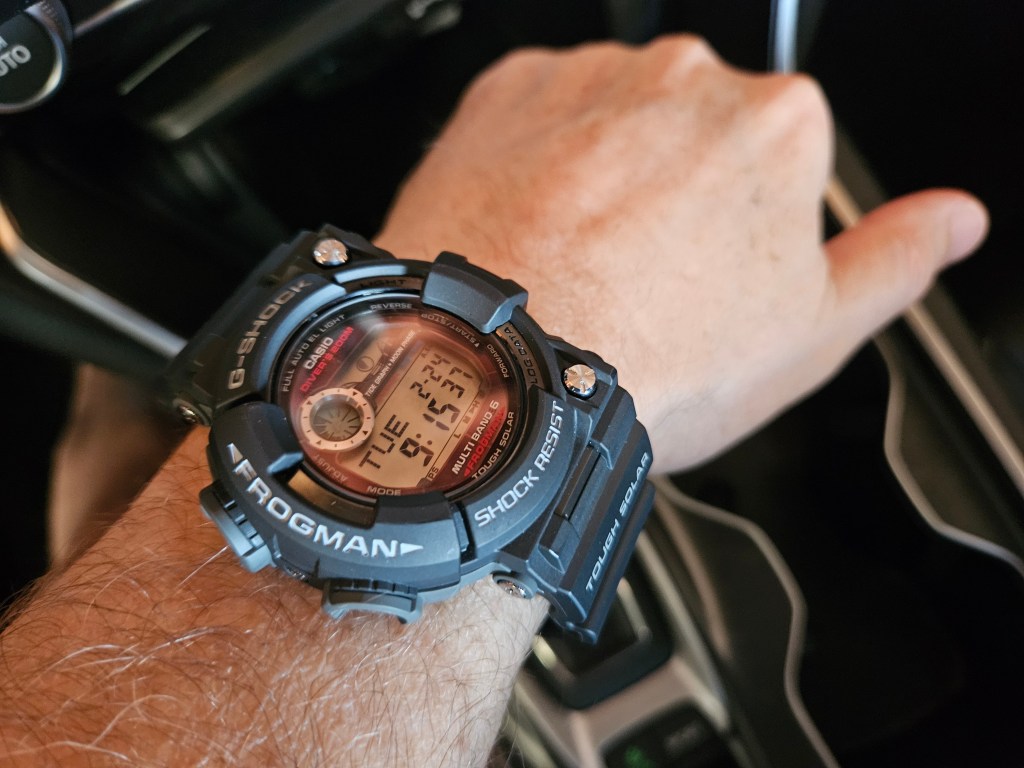
    I made a YouTube video about my G-Shock Frogman and my growing inability to take it off my wrist. The response was immediate and disproportionate. The video drew ten times the comments I typically get when I talk about mechanical watches.

    That told me something important.

    The passion inside the G-Shock world isn’t just strong. It’s combustible.

    What surprised me even more was the pattern many viewers described. It ran directly against the standard collector narrative—the familiar climb from inexpensive watches up the luxury ladder, the gradual refinement that ends with an Omega, a Tudor, and the quiet satisfaction of having “arrived.”

    Many G-Shock owners reported the opposite trajectory.

    They did climb the ladder. They bought the Swiss pieces. They tasted the luxury world. And then something happened.

    They discovered atomic time.

    One comment captured the shift perfectly: the plan had been to move from entry-level divers into Tudor. But after experiencing the precision of a radio-controlled G-Shock, mechanical watches stopped making sense. The Tudors remained—for weddings, formal events, the occasional appearance—but daily life belonged to the digital watch.

    The romance didn’t fade gradually.

    It collapsed.

    What replaced it wasn’t thrift or minimalism. It was something colder and far more powerful: precision, efficiency, optimization. The watch was no longer a story. It was a system.

    This transformation deserves a name: Precision Conversion.

    Precision Conversion is the moment a collector crosses an invisible line. He stops wearing watches for heritage, craftsmanship, or the poetry of miniature machinery and starts wearing them for one unforgiving reason: they are correct.

    It often begins quietly. One morning, the atomic watch has synchronized overnight. No drift. No adjustment. No uncertainty. The time is simply right—down to the second, without effort, without supervision.

    After that, the mechanical watch changes character.

    What once felt soulful now feels approximate. What once felt charming now feels like a pleasant but unreliable narrator. The convert doesn’t lose respect for craftsmanship. He loses tolerance for romance that runs five seconds fast.

    Accuracy begins to feel like moral clarity. Self-correction feels like intelligence. A watch that needs adjusting starts to look less like a companion and more like a hobby that forgot its primary responsibility.

    And here’s the important part.

    Money never came up.

    Not once.

    These comments weren’t about saving cash or avoiding luxury. For true G-Shock converts, the affordability is incidental—almost accidental. The lower price isn’t the motivation. It’s simply a pleasant side effect.

    In this world, G-Shock isn’t the budget choice.

    It’s the rational one.

    The price, as the believers would say, is just icing on the cake.

  • From Wrist to World: The Long Climb Out of Gollumification

    From Wrist to World: The Long Climb Out of Gollumification

    At a certain depth, the watch obsessive stops merely owning watches and begins inhabiting them. He lives in beat rates and power reserves, dreams in lume, and speaks a dialect composed entirely of tolerances, metallurgy, and micro-adjustments. This language becomes his native tongue—and everyone else’s becomes a foreign one. Instead of translating himself back into ordinary conversation, he doubles down. Why speak about people, work, or weather when there are case coatings, anti-magnetism ratings, and the eternal question of 20mm versus 22mm?

    This is Gollumification: the slow psychological narrowing that occurs when a hobby expands to occupy the territory once reserved for identity, emotion, and social life. The enthusiast begins to interpret the world through horological logic. Reliability matters more than warmth. Precision outranks connection. Conversations become monologues disguised as education. Over time, the technical vocabulary hardens into a private dialect that excludes anyone not fluent in the faith.

    The social consequences arrive quietly. Friends feel the intensity and step back. Family members nod politely, then change the subject, then eventually stop asking. Their distance confirms the collector’s growing suspicion that the outside world lacks depth or appreciation. The loop closes: fewer people, more watches; more expertise, less range as a human being.

    Advanced Gollumification produces a curious asymmetry. The collection becomes refined, curated, museum-worthy. The collector becomes narrower, guarded, and faintly brittle—capable of explaining torque tolerances at length but uncomfortable with ordinary emotional exchange. He manages mechanisms with surgical care while neglecting the untidy maintenance of relationships.

    Some drift into this state gradually, the behavioral accretion so slow they don’t notice the cave forming around them. Others embrace it knowingly, wearing their social withdrawal like a badge of purity. If the world doesn’t understand watches, the problem must be the world.

    Rarely, something interrupts the descent. A spouse’s fatigue. A child’s indifference. The uneasy realization that the collection is thriving while the rest of life is running on reserve. This is the beginning of De-Gollumification.

    De-Gollumification is the difficult return from horological exile—the moment the collector recognizes that memorizing every movement specification is not the same as being present in his own life. The shift begins with a painful inventory: relationships neglected, conversations hijacked, attention diverted into stainless steel and sapphire. The enthusiast steps back from the private dialect of lume performance and lug geometry and relearns the language of ordinary human exchange.

    The watches remain, but their jurisdiction shrinks. Identity migrates back to where it belongs. The collector stops leading with the wrist and starts leading with attention. The transition is humbling and occasionally disorienting, like emerging from a quiet bunker into daylight.

    Successful De-Gollumification does not require selling the collection. It requires abandoning the bunker. The pieces stay. The spell breaks. There are fewer lectures and more listening, fewer unboxings and more presence. The whisper of my precious gives way to something healthier and far more difficult: our life.