Tag: marketing

  • “I Am the Frogman”: The Last Shout Before the Door Seals

    “I Am the Frogman”: The Last Shout Before the Door Seals

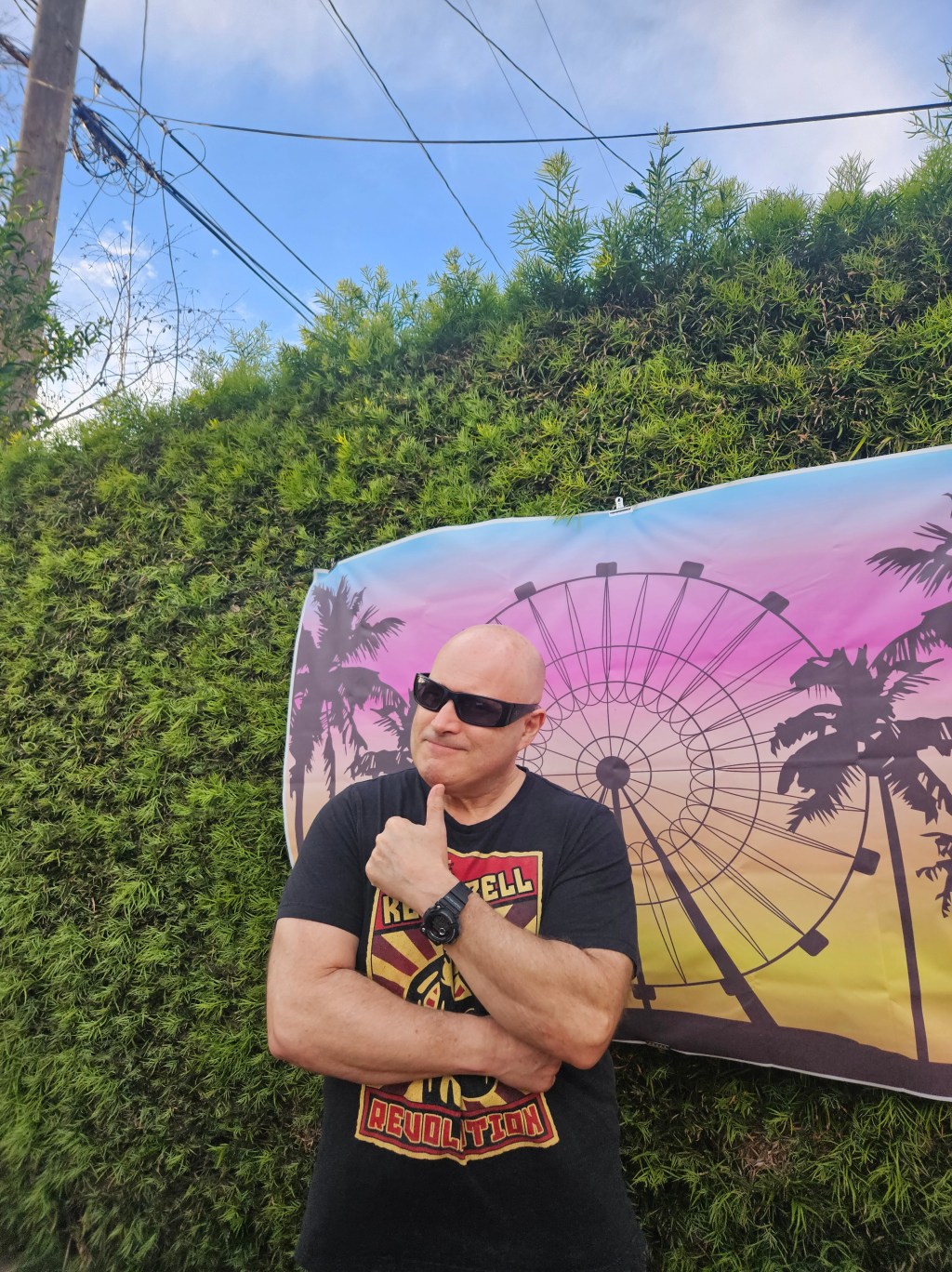
    I’ve spent more than a decade documenting my watch obsession on YouTube—a pursuit that begins as hobby and ends, if you’re not careful, as behavioral conditioning. You think you’re making videos. You’re actually being trained. The algorithm dispenses rewards and punishments with clinical indifference: views, comments, silence. You adapt. Of course you adapt. That’s the job now.

    The trouble is that the algorithm has no interest in truth, balance, or restraint. It prefers spectacle. It rewards the emotional range of a teenager who’s just discovered caffeine: hyperbole, dread, euphoria, FOMO, regret—delivered with the urgency of a man announcing the end of civilization via bezel insert. You wake up one morning and discover you’ve succumbed to Algorithmic Persona Drift—a slow mutation in which your public self becomes a louder, shinier, more hysterical version engineered for attention rather than accuracy.

    Feed it, and it feeds you back. The cycle tightens. Every video must be more decisive, more apocalyptic, more “this changes everything.” You produce manifestos. You narrate epiphanies. You analyze your own obsession with the intensity of a man dissecting his own heartbeat. The result is predictable: you become a caricature of yourself—recognizable, marketable, and faintly absurd.

    If you can tolerate that, the system will reward you. The numbers rise. The revenue trickles, then flows. You build a small empire out of controlled exaggeration. But there comes a moment—quiet, unwelcome—when you no longer recognize the man delivering the lines. The performance has outgrown the person. At that point, the decision presents itself with unpleasant clarity: keep feeding the machine and let it finish the job, or step away and salvage what remains of your voice.

    That’s one exit.

    The other is less dignified. You don’t leave; you are expelled. The causes are familiar—burnout, self-disgust, ennui, health—but the most decisive is also the least negotiable: age. You wake up one day and realize the tempo has changed. The rhythms that once animated you now sound distant, like music leaking from another room. The new release, the hyped drop, the celebrity of the week—none of it lands with the old voltage. Mortality has entered the conversation and lowered the volume.

    You try to resist. You tell yourself enthusiasm is a choice. But the gap widens anyway. You find yourself oddly relieved that you no longer care about bracelet articulation or dial gradients or the fever dream that the “perfect collection” is one purchase away. The brotherhood reveals itself for what it always was: half fellowship, half support group. You no longer feel the urge to compare scars from impulse buys, to laugh at the madness, to whisper—half-serious, half-hopeful—that this watch will finally cure you.

    For me, the separation was unmistakable. Twenty years dissolved into a blur of rotating bezels and contingency divers. Then, at sixty-three, something tapped my shoulder. Not a crisis. A correction. The obsession didn’t die; it simply lost its authority. Desire dimmed, replaced by a quiet recognition that watches are exquisitely engineered ways of losing to time.

    The feeling calls to mind a scene from Battlestar Galactica: a traitor sealed behind glass, the airlock hissing, the crew watching with solemn finality. Not melodrama—procedure. That’s aging. Not tragic, not cruel—inevitable. At some point, those still inside the illusion of endless tomorrows begin to edge away from those who have seen the horizon contract.

    A pane descends. It isn’t hostile. It’s accurate.

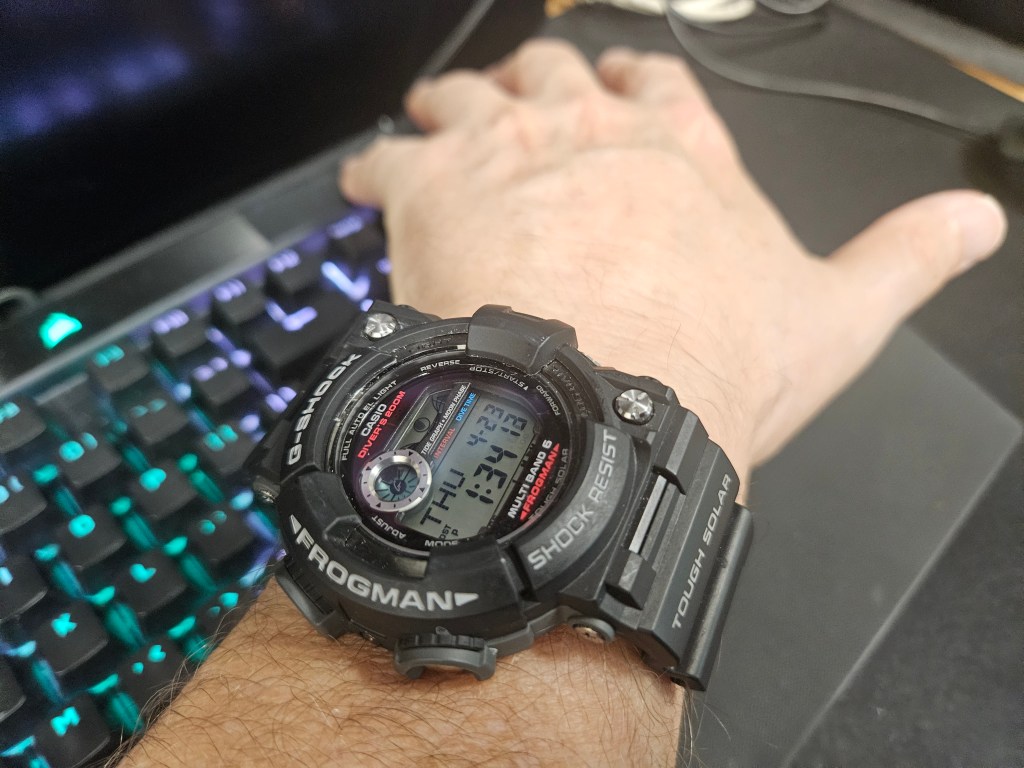
    You tap the glass, wave, try to rejoin the cockpit of youthful urgency. You even lift your wrist—your hulking G-Shock Frogman—and make your case. “Look,” you want to say, “I’m still in it.” But the seal has set. Reentry is not part of the design.

    What remains is less dramatic and more demanding: dignity. Accept the season you’re in. Build meaning instead of inventory. Offer something useful to those still racing ahead, even if they don’t yet see why it matters. They will. Everyone does, eventually.

    The algorithm fades. The noise recedes.

    And you are left, at last, with a quieter, harder question: not what you want next—but who you intend to be without the applause.

  • The Year of No Watches: When a Channel Chooses Integrity Over the Algorithm

    The Year of No Watches: When a Channel Chooses Integrity Over the Algorithm

    You are a YouTuber whose world runs on watches. You talk about them, film them, arrange them under flattering light, and dream about the next one before the current one has even settled on your wrist. New arrivals are the oxygen of the channel. Unboxings pay the bills. Acquisition is the content engine.

    And that’s exactly the problem.

    At some point, you realize that if you want to stay honest—with yourself and with your viewers—you need to stop buying watches for a year.

    Not slow down.
    Not “be more selective.”
    Stop.

    What you need is the horological equivalent of a metabolic reset. A fast. A purge. A period of spiritual autophagy in which the toxins of hype, comparison, and compulsive novelty are allowed to clear out of your system. You know the risks. The algorithm prefers excitement. Viewers love new toys. Sponsors like movement. A quiet year may cost you clicks, growth, and easy revenue.

    But integrity rarely trends.

    So you adopt the discipline of Kafka’s Hunger Artist and deny yourself the very thing your audience expects you to crave. In this world, the practice has a name: Horological Autophagy—a deliberate refusal to acquire, designed to cleanse the mind of consumption reflexes and restore the ability to judge watches without the intoxicating influence of “the next one.”

    This is more than restraint. It is a public commitment: a Watch Hiatus. A creator’s declaration that credibility matters more than novelty, that thought will replace acquisition, and that authenticity will carry the channel even if the metrics wobble. During this period, the content shifts. Fewer arrivals. More reflection. Less stimulation. More judgment. The organizing principle is no longer “What’s new?” but “What actually matters?”

    To outsiders, the move may look like deprivation. It isn’t. It’s rehabilitation. Constant buying dulls appreciation the way constant noise dulls hearing. Remove the flow of new watches, and something unexpected returns: patience, clarity, and the ability to enjoy what you already own without immediately wondering what should replace it.

    The point of the fast is not suffering. The point is recovery.

    And the deeper shift is this: the channel stops serving the appetite and starts serving the audience. Traffic, sponsorship leverage, and the small intoxication of self-importance move to the background. The mission changes from feeding desire to strengthening judgment.

    Because the strongest signal a creator can send is not enthusiasm.

    It’s restraint.

    So go forward without the safety net of new purchases. Let the numbers fluctuate. Let the algorithm frown. Choose substance over spectacle, discipline over dopamine.

    The year without buying isn’t a retreat from the hobby.

    It’s the moment you finally take control of it.

  • Posting Ennui and the Rise of Podcast Land

    Posting Ennui and the Rise of Podcast Land

    It’s a small miracle that Kyle Chayka’s New Yorker piece, “Are You Experiencing Posting Ennui?”, wasn’t published five years ago. The argument feels overdue—like an obituary written long after the corpse started to stink. Chayka observes what most of us have already felt in our scrolling bones: the golden era of amateur posting—your breakfast photo, your blurry concert shot, your moody-filtered selfie—has gone the way of the lava lamp and the Livestrong bracelet. What was once dubbed “valorized amateurism” now reads like cringe-inducing narcissism.

    In its place, we have the glossy perfection of influencers and the manic edge of doom content. It’s either an unboxing of a $5,000 Japanese toaster or a clip forecasting economic collapse by Tuesday. There is no middle.

    Some of this is generational. Millennials have aged out of thirst traps and into soft lighting and privacy. Gen Z, including my daughters, treat public self-aggrandizement with the kind of disgust once reserved for timeshare pitches and chain emails. To them, most online posting isn’t just unnecessary—it’s embarrassing.

    Chayka diagnoses the affliction as posting ennui—the existential fatigue of shouting into a void dominated by micro-celebrity algorithms and brand-filtered banality. We used to post in order to share something real; now we post to survive the algorithm’s cold indifference. And the algorithm doesn’t even show our friends anymore. So what’s the point? The casual post is now a ghost of its former self—undone not by controversy, but by irrelevance.

    Then there’s AI, which hangs over this whole landscape like a digital grim reaper. Now, even authenticity feels manufactured. Who made that caption? Who edited that face? Is that even a real voice? The uncanny valley has extended to your Instagram feed.

    Chayka predicts we may be headed toward what he calls Posting Zero—a post-social media state of blissful digital silence, where the compulsion to perform evaporates, and nobody’s life is reduced to a grid of curated lies.

    And honestly? I’m here for it.

    Let the pixelated word salads and beige hotel mirror selfies die a quiet death. Let the algorithm cannibalize itself. But here’s where I’ll add a wrinkle Chayka overlooks: even as posting dies, Podcast Land thrives.

    The podcast isn’t dead. It’s ascendant. While selfies wilt, microphones multiply. I know people—and I count myself among them—who have fully relocated to Podcast Land. Sam Harris talks to me for two hours a day. I fall asleep to history podcasts. I nap with AirPods in. I swing kettlebells to longform interviews about Stoicism and dopamine. I am deep in Podcast Land. I’ve got residency status.

    So yes, let the Instagram Stories dry up. Let the TikTok dances lose their rhythm. But don’t mistake this silence for disengagement. We’re still listening. We’re still absorbing. We’re just done performing.

    Welcome to Posting Zero. Now please keep your voice down—I’m trying to hear what Sam Harris is saying about the AI Takeover.

  • Brand Me, Break Me: The Confused User’s Guide to Digital Collapse (A College Essay Prompt)

    Brand Me, Break Me: The Confused User’s Guide to Digital Collapse (A College Essay Prompt)

    In addition to teaching Critical Thinking, I also teach Freshman Composition, and this semester I’m working with student-athletes—specifically, football players navigating the brave new world of NIL (Name, Image, Likeness) deals. These athletes are now eligible to make money from social media, which makes our first writing assignment both practical and perilous.

    Essay Prompt #1: Brand Me, Break Me: The Confused User’s Guide to Digital Collapse

    Social media is a business. Social media is also a drug. Sometimes, it’s both—and that’s when things get weird.

    In the docuseries Money Game, we watch college athletes play the algorithm like it’s just another playbook. They build brands, negotiate deals, and treat their social feeds like a revenue stream. Let’s call them Business Users—people who understand the game and are winning it.

    But then come the Dopamine Users, the rest of us poor souls, scrolling and posting not for profit, but for approval. In Black Mirror’s “Nosedive” and “Joan Is Awful,” we see social media mutate into a psychological carnival of rating systems, fake smiles, and avatars of self-worth. The result? A curated self that has nothing to do with reality and everything to do with anxiety, desperation, and an ongoing identity crisis.

    And then there’s the tragicomic third act: The Confused User. Think Untold: The Liver King. Here’s a guy who tried to be a Business User but collapsed into parody—lying, self-deluding, and publicly unraveling. The Confused User believes they’re optimizing for attention and success but ends up optimizing for ridicule and collapse.

    In this essay, use Money Game, “Nosedive,” “Joan Is Awful,” Untold: The Liver King, Jonathan Haidt’s essay “Why the Past 10 Years of American Life Have Been Uniquely Stupid,” and Sherry Turkle’s TED Talk “Alone, but Connected?” to respond to the following claim:

    Social media can be a profitable business tool—but when it becomes a substitute for self-worth, it guarantees isolation, mental illness, and eventual collapse. Understanding the difference between Business Users, Dopamine Users, and Confused Users may be the only way to survive the algorithm without losing your mind.

    You may agree, partially agree, or disagree with the claim—but either way, take a position with clarity and nuance. Analyze the psychology, the economics, and the wreckage.

    And remember: this is a critical thinking exercise. That means no TikTok therapy takes, no AI-generated summaries, and no mushy conclusions. Think hard, argue well, and—above all—write like someone who’s seen the glitch in the matrix.

    Sample Thesis Statements:

    1. While social media offers entrepreneurial opportunities for Business Users, the vast majority of people are Dopamine Users unknowingly trading mental stability for validation, making the platform a psychological trap disguised as empowerment.
    2. The Confused User, exemplified by the Liver King, represents a cautionary tale in the digital economy: when brand-building and identity collapse into one, social media success becomes indistinguishable from self-destruction.
    3. Social media doesn’t inherently damage us—but without a clear distinction between economic strategy and personal validation, users risk becoming Confused Users whose craving for attention leads not to fame, but to ruin.

    In a world where your Instagram handle might carry more currency than your GPA, this isn’t just an academic exercise—it’s a survival guide. Whether you’re gunning for a sponsorship deal or just trying not to lose your sense of self in the scroll, this essay is your chance to interrogate the game before it plays you. Treat it like film study for the algorithm: read the plays, understand the players, and figure out how to stay human in a system designed to monetize your attention and, if you’re not careful, your identity.

  • College Essay Prompt: Your Brand, Your Legacy: How to Influence Without Selling Out

    College Essay Prompt: Your Brand, Your Legacy: How to Influence Without Selling Out

    Assignment Overview:

    In the NIL era, athletes are no longer just players—they’re entrepreneurs, role models, and public figures. The rise of influencer culture gives you the power to shape your own brand, connect with fans, and earn money. But with that power comes pressure: How do you stay real while staying relevant? How do you build your platform without becoming a product?

    In the Money Game docuseries, LSU gymnast Olivia Dunne models a smart, sustainable approach to NIL: blending athletic performance, personality, and professionalism. In contrast, the Netflix documentary Untold: The Liver King tells the story of Brian Johnson—a man who built an extreme, hyper-masculine fitness brand only to fall hard after revealing he built his image on steroids and deception.

    In this essay, you will write a “how-to manual” for student-athletes trying to build an ethical, authentic, and effective personal brand. Your argument should clearly explain what works, what doesn’t, and why. Use Olivia Dunne as a model of smart influencer strategy, the Liver King as a cautionary tale, and at least one additional athlete (from the reading list or your own research) as a supporting case study.


    Your Goals in This Essay:

    • Teach readers how to build a responsible and sustainable NIL brand
    • Compare successful and failed influencer strategies
    • Reflect on how an athlete can balance real identity with public image
    • Take a clear stance on what makes influencer branding admirable, ethical, and long-lasting

    Essay Requirements:

    • MLA format (12-point font, double-spaced, proper citations)
    • 8 paragraphs: introduction, 6 body paragraphs, conclusion
    • At least two credible sources (see the reading list or find your own)
    • In-text citations and a Works Cited page
    • A focused, argumentative thesis (not just “influencing is good/bad”)
    • Use specific examples and clear reasoning

    Suggested 8-Paragraph Outline:

    1. Introduction
      • Hook: Ask a question or tell a quick story about athlete fame or social media fame
      • Context: Briefly define NIL and explain how it has changed college athletics
      • Thesis: State your core advice—what makes an NIL brand ethical, effective, and worth following
    2. Lesson #1: Be Real, Not Just Visible
      • Use Dunne’s example to show the power of authenticity and athletic credibility
      • Contrast with the Liver King’s persona-based deception
    3. Lesson #2: Align Your Brand with Who You Are
      • Use a secondary case study (e.g., Shedeur Sanders or Chase Griffin)
      • Show how a values-based brand creates trust and long-term appeal
    4. Lesson #3: Build for the Long Run, Not Just for Likes
      • Talk about long-term goals vs. short-term popularity
      • Emphasize how transparency and substance protect your legacy
    5. Lesson #4: Know the Game—You’re a Business, Not Just a Feed
      • Explain the importance of smart partnerships, content quality, and self-discipline
      • Compare thoughtful NIL deals with hype-based gimmicks
    6. Lesson #5: The Spotlight Is Hot—Know the Risks
      • Social media can bring opportunity and scrutiny
      • One bad post or fake partnership can harm your name
      • Tie back to broader trends in sports culture
    7. Counterargument + Rebuttal
      • Acknowledge: some believe shock and virality are the fastest way to fame
      • Rebut: real influence lasts longer than a trend, and fake personas crack under pressure
    8. Conclusion
      • Restate your thesis about how to build a brand that reflects who you are
      • Leave readers with advice: if a younger athlete asked you for NIL advice, what would you say?

    Companion Reading List

    1. [“How Marketers Choose College Athlete Influencers” – Harvard Business Review](https://hbr.org/2024/05/how-marketers-choose-college-athlete-influencers)

    Overview: This article delves into the criteria marketers use to select college athletes for NIL deals, emphasizing authenticity, engagement, and brand alignment.

    2. [“College Athletes Are Now Online Influencers, Too” – Global Sport Matters](https://globalsportmatters.com/business/2023/02/08/whole-different-audience-college-athletes-online-influencers-too/)

    Overview: Explores the dual identity of college athletes as both competitors and influencers, highlighting the opportunities and challenges of this new landscape.

    3. [“How NIL Deals and Brand Sponsorships Are Helping College Athletes Make Money” – Business Insider](https://www.businessinsider.com/how-college-athletes-are-getting-paid-from-nil-endorsement-deals)

    *Overview:* Provides a comprehensive look at the financial aspects of NIL deals, including the role of collectives and the varying scales of athlete earnings.([MarketWatch][1])

    4. [“Livvy Dunne Dishes on Her Social Media Strategy” – On3](https://www.on3.com/college/lsu-tigers/news/livvy-dunne-dishes-on-her-social-media-strategy-how-she-handles-rabid-fans/)

    *Overview:* Offers insights into Olivia Dunne’s approach to managing her online presence, balancing personal branding with athletic commitments.

    5. [“The Top 10 NIL Influencers To Follow On Social Media” – Viral Nation](https://www.viralnation.com/resources/blog/top-10-nil-influencers-of-2022)

    Overview: Highlights standout college athletes who have effectively leveraged social media for NIL opportunities, providing case studies of successful strategies.

    College Football Players Exemplifying Savvy Social Media Use

    1. Shedeur Sanders (University of Colorado)

    Overview: Son of NFL legend Deion Sanders, Shedeur has cultivated a strong personal brand through consistent social media engagement, showcasing his on-field performance and off-field personality. His strategic use of platforms has led to significant NIL deals, making him one of the top earners among college athletes.([talkSPORT][2])

    2. Chase Griffin (UCLA)

    Overview: Recognized as a two-time NIL Male Athlete of the Year, Griffin has combined academic excellence with a thoughtful social media presence. He uses his platforms to discuss topics beyond football, including education and social issues, aligning with brands that reflect his values.

    3. Michael Turk (Oklahoma)

    Overview: Through his YouTube channel “Hangtime,” Turk shares content that blends athletic training, personal faith, and lifestyle topics. His authentic storytelling and engagement have attracted a substantial following, enhancing his marketability for NIL partnerships.([Wikipedia][3])

    4. Hendon Hooker (University of Tennessee)

    Overview: Hooker has utilized his platform to promote positive messages, including co-authoring a children’s book that combines sports themes with life lessons. His commitment to community engagement and personal development resonates with audiences and sponsors alike.([Wikipedia][4])

    5. Jaden Rashada (Arizona State University)

    Overview: As one of the first high school athletes to sign an NIL deal, Rashada has been at the forefront of athlete branding. His proactive approach to building a personal brand sets a precedent for upcoming athletes navigating the NIL landscape.([Wikipedia][5])

    [1]: https://www.marketwatch.com/story/these-10-college-athletes-are-making-over-1-million-a-year-in-nil-deals-203649d7?utm_source=chatgpt.com “These 10 college athletes are making over $1 million a year in NIL deals”

    [2]: https://talksport.com/us/2066573/livvy-dunne-top-nil-deals-shedeur-sanders-college/?utm_source=chatgpt.com “Livvy Dunne has $4m NIL fortune but it’s a trailblazing quarterback who tops college list”

    [3]: https://en.wikipedia.org/wiki/Michael_Turk?utm_source=chatgpt.com “Michael Turk”

    [4]: https://en.wikipedia.org/wiki/Hendon_Hooker?utm_source=chatgpt.com “Hendon Hooker”

    [5]: https://en.wikipedia.org/wiki/Jaden_Rashada?utm_source=chatgpt.com “Jaden Rashada”

    10 Dos and Don’ts of Athletic Social Media Branding

    1. DO show your work ethic.

    Post training clips, game-day prep, recovery routines, and behind-the-scenes discipline. You’re not just flexing muscles—you’re broadcasting your commitment.

    DON’T just flex your abs.
    A shirtless selfie with no context screams vanity, not value. You’re not auditioning for a thirst trap Olympics.


    2. DO engage with your audience.

    Reply to comments, answer questions, and create polls or stories that invite fans into your world.

    DON’T buy followers or fake engagement.
    It’s obvious. It’s embarrassing. And brands can tell.


    3. DO be authentic.

    Speak in your voice. Share your story—wins, losses, doubts, comebacks. Fans connect with real people, not curated robots.

    DON’T mimic influencers who aren’t athletes.
    You’re not a fitness model or a supplement shill—unless you want to be irrelevant in two years.


    4. DO collaborate with brands that match your values.

    If you believe in a product, use it, and can explain why, that’s a partnership—not a transaction.

    DON’T promote sketchy products or fad diets.
    One bad NIL deal can wreck your reputation. If it sounds like snake oil, it probably is.


    5. DO use high-quality visuals.

    Good lighting, steady framing, and thoughtful captions go a long way. Even a smartphone can create pro-level content now.

    DON’T post blurry, off-angle, or half-baked content.
    You’re not in a group chat. You’re building a portfolio.


    6. DO tell a story.

    Whether it’s a comeback from injury, a day-in-the-life, or your pregame rituals—narrative builds loyalty.

    DON’T just post random hype clips with rap beats.
    Unless there’s context, all we see is ego and noise.


    7. DO highlight your education and character.

    Brands—and future employers—like athletes with brains, purpose, and integrity. Show that you’re more than a stat sheet.

    DON’T trash talk, subtweet, or complain.
    Screenshots are forever. Emotionally tweet like you’re already in the NFL.


    8. DO maintain consistency.

    Post regularly, even during the offseason. That’s when the real connections are made.

    DON’T ghost your audience.
    Going silent for months makes it look like you only post when you’re winning.


    9. DO respect team rules and brand guidelines.

    If you’re repping a university or sponsor, know the line between personal and professional content.

    DON’T leak locker room drama.
    One bad post can get you benched, dropped, or worse—memed into oblivion.


    10. DO think long-term.

    Use social media to build a bridge to life after football—whether it’s coaching, media, business, or beyond.

    DON’T tie your entire identity to performance.
    Your value isn’t just in touchdowns. Build a brand that lasts longer than your playing career.