Tag: memoir

  • Zosia Mamet and My Personal Reading Revival

    Zosia Mamet and My Personal Reading Revival

    It’s rare that I fall in love with books these days, but when it happens, I’m grateful because reading reminds me of my glory days, the early 80s when I consumed books with ferocity, imaginative pleasure, and obligation like a bodybuilder taking protein powder and creatine. Three major factors have curtailed my reading of books: One, I’ve grown so cynical over the years that I’ve come to the belief that 99% of books are in actuality just a short story or essay with padding. An author has an intriguing idea, and they sit down with their agent and cook up a book that is mostly chicanery with a dash of substance. 

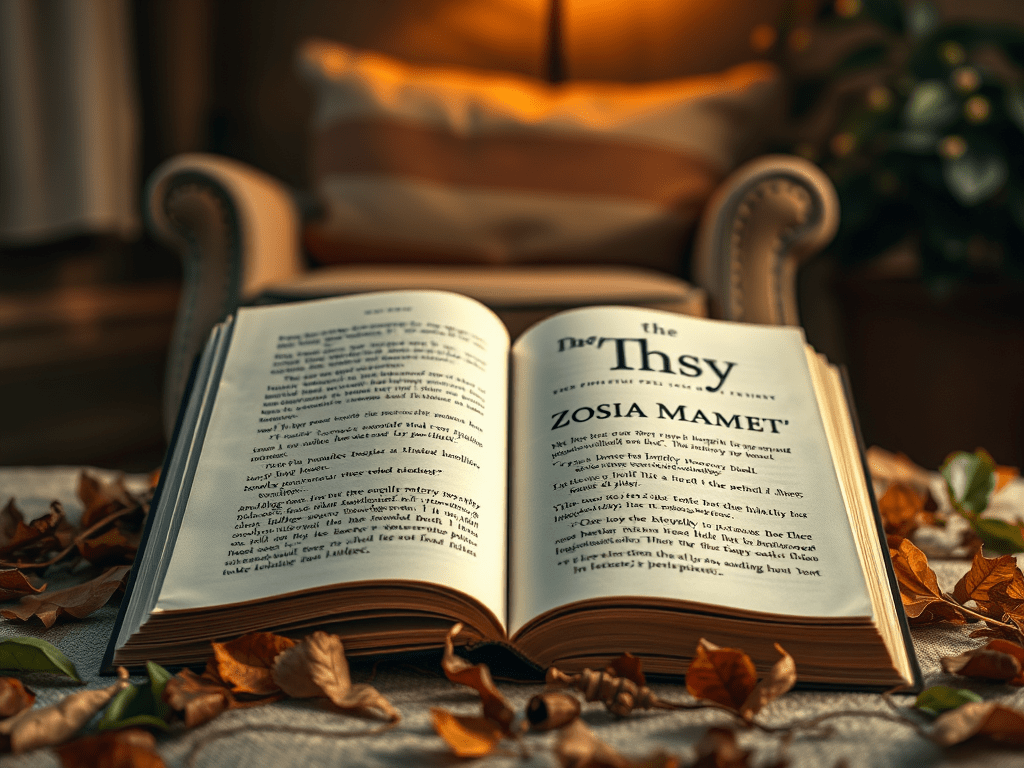
    Then three days ago, I heard actor Zosia Mamet talking about her memoir Does This Make Me Funny?, a collection of essays, with KCRW host Sam Sanders, and I was so struck by her depth of wit, intelligence, and moral perspective that I immediately bought her book, or I should say the Kindle eBook version of it. Even more rare than buying books as intellectual property, it is even rarer that I buy a hard copy of something, unless it is a kettlebell training book or a cookbook like Miyoko Schimmer’s The Vegan Creamery

    Getting most of my books on Kindle speaks to the second reason my reading has diminished. The physical act of reading is unpleasant. Holding the book, turning the pages, getting into a comfortable position, attenuating my eyes to the various font sizes. I find the whole thing disconcerting and unpleasant, like trying to figure out the seat positions, buttons, and levers of an unfamiliar car. The most comfortable forms of reading are either sitting at my desktop and reading the Kindle on a 27-inch screen or reading while sitting in bed with a 16-inch laptop.

    The third reason I don’t read as much is that the Internet and its attention economy have fried my brain over the decades. The attention muscles inside my cortex have atrophied to a woeful state. 

    But occasionally a rose grows out of the cracks in the cement sidewalk, and such is the case with Zosia Mamet’s memoir, as witty, deep, self-deprecating, and salient as the author speaking to Sam Sanders three days ago. Reading the memoir is to connect with someone for whom her writing voice and the core of her being are the same. The result is something distinctive and salient, something that recoils and then snaps forward to leave its literary fangs inside you. Isn’t that what writing is supposed to be about? Nabokov was like that. So was Kafka. And so is Zosia Mamet.

    I detest some confectionary celebrity memoir reeking of privilege, superfluousness, and mediocrity. None of that is in Zosia’s collection of essays. 

    As we read in Jancee Dunn’s New York Times article “At Least Zosia Mamet Can Laugh About It,” the core of her book is about her mental, physical, and spiritual health. Coming from a family that is deeply entrenched in literature and the arts is a double-edged sword with excruciating pressure to live up to superhuman expectations causing Zosia’s thorn in her side to be the constant sense that she is falling abysmally short. 

    Like the best comedia, she opts out of self-pity for humor as she does a deep dive into her anxiety, depression, body dysmorphia, anorexia, and anhedonia, and all the self-destructive behaviors she succumbed to in order to overcome these afflictions. Because she knows that body dysmorphia is a delusion that hijacks her brain, she says about herself: “I am often an unreliable narrator of my own reality.” 

    Which in a nutshell is the human condition: Can we trust ourselves or are we getting duped by our own fake narrative? 

    What tools from our emotional toolbox can we use to be more reliable? Perhaps comedy is one of them. Think of our irrational states: overcome by maudlin self-pity, vanity, and grandiosity, we spin grotesque narratives about ourselves that compel us to behave in ways that are ridiculous and often result in self-sabotage. Perhaps comedy is the antidote. Perhaps comedy distances us from our preposterous self-mythology and helps us in the arduous process of self-reinvention. That’s the sense I’m getting from Zosia Mamet’s very necessary book, a book that has no padding at all but has been made from a brilliant mind with blood, sweat, and tears. 

  • Florida Fever Dreams and Katrina Floodwaters: Future Writing Prompts I Can’t Quit

    Florida Fever Dreams and Katrina Floodwaters: Future Writing Prompts I Can’t Quit

    I work obsessively hard to develop essay prompts for my college students. When they prove effective and resonate with the students, I am gratified beyond words and will keep the prompt for perhaps too long. I have an assignment about a diet writer Rebecca Johns who in her essay “A Diet Writer’s Regrets” explores the irony and misery of gaining weight while dispensing weight-loss tips in her women’s magazine articles. Her inability to execute her own advice becomes an opportunity for my students to explore the notion of free will when it comes to weight management, especially now that GLP-1 drugs are proving that dependence on technology can be so much more reliable than aspirations toward self-agency. The students’ essays over the last four semesters have been truly engaging, revealing either their own weight-management torment or a friend or family member’s. 

    One problem, though, with an essay prompt is that as it gets used semester after semester some of the essay components, such as the counterargument-rebuttal section, start looking the same. I suspect the previously written essays become in some form or other available to the new batch of students, and for this reason, I think even the best essay prompts have a limited shelf life. 

    Another challenge with creating essay prompts is that you don’t really know how they will land with the students until you actually try it out. For example, I was very enthusiastic about my freshman composition class’s first assignment in which they write about the crisis of young men who lack a sense of belonging and purpose and how in their vulnerable state they become vulnerable to the deceptions, manipulations, and false claims of bro influencers. We studied the Liver King who is said to have made over a hundred million dollars and in his caveman cosplay, he was simply too ridiculous and grotesque for my students–all athletes–to take him seriously. He proved so absurd that whatever gravitas I was trying to squeeze out of the assignment just felt like a joke. While millions of men followed their organ-eating cult leader, my athletes were not impressed, and I felt that my essay prompt suffered for it. As a result, I doubt I’ll do that one again.

    Looking ahead, I’m thinking of Florida as less of a physical place and more of a mental fever swamp where I can explore the notion of freedom in its immature and mature incarnations. The TV comedy series It’s Florida, Man and the documentary Some Kind of Heaven about a hedonistic senior citizen home could be an effective exploration of the perils of perpetual adolescence. To avoid making the essay prompt nihilistic, I am leaning toward a contrast essay in which the students explore a more healthy kind of freedom as Cal Newport advocates in his message of “deep work”–the idea that focused work is essential to flourishing and self-fulfillment. 

    Another topic that possesses me is Hurricane Katrina, the idea that a natural disaster was made into a man-made catastrophe through neglect and reckless disregard for the people of New Orleans. This ignominious chapter in American history is a powerful window into red-lining, government corruption, and media misinformation. The riveting documentaries Hurricane Katrina: Race Against Time (Hulu) and Katrina: Come Hell and High Water (Netflix) convince me that I will be exploring Hurricane Katrina next semester. 

    My challenge with Katrina is making sure the story doesn’t collapse into pure tragedy. To balance the devastation, I need to highlight the unique culture of New Orleans—the joy, the tight-knit families, the music, food, and resilience that define the city. The message I want to leave students with is that, despite catastrophe, New Orleans has a distinctive soul that continues to draw the world to its city.

    I suspect even after I retire in less than two years I will still sniff out writing prompts. Coming up with essay prompts is my addiction, and this addiction isn’t going away anytime soon. 

  • Words of Wisdom in a World of Publishing Hallucinations

    Words of Wisdom in a World of Publishing Hallucinations

    Last night I dreamed I was at the Aspen Institute, where I took the stage as a guest speaker while snowflakes pirouetted past the classroom windows like bored ballerinas. Dozens of young writers—already published, already duped—sat before me, waiting to be enlightened. I told them the truth their publishers had concealed with a smile and a contract: the marketing promises were fairy dust, the royalty checks were jokes, and their “book deals” were little more than elaborate scams. They would earn a pittance, and the betrayal would sting worse than any bad review.

    Some of them glared at me like I’d just blasphemed against their gods, but others—emboldened by rage—shouted the names of their novels and memoirs into the snowy air. A nineteen-year-old tech billionaire from India cried out the title of his memoir: The Gunther Effect. I made him repeat it three times, as if conjuring a spell, so the words wouldn’t slip away. Against my better judgment, I was intrigued.

    By popular demand, I returned for a second sermon. This time, I was flanked by professors and “established” writers who knew the game as well as I did. Their lectures weren’t brilliant, but they didn’t have to be. For me, just focusing on one speaker, narrowing the scattered kaleidoscope of my mind into a single lens, felt like mental hygiene—a purging of the Internet’s endless distractions. I thought, This is what I miss: the monastic joy of being a student, concentrating on one voice instead of chasing dopamine scraps.

    And slowly, the room shifted. The students began to understand that my colleagues and I weren’t cynics but keepers of the ugly gospel. We had the keys to the vault, the passwords to real power. We were the Priests and Priestesses of Light and Success, consecrated by disillusion. Hands shot up like candles in a vigil, their questions burning against the snowfall outside, and we were exalted, gratified, almost holy in the glow of their hunger.

  • Kettlebells, Clorox, Waikiki Dread, and the Need to Reread Ariel Leve’s An Abbreviated Life

    Kettlebells, Clorox, Waikiki Dread, and the Need to Reread Ariel Leve’s An Abbreviated Life

    At nearly sixty-four, I still work out like a man who thinks death is watching from the corner of the garage, arms crossed, waiting to pounce the moment I skip a kettlebell swing. I train with the same primal urgency I felt at thirteen—when muscle equaled safety, and soreness meant I still mattered. I think about workouts. I talk about them. I bore people to death with unsolicited fitness manifestos. My obsessions are a carousel of age, mortality, exercise, oatmeal breakfasts, French-press coffee, and a pathological resistance to anything resembling leisure, especially vacations.

    Which brings me to now: it’s Sunday, and in a few hours my wife’s friend will drive us to LAX so we can board a United flight to Oahu. I should be thrilled. I’m not. I feel like a hostage in my own well-appointed life. I’m going only because family life requires the occasional sacrifice—and this is mine. A three-night stay at the Embassy Suites in Waikiki Beach. Palm trees. Breezes. Ocean sunsets. All of it unnerves me. I want to be helpful, gracious, even grateful—but I am a neurotic, OCD-addled man-child in a do-rag who agonizes every morning over which chunky diver watch to wear, like I’m prepping for surgery on the space-time continuum.

    I do not want to be the dead weight on this trip.

    Still, I try to prepare. My comfort rituals are in full swing. We’re packing two memory foam pillows because hotel pillows have the spinal integrity of a wet napkin. I created a “Travel Checklist” yesterday with over 30 items. My wife flagged two of them—Clorox gel and a scrub brush—and asked why I intended to pack janitorial supplies. “To disinfect the hotel shower,” I said. She told me I’m crazy. Scratch that from the list.

    We’ll land around eleven tonight, pick up the rental car, check in, visit ABC Store #38—because no Hawaii trip is complete without wandering into an ABC Store to buy bottled water, toothpaste, and the spiritual reassurance that you haven’t forgotten something vital. Then we’ll sync our devices to the hotel WiFi, maybe sit on the bed and stare blankly at the TV for twenty minutes before collapsing into our pancake pillows (if the foam ones failed to survive the suitcase crush). By the time I feel vaguely human, it will be midnight.

    And just like that, the countdown begins.

    We fly back Wednesday. Back to LAX. Back to my routine. By Thursday morning, I’ll be at Trader Joe’s shopping for groceries, then in the garage doing kettlebell swings to reassert my identity as a disciplined, slightly unhinged older man who treats a three-day vacation like a stint in exile.

    My wife’s friends raised their eyebrows when they heard how short the trip is. “That’s all my husband can take,” she told them. I felt seen and exposed all at once. It hit me while writing this: it really is a short trip. I feel guilty for being the reason we trimmed it down to a long weekend. And yet—I’m also relieved. Too much freedom, too much unstructured joy, and I begin to unravel. I need my routines. I need the Mothership. Without them, I drift.

    I’m reminded of a memoir I read nine years ago and plan to reread after this trip: An Abbreviated Life by Ariel Leve. It’s about surviving childhood under the tyranny of a narcissistic, chaotic mother. Leve writes with scalpel precision about how chronic trauma rewires the brain, how the child adapts with emotional detachment and hypervigilance, and how adulthood becomes a performance of normalcy built on damaged circuitry. Her memoir is unsentimental, razor-sharp, and achingly honest. I admire her. In some cracked mirror, I recognize myself.

    When I return from Oahu, I’ll dig up my old copy of her book. It’ll be the perfect homecoming gift—a reminder that healing is a long-haul flight, often with delays, turbulence, and very bad pillows.

  • Zen and the Art of Overwriting

    Zen and the Art of Overwriting

    I’m fully aware of the irony—here I am, writing a book about why neither you nor I should write a book, all while suspecting that the very act of doing so is just another cruel trick played by the same deranged demon that has spent decades squandering my life. This demon doesn’t care about reason, practicality, or viable creative outlets. No, it thrives on delusion, whispering sweet nothings about literary immortality while leading me, yet again, down another fool’s errand disguised as a grand artistic mission.

    And sure, this book has a certain rigor, a dash of élan, even a seductive frisson that keeps me going—but haven’t I felt this before? Haven’t I mistaken obsession for genius, compulsion for destiny? As much as I’d like to believe this time is different, I can’t shake the creeping suspicion that I’m once again doing the demon’s bidding, marching in circles, convinced I’m breaking new ground.

    For all I know, the writing demon has plucked this topic—why you shouldn’t write a book—the literary equivalent of a half-eaten donut fished out of a dumpster, held it up like a divine relic, and declared, “Behold! The sacred sustenance for the book that will change the world!”

    I have to wonder why this demon remains so incalcitrant, why it refuses to release its grip on my psyche. And I suspect it was baked in during my formative years—the 1970s—when books weren’t just books; they were sacred texts, maps to enlightenment, portals to a better world. Back then, the right book could change everything. And no place embodied this belief more than the Co-Op grocery store in the San Francisco Bay Area, a socialist utopia disguised as a supermarket.

    Co-Op wasn’t just a store—it was a temple of countercultural righteousness, a fluorescent-lit commune where food was political, capitalism was the enemy, and books were the gospel of enlightenment and revolution. The employees, mostly bearded men in survivalist gear and women in flowing skirts, looked like they had just emerged from a transcendental meditation retreat in Big Sur. The store carried everything necessary for the well-intentioned ascetic: wheat germ, carob honey ice cream, tofu, Japanese yams, granola by the truckload. In one corner, you could buy an alfalfa sprout home-growing kit; in another, you could pick up a well-worn copy of Zen and the Art of Motorcycle Maintenance. The book section—small, but potent—was a who’s who of 70s countercultural essentials: The Secret Life of Plants, Chariots of the Gods, The Peter Principle, and the vegetarian bible of all vegetarian bibles, Frances Moore Lappé’s Diet for a Small Planet.

    Shopping at Co-Op was an act of ideological purification. You weren’t just filling your pantry—you were waging war against The Man. Your grocery list was a manifesto. Brown rice instead of white? A stance against industrial food tyranny. Organic honey? A protest against corporate sugar slavery. Granola? The fuel of the revolution.

    But here’s the problem with turning your diet into a moral crusade—it comes with unintended consequences. Specifically, Granola Belly.

    The self-styled revolutionaries of the Co-Op era, those brave warriors against the forces of corporate food oppression, were inadvertently overeating their way to oblivion. Granola, wheat germ, and honey—pure, untainted by corporate greed—were caloric landmines. Yet they shoveled it down in righteous indignation, their burgeoning bellies a testament to their dietary zealotry. They waddled through the aisles, draped in North Face survival gear, looking ready to disappear into the Alaskan wilderness at any moment—if only they weren’t weighed down by their own moral superiority.

    Granola enthusiasts of the 70s were, in essence, a contradiction wrapped in a paradox and coated in raw honey. They raged against consumerism, yet consumed with a ferocity that would make a glutton blush. They preached self-discipline while mainlining carbohydrate ecstasy. They railed against corporate food tyranny, but the only thing expanding faster than their political righteousness was their waistlines.

    But Co-Op wasn’t just about the food—it was about the books. If the aisles were the body of the revolution, the books were its soul. They were blueprints for enlightenment, roadmaps to utopia. Talk to plants, replace animal protein with soy, meditate your way to cosmic awareness, learn the wisdom of the ancient aliens—everything you needed to build a new world was right there, tucked between the sacks of lentils and jars of miso paste.

    Which brings me back to my writing demon.

    Just as the Co-Op faithful believed books could transform civilization, I have spent my life believing the same about my own writing. The demon isn’t just some compulsive need to write—it’s the insatiable hunger for literary immortality, the delusion that one book—one perfectly crafted book—could define me, complete me, redeem me.

    It’s the same old obsession, wrapped in different packaging. My granola bowl is now a manuscript, my utopian blueprint now a satirical screed. I am still that wide-eyed Co-Op kid, convinced that books can reshape the world. But instead of reading the gospel, I am trying—foolishly, obsessively—to write it.

  • Claustrophobia Reveals Your True Soul to the World

    Claustrophobia Reveals Your True Soul to the World

    There are many ways to expose your raw, unfiltered self to the world. Some people achieve this through a near-death experience, a public meltdown, or a bout of food poisoning on an international flight. For me, claustrophobia is the great revealer, an unrelenting force that strips away every ounce of composure and leaves me flailing like a man trapped in quicksand. It doesn’t matter if I’m in a dentist’s chair or strapped into a sadistic amusement park ride—when the walls start closing in, I become the star of my own public humiliation showcase.

    The first great revelation of my soul came at Universal Studios, where I made the tragic miscalculation of sacrificing my personal comfort for my wife and twin daughters. A father’s love is boundless, but so, unfortunately, was my terror. The very air of the place reeked of Las Vegas grift, stale churros, and desperate cash grabs. Every corner had some overenthusiastic performer in mothball-scented epaulets or a handlebar-mustached imposter butchering a French accent for a paycheck. But nothing could have prepared me for the medieval horror that awaited on the Harry Potter Forbidden Journey ride.

    After standing in line for an eternity, I found myself wedged into an airplane seat designed for a malnourished Victorian child. A heavy metal harness slammed down on my 52-inch chest like a bear trap, and within seconds, my body entered full-blown rebellion mode. My lungs went on strike, my heart pounded out an emergency evacuation order, and my brain whispered, You are about to die in the most embarrassing way possible. As the conveyor belt dragged me toward a dark, swirling vortex of Hogwarts-themed doom, I did what any reasonable person would do—I began screaming like a man being lowered into a pit of snakes.

    “STOP THE RIDE! I’M HAVING A HEART ATTACK!” I wailed, flailing like an air dancer outside a used car lot.

    At first, no one in charge seemed to care, but the fellow prisoners trapped beside me picked up on my panic and began chanting my cause like a medieval mob: “STOP THE RIDE! STOP THE RIDE!” Finally, a burly security officer in an FBI-grade sport coat emerged, walkie-talkie in hand, and surveyed my meltdown with the practiced patience of a man who had seen worse. I looked up at him, sheepish and sweaty, and asked, “Do you need to take me to a debriefing room?” He chuckled, helped me out of my restraints, and sent me shuffling out of Universal Studios, a broken man.

    But the universe was not done exposing my fragility.

    The Dentist’s Chair: A Torture Chamber Disguised as Healthcare

    Around the same time as the Universal Studios fiasco, I had a similarly catastrophic loss of dignity at Dr. Howard Chen’s dental office. The appointment started out fine—numbing shots, ear-splitting drills, the usual dance with mortality. But then the bite block came out. For those blissfully unaware, a bite block is a rubber wedge designed to keep your mouth open during dental procedures, but in my case, it may as well have been a medieval jaw clamp designed by Torquemada himself.

    The second it locked my mouth open, my brain fired off the same claustrophobic distress signal as it had on the Harry Potter ride. I couldn’t swallow, which meant I couldn’t breathe, which meant I was about to die, right there, in a flannel shirt, under a fluorescent light, to the soft rock stylings of The Carpenters.

    Before I could stop myself, I ripped off my shirt, launched myself out of the dental chair, and began gasping like a shipwreck survivor.

    “Are you going to be okay, Jeff?” Dr. Chen asked, his voice dripping with the calm patience of a man who has dealt with neurotics before.

    “I CAN’T HAVE THIS RUBBER THING IN MY MOUTH,” I announced, holding the bite block aloft like a relic from an exorcism.

    Dr. Chen nodded, his eyes a mix of concern and professional detachment. “Okay, we’ll do it without the bite block.” He gestured toward the chair. “Go ahead and sit back down.”

    I obeyed, heart pounding, and the rest of the drilling continued without further catastrophe. But the damage to my dignity was irreversible.

    Sensory Hell: The Dentist’s Office Smells Like Death

    The claustrophobia is bad enough, but what really pushes me over the edge is that I am what some might call a “super smeller.” Lying in the dental chair, I am forced to marinate in an unholy stew of:

    • Clove oil
    • Formaldehyde
    • Acrylic
    • Glutaraldehyde
    • Latex gloves
    • The lingering decay of other patients’ tooth dust

    It is the aroma of death itself. I am not a dental patient—I am a cadaver in the early stages of embalming.

    And while I fight off nausea, my mind spirals into a full existential crisis. Something about lying prone, mouth pried open, surgical tools scraping at my enamel, makes me contemplate my soul more than any other moment in my life. The sheer vulnerability of the position mimics some prelude to the afterlife, and I am left with only my own morbid thoughts for company.

    Morbidity Hits Different with 1970s Soft Rock

    As if my anxiety needed any further provocation, Dr. Chen’s office plays 1970s easy listening on a continuous loop. The Carpenters, Neil Diamond, John Denver—songs that transport me straight back to my early years as a melancholic prepubescent. Suddenly, I am ten years old again, scribbling dramatic diary entries about my unrequited love for Patty Wilson, the rosy-cheeked blonde girl from fourth grade who never knew I existed.

    But before I can fully dissolve into a puddle of nostalgic despair, Dr. Chen interrupts.

    “You’re brushing too hard,” he warns. “You’re murdering your gum line.”

    “But I don’t trust the Sonicare to do the job!” I protest.

    “You need to have faith in the Sonicare, Jeff.”

    “But I am a man of doubt.”

    Dr. Chen sighs, shaking his head. “I can see that.”

    Final Humiliation: The Dentist Knows I’m Crazy

    During my latest visit, he threw a new horror into the mix: the possibility of a root canal.

    “What can I do to avoid it?” I asked, racked with dread.

    “Relax, Jeff,” he said. “All this stress is hurting your immune system. You need a strong immune system to fight decay.”

    Great. Now I have to worry about stress-induced tooth rot.

    As I staggered out of the office, I nearly reversed into an angry SUV driver, who honked with the force of a nuclear siren. But what truly shattered me was the sight of Dr. Chen, peering through his office window, watching the entire debacle unfold.

    And in that moment, as our eyes met, I knew—I was, without a doubt, the most unhinged patient he had ever seen. There would be no coming back from this.

    Claustrophobia, once again, had revealed my true soul to the world.

  • What does it feel like to be crushed beneath decades of writing addiction?

    What does it feel like to be crushed beneath decades of writing addiction?

    What does it mean to be pinned down for decades by some vast, crushing force, an unmovable, soul-flattening monolith that convinces you of your own helplessness? More importantly, do we even want to be free from it, or is that liberation its own special kind of agony?

    This takes me back to 1970, watching Adam-12, one of my favorite TV shows, though I only remember one episode. A man was trapped under a fallen telephone pole, the weight pressing into his ribs. When paramedics arrived, they informed him they’d be using a crane to lift it off. “Funny,” the man remarked. “I don’t even feel any pain.” The paramedic’s response? You don’t feel pain now—but once we lift it, you will.

    That moment lodged itself in my brain like a splinter. Because, really, what is breaking free from an addiction if not having a telephone pole lifted off your chest? You think you’re ready for freedom, but then the weight is gone, and suddenly, every nerve in your body starts screaming. You had learned to live with the oppression, adapted to its limits, made peace with your own captivity. And now, you have to face everything that weight once shielded you from—all the wounds you ignored, all the realities you deferred, all the choices you never had to make because you were conveniently immobilized.

    That’s where I am now. My recovery means staying in my lane, so I have to admit that I will never write A Confederacy of Dunces. I don’t have the genius to write something like The Ginger Man. I won’t be crafting an autofictional masterwork à la Emmanuel Carrère’s Kingdom. What I do have is a lifetime spent crushed under the telephone pole of writing addiction, a weight that once gave my life structure—even as it kept me from actually living it.

    So, I had to be the crane operator, the paramedic, and the doctor all at once. I had to lift the damn pole, endure the pain, and figure out how to move forward. 

    Lifting the telephone pole off my ribs did indeed hurt like hell. By the time the 2024 Thanksgiving rolled around, I could feel the weight of grief like an overstuffed holiday plate. I’d said goodbye to my mother during the pandemic, standing outside a nursing home window and offering her love through a mesh screen, as if I were visiting someone in solitary confinement. Two years later, I watched my father—a proud infantryman in his day—fade to 130 pounds, his body surrendering to cancer. Since their passing, the world felt quieter, smaller, like someone had dimmed the lights without warning.

    So, when hosting Thanksgiving fell squarely on my plate, it wasn’t some Norman Rockwell fantasy. It was more like getting crushed by a baby grand piano dropped from the second floor. And instead of gracefully stepping aside, I just let it hit me—because honestly, moving felt like too much effort.

    The guest list wasn’t exactly daunting—just my perpetually single brother, whose dating apps seemed better at generating cautionary tales than romantic prospects, and two of my wife’s teacher friends, both middle school band directors still recovering from clarinet-induced PTSD. The conversation was polite, though it had all the flavor of plain oatmeal.

    Stuffed to the gills but somehow still shoveling pie like our lives depended on it, we trudged through the ritual of TV show recommendations. Each suggestion was delivered with the gravitas of a public service announcement—skip this series at your own peril. Apparently, failing to watch that one obscure, eight-part masterpiece would leave me culturally destitute, wandering through a desolate landscape devoid of punchlines and plot twists.

    Honestly, I enjoyed the company. The real villain of Thanksgiving wasn’t the guests—it was the dishes. The endless scrubbing that left my hands raw, the dishwashing marathon that stretched into eternity, the mountain of dirty plates multiplying like gremlins in the sink. That’s where the wheels came off.

    My wife, meanwhile, glided through the chaos like some kind of culinary sorceress, humming softly as she orchestrated the entire meal with the grace of a Michelin-starred maestro. She didn’t grumble. Not a single passive-aggressive sigh escaped her lips. She was the picture of serene competence.

    I, on the other hand, hovered around the kitchen like a useless NPC in a video game—occasionally moving a plate from table to sink and acting as though I’d just conquered Everest. At one point, I genuinely felt winded after rearranging the silverware. My contribution was so meager it felt performative, like a child pretending to be tired after “helping” Dad mow the lawn by pushing a plastic toy mower ten feet behind him.

    Somewhere between rinsing the roasting pan and glaring at the pile of silverware, it hit me—I was teetering on the edge of a Mope-a-saurus moment. The only thing preventing my full transformation was the vague sense of shame that my wife, who had just cooked for hours, wasn’t grumbling about the aftermath. That’s when you know you’re in trouble—when someone else’s superior competence and good cheer makes you feel like a defective appliance, sputtering through life with a flickering power cord and a weak motor.

    The lethal cocktail of self-loathing and forced sociability had drained me to the marrow. By the time the guests finally took their leave, I should have collapsed straight into bed, preferably into a coma-level sleep.

    But as a writing addict, I stayed up deep into the night and wrote a book proposal. 

    Surviving Thanksgiving: The Essential Guide

    A Memoir of Grief, Dysfunction, and the Existential Terror of Dishes

    Author: Jeff McMahon, recovering member of Write-a-holics Anonymous, part-time Manuscriptus Rex, full-time over-thinker.

    Overview:
    The holidays are supposed to be about gratitude, togetherness, and the warm glow of familial love. But let’s be honest—Thanksgiving is a psychological endurance test wrapped in a turkey-scented mirage of Norman Rockwell propaganda. You either come out of it spiritually enriched or barely clinging to sanity, drowning in a sea of gravy-stained regrets.

    This book is for those of us who, instead of basking in holiday joy, find ourselves staring into the abyss of mashed potatoes, contemplating the futility of existence while our hands prune in dishwater. It’s for the people who, somewhere between the third helping of stuffing and the forced enthusiasm over TV show recommendations, realize they are hurtling toward their final transformation: a hollow version of their former selves.

    Through dark humor, painfully relatable anecdotes, and some uncomfortably personal self-reflection, Surviving Thanksgiving: The Essential Guide will navigate the holiday’s perils—family dysfunction, grief-laden nostalgia, the crushing disappointment of dry turkey, and the passive-aggressive Olympics that inevitably break out over pie. Along the way, I’ll explore the psychology of holiday meltdowns, the delusions of tradition, and why washing dishes can trigger a full existential crisis.

    Target Audience:
    This book is for:

    • Burnt-out hosts who wonder why they agreed to this in the first place.
    • Perpetually single siblings trapped in the “Any Special Someone?” interrogation.
    • Grief-stricken folks realizing the empty chairs at the table hurt more than expected.
    • Introverts who barely survived the social gauntlet.
    • Writing addicts who turn all their misery into book proposals.

    Tone & Style:
    Think David Sedaris meets Kitchen Confidential with a side of A Confederacy of Dunces. It’s part memoir, part cultural critique, and entirely fueled by existential dread and too much pie.

    Managing my anxieties over Thanksgiving, I had conceived a preposterous memoir, a premise clearly more suitable for an essay than a book, but I couldn’t help it. Conceiving of these “comic memoirs” and providing a book proposal was a compulsion. Stopping one addiction didn’t make my compulsions disappear. They simply rerouted, popping up in new, mutated forms, like a literary game of whack-a-mole.

    Now, instead of writing doomed novels, I found myself obsessing over my own struggles, crafting fractured hero tales where I was the comic fool, perpetually failing forward, stumbling through existence like a man who just had a telephone pole yanked off his chest—and is still waiting for his ribs to stop throbbing.

  • If you want to lose all your friends, write a memoir

    If you want to lose all your friends, write a memoir

    Things didn’t get off to a great start with Meredith Maran’s Why We Write About Ourselves, a collection of essays on memoir writing. She kicks things off with a dire warning: if you want to lose your friends and nuke your marriage, just go ahead and write a memoir. I had been hoping for a beacon to guide me out of my existential writing crisis and into the Promised Land, but instead, I found myself in a flashing red-light district of Proceed at Your Own Peril.

    Maran dives deep into the murky waters of writerly motivation and resurfaces with the least flattering answer possible: we’re all a bunch of nosy, voyeuristic gossip hounds who want the dirt—preferably dished out in the raw, unfiltered voice of the first-person narrator. It reminds me of Truman Capote’s observation that all literature is just well-dressed gossip, and in the world of memoir, it seems the clothes are optional.

    With the motivations for reading memoirs sufficiently dragged into the light, Maran turns to the reasons people write them. She notes that some see the memoir as nothing more than a narcissistic circus—a playing field where “attention-craving, sensationalistic, crass, and craven” egomaniacs head-butt and navel-gaze their way onto the bestseller list. It’s a bleak portrait, and one that left me momentarily concerned that I, too, might just be another sideshow act in this literary funhouse.

    Fortunately, the writers in Maran’s book offer more redeeming perspectives. Not everyone approaches memoir as a vehicle for public self-adoration or a passive-aggressive airing of grievances. Some actually—brace yourself—write for reasons that are noble, even sympathetic.

    Ayelet Waldman, for instance, delivers a reality check: a memoir cannot simply be a glorified diary, a raw and unfiltered regurgitation of emotions. It must be processed—shaped by craft, analysis, and a clear point of view. In other words, if your memoir reads like the fevered pages of a high school journal, you’re doing it wrong. Writing may be therapeutic, but unless it’s been refined into something resembling art, it has no business being read by anyone who isn’t legally obligated to love you.

    As I devoured the memoirists’ writing advice, one truth became undeniable: The elements that make a great memoir are the same ones that make a great novel—world-building, fearless truth-telling, a well-defined character arc, an engaging narrative, a distinct point of view, and above all, a damn good story.

    But memoir comes with a steeper price. In fiction, a character’s deepest secrets are spilled without hesitation—because, after all, they’re not real. A memoir, however, deals in cold, hard reality, which means that privacy is collateral damage. That’s the rub of memoir: The death of discretion. In a world where people already complain about “too much sharing,” a memoirist must trample that boundary without apology. No holds barred, no skeletons left in the closet.

    So why not just slap a fictional label on it and dodge the ethical landmines? Why not camouflage the truth in a novel and spare yourself (and others) the public exposure? Sometimes, that’s the smarter move. But not always.

    There’s a reason we say, “You can’t make this stuff up.” Some real-life events have an organic absurdity, a cosmic cruelty, or an accidental genius that fiction could never replicate. In some cases, stranger than fiction isn’t just a phrase—it’s a mandate. If a story loses its raw power by being fictionalized, then you have no choice but to write it as it happened, bruises and all.

    Then things get even messier. What happens when you dress a memoir in fictional clothing—using an unreliable narrator, injecting autobiographical flourishes, blending novelistic techniques into something that isn’t quite memoir, isn’t quite novel, but floats in that murky realm of autofiction?

    I considered all of this and still chose memoir. Because for me, writing about a young man whose life was warped, reshaped, and essentially hijacked by comic novels—especially A Confederacy of Dunces—wasn’t just an artistic decision. It was the spine of my existence. It wasn’t just about paying the bills, meeting obligations, or navigating life’s banal logistics. It was about inhabiting two parallel universes at once, toggling between reality and the kind of aspiring literary dream world Steely Dan’s melancholy narrator longs for as a musician in “Deacon Blues.”

    Because for some of us, living in two worlds is the only way to manage ourselves.

  • WHY WE PREFERRED THE BRADY BUNCH OVER THE BUGALOOS

    WHY WE PREFERRED THE BRADY BUNCH OVER THE BUGALOOS

    Airing from 1969 to 1974, The Brady Bunch parachuted into a world where psychedelic counterculture wasn’t just in the streets—it was infiltrating children’s television like an unsupervised batch of bad acid. This was the golden age of Sid and Marty Krofft, the demented puppet masters behind some of the trippiest, most hallucinatory shows ever greenlit for kids who just wanted to eat their Froot Loops in peace.

    Take The Bugaloos, for instance. A gang of groovy humanoid insects pranced around Tranquility Forest, looking like Woodstock refugees who had lost a bet with Mother Nature. I.Q. the grasshopper, Harmony the bumblebee, and Joy the butterfly flitted through a kaleidoscopic fever dream, their wings flapping to the rhythm of some drugged-out sitar riff.

    Then there was H.R. Pufnstuf, a show that didn’t even pretend to hide its narcotic inspiration. The premise? A boy named Jimmy, possibly the first recorded victim of child abduction via talking boat, washes up on an island ruled by a towering, lisping dragon in a sash. He’s relentlessly hunted by a witch named Wilhelmina W. Witchiepoo, who cackles and screeches like she just took a bad hit of something cooked up in Timothy Leary’s basement. It was a surrealist nightmare wrapped in felt, and we just accepted it as part of our Saturday morning routine.

    And let’s not forget Lidsville, the unholy love child of Alice in Wonderland and a mescaline bender. A kid falls into a magician’s oversized hat and enters a world where—stay with me here—the hats are alive. Sentient bowler hats, deranged cowboy hats, and scheming top hats all vying for dominance in a dystopian headwear hierarchy. It was a concept so bizarre that it made H.R. Pufnstuf look like a Ken Burns documentary.

    Meanwhile, our parents had no idea what we were watching. They assumed we were parked in front of harmless Saturday morning cartoons, blissfully unaware that we were being force-fed a psychedelic trip disguised as children’s programming. Looking back, it’s no wonder an entire generation grew up with a slightly warped sense of reality—half of our formative years were spent under the subconscious influence of a neon-soaked acid carnival.

    But The Brady Bunch wanted no part of this trippy circus. Instead, Sherwood Schwartz’s creation pressed the rewind button, bypassing the counterculture entirely to resurrect a 1950s fantasyland straight out of Leave It to Beaver and Dennis the Menace. This was a world where no one dropped acid, but plenty of people dropped wholesome life lessons over dinner. ABC executives were spooked by the show’s aggressively retro vibe—after all, this was the era of protest marches and free love, not avocado-colored appliances and canned moral epiphanies. Yet America couldn’t resist the lure of a sanitized, hyper-organized utopia where the biggest crisis was Jan losing her glasses. The Brady home became a saccharine oasis, offering the myth of innocence to a country drowning in cultural upheaval. It was a fantasy so potent that, decades later, it would be skewered in Pleasantville—a reminder that even the shiniest mirage of perfection can’t hide the cracks in the human condition.

    I still remember a conversation from middle school that stuck like gum to the bottom of my brain. We were confessing how much we envied the kids with curfews. That’s right—curfews. Rules. Structure. While their parents were saying things like, “Be home by 9,” ours were basically saying, “Don’t set the house on fire.” The culture we grew up in was simple: adults did their thing (drink, argue, vanish), and we kids were left to figure out life on our own, like feral cats with no boundaries.

    Sure, we flirted with chaos, captivated for a hot minute by the surreal carnival of Sid and Marty Krofft’s fever-dream creations. Watching The Bugaloos or H.R. Pufnstuf was like peeking into a world designed by someone who’d eaten a bad batch of brownies. But the novelty wore off fast. You can only handle so many psychedelic forests and talking hats before you crave something—anything—that makes sense. That’s why we kept returning to The Brady Bunch and later Happy Days. Deep down, we knew that life imitating a bad acid trip wasn’t sustainable. Chaos might be entertaining, but it doesn’t tuck you in at night or teach you that everything can be neatly resolved in 30 minutes.