Tag: mental-health

  • The Man Who Loved Podcasts Too Much

    The Man Who Loved Podcasts Too Much

    Last night, I was in my kitchen, casually sharing shrimp, cocktail sauce, and champagne with public intellectuals Andrew Sullivan and Reihan Salam. As one does. We dove headfirst into the big topics: public policy, identitarianism, the collapse of critical thinking in echo chambers, and the shaky health of democracy. Between bites of shrimp and sips of champagne, we reveled in our status as lifelong learners, trading stories about childhood, lost pets, first crushes, and bouts of existential despair. The shrimp bowl magically replenished itself, and the champagne glasses never emptied. It was glorious—three intellectual heavyweights, solving the world’s problems, toasting to friendship and intellectual curiosity. For a fleeting moment, I felt like I’d reached peak existence: camaraderie, enlightenment, and a deeply inflated sense of self-worth, all in one glorious, shrimp-fueled evening.

    Only it didn’t happen.

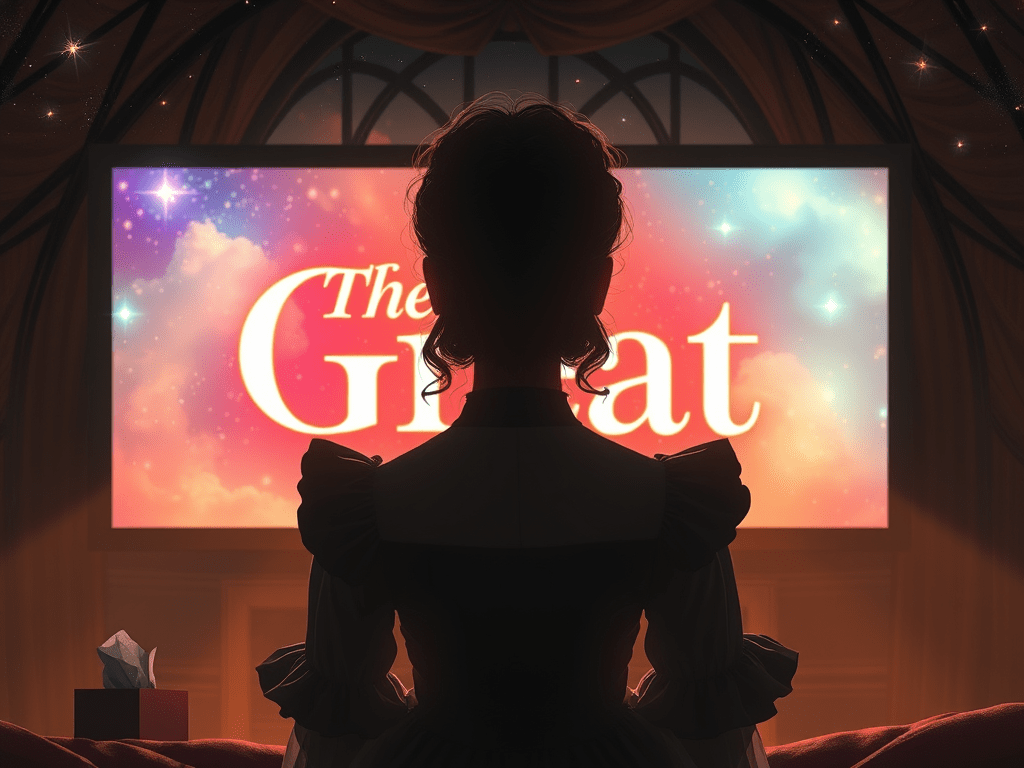
    I was dreaming, my subconscious hijacked by The Dishcast. This is my nocturnal routine: When I go to bed at night, I fall asleep to a podcast and, before long, I’m the star guest. There I am, delivering profound manifestos about the human condition, my opinions urgently needed and universally admired.

    When I woke up, the camaraderie still lingered, as if Andrew and Reihan had just slipped out the back door, leaving only a faint echo of laughter.

    This happens all the time. In my dreams, I’m not just a listener—I’m part of the podcast universe, slapping backs, sipping champagne, and dropping truths no one dared to utter. Reality, by comparison, is disappointingly quiet.

    Clearly, podcasts are taking too much bandwidth in my brain. I’m not alone. Like millions of others, I’ve practically taken up residence in the world of podcasts. My life runs on a steady soundtrack of conversations and monologues, piped directly into my ears while I swing kettlebells, pedal my exercise bike, grade uninspired writing assignments, cook, eat, and scrub the kitchen into submission. Podcasts are my companions for post-workout naps, my co-pilots on the commute, and my salvation during middle-of-the-night insomnia—the kind where you wake up at 2 a.m., stare at the ceiling, and hope a familiar voice can lull you back to sleep before dawn.

    In total, I must rack up over a hundred hours of podcast listening every week. I spend more time in the podcast multiverse than in the real one, and inevitably, these voices have taken up permanent residency in my brain. Some of these parasocial relationships I welcome with open arms; others, I tolerate with the resigned grumbling of a bad roommate. And then there are the hosts who commit unforgivable sins—becoming smug, tedious, or worse, preachy—earning themselves a one-way ticket to oblivion. In this universe, the delete button is my only weapon, and I wield it without mercy.

    Living in the podcast world as I do—where most of my waking and sleeping hours are dominated by disembodied voices—I’ve started asking some uncomfortable questions. Have I, like millions of others, surrendered my brain to the podcasters, letting them hijack my mental real estate to my own detriment? Am I so immersed in podcast life that I’ve lost all perspective, like a fish in water, oblivious to how wet it is?

    What am I really after here? Entertainment? Wisdom? A surrogate friend? Or just noise to drown out the endless chatter in my own head? Why do some podcasts stick while others fall by the wayside? Are my favorites truly brilliant, or just slightly less irritating than their competition? Is it their buttery voices, sharp wit, or the fact that they don’t seem to realize they’ve become permanent fixtures in my inner monologue?

    Could I live without podcasts? Would the silence reveal things about myself I’m not ready to confront? What do I call that blissful, cozy state when I’m wrapped in the warmth of a trusted voice? Podcastopia? Earbud Nirvana? Sonic Solace? And is it possible to “love” a podcaster too much, like when I know their pet’s name but can’t remember my sibling’s birthday?

    Am I escaping something? Is this obsession a creative pursuit or an elaborate scheme to avoid existential dread? And most importantly, does this insatiable consumption mean something is deeply, hilariously wrong with me? Or does it point to something more profound—a need for a new word to describe the bottomless, soul-deep immersion of chasing episode after episode like a digital hunter-gatherer?

    Yeah, I’ve got questions. But it might be too late. I may already be The Man Who Loved Podcasts Too Much.

    After waking up from my dream of hanging out with Andrew Sullivan and Reihan Salam, I crept into the kitchen for breakfast–a self-inflicted atrocity of overnight oats. Not just any overnight oats, mind you, but a Trader Joe’s variety touting “ancient grains,” as if the endorsement of long-dead civilizations could somehow redeem the experience. Spoiler: it didn’t. Despite my best attempts at culinary CPR—vanilla protein powder, a smattering of berries, and a dusting of pumpkin spice—the result was still cold, gluey sludge, the breakfast equivalent of a wet handshake.

    Each spoonful felt like a personal affront, a betrayal by my own hands, as though I had willingly prepared the kind of gruel Dickensian orphans would revolt over. The texture was an abominable mix of paste and gravel, and the cold temperature screamed “punishment” rather than “sustenance.” By the end, I wasn’t just eating; I was enduring. Mental note: next time, boil this nonsense into something remotely edible—or toss it and make a proper breakfast for a self-respecting adult. 

  • LARRY SANDERS: WHEN YOUR ONLY MEASURE OF SELF-WORTH IS THE NIELSEN RATING

    LARRY SANDERS: WHEN YOUR ONLY MEASURE OF SELF-WORTH IS THE NIELSEN RATING

    The Larry Sanders Show is, at its core, a study in impoverishment—not financial, mind you, but emotional, existential, and spiritual. It’s a bleak yet hilarious portrait of men so starved for validation that their only measure of self-worth is the Nielsen rating. Without it, they might as well not exist. The three principals—Larry Sanders, Hank Kingsley, and Artie the producer—are all flailing in different shades of desperation, their egos so fragile they make pre-teen TikTok influencers look well-adjusted.

    What’s astonishing is that these men are emotional dumpster fires in a pre-social media era. Had they been forced to navigate Instagram, they’d have suffered full mental collapse long before season six. Larry, in particular, embodies this fragile insecurity perfectly: there he is, night after night, lying in bed with some beautiful woman, but his true lover is the TV screen, where he watches his own performance with a mix of self-loathing and obsessive scrutiny. His actual partner—flesh, blood, and pleading for his attention—might as well be a houseplant.

    Hank Kingsley, meanwhile, is a slow-motion trainwreck of envy and delusion. He loathes Larry with the fire of a thousand suns, seeing his role as sidekick as a cosmic insult to a man of his alleged grandeur. His existence is a never-ending, one-man King Lear, with far more Rogaine and far less dignity.

    Then there’s Artie, the producer, the closest thing the show has to a functional adult. He wrangles chaos with a cigarette in one hand and a whiskey in the other, managing to keep the circus running even as its ringleader is in freefall. But Artie, too, is an emotional casualty. He can juggle Larry’s neuroses and Hank’s tantrums with military precision, yet his own life is a shipwreck, his ability to maintain order confined strictly to the world of late-night television.

    Yet for all its cynicism, the show doesn’t just leave us gawking at these wrecked souls—it makes us care. We want them to wake up, to claw their way out of their vanity-driven stupor, to abandon the mirage of celebrity and seek something real. But they won’t. They can’t. They are too drunk on the high of public approval, too lost in the spectacle of show business, too incapable of self-awareness to change course. And so we watch them burn out in real time, laughing through the tragedy, absorbing its lessons like a cautionary tale wrapped in razor-sharp wit.

    In the end, The Larry Sanders Show is the perfect showbiz fable: hilarious, cutting, deeply sad, and just self-aware enough to let us laugh at the madness while secretly wondering if we, too, are addicted to the same empty validation.