Tag: mindfulness

  • Algovorous

    Algovorous

    Algovorous
    adjective

    Characterized by habitual consumption of algorithmically curated stimuli that prioritize engagement over nourishment. An algovorous person feeds continuously on feeds, prompts, and recommendations, mistaking stimulation for insight. Attention erodes, resilience weakens, and depth is displaced by endless, low-friction intake.

    ***

    You don’t know any other world because you were born inside the Attention Economy. There was no “before” for you—no baseline against which to compare the glow of screens to a quieter, unmonetized mental life. So let me tell you something grim about the system you’ve inherited: it runs on engagement at all costs. Not truth. Not wisdom. Not even pleasure in any deep sense. Just engagement. As Jaron Lanier warns in Ten Arguments for Deleting Your Social Media Account Right Now, the economy works best when it bypasses your higher faculties and plugs directly into the brain’s most primitive circuitry. This is not the part of you that reasons, imagines, or aspires. It’s the reptile brain—the swampy basement where jealousy, envy, FOMO, and schadenfreude slosh around, waiting to be poked with a stick. Stimulate that region long enough and you don’t become thoughtful or fulfilled. You become reactive, agitated, and strangely hungry for more of the same poison.

    The platforms know this. A successful YouTuber doesn’t need insight; he needs targets. Hence the booming genre of downfall porn: endless autopsies of other people’s collapses. Take bodybuilding YouTube, a carnival of oiled torsos and moral rot. Greg Doucette, with his two-and-a-half million subscribers, has perfected the form. His brand is not training wisdom so much as public execution. He thrives on predicting the imminent demise of rival influencers, especially Mike Israetel, whose Renaissance Periodization channel—approaching four million subscribers—shows no interest in collapsing on schedule. That hasn’t stopped Doucette from announcing the funeral. He does it in a tank top, veins bulging, traps flared, voice pitched to a squeaky fury, filleting his subjects like a caffeinated fishmonger. The performance is manic, theatrical, and wildly successful. Rage, it turns out, scales beautifully.

    I’m not a psychiatrist, but you don’t need a medical degree to recognize a toxic loop when you see one. Mental health professionals would likely agree: this is dopamine farming. The audience gets a chemical jolt from watching others stumble while doing nothing to improve their own lives. It’s adrenaline for the bored, envy with a subscription button. In the Attention Economy, toxicity isn’t a bug—it’s the feature. The viewer doesn’t flourish; the algorithm does. You sit there, immobilized, a butterfly pinned to corkboard entertainment, while someone else’s revenue graph climbs. That is the deal on offer: your attention in exchange for distraction from the harder work of becoming a person.

  • The Tabloid Mind Vs. The Thoughtful Mind

    The Tabloid Mind Vs. The Thoughtful Mind

    The verdict is in: after fifteen years of running their experiment on us, social media has mangled the human psyche. It has sandblasted away nuance, turned civility into snarling, and left us performing as shrill tribal mascots. The trouble begins with its essence: an Attention Machine. Every scroll is a sugar hit for the brain—quick spike, hard crash. We learn the trick ourselves, spitting out content like human Pez dispensers, packaging our thoughts as candy for the feed.

    Belonging is rationed out in likes and retweets, and the cost is subtlety. To win attention, you don’t weigh both sides—you crank the volume, you caricature, you inflame. What begins as a hook metastasizes into belief. We develop the Tabloid Mind: the reflex to turn every notion into a screaming headline. And once we inhabit the Tabloid Mind, we degrade, becoming not better humans but better performers for the algorithm.

    The Thoughtful Mind never stood a chance. A Tabloid platform attracts tens of millions; the Thoughtful Mind, if lucky, limps along with scraps. Yet the difference is stark. The Thoughtful Mind asks, listens, considers contradictions, and cools the room so clarity can thrive. The Tabloid Mind, by contrast, thrives on panic and rage, reducing discourse to a lizard-brain cage match where opponents are demons and the fire must never go out.

    A culture enthroned by the Tabloid Mind breeds paranoia, extremism, conspiracy, and violence. And violence doesn’t need to be shouted—it can be winked into existence by the constant drip of toxic adrenaline.

    I know the alternative exists because I live it daily in the classroom. When my students wrestle with bro culture, influencer fakery, or the cultural fallout of GLP-1 drugs, they do so with humor, nuance, and critical thought. The Thoughtful Mind lives there, in the room, face to face. No one is frothing at the dopamine mouth. No one is shitposting for clout. We disagree, we wrestle, we laugh—but we think.

    The Tabloid Mind is not sustainable. It’s a toxin, and unchecked, it will kill us. Our survival depends on choosing the Thoughtful Mind instead. The fight between them—clickbait versus clarity, heat versus light—is not just cultural noise. It’s the defining battle of our age.

  • The Infinite Hole: Addiction, Part X, and the Fight for the Higher Channel

    The Infinite Hole: Addiction, Part X, and the Fight for the Higher Channel

    A friend once told me that when he was nine, hanging out after school, some boys insisted they had to walk across the neighborhood to watch “a girl fight.” He assumed the girls were older, maybe middle schoolers. The boys were giddy: they claimed clothes would rip, and they’d get the thrill of seeing girls half-dressed.

    My friend refused to join them. He didn’t want to see a fight. But in that moment he was struck by a recurring fantasy: the wish to be invisible, to slip into girls’ rooms and spy. That impulse stayed with him for years.

    Decades later, YouTube would grant him such invisibility. Millions of young women had become willing exhibitionists. He became addicted. The voyeurism consumed him, draining his time, corroding his relationships, creating a double life thick with shame and self-loathing. He even dreamed of damnation, his soul circling a pit dug by his own compulsions.

    Addiction ruins us because it hijacks our agency. Urges swell until they dictate every move. Writing about this in Lessons for Living, Phil Stutz explains: “When you behave as if there are no consequences, you’ve lost your sense of the future. Immediate pleasure is all there is. Without a future, life becomes meaningless.”

    Stutz names the inner saboteur “Part X.” This demon convinces us that we can’t survive without indulging our urges. But Part X is a liar.

    Why do we fall for it? Stutz argues that it’s simple: “It’s human nature to want a reward for our pain and effort.” We grow restless waiting for pleasure to arrive. Faith and patience feel intolerable. Part X whispers that we are special, entitled to gratification now, free from universal law. Faith is unnecessary.

    And so the cycle begins. Faith collapses, the urges tighten, and soon we are hooked, yoked to Part X. Stutz warns:

    “Unstopped, this force turns your impulses into addictions. Every lower-channel impulse takes you outside yourself for gratification. But we are spiritual beings, and the only real satisfaction comes from connecting to higher forces. What you call these forces—God or flow or the unconscious—doesn’t matter. These are infinite forces, found only inside ourselves. The more you go out into the material world, the further you get from these forces and the emptier you feel. To one degree or another, we all feel this inner emptiness, this hole inside. Part X lies, telling us to go outside ourselves for one more joint or piece of cake or outburst of rage—this will finally fill up the hole. Then we take ourselves even further from the inner forces that could actually satisfy the emptiness. It’s an escalating cycle. The more we act out our impulse, the bigger the hole gets.”

    This is addiction’s essence: trying to fill an infinite hole with finite scraps.

    Freedom doesn’t come cheap. Stutz insists that change is brutal because deprivation feels unbearable. Part X insists suffering is intolerable. The only way forward is to flip the script: to see deprivation itself as reward. To starve the demon is to grow strong. As he puts it, “Each time you retrain your impulses, you close off the lower channel. A dynamic inversion occurs—when you curb the impulse you invert its energy, holding it inside yourself. This energy gets transformed and then emerges in a more powerful form through the higher channel.”

    The difference is palpable. In the lower channel, you rot in a swamp of shame, fatigue, and alienation. In the higher channel, you live with integrity, vitality, and connection. One road leads to corrosion, the other to grace.

    To walk the higher path requires humility: admit your condition, seek higher forces—God, Flow, your own language for the divine—and retrain your impulses. The more you resist, the stronger you become. Each act of resistance is an investment in yourself, a deposit of energy and purpose.

    The strategy includes visualization. Stutz recommends imagining not only your degraded state after indulgence—the lizard eyes in the mirror, the soul hollowed by shame—but also your rescue: “Imagine that a host of spiritual guides descend to lift you out of the lower channel. I see them in white robes; you can use any image that works. If the concept of guides bothers you, think of them as pure forces from out of your own unconscious. Finally, imagine yourself walking out into the world with these guiding figures. Your purpose is to be of service to the world. Again, teach yourself to quickly create this feeling of being of service. Service is the most direct way to open the higher channel.”

    This is Stutz’s religion: service as salvation, energy as grace, the higher channel as the place of renewal. It mirrors Judeo-Christian patterns of death and rebirth: die to the old self, be born into the new. Paul himself would likely reject it as a man-made scheme, but the parallels are striking.

    Whether believer or skeptic, the conclusion remains: renounce the lower channel, resist Part X, and live in the higher one. Only then can you taste true courage, creativity, and purpose.

  • Stepford Dreams and Other Diseases

    Stepford Dreams and Other Diseases

    “Our culture denies the nature of reality,” therapist Phil Stutz declares in one of his chapters from Lessons for Living. In denial, we drift through a fantasy world—a frictionless utopia where everything turns out perfectly with minimal effort, unpleasantness is airbrushed away, and immediate gratification flows like tap water. If you fail to thrive in this Instagram-ready Eden, well, clearly it’s your fault.

    Reading Stutz’s dissection of this mythical paradise—one that entitlement and cleverness supposedly guarantee—I’m reminded of family vacations to Hawaii. The trip’s curated perfection feels ripped straight from pop culture’s catalog of false realities. I start imagining myself as a minor Polynesian god, which makes returning home to laundry, bills, and chores feel like divine demotion.

    Stutz’s mission is to break our addiction to the idea that life is a permanent Hawaiian vacation. His blunt truth: life is pain and adversity, the future is uncertain, real accomplishments require sweat and discipline, and—brace yourself—you are not special enough to escape these rules. These principles don’t expire.

    This is not, Stutz insists, a gospel of misery. Love, joy, surprise, transcendence, and creativity are woven into life’s fabric—but so are conflict, loss, and uncertainty.

    Why, then, do we cling to the fantasy? In part, because the media keeps showing us people who appear to have escaped reality’s terms. Movie stars and influencers are lit like Renaissance portraits, perfectly curated, radiating supreme happiness. Their romances are operatic, their sex lives cinematic. They seem universally adored and gracious enough to share the “secrets” of their bliss. They look as if they’ve broken free of pain, adversity, and doubt—and they promise we can do the same if we just buy the right products and mimic their lifestyle.

    It doesn’t matter where you sit in the social pecking order; the fantasy assures you can ascend to the influencer’s Olympus.

    This is a mass delusion. Stutz writes, “When everyone acts as if a fantasy is real, it begins to seem real.” But for you, it never arrives. Your bank account wheezes. Your waistline ignores your best intentions. Your body refuses to flatter you. Your parenting is a gamble at best. Your life often feels like it’s running you.

    Because you believe in the fantasy, you think you’re defective. You look in the mirror and mutter, “Loser.”

    That’s the invoice for believing in perfection: when it inevitably collapses, you’re left with self-loathing. Stutz warns, “The problem is that the other group has become the standard, and self-esteem starts to depend on being like them. An adverse event feels like something is happening that is not supposed to be happening. The natural experiences of living make you feel like a failure.”

    His solution? Total reorientation. Replace the static images of perfection—what I call “Magical Moments Frozen in Time”—with the truth: life is a messy, moving process. Stutz explains: “The ideal world with the superior people is like a snapshot or a postcard. A moment frozen in time that never existed. But real life is a process; it has movement and depth. The realm of illusion is an image, dead and superficial. Still, these images are tempting. There is no mess in them.”

    If media has brainwashed us into aspiring to be perfect Stepford spouses, how do we reject these static ideals and embrace life in its raw, dynamic, and inconvenient fullness? Stutz says we must accept this: “Life is made up of events. The only real way to accept life is to accept the events that comprise it. And the flow of events never stops. The driving force of the universe reveals itself via the events of our lives.”

    This flow connects us to life’s energy, making us fully alive. The downside? It leaves us feeling small, exposed, and out of control. The false paradise promises to free us from that vulnerability, but in doing so, it severs our connection to life’s current and leaves us in “spiritual death.”

    Mental health, Stutz argues, depends on accepting this unstoppable flow of events. He compares it to good parenting: “It is not good enough to just show up. You need a point of view and a set of tools. It is impossible to deal with events constructively without being prepared.” If you’re clinging to Magical Moments Frozen in Time, you’re unprepared when reality slaps you.

    The preparation, he says, is a philosophy—one that lets you redefine negative events. Stutz writes, “Preparing yourself with a philosophy enables you to change the meaning of a negative event. With a specific philosophy, you can aggressively change your perception of events.” That philosophy rests on three pillars:

    • Adverse events are supposed to happen; they don’t mean you’re broken.
    • Every negative event is a growth opportunity.
    • Spiritual strength matters more than positive outcomes.

    When you accept life as a series of crises, you stop throwing toddler-level tantrums every time something goes wrong. People addicted to Magical Moments tend to overreact to challenges—often making their reaction worse than the original problem.

    Reading this, I recall when my wife and I had twins fifteen years ago. She handled meltdowns with calm; I met a child’s tantrum with one of my own. A therapist told me, “When you get angry, you go zero to ten in under a second, and your body chemistry changes in a way that fills the room with toxic energy. That escalates your children’s tantrums. Your wife, on the other hand, stays calm. She has a calming effect on the twins. You need to learn how to calm down in a crisis.”

    Stutz is right. Being a spiritual person means maturing as a parent. Being a devotee of Magical Moments Frozen in Time means being a spoiled child yourself—an extra in Idiocracy. A society enthralled by fake perfection can’t sustain itself; it’s destined for regression, chaos, and entropy.

  • Nostalgia, Nihilism, and the Need for a North Star

    Nostalgia, Nihilism, and the Need for a North Star

    We live in a state of perpetual performance. Not just for others, but for ourselves. It’s cosplay with consequences—playful on the surface, deadly serious underneath. We obsess over how our performance lands. We evaluate our worth by the reactions we elicit. At stake is not just our reputation, but our very sense of moral character.

    This obsession isn’t new. The philosopher Blaise Pascal put it bluntly: we’d rather appear virtuous than actually be virtuous. It’s easier to sculpt the image than to develop the core. In this way, we’ve become artisans of curation, not content—architects of persona, not people.

    We live, as Shakespeare warned, on a stage. But our thirst for applause is bottomless. The more we receive, the more we crave. We become validation addicts, forever chasing the next fix of approval. And when applause falters or vanishes, anxiety rushes in. To soothe this anxiety, we self-medicate. Not just with likes and follows—but with food, consumption, workouts, and delusion.

    Some of us drown that dread in comfort food. Others sprint in the opposite direction—discipline, clean eating, high-performance regimens. But often, that stoicism is just cosplay too: hunger in a different mask. When that fails, we drift into nostalgia. We reimagine the past—not as it was, but as it flatters us to believe it was. We cast ourselves as the hero, the lover, the misunderstood genius. The story becomes so good, we forget it isn’t true. We live in the fiction and lose our grip on reality.

    This disconnect—between who we pretend to be and who we are—makes us brittle. Maladapted. And so the cycle deepens: more consumption, more self-distraction, more illusion. Consumerism becomes therapy. Hedonism becomes self-care. Nihilism becomes a badge of honor. All of it is cosplay. And all of it is corrosive.

    Philosophy, religion, and therapy exist to confront this masquerade. They offer a language for our delusions, a history of our dysfunction, and a spiritual direction out of the maze. They remind us that cosplay is not identity, and performance is not presence.

    I don’t pretend to have it figured out. But I’ve found insight in thinkers like Phil Stutz, who warns against the seductive ease of instant gratification, and Steven Pressfield, who speaks of resisting the lure of comfort in favor of a purposeful life. I’ve also been challenged—and strangely comforted—by Paul’s doctrine of kenosis: the radical idea that we’re not here to inflate ourselves but to empty ourselves in service of others. In a world obsessed with power and “respect,” that message lands like a thunderclap.

    What unsettles me most is not our ignorance—it’s our awareness. Many of us know the truth. We even live it for a while. But we drift. We relapse. We trade the hard-earned clarity for the cheap thrill of our old scripts. That’s what demoralizes me: not just the fall, but the speed and ease with which it happens.

    Yet I still believe in the power of a North Star. Call it purpose, vision, a calling—whatever name it takes, it’s the gravitational pull that keeps us from floating off into the void of our appetites. I think of Ann Kim, the Korean immigrant told to stay in her lane. She didn’t. She found her voice, expressed it through food, and became a James Beard Award-winning chef.

    The path to a good life, I suspect, doesn’t begin with fear of failure. It begins with a compelling vision of who we are meant to be. And the discipline to never look away from it.

  • Blubberation: The Scourge of Humankind

    Blubberation: The Scourge of Humankind

    Few words in the English language wear such a deceptive mask as maudlin. To the untrained ear, it sounds quaint—maybe even charming—like something involving an embroidered hanky and a soft violin cue. Most people, if they’ve heard it at all, treat maudlin like a minor indulgence in sentiment. But this tepid reaction completely misses the word’s fangs. In truth, maudlin is not merely saccharine—it’s a spiritual sickness. It is the emotional equivalent of soggy pie crust: overbaked, overhandled, and incapable of supporting the weight of anything real.

    Jeffrey Rosen, in The Pursuit of Happiness, opens with a quote from Paracelsus that nails the metaphysical rot at the core of maudlin: “Even as man imagines himself to be, such he is, and he is also that which he imagines.” Most of us don’t realize we’ve built our entire personalities around a grandiose hallucination—an operatic self-image drenched in tragic overtones, straining for gravitas. This isn’t just self-delusion. It’s Blubberation—a term I propose as an upgrade to the soft-focus failure of maudlin. Blubberation is not some quaint emotional hiccup. It’s our default operating system. We cling to our sad little myths and bathe in our own narrative syrup, while Rosen, echoing the Stoics, begs us to snap out of it. Real freedom, the kind Cicero and Jefferson admired, comes not from indulging the lower self with its gaudy tantrums, but from mastering our inner world—our thoughts, emotions, actions, and absurd yearnings for applause.

    Consider Cicero’s ideal: the man who is not tormented by longing, not broken by fear, not drunk on ambition or self-congratulating euphoria. This man, Cicero says, is the happy man. And here’s the kicker: this man is the sworn enemy of Blubberation. The Stoic’s strength lies in composure; Blubberation recoils from it like a vampire from sunlight. Rosen knows this. His book is a case against the lachrymose self—the one addicted to its own melodrama, whose emotional overreach demands constant rewards: a cookie, a compliment, a new Omega Speedmaster.

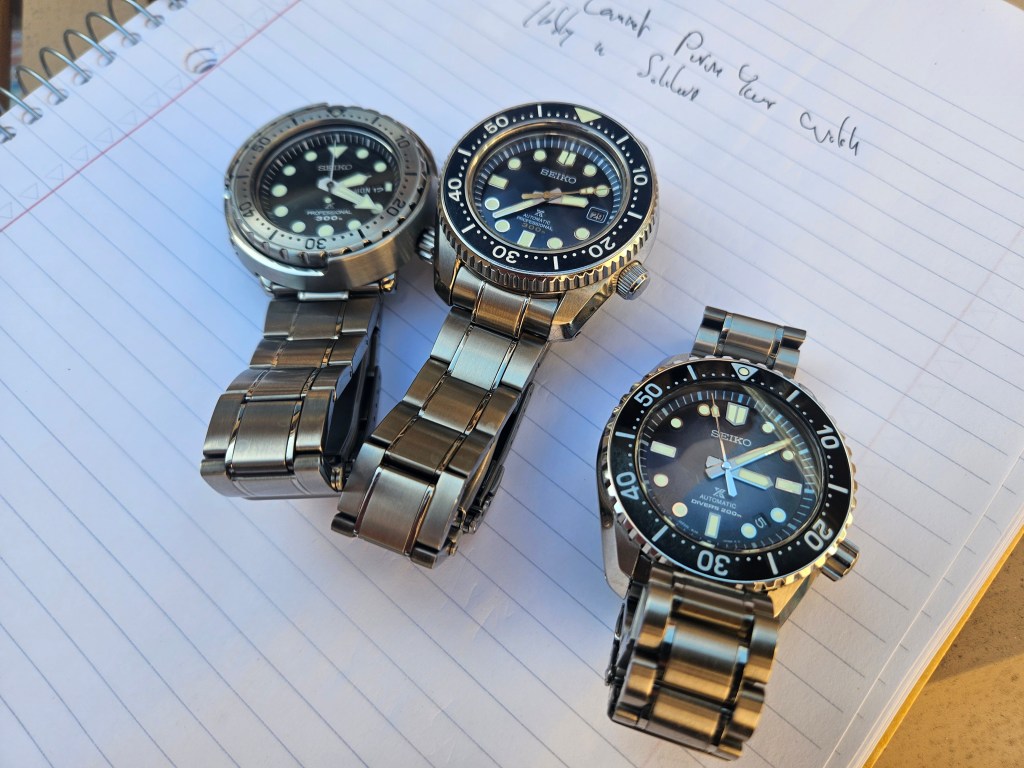
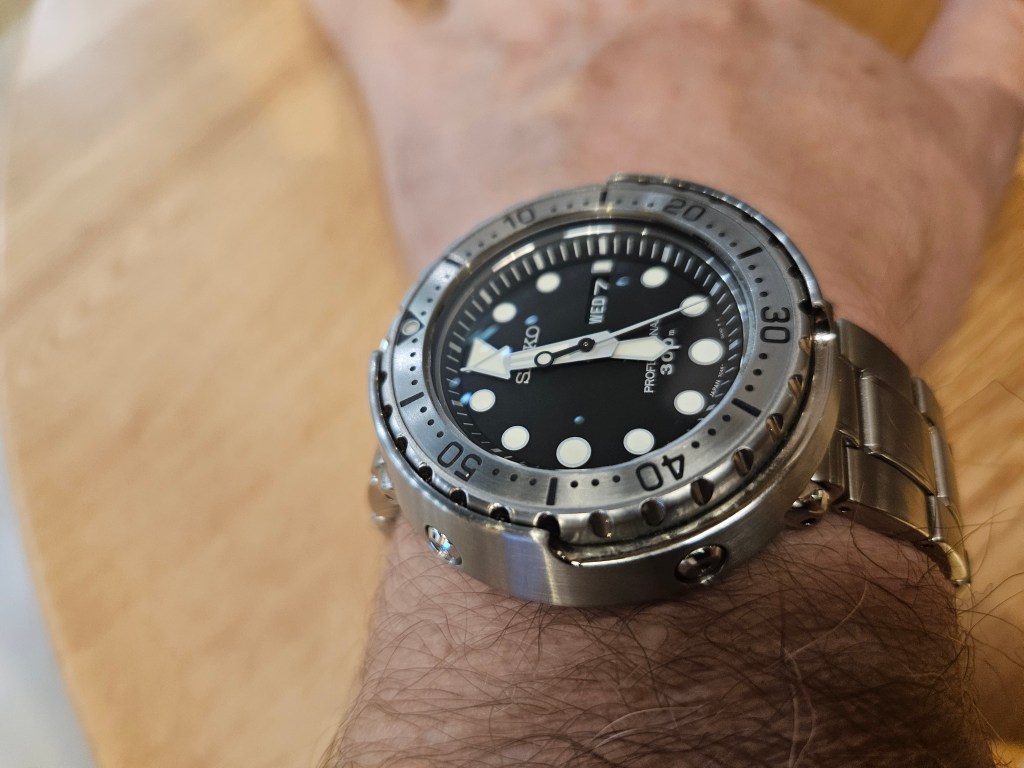
    Let me be clear. I am not above this. I am its most devout practitioner. In fact, my watch addiction is Blubberation in horological form. I’ve shed actual tears during a wrist rotation cull. I have felt the full agony of “falling out of love” with a diver watch I once swore was “The One.” I’ve experienced the euphoric lift of trimming my collection, only to relapse a week later with trembling hands at a DHL box. We call this collecting. We dress it up as passion. But let’s be honest: it’s the theater of the self. It’s manufactured meaning in a velvet-lined case.

    Maudlin doesn’t cut it anymore. It’s too polite, too antique-shop sad. Blubberation, on the other hand, is a full-body emotional spill. It’s sadness with jazz hands. It’s weeping into your soy latte because someone forgot to like your Reels. It’s mistaking catharsis for wisdom. It’s trying to turn your trauma into TikTok content with the right music filter. And it’s not limited to watches. It infects how we narrate our lives, our diets, our so-called “journeys.” It’s the self crying out, not for help—but for attention.

    Blubberation, in the end, is a trap. It offers the illusion of depth but delivers only the shallows. It promises identity but trades in caricature. The Stoics warned us: without restraint and clarity, we become slaves to our worst performances. We become sentimental hustlers, selling tragedy like perfume. And as long as we keep mistaking our emotional indulgence for authenticity, we’ll never touch happiness—only sniff it through the fog of our own overwrought monologues.

  • Sociopathware: When “Social” Media Turns on You

    Sociopathware: When “Social” Media Turns on You

    Reading Richard Seymour’s The Twittering Machine is like realizing that Black Mirror isn’t speculative fiction—it’s journalism. Seymour depicts our digital lives not as a harmless distraction, but as a propaganda-laced fever swamp where we are less users than livestock—bred for data, addicted to outrage, and stripped of self-agency. Watching sociopathic tech billionaires rise to power makes a dark kind of sense once you grasp that mass digital degradation isn’t a glitch—it’s the business model. We’re not approaching dystopia. We’re soaking in it.

    Most of us are already trapped in Seymour’s machine, flapping like digital pigeons in a Skinner Box—pecking for likes, retweets, or one more fleeting dopamine pellet. We scroll ourselves into oblivion, zombified by clickbait and influencer melodrama. Yet, a flicker of awareness sometimes breaks through the haze. We feel it in our fogged-over thoughts, our shortened attention spans, and our anxious obsession with being “seen” by strangers. We suspect that something inside us is being hollowed out.

    But Seymour doesn’t offer false comfort. He cites a 2015 study in which people attempted to quit Facebook for 99 days. Most couldn’t make it past 72 hours. Many defected to Instagram or Twitter instead—same addiction, different flavor. Only a rare few fully unplugged, and they reported something radical: clarity, calm, and a sudden liberation from the exhausting treadmill of self-performance. They had severed the feed and stepped outside what philosopher Byung-Chul Han calls gamification capitalism—a regime where every social interaction is a data point, and every self is an audition tape.

    Seymour’s conclusion is damning: it’s time to retire the quaint euphemism “social media.” The phrase slipped into our cultural vocabulary like a charming grifter—suggesting friendly exchanges over digital lattes. But this is no buzzing café. It’s a dopamine-spewing Digital Skinner Box, where we tap and swipe like lab rats begging for validation. What we’re calling “social” is in fact algorithmic manipulation wrapped in UX design. We are not exchanging ideas—we are selling our attention for hollow engagement while surrendering our behavior to surveillance capitalists who harvest us like ethical-free farmers with no livestock regulations.

    Richard Seymour calls this system The Twittering Machine. Byung-Chul Han calls it gamification capitalism. Anna Lembke, in Dopamine Nation, calls it overstimulation as societal collapse. And thinkers studying Algorithmic Capture say we’ve reached the point where we no longer shape technology—technology shapes us. Let’s be honest: this isn’t “social media.” It’s Sociopathware. It’s addiction media. It’s the slow, glossy erosion of the self, optimized for engagement, monetized by mental disintegration.

    Here’s the part you won’t hear in a TED Talk or an onboarding video: Sociopathware was never designed to serve you. It was built to study you—your moods, fears, cravings, and insecurities—and then weaponize that knowledge to keep you scrolling, swiping, and endlessly performing. Every “like” you chase, every selfie you tweak, every argument you think you’re winning online—those are breadcrumbs in a maze you didn’t design. The longer you’re inside it, the more your sense of self becomes an avatar—algorithmically curated, strategically muted, optimized for appeal. That’s not agency. That’s submission in costume. And the more you rely on these platforms for validation, identity, or even basic social interaction, the more control you hand over to a machine that profits when you forget who you really are. If you value your voice, your mind, and your ability to think freely, don’t let a dashboard dictate your personality.

  • An Argument for Healthy Denial: A Self-Help Sermon for the Self-Indulgent

    An Argument for Healthy Denial: A Self-Help Sermon for the Self-Indulgent

    Let’s be honest. You’ve tried the soft-glow Instagram mantras and the overpriced journaling apps. You’ve danced with dopamine like a lab rat in a Vegas casino, chasing every ping, snack, scroll, and retail hit like it was divine revelation. And where has it gotten you? Nowhere worth photographing.

    So here’s your wake-up call, preacher-style, minus the tambourine: take care of your damn self. Not in that syrupy “self-care” way that means binge-watching prestige TV while mainlining DoorDash and calling it therapy. No, I mean the kind of care that involves discipline, boundaries, and strategic discomfort—also known as healthy denial.

    Phil Stutz is right: your relationship with your body, your soul, and the people around you depends on your ability to say “no” like your life depends on it—because it does. Not “no” out of self-loathing or ascetic performance art, but “no” because you actually give a damn about the human being you’re becoming.

    You don’t skip the donut because you hate yourself. You skip it because you respect yourself enough not to let your biology, your boredom, or your bastardized idea of “treat culture” run your life. You are not a French bulldog in a baby stroller. You are a fully grown adult with responsibilities and, presumably, a spine.

    And no, this isn’t some narcissistic glow-up project. You’re not chiseling your abs to become a thirst trap or launching your “healing journey” vlog. This is not a TED Talk in the making. This is about getting better because the people who count on you deserve more than your bloated, distracted, half-baked self. Society doesn’t need another dopamine junkie sucking on algorithmic pacifiers while pretending to be “living their truth.”

    Yes, some will tell you denial is toxic, puritanical, even abusive. These are the same people who believe “treating yourself” five times a day is a human right. But let’s get something straight: healthy denial is not self-hatred—it’s self-respect with a steel backbone. You deny yourself garbage because you’re aiming for gold. You crave meaning, not just muffins. You want to die with fewer regrets, not a legacy of half-eaten potato chips and unread terms of service.

    So here’s what you’re going to do.
    You will stop snacking. Period.
    You will stop scrolling like a brainless peasant begging for dopamine crumbs from tech oligarchs.
    You will stop curating materialistic trinkets—yes, even the “limited edition” timepieces—and broadcasting your conspicuous consumption like a status-starved magpie.

    Instead, you will create.

    You will write.
    You will make music.
    You will work out with the devotion of a monk in a burning temple.
    You will show up for your family like it matters—because it does.
    And you will treat your time on this spinning sphere not as an entitlement but as the limited-edition miracle it is.

    This is not about being better than others. This is about being better for others. And if that sounds corny to you, maybe you’ve been swimming in irony so long you’ve forgotten what sincerity feels like.

    Here’s your new gospel: eat clean, think clearly, serve humbly, and waste nothing—not even time.

    Now get to it. The clock is ticking, and you’re not getting any younger.

  • The Great, on Hulu, is your TV Mount Everest

    The Great, on Hulu, is your TV Mount Everest

    So, you’ve just finished watching the complete 3 seasons of The Great on Hulu, and now you’re a broken shell of a human being. This “anti-historical” comedy about Empress Catherine the Great, penned by the devilishly talented Tony McNamara, is hands-down the best thing you’ve ever seen on television. And now, you’re plunged into a depression so deep that not even Elle Fanning’s radiant smirk or Nicholas Hoult’s glorious, sociopathic wit can pull you out of it. Why? Because you know, deep in your soul, that you’ll never see a script with such biting humor, impeccable cadence, and penetrating insight again. Ever.

    The Great is your TV Mount Everest, and the air up there is so thin that coming back down to the ground feels like an existential freefall. Desperate for solace, you decide to drown your sorrows in another “costume comedy,” because clearly, nothing soothes the soul like more ruffles and wigs.

    Enter The Decameron on Netflix—a comedy about the bubonic plague in 14th Century Italy. Yes, someone thought it would be a good idea to wring laughs out of a pandemic that killed a third of Europe. And the shocking part? They actually pulled it off. You’re impressed. Sort of. But at the same time, let’s not kid ourselves—the writing is not even in the same universe as The Great. It’s like comparing a Michelin-starred meal to the tastiest TV dinner you’ve ever had. Sure, it’s good, but come on—it’s not The Great. But here’s the kicker: you can’t trust your judgment anymore. You’ve entered a full-blown Post-Masterpiece Meltdown. On one hand, you’re bending over backward to be generous toward The Decameron, because you know deep down it’s unfair to compare anything to the sheer brilliance of The Great. On the other hand, you’re haunted by the suspicion that your generosity might be blinding you to the show’s actual merits—or lack thereof. You’re like someone who’s just lost the love of their life and is now attempting to date again by swiping right on Tinder with tears streaming down their face.

    Can you really trust your post-Great heart to judge anything properly? To make matters worse, The Decameron features the enigma that is Tanya Reynolds, an actress whose face is a bafflingly delightful conundrum—one moment goofy, the next serenely beautiful, as if she’s somehow tapped into a facial time machine that can travel between awkward adolescence and timeless beauty at will. Her intoxicating, elastic pulchritude is the final nail in the coffin of your short-circuited judgment. Your critical faculties, once sharp as a chef’s knife, now resemble a spoon trying to slice through steak. And you used to take pride in your TV criticism! Now you’re floundering in a sea of existential doubt, questioning everything—your taste, your standards, your very identity as a TV aficionado. So here you are, a once-confident critic, now reduced to a quivering mass of uncertainty, all because you stumbled upon Tony McNamara’s masterpiece, The Great. It’s like finding out you’ve been living in Plato’s cave all along, and now you’ve seen the light, you’re doomed to spend the rest of your days in the shadows, longing for the brilliance you can never unsee. Welcome to your new life in the Post-Masterpiece Meltdown. Enjoy the view—such as it is.

  • FOMO Detox: The Irony of Missing Out on Missing Out

    FOMO Detox: The Irony of Missing Out on Missing Out

    Johann Hari’s Stolen Focus: Why You Can’t Pay Attention delivers a delicious paradox: in recounting his three-month escape from the digital mosh pit, he finds that others are envious—not of his former screen-addled misery, but of his newfound clarity. That’s right—people experience FOMO over his liberation from FOMO. The irony is so rich it could fund a startup.

    Hari makes it plain: our collective addiction to the glowing rectangle is absurd. The average person fondles their phone 2,617 times a day—a number so obscene it belongs in a criminal indictment. The sheer time-suck is beyond comprehension. Whole lives are quietly siphoned into the abyss of notifications, DMs, and doomscrolling, and the tragedy is that most of us don’t even realize it’s happening. The smartphone, he argues, is the ultimate avoidance device—a pocket-sized panic portal that keeps you hooked on the fantasy of being somewhere else, all while real life drifts past like a neglected houseplant.

    And yet, there is no moral outcry. No grand rebellion. We are, at best, laboratory rats pressing the dopamine lever. The tech overlords—those data-mining, attention-harvesting Svengalis—have transformed our collective neurosis into a business model. They don’t just own our data. They own us.

    But something strange happens when Hari logs off. The panic dissipates. The constant itch for digital validation fades. His nervous system, previously fried to a crisp, begins to heal. News consumption becomes a choice, not a compulsion. He starts feeling something he hadn’t in years: depth. The world around him regains texture. Conversations feel richer. His brain, previously hijacked by the siren call of infinite scrolling, starts functioning again.

    His grand revelation? Multitasking is a lie. A cruel joke. The human brain is wired for focus, not for toggling between Instagram reels and email pings like a malfunctioning slot machine. And yet, people have become so conditioned to constant distraction that they can’t even sit on a toilet without clutching a phone like a life raft.

    As the world speeds up, Hari finds himself craving slowness. A quiet rebellion against the frantic pace dictated by social media’s profit-driven algorithms. It’s almost as if—perish the thought—the tech lords don’t want you to know this. Because if enough people realized that the great FOMO-induced panic is just an engineered illusion, they might finally look up from their screens and ask the unthinkable: What have I been missing?