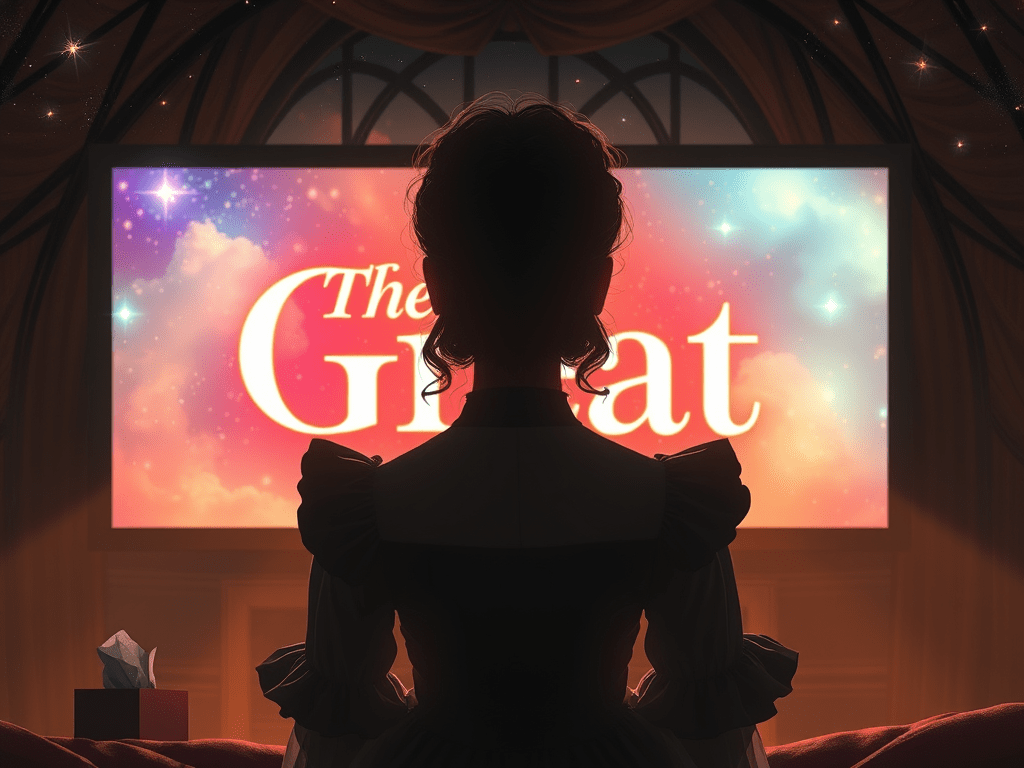
So, you’ve just finished watching the complete 3 seasons of The Great on Hulu, and now you’re a broken shell of a human being. This “anti-historical” comedy about Empress Catherine the Great, penned by the devilishly talented Tony McNamara, is hands-down the best thing you’ve ever seen on television. And now, you’re plunged into a depression so deep that not even Elle Fanning’s radiant smirk or Nicholas Hoult’s glorious, sociopathic wit can pull you out of it. Why? Because you know, deep in your soul, that you’ll never see a script with such biting humor, impeccable cadence, and penetrating insight again. Ever.
The Great is your TV Mount Everest, and the air up there is so thin that coming back down to the ground feels like an existential freefall. Desperate for solace, you decide to drown your sorrows in another “costume comedy,” because clearly, nothing soothes the soul like more ruffles and wigs.
Enter The Decameron on Netflix—a comedy about the bubonic plague in 14th Century Italy. Yes, someone thought it would be a good idea to wring laughs out of a pandemic that killed a third of Europe. And the shocking part? They actually pulled it off. You’re impressed. Sort of. But at the same time, let’s not kid ourselves—the writing is not even in the same universe as The Great. It’s like comparing a Michelin-starred meal to the tastiest TV dinner you’ve ever had. Sure, it’s good, but come on—it’s not The Great. But here’s the kicker: you can’t trust your judgment anymore. You’ve entered a full-blown Post-Masterpiece Meltdown. On one hand, you’re bending over backward to be generous toward The Decameron, because you know deep down it’s unfair to compare anything to the sheer brilliance of The Great. On the other hand, you’re haunted by the suspicion that your generosity might be blinding you to the show’s actual merits—or lack thereof. You’re like someone who’s just lost the love of their life and is now attempting to date again by swiping right on Tinder with tears streaming down their face.
Can you really trust your post-Great heart to judge anything properly? To make matters worse, The Decameron features the enigma that is Tanya Reynolds, an actress whose face is a bafflingly delightful conundrum—one moment goofy, the next serenely beautiful, as if she’s somehow tapped into a facial time machine that can travel between awkward adolescence and timeless beauty at will. Her intoxicating, elastic pulchritude is the final nail in the coffin of your short-circuited judgment. Your critical faculties, once sharp as a chef’s knife, now resemble a spoon trying to slice through steak. And you used to take pride in your TV criticism! Now you’re floundering in a sea of existential doubt, questioning everything—your taste, your standards, your very identity as a TV aficionado. So here you are, a once-confident critic, now reduced to a quivering mass of uncertainty, all because you stumbled upon Tony McNamara’s masterpiece, The Great. It’s like finding out you’ve been living in Plato’s cave all along, and now you’ve seen the light, you’re doomed to spend the rest of your days in the shadows, longing for the brilliance you can never unsee. Welcome to your new life in the Post-Masterpiece Meltdown. Enjoy the view—such as it is.

 Cinemorphosis