Tag: new-orleans

  • College Essay Prompt: Hurricane Katrina—Man-Made Catastrophe

    College Essay Prompt: Hurricane Katrina—Man-Made Catastrophe

    The story of Hurricane Katrina is not simply one of wind and water but of betrayal. The documentaries Hurricane Katrina: Race Against Time (Hulu) and Katrina: Come Hell and High Water (Netflix), along with Clint Smith’s essay “Twenty Years After the Storm” and Nicholas Lemann’s “Why Hurricane Katrina Was Not a Natural Disaster,” confront us with a grim truth: New Orleans, a city celebrated for its culture, music, and resilience, was devastated less by the storm itself than by the nation’s failure to protect its people.

    Through the voices of survivors, these works expose what might be called a fourfold sin: decades of red-lining that left poor Black neighborhoods especially vulnerable; government neglect that failed to strengthen levees or prepare for disaster; abandonment in the crucial days after the storm, when aid was sluggish and chaotic; and media defamation that painted survivors as looters rather than victims. Together, they suggest that Katrina was not just a natural disaster but a man-made catastrophe rooted in systemic racism, incompetence, and indifference.

    In a 1,700-word argumentative essay, take a clear position on the claim that Hurricane Katrina was less an act of nature than an act of national negligence. Your essay should:

    • Analyze how the films and essays portray the failures of government and institutions.
    • Consider how systemic issues (race, class, geography, and policy) compounded the disaster.
    • Explore how family, community, and cultural identity offered resilience when systems failed.
    • Use evidence from both documentaries and essays to develop your argument.

    Your goal is not just to summarize these sources but to engage critically with them, asking: What does it mean when a city is abandoned by its own country? What lessons does this catastrophe offer us about justice, resilience, and human dignity in the face of systemic failure?

    Sample Outline for Katrina Essay

    Thesis Statement:
    Hurricane Katrina was less a natural disaster than a man-made catastrophe, as decades of red-lining, government neglect, abandonment during the crisis, and media defamation amplified the storm’s destruction—yet amidst betrayal, the people of New Orleans revealed a code of resilience rooted in family, community, and cultural identity.


    Introduction (Paragraph 1)

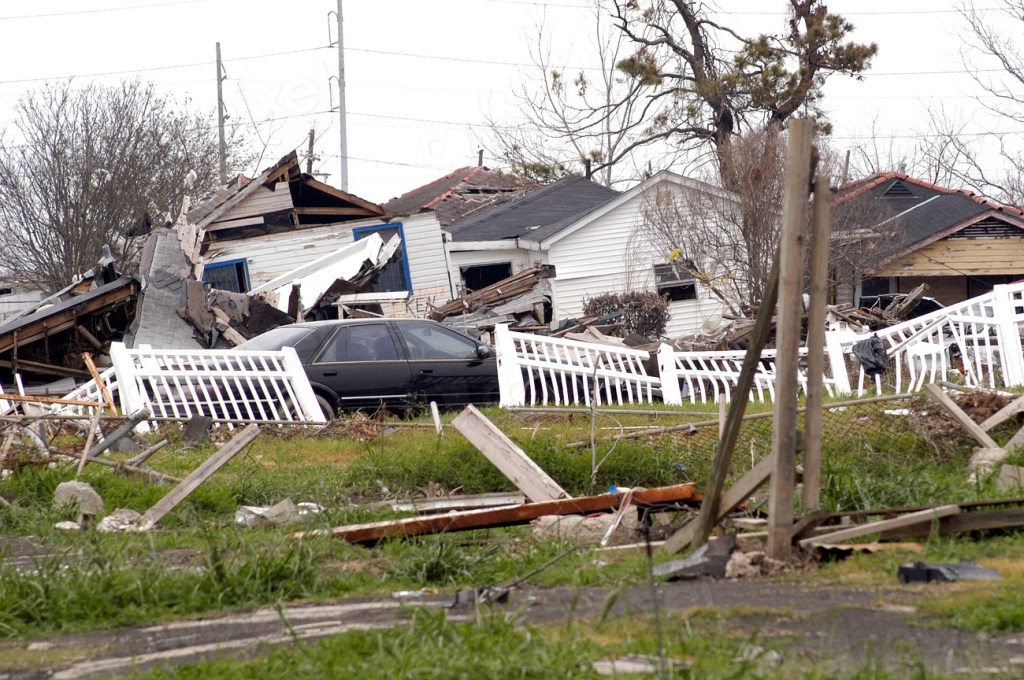
    • Hook: vivid image of Katrina’s aftermath (rooftops, floodwaters, stranded families).
    • Background: films (Race Against Time, Come Hell and High Water) + essays (Clint Smith, Nicholas Lemann).
    • Transition: disaster reframed not as “natural” but as systemic failure.
    • Thesis (above).

    Body Paragraphs

    2. Historical Red-Lining and Vulnerability

    • Show how discriminatory housing policies left Black neighborhoods in flood-prone areas.
    • Use evidence from Lemann to explain how structural racism predetermined who would suffer most.

    3. Government Neglect Before the Storm

    • Weak levee systems and ignored warnings.
    • Films highlight repeated calls for reform that were dismissed.
    • Argue this negligence magnified the hurricane’s impact.

    4. Abandonment in the Storm’s Aftermath

    • FEMA’s failures and delayed military response.
    • Smith’s essay on families stranded without aid.
    • Link to systemic indifference toward vulnerable populations.

    5. Media Defamation and Public Perception

    • “Looters vs. survivors” narrative.
    • Racialized framing of desperation as criminality.
    • Analyze how defamation deepened the betrayal of victims.

    6. Katrina as Man-Made Catastrophe

    • Synthesize the “fourfold sin” into a coherent argument.
    • Emphasize how the storm was natural, but the disaster was political and systemic.

    7. Bonds of Family as Survival

    • Use Smith’s depictions of kinship.
    • Highlight family loyalty as a lifeboat of resilience.

    8. Community as Improvised Solidarity

    • Neighbors rescuing neighbors, churches as sanctuaries.
    • Films show grassroots resilience when official systems failed.

    9. Cultural Identity and Resilience

    • New Orleans’ unique culture—music, food, community pride—helped people endure.
    • Argue that culture is not superficial but a survival mechanism.

    10. Lessons for Justice and Human Dignity

    • What Katrina reveals about systemic racism, governmental accountability, and disaster response.
    • Extend argument: resilience is inspiring, but betrayal should never be normalized.

    Conclusion (Paragraph 11)

    • Restate thesis in fresh language.
    • Reflect on the paradox: beauty of resilience vs. shame of abandonment.
    • End with a call to remember New Orleans not as a drowned city but as proof of what solidarity and dignity look like when systems collapse.
  • When the Levees Broke, So Did the Nation

    When the Levees Broke, So Did the Nation

    The documentaries Hurricane Katrina: Race Against Time (Hulu) and Katrina: Come Hell and High Water (Netflix) are searing indictments as much as they are testaments to survival. They tell the story of a singular city—New Orleans, a cultural jewel—betrayed and abandoned by its own nation.

    Told through the voices of those who endured the storm in 2005, these films lay bare a fourfold sin against the people of New Orleans.

    First sin: red-lining. Decades of discriminatory housing policies corralled Black families into neighborhoods below sea level—neighborhoods left exposed to catastrophe—while white families secured higher, safer ground. Yet out of this coerced geography bloomed community, kinship, jazz, art, and a way of life so distinctive that New Orleans became not just a city but a state of mind.

    Second sin: neglect. The protective marshlands were carved away, the levees shoddily built, the safeguards ignored. What should have been natural resilience was dismantled piece by piece, until a storm became a man-made massacre.

    Third sin: abandonment. When the waters rose, thousands of citizens waited for rescue that never came. They suffered hunger, thirst, illness, despair. Bureaucracies paralyzed by incompetence and poisoned by political rivalry left them stranded—leaders too intent on humiliating one another to save lives.

    Fourth sin: defamation. Media outlets, infected with racism, painted Black survivors as looters and criminals while white survivors were depicted as resourceful and brave. Rumors of sniper fire and marauding gangs turned aid missions into militarized standoffs, with the National Guard pointing rifles at the very people they were sent to save. These lies fueled white vigilantes who hunted Black residents as if the collapse of law gave them license to kill.

    This fourfold betrayal is almost unbearable to watch, yet threaded through the grief is a resilient beauty: the music, the food, the language, the humor, the love of place that make New Orleans irreducible. Katrina remains one of America’s most shameful chapters—but also a reminder that the soul of New Orleans is larger than its wounds.

  • Gilded Cages and Bourbon Hangovers: The Tragicomedy of Southern Charm

    Gilded Cages and Bourbon Hangovers: The Tragicomedy of Southern Charm

    Gilded Cages and Bourbon Hangovers: The Tragicomedy of Southern Charm

    There’s an old saying: declaw a cat, and it can’t survive in the wild. But what happens when the cat doesn’t want to leave its velvet-cushioned cage? Welcome to Southern Charm, a reality show that parades a peculiar species—the overgrown man-child, trapped by privilege, mediocrity, and the reassuring hum of an ever-flowing bourbon decanter.

    These men, ranging from their thirties to their fifties, are not so much participants in life as they are well-dressed relics, embalmed in their own vices. Work is an abstract concept, something dabbled in between brunches and boat parties. Women are recreational pastimes, sampled and discarded like seasonal cocktails. And the ultimate validation? The cooing, slurred approval of their doting mothers, who, in between vodka tonics, assure their progeny that they are, indeed, true Southern gentlemen.

    But Southern Charm isn’t just about individual arrested development—it’s about a collective one. Nowhere is this more apparent than in the show’s occasional detours into the grotesque theater of old-money delusion. Take, for example, the time disgraced politician Thomas Ravenel dined with his father, Arthur, a former U.S. Representative. Over lunch, Arthur casually revealed his habit of quickly getting rid of five-dollar bills because Abraham Lincoln’s face still irks him. That’s right—Lincoln, the president who ended slavery, remains a personal affront to this withered artifact of the antebellum South.

    If I had to sum up Southern Charm in a single word, it would be imprisonment. These men are locked in a gilded purgatory, shackled by tradition, vice, and a desperate fear of anything beyond their insular Charleston bubble. They know their world is suffocating, yet they can’t—or won’t—leave it. And that’s what makes Southern Charm such a mesmerizing trainwreck: watching these men wriggle and rationalize, making their slow-motion deal with the devil, one bourbon at a time.