Tag: parenting

  • Demoted Dad: A Suburban Fall from Instructional Grace

    Demoted Dad: A Suburban Fall from Instructional Grace

    This morning, mid-swing in a blissful kettlebell session in my garage—a sacred temple of sweat, steel, and solitude—I glanced out to see a domestic drama playing out on the asphalt stage of my street.

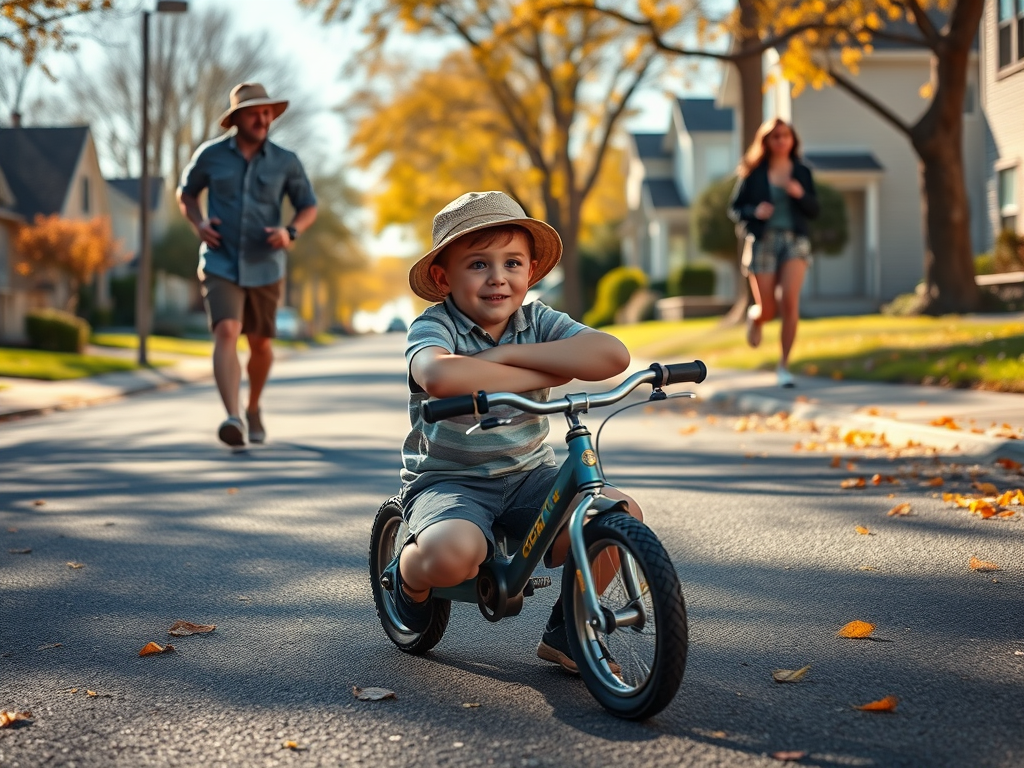
    There he was: a dad in safari shorts and a floppy bucket hat, walking ten feet behind his five-year-old son, who was waging war with a two-wheeled bike. The boy had the wild energy of someone determined to conquer balance through sheer will. He fell. Got up. Fell again. But on the third tumble, he’d had enough. He plopped down in the middle of the road like a pint-sized union striker, arms crossed, lips pursed, radiating silent defiance. He wasn’t hurt. He was done.

    The dad—poor man—begged him to rise. Pleaded. Offered bribes, probably. But the child had entered the iron-willed resistance phase that all seasoned parents recognize: the Sit-In of Doom.

    I considered emerging from my kettlebell cave to offer peace offerings. Coffee for the dad. Lemonade for the boy. Something to cut the tension. But reason—and David French’s podcast on the masculinity crisis—pulled me back into my dungeon. I resumed my Turkish Get-Ups as the father stood in the street, trying to lead someone who refused to be led.

    Thirty minutes passed.

    When I looked again, the scene had shifted.

    Now the father was on his own bike, trailing behind his son and wife. The boy, steadier now, was pedaling confidently while the mother jogged beside him, holding the handlebars like a Secret Service agent shielding the President. The boy beamed, triumphant. The mother wore a face that said, without saying a word, “This is how it’s done.”

    And the father?

    He wore the same sullen expression his son had half an hour earlier. He looked demoted. Not from fatherhood, but from a very specific rank: Lead Bike Instructor.

    He was now an observing sidekick. A support staffer. An unpaid intern in his own household. Whether he’ll regain his instructor’s license remains to be seen, but one suspects the road back will involve bureaucratic hoops, penance, and perhaps a formal review board chaired by his wife.

    Such is the quiet theater of suburbia—played out between fallen bikes, bruised egos, and the eternal struggle for parental credibility.

  • The Netflix TV Series Adolescence Explores the Incel Inferno

    The Netflix TV Series Adolescence Explores the Incel Inferno

    In her searing New Yorker essay “The Rage of the Incels,” Jia Tolentino charts the psychological freefall of young men who feel so broken, so undesirable, that they trade intimacy for ideology. These are men who live in the shadows—paralyzed by fear, consumed by resentment, and desperate to rewrite their own narrative of failure. Lacking the confidence to form real connections, they retreat into a warped fantasy of grandiosity and “absolute male supremacy,” hoping to drown out their self-loathing in the cold armor of systemic power.

    At the core of this fantasy lies a cruel sleight of hand: to escape the feeling of being disgusting, they dehumanize others—namely women. Online, where pornified, transactional, and violent depictions of sex are the norm, this dehumanization metastasizes with chilling efficiency. On the internet, there’s no need for empathy, just anonymity and algorithms.

    Tolentino highlights the gendered nature of this despair. When women feel undesirable, they tend to turn the blame inward. Men, however, often blame the system—or more specifically, women. This externalization leads some into the dark corridors of inceldom, where racism, misogyny, and white supremacy form the ideological bedrock of a movement built on grievance.

    The young men most vulnerable to this radicalization often come with tragic resumes: childhood trauma, social ineptitude, academic failure, economic hopelessness. They are digital shut-ins, living in their parents’ basements, marinating in their self-hatred and curating worldviews that feed their rage. With no jobs, no degrees, and no meaningful relationships, they rot—and rot loudly.

    This psychological spiral is embodied in Adolescence, the Netflix miniseries centered on Jamie Miller, a 13-year-old whose descent into incel ideology leads to horrific violence. The show doesn’t offer easy answers—it shows a boy abandoned long before he ever picked up a weapon. His parents aren’t just grieving the victim of his crime; they’re grieving their own son, whose silent suffering metastasized into something monstrous. The tragedy is not just what he did—but how long he was hurting, invisible to everyone.

  • Before Snack Times

    Before Snack Times

    In the Before Snack Times of the early 70s, we didn’t have helicopter parents hovering over us, micromanaging our every move with a suffocating schedule of dance classes, gymnastics, karate, swim lessons, math tutors, writing coaches, soccer practices, chess clubs, computer coding, mindfulness meditation, and Ashtanga Yoga. We didn’t have smartphones tracking us like we were secret agents with microchips implanted in our necks. For the entire day, our parents had absolutely no clue where we were or what we were up to. We’d saunter off after breakfast, either on foot or aboard our trusty bicycles, and were expected to return only by dinner. During that endless stretch of freedom, we’d navigate through construction sites strewn with lumber, nails, electrical wires, and bottomless ditches, all of which screamed, “Adventure awaits!” We gravitated toward mud, streams, and rivers like moths to a flame, setting up wooden ramps to perform Evel Knievel-level stunts over bodies of water. The messier and more perilous the terrain, the more irresistible it became. These hazardous playgrounds were usually bordered by rusty barbed-wire fences and “Do Not Enter” signs, which not only failed to deter us but ignited our rebellious spirits to trespass with even more gusto. Inside these danger zones, we’d be chased by furious steers, territorial cows, and muscle-bound guard dogs. Occasionally, a disgruntled landowner would fire warning shots at us with a pellet gun, a token gesture that barely fazed us. In the ravines behind our homes, we crafted forts, swung from vines, ignited firecrackers, and leaped into piles of poison oak. We encountered black widows, rattlesnakes, bobcats, coyotes, and even the occasional mountain lion. After a day of flouting every conceivable health and safety code, we’d trudge home at night, our bodies caked in filth, bruises, and scratches. But our parents, bless their oblivious hearts, never inquired about our whereabouts or escapades. As long as we took a bath and cleaned up, they were content to feed us hearty helpings of turkey pot pies, meatloaf, chili, and tacos. They knew we needed the energy to wake up the next morning and dive headfirst into another day of mayhem. Back then, we had little time for snacking. Our days were filled with wilderness adventures, where our imaginations ran wild. This level of playfulness, chaos, and enchantment is as extinct as the dinosaurs in today’s Snack Age, where parents meticulously micromanage their children’s activities and pacify their appetites with chips, juice boxes, chocolate chip granola bars, fruit rolls, and Happy Meals.