Tag: photography

  • Why the Small G-Shock Square GW5000 Beats the Giant Rangeman GW-9400

    Why the Small G-Shock Square GW5000 Beats the Giant Rangeman GW-9400

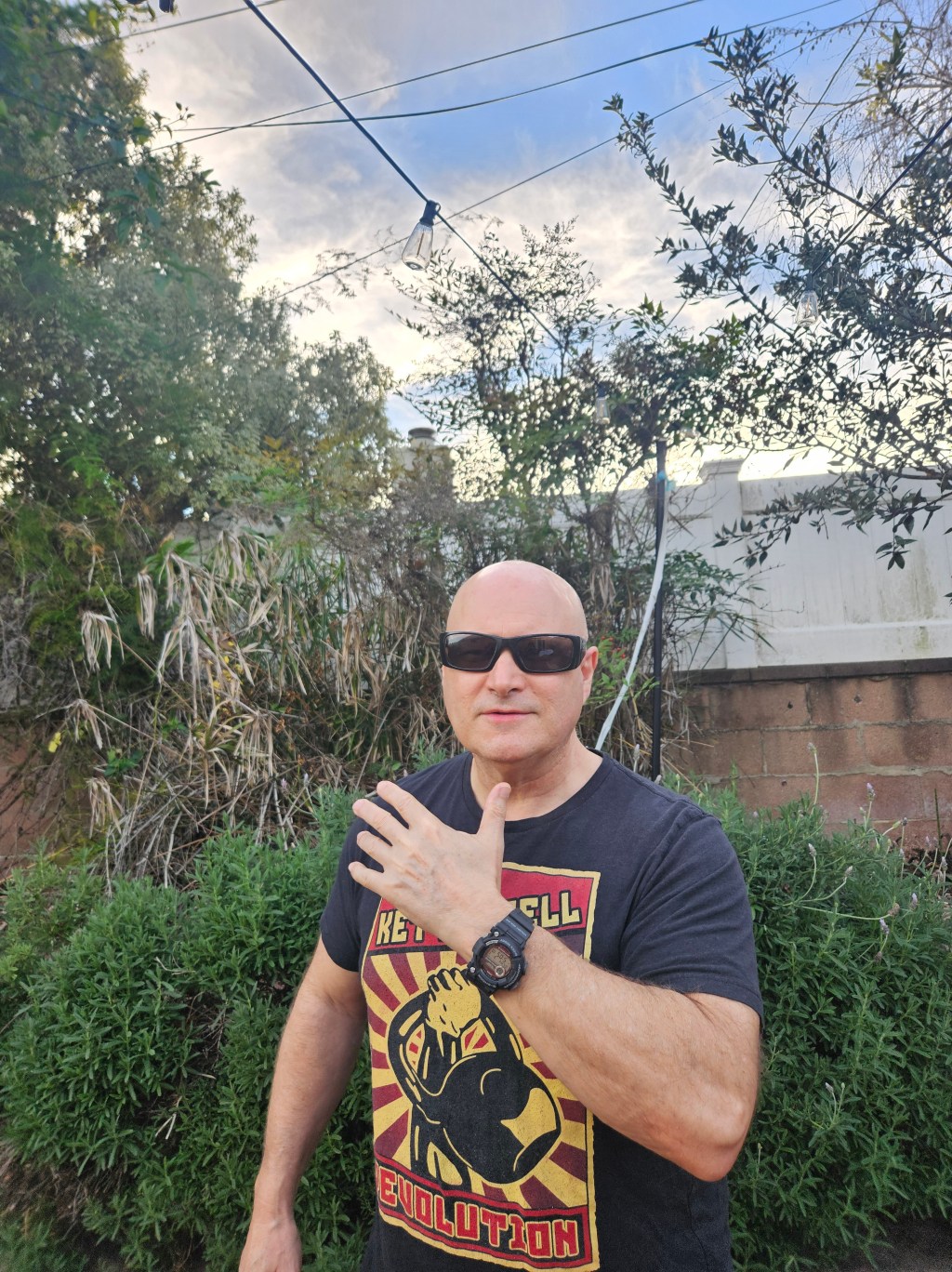
    I am not a delicate man. I’m built like Larry Csonka charging through a defensive line—thick wrists, burly forearms, the kind of limb geometry that usually demands “wrist presence.” On paper, the Rangeman GW-9400 should be my natural habitat: big, armored, survivalist, ready to rappel down a canyon at a moment’s notice. The smaller GW-5000U Square, by contrast, looks modest—almost restrained. If you were casting the role of “watch for the large man,” you would hand me the Rangeman without hesitation. And yet, I may very well buy the Square.

    Because this decision has nothing to do with testosterone per millimeter. It comes down to the most ruthless metric in watchmaking: how quickly your eye extracts the time without negotiation. The Rangeman is a dashboard—altimeter, barometer, compass—a field manual wrapped around your ulna. It is physically larger, louder, more armored. But its time display is portioned into compartments, trimmed down, crowded by supporting actors. The numerals are not the star of the show; they are part of an ensemble cast. The GW-5000U, by contrast, clears the stage. Big, centered digits. High contrast. No clutter. It understands something fundamental: a watch’s first job is legibility, not cosplay. Size without clarity is just acreage.

    Now, the Rangeman does offer more capability. Triple Sensor technology. Tactical presence. Expedition energy. All true. But capability is irrelevant if the core function requires squinting, tilting, or activating a backlight like you’re cracking a safe. A watch that grows in diameter while shrinking its time display commits a design sin. It mistakes bulk for usability. The GW-5000U may be smaller, but it is proportionally optimized. Its screen serves the hour, not the ego. It doesn’t pretend to be base camp. It tells the time—immediately, decisively, without drama.

    This is the lesson of the Bloat Paradox: the absurd condition in which a larger watch delivers smaller, less legible time information, proving that increased case size can inversely correlate with functional clarity. In the hierarchy of horology, clarity outranks spectacle. The square wins. The giant loses.

  • When Giving a Watch to Someone Is the Ultimate Selfishness

    When Giving a Watch to Someone Is the Ultimate Selfishness

    Core members of G-Shock Nation revere the GW-5000U because it represents the moment the Square stopped flexing and started aging well. It carries the 1983 blueprint, but underneath the familiar shape lives grown-up engineering: steel inner case, screwback, soft resin that disappears on the wrist, solar power, Multiband 6. No tactical cosplay. No feature inflation. No desperate attempt to look extreme. It sits there dense, quiet, perfectly accurate, and emotionally undemanding. To the initiated, that restraint signals maturity. The owner is no longer chasing the next G-Shock. He has arrived. The GW-5000U isn’t admired for excess; it’s admired for restraint. In a hobby addicted to novelty, the greatest watch is the one that makes novelty feel unnecessary.

    Collectors buy the GW-5000U the way serious readers buy a hardbound classic they’ve already finished online. The object represents a principle. It is the philosophical center of the Square ecosystem—the pure form. Screwback steel, operational silence, atomic precision, no theatrics, no gimmicks. Owning it signals allegiance to a worldview: function over spectacle, permanence over churn, competence over excitement. The purchase isn’t about need. It’s about completion. Without the 5000U, the collection feels like a conversation circling its point. With it, the argument finally lands. The watch becomes less a tool than an anchor—an idea made physical, a quiet declaration that you are no longer collecting features; you are collecting coherence.

    And yet, as you contemplate its greatness, a physical reality intrudes. The watch is small. Your eight-inch wrists and decades of barbell diplomacy have produced forearms that turn the Square into a polite suggestion of a watch. You no longer care about wrist presence, but wearing something that looks like a borrowed child’s timepiece crosses a line. Philosophical perfection is one thing. Visual credibility is another.

    Then comes the rationalization. Your twin daughters. The GW-5000U would look perfect on them. It would teach them punctuality, discipline, operational thinking. It would introduce them to the beauty of silent precision. It would, naturally, make them chips off the old block. You present the idea with the enthusiasm of a man offering enlightenment. They respond with the facial expression normally reserved for unexpected homework. In that moment, clarity arrives. This isn’t mentorship. This is Proxy Justification—the collector’s sleight of hand, where a purchase he cannot defend for himself is reassigned to someone else while quietly serving his own emotional agenda. The language is generosity. The motive is displacement. He isn’t buying a gift. He’s buying wrist time by proxy.

    The realization lands hard and fast. The box remains unpurchased. The daughters remain uninterested. And you step back, a little embarrassed, a little wiser, and briefly sober. In a hobby built on elegant rationalizations, the rarest achievement isn’t the right watch. It’s the moment you recognize a bad story—and don’t tell it to yourself.

  • Pumpkin Pants and the Stolen Nectar

    Pumpkin Pants and the Stolen Nectar

    Last night I dreamed my dresser had a secret tier for magical pants—trousers that could rewind age, inject vitality, and reboot my identity on command. I slipped into a pair of pumpkin-orange linen specials and, poof, a mastiff materialized: a melancholy titan who brightened under my hand and wilted the moment I stopped petting him, like a living barometer for attention.

    I conjured my brother to act as the dog’s surrogate owner—someone to manage the mastiff’s emotional weather—then set off on a quest for the nectar of the gods. My route was wonderfully bureaucratic: I walked into a museum, stepped into a glass case of Roman centurions, and revived one. Together we climbed Mount Olympus and stole the gods’ food—a heist movie scored by thunder. The soldier, alabaster white and eternally pleased with himself, proved cocky, selfish, and deeply agenda-driven.

    We returned from Olympus, bounty in tow, and stopped by a beach picnic where my friends were sprawled across blankets. That’s when the centurion confessed he’d hidden the nectar, claiming it was reserved for “the people God had planned,” which apparently did not include my friends. We argued—he with smug fatalism, me with wounded entitlement. If anyone had earned a sip of immortality, surely the guy in magic pants who resurrected marble and burgled Olympus had.

    My plan was simple: share the nectar, dazzle my friends, and be canonized as the man with enchanted trousers, a mystical mastiff, and a knack for raising statues from the dead before shopping the divine pantry. It was less generosity than PR. But my uncooperative companion killed the campaign. By hoarding the nectar, he blocked my ascent in the friend-group hierarchy and forced an unflattering verdict: no elevation for me—just a man in orange linen, standing next to a sulking dog and an even sulkier demigod.

  • College Essay Assignment: Kayfabe Nation—How Showbiz Spectacle Hijacked Reality

    College Essay Assignment: Kayfabe Nation—How Showbiz Spectacle Hijacked Reality

    Prompt:

    In professional wrestling, “kayfabe” refers to the willing suspension of disbelief—the blurred line between what is real and what is scripted. Vince McMahon, long-time CEO of WWE, not only mastered kayfabe in the ring but arguably exported it to the broader American culture. From politics to social media, from reality TV to influencer culture, the logic of kayfabe—the performance of truth—has arguably infiltrated how we consume media, understand power, and participate in public life.

    In an 8-paragraph essay, make an argument about how kayfabe, as popularized by McMahon and WWE, has become a defining feature of American culture. Use examples from Mr. McMahon (Netflix docuseries), the book Ringmaster: Vince McMahon and the Unmaking of America by Abraham Riesman (optional), and draw on insights from at least two additional cultural texts (suggestions below) to support your claim.


    Essay Structure (8 Paragraphs)

    Paragraph 1 – Introduction

    • Define “kayfabe” and introduce Vince McMahon as a key architect of it.
    • Introduce your thesis: Kayfabe has escaped the wrestling ring and now defines American public life through… [insert core claims: performance, manipulation, spectacle, etc.]

    Paragraph 2 – McMahon’s Mastery of Kayfabe

    • Show how Vince McMahon blurred the line between reality and performance in wrestling.
    • Use specific examples from Mr. McMahon or WWE history: character reinvention, real-life scandals worked into storylines, etc.

    Paragraph 3 – Kayfabe in Politics

    • Explore how politicians use wrestling-style performance—outrage, heel turns, loyalty tests—to manipulate perception.
    • Draw connections to Trump, MTG, RFK Jr., or any public figure who uses theatricality as political currency.

    Paragraph 4 – Kayfabe in Influencer Culture and Social Media

    • Show how influencers perform personas for clicks, sponsorships, and attention.
    • Highlight “authenticity as a performance” (Instagram, TikTok, YouTube).
    • Connect to Sherry Turkle’s idea of “performing ourselves into being.”

    Paragraph 5 – Kayfabe and the Media

    • Explain how media outlets also engage in narrative performance, packaging news as conflict and drama.
    • Consider the structure of cable news or partisan commentary.
    • Tie in insights from The Social Dilemma if desired.

    Paragraph 6 – Why This Works: Spectacle, Identity, and Tribalism

    • Analyze why kayfabe culture thrives—people want characters, not nuance; certainty, not ambiguity.
    • Explore how kayfabe fuels tribal identity and short-circuits critical thinking.

    Paragraph 7 – Counterargument & Rebuttal

    • Some may argue kayfabe is just entertainment and audiences are in on the joke.
    • Rebuttal: Even when “in on the joke,” people act based on performance rather than truth—leading to real-world consequences (e.g., Jan. 6, vaccine conspiracies, celebrity cults).

    Paragraph 8 – Conclusion

    • Restate your thesis: Kayfabe is no longer a gimmick—it’s a governing principle.
    • Reflect on the dangers of living in a world where perception outweighs reality.
    • Optional: Suggest how we might reclaim discernment in a post-kayfabe culture.

    Suggested Sources

    • Netflix documentary: Mr. McMahon
    • Abraham Riesman’s Ringmaster: Vince McMahon and the Unmaking of America (excerpts or reviews)
    • Sherry Turkle’s TED Talk “Connected, but Alone?”
    • Clips from WWE (e.g., McMahon’s character arc, Trump’s WrestleMania appearance)
    • The Social Dilemma (Netflix)
    • Articles on political spectacle and “media wrestling” (e.g., Matt Taibbi’s Hate, Inc. or Jonathan Haidt on tribalism)

  • How I Outsmarted the Algorithm and Found a Human Being at Lowe’s

    How I Outsmarted the Algorithm and Found a Human Being at Lowe’s

    Today, I embarked on a noble and deeply aggravating quest: buying a refrigerator.
    I knew exactly which model I wanted — the research was done, the decision made — and I almost bought it online. But Lowe’s website, in its infinite wisdom, offered no civilized scheduling options. Buy today, and you’re rewarded with delivery tomorrow, whether you like it or not. I needed four more days — a minor concession to the gods of logistics, apparently beyond the website’s feeble imagination.

    So I drove to the Lowe’s on Skypark in Torrance, muttering curses at the indignities of modern retail. I marched straight to the Refunds desk, where two clerks stood idle, marooned in a sea of boredom. I said, with the slight guilt of a man about to break protocol, “I know I’m supposed to go to Appliances and hunt down a salesperson, but can you help me?”

    And then — like a choir of angels tuning up in aisle five — one of them smiled and said, “Well, since Appliances is busy, I’ll help you.”
    Her words were a warm poultice slapped onto my stress-riddled soul, the perfect antidote to the week’s ordeal: a refrigerator emergency caused by my seven-year-old Kenmore, which froze over, sneered at my hair dryer attack on its blocked freezer drain, and essentially told me to go pound sand.

    Within ten minutes, the deal was done. I floated out of Lowe’s light as a helium balloon, buoyed by the rarest of modern mercies: competent, unsolicited human kindness.
    Yes, by the time my contractor widens the kitchen doorway to accommodate this new metallic beast, and I pay for the fridge, warranty, and the luxury of hauling my dead Kenmore to appliance hell, I’ll be out two thousand dollars.
    But for a fleeting, golden moment, I remembered that the world, battered as it is, can still be shockingly decent.


  • The First Cut is the Deepest: A Childhood Steeped in FOMO

    The First Cut is the Deepest: A Childhood Steeped in FOMO

    FOMO is never stronger than in childhood, when imagination stretches farther than reality can reach and the world feels just beyond our grasp. To a child, magic is real, enchantment is tangible, and some hidden paradise always seems just out of reach—close enough to see, impossible to touch. And nothing stings quite like realizing that somewhere, right now, a better world exists, and you are not in it.

    I learned this lesson in the summer of 1968 in San Jose, California, while riding bikes with my neighbor, Billy Cantambay. We were two six-year-olds, circling Venado Court as a fine mist of summer rain fell around us, making the streetlights glow and the air smell like wet pavement and possibility.

    Then we saw it:

    A single blue light flickering in the distance, hovering above the unfinished housing developments at the edge of the neighborhood. It twinkled through the fog like a Christmas bulb detached from time, a spectral glow that neither of us could explain.

    “Christmas lights!” one of us shouted.

    “Christmas lights!” the other echoed.

    But why was Christmas happening over there and not here? Whose house was that? What kind of people lived beneath that glow? In my mind, I pictured a lone man inside—not lonely, just content—waking up to Christmas every day.

    For a week, Billy and I worshipped the light, riding our bikes in endless circles, pointing, speculating, longing. Then one evening, it was gone. No explanation. No goodbye. Just a vanishing act, leaving behind nothing but an ache—an inexplicable sadness, as if we had been denied entry into something greater than ourselves.

    Four years later, another dream slipped through my fingers, and this time, I cried about it.

    My fifth-grade friend Marc Warren had invited me to Piper’s Smorgasbord in San Leandro, California—a kingdom of pizza, fried chicken, and blueberry pie, where gluttony was not just encouraged but a sacred ritual. By the time we left, we were bloated with triumph.

    Driving home, still drunk on sugar and grease, we talked about our flying dreams.

    Not figurative flying—not ambition, not success—actual flying. The kind where you jump off a cliff and just go, gliding over the ocean, effortless, weightless, free.

    The dreams were so vivid—we could remember the wind in our faces, the rush of air under our arms, the certainty that we would never fall.

    And then, reality crashed down.

    We weren’t flying. We would never fly.

    The grief was immediate, existential, crushing.

    Two fifth-graders, staring out the car window, weeping over the cosmic injustice of gravity.

    That’s the cruelty of FOMO—it isn’t just about missing an event. It’s about missing a world, a place so real inside your imagination that its absence hurts like a phantom limb.

    Every culture has its own version of this unreachable paradise—a place forever close but forever out of reach.

    For me, it was Bali Ha’i.

    The song, sung so hauntingly by Juanita Hall in South Pacific, tells of an island just across the water—visible, tantalizing, but never quite attainable.

    I first heard it as a toddler in the Flavet Villages—a cluster of old military barracks repurposed as student housing in Gainesville, Florida, where my family lived near an alligator swamp and a stretch of forest.

    Most people would have found the place bleak. I found it enchanted.

    At dusk, my father and I would walk to the edge of the forest to visit a Mynah bird, which perched on the same branch every evening, watching us with an intelligence I couldn’t explain.

    The swamp smelled of alligator dung, a rank, pungent stench that somehow filled me with a sense of cosmic belonging.

    One night, as we stood beneath the Mynah bird, a distant radio played “Bali Ha’i.”

    The melody wove itself into the moment, perfectly harmonizing with the humid night air, the bird’s quiet watchfulness, and the unseen creatures shifting in the darkness.

    For the first time, I understood the ache of paradise lost.

    In 1965, another world out of reach found me.

    Her name was Barbara Eden.

    She lived inside a genie bottle—a glowing jewel of a home, lined with pink and purple satin, circular sofas, and mother-of-pearl inlays.

    To five-year-old me, this was the peak of human civilization.

    I didn’t just want to watch I Dream of Jeannie. I wanted to live inside that bottle.

    I imagined myself curled up on the velvet cushions, bathed in the warm glow of genie magic, whispering secrets with Jeannie as the outside world became irrelevant.

    When it hit me—really hit me—that I would never live in that bottle, that the closest I’d ever get was a TV screen and my own relentless imagination, I felt crushed in a way I had no words for.

    Even crueler?

    That gorgeous genie home was just a painted Jim Beam whiskey decanter.

    That’s what FOMO really is: intoxication by illusion.

    And long before Instagram, long before airbrushed vacations and curated feeds, I was already intimately familiar with its sting.