Tag: publishing

  • The Art of Humble Submission

    The Art of Humble Submission

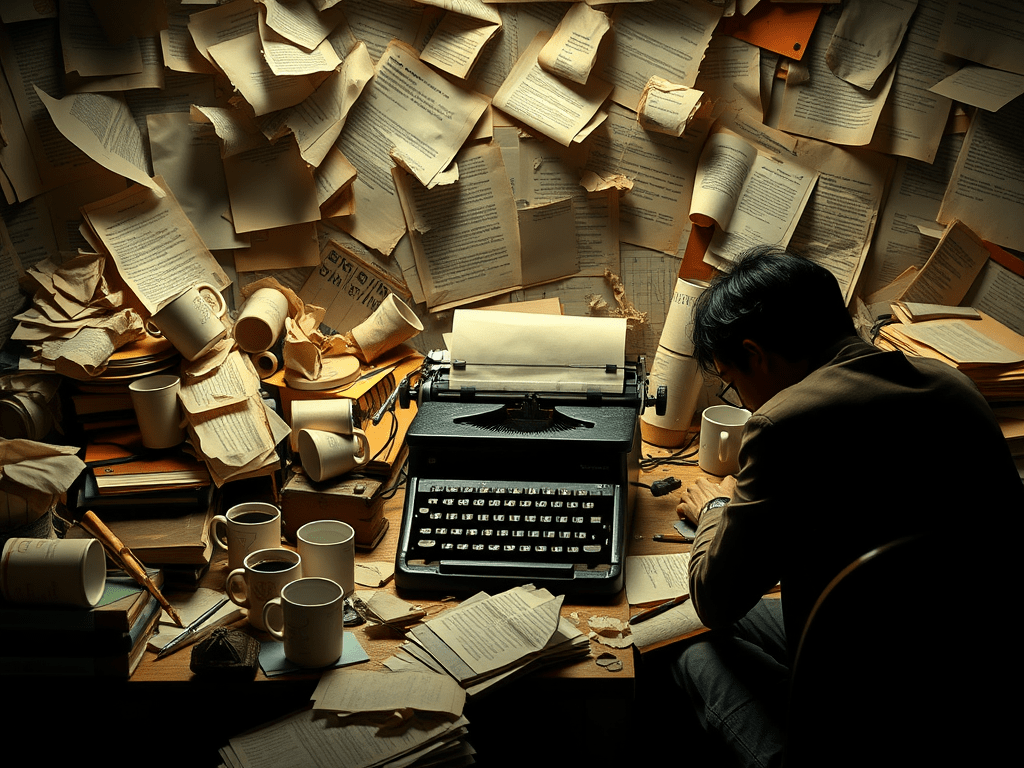
    When you’re a writer, you draft, revise, despair, polish again, and then perform an ancient ritual of humility: you submit. Whether your offering goes to a magazine, an agent, or a publisher, the act is the same—a small bow before the gatekeepers. In On Writing and Failure, Stephen Marche seizes on this word—submission—as the perfect metaphor for the writer’s life: a posture equal parts hope and humiliation. “Writers live in a state of submission,” he observes. “Submission means rejection. Rejection is the condition of the practice of submission, which is the practice of writing.” And digital culture has intensified the ordeal. With online forms and instant attachments, rejection arrives at industrial scale. A determined writer can now collect hundreds of dismissals a week. Ninety-nine percent will never land a deal, and those who do may make less than the barista who hands them their morning latte.

    So what exactly is a writer submitting to? Not just editors. Not merely algorithms. A writer submits to the dream that the private mind might earn a public life—that interiority, sculpted into sentences, might sustain you financially and spiritually. You write in the hope that your imagined worlds might become someone else’s emotional reality, that your pages might matter to strangers.

    Marche’s advice is blunt: persistence is not optional. Writing success is not a meritocracy but a lottery with a talent filter. The more tickets you buy, the better your odds. “Persistence is the siege you lay on fortune,” he writes—a relentless knocking at a door that may never open, but sometimes does for reasons no one fully understands.

    And this capriciousness is not unique to writers. Marche notes that actors secure roles only 7 percent of the time because of talent; the rest depends on age, look, market trends, and even “box office value in China.” Painters, dancers, musicians, designers—all create under the same unstable sky. To make art is to gamble against indifference. Persistence isn’t noble; it’s necessary, because fate occasionally rewards the stubborn.

  • Why Publish a Novel When You Can Rant Weekly?

    Why Publish a Novel When You Can Rant Weekly?

    In On Writing and Failure, Stephen Marche reminds us that roughly 300,000 books appear in the United States every year, and only a few hundred can reasonably be called creative or financial successes. Most books by “successful” authors flop. Most writers are failures. And then there is the vast shadow population: the would-be writers who never finish a book, yet earnestly introduce themselves at parties as working on one. If they are legion, it’s because failure in writing isn’t an exception — it’s the baseline condition.

    Lately I hear a parallel refrain: “Everyone has a podcast.” The cultural fantasy of “being a writer” — once the preferred badge of intelligence and depth — is being shoved aside by the fantasy of being a podcaster, which is the new intellectual flex. Instead of the solitary novelist hunched over drafts, we get booming-voiced men with battle-hardened beards and canned energy drinks, thumping their thighs as they dismantle “the mainstream narrative.” And if that theatrics doesn’t suit your tastes, you can choose from endless niches: politics, wellness sermons, nostalgia rants, paranormal confessionals, or gentle whisper-therapy for anxious brains. The point isn’t content; the point is talking.

    Marche dissects the layers of literary failure, but he forces us to consider a stranger threat: failure may be vanishing simply because writing itself may be vanishing as an arena where one can fail. You can’t fail at spearing a sabre-toothed tiger in 2025; the task no longer exists. Likewise, journaling and “mindfulness notes” have replaced drafts and essays, but only matter once they’re converted into soundbites on TikTok or a monologue in a podcast episode.

    If writing once demanded endurance, rejection slips, and a skin thin enough to bruise yet thick enough to keep showing up, now the danger is different: a discipline can’t hurt you once it stops being culturally real. Increasingly, I wonder whether writing, as a vocation and identity, even exists in the same form it did twenty years ago — and if it doesn’t, what exactly does it mean to “fail” at it anymore?

  • Greatness Adjacent: My Life as a Literary Delusionist

    Greatness Adjacent: My Life as a Literary Delusionist

    After churning out one literary failure after another across five decades, I’m forced to ask myself: Is my perseverance a virtue, the kind of tenacity that gets celebrated in self-help books and motivational speeches? Or is it a pathological compulsion, a lifelong affliction keeping me from my real calling—whatever that may be? And if the notion of a “true calling” is just a fairy tale we tell ourselves to make existence more bearable, then perhaps I should at least free up some time to do the dishes.

    To grapple with these existential questions, I turned to Stephen Marche’s slim but merciless On Writing and Failure: Or, On the Peculiar Perseverance Required to Endure the Life of a Writer. His thesis? Failure isn’t an anomaly in the writing life—it’s the default setting. The occasional success, when it happens, is a fluke, an accident, a glitch in the system. Failure, on the other hand, is the well-worn coat writers wrap themselves in, the skin they inhabit. And mind you, he’s not even talking about unpublished failures like myself—he’s extending this bleak diagnosis to the published ones, the so-called “real writers.”

    Marche backs up his grim pronouncement with numbers: Three hundred thousand books are published every year in the United States, and only a microscopic fraction make a dent in public consciousness. It doesn’t matter how famous you are—your book is still more likely to sink into obscurity than to make any meaningful impact. If you’re not sufficiently depressed yet, Marche then drags in examples from literary history: beloved writers who, despite their modern-day veneration, spent their lives begging for money, wallowing in debtors’ prisons, or drinking themselves into oblivion.

    Marche’s goal with this book—barely longer than a grocery receipt—is to strip writing of its romantic pretensions. Forget divine inspiration, artistic calling, or the fantasy of making it; writing is just stubbornness on repeat. But here’s where he really twists the knife: That whole narrative about failure eventually leading to success? Utter nonsense. “The internet loves this arc,” he writes, “low then high; first perseverance, then making it all; all struggle redeemed; the more struggle the more redemption. It’s pure bullshit.” The truth? Most writers fail, period. And even the rare successes are plagued by existential misery—forever misunderstood, chronically isolated, and shackled to a relentless hunger for recognition that can never truly be satisfied.

    Worse still, even the successful ones live in constant anxiety over whether they’ll ever be successful again. Literary triumphs don’t lead to security; they lead to paranoia. Marche describes the “psychology of failure” as an inescapable affliction that forces writers to cling to the smallest scraps of validation, inflating minor achievements to salve their chronic inadequacy. His case study? A professor who once had a letter published in The Times Literary Supplement and framed it on his wall like a Nobel Prize, using it as a talisman against irrelevance.

    Reading On Writing and Failure is like stepping into a room full of my own ghosts—writers far more accomplished than I am, yet still plagued by the same desperate need for affirmation, the same self-inflicted torment, the same inability to simply be content. It’s almost comforting, in a bleak sort of way. All those books about “maximizing happiness,” “daily habits of highly effective people,” and “radical gratitude” are useless against the unyielding hunger of the literary ego. If failure is the writer’s natural habitat, then perhaps the real victory isn’t in succeeding but in learning to fail with style.

    What struck me most about Marche’s book is just how desperate writers are for validation—so desperate, in fact, that we cling to the tiniest scraps of approval like a Jedi clutching a lightsaber in a dark alley. As proof that I was destined for literary greatness, I have spent the last three decades obsessively revisiting a single one-hour phone conversation I had in 1992 with the retired literary agent Reid Boates. At the time, I was hawking The Man Who Stopped Dating, a novel the publishing industry (correctly) determined should never see the light of day. But Boates, to my eternal delight, told me my synopsis knocked his socks off. That one phrase sent me soaring. If a mere synopsis could strip a seasoned agent of his footwear, surely I was on the brink of glory.

    Perhaps the memento I cherish even more is a letter I received from Samuel Wilson Fussell, author of Muscle: Confessions of an Unlikely Bodybuilder. After devouring his memoir, I wrote him a fan letter detailing my own bodybuilding misadventures and name-dropping a few of the lunatics I recognized from his book. Fussell responded enthusiastically, telling me that he and his friends had read my letter out loud and collapsed to the floor, clutching their bellies in laughter. Over the years, I’ve sometimes wondered: Were they laughing with me… or at me? But in the moment, it didn’t matter. In my mind, Fussell’s response confirmed what I already knew—I was a man of literary consequence, a peer among published authors and esteemed literary agents, a rising star on the precipice of greatness.

    And here’s the kicker: I can still remember the pure, uncut euphoria I felt after talking to Reid Boates and receiving Fussell’s letter, and I am convinced—convinced—that the high would have been no greater had I seen my best-selling novel displayed in the window of a Manhattan bookstore.

    Marche is right. My neediness was so profound that I mistook these small flashes of recognition as irrefutable proof of my imminent rise to literary celebrity. But unlike Marche, I find no solace in knowing that I am not alone in this affliction. I can only speak for myself: I am a writing addict. My compulsion produces nothing of value, it embarrasses me, and I am in desperate need of rehabilitation. And so, in a cruel twist of irony, I write about my recovery from writing—even though my so-called recovery demands that I stop writing altogether. My misery, therefore, is guaranteed.

  • A Confederacy of Dunces Ruined My Life

    A Confederacy of Dunces Ruined My Life

    If I was indeed possessed by a misguided writing demon in the mid-’80s—courtesy of reading A Confederacy of Dunces on repeat and subsequently squandering decades chasing a fool’s errand to capture some fraction of Toole’s novelistic splendor—then one could argue, with a certain tragic flair, that A Confederacy of Dunces ruined my life. Of course, that’s a spectacular oversimplification, but it has a nice literary ring to it, the kind of statement that cries out for a memoir deal. A perfect hook for a writing addict who, in theory, is supposed to have sworn off writing books but is secretly mainlining one on the side. It’s theatrical, adolescent, irresistibly neat. But let’s indulge the idea for a moment: a novel ruined a young man’s life. Decades later, the question remains—what do we do with this squandered life? Do we ignore it, dismiss it as a useless souvenir, or can something be salvaged from the wreckage?

    If there’s anything worth extracting from my own literary misadventures, it’s a warning to younger, equally deluded souls who might be possessed by the same demon of ambition. And make no mistake—ambition alone will not get you anywhere worth going. Yes, it will drag you through years of toil, ensure you hit your daily word count, and convince you that sheer willpower equals literary success. But ultimately, ambition alone will lead you into a tunnel with no exit. You’ll work hard—but not the right way. You’ll write, but without joy, without connection, without meaning. You will produce, but you will not matter.

    So instead of chasing the illusion of grandeur, you should be asking yourself four crucial questions. First, are you having fun with the creative process? If not, why are you doing this? The comedian Tiffany Haddish once said that Eddie Murphy pulled her aside and told her that if she wasn’t having fun on stage, the audience would sense it—and once she embraced that, her career took off. The same applies to writing. If your joy doesn’t translate onto the page, don’t expect anyone else to find it. Ambition will get words onto the page, but it won’t make them worth reading. Second, are you the only person in the world who could write this book? What unique gifts, obsessions, or quirks of personality make you the best person to write this, or are you forcing an idea simply because you think it’s marketable? If the demon of ambition is blinding you to your weaknesses, rest assured that agents and editors will see them clearly—and they will tell you to go home. The demon, of course, won’t listen. He never does.

    Third, why this book? Can you articulate—persuasively—why your book matters? Will it survive in an attention economy where a two-minute TikTok can go viral while your ten-year opus sells six copies? Do you know what your book is competing against? Can you justify its existence? 

    Imagine, for a moment, that you’ve never been published and have no social media following to catapult your debut novel into relevance. How exactly do you think this book is going to survive? Picture a horde of baby sea turtles, freshly hatched, flopping their way toward the ocean. Before they even touch the surf, they’re picked off by seagulls, crabs, raccoons, foxes, coyotes, frigatebirds, herons, egrets, snappers, jacks, barracudas, dolphins, sharks—the list of assassins is endless. The ones that do make it into open water face even worse odds. And yet, statistically, they still have a better shot at survival than your novel has at flourishing into a living, breathing piece of art that embeds itself in millions of imaginations.

    So before you get too deep into your literary fever dream, you need to ask yourself a sobering question: Is there enough juice for the squeeze? Best-selling author Sam Harris certainly asked himself that before shifting his focus away from books to his wildly successful Making Sense podcast. I remember him breaking it down with ruthless efficiency: writing a book can take five grueling years—writing, editing, publishing, book tours—and even after all that, sales might not justify the effort. Meanwhile, he can record a podcast in a few hours and reach millions instantly. No torturous rewrites, no endless editing loops, no begging the world to care.

    And that’s a best-selling author speaking. You’re not one. You’re a nobody with a dream, convinced that your fragile little hatchling of a book will somehow defy the gauntlet and fulfill your delusions of literary immortality. You have lost your mind. More than likely, the book won’t be read. Which brings us to your final, painful reckoning.

    Will your book actually connect with anyone? Or will it be yet another tree falling in the forest with no one around to hear it? Failure to connect isn’t bad luck—it’s bad writing. If your prose exists in a silo of delirious echoes, unread and unloved, then it isn’t literature—it’s literary vapor, ghostly and weightless, doomed to drift into oblivion. And here’s the cruelest truth of all: your writing demon won’t make this distinction. He’ll tell you that writing is writing, that piling up pages is progress, that if you just keep going, success is inevitable.

    It isn’t.

    Had I asked myself these questions before chasing my writing demon down every blind alley, perhaps I would have written with purpose instead of compulsion. But I was too busy obeying the demon to pause and think. If you’re an aspiring writer, don’t make the same mistake. Ambition can drive you forward, but only if it’s tethered to something real—joy, originality, necessity, and connection. Otherwise, you’re just manufacturing words, filling pages with the sound and the fury, signifying nothing.

  • Joan Didion Was Correct: Writing Is an Aggressive Act

    Joan Didion Was Correct: Writing Is an Aggressive Act

    In my quest to diagnose the writing demon that refuses to release me from its grip, I turned to Why We Write: 20 Acclaimed Authors on How and Why They Do What They Do, edited by Meredith Maran. In her introduction, Maran paints a bleak portrait of the literary life: writers waking before dawn, shackling themselves to their craft with grim determination, all while the odds of success hover somewhere between laughable and nonexistent.

    She lays out the statistics like a funeral director preparing the bereaved: out of a million manuscripts, only 1% will find a home. And if that doesn’t crush your soul, she follows up with another gut punch: only 30% of published books turn a profit. Clearly, materialism isn’t the primary motivator here. Perhaps masochism plays a role—some deep-seated desire for rejection that outstrips the mere thrill of self-rejection. Or maybe it’s just pathology, an exorcism waiting to happen.

    For those unwilling to embrace despair, Maran brings in George Orwell’s “four great motives for writing”: egotism, the pleasures of good prose, the need for historical clarity, and the urge to make a political argument. Sensible enough. No surprises.

    Where things get interesting is Joan Didion’s take. Didion, never one for sentimentality, strips the writer’s motives bare: “In many ways writing is the act of saying I, of imposing oneself upon other people, of saying listen to me, see it my way, change your mind. It’s an aggressive, even hostile act.”

    Reading that, my eyes lit up with recognition. Didion had just sketched Manuscriptus Rex in perfect detail—the secret bully, the compulsive brain-hijacker who isn’t content to write in solitude but needs to occupy the minds of others, to install his worldview in their most private spaces.

    Terry Tempest Williams, on the other hand, writes to confront her ghosts, a sentiment that deeply appeals to me. The idea of the writer as a haunted creature, forever pursued by stories that demand exorcism, feels not only true but inescapable.

    But here’s the kicker—Maran makes it clear that the twenty writers in her book aren’t failures like me. They’re not Manuscriptus Rexes, howling into the void. No, they are the anointed ones, welcomed by publishers with open arms, bathed in the golden light of editorial gratitude.

    And yet, they didn’t land on Mount Olympus by accident. They fought. They clawed their way up, word by painful word, which means they have something to teach—not just to their fans but to me, a self-aware Manuscriptus Rex still trying to understand what, exactly, makes him tick.

    There is no shortage of delicious tidbits in Why We Write. Isabel Allende talks about the necessity of writing like a growing tumor that has to be dealt with or will simply grow out of control. She adds that even if she begins with a germ of an idea, the book has a life of its own. It grows from her unconscious obsessions and preoccupations, so that in the beginning she has not yet discovered what story she is going to tell. Also, she is a writer of ritual and routine. Every January seventh is the day before she starts writing a new book. She gathers all her materials in her “little pool house,” which she uses as her office. It is her sacred space to work, just “seventeen steps” from her home. 

    The idea of having two separate spaces—one for writing, one for everything else—fascinates me. It reminds me of something Martin Amis once told Charlie Rose: he needed to be a writer because toggling between the world of the novel and the earthly world created a kind of necessary duality, a parallel existence where imagination could thrive. For someone wired for storytelling, living between those two realities wasn’t just a luxury—it was a survival mechanism.

    At home, Isabel Allende straddles two universes, one sacred, the other profane. And it calls to mind the lesson my college fiction professor, N.V.M. Gonzalez, drilled into us: a fiction writer must know the difference between sacred and profane time.

    A great writer conducts these two temporal forces like an orchestra. Sacred time—mythic, timeless, symbolic—stretches beyond the clock, charging pivotal moments with fate, destiny, and the weight of history. It’s the crossroads where a single decision echoes through eternity. Profane time, by contrast, is the ticking metronome of daily existence—the coffee that goes cold, the unpaid bills, the search for a parking spot.

    A great novel moves between the two—one moment steeped in cosmic significance, the next trapped in the drudgery of real life. A character might wrestle with divine purpose—but that won’t stop their Wi-Fi from cutting out mid-revelation.

    Allende enters her writing enclave in a state of terror and exhilaration, grappling with ideas—some brilliant, some best left in the trash bin—while navigating stress, disappointment, and suspense. Her process feels high-stakes, and really, what is life without high stakes? A slow, numbing descent into low expectations, inertia, and existential boredom—a fate worse than failure.

    Maybe writing addiction is just the relentless drive to keep the stakes high. Without it, life shrinks into a provisional existence, where survival boils down to the next meal, the next fleeting pleasure, the next song that momentarily sends a tingle up your spine—a desperate Morse code from the universe to confirm you’re still alive.

    The writers in this book all share the same unshakable compulsion to write. For them, writing isn’t just a craft; it’s therapy, oxygen, a way to make sense of chaos. They write because they can’t not write—because failure to do so would send them spiraling into an existential crisis too dark to contemplate. Writing gives them self-worth, wards off insanity, and serves as the only acceptable coping mechanism for their undying curiosities. It isn’t a choice—it’s a chronic condition.

    These successful authors write relentlessly, enduring the agony of writer’s block, self-loathing, and the horror of their own bad prose, all while clawing their way toward something better. And while I share their compulsions, I lack their stamina and focus. Reading about Isabel Allende’s fourteen-hour writing binges was my moment of clarity: I am not a literary gladiator. These novelists can paint vast landscapes of story without crapping out halfway. I, on the other hand, am a wind-sprinter—a lunatic exploding off the starting block, only to collapse in a gasping heap a hundred yards later, curl into the fetal position, and slip into a creative coma.

    And this, I suspect, is the great torment of Manuscriptus Rex—an insatiable hunger to write the big book, clashing violently with a temperament built for sprints, not marathons. This misalignment fuels much of my artistic misery, my chronic dissatisfaction, and my ever-expanding graveyard of unfinished masterpieces.

    Still, whatever envy and despair I felt reading about these elite warriors of the written word, this book offered a cure—I will never again attempt a novel unless divine intervention forces my hand. I’ve seen too many of my failed attempts, the work of a man pretending to be a novelist rather than one willing to endure the necessary rigor. But I do have another calling: identifying unhinged, demonic states in others.

    Like a literary taxidermist, I want to capture these wild, self-destructive compulsions, mount them for display, and present them with maximum drama—not for amusement, but as cautionary tales. This is my work, my rehabilitation, the writing I was meant to do. And unlike novel-writing, it actually feels like a necessity, not a delusion.

  • Failure is the default setting of the writer

    Failure is the default setting of the writer

    After churning out one literary failure after another across five decades, I’m forced to ask myself: Is my perseverance a virtue, the kind of tenacity that gets celebrated in self-help books and motivational speeches? Or is it a pathological compulsion, a lifelong affliction keeping me from my real calling—whatever that may be? And if the notion of a “true calling” is just a fairy tale we tell ourselves to make existence more bearable, then perhaps I should at least free up some time to do the dishes.

    To grapple with these existential questions, I turned to Stephen Marche’s slim but merciless On Writing and Failure: Or, On the Peculiar Perseverance Required to Endure the Life of a Writer. His thesis? Failure isn’t an anomaly in the writing life—it’s the default setting. The occasional success, when it happens, is a fluke, an accident, a glitch in the system. Failure, on the other hand, is the well-worn coat writers wrap themselves in, the skin they inhabit. And mind you, he’s not even talking about unpublished failures like myself—he’s extending this bleak diagnosis to the published ones, the so-called “real writers.”

    Marche backs up his grim pronouncement with numbers: Three hundred thousand books are published every year in the United States, and only a microscopic fraction make a dent in public consciousness. It doesn’t matter how famous you are—your book is still more likely to sink into obscurity than to make any meaningful impact. If you’re not sufficiently depressed yet, Marche then drags in examples from literary history: beloved writers who, despite their modern-day veneration, spent their lives begging for money, wallowing in debtors’ prisons, or drinking themselves into oblivion.

    Marche’s goal with this book—barely longer than a grocery receipt—is to strip writing of its romantic pretensions. Forget divine inspiration, artistic calling, or the fantasy of making it; writing is just stubbornness on repeat. But here’s where he really twists the knife: That whole narrative about failure eventually leading to success? Utter nonsense. “The internet loves this arc,” he writes, “low then high; first perseverance, then making it all; all struggle redeemed; the more struggle the more redemption. It’s pure bullshit.” The truth? Most writers fail, period. And even the rare successes are plagued by existential misery—forever misunderstood, chronically isolated, and shackled to a relentless hunger for recognition that can never truly be satisfied.

    Worse still, even the successful ones live in constant anxiety over whether they’ll ever be successful again. Literary triumphs don’t lead to security; they lead to paranoia. Marche describes the “psychology of failure” as an inescapable affliction that forces writers to cling to the smallest scraps of validation, inflating minor achievements to salve their chronic inadequacy. His case study? A professor who once had a letter published in The Times Literary Supplement and framed it on his wall like a Nobel Prize, using it as a talisman against irrelevance.

    Reading On Writing and Failure is like stepping into a room full of my own ghosts—writers far more accomplished than I am, yet still plagued by the same desperate need for affirmation, the same self-inflicted torment, the same inability to simply be content. It’s almost comforting, in a bleak sort of way. All those books about “maximizing happiness,” “daily habits of highly effective people,” and “radical gratitude” are useless against the unyielding hunger of the literary ego. If failure is the writer’s natural habitat, then perhaps the real victory isn’t in succeeding but in learning to fail with style.

    What struck me most about Marche’s book is just how desperate writers are for validation—so desperate, in fact, that we cling to the tiniest scraps of approval like a Jedi clutching a lightsaber in a dark alley. As proof that I was destined for literary greatness, I have spent the last three decades obsessively revisiting a single one-hour phone conversation I had in 1992 with the retired literary agent Reid Boates. At the time, I was hawking The Man Who Stopped Dating, a novel the publishing industry (correctly) determined should never see the light of day. But Boates, to my eternal delight, told me my synopsis knocked his socks off. That one phrase sent me soaring. If a mere synopsis could strip a seasoned agent of his footwear, surely I was on the brink of glory.

    Perhaps the memento I cherish even more is a letter I received from Samuel Wilson Fussell, author of Muscle: Confessions of an Unlikely Bodybuilder. After devouring his memoir, I wrote him a fan letter detailing my own bodybuilding misadventures and name-dropping a few of the lunatics I recognized from his book. Fussell responded enthusiastically, telling me that he and his friends had read my letter out loud and collapsed to the floor, clutching their bellies in laughter. Over the years, I’ve sometimes wondered: Were they laughing with me… or at me? But in the moment, it didn’t matter. In my mind, Fussell’s response confirmed what I already knew—I was a man of literary consequence, a peer among published authors and esteemed literary agents, a rising star on the precipice of greatness.

    And here’s the kicker: I can still remember the pure, uncut euphoria I felt after talking to Reid Boates and receiving Fussell’s letter, and I am convinced—convinced—that the high would have been no greater had I seen my best-selling novel displayed in the window of a Manhattan bookstore.

    Marche is right. My neediness was so profound that I mistook these small flashes of recognition as irrefutable proof of my imminent rise to literary celebrity. But unlike Marche, I find no solace in knowing that I am not alone in this affliction. I can only speak for myself: I am a writing addict. My compulsion produces nothing of value, it embarrasses me, and I am in desperate need of rehabilitation. And so, in a cruel twist of irony, I write about my recovery from writing—even though my so-called recovery demands that I stop writing altogether. My misery, therefore, is guaranteed.

  • How Eddie Murphy’s Advice Pushed Tiffany Haddish’s Career in the Right Direction

    How Eddie Murphy’s Advice Pushed Tiffany Haddish’s Career in the Right Direction

    If I was indeed possessed by a misguided writing demon in the mid-’80s—courtesy of reading A Confederacy of Dunces on repeat and subsequently squandering decades chasing a fool’s errand to capture some fraction of Toole’s novelistic splendor—then one could argue, with a certain tragic flair, that A Confederacy of Dunces ruined my life. Of course, that’s a spectacular oversimplification, but it has a nice literary ring to it, the kind of statement that cries out for a memoir deal. A perfect hook for a writing addict who, in theory, is supposed to have sworn off writing books but is secretly mainlining one on the side. It’s theatrical, adolescent, irresistibly neat. But let’s indulge the idea for a moment: a novel ruined a young man’s life. Decades later, the question remains—what do we do with this squandered life? Do we ignore it, dismiss it as a useless souvenir, or can something be salvaged from the wreckage?

    If there’s anything worth extracting from my own literary misadventures, it’s a warning to younger, equally deluded souls who might be possessed by the same demon of ambition. And make no mistake—ambition alone will not get you anywhere worth going. Yes, it will drag you through years of toil, ensure you hit your daily word count, and convince you that sheer willpower equals literary success. But ultimately, ambition alone will lead you into a tunnel with no exit. You’ll work hard—but not the right way. You’ll write, but without joy, without connection, without meaning. You will produce, but you will not matter.

    So instead of chasing the illusion of grandeur, you should be asking yourself four crucial questions. First, are you having fun with the creative process? If not, why are you doing this? The comedian Tiffany Haddish once said that Eddie Murphy pulled her aside and told her that if she wasn’t having fun on stage, the audience would sense it—and once she embraced that, her career took off. The same applies to writing. If your joy doesn’t translate onto the page, don’t expect anyone else to find it. Ambition will get words onto the page, but it won’t make them worth reading. Second, are you the only person in the world who could write this book? What unique gifts, obsessions, or quirks of personality make you the best person to write this, or are you forcing an idea simply because you think it’s marketable? If the demon of ambition is blinding you to your weaknesses, rest assured that agents and editors will see them clearly—and they will tell you to go home. The demon, of course, won’t listen. He never does.

    Third, why this book? Can you articulate—persuasively—why your book matters? Will it survive in an attention economy where a two-minute TikTok can go viral while your ten-year opus sells six copies? Do you know what your book is competing against? Can you justify its existence? 

    Imagine, for a moment, that you’ve never been published and have no social media following to catapult your debut novel into relevance. How exactly do you think this book is going to survive? Picture a horde of baby sea turtles, freshly hatched, flopping their way toward the ocean. Before they even touch the surf, they’re picked off by seagulls, crabs, raccoons, foxes, coyotes, frigatebirds, herons, egrets, snappers, jacks, barracudas, dolphins, sharks—the list of assassins is endless. The ones that do make it into open water face even worse odds. And yet, statistically, they still have a better shot at survival than your novel has at flourishing into a living, breathing piece of art that embeds itself in millions of imaginations.

    So before you get too deep into your literary fever dream, you need to ask yourself a sobering question: Is there enough juice for the squeeze? Best-selling author Sam Harris certainly asked himself that before shifting his focus away from books to his wildly successful Making Sense podcast. I remember him breaking it down with ruthless efficiency: writing a book can take five grueling years—writing, editing, publishing, book tours—and even after all that, sales might not justify the effort. Meanwhile, he can record a podcast in a few hours and reach millions instantly. No torturous rewrites, no endless editing loops, no begging the world to care.

    And that’s a best-selling author speaking. You’re not one. You’re a nobody with a dream, convinced that your fragile little hatchling of a book will somehow defy the gauntlet and fulfill your delusions of literary immortality. You have lost your mind. More than likely, the book won’t be read. Which brings us to your final, painful reckoning.

    Will your book actually connect with anyone? Or will it be yet another tree falling in the forest with no one around to hear it? Failure to connect isn’t bad luck—it’s bad writing. If your prose exists in a silo of delirious echoes, unread and unloved, then it isn’t literature—it’s literary vapor, ghostly and weightless, doomed to drift into oblivion. And here’s the cruelest truth of all: your writing demon won’t make this distinction. He’ll tell you that writing is writing, that piling up pages is progress, that if you just keep going, success is inevitable.

    It isn’t.

    Had I asked myself these questions before chasing my writing demon down every blind alley, perhaps I would have written with purpose instead of compulsion. But I was too busy obeying the demon to pause and think. If you’re an aspiring writer, don’t make the same mistake. Ambition can drive you forward, but only if it’s tethered to something real—joy, originality, necessity, and connection. Otherwise, you’re just manufacturing words, filling pages with the sound and the fury, signifying nothing.