Tag: radio

  • Blast from the Past: From Russia with Love: Angelo’s Ocean 214 Radio

    On the topic of radios with a wooden case…presenting the Ocean 214—from Russia with love!  I bought it from a seller in the Ukraine, so shipping was on the high side, but surprisingly, I didn’t have much competition bidding on the radio.  I’ve been wanting to try a Russian/Soviet radio for quite a while, but simply couldn’t get excited about the VEF series, because…how can I put this nicely…”they ugly…butt ugly!” 

    The VEFs look like a big block of plastic with little or no imagination in the design.  They might be great performers and high quality—I don’t know, because I’ve never played with one—but I’m not excited by the looks.  Enter the Okeah—I saw a couple different ones from this manufacturer, and settled on the 214.  I like the wooden case and the various surfaces and colors used to make up the package. 

    Mine is in good shape except for an antenna problem—the smaller top portions of the antenna pull out of the base.  But it still receives well on all bands.  Oh, but that’s the other problem—the writing is in Russian and I’m totally unfamiliar with the frequencies they use.  So I push buttons and turn knobs until I hear people talking or I hear music.  It’s an adventure. 

    The sound is good—in a way, similar to my Lloyd’s, supporting the argument that the wooden cabinet does have its own sound.  In fact, the Okeah has more tone controls to play with and I can get a very satisfying deep sound for music, or a clearer, high pitched sound for talk.  The shortwave bands do pull in stations nicely as well.  I’m still figuring things out with regard to how these bands translate from radios I’m used to using.

    I can recommend this radio if you have interest in getting an Eastern European manufactured radio.  From the little I could find on Google, it seems the factory for this brand might be located in Belarus.  There is much more information on VEF, who must have been a much bigger company.  But I like the Okeah—I like the looks, I like the woodgrain and I’m satisfied with the performance.  I will say that it appears to be old, and wasn’t babied as it was dirty when I got it, and apparently not extremely well maintained.  But a few shots of tuner spray brought it to life and it sounds great.  At some point, I might try my luck on E-Bay to see if I can turn a profit.  But for now, I’m having too much fun with the radio.   

  • Blast from the Past: Angelo’s Review of the Montgomery Ward Airline GEN-1494A Vintage Radio

    Since the very first time I saw this model listed on E-Bay a couple years ago, I’ve wanted one of these:  The Montgomery Ward Airline GEN-1494A.

    I guess the thing that attracted me to this radio the most is the handsome looks.  I like the symmetry of the dual tuning dials, divided by the power meter.  I like the contrast of brushed aluminum and charcoal color plastics, encased in clear acrylic dial covers.  I like the large but not huge size of the receiver.  Simply, I like everything about this radio’s styling.  I wouldn’t change anything—not even the orange and white frequency information, which looks great on the dark gray/black. 

    The materials are not quite up to Sony or Panasonic standards, but there’s nothing to be ashamed of here.  It’s good quality stuff, certainly comparable to any Sharp or Sanyo of a similar vintage.  It’s in that Toshiba/Hitachi category as far as I can tell.

    Performance wise, it’s a winner.  I was astounded by the shortwave reception—very, very close to matching the Sony ICF-5800 that I recently sold.  It picks up shortwave signals that most of my other radios are unable to track.  FM sound is strong, AM crisp.  It’s very capable of getting the full compliment of AM-FM stations that my other good radios can receive.  After the stellar shortwave performance, I was surprised that it didn’t perform well on the PSB 1 or PSB 2 options.  They were pretty dead—and my old Arvin radios generally get activity on these bands.  Maybe it’s just the night and the location.

    Speaker sound is another high grade.  While it’s not as powerful as the Panasonic 888, it has a pleasing sound.  The “tone” adjustment actually does its job too.  It’s equally good for talk or music.

    This is a well balanced radio that I can heartily recommend.  I have seen several of these over the years, and have bid on a few of them.  I was never able to wrangle one until this one failed to cross the $30.00 mark, and I snatched it up in the closing minutes.  It needed a little cleaning—and to get it to work on batteries, I had to use steel wool to remove corrosion from the battery compartment contacts—-but aside from those minor issues, it’s pretty darn nice.  Perfect antenna, no major dings and a real player.

    Is it a keeper?  For me, there aren’t many keepers.  I generally buy radios at what I consider a value price.  After cleaning them up and playing with them for a few months, I’m willing to throw them back to keep funding my hobby and charting new territory—such as a very recent interest in old tube radios.  But I have to say, the great shortwave performance, on this Ward model will make it a tough decision to let this go.  Like my Panasonic 888, Zenith Trans-Oceanic 7000 and Grundig Ocean Boy 820, this Ward Airline 1494 has virtues that might make it a permanent fixture.  That’s pretty strong company that this radio finds itself in.

  • Blast from the Past: Grundig Satellit 750

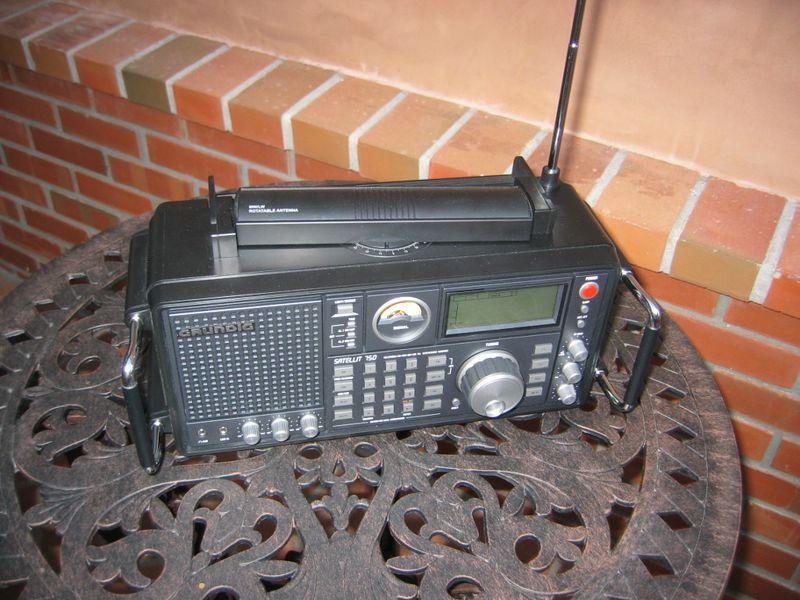
    IMG_3672


    Greg, a reader from Ann Arbor, Michigan, was kind enough to Fed Ex me his Grundig Satellit 750, which has a Kiwa speaker upgrade. Therefore, I have to assume the stock 750 speaker sound has less fidelity than the one I’ll be using by my bedside for the next two weeks. 

    As I will be using the 750 as a bedside radio, I’m not too worried about fidelity since I’m not cranking the thing up by any means. All that I ask is that its AM sound not be as harsh and punishing as my C.Crane CSW. Thankfully, the 750 is easier on the ears. 

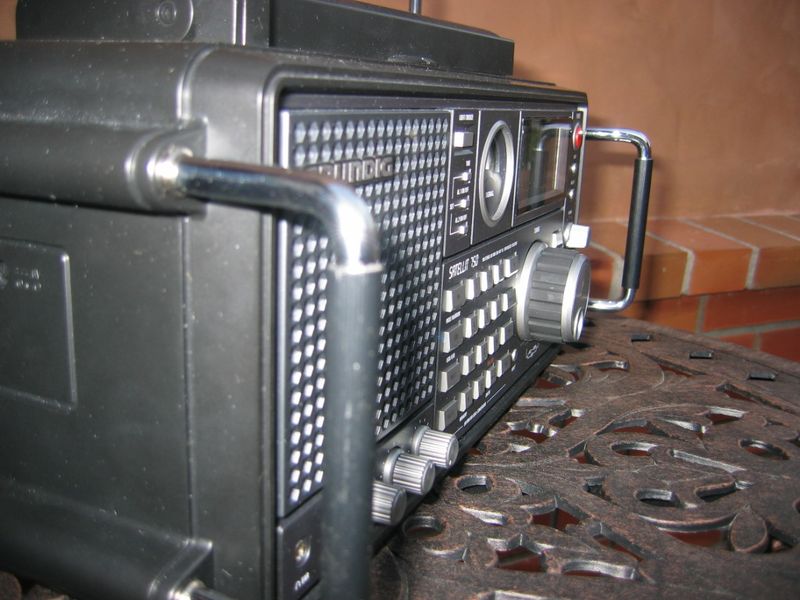
    IMG_3674

    When I took out the 750, I was amazed like other Tecsun radios at how light the radio is (Tecsun makes many Grundig and Eton radios, including the GS750). I prefer my radios to be heavy like tanks, which is why several months ago I went on a vintage radio spree, getting my grubby hands on some classics so that I could use them as a point of comparison for some of today’s radios. 

    IMG_3675

    Here’s the bright side of the GS750’s light weight: It makes a very good portable radio, much better than I initially thought. It’s easy to handle and not as big in person as you might think. If you’re a camper or do a lot of outdoor radio listening, I can recommend the GS750. 

    IMG_3679

    One thing I like about the 750 is the way it looks on my bedside table. Its cockpit control styling makes me feel like a little kid on a toy airplane or flying in a pretend rocket to Mars. 

    The 750 by your bed says boldly, “You have arrived at the Mothership.” Before I geek-out too much, let me transition to function and performance.

    The learning curve for time controls, direct key entry, and presets is fairly easy. It took me about five minutes to comprehend the manual; however, I have toyed around with Tecsun radios before, so I am fairly familiar with their functions.

    As a bedside radio, it’s nice that you can toggle through your stations with the up and down arrow buttons. 

    I haven’t used this radio at night yet and doubt it is illuminated sufficiently without my needing a pen flashlight. Clearly, the 750 is more of a general table radio than a clock radio, but I’m using it by my bedside because that is where I listen to radio most often and I want to get as many hours in as possible during my two-week loan.

    What about performance? Excellent on FM and AM. I was able to eliminate birdy on weak AM stations by rotating the rotational antenna, called a Gyro on vintage Panasonics. 

    The FM antenna is huge and can be rotated 360 degrees. There is also an FM antenna button that gives you varying degrees of attenuation to maximize reception. 

    I’d say FM was as strong as my current FM champion, my C.Crane CSW. Better yet, the GS 750’s AM sounds much better. 

    Truth be told, I am more impressed with the GS750 than I thought I’d be. I love its look, its performance is excellent, its functions and options are plentiful without being too busy. 

    I think if I were to buy one on Amazon for their sale price of $220 and free shipping, I’d have to put it in the workout room and move the Boston Acoustics Horizon Duo, a completely different kind of radio, in my bedroom. The question is will I buy a GS750? Hard to say. For about $150, I should be able to get a C.Crane CCRadio 2, which may be a better fit in my bedroom. While I am confident the CCRadio 2, made by Sangean, will match the GS750’s AM performance and have richer speaker sound, I am not convinced that its FM will be able to compete with the GS750’s.

    IMG_3680

    In any event, I don’t have to make a decision now. I have another two weeks with the GS750 to think it over.   

  • Blast from the Past: Panasonic RF-3000, The Tank

    I picked up the package of the Panasonic RF-3000 and could already feel the presence of greatness evidenced by the density of the box. Inside was a 25-pound radio. What do today’s radios weigh? Two pounds?

    The heft of this vintage reminds me of a beloved car my parents bought, a brand new 1967 Chrysler Newport. My parents loved that car and would still have it today except that a troubled neighbor boy attempted to steal the car in 1974 or 1975. The car rolled down the steep hill of a street we lived on and was totaled (as a side note that same troubled boy stole another car a few years later, crashed it, and suffered permanent brain damage, but I digress).

    My point is today’s products are cheap and often chintzy. This can not be said of the solid looking RF-3000. Its only flaws are that twice the previous owner, suffering from dotage presumably, felt compelled to inscribe his social security on the radio. Perhaps this is a testament to his proprietary love of the radio, well deserved. In any case, the person managing the deceased radio owner’s estate disclosed this flaw on eBay. Sorry, there’s something unwittingly macabre about this review. Please let me proceed. 

    Why does a man want a heavy radio? The same reason a man wants 300-500 horsepower in his sport sedan. One word: Confidence. The RF-3000 delivers and more.  

    I turned on the RF-3000 and was stunned by crystal clarity and a salient quality of sound that in my subjective mind may eclipse its legendary brother, the RF-2200. Stations came in with ease. The birdy on the dreaded 710 AM vanished with a slight rotation of the hulking 3000. 88.9 KXLU came in loud and clear. Same for 89.3 and 103.1, other touchy stations. Let’s get real. The 3000 puts today’s radios to utter shame (forgive me, but hyperbolic emotion lends itself to cliche).

    IMG_3362

    This radio is huge. My wife says it looks like a relic from The Hatch in ABC’s hit TV show Lost. As I said earlier, it evokes the grand heft of my parents’ 1967 Chrysler Newport. 

    What did I pay for this booming radio that is so solid I am reminded of the hull of a cruise ship? A paltry $87. You can buy some mediocre radios out there for twice that much. I’m glad I snatched this thing. What a treasure. File the vintage RF-3000 as more grist for middle-aged curmudgeonly men to rant and bicker about the loss of quality in the Modern Age. 

    IMG_3363
  • Radio Obsession 2015: State of the Radio Collection: “I’ve Got What I Want”

    Radio Obsession 2015: State of the Radio Collection: “I’ve Got What I Want”

    IMG_6254

    When I got bit by the radio bug in 2004 and bought every Grundig, Eton, Kaito, and Tecsun being released, I started my radio education. At the time, I also bought some vintage Panasonic, Sony, and Telefunken radios. 

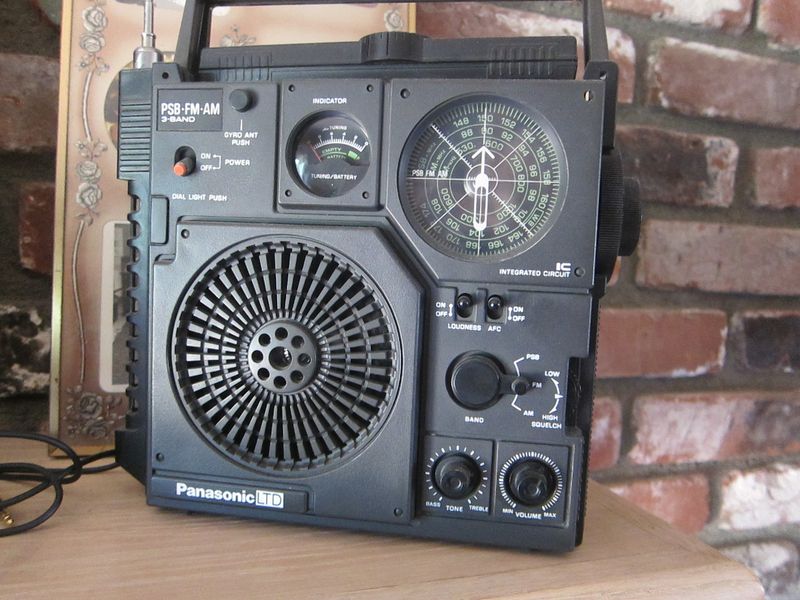
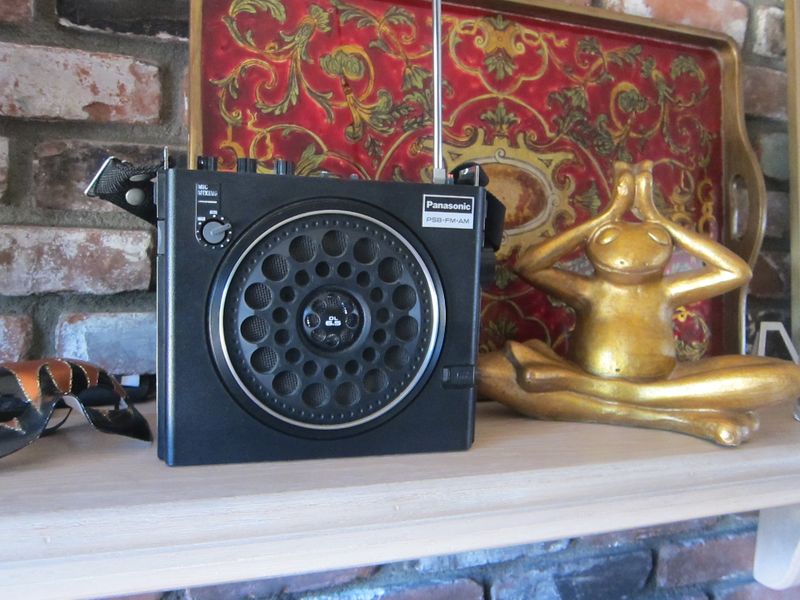
    Has my passion died? Not really. Here’s the thing. I’ve got what I want. And I know my limitations regarding my tech skills, so I only use my mint Panasonic RF-888 shown below when I want a taste of vintage glory. My beloved Panasonic RF-877 “GI-Joe Radio” (top of the post) shown has amazing FM/AM reception but its sound is intermittent due to oxidization inside the pot. I may have to hire someone to clean it out. 

    IMG_6252

    I’m resigned to the fact that while I have the best modern radios for suiting my listening needs, none of them have the majesty of a Panasonic RF-2200 or a lesser priced GE Super Radio II. 

    In any event, here’s my current collection:

    IMG_6250

    The C.Crane SW Radio plays in my workout den/office. I wanted it in my bedroom but its FM antenna too easily hooked on my elbow when I was getting up in the dark, so back in the den it went. Strengths: FM and loud sound. Weaknesses: None. 

    IMG_6258

    C.Crane 2E plays in the kitchen. I bought this a year ago evidencing that I’ll still buy a new radio if I am confident that it is an upgrade to what I already own. The 2E proves to be better than its previous incarnation in terms of sound and FM reception but only by a hair. Weakness: Like all my radios, 640 AM is too strong in Torrance and gets overload in the sound of squawking goose. I gave up on 640 and now listen to Leo Laporte podcasts.

    IMG_6263

    C. Crane Plus in the girls’ bathroom. Nearly as good as the 2E. Ed bought this for me for 7 dollars at Fryes. My greatest radio deal ever.

    IMG_6262

    Tivoli Songbook in the master bathroom. It’s small so it fits on the tiny bathroom table. FM is fine. AM is subject to interference.

    IMG_6259

    Sangean WR-2 plays in the master bedroom. I love that its earbud jack is in the front. FM is great. AM is above average. Problems: The on-off button sometimes needs to be pressed 3-5 times to operate, a condition that can be improved with a Q-Tip dab of Deoxit.

    So there you have it. I still love my radios. I don’t buy them much anymore, not because I’ve lost my passion but because I’ve got what I want.   Related articles

  • Comparing the Qodosen DX-286 with the Tecsun PL-330 (Which I Absolutely Did Not Need)

    Comparing the Qodosen DX-286 with the Tecsun PL-330 (Which I Absolutely Did Not Need)

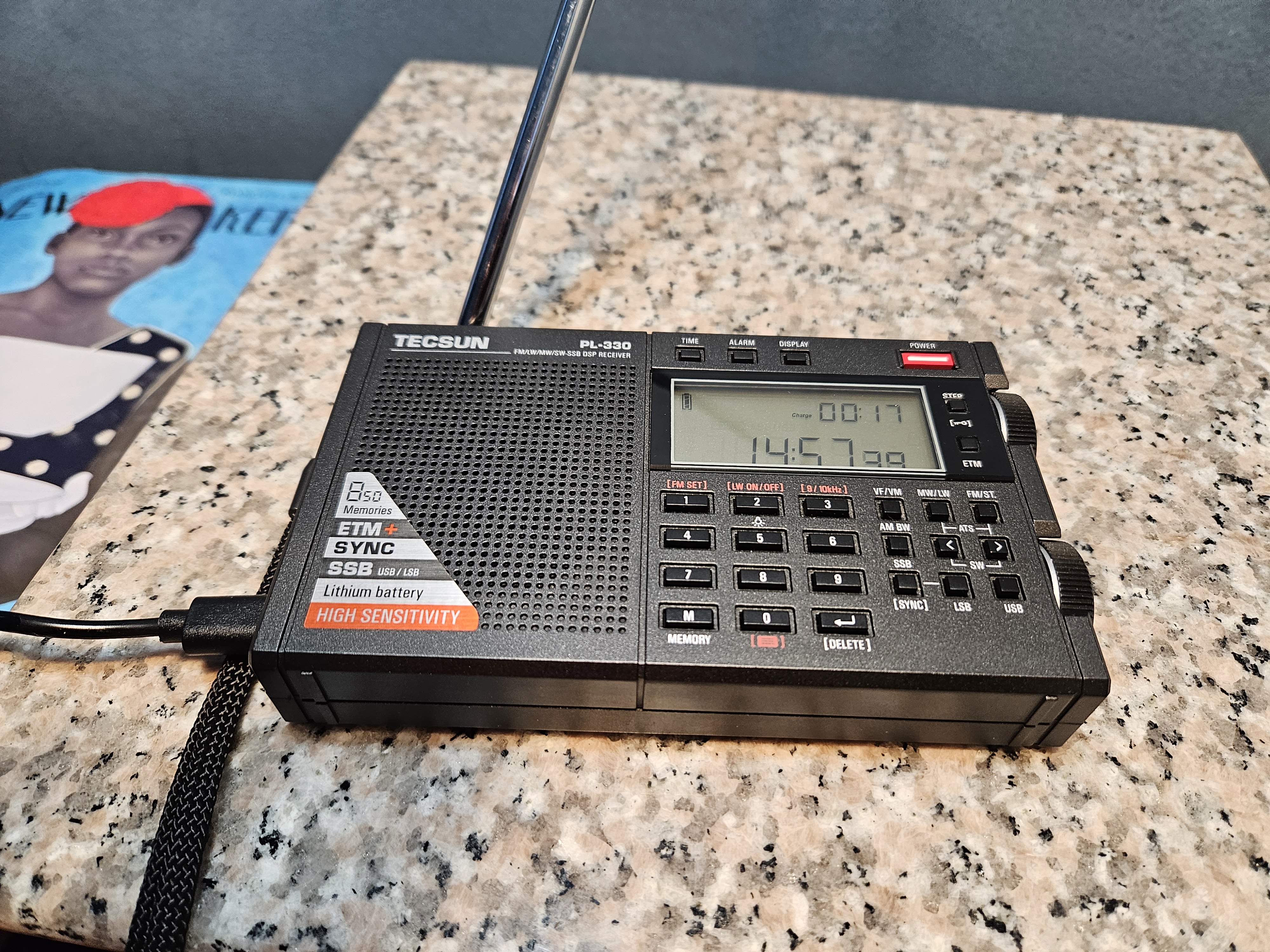
    Tecsun 330 & Qodosen

    Let’s get one thing straight: I had no business buying the Tecsun PL-330. None. I already own the Tecsun Four Horsemen—660, 680, 880, and 990—all brilliant in their own right, all lovingly hoarded. I even own the Qodosen DX-286, a small-footprint miracle that punches above its weight with a speaker that sounds like it’s packing 3 watts of sonic muscle, though the specs remain elusive. That radio even beats the Tecsuns on AM shielding, filtering out the urban electrical swamp that makes most radios wheeze and crackle like they’re being exorcised.

    And yet… the PL-330, a compact, .25-watt whisper of a radio, somehow seduced me. Maybe it was the open-box discount—$50 for a radio with a good reputation and a slightly rumpled box? Resistance was futile. I hit “Buy Now” faster than a dopamine junkie in a Black Friday frenzy.

    I didn’t even need the manual. Owning this many Tecsuns means I’m essentially fluent in Tecsunese. Clock setting? Presets? I could do it blindfolded while flossing.

    But let me be honest: The PL-330 is sleek. It has the crisp, militaristic geometry of something NASA might issue to interns. The buttons are snug and precise, unlike the Qodosen’s oversized, Playskool-style layout that screams “Designed by someone who just discovered ergonomics last Tuesday.”

    That said, Qodosen wins on practicality—it has a kickstand. The PL-330, bafflingly, does not. A design oversight or a cruel joke? We may never know.

    I don’t dabble in shortwave, but word on the street is that the 330 handles it like a champ. For FM, both radios are impressively sensitive, but I give a hair-thin edge to the Qodosen. On AM, the Qodosen’s clarity and noise control make it the better choice. For music, the Qodosen delivers a richer, more textured experience. But for talk radio, the PL-330 is sharper and cleaner—great for absorbing Madeleine Brand or NPR in the quiet of dawn.

    Verdict? The Qodosen stays bedside, loyal and boomy. The PL-330 earns a home in the master bath or kitchen, a quiet companion for 5 a.m. when the world still sleeps.

    Did I need it? Absolutely not. Am I keeping it? Absolutely.

    Tecsun PL-330 1
  • The Love of Radios and the Power of Gezelligheid

    The Love of Radios and the Power of Gezelligheid

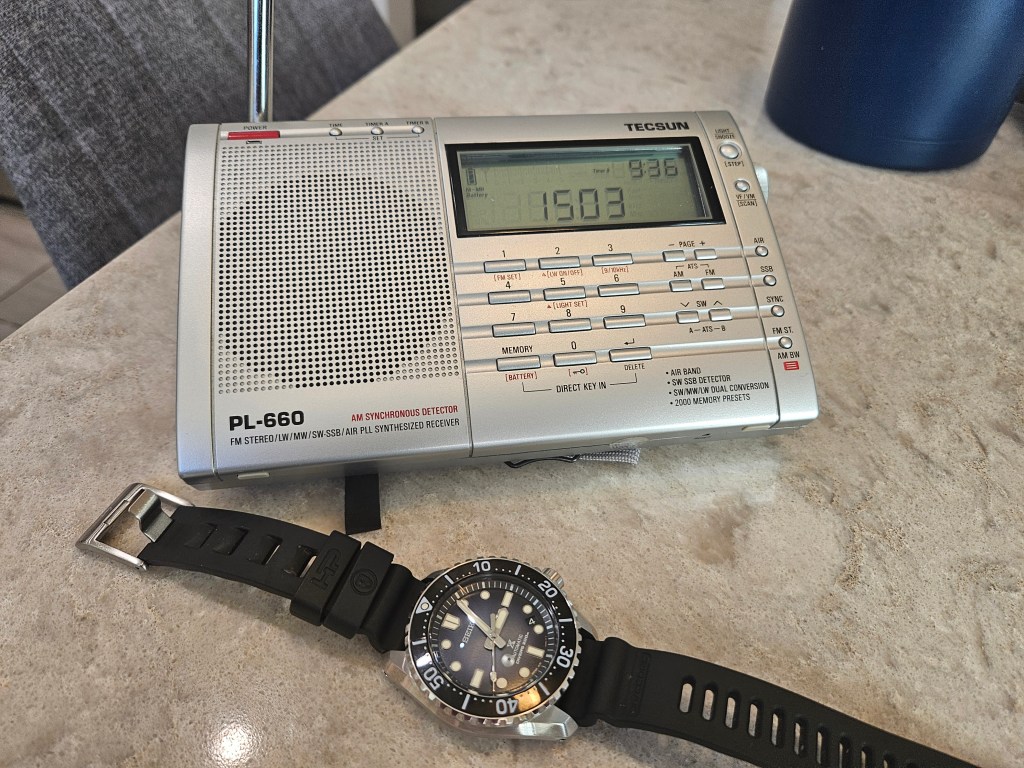
    20250226_132117

    The Love of Radios and the Power of Gezelligheid

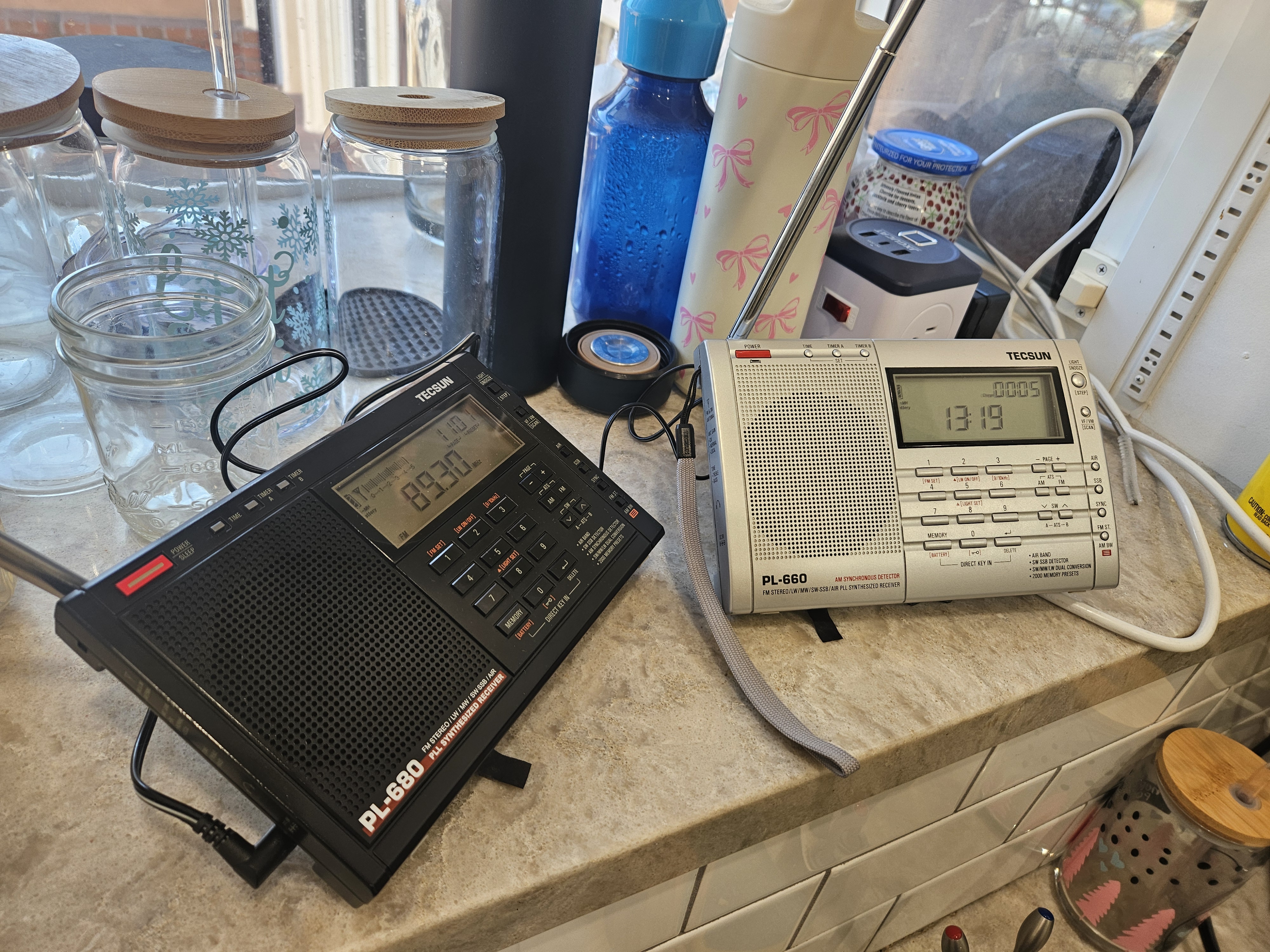
    I’m fully aware that my love for radios borders on the irrational. When I see a certain type—say, the Tecsun PL-680 or PL-660—something in my brain short-circuits. I’m instantly enchanted, as if I’ve just glimpsed an old friend across a crowded room, and at the same time, I’m comforted, as if that friend just handed me a warm cup of coffee and told me everything was going to be alright.

    A radio isn’t just a device; it’s a symbol, though I haven’t quite worked out of what exactly. Maybe it represents the art of slowing down—of sitting in a quiet room, wrapped in a cocoon of music or in the company of voices so familiar they feel like beloved houseguests. Or maybe it’s something more primal, a sanctuary against the chaos of the world, a frequency through which I can tune out the profane and tune into something sacred.

    The word that comes to mind when I hold a radio is cozy—but not in the kitschy, scented-candle, novelty-mug kind of way. This is deeper than that, more akin to the Dutch word gezelligheid—a term that encompasses coziness, warmth, companionship, and the ineffable comfort of simply being. Radios don’t just play sound; they create atmosphere. They transport me back to Hollywood, Florida, sitting on the porch with my grandfather, the air thick with the scent of an impending tropical storm, the crackle of a ball game playing in the background like a heartbeat of another era.

    Many have abandoned radio for the cold efficiency of streaming devices and smartphones. I tried to do the same for over a decade. I failed. Because gezelligheid—that feeling of simple, enduring pleasure—isn’t something you can replace with an algorithm. Some things, no matter how old-fashioned, still hum with life.

  • The Tecsun PL-880 Fulfills My Expectations

    The Tecsun PL-880 Fulfills My Expectations

    20250122_144605

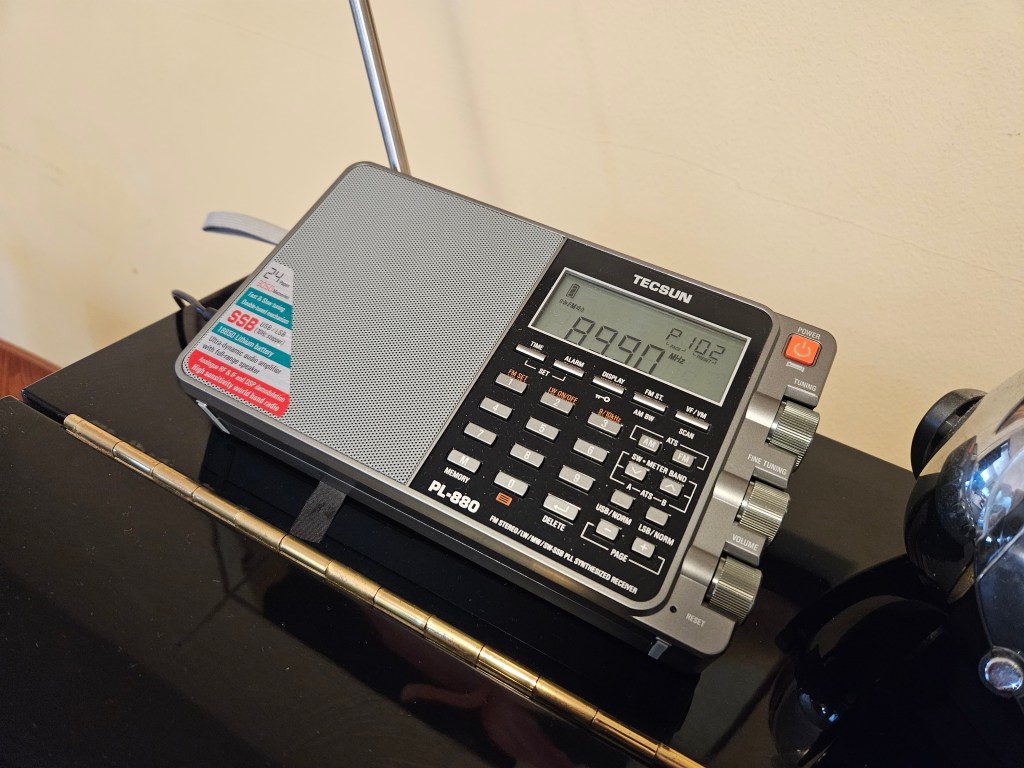
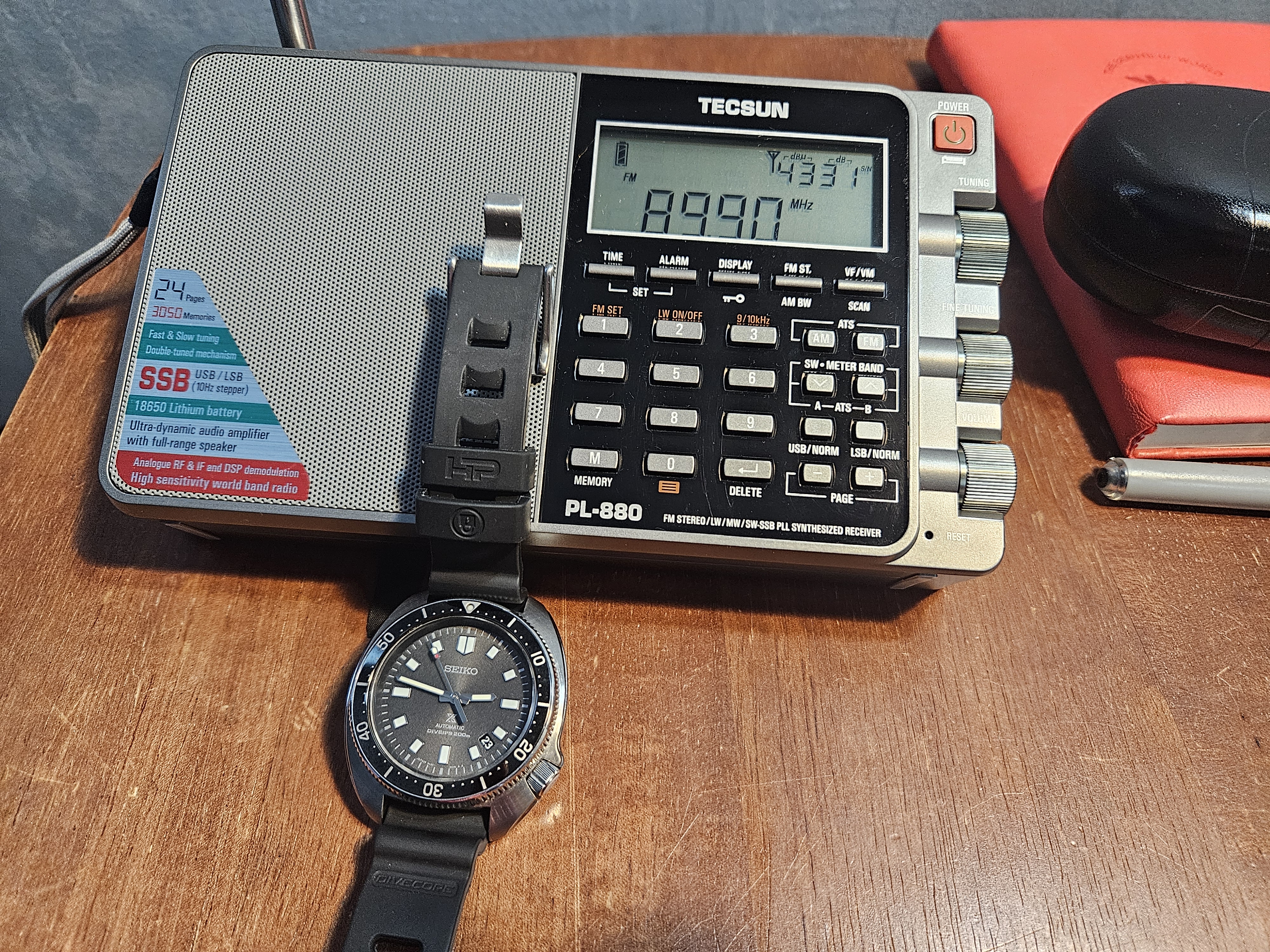
    I wanted a Tecsun in my bedroom—not some soulless streaming device, but a real radio, one with warmth, charm, and that inexplicable magic that only live broadcasts can offer. The idea was simple: a companion for afternoon naps and late-night reading sessions set to the soothing sounds of classical or jazz. After all, what better antidote to our algorithm-driven existence than the analog embrace of a good radio?

    Back in my radio-obsessed heyday around 2008, I foolishly sold my beloved Tecsun PL-660. Call it hubris, call it a lapse in judgment, but I’ve regretted it ever since. To atone, I snagged a used PL-660 for the kitchen and, for my bedroom sanctuary, opted for a Tecsun PL-880—a model lauded as a minor deity among radios.

    Now, let’s talk about my brief but painful dalliance with the PL-990. I ordered it from the reputable Anon-Co, expecting greatness, only to be greeted by an AM band as dead as a doorknob. Heartbreaking. Back it went, and in its place came the PL-880, slightly used but fully tested. And let me tell you, the speaker on the 880 is a revelation—warmer and more inviting than the 990’s. It’s like stepping into a cozy jazz club versus a sterile concert hall.

    The 880 arrived ready for action, with AM and FM defaults already set to North American standards—no fiddling required. On “DX” mode, the AM band delivers stunning clarity with zero floor noise or interference. It’s a joy to listen to, unlike 95% of the radios cluttering the market that barely rise above the status of glorified paperweights. FM performance is similarly impressive, though 89.3 gave me a little attitude when placed too close to the wall. A quick relocation to the bed or a spot away from the wall solved that, but the rest of the FM dial? Flawless. KCRW 89.9, in particular, comes through like it’s broadcasting from my nightstand, even while the battery charges.

    Speaking of AM, charging compromises its pristine reception, so I stick to battery power for those late-night AM sessions. Setting presets and navigating pages took a bit of patience—about 15 minutes of trial and error—but the interface is intuitive enough that even if you mess it up, direct entry is a breeze.

    In short, the PL-880 does exactly what I hoped it would: it fills my room with rich, crystal-clear sound, providing a listening experience that feels both luxurious and intimate. Sure, the PL-990 looks great and has fantastic build quality, but for my purposes, the 880 checks every box at a fraction of the cost. Why throw extra cash at a feature set I don’t need?

    Here’s the thing about being radio-obsessed: a radio isn’t just a gadget. It’s a companion, a quiet presence that connects you to a wider world while anchoring you in your own space. The PL-880 is just that—a welcome friend who’s already earned its place in my home.

    20250122_144540
  • Qodosen DX-286: Purchased Twice, an Update

    Qodosen DX-286: Purchased Twice, an Update

    (originally posted on my Herculodge blog (on the defunct Typepad platform. I’m including an update on this post.)

    The Qodosen DX-286 arrived last Sunday, Day 5 of the Los Angeles Fires, and I wasted no time putting it under the microscope. I scrutinized its build quality, tested its FM and AM performance, and after some thoughtful listening, I decided it was going back.

    To be fair, music sounded pleasant enough on the small mono speaker—soft, inoffensive, like background noise in a coffee shop. But voices? Hollow, thin, and oddly distant. It quickly became clear that this radio would only be tolerable if tethered to a pair of headphones. As for the physical design, the kickstand and battery door felt flimsy, as if one wrong move would snap them clean off. They inspired about as much confidence as a paper umbrella in a hurricane.

    AM reception? Surprisingly solid. FM? Good but not amazing. Despite all the hype about the Qodosen’s so-called super-powerful radio chip, it was no better than the Degen/Kaito 1103 I had over a decade ago. Sure, it effortlessly locked onto 89.3 from Pasadena, but it fumbled with the weaker college station 88.9, struggling like a kid lifting his first dumbbell.

    That’s when it hit me: I was never going to fall in love with this pint-sized radio. It felt like driving a rattling Mazda Miata through a wind tunnel—fun in theory, but exhausting in practice. So, I packed up the Qodosen and sent it back. I don’t blame Qodosen. I blame my unrealistic expectations and my failure to realize I didn’t want a radio this small for my bedroom. 

    In its place? The Tecsun PL-990X. Seven and a half glorious inches of luxury radio, a true cruiser compared to the jittery compact Qodosen. Don’t get me wrong—the DX-286 is a decent radio. I just realized I wanted something bigger, smoother, and built for the long haul. 

    Update:

    I rebought the Qodosen about a month after writing my original Herculodge review. I realized the speaker is excellent, its AM is superior to my Tecsun radios, and that it’s a keeper. One issue: The kickstand broke, so I play it flat on its back.

  • Tuned In, Checked Out: Confessions of a Radio Enthusiast

    Tuned In, Checked Out: Confessions of a Radio Enthusiast

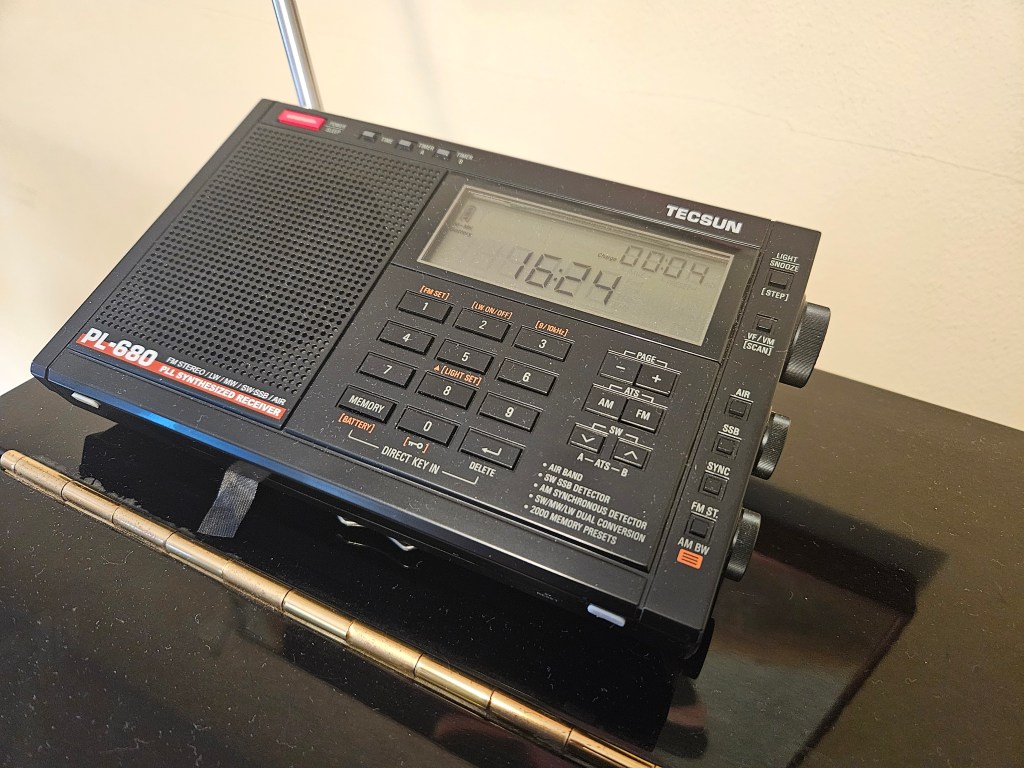
    When I catch sight of my black Tecsun PL-680—hulking, angular, unapologetically retro—I freeze like a Victorian child glimpsing a forbidden mechanical marvel through a shop window. My eyes widen, my breath catches. It’s the same reverence I once felt, age six, face pressed against the glass of a toy store, transfixed by the GI Joe helicopter with working rotors and the implied promise of war-zone adventure. Only now the battleground is a cluttered kitchen table, and the artillery is AM talk radio, jazz on shortwave, the solemn murmur of world news drifting in from another hemisphere.

    The desire to switch it on and be swallowed by its frequencies is so intense, it borders on insanity. I feel embarrassed by the depth of this longing, but not enough to stop. My smaller Tecsun PL-330 elicits the same pulse of joy—compact, stealthy, and with an antenna that telescopes like it’s reaching for God. These machines are not just radios; they’re sanctuaries. Each one is a cozy cockpit where I can retreat from reality and tune in to something more orderly, more measured, more mine.

    “On the spectrum,” my wife jokes, watching me cradle a shortwave receiver like it’s a newborn or a detonator. I laugh, but I know she’s not wrong. The way I look at these devices—mouth slightly open, posture slack, eyes glazed with devotion—is not what you’d call neurotypical. It’s the gaze of a man who has found something he understands in a world that too often makes no sense.

    I have no interest in being cured. Therapy doesn’t come with a frequency dial. Meditation never once pulled in Radio Romania International. And no mindfulness app can match the primal, analog thrill of catching a faint station through the hiss of the void.

    These radios are my proof—of eccentricity, yes, but also of what keeps me sane. They hum. They glow. They speak in languages I don’t understand but need to hear. And if that’s madness, I’m fine with it. I’ll be here with my Tecsun, smiling at static, laughing at myself, and tuning in to everything that doesn’t ask me to explain why.