Tag: recipe

  • CAR T-Cell Therapy Helped My Brother Beat a Rare Cancer

    CAR T-Cell Therapy Helped My Brother Beat a Rare Cancer

    In 2021, my younger brother faced a grim diagnosis: Burkitt lymphoma, a rare and aggressive cancer that left him with a mere three months to live. As if that wasn’t enough, he was recently divorced, his finances were in tatters following the collapse of his tech start-up, and the weight of stage-4 cancer was crushing him. The doctor, in a rare moment of compassion, suggested he create a bucket list. But fate had one last twist in store: my brother was accepted as the final participant in a groundbreaking UCSF experimental treatment known as CAR T-cell therapy.

    For three weeks, he underwent this miracle treatment, and as his recovery began, he was supposed to stay at the nearby Koz Hospitality House, a sanctuary for cancer patients. But he needed more than just a place to stay—he needed someone to help him navigate this harrowing chapter. Enter me. My college courses had all shifted online due to the pandemic, so I was able to handle my remote office hours from the Koz House. I moved in with my brother for two weeks, and though it was a challenge, it felt like a moral imperative to be by his side.

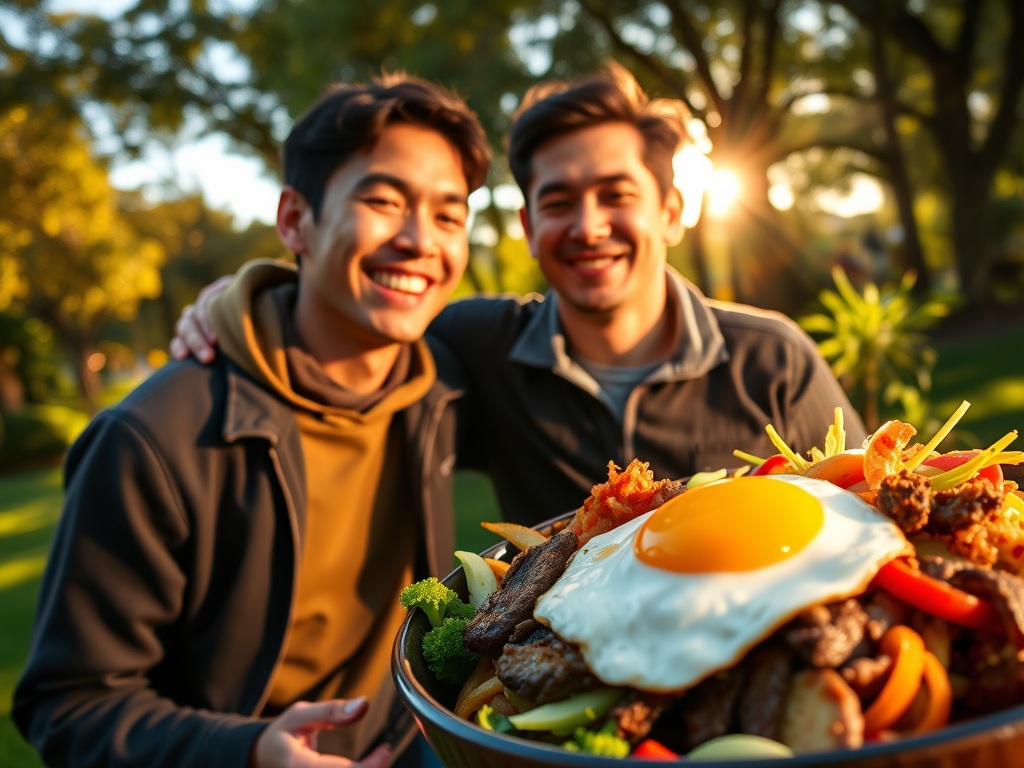
    What followed was nothing short of miraculous. Not only did my brother defy the odds and beat the cancer—the enormous tumor in his chest vanished—but the absence of chemotherapy meant he was full of energy. We walked several miles a day in the warm embrace of the Golden Gate Park sunshine, and dined out at local restaurants, with our absolute favorite being the Bibimbap from a charming Korean café within walking distance of the Koz House.

    Imagine, if you will, a plate that could make the gods weep with joy: the luxurious Bibimbap. At its core is a steaming mound of jasmine rice, each grain perfectly cooked and slightly caramelized around the edges, promising a delightful crunch. This foundation is adorned with a vibrant array of vegetables that seem to dance in a riot of color. There are tenderly crisp shredded carrots, their bright orange sweetness a contrast to the emerald-green spinach, delicately sautéed to perfection. Thin strips of julienned shiitake mushrooms lend an earthy umami, while sautéed zucchini adds a touch of sweetness, and crunchy bean sprouts offer a refreshing snap.

    Amid this colorful tableau, slices of seasoned beef—tender and juicy, marinated in a rich blend of soy sauce, garlic, and sesame oil—rest in harmonious balance with the vegetables. Atop this culinary masterpiece is a perfectly fried egg, its golden yolk a glossy orb of creamy richness, its edges crisply caramelized for a delightful textural contrast. A bold dollop of gochujang, a spicy-sweet fermented chili paste, sits at the center, its fiery kick slicing through the richness with vibrant heat.

    A sprinkling of sesame seeds, their nutty aroma mingling with the dish’s complex flavors, completes the ensemble. Thinly sliced scallions add a touch of freshness, and a drizzle of toasted sesame oil imparts a deep, nutty undertone. Every bite of this artful creation is a testament to the balance of textures and flavors—a celebration of umami, sweetness, and spice that transforms each meal into a joyous feast.

    Watching my brother relish every bite of this extraordinary Bibimbap was more than just a culinary delight—it felt like witnessing a healing miracle. It was as though this renowned Korean dish held within it a secret power, a savory balm that not only nourished his body but also rejuvenated his spirit, making him heal before my very eyes.

  • The Day I Failed the Ishihara Color Blindness Test

    The Day I Failed the Ishihara Color Blindness Test

    For years, I harbored a vague but nagging suspicion that peanut butter was green. Why? No clue—until 1971, when the grim truth revealed itself under the fluorescent doom of Independent Elementary’s nurse’s office.

    It was the day of the Ishihara Color Blindness Test, a supposedly routine exercise in humiliation where each fifth grader took turns peering into an illuminated contraption to identify numbers and shapes hidden in a field of colored dots. My classmates breezed through it like game show contestants, rattling off answers with the breezy confidence of children who’d never questioned their own eyesight.

    Then it was my turn.

    I stared into the glowing abyss. Saw nothing. Blinked. Still nothing.

    The nurse grew impatient. “Well? Can’t you see anything?”

    I could not.

    The room erupted in laughter. Congratulations—I was officially hopelessly color-blind, a medical outcast, a social leper. For the remainder of the morning, my classmates regarded me like a rare museum specimen. This boy thinks peanut butter is green. Proceed with caution.

    But fate, as it turns out, is not without a sense of humor.

    During lunch recess, the hierarchy of fifth-grade cruelty shifted. Kickball—a sport where raw physical dominance could overwrite even the most damning personal defect—offered me an unexpected shot at redemption. As the ball rolled toward me, I summoned the might of my tree-trunk leg, swung with the force of a caffeinated mule, and launched that red rubber sphere over everyone’s heads. It sailed past the outfield, past the schoolyard, and over the fence—finally splashing down into the backyard swimming pool of a bewildered suburbanite several blocks away.

    For a brief, glorious moment, I was no longer the kid who saw peanut butter in the wrong spectrum. I was a legend. The freakishly strong fifth grader with the foot of an Olympian and the trajectory of a human cannon.

    Lesson learned: You may be ridiculed for believing peanut butter is green, but if you channel your inner Herman Munster and kick a ball into another ZIP code, nobody gives a damn about your defective eyeballs. Heroism comes in many shades—even if you can’t see them.

  • Never Insult Your Guests with Mock Apple Pie

    Never Insult Your Guests with Mock Apple Pie

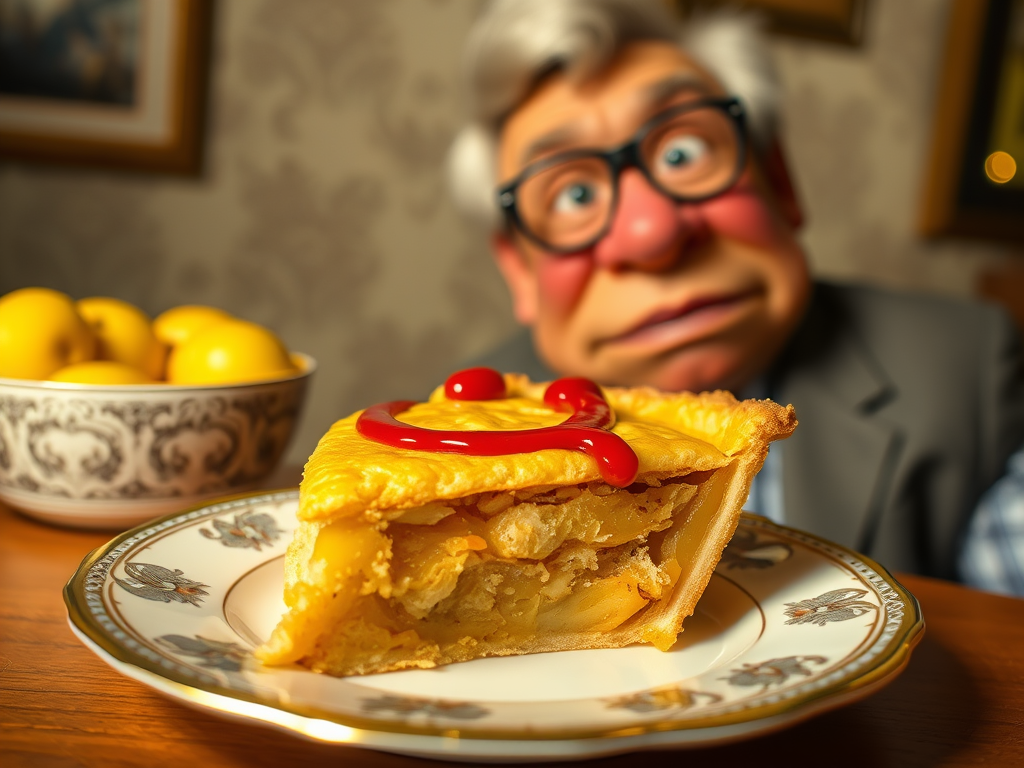
    One fateful evening in 1982, as I was nestled on the couch like a potato after a long day, I tuned into a San Francisco KQED comedy special. Enter Bob Sarlatte, a comedian with a chin so bold it could be used as a paperweight and a grin so snide it seemed to have its own agenda. He took aim at the pièce de résistance of culinary chicanery: the Ritz Crackers recipe for Mock Apple Pie. Sarlatte was on a mission to uncover the absurdity behind Ritz’s audacious claim of making apple pie with, wait for it, crackers instead of apples. He was incredulous, practically frothing at the mouth as he dissected this travesty. “Why on earth,” he demanded, “would Ritz, in all their cracker-clad glory, boast about a recipe that doesn’t even remotely involve apples?” According to Sarlatte, this so-called “apple pie” was like calling a desert a beach because it had sand—except the sand was made of crushed Ritz crackers, and the beach was a figment of your imagination. The comedian was in no mood for Ritz’s grandstanding. To him, this wasn’t a culinary innovation; it was a culinary catastrophe. He took Ritz to task for attempting to pass off a cracker conglomeration as apple pie, as if the lack of fruit was a feature, not a flaw. “Who,” Sarlatte railed, “are you going to serve this Mock Apple Pie to? Your mock friends? People who enjoy mockery served with a side of disappointment?” Sarlatte’s razor-sharp wit wasn’t just about lampooning a recipe—it was about exposing a greater travesty: the shameless elevation of a subpar substitute as a triumph of creativity. This wasn’t a clever culinary trick; it was an insult wrapped in a cracker crust. Bob Sarlatte laid bare the staggering lack of self-awareness and the brazen audacity required to serve such an ersatz “apple” pie with a smug smile. It was a masterclass in how to serve up an insult with a cherry on top, minus the apple, of course.

  • WHEN WATCHING PIE BAKING CONTESTS ELEVATES THE SOUL

    WHEN WATCHING PIE BAKING CONTESTS ELEVATES THE SOUL

    Many moons ago, my wife and I watched the 2006 HBO documentary Thin, which chronicles the tragic existence of girls in a Florida rehab clinic for eating disorders. These poor souls were ensnared in a vicious cycle of depression, self-loathing, and lies, their recovery rates abysmally low and fatality rates tragically high. After this emotional gut-punch, we desperately needed a palate cleanser, so we turned to a pie-baking contest featuring Midwestern women in Christmas sweaters, lovingly toiling over pie crusts. These wholesome warriors of the kitchen were a stark contrast to the aforementioned sufferers. It dawned on me that pie baking is the antithesis of anorexia—a condition of solipsism where one disappears into the self, whereas pie baking is a testament to community, love, and selfless devotion to butter and flour.

    Imagine, if you will, a world where the kitchen isn’t just a hub of culinary creation but a sacred temple of love, where pie-baking is the highest form of devotion. In this sanctified realm, every Midwestern woman in a Christmas sweater is a culinary high priestess, her rolling pin a scepter of affection, her pie crust a canvas for heartfelt artistry. The Pie Baking Contest is an epic battleground where these valiant women gather, their aprons fluttering like superhero capes, ready to channel pure, unadulterated love into their pies. The stakes are absurdly high, the competition fierce, but the atmosphere? Pure camaraderie and joy.

    Here, pie baking is not just a quaint pastime; it’s an epic saga of love, community, and unyielding devotion. These heroines approach their craft with the precision of neurosurgeons and the passion of Renaissance artists. Flour fills the air like enchanted snow, butter is blended into dough with the deftness of a master illusionist, and apples are peeled and sliced with the ferocity of a seasoned samurai. Each pie is a labor of love, a tangible expression of their deepest affections. As they sweat and toil over their creations, the kitchen morphs into a bustling hub of warmth and connection.

    Baking pies, slinging spaghetti and garlic bread, or whipping up a dish of hot and sour Tom Yum Goong soup demands a healthy soul, one that’s plugged into the matrix of family and community. We therefore don’t journey solo but soar with a merry band of culinary adventurers, armed with spatulas and mixing bowls, ready to conquer the next great feast. So, skip the guilt and embrace the butter—life’s too short for bland food and empty kitchens.