You do not know who you will become when you retire.
This is an irritating fact because retirement planning encourages the opposite assumption. You sit at your desk while still employed and confidently construct the future version of yourself. He will exercise four times a week. He will read difficult books. He will write every morning. He will travel. He will maintain friendships. He will practice Expansive Leisure and avoid the Retirement Larval State. He will be disciplined, curious, physically vigorous, socially engaged, and spiritually alert.
This man sounds magnificent.
Unfortunately, he does not exist.
The person making these plans is still embedded in the structures that have defined him for forty years. He has a job, a title, colleagues, students, deadlines, routines, and an institution that tells him where to be and when to be there. He knows himself under these conditions and therefore assumes he will remain essentially the same person after the conditions disappear.
Why would he?
This is the Stranger-Self Principle: the person planning your retirement has never experienced retirement and therefore cannot reliably predict the behavior of the person who will actually live it.
Working You and Retired You have never met.
Working You wakes at five and imagines that Retired You will continue waking at five because this is simply the kind of disciplined fellow you are. Perhaps. Or perhaps Retired You will wake at seven-thirty, shuffle into the kitchen wearing Hawaiian tank tops and flip-flops, eat breakfast, inspect the internet, and conclude that the morning’s intellectual work should begin immediately after a brief restorative lie-down.
Working You has no idea.
Retirement removes too many variables for confident prediction. Your work-based social life disappears. Your professional identity weakens. The automatic encounters vanish. Nobody waits outside your office. Nobody expects you in a classroom. Nobody sends an email asking whether you can attend a meeting Thursday at two, thereby providing the unexpected pleasure of declining it.
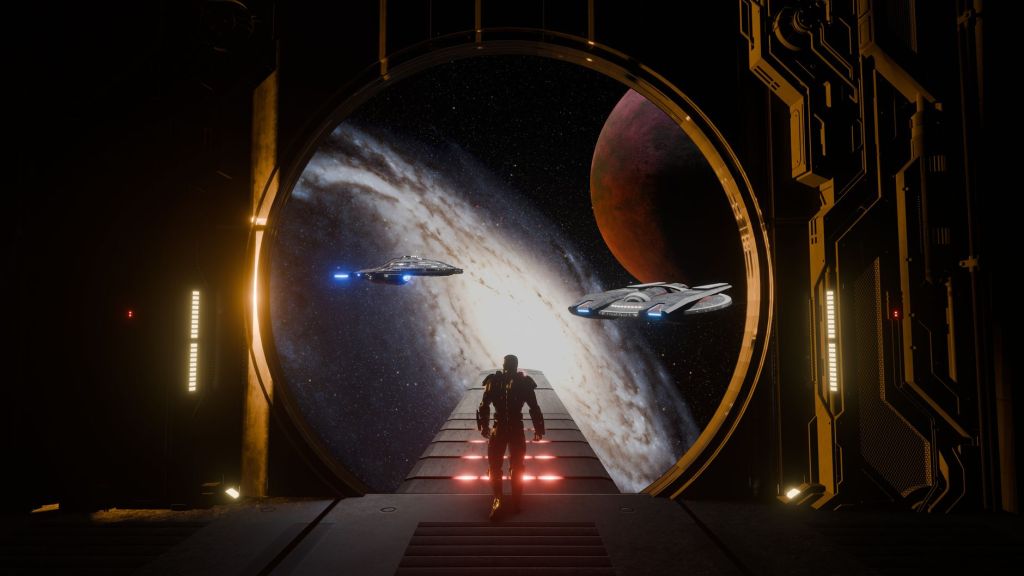
You have crossed the Rubicon. The old shore is behind you, and the maps become increasingly speculative.
You can study other retirees, of course. You can read Steve Lopez’s personal retirement journey. You can consult psychologists, financial advisers, longevity experts, philosophers, theologians, and seventy-eight-year-old men with magnificent calves who walk six miles every morning. Everyone has a roadmap. Maintain purpose. Cultivate friendships. Exercise. Volunteer. Travel. Learn Italian. Join a pickleball league. Buy resistance bands.
Excellent advice.
Retired You may tell all of them to go to hell.
Welcome to the Stranger-Self Principle. Retirement isn’t merely a new circumstance imposed upon an established personality. The circumstance may alter the personality itself. The man who spent forty years craving free time may discover that unlimited free time terrifies him. The introvert who dreamed of being left alone may discover that solitude loses some of its charm around the fourth consecutive Tuesday. The professor who swore he would never miss teaching may find himself constructing a syllabus for imaginary students at five in the morning.
You don’t know.
This uncertainty exposes an even more embarrassing human tendency: the Retrospective-Wisdom Principle. We improvise our way through life and afterward invent elegant explanations for what we have done.
We prefer to imagine ourselves as architects following blueprints. In reality, much of the time we are raccoons trapped in a garage, knocking things over in the darkness until we accidentally find the pet door.
Later, naturally, we write a book about our methodology.
We take the accident, the compromise, the lucky encounter, the failure we survived, and the decision we made because every other option looked worse, and transform it into a Principle. Suddenly the crooked path becomes a journey. The improvisation becomes wisdom. The scar becomes evidence that we knew where we were going all along.
I should be particularly suspicious of this tendency because I have spent considerable time naming retirement principles. I have principles for walking, principles for exercise, principles for leisure, principles for bureaucracy, principles for mortality, principles for maintaining vitality, and principles explaining why I need to get off my reinforced couch.
At this rate, by the time I retire I will possess enough principles to govern Switzerland.
What I will not possess is certainty.
Perhaps that is the useful realization. Human beings know considerably less than they pretend to know, particularly about themselves. We construct identities, announce convictions, establish routines, and declare that we have finally figured things out. Then circumstances change and expose how much of our supposedly permanent character depended upon the scaffolding surrounding it.
Retirement removes a considerable portion of that scaffolding.
Then you meet the stranger underneath.
Perhaps he will exercise, write, travel, cultivate friendships, and become Radiant Man. Perhaps he will spend three consecutive afternoons comparing laptops he doesn’t need while eating red grapes on a camping mattress installed permanently atop his couch.
Probably both.
So I am entering retirement without pretending that I possess the master plan. I have some useful principles. I have people I love. I have things I want to do. I can see occasional shards of light in the distance, and for now that is enough to establish a direction.
The rest I will make up as I go along.
Just like everybody else.
Although I would prefer to make it up while driving a brand-new eggshell-white Honda Accord Hybrid.
God knows I need excellent gas mileage for the two-mile expedition to Costco every other Wednesday.