Tag: rock

  • Radio Obsession 2015: State of the Radio Collection: “I’ve Got What I Want”

    Radio Obsession 2015: State of the Radio Collection: “I’ve Got What I Want”

    IMG_6254

    When I got bit by the radio bug in 2004 and bought every Grundig, Eton, Kaito, and Tecsun being released, I started my radio education. At the time, I also bought some vintage Panasonic, Sony, and Telefunken radios. 

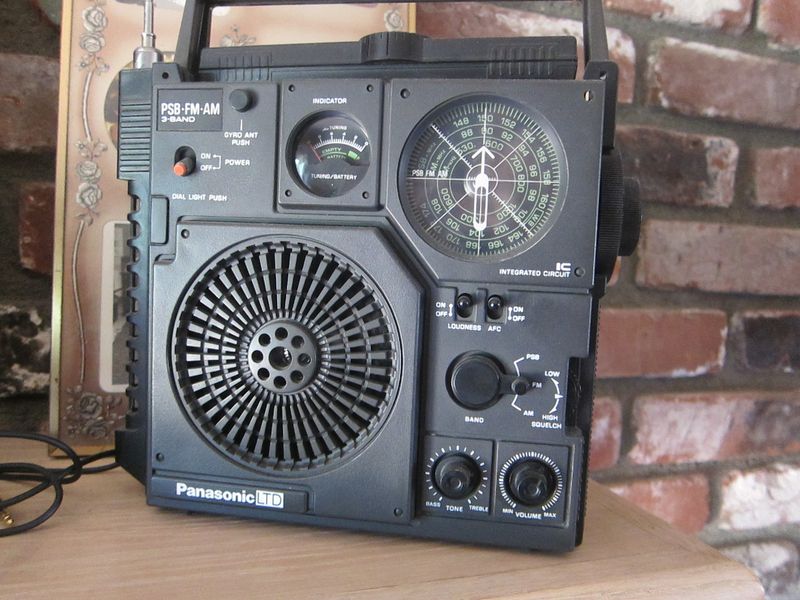
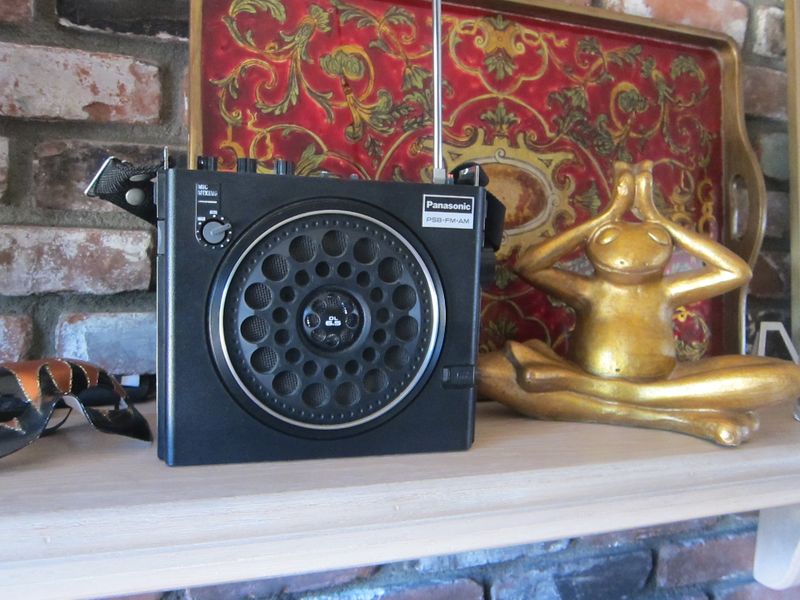
    Has my passion died? Not really. Here’s the thing. I’ve got what I want. And I know my limitations regarding my tech skills, so I only use my mint Panasonic RF-888 shown below when I want a taste of vintage glory. My beloved Panasonic RF-877 “GI-Joe Radio” (top of the post) shown has amazing FM/AM reception but its sound is intermittent due to oxidization inside the pot. I may have to hire someone to clean it out. 

    IMG_6252

    I’m resigned to the fact that while I have the best modern radios for suiting my listening needs, none of them have the majesty of a Panasonic RF-2200 or a lesser priced GE Super Radio II. 

    In any event, here’s my current collection:

    IMG_6250

    The C.Crane SW Radio plays in my workout den/office. I wanted it in my bedroom but its FM antenna too easily hooked on my elbow when I was getting up in the dark, so back in the den it went. Strengths: FM and loud sound. Weaknesses: None. 

    IMG_6258

    C.Crane 2E plays in the kitchen. I bought this a year ago evidencing that I’ll still buy a new radio if I am confident that it is an upgrade to what I already own. The 2E proves to be better than its previous incarnation in terms of sound and FM reception but only by a hair. Weakness: Like all my radios, 640 AM is too strong in Torrance and gets overload in the sound of squawking goose. I gave up on 640 and now listen to Leo Laporte podcasts.

    IMG_6263

    C. Crane Plus in the girls’ bathroom. Nearly as good as the 2E. Ed bought this for me for 7 dollars at Fryes. My greatest radio deal ever.

    IMG_6262

    Tivoli Songbook in the master bathroom. It’s small so it fits on the tiny bathroom table. FM is fine. AM is subject to interference.

    IMG_6259

    Sangean WR-2 plays in the master bedroom. I love that its earbud jack is in the front. FM is great. AM is above average. Problems: The on-off button sometimes needs to be pressed 3-5 times to operate, a condition that can be improved with a Q-Tip dab of Deoxit.

    So there you have it. I still love my radios. I don’t buy them much anymore, not because I’ve lost my passion but because I’ve got what I want.   Related articles

  • The Tecsun PL-880 Fulfills My Expectations

    The Tecsun PL-880 Fulfills My Expectations

    20250122_144605

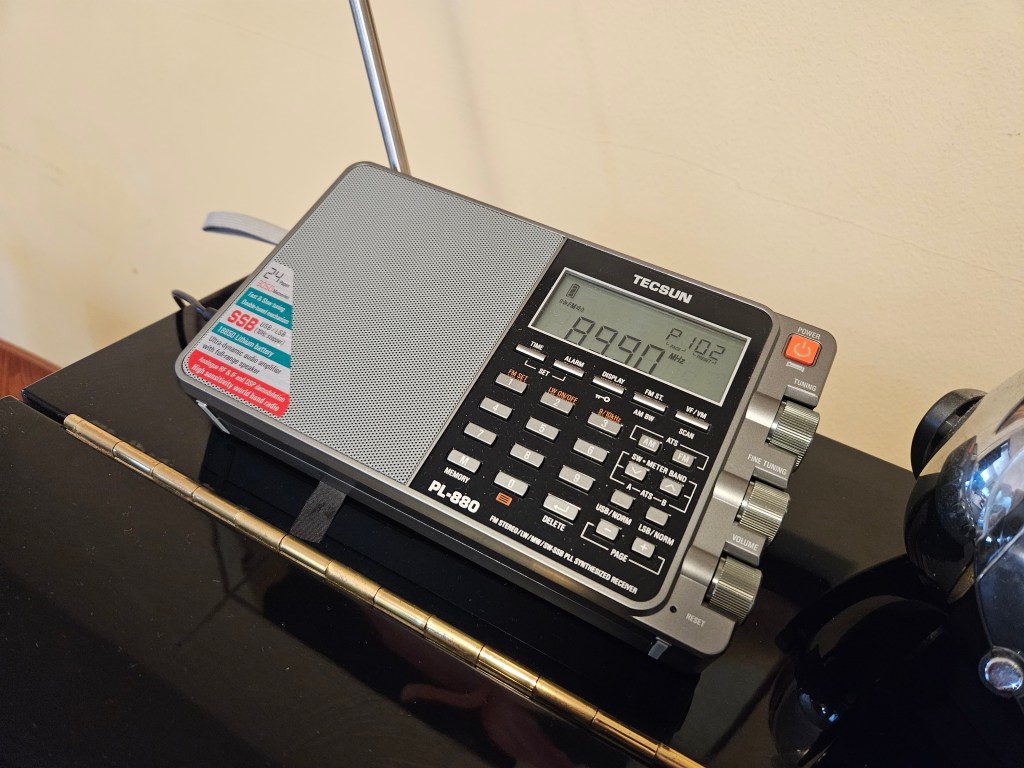
    I wanted a Tecsun in my bedroom—not some soulless streaming device, but a real radio, one with warmth, charm, and that inexplicable magic that only live broadcasts can offer. The idea was simple: a companion for afternoon naps and late-night reading sessions set to the soothing sounds of classical or jazz. After all, what better antidote to our algorithm-driven existence than the analog embrace of a good radio?

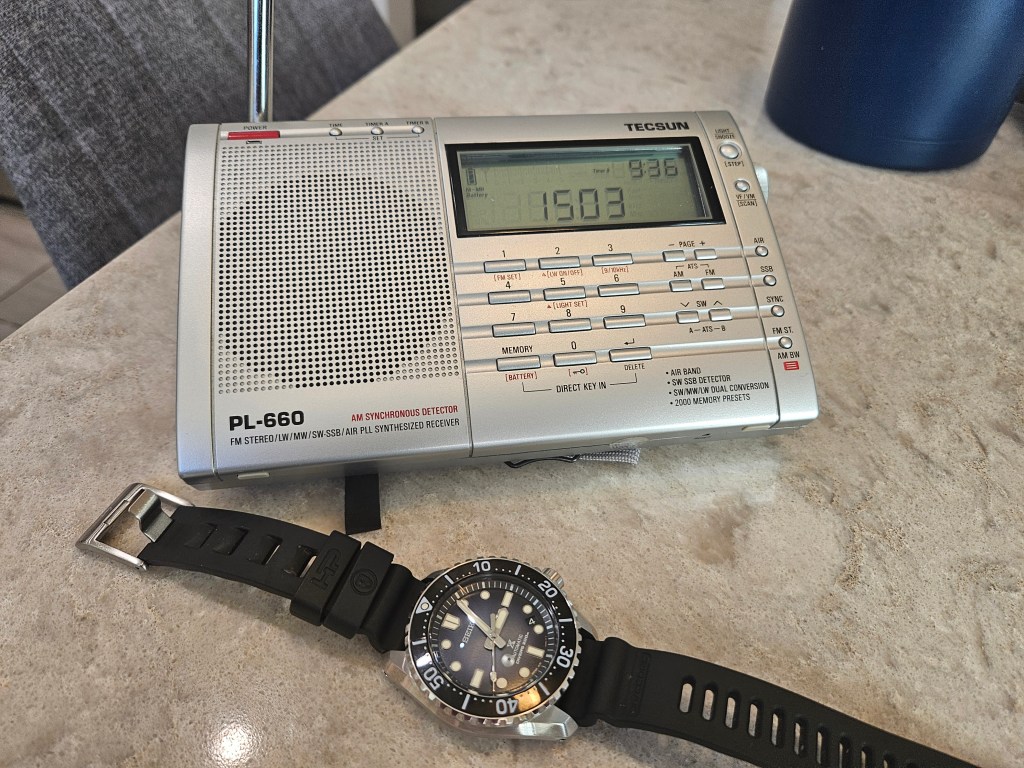
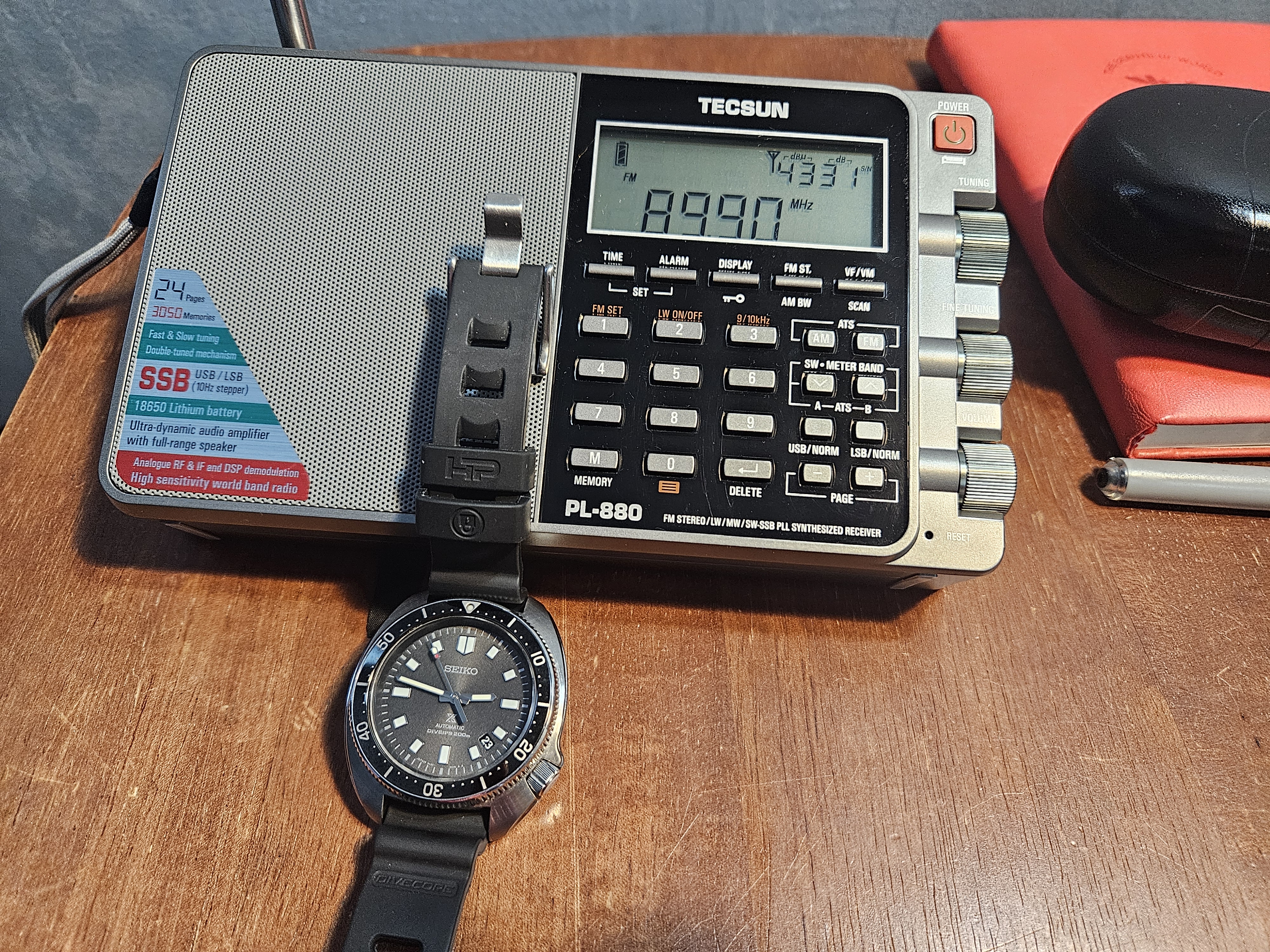
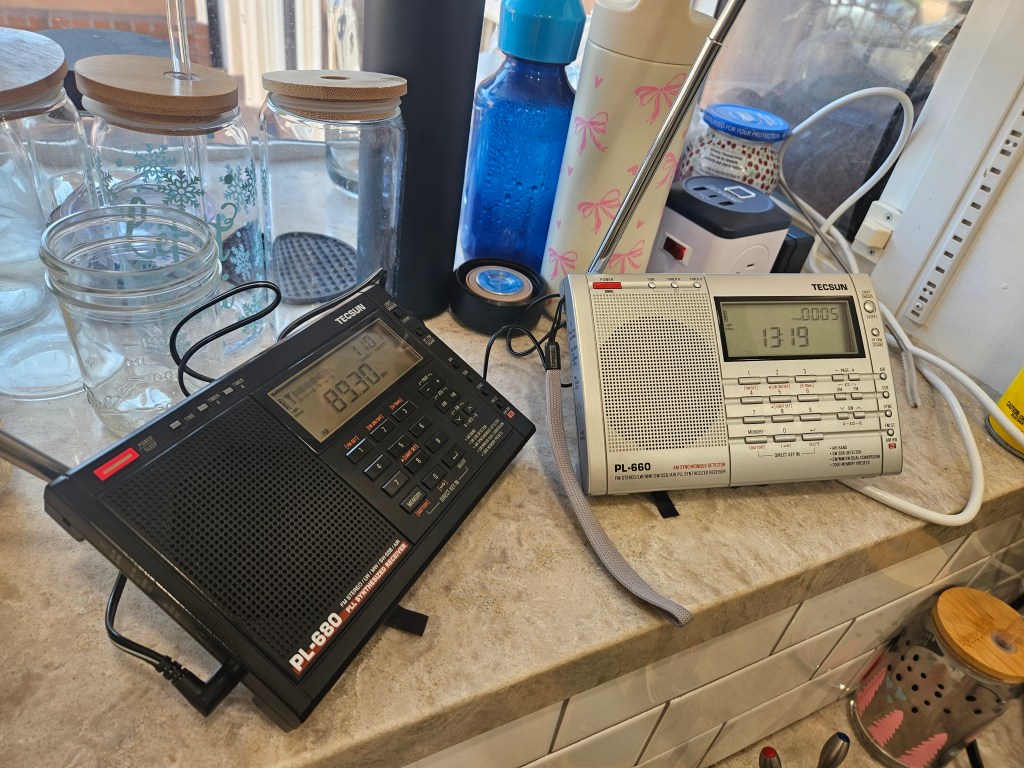
    Back in my radio-obsessed heyday around 2008, I foolishly sold my beloved Tecsun PL-660. Call it hubris, call it a lapse in judgment, but I’ve regretted it ever since. To atone, I snagged a used PL-660 for the kitchen and, for my bedroom sanctuary, opted for a Tecsun PL-880—a model lauded as a minor deity among radios.

    Now, let’s talk about my brief but painful dalliance with the PL-990. I ordered it from the reputable Anon-Co, expecting greatness, only to be greeted by an AM band as dead as a doorknob. Heartbreaking. Back it went, and in its place came the PL-880, slightly used but fully tested. And let me tell you, the speaker on the 880 is a revelation—warmer and more inviting than the 990’s. It’s like stepping into a cozy jazz club versus a sterile concert hall.

    The 880 arrived ready for action, with AM and FM defaults already set to North American standards—no fiddling required. On “DX” mode, the AM band delivers stunning clarity with zero floor noise or interference. It’s a joy to listen to, unlike 95% of the radios cluttering the market that barely rise above the status of glorified paperweights. FM performance is similarly impressive, though 89.3 gave me a little attitude when placed too close to the wall. A quick relocation to the bed or a spot away from the wall solved that, but the rest of the FM dial? Flawless. KCRW 89.9, in particular, comes through like it’s broadcasting from my nightstand, even while the battery charges.

    Speaking of AM, charging compromises its pristine reception, so I stick to battery power for those late-night AM sessions. Setting presets and navigating pages took a bit of patience—about 15 minutes of trial and error—but the interface is intuitive enough that even if you mess it up, direct entry is a breeze.

    In short, the PL-880 does exactly what I hoped it would: it fills my room with rich, crystal-clear sound, providing a listening experience that feels both luxurious and intimate. Sure, the PL-990 looks great and has fantastic build quality, but for my purposes, the 880 checks every box at a fraction of the cost. Why throw extra cash at a feature set I don’t need?

    Here’s the thing about being radio-obsessed: a radio isn’t just a gadget. It’s a companion, a quiet presence that connects you to a wider world while anchoring you in your own space. The PL-880 is just that—a welcome friend who’s already earned its place in my home.

    20250122_144540
  • The Gospel of Squats

    The Gospel of Squats

    In seventh grade, while your father was off playing superhero in the Peace Corps—presumably saving the world one mosquito net at a time—you were marooned in Nairobi, Kenya. Your days were spent juggling soccer balls with local kids whose knees seemed invincible, bonding with mood-swinging chameleons, and trying to convince yourself that your Action Man dolls (the British knockoff of G.I. Joe) were more than just inert plastic with bad articulation. When the dolls failed to deliver, you escaped into glossy American sports magazines, fantasizing about transforming your spaghetti frame into the hulking majesty of Reggie Jackson or Greg Luzinski. You didn’t realize it yet, but you were becoming a social alien—an unintentional exile from your former Bay Area self, the human equivalent of a chameleon stuck on a disco strobe.

    Coming back to California in 1974 to attend Earl Warren Junior High felt like being dropped into a strange new planet where bad perms and bell-bottoms were considered high fashion. When kids talked about “doobies,” you imagined something slimy from the ocean depths, and “bong” sounded like an unfortunate percussion instrument. Naturally, you said all this out loud. Your classmates—high-functioning experts in pot, Zeppelin, and humiliation—saw you for what you were: a clueless alien with a warped pop culture radar. “This kid thinks a bong is a wind chime” became your unofficial welcome-back slogan.

    Enter Lou Kruk, your P.E. teacher: part demigod, part drill sergeant, part Baywatch extra. He stood over six feet tall with the torso of an ice cream cone, mahogany tan legs bursting out of gym shorts so tight they could’ve been airbrushed. His lion-like hair, aviator sunglasses, and windbreakers gave him the aura of a man who taught dodgeball by day and raced Porsches by night. He did, in fact, drive a Porsche. He also owned a sailboat. And his girlfriend looked like a magazine ad for champagne and yacht clubs.

    Kruk’s voice thundered like Wolfman Jack having a meltdown, and he blasted Herb Alpert & The Tijuana Brass while ordering you to deadlift your body weight. During one rope climb session in the cafeteria, he interrupted class to verbally annihilate a group of bullies with a monologue worthy of a Greek tragedy. “He’s already in the gutter! You want to put your boot on his head too?” The bullies melted. You, meanwhile, silently vowed to name your first child Lou.

    On day one of Olympic Weightlifting, Kruk preached the gospel of the front squat. Feet flat, butt to the floor—no exceptions, no mercy. You took this commandment personally. You practiced until your glutes sang hymns of soreness. Your squats got so deep they could’ve hit oil. And when Kruk pointed to you as the Platonic ideal of squat form, the gym practically knelt.

    Eventually, you were powering through front squats with 200 pounds like they were grocery bags. The day you nailed a dozen reps at 225, the entire gym went silent. You weren’t lifting; you were levitating. Your thighs bloomed into grotesque botanical wonders. 

    Soon, you were squatting everywhere. At your locker. In algebra. As goalie during PE soccer games (to your teammates’ horror, as balls flew by into the net). You became known as “Squats,” and also “Thunder Thighs,” titles you wore like medals pinned to your hypertrophic quads. You didn’t care about ridicule anymore. You were a squat apostle, a zealot for quad dominance in the 148-pound class, where you snatched and clean-and-jerked like an adolescent Hercules hopped up on whey and divine purpose.

    You basked in Kruk’s approval like a reptile soaking up solar validation. His nods, his booming laughter—they were your sacraments. You became an unsolicited preacher, spreading the word of the front squat like a sidewalk prophet. For you, the squat wasn’t just exercise. It was theology. It was identity. It was the key to everything: confidence, masculinity, self-worth. Every rep was a sermon. Every deep descent into the squat rack brought you closer to the divine.

  • The Sundays Can’t Come Back—They Never Wanted to Be Here

    The Sundays Can’t Come Back—They Never Wanted to Be Here

    I estimate there are maybe 50,000 diehard fans of The Sundays left on Earth—middle-aged romantics who imprinted on their music in their twenties like baby ducks and have carried that delicate soundscape in their bones ever since. These are the ones still haunting Reddit threads and aging fan forums, half-pleading, half-praying for Harriet Wheeler and David Gavurin to reemerge from their English countryside exile and record something—anything—before they fully dissolve into myth.

    I count myself among them. I think “You’re Not the Only One I Know” is the most beautiful song ever written, full stop. And yes, I have complicated feelings about its sudden afterlife on TikTok. On one hand, I’m glad new ears are discovering it. On the other, I want to slam the door and shout, “Get off my lawn—it’s my song.” Like any relic of private beauty, it feels stolen once it trends.

    But here’s the thing: The Sundays aren’t coming back. And they shouldn’t. Their music is a love letter to solitude. It’s woven from the threads of retreat, quiet heartbreak, and the refusal to participate in the world’s noisy charade. Every line aches with the voice of someone who’d rather be home. A comeback would be a contradiction—like resurrecting Greta Garbo to guest on a reality show. Their brilliance was their withdrawal.

    Take “You’re Not the Only One I Know”—the narrator, calmly stationed in a chair, shooing people away like pigeons. Or “Here’s Where the Story Ends,” where every attempt at connection curdles in the air. Or “My Finest Hour,” which ends not in triumph but in a gentle surrender to domestic retreat. These aren’t anthems for a reunion tour. They’re hymns of hibernation.

    The Sundays were never built for comebacks. Their art was a form of aesthetic convalescence, a music of shy resilience. Their narrators, like the band itself, are Edward Scissorhands types—fragile, inward, best left unbothered in their Victorian turret. If they returned, they wouldn’t be The Sundays. They’d be Tuesday Afternoon.

  • The Curdling Effect: How Great Songs Die in Grocery Stores

    The Curdling Effect: How Great Songs Die in Grocery Stores

    There was a time—long before streaming services, algorithmic playlists, and “sonic branding agencies”—when “Dark Side of the Moon” could take you on a soul-melting trip through space, madness, and time. In high school, Pink Floyd was our sonic sacrament. The cymbals shimmered like cosmic omens, and we let the guitars dissolve our angst into astral vapor.

    Then Circuit City got its grubby corporate mitts on it.

    Some goons in a boardroom decided that Pink Floyd’s transcendent opus would make a great jingle for discount televisions. The song was diced, commodified, and stuffed into every radio and TV break until what once felt like a journey into the abyss became the soundtrack to buying a laser printer. “Dark Side: didn’t just sell out—it was dragged through the spin cycle of capitalism and emerged shriveled and stained, like a silk shirt forgotten in a laundromat dryer.

    Same thing happened to U2. “I Still Haven’t Found What I’m Looking For” once carried a biblical ache, a spiritual yearning that made you want to climb a desert mountain and cry. Then one fateful day in 1989, I was in a fluorescent-lit supermarket, watching the vegetable misting system descend on some limp romaine, when I heard it—Muzak’d into oblivion. Bono’s ache had been lobotomized and looped over damp eggplant. I felt like I’d witnessed a holy relic turned into a toilet brush.

    There’s a name for this: The Curdling Effect. When a song becomes so omnipresent, over-marketed, or backgrounded that it curdles—its soul separating from its sound, leaving only a sentimental sludge.

    Sometimes entire bands curdle. Take Coldplay. They’re talented, sure, but somewhere along the way they became the official band of stadium urinals and car commercials. Every note now drips with forced uplift and corporate synergy. Once they soared; now they slosh around in the shallow end of their own overexposure.

    But here’s the miracle: some songs are immune. Some endure. Some never curdle.

    Take “Fade Into You: by Mazzy Star. It drips with longing, and its beauty doesn’t spoil, even after decades. This morning, driving my twin daughters to school, I heard Victoria Bigelow’s cover. It stopped me. Time slowed. The song had lost none of its haunting gravity. It was still a velvet fog of romance and surrender.

    And then came a moment of musical resurrection. Olivia Dean’s “Touching Toes” played on the car stereo. It reminded me of Maria Muldaur’s “Midnight at the Oasis,” a song I hadn’t thought of in years. Both had that sultry, half-smile sway that drops your blood pressure and restores your faith in kindness. I let people merge in traffic. I was chill. I was enlightened.

    I’m now curating a playlist: Olivia Dean, Maria Muldaur, and any song that keeps me from flipping off fellow drivers. I call it The Chill Driver Playlist—a sonic antidote to the Curdling Effect.

  • Left Behind in a Dream: How Grunge Crushed My Jangle-Pop Heart

    Left Behind in a Dream: How Grunge Crushed My Jangle-Pop Heart

    In 1990, I was standing under the humming fluorescents of a dusty T-shirt and poster shop on Hollywood Boulevard, flipping through faded images of Morrissey, when a song hit me like a velvet brick: Obscurity Knocks by the Trashcan Sinatras.

    A wall of shimmering guitars spilled out of the speakers—jangly, melancholic, and so clearly descended from the holy Johnny Marr school of emotional resonance. It was as if Heaven Knows I’m Miserable Now had been reincarnated in a Scottish bedroom, passed through a reverb pedal, and handed to someone just wounded enough to understand.

    That same year, I fell headfirst into The Sundays’ Reading, Writing, and Arithmetic, and I’ve never quite crawled out. You’re Not the Only One I Know” may still be my favorite song of all time—part lullaby, part confessional, sung by someone who sounded like they were trying not to wake the ghosts in the room.

    In those moments, I was sure I was witnessing the dawn of a new musical epoch—an era where introspective, literate guitar pop would inherit the emotional crown left by The Smiths. I imagined mixtapes stretching into the next decade, filled with chiming guitars and lyrics that quoted Yeats and quietly ruined you.

    But then the mood changed.

    Nirvana showed up, kicked in the door, and everyone suddenly wanted to scream into the void instead of whisper into the ache. Nevermind dropped, and within what felt like minutes, everyone moved to Seattle, grew out their hair, and baptized themselves in feedback and flannel. The dreamy pop I loved didn’t just fall out of fashion—it was buried in a landslide of Grunge.

    The prophecy had already been written in “Obscurity Knocks”—and it delivered.

    But I refused to let go. While the world air-guitared to “Smells Like Teen Spirit,” I doubled down on Lloyd Cole, The Cocteau Twins, Lush, Chapterhouse, and The Go-Betweens. I curated sadness. I polished it. I stayed loyal to the bands that sounded like rain and minor chords and unspoken longing.

    Grunge? Too growly. Too aggro. Too much boot-stomping and not enough sighing into the mist.

    So what carries the flickering torch of that era for me today? What band whispers instead of roars, dreams instead of demands? One song comes to mind: Love Yourself by Lovejoy.

    It’s not a perfect mirror of those early ’90s tracks, but it has the same fragile DNA—the ache, the beauty, the subtle drama folded into melody. It’s as if someone reached back into my old shoebox of mixtapes, pulled out a strand of sound, and stitched it into something new.

    Call me stubborn. Call me sentimental. But I’ll be here, still thumbing through my old CDs, still worshipping at the altar of bittersweet jangle-pop, long after the amplifiers of Grunge have gone quiet.

  • Radio Reclaimed: The Proxy Friendship That Saves Your Sanity

    Radio Reclaimed: The Proxy Friendship That Saves Your Sanity

    A couple of months ago, as the Los Angeles wildfires raged, I found myself glued to a radio for live reports. A thought struck me like a lightning bolt: I had missed the radio. This ancient relic had been eclipsed by streaming devices, which, over the past decade, had somehow become my personal cocoon—a space where I meticulously curated my music and podcasts like a hyper-intelligent hermit with a PhD in self-isolation. I was alone, yes, but at least I had the comforting hum of algorithmically chosen tunes to keep me company. Then I realized: this wasn’t comfort. This was madness in a cocoon. My little silo, built to keep out the noise of the world, was also keeping out everything else that made me feel connected. I was losing my grip on reality, like the woman in “The Yellow Wallpaper” who could only see the world through the eyes of her claustrophobic madness.

    So, I did what any self-respecting, slightly paranoid adult would do: I bought a batch of high-performance radios, like the Tecsun PL-990, and I tuned back into the real world. I started listening to Larry Mantle’s voice again on LAist, to KJAZZ and KUSC—the classical music station that claims to be the most popular in the country. And after a few months of basking in their sonic embrace, I understood why KUSC is so beloved. It’s not just music; it’s a friend. The DJs don’t just announce the next piece; they drop in casual nuggets of composer trivia like old pals who just happen to know a lot about Bach’s temper. They are personal, conversational, and soothing, like a club of soundwave whisperers gently easing you into a state of calm with “your nightly lullaby” or music to “start your day.”

    KUSC doesn’t just play classical music. It plays the role of a companion—your anti-anxiety, anti-depression, virtual hug in the form of a radio signal. These aren’t just voices on the air; they’re voices that make you feel like you’re not alone, that someone is there to guide you through the chaos of your day. It’s the kind of subtle emotional manipulation you don’t mind because it’s just so comforting. If radio is going to survive the onslaught of streaming, it could do worse than to study KUSC’s Proxy Friendship model. There’s a lesson in that calm, gentle routine that could help even the most chaotic station become a lifeline in a world that feels like it’s constantly spinning off its axis.

  • When the DJ Lost His Mind & Played The Beatles’ “Hey Jude” for Three Hours Straight

    When the DJ Lost His Mind & Played The Beatles’ “Hey Jude” for Three Hours Straight

    It was a sweltering summer night in 1970, the kind of heat that melts your popsicle before you’ve unwrapped it and turns your family barbecue into a gladiator pit of passive-aggressive banter and steak smoke. Somewhere between my dad arguing about grill temps and my aunt trying to turn potato salad into a personality, the true spectacle of the evening wasn’t the charred meat or the mid-century familial dysfunction—it was what erupted over the airwaves.

    KFRC 610 AM, the mighty Top 40 beacon of San Francisco, had apparently been hijacked by a disc jockey teetering on the edge of reality. This radio shaman, perhaps emboldened by a bad acid trip or simply possessed by the spirit of Lennon and McCartney, played The Beatles’ “Hey Jude” on an endless loop for three solid hours.

    Not once. Not twice. Dozens of times.

    It was as if he’d discovered a wormhole in the Na-na-na-na-na-na-na dimension, and he was determined to drag the entire Bay Area through it, kicking and screaming—or, more likely, humming along with mounting psychosis. By the 12th replay, “Hey Jude” didn’t sound like music anymore; it was a mantra, a chant, a psychological experiment conducted in real time on unsuspecting citizens.

    At the time, DJs weren’t expected to be sane. Sanity was a liability.

    In fact, if your grip on reality was too tight, you probably worked in banking. Radio was for the unhinged, the beautifully deranged, the guys who played 9-minute prog-rock odysseys just to go smoke a joint or use the bathroom.

    One DJ at a rival station had a nightly tradition: every time he had to take a leak or inhale an entire bag of Cheetos, he’d cue up The Moody Blues’ “Nights in White Satin.” At nearly ten minutes long, it was the perfect alibi for sloth and snack breaks. And get this—listeners loved it. They called in and demanded it. That song didn’t just chart; it ascended like a slow-moving fog of existential poetry and flute solos.

    Suddenly, the 3-minute pop single was passé. Listeners wanted long, indulgent, vinyl-drenched feasts of music. “Suite: Judy Blue Eyes” wasn’t a song—it was an epic. It was our Ninth Symphony, a sprawling, self-important masterpiece that dared to be longer than your average sitcom episode.

    This was the golden era of the musical buffet, where DJs weren’t just tastemakers—they were lunatic conductors of cultural excess. Every drawn-out bridge and psychedelic outro was a sign that we had transcended the 45-rpm world of bubblegum pop and entered a new, freeform temple of indulgence.

    And if your DJ didn’t go off the rails every now and then, frankly, what the hell were you listening for?