Tag: romance

  • The Unwritten Rules of the Iron Temple (and How You Broke Them All)

    The Unwritten Rules of the Iron Temple (and How You Broke Them All)

    One of the twisted pleasures of training at Walt’s Gym in the mid-70s was sweating it out beside the Big Time Wrestling stars you once watched religiously after school on Channel 44. For two straight years, those hulking, cartoonish men had been etched into your imagination, and suddenly—there they were, no longer trapped in your Zenith TV, but flesh-and-blood titans grunting beside you as you tried to make a name for yourself as a thirteen-year-old Olympic weightlifter.

    You couldn’t believe your luck. Kinji Shibuya, Pedro Morales, Hector Cruz—icons of your adolescent screen time were now regulars at your crusty little training temple. But with awe came idiocy. You were built for your age, sure, but common sense hadn’t caught up to your biceps.

    Take the time you ran cable lat rows next to Hector Cruz. Somewhere between rep six and seven, you decided to open your mouth and muse aloud whether wrestling—dare you say it—might be fake. Cruz turned, his forehead looking like tectonic plates mid-quake, and fixed you with a death glare. “Look at these scars on my face! Do they look fake to you?” he growled. You nodded dumbly, suddenly aware that your joke had been the conversational equivalent of lighting yourself on fire.

    Then came Towelgate. You spotted a sweat towel draped across the calf machine and figured, hey, free towel. You wiped your pubescent brow and basked in your temporary coolness—until a mountain of muscle barreled off the bench press and accused you of theft. With twitching biceps and a voice that rumbled like thunder, he threatened to rearrange your face if you ever touched his towel again. That was the day you learned: gym towels are sacred. More sacred than communion wafers. More sacred than your own dignity.

    But nothing topped the screaming incident. You thought your loud, primal grunts gave your lifts an air of badassery. They didn’t. One day, a competitive bodybuilder who looked like an enraged Renaissance statue cornered you between sets and snarled, “Kid, if you don’t cut the screaming, someone’s going to shut you up permanently. And they’ll get a standing ovation for it.”

    That was your education. Walt’s Gym wasn’t just about the weight on the bar. It was about knowing the tribal codes, reading the room, and shutting the hell up before your next breath became your last. You didn’t just lift—you survived. And sometimes, that was the heavier feat.

  • The Gospel of Squats

    The Gospel of Squats

    In seventh grade, while your father was off playing superhero in the Peace Corps—presumably saving the world one mosquito net at a time—you were marooned in Nairobi, Kenya. Your days were spent juggling soccer balls with local kids whose knees seemed invincible, bonding with mood-swinging chameleons, and trying to convince yourself that your Action Man dolls (the British knockoff of G.I. Joe) were more than just inert plastic with bad articulation. When the dolls failed to deliver, you escaped into glossy American sports magazines, fantasizing about transforming your spaghetti frame into the hulking majesty of Reggie Jackson or Greg Luzinski. You didn’t realize it yet, but you were becoming a social alien—an unintentional exile from your former Bay Area self, the human equivalent of a chameleon stuck on a disco strobe.

    Coming back to California in 1974 to attend Earl Warren Junior High felt like being dropped into a strange new planet where bad perms and bell-bottoms were considered high fashion. When kids talked about “doobies,” you imagined something slimy from the ocean depths, and “bong” sounded like an unfortunate percussion instrument. Naturally, you said all this out loud. Your classmates—high-functioning experts in pot, Zeppelin, and humiliation—saw you for what you were: a clueless alien with a warped pop culture radar. “This kid thinks a bong is a wind chime” became your unofficial welcome-back slogan.

    Enter Lou Kruk, your P.E. teacher: part demigod, part drill sergeant, part Baywatch extra. He stood over six feet tall with the torso of an ice cream cone, mahogany tan legs bursting out of gym shorts so tight they could’ve been airbrushed. His lion-like hair, aviator sunglasses, and windbreakers gave him the aura of a man who taught dodgeball by day and raced Porsches by night. He did, in fact, drive a Porsche. He also owned a sailboat. And his girlfriend looked like a magazine ad for champagne and yacht clubs.

    Kruk’s voice thundered like Wolfman Jack having a meltdown, and he blasted Herb Alpert & The Tijuana Brass while ordering you to deadlift your body weight. During one rope climb session in the cafeteria, he interrupted class to verbally annihilate a group of bullies with a monologue worthy of a Greek tragedy. “He’s already in the gutter! You want to put your boot on his head too?” The bullies melted. You, meanwhile, silently vowed to name your first child Lou.

    On day one of Olympic Weightlifting, Kruk preached the gospel of the front squat. Feet flat, butt to the floor—no exceptions, no mercy. You took this commandment personally. You practiced until your glutes sang hymns of soreness. Your squats got so deep they could’ve hit oil. And when Kruk pointed to you as the Platonic ideal of squat form, the gym practically knelt.

    Eventually, you were powering through front squats with 200 pounds like they were grocery bags. The day you nailed a dozen reps at 225, the entire gym went silent. You weren’t lifting; you were levitating. Your thighs bloomed into grotesque botanical wonders. 

    Soon, you were squatting everywhere. At your locker. In algebra. As goalie during PE soccer games (to your teammates’ horror, as balls flew by into the net). You became known as “Squats,” and also “Thunder Thighs,” titles you wore like medals pinned to your hypertrophic quads. You didn’t care about ridicule anymore. You were a squat apostle, a zealot for quad dominance in the 148-pound class, where you snatched and clean-and-jerked like an adolescent Hercules hopped up on whey and divine purpose.

    You basked in Kruk’s approval like a reptile soaking up solar validation. His nods, his booming laughter—they were your sacraments. You became an unsolicited preacher, spreading the word of the front squat like a sidewalk prophet. For you, the squat wasn’t just exercise. It was theology. It was identity. It was the key to everything: confidence, masculinity, self-worth. Every rep was a sermon. Every deep descent into the squat rack brought you closer to the divine.

  • Captain America vs. the Aryan Poster Child

    Captain America vs. the Aryan Poster Child

    On dry land, you were Captain America incarnate—at least in your own mind. A five-year-old freedom fighter in light-up sneakers, flexing your spaghetti arms to vanquish Red Skull stand-ins wherever they lurked. And in 1973, Kindergarten was your battlefield. The enemy? A kid named Teddy Heinrich, your neighbor at the Royal Lanai Apartments in San Jose—a cherubic little stormtrooper-in-training who strutted around with the smugness of a pint-sized Aryan poster child.

    You had no idea you were Jewish, not consciously. But Teddy sure did. He made it his mission to educate you—mostly through Nazi memorabilia and unsolicited history lessons delivered between episodes of The Three Stooges and Superman, which you watched on his living room TV because your family didn’t have UHF. His parents were phantoms—always cloistered in the master bedroom, never cracking a smile, and dressed like they were auditioning for The Cabinet of Dr. Caligari.

    One day, Teddy gave you the grand tour of his family’s closet. Instead of a vacuum or winter coats, he pulled out his grandfather’s SS uniform—complete with a swastika armband, as if he were unveiling a treasured heirloom. “Check it out,” he said, beaming. “The greatest fighting machine the world has ever known.” His father peeked out from the shadows, nodded with ghostly approval, and slithered back into the bedroom.

    You didn’t know what to make of it. Your Nazi education came exclusively from The Sound of Music, and even then, the swastikas were mostly an inconvenience to the yodeling.

    Days later, under the hot California sun, you and Teddy were sprawled on the apartment lawn. He used his magnifying glass to torch a grotesque Jerusalem cricket, its alien limbs writhing in agony. You kicked it away, trying to save the poor thing, but Teddy doubled down—burning swastikas and “Nazi” into a wood block like a miniature war criminal with a hobby.

    You started mimicking him, doodling swastikas like a deranged architect. When your mother caught you mid-sketch, she froze. “Where did you learn that?” You dropped Teddy’s name like a hot grenade.

    She banned the symbols and told you they were evil. You nodded, swore to behave—and went right back to etching them at school, seduced by their sinister geometry.

    Then came the day Teddy called you a “dumb Jew.”

    You didn’t even know what the word meant. You just knew something flared in your chest like a lit fuse. In an instant, you were on top of him, pounding his freckled face into the grass. He didn’t fight back. He just took it—limp, passive, stunned. You clawed at his cheeks, turned them into raw hamburger. It was an out-of-body experience. You were rage. You were justice. You were five years old and seeing red.

    You walked home calm, maybe even proud. An hour later, Teddy and his mother showed up at your door. She was full of righteous German fury. “Your son did this?” she said, pushing her bruised child forward like Exhibit A. “I almost had to take him to the hospital.”

    Your mother, stunned, sent you to the kitchen. You listened from the other room as she said, “Did he really do all this?”

    “Yes!” the woman barked. “Your son should not be allowed to play with mine anymore.”

    Once they left, your mother turned to you. You explained the swastikas. The Nazi closet. The slur.

    She didn’t ground you. She didn’t raise her voice. Instead, she nodded with a quiet, ancestral gravity—as if somewhere in the back of her mind, ghosts had nodded with her.

    In her eyes, you weren’t a delinquent.

    You were Captain America.

  • The Confessions of a Hot Tub Messiah

    The Confessions of a Hot Tub Messiah

    You were twenty-six in the hot August month of 1998 and for a shimmering chlorinated hour at a friend’s pool party at a lavish apartment complex in Livermore, California, you became the mythical, magical Hot Tub Stud. Your girlfriend wasn’t there. It was August, and she had already packed her bags to start her fall semester at Scripps College in Claremont California. It was ridiculous that you and your girlfriend Pamela would attempt a long-term relationship. You were each other’s first romance. You both were surely naive. Neither of you knew how doomed and unhealthy your relationship was. There were things about you–your neediness and lack of spontaneity to name two–that Pamela hated about you. Deep down, you knew she hated you, but you were too needy to acknowledge how repulsed she was by your neediness. You were also too needy to acknowledge that you weren’t so hot about her either. Sure, the chemistry was great. You guys desired each other every second, but it was impossible for you to truly love someone who recoiled at your broken, immature self. Deep down, you wanted to be admired and adored, and you knew Pamela would never be that person.

    Around 3 p.m., in the steamy, chlorine-scented haze of suburban hedonism, she appeared: Rachel, a petite brunette with long, flowing hair, skin like burnished chestnut, and dark, soulful eyes that suggested she’d read Anna Karenina and wept at the right parts. She wore a green bikini. She had depth. She had presence. And she was—unbelievably—into you.

    And not just into your pecs and biceps. She was drawn to your languid ease, your temporary state of post-Pamela serenity, that rare moment when you weren’t apologizing for your existence or scanning the horizon for emotional threats. You exuded something you rarely possessed: confidence. You didn’t try to be charming. You just were.

    You talked. She was an Ashkenazi Jew, like you—except fully, whereas you were only half, your dad a gruff Irish Catholic whose idea of spiritual intimacy was yelling at the TV. You told her it was a miracle you weren’t in therapy. She laughed. The real kind. She told you about growing up in a Jewish enclave in Dallas, her econ degree from San Francisco State, and the Marina District apartment she shared with roommates and dreams.

    In the swirling warmth of the hot tub, you slowly cradled her as she floated on her back, spinning gently in your arms like a sun-drunk naiad. You gazed into each other’s eyes like characters in a perfume commercial—if the perfume were melancholy, the top note regret.

    And in that moment, Pamela ceased to exist. You were ready to let Pamela become a dot receding into the horizon, propose to Rachel, adopt a rescue dog, and buy Rachel a two-bedroom Marina District condo with French doors and jasmine on the balcony. Your soul whispered scripture: “And the two shall become one flesh.”

    But just as you leaned into that soon-to-be-legendary kiss, your guilt, or maybe your emotional cowardice, threw a wrench into fate. You stood her upright and mumbled something about having a girlfriend.

    The look on Rachel’s face—that soft, diplomatic devastation—has haunted you ever since. She gave you a gentle out: “You’re probably confused.” And then she disappeared into the changing room like Eurydice stepping into the underworld, and you never saw her again.

    Years passed. Decades. And when life feels like a cruel joke told by someone with bad timing—when you’re depressed, flabby, or existentially irrelevant—you return to that hot tub. You imagine yourself sweeping Rachel off her feet, performing impromptu piano recitals, meeting her doting parents, and becoming the man you wanted to be in that moment: the Hot Tub Stud who followed through.

    But you didn’t. You blinked. You let Eden slip through your fingers, and like all paradise stories, it ended with exile.

    Still, for one hour, you were perfect. You were desired. You were whole.

    And you’ve been chasing that hour ever since.

  • Watch Ownership Is a Letdown; Research Is the High

    Watch Ownership Is a Letdown; Research Is the High

    One of my favorite pastimes is watching YouTube comparison videos of the Toyota Camry vs. the Honda Accord. I’m not shopping for a car. I don’t need a car. I may never buy another car. 

    But these videos? They soothe the savage beast inside of me. They go down like a smooth bourbon, with notes of ABS braking and a smoky finish of fuel economy.

    While others go to YouTube to meditate or do yoga, I fall into the hypnotic cadence of two grown men comparing rear-seat legroom and infotainment systems with the solemnity of Cold War negotiators. 

    I’m riveted. Parsing the pros and cons of these two sedans gives me a focus so intense it borders on religious ecstasy. I study engine specs like they’re verses from Leviticus. My concentration sharpens, my anxiety fades. I am, for a brief and blissful moment, free.

    And then it hits me: I don’t want the car. I want the focus. The Camry and Accord are just placeholders in the temple of obsession.

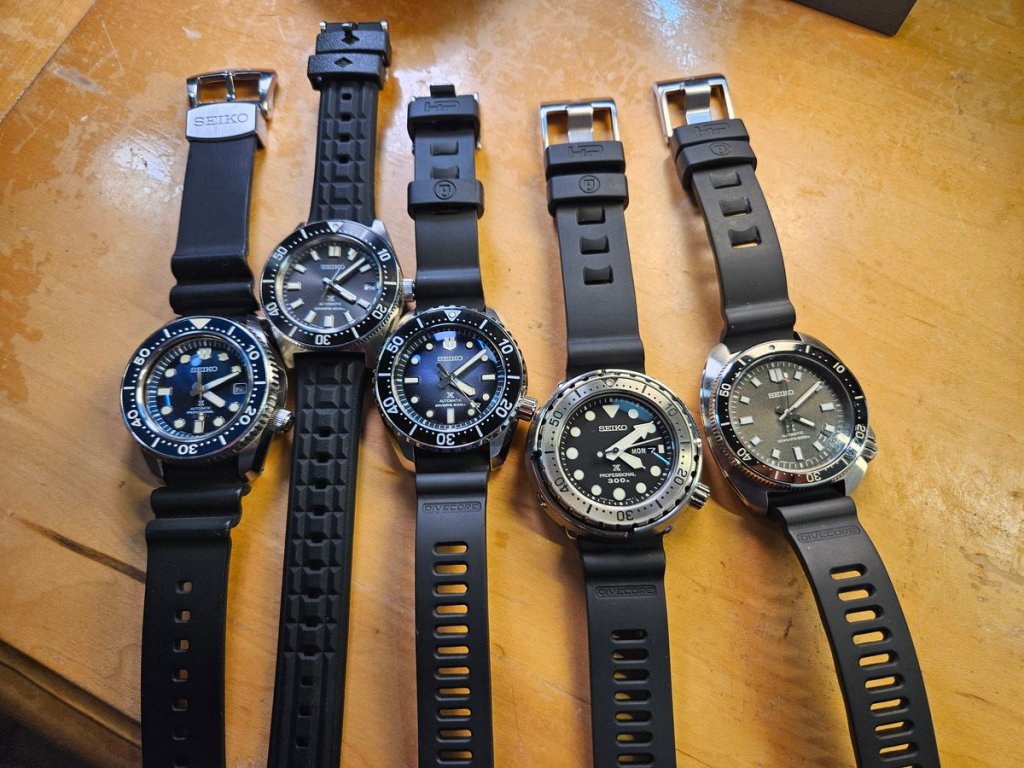
    This revelation sheds light on my watch obsession. It helps me realize that acquiring a watch in most cases is a bitter letdown. A $3,000 watch on the wrist is like a Tinder date at Denny’s: out of place and super embarrassing. 

    I’ve worn $5,000 watches while taking my daughters to YogurtLand and I’ve said to myself, “Dude, you’ve lost the plot.”

    How did I get here with expensive watches that I wear when I’m buying pretzels and diet soda at Target?

    And then I realize. The same drive to focus on Camry-Accord comparisons is the same drive that makes me do “timepiece research.”  Watching my fellow timepiece obsessives drool over bezels and lume shots is the real high. That’s what lights me up. That’s what gets the adrenaline surging through my veins. 

    I’ve spent years confusing consumer acquisition with personal transformation. Getting this thing or that thing will change me inside. I want to be courageous, dignified, courteous, disciplined, fit, and healthy. A watch can’t redeem me. It can’t make me whole. It can’t make me the person I wish I were. Not once have I ever put a new watch on my wrist, gave my wife a wrist shot, and said, “Look, honey, I’ve achieved a metamorphosis.”

    She’ll just look at me and say, “Dude, clean the leaves out of the rain gutters.”

    The material thing in my hands is a letdown because what I really want is the chase and the intense focus. The glorious plunge down a rabbit hole lined with brushed stainless steel and leather-wrapped dashboards. My consumerism isn’t about consumption—it’s about cultivating a state of intense obsession that drowns out the shrieking absurdity of modern life.

    So no more mistaking adrenaline for fulfillment. No more clicking “Buy Now” hoping for transcendence in a shipping box. 

    I’ll keep researching. That’s my Prozac. That’s my monastery. 

    But buying something has proven to be a fool’s errand. And if doing so-called research inflames my consumer appetites, then I should probably put my foot on the brakes when it comes to the research because it can be a prelude to making a purchase I don’t want to make.

    Let me give you an analogy. Let’s say you’re back in high school and you’re at the high school dance, but your girlfriend isn’t there because she’s on a ski trip. While bored at the dance, your ex shows up. She looks more beautiful than you remember her. She approaches you and asks you to dance. “Nothing will happen,” she says. “It will be completely innocent.” You dance with her and something happens. 

    That’s what watch research is like. You tell yourself the research is innocent. You’re just reading forums. Watching a video or two. Maybe checking inventory. 

    But then you wake up and you’re shopping at Target with a $5,000 watch on your wrist and you feel both embarrassed and ashamed.

    Doing research on watches is like having that dance with your ex-girlfriend: Something is going to happen. And it’s not going to be pretty. 

    Have a wonderful day, everyone. Don’t forget to smash that Like button of your soul.

  • If Cormac McCarthy Wrote a Movie Treatment for The Beatles’ “The Long and Winding Road.” 

    If Cormac McCarthy Wrote a Movie Treatment for The Beatles’ “The Long and Winding Road.” 

    FADE IN:

    A road. It winds through the wastes like a serpent that forgot its own name. Cracked earth on either side. Fence posts like grave markers. Vultures in the sky, circling nothing in particular, just keeping warm. A man walks it. His boots are flayed open. His eyes are sunburned. His soul is a blister dragging itself behind him.

    His name is Lyle. Or maybe Thomas. The script never says. Doesn’t matter. He’s every man who ever wrote a love letter in blood and mailed it into the void.

    He is looking for her. She has no name, just a shape in the distance, a memory braided from perfume and last words. She left him. Maybe twice. Maybe more. He kept the door open. She never knocked.

    The road has been long. Winding. Bleak. It led him through dead towns and ghost motels. Once he stayed in a place where the concierge was a buzzard and the minibar held only regret.

    He speaks not. The road speaks for him. It says:

    Every fool must follow something. You picked hope. Bad draw.

    Flashbacks flicker: A woman, face soft as moonlight, eyes like unpaid debt. She tells him she’s leaving. He says he’ll wait. She laughs. That’s the last thing she gives him. Her laughter. Acid-bright and final.

    Along the road he meets others—pilgrims of delusion.

    One man rides a shopping cart filled with old love songs on cassette.

    One woman sews wedding dresses for brides that never were.

    One child sells maps to places that no longer exist.

    They all walk. They all believe the road leads somewhere. It don’t.

    Eventually, Lyle comes upon a house at the end of the road. It is the house. Her house. Or what’s left of it. The windows are boarded. The door is gone. Inside, just dust, a broken phonograph, and a bird trapped in the chimney, fluttering against the soot.

    He kneels.

    Not to pray. To listen.

    There’s no music. No answer. Only wind. And the bird’s soft thump, thump, thump.

    He lies down. The road curls around him like a noose.

    FADE TO BLACK.

    The final line scrolls in silence:

    Love didn’t leave. It just stopped answering the door.

  • Old Money, New Misery: My Southern Charm Obsession

    Old Money, New Misery: My Southern Charm Obsession

    Yes, I’m hooked—addicted, really—to Southern Charm, Bravo’s televised safari through Charlotte, South Carolina’s aristocratic swamp of ennui, vanity, and monogrammed dysfunction. Most of the men are local fixtures: old money, old habits, old egos. They drift through their curated lives like shirtless Gatsby extras, tumbling into affairs, start-up flops, and half-baked rebrands of their own manhood—usually involving whiskey, dubious real estate ventures, and “branding consultants” who charge $8,000 to tell them to get a podcast. They aren’t villains exactly—there’s a flicker of decency beneath the smugness—but they are prone to recreational cruelty. Boredom gives their mischief a sadistic edge. Monogamy is a punchline. Direction is a punch-drunk memory. They’re trapped in a gilded cage of their own entitlement, slouching toward irrelevance with cocktails in hand. For the most part, they are a cast of man-child babies performing businessman cosplay.

    The women, in contrast, seem genetically engineered for composure, ambition, and unearned patience. While the men unravel like overpriced cable-knit sweaters, the women balance jobs, goals, and the emotional labor of pretending to be intrigued by yet another man-child’s whiskey brand. They hold the show together. They’re smarter, sharper, and infinitely more emotionally competent. Frankly, they deserve their own spin-off where they leave the men behind and conquer the Southeast in blazers and heels.

    And presiding over this high-society soap opera like a Southern Sphinx is Grand Matriarch Patricia. She doesn’t walk—she presides. Draped in silk and judgment, she rules from her settee with a cocktail in one hand and a butler at her heels. Her hobbies include throwing theme parties for her yapping purse-dogs, matchmaking with surgical precision, and purchasing $30,000 gold elephants out of sheer boredom. She’s not a character; she’s a living monument to genteel tyranny. Watching her is like watching Downton Abbey if it were sponsored by bourbon and Botox.

    Honestly? The show makes me want to move to Charlotte. The humid rain gives me Florida flashbacks. The homes are plush, the restaurants look sinfully inviting, and every time I watch Southern Charm, I find myself daydreaming of strolling through the city in linen pants, pretending I too have nothing better to do than flirt, sip, and emotionally combust in a well-upholstered room.

  • Love Is Dead. There’s an App for That

    Love Is Dead. There’s an App for That

    Once students begin outsourcing their thinking to AI for college essays, you have to ask—where does it end? Apparently, it doesn’t. I’ve already heard from students who use AI as their therapist, their life coach, their financial planner, their meal prep consultant, their fitness guru, and their cheerleader-in-residence. Why not outsource the last vestige of human complexity—romantic personality—while we’re at it?

    And yes, that’s happening too.

    There was a time—not long ago—when seduction required something resembling a soul. Charisma, emotional intelligence, maybe even a book recommendation or a decent metaphor. But today? All you need is an app and a gaping hole where your confidence should be. Ozempic has turned fitness into pharmacology. ChatGPT has made college admissions essays smoother than a TED Talk on Xanax. And now comes Rizz: the AI Cyrano de Bergerac for the romantically unfit.

    With Rizz, you don’t need game. You need preferences. Pick your persona like toppings at a froyo bar: cocky, brooding, funny-but-traumatized. Want to flirt like Oscar Wilde but look like Travis Kelce? Rizz will convert your digital flop sweat into a curated symphony of “hey, you up?” so poetic it practically gets tenure. No more existential dread over emojis. No more copy-pasting Tinder lines. Just feed your awkwardness into the cloud and receive, in return, a seductive hologram programmed to succeed.

    And it will succeed—wildly. Because nothing drives app downloads like the spectacle of charisma-challenged men suddenly romancing women they previously couldn’t make eye contact with. Even the naturally confident will fold, unable to compete with the sleek, data-driven flirtation engine that is Rizz. It’s not a fair fight. It’s a software update.

    But here’s the kicker: she’s using Rizz too. That witty back-and-forth you’ve been screenshotting for your group chat? Two bots flirting on your behalf while you both sit slack-jawed, scrolling through reality shows and wondering why you feel nothing. The entire courtship ritual has been reduced to a backend exchange between language models. Romance hasn’t merely died—it’s been beta-tested, A/B split, and replaced by a frictionless UX flow.

    Welcome to the algorithmic afterlife of love. The heart still wants what it wants. It just needs a login first.

  • The Lion Man

    The Lion Man

    I recently had a dream that put me face to face with evil—not the metaphorical kind, not garden-variety wickedness or tax-season despair. No, this was evil with a proper noun. The Lion Man. A creature of mythic malevolence, stitched together from nightmares and paranoia, and now inexplicably headlining a lecture in a packed auditorium.

    I was in the front row, naturally—because why wouldn’t my psyche give me VIP seating for its own unraveling?

    Onstage stood the Lion Man: nearly seven feet tall, dressed in a powder-blue gangster suit that shimmered with the kind of menace only polyester can summon. His face was unmistakably leonine, all fangs and symmetry, framed by a magnificent, thick mane that looked equal parts MGM mascot and Old Testament prophet gone feral. His eyes—icy blue and depthless—held the kind of hatred you don’t recover from. Looking into them felt like staring at the sun: too much exposure and you’re permanently damaged.

    He gripped a lectern and delivered a furious, gesticulating sermon, his arms slicing through the air like cleavers. But I couldn’t hear a word. Not one syllable. His mouth moved—angrily, emphatically—but all I heard was a dark, atonal soundtrack swelling behind him, as if his words existed in a frequency my soul refused to translate.

    Then, things got worse.

    At some invisible signal—maybe a silent scream—several people wheeled a phone booth onto the stage. It had the sad, sterile shine of a prop pulled from a David Lynch nightmare. The Lion Man stepped inside. The roof slid open like the lid of a cursed urn, and animals—real, living animals—were dropped in from above.

    What followed was carnage. He devoured them all. Cows, pigs, zebras, horses, dogs, cats. No hesitation. No remorse. I could hear the crunching—those surgically sharp teeth pulverizing bone like brittle kindling. One by one, their skeletons were spat out from the phone booth like nightmarish confetti. I sat paralyzed as femurs and ribs rained down, the floor littered with vertebrae and splintered jaws.

    When it was over, the Lion Man stepped out casually, as if he’d just wrapped a press conference. He dusted bits of fur and sinew off the lapel of his gleaming suit. Then he looked at me.

    No, into me.

    Our eyes locked. I wanted to recoil, hide, burst into flame—anything but be seen by that gaze. But I was frozen, a slab of pure terror, incapable of blinking. He stared at me as if to say, You’re next.

    I woke up at 4 a.m., choking on dread. But the dream hadn’t entirely ended. I could feel him in the room. He was sitting on the edge of my bed. Not metaphorically. Not symbolically. He was there—massive, radiating cold, breathing slowly. The terror was so complete I couldn’t move, couldn’t even gasp for air. It felt like being buried under ice.

    Then—tap tap tap.

    I turned my head, barely.

    Outside the window was Gravefeather—the crow. My familiar friend. My unsolicited spirit guide. He was perched on the sill, eyes glinting with that uncanny, measured intelligence. He tapped once more.

    The Lion Man noticed. And then he vanished—dissolved like fog in sunlight. Just like that. Gone.

    Gravefeather and I locked eyes. No theatrics. No nods. Just understanding.

    “Thank you,” I whispered aloud, the paralysis receding. Gravefeather paused a beat longer, then flapped into the night, leaving me shaken, grateful, and completely unable to sleep again.

  • Breaking Up with the Big Apple: Lena Dunham’s Urban Exorcism

    Breaking Up with the Big Apple: Lena Dunham’s Urban Exorcism

    Lena Dunham once burst onto the pop culture scene like a glitter bomb in a library—loud, impossible to ignore, and slightly out of place. As the wunderkind creator and star of Girls, she personified a certain species of early-2010s Brooklynite: neurotic, navel-gazing, and armed with a liberal arts degree and a vape pen. Her character, Hannah Horvath, declared herself the voice of her generation—or at least a voice of a generation—and we believed her, for better or worse. Adam Driver rode shotgun to stardom on the back of that HBO juggernaut, but Dunham, after a brief and blazing ascent, seemed to evaporate into a fog of personal crises, health issues, and public backlash.

    And then—poof—she was gone.

    Now, Dunham reappears in the pages of The New Yorker with a lyrical breakup letter to New York City, a place that once ran through her veins like overcaffeinated blood. Titled “Why I Broke Up With New York,” the essay chronicles her disillusionment with the urban cathedral she once helped mythologize. Born to an artsy Manhattan clan, she was baptized in brownstones and indie bookstore readings. But the signs of incompatibility showed early: by fourth grade, she needed therapy and anti-anxiety meds. The city wasn’t just fast—it was feral. The subway was a sensory mugging. Noise, chaos, and crowds ganged up on her nervous system. Her sanctuary was a loft bed, stacked high with books and lined with silence.

    That Dunham became the face of NYC hipsterdom is an irony she doesn’t miss. Girls was a love letter to New York in the same way a therapy session is a love letter to your absentee father. After the show ended, so did her patience. She fled to Los Angeles, then Wales—yes, Wales—and finally landed in London, which offered just enough cosmopolitan energy without the aggressive swagger of Manhattan. London was like New York after a long exhale.

    What Dunham’s essay ultimately embraces is self-acceptance. Breaking up with New York doesn’t mean she failed. It just means she outgrew a place that never really fit. And for those who see New York as a mythic proving ground for artists, she offers a bracing rebuttal: it’s also a place that can grind your soul into subway soot. There’s no shame in walking away from an abusive relationship—even if that relationship is with a city that other people treat like a religion.