Tag: romance

  • INTERROGATING THE ALTER EGO OF RACHEL BLOOM IN CRAZY EX-GIRLFRIEND

    INTERROGATING THE ALTER EGO OF RACHEL BLOOM IN CRAZY EX-GIRLFRIEND

    Rachel Bloom weaponizes her alter ego, Rebecca Bunch, to dissect her neuroses with surgical precision, laying bare her obsessions, compulsions, and complete disregard for boundaries. Rebecca isn’t just self-destructive—she’s a human wrecking ball, alienating friends, terrifying acquaintances, and steamrolling her own well-being with reckless abandon. And yet, despite all the chaos, she remains irresistibly lovable, armed with good intentions and a heart too big for her own good.

    Rebecca is a whip-smart New York attorney drowning in success-induced existential despair when fate—or perhaps something more deranged—intervenes. A chance sighting of her old summer camp crush, Josh Chan, sends her into a tailspin of romantic delusion. Suddenly, the only logical course of action isn’t therapy, self-reflection, or even a stiff drink—it’s packing up her entire life and moving to West Covina, California, in pursuit of a man who barely remembers her. What follows is less a fairytale romance and more an operatic descent into obsession, complete with full-blown musical numbers choreographed straight from the fevered depths of her subconscious.

    Once in West Covina, Rebecca lands in a delightfully dysfunctional law firm, where her brilliance is only matched by her ability to make everyone around her deeply uncomfortable. She barrels through life like a caffeinated hurricane, terrifying innocent bystanders with her intellect and intensity, all while chasing an idea of love that exists only in her own head. The show’s most poignant relationship, however, isn’t a romantic one—it’s her friendship with Paula, a sharp-witted, no-nonsense co-worker and mother who, in many ways, fills the maternal void in Rebecca’s life. Paula, trapped in the drudgery of domesticity, finds a thrilling (and slightly concerning) outlet in Rebecca’s increasingly unhinged escapades, turning their dynamic into the show’s emotional anchor.

    At its best, Crazy Ex-Girlfriend thrives on this friendship, an odd yet deeply affecting bond between two women clinging to each other for meaning and validation. But by season four, the show stumbles, bogged down by meandering storylines and an inexplicable reluctance to lean into its greatest strength—Rebecca and Paula’s relationship. The final season drags like an overlong curtain call, but even its missteps can’t erase the brilliance of what came before. At its core, Crazy Ex-Girlfriend is an incisive, darkly hilarious exploration of self-sabotage, redemption, and the uphill battle of getting out of your own way.

  • An Unexpected Love Story in The Great

    An Unexpected Love Story in The Great

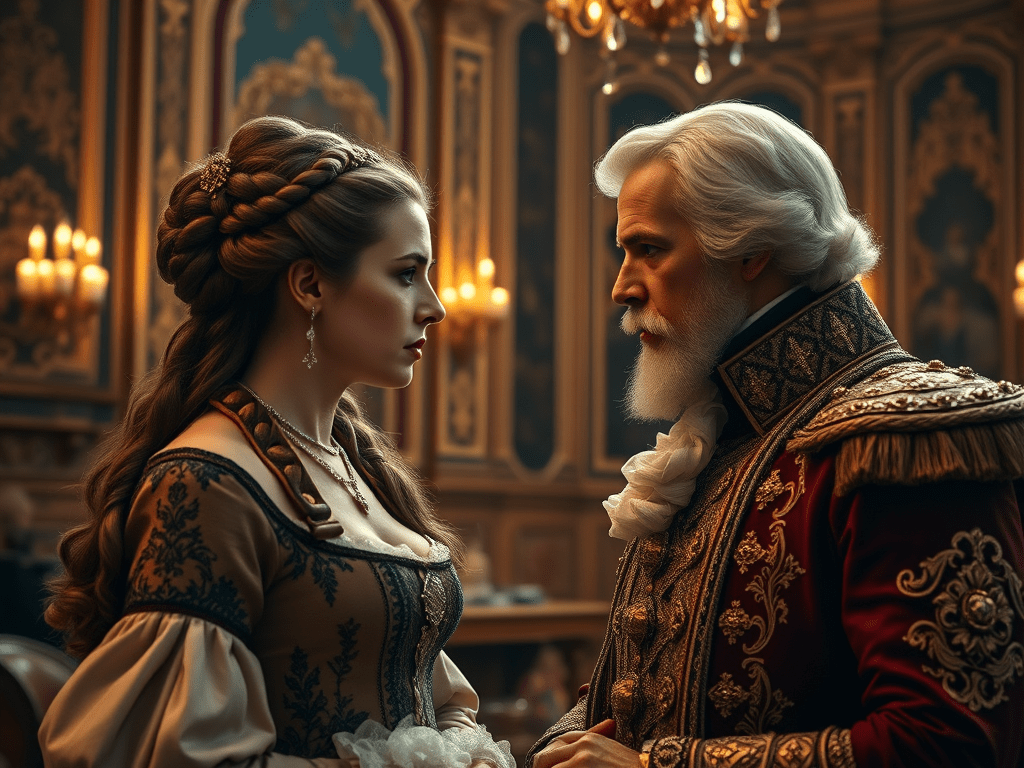
    If you had told me to watch a period drama about the turbulent love life of Peter III and Catherine the Great—one mostly confined to the gilded chambers of a Russian palace—I would have laughed, pointed to my rain gutters, and insisted I had more pressing matters to attend to. And yet, The Great did something miraculous: it took that seemingly dreary premise and spun it into one of the sharpest, most unexpected love stories I’ve ever seen on television.

    Elle Fanning’s Catherine enters the series practically vibrating with resentment, married off to a narcissistic, gluttonous man-child of an emperor played by Nicholas Hoult, whose Peter III treats ruling Russia like an all-you-can-eat buffet of debauchery. He’s selfish, crude, and revels in excess, while she’s a self-serious, idealistic reformer, convinced she’s been cursed with a fool for a husband. On paper, theirs should be a tale of mutual disdain, and indeed, for a while, it is. But then something bizarre and wonderful happens: they fall in love—not with doe-eyed, saccharine declarations, but in a way that feels both tragic and inevitable. They fall in love despite themselves.

    Peter, the arrogant peacock, starts showing unexpected flashes of vulnerability, betraying an almost boyish need to be seen and understood. Catherine, the self-righteous revolutionary, finds herself drawn to his wit, his strange charm, and his surprising capacity for change. They spar like intellectual gladiators, their verbal fencing as much foreplay as it is battle. This is where The Great sets itself apart from every predictable romance that’s ever clogged up a TV screen: the dialogue—crafted with Tony McNamara’s signature razor-sharp wit—isn’t just ornamental, it’s the very foundation of their attraction. They fall in love through language, through their relentless, biting exchanges that crackle with intelligence, irony, and reluctant admiration.

    Over three seasons, The Great delivers the most gut-wrenching, wickedly funny, and beautifully tragic love story I’ve ever seen—a romance built on war, wit, and the deeply human, utterly irrational act of loving someone against your better judgment.