Tag: social-media

  • “I Am the Frogman”: The Last Shout Before the Door Seals

    “I Am the Frogman”: The Last Shout Before the Door Seals

    I’ve spent more than a decade documenting my watch obsession on YouTube—a pursuit that begins as hobby and ends, if you’re not careful, as behavioral conditioning. You think you’re making videos. You’re actually being trained. The algorithm dispenses rewards and punishments with clinical indifference: views, comments, silence. You adapt. Of course you adapt. That’s the job now.

    The trouble is that the algorithm has no interest in truth, balance, or restraint. It prefers spectacle. It rewards the emotional range of a teenager who’s just discovered caffeine: hyperbole, dread, euphoria, FOMO, regret—delivered with the urgency of a man announcing the end of civilization via bezel insert. You wake up one morning and discover you’ve succumbed to Algorithmic Persona Drift—a slow mutation in which your public self becomes a louder, shinier, more hysterical version engineered for attention rather than accuracy.

    Feed it, and it feeds you back. The cycle tightens. Every video must be more decisive, more apocalyptic, more “this changes everything.” You produce manifestos. You narrate epiphanies. You analyze your own obsession with the intensity of a man dissecting his own heartbeat. The result is predictable: you become a caricature of yourself—recognizable, marketable, and faintly absurd.

    If you can tolerate that, the system will reward you. The numbers rise. The revenue trickles, then flows. You build a small empire out of controlled exaggeration. But there comes a moment—quiet, unwelcome—when you no longer recognize the man delivering the lines. The performance has outgrown the person. At that point, the decision presents itself with unpleasant clarity: keep feeding the machine and let it finish the job, or step away and salvage what remains of your voice.

    That’s one exit.

    The other is less dignified. You don’t leave; you are expelled. The causes are familiar—burnout, self-disgust, ennui, health—but the most decisive is also the least negotiable: age. You wake up one day and realize the tempo has changed. The rhythms that once animated you now sound distant, like music leaking from another room. The new release, the hyped drop, the celebrity of the week—none of it lands with the old voltage. Mortality has entered the conversation and lowered the volume.

    You try to resist. You tell yourself enthusiasm is a choice. But the gap widens anyway. You find yourself oddly relieved that you no longer care about bracelet articulation or dial gradients or the fever dream that the “perfect collection” is one purchase away. The brotherhood reveals itself for what it always was: half fellowship, half support group. You no longer feel the urge to compare scars from impulse buys, to laugh at the madness, to whisper—half-serious, half-hopeful—that this watch will finally cure you.

    For me, the separation was unmistakable. Twenty years dissolved into a blur of rotating bezels and contingency divers. Then, at sixty-three, something tapped my shoulder. Not a crisis. A correction. The obsession didn’t die; it simply lost its authority. Desire dimmed, replaced by a quiet recognition that watches are exquisitely engineered ways of losing to time.

    The feeling calls to mind a scene from Battlestar Galactica: a traitor sealed behind glass, the airlock hissing, the crew watching with solemn finality. Not melodrama—procedure. That’s aging. Not tragic, not cruel—inevitable. At some point, those still inside the illusion of endless tomorrows begin to edge away from those who have seen the horizon contract.

    A pane descends. It isn’t hostile. It’s accurate.

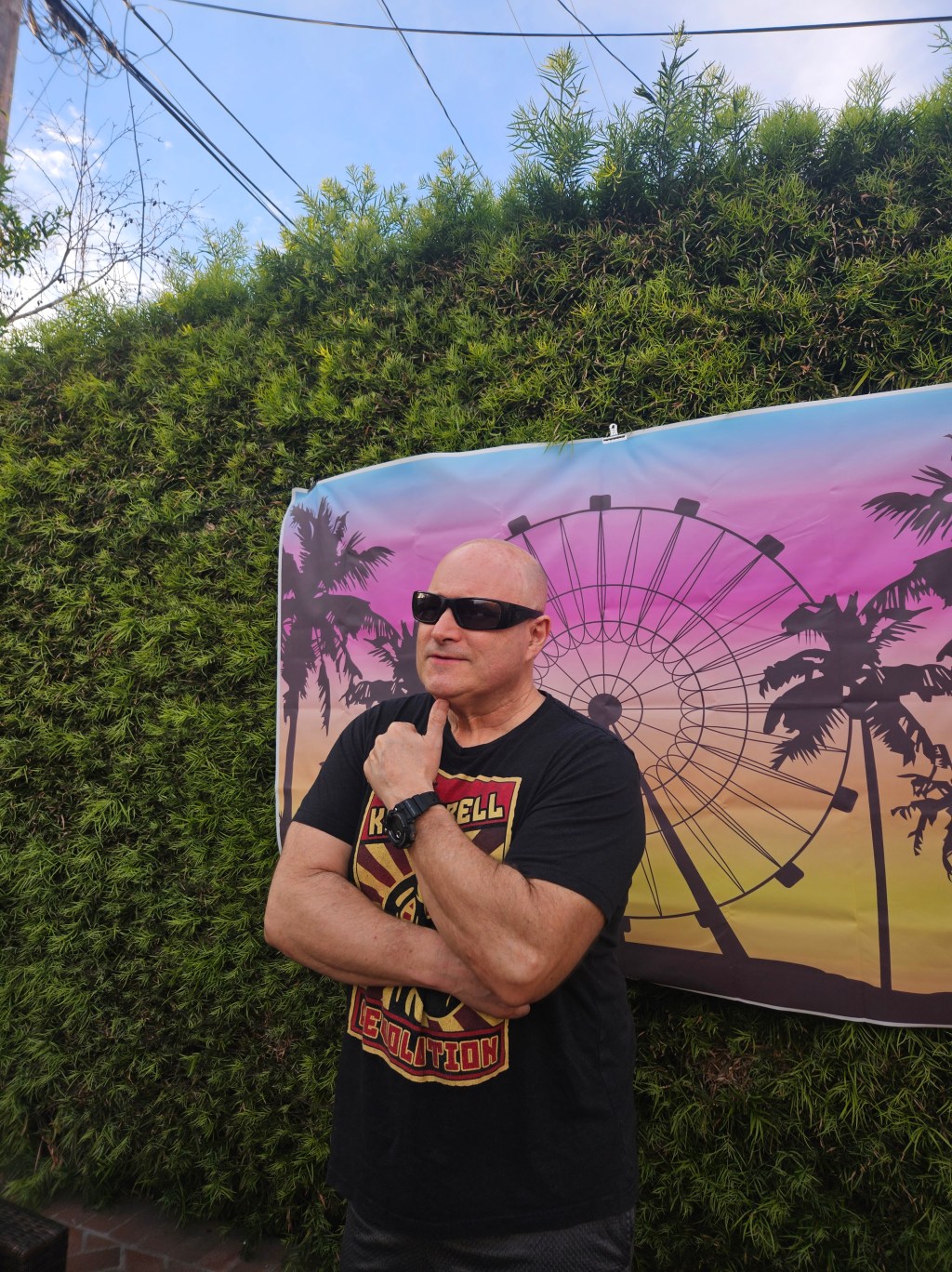
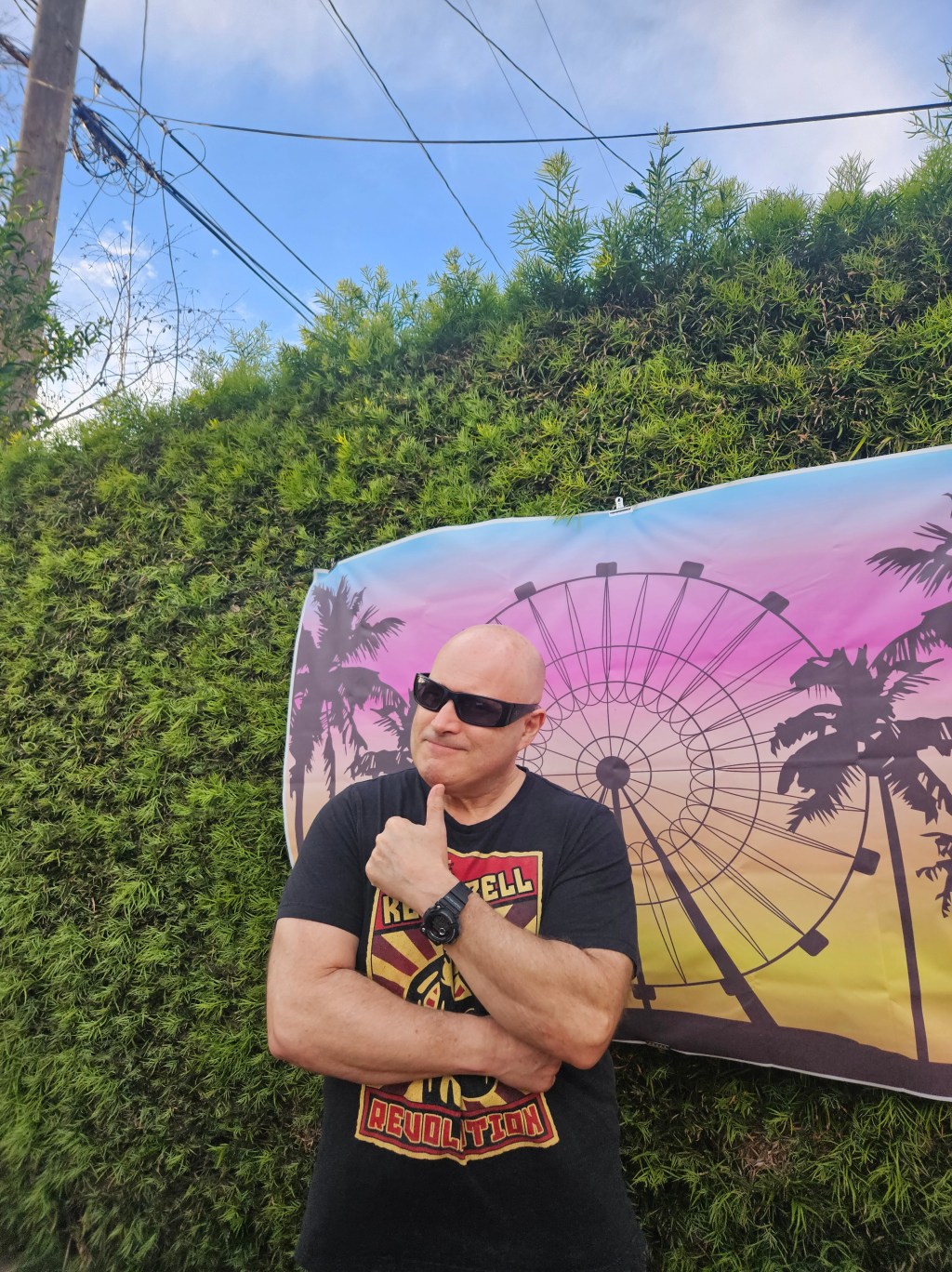
    You tap the glass, wave, try to rejoin the cockpit of youthful urgency. You even lift your wrist—your hulking G-Shock Frogman—and make your case. “Look,” you want to say, “I’m still in it.” But the seal has set. Reentry is not part of the design.

    What remains is less dramatic and more demanding: dignity. Accept the season you’re in. Build meaning instead of inventory. Offer something useful to those still racing ahead, even if they don’t yet see why it matters. They will. Everyone does, eventually.

    The algorithm fades. The noise recedes.

    And you are left, at last, with a quieter, harder question: not what you want next—but who you intend to be without the applause.

  • Famous for Nothing: The Rise of Validation Maximalism

    Famous for Nothing: The Rise of Validation Maximalism

    In the early 2000s as the media landscape was changing, Paris Hilton was known to be famous for being famous. Her appeal wasn’t the substance behind the glitter but the glitter itself, to borrow a metaphor from F. Scott Fitzgerald’s short story “Winter Dreams.” This condition of being famous for being famous created FOMO in a new generation who wanted to follow Hilton’s path. This desire to be famous for being famous is a pathology, an infantile dream of instant validation and attention without having any substance. A life of meaning is disdained while a life of confectionary hype becomes the dopamine hit for a child. 

    This desire for fame without doing anything other than being famous became part of a new era, the Age of Validation Maximalism: the compulsive pursuit of attention, recognition, and social proof as ends in themselves, where the quantity of admiration replaces the quality of accomplishment.

    What Hilton embodied as a cultural anomaly has since been industrialized by platforms like Instagram and TikTok. Their algorithms do not reward substance; they reward engagement velocity—clicks, likes, shares, watch time. In this system, meaning is irrelevant unless it can be measured, and what can be measured is almost always surface-level reaction. 

    Validation Maximalism becomes not just a personal pathology but a structural inevitability. The algorithm functions like a slot machine for attention: it amplifies whatever triggers the quickest response, whether that is outrage, titillation, or empty spectacle. Over time, users internalize this logic, optimizing themselves for visibility rather than substance. The result is a feedback loop in which the pursuit of validation reshapes identity itself, producing a generation that doesn’t just seek attention—it is engineered to depend on it.

    Because content creators emphasize Validation Maximalism over intellectual rigor, we consume “information” in the realm of fitness, consumer goods, culture, and politics that is seriously compromised because it is fine-tuned to the algorithm more than accuracy and nuance. Consuming this compromised content, we exist in a symbiotic relationship with the content creators. We exist in a sort of algorithmic co-dependency: a feedback loop in which creators optimize content for engagement metrics while audiences reward that optimization with clicks and attention, locking both parties into a system where visibility outranks truth. Such a co-dependency impedes our growth and infantizes us.

    Infantilization is the predictable outcome of this arrangement: a steady shrinking of our cognitive and moral range until we prefer ease over effort and reaction over reflection. When information is engineered for instant reward, we lose the habit of sustained attention; nuance feels like friction, and we avoid it. Our judgment softens into reflex—likes, shares, quick takes—while the harder work of weighing evidence and tolerating ambiguity atrophies. We become dependent on external cues to tell us what to think and feel, outsourcing discernment to the feed.

    Over time, this produces a citizen who is easily steered, impatient with complexity, and suspicious of anything that doesn’t deliver a fast emotional payoff. The result isn’t just weaker thinking; it’s a diminished self—one trained to consume rather than to understand, to react rather than to reason.

    Wanting to be famous for being famous looks harmless at first—a glossy ambition, a shortcut to attention—but it functions like a cultural solvent. When visibility becomes the highest good, every other standard—truth, craft, character—gets thinned to fit the feed. Institutions begin to mirror the metric: news chases clicks, fitness chases spectacle, politics chases virality. Individuals follow suit, curating selves for applause rather than substance, measuring worth in impressions rather than impact. The result is a society that knows how to amplify but not how to evaluate, quick to react and slow to understand. Treating fame as an end in itself isn’t just a personal quirk; it’s a pathology that scales, replacing meaning with metrics and leaving us loud, visible—and curiously empty.

  • The Year of No Watches: When a Channel Chooses Integrity Over the Algorithm

    The Year of No Watches: When a Channel Chooses Integrity Over the Algorithm

    You are a YouTuber whose world runs on watches. You talk about them, film them, arrange them under flattering light, and dream about the next one before the current one has even settled on your wrist. New arrivals are the oxygen of the channel. Unboxings pay the bills. Acquisition is the content engine.

    And that’s exactly the problem.

    At some point, you realize that if you want to stay honest—with yourself and with your viewers—you need to stop buying watches for a year.

    Not slow down.
    Not “be more selective.”
    Stop.

    What you need is the horological equivalent of a metabolic reset. A fast. A purge. A period of spiritual autophagy in which the toxins of hype, comparison, and compulsive novelty are allowed to clear out of your system. You know the risks. The algorithm prefers excitement. Viewers love new toys. Sponsors like movement. A quiet year may cost you clicks, growth, and easy revenue.

    But integrity rarely trends.

    So you adopt the discipline of Kafka’s Hunger Artist and deny yourself the very thing your audience expects you to crave. In this world, the practice has a name: Horological Autophagy—a deliberate refusal to acquire, designed to cleanse the mind of consumption reflexes and restore the ability to judge watches without the intoxicating influence of “the next one.”

    This is more than restraint. It is a public commitment: a Watch Hiatus. A creator’s declaration that credibility matters more than novelty, that thought will replace acquisition, and that authenticity will carry the channel even if the metrics wobble. During this period, the content shifts. Fewer arrivals. More reflection. Less stimulation. More judgment. The organizing principle is no longer “What’s new?” but “What actually matters?”

    To outsiders, the move may look like deprivation. It isn’t. It’s rehabilitation. Constant buying dulls appreciation the way constant noise dulls hearing. Remove the flow of new watches, and something unexpected returns: patience, clarity, and the ability to enjoy what you already own without immediately wondering what should replace it.

    The point of the fast is not suffering. The point is recovery.

    And the deeper shift is this: the channel stops serving the appetite and starts serving the audience. Traffic, sponsorship leverage, and the small intoxication of self-importance move to the background. The mission changes from feeding desire to strengthening judgment.

    Because the strongest signal a creator can send is not enthusiasm.

    It’s restraint.

    So go forward without the safety net of new purchases. Let the numbers fluctuate. Let the algorithm frown. Choose substance over spectacle, discipline over dopamine.

    The year without buying isn’t a retreat from the hobby.

    It’s the moment you finally take control of it.

  • The Hidden Price of Digital Purity

    The Hidden Price of Digital Purity

    Digital Asceticism is the deliberate, selective refusal of digital environments that inflame attention, distort judgment, and reward compulsive performance—while remaining just online enough to function at work or school. It is not technophobia or a monkish retreat to the woods. It is targeted abstinence. A disciplined no to platforms that mainline adrenaline, monetize approval-seeking, and encourage cognitive excess. Digital asceticism treats restraint as hygiene: a mental detox that restores proportion, quiets the nervous system, and makes sustained thought possible again. In theory, it is an act of self-preservation. In practice, it is a social provocation.

    At some point, digital abstinence becomes less a lifestyle choice than a medical necessity. You don’t vanish entirely—emails still get answered, documents still get submitted—but you excise the worst offenders. You leave the sites engineered to spike adrenaline. You step away from social platforms that convert loneliness into performance. You stop leaning on AI machines because you know your weakness: once you start, you overwrite. The prose swells, flexes, and bulges like a bodybuilder juiced beyond structural integrity. The result is a brief but genuine cleansing. Attention returns. Language slims down. The mind exhales.

    Then comes the price. Digital abstinence is never perceived as neutral. Like a vegan arriving at a barbecue clutching a frozen vegetable patty, your refusal radiates judgment whether you intend it or not. Your silence implies their noise. Your absence throws their habits into relief. You didn’t say they were living falsely—but your departure suggests it. Resentment follows. So does envy. While you were gone, people were quietly happy for you, even as they resented you. You had done what they could not: stepped away, purified, escaped.

    The real shock comes when you try to return. The welcome is chilly. People are offended that you left, because leaving forced a verdict on their behavior—and the verdict wasn’t flattering. Worse, your return depresses them. Watching you re-enter the platforms feels like watching a recovering alcoholic wander back into the liquor store. Your relapse reassures them, but it also wounds them. Digital asceticism, it turns out, is not just a personal discipline but a social rupture. Enter it carefully. Once you leave the loop, nothing about going back is simple.

  • The Expiration Date of the Fitness Influencer

    The Expiration Date of the Fitness Influencer

    Parasocial Fatigue

    noun

    Parasocial Fatigue describes the emotional and cognitive exhaustion that sets in when an audience becomes overexposed to an influencer’s performative intimacy and relentless self-presentation. What begins as a one-sided relationship built on usefulness, inspiration, or trust curdles as the influencer’s need for attention, validation, and monetization becomes increasingly visible. The constant uploads, recycled insights, manufactured urgency, and naked thirst for engagement erode the illusion of authenticity that sustained the bond in the first place. Viewers no longer feel informed or inspired; they feel harvested. At that point, familiarity turns to irritation, admiration hardens into disdain, and the influencer’s presence in the feed triggers avoidance rather than curiosity—a quiet severing of a relationship that was never mutual to begin with.

    In the beginning, your favorite influencer feels like a gift. They offer sensible advice on nutrition, a workout routine that doesn’t insult your intelligence, a body that seems to testify to discipline rather than sorcery. You follow them in good faith. For a while, the content delivers. Then the expiration date quietly approaches. The useful insights thin out, replaced by a slurry of hype, urgency, and alarmist drivel—“You’re poisoning yourself unless you stop eating this one food today.” Clickbait metastasizes. The signal is buried under noise. What once felt like guidance now feels like a carnival barker shouting through a megaphone.

    Eventually you see the machinery. This isn’t a lone truth-teller sharing wisdom from a garage gym; it’s a small content factory with payroll to meet. Ideas are skimmed from journals, stripped of nuance, and polished with influencer saliva until they’re shiny enough to go viral. The real giveaway, though, isn’t the dubious science—it’s the thirst. You can see it in their eyes: the desperation to stay relevant, the exhaustion of feeding the algorithm daily, the hollow confidence of someone trapped in their own posting schedule. The charm collapses. When they appear in your feed now, it’s not curiosity you feel, but a reflexive flinch. Parasocial fatigue sets in, and disdain follows close behind.

  • Algorithmic Grooming and the Rise of the Instagram Face

    Algorithmic Grooming and the Rise of the Instagram Face

    Algorithmic Grooming

    noun

    Algorithmic Grooming refers to the slow, cumulative process by which digital platforms condition users’ tastes, attention, and behavior through repeated, curated exposure that feels personalized but is strategically engineered. Rather than directing users abruptly, the system nudges them incrementally—rewarding certain clicks, emotions, and patterns while starving others—until preferences begin to align with the platform’s commercial and engagement goals. The grooming is effective precisely because it feels voluntary and benign; users experience it as discovery, convenience, or self-expression. Yet over time, choice narrows, novelty fades, and autonomy erodes, as the algorithm trains the user to want what is most profitable to serve. What appears as personalization is, in practice, a quiet apprenticeship in predictability.

    ***

    In Filterworld, Kyle Chayka describes algorithmic recommendations with clinical clarity: systems that inhale mountains of user data, run it through equations, and exhale whatever best serves preset goals. Those goals are not yours. They belong to Google Search, Facebook, Spotify, Netflix, TikTok—the platforms that quietly choreograph your days. You tell yourself you’re shaping your feed, curating a digital self-portrait. In reality, the feed is shaping you back, sanding down your edges, rewarding certain impulses, discouraging others. What feels like mutual interdependence is a one-sided apprenticeship in predictability. The changes you undergo—your tastes, habits, even your sense of self—aren’t acts of self-authorship so much as behavior modification in service of attention capture and commerce. And crucially, this isn’t some neutral, machine-led drift. As Chayka points out, there are humans behind the curtain, tweaking the levers with intent. They pull the strings. You dance.

    The cultural fallout is flattening. When everyone is groomed by similar incentives, culture loses texture and people begin to resemble one another—algorithmically smoothed, aesthetically standardized. Chayka borrows Jia Tolentino’s example of the “Instagram face”: the ethnically ambiguous, surgically perfected, cat-like beauty that looks less human than rendered. It’s a face optimized for engagement, not expression. And it serves as a tidy metaphor for algorithmic grooming’s endgame. What begins as personalization ends in dehumanization. The algorithm doesn’t just recommend content; it quietly trains us to become the kind of people that content is easiest to sell to—interchangeable, compliant, and eerily smooth.

  • Screen Bilinguals and Screen Natives

    Screen Bilinguals and Screen Natives

    Screen Bilinguals

    noun

    Screen Bilinguals are those who remember Pre-Screen Life and Post-Screen Life and can mentally translate between the two. They know what it felt like to disappear into a book without notifications, to wander outdoors without documenting the evidence, and to experience friendship without performance. They may use screens constantly now, but they retain an embodied memory of undistracted attention and uncurated presence. That memory gives them perspective—and often a quiet grief.

    Screen Natives

    noun

    Screen Natives are those who never lived outside the Attention Economy. They have no experiential baseline for pre-digital reading, boredom, or intimacy. For them, screens are not tools but atmosphere. Experience arrives already framed, shareable, and optimizable. Connection is inseparable from capture, and attention has always been contested territory. What Screen Bilinguals experience as loss, Screen Natives experience as reality itself—neither chosen nor questioned, simply inherited.

    ***

    I am reasonably sure that some of the best memories of my pre-screen adolescence would not survive contact with smartphones and social media. They required a kind of reckless presence that today’s technology quietly sabotages. Every summer from 1975 to 1979, my family—along with ten others—made a pilgrimage to Point Reyes Beach, where the Johnsons’ oyster farm supplied what appeared to be bottomless truck beds of shellfish. From noon until sunset, hundreds of us devoured obscene quantities of barbecued oysters dripping with garlic butter and Tabasco, flanked by thousands of loaves of garlic bread and slabs of chocolate cake so moist they bordered on indecent. Ignoring cheerful warnings about nearby great white sightings, we periodically sprinted into the Pacific, then staggered back to the picnic tables, pecs gleaming with saltwater, to resume eating like mythological beings. In the summer of ’78, I told my parents to leave without me and caught a ride home in the bed of a stranger’s truck. Stuffed beyond reason, convinced I was some minor sea god, I lay under the stars with a gang of people I’d met hours earlier, trading delirious stories and watching the universe spin. No one documented a thing. We didn’t track calories, curate moments, or worry about time. Life simply happened to us, and that was enough.

    Those memories now trouble me. Were they the accidental privilege of being screen-bilingual—raised before devices trained us to perform our lives in public? Does being a screen native quietly thin experience itself by insisting everything be captured, filtered, and offered up for consumption? Free from the reflex to mediate, I could disappear into the moment without irony or self-surveillance. Had I grown up with screens, the day would have demanded angles, captions, and metrics. The magic would have curdled under the pressure to perform. The idea that every experience must double as content strikes me as a curse—a low-grade exile from real life, where spontaneity dies not from malice but from documentation.

  • Algovorous

    Algovorous

    Algovorous
    adjective

    Characterized by habitual consumption of algorithmically curated stimuli that prioritize engagement over nourishment. An algovorous person feeds continuously on feeds, prompts, and recommendations, mistaking stimulation for insight. Attention erodes, resilience weakens, and depth is displaced by endless, low-friction intake.

    ***

    You don’t know any other world because you were born inside the Attention Economy. There was no “before” for you—no baseline against which to compare the glow of screens to a quieter, unmonetized mental life. So let me tell you something grim about the system you’ve inherited: it runs on engagement at all costs. Not truth. Not wisdom. Not even pleasure in any deep sense. Just engagement. As Jaron Lanier warns in Ten Arguments for Deleting Your Social Media Account Right Now, the economy works best when it bypasses your higher faculties and plugs directly into the brain’s most primitive circuitry. This is not the part of you that reasons, imagines, or aspires. It’s the reptile brain—the swampy basement where jealousy, envy, FOMO, and schadenfreude slosh around, waiting to be poked with a stick. Stimulate that region long enough and you don’t become thoughtful or fulfilled. You become reactive, agitated, and strangely hungry for more of the same poison.

    The platforms know this. A successful YouTuber doesn’t need insight; he needs targets. Hence the booming genre of downfall porn: endless autopsies of other people’s collapses. Take bodybuilding YouTube, a carnival of oiled torsos and moral rot. Greg Doucette, with his two-and-a-half million subscribers, has perfected the form. His brand is not training wisdom so much as public execution. He thrives on predicting the imminent demise of rival influencers, especially Mike Israetel, whose Renaissance Periodization channel—approaching four million subscribers—shows no interest in collapsing on schedule. That hasn’t stopped Doucette from announcing the funeral. He does it in a tank top, veins bulging, traps flared, voice pitched to a squeaky fury, filleting his subjects like a caffeinated fishmonger. The performance is manic, theatrical, and wildly successful. Rage, it turns out, scales beautifully.

    I’m not a psychiatrist, but you don’t need a medical degree to recognize a toxic loop when you see one. Mental health professionals would likely agree: this is dopamine farming. The audience gets a chemical jolt from watching others stumble while doing nothing to improve their own lives. It’s adrenaline for the bored, envy with a subscription button. In the Attention Economy, toxicity isn’t a bug—it’s the feature. The viewer doesn’t flourish; the algorithm does. You sit there, immobilized, a butterfly pinned to corkboard entertainment, while someone else’s revenue graph climbs. That is the deal on offer: your attention in exchange for distraction from the harder work of becoming a person.

  • The Word of the Year Points to the Collective Loss of Our Minds

    The Word of the Year Points to the Collective Loss of Our Minds

    The Word of the Year is supposed to capture the moment we’re living in—our collective mood, our shared madness. As Amogh Dimri explains in “Rage Bait Is a Brilliant Word of the Year,” we’re no longer defined by reason or restraint but by whatever emotion the attention economy yanks out of us. Dimri reminds us that 2023 gave us rizz and 2024 bestowed brain rot. In other words, when our brains aren’t decomposing from endless scrolling, we’re wide awake and quivering with unhinged outrage. This may explain why I now hate driving more than folding laundry or going to the dentist. The roads are filled with people whose minds seem equal parts rotted and enraged—and the algorithms aren’t helping.

    Dimri cites the Oxford English Dictionary’s definition of rage bait as “online content deliberately designed to elicit anger” in order to goose traffic and juice engagement. An elegant description for something as crude as poking humanity’s collective bruise.

    Critics complain that Oxford’s online voting process indulges the very brain rot it warns us about, but I’m with Dimri. Oxford is right to acknowledge how digital speech shapes culture. Ignoring these terms would be like pretending smog doesn’t count as weather. Rage bait is influential because it packs the whole human condition—weakness, manipulation, and political dysfunction—into two syllables. And, as I’d add, it also produces drivers who treat the road like a demolition derby.

    As for predecessors, rage bait didn’t appear out of thin air. Vince McMahon practically drafted its blueprint decades ago. His wrestling empire ran on kayfabe, where performers wore the mask of rage so long they eventually believed it. Something similar has infected our online discourse. The performance swallowed the performer, and here we are—furious, fragmented, and algorithmically herded into traffic.

  • Today I Gave My Students a Lesson on Real and Fake Engagement

    Today I Gave My Students a Lesson on Real and Fake Engagement

    I teach the student athletes at my college, and right now we’re exploring a question that cuts to the bone of modern life: Why are we so morally apathetic toward companies that feed our addictions, glamorize eating disorders, and employ CEOs who behave like cult leaders or predators?

    We’ve watched three documentaries to anchor our research: Brandy Hellville and the Cult of Fast Fashion (Max), Trainwreck: The Cult of American Apparel (Max), and White Hot: The Rise and Fall of Abercrombie & Fitch (Netflix). Each one dissects a different brand, but the pathology beneath them is the same—companies built not on fabric, but fantasy. For four weeks, I lectured about this moral rot. My students listened politely. Eyes glazed. Interest flatlined. It was clear: they didn’t care about fashion.

    So today, I tried something different. I told them to forget about the clothes. The essay, I explained, isn’t really about fashion—it’s about selling illusion. These brands were never peddling T-shirts or jeans; they were peddling a fantasy of beauty, popularity, and belonging. And they did it through something I called fake engagement—a kind of fever swamp where people mistake addiction for connection, and attention for meaning.

    Fake engagement is the psychological engine of our times. It’s the dopamine loop of social media and the endless scroll. People feed their insecurities into it and get rewarded with the mirage of significance: likes, follows, attention. It’s an addictive system built on FOMO and self-erasure. Fake engagement is a demon. The more you feed it, the hungrier it gets. You buy things, post things, watch things, all to feel visible—and yet every click deepens the void.

    This pathology is not confined to consumer brands. The entire economy now depends on it. Influencers sell fake authenticity. YouTubers stage “relatable” chaos. Politicians farm outrage to harvest donations. Every sphere of life—from entertainment to governance—has been infected by the logic of the algorithm: engagement above truth, virality above virtue.

    I told my students they weren’t hearing anything new. The technologist Jaron Lanier has been warning us for over a decade that digital platforms are rewiring our brains, turning us into unpaid content providers for an economy of distraction. But then I reminded them that as athletes, they actually hold a kind of immunity to this epidemic.

    Athletes can’t survive on fake engagement. They can’t pretend to win a game. They can’t filter a sprint or Photoshop a jump shot. Their work depends on real engagement—trust, discipline, and honest feedback. Their coaches demand evidence, not illusion. That’s what separates a competitor from a content creator. One lives in the real world; the other edits it out.

    In sports, there’s no algorithm to flatter you. Reality is merciless and fair. You either make the shot or you don’t. You either train or you coast. You either improve or you plateau. The scoreboard has no patience for your self-image.

    I contrasted this grounded reality with the digital circus we’ve come to call culture. Mukbang YouTubers stuff themselves with 10,000 calories on camera for likes. Watch obsessives blow through their savings chasing luxury dopamine. Influencers curate their “personal brand” as if selfhood were a marketing campaign. They call this engagement. I call it pathology. They’re chasing the same empty high that the fast-fashion industry monetized years ago: the belief that buying something—or becoming something online—can fill the hole of disconnection.

    This is the epistemic crisis of our time: a collective break from reality. People no longer ask whether something is true or good; they ask whether it’s viral. We’re a civilization medicated by attention, high on engagement, and bankrupt in meaning.

    That’s why I tell my athletes their essay isn’t about fashion—it’s about truth. About how human beings become spiritually and mentally sick when they lose their relationship to reality. You can’t heal what you refuse to see. And you can’t see anything clearly when your mind is hijacked by dopamine economics.

    The world doesn’t need more influencers. It needs coaches—people who ground others in trust, expertise, and evidence. Coaches model a form of mentorship that Silicon Valley can’t replicate. They give feedback that isn’t gamified. They remind players that mastery requires patience, and that progress is measured in skill, not clicks.

    When you think about it, the word coach itself has moral weight. It implies guidance, not manipulation. Accountability, not performance. A coach is the opposite of an influencer: they aren’t trying to be adored; they’re trying to make you better. They aren’t feeding your addiction to attention; they’re training your focus on reality.

    I told my students that if society is going to survive this digital delirium, we’ll need millions of new coaches—mentors, teachers, parents, and friends who can anchor us in truth when everything around us is optimized for illusion. The fast-fashion brands we study are just one symptom of a larger disease: the worship of surface.

    But reality, like sport, eventually wins. The body knows when it’s neglected. The mind knows when it’s being used. Truth has a way of breaking through even the loudest feed.

    The good news is that after four weeks of blank stares, something finally broke through. When I reframed the essay—not as a takedown of fashion, but as a diagnosis of fake engagement—the room changed. My athletes sat up straighter. They started nodding. Their eyes lit up. For the first time all semester, they were engaged.

    The irony wasn’t lost on me. The essay about fake engagement had just produced the real kind.