Tag: style

  • I Am a Citizen of Paradise

    I Am a Citizen of Paradise

    Last night after dinner, we were sitting at the kitchen table debating whether to try a new Thai ice cream shop at the mall when my wife informed me that I would first have to change my clothes.

    The tank top had to go.

    She explained that my tropical tank tops were perfectly acceptable within the privacy of our home, but exposing innocent members of the public to them was an entirely different matter.

    Then came the indictment.

    “You have a uniform,” she said.

    She was right.

    Twelve months a year I rotate through the same ensemble: a brightly colored tank top emblazoned with Miami or Maui, gym shorts, and flip-flops. It doesn’t matter whether the calendar says July or January. My wardrobe insists that I am perpetually fifty yards from a beach.

    I cannot dispute the charge.

    Somewhere along the way, this ceased being casual clothing and became an identity.

    I suspect my wardrobe reveals more about my aspirations than my fashion sense. For years I have fantasized about retirement, tropical climates, and that peculiar feeling of transcendence that overtakes me whenever I stand in a warm tropical rain. There is something about those moments—the humid air, the gentle rain, the lush vegetation—that dissolves the ordinary boundaries of time. Eternity no longer feels like a distant theological concept but like a change in the weather.

    Perhaps that is why I continue to dress as I do. Deep down, I am still that eight-year-old boy on Venado Court, pedaling his bicycle through a warm summer drizzle, convinced that the flashing blue lights on the distant horizon could only mean one thing: Christmas had somehow arrived in July. I am still chasing that impossible moment when the world briefly shimmered with enchantment and the ordinary became a gateway to paradise.

    Looking at my wardrobe through that lens, I realize I have been practicing what I call Paradise Cosplay: the habit of dressing as though one already inhabits the life one longs for, using clothing less as protection from the elements than as a costume for an imagined future.

    My shirts are less garments than promissory notes.

    Unfortunately, imagination has a way of flattering itself.

    The man I picture is a serene retiree strolling barefoot beneath palm trees, liberated from deadlines, meetings, and alarm clocks.

    The man reflected in the mirror looks more like a retired police sergeant or former offensive lineman wandering the suburbs after escaping from a backyard barbecue. The tank top clings with unwarranted confidence. The flip-flops slap against the pavement with all the elegance of a harbor seal. The overall effect suggests not “citizen of paradise” but “guy who might spend thirty minutes explaining the proper way to grill bratwurst.”

    My wardrobe, in other words, is less a triumph of sartorial judgment than a wearable wish-fulfillment fantasy.

    Still, I find it oddly comforting.

    Perhaps we all dress, at least in part, for the lives we hope to inhabit rather than the ones we actually possess. Some people wear power suits because they dream of becoming CEOs. Others wear designer labels because they aspire to glamour. I wear Miami across my chest because I long to believe that somewhere, just beyond the next chapter of life, warm rain is falling, palm trees are swaying, and retirement is finally waiting for me.

    I find a peculiar irony in all of this. I long for sacred time, for heaven breaking into ordinary life, yet the more intense that longing becomes, the tackier my wardrobe grows. I have fallen victim to Aspiration Kitsch: the phenomenon in which our deepest hopes become embodied in sentimental, commercial, and aesthetically questionable objects that are laughably inadequate substitutes for the realities they promise.

    A wiser man might have settled on something understated and elegant. He might have adopted the quiet sophistication of yoga attire and looked like someone who occasionally reads Rilke before meditation.

    Instead, I dress like a retired Parrot Head who has spent twenty years marinating in the food court of Margaritaville. I resemble one of those sunburned Floridians lounging on a pool float outside an Orlando condo, nursing a neon-blue cocktail the color of windshield washer fluid while Jimmy Buffett assures him that wasting away is a perfectly respectable retirement strategy.

    The contrast is almost theological.

    I yearn to inhabit a world of dignified enchantment, where warm tropical rain feels like a sacrament and eternity brushes against the present moment.

    My wardrobe keeps insisting that my highest spiritual aspiration is happy hour.

  • Acid-Washed Jeans and Artificial Intelligence: The Rise and Fall of Instant Cool

    Acid-Washed Jeans and Artificial Intelligence: The Rise and Fall of Instant Cool

    I have a confession that belongs in the Museum of Bad Decisions: I wore acid-washed jeans in the 80s. Not casually. Not ironically. I wore them to teach college writing at twenty-four, convinced I was the cool professor—the kind of man who could annotate a thesis statement and headline a Duran Duran video without changing outfits.

    The problem, of course, is that everyone thought they were that guy. Acid-washed jeans thrived because they delivered instant mythology. You looked like you had lived—hard, fast, dangerously—when in reality you had simply survived a trip to the mall. They were rebellion by chemical treatment, authenticity by rinse cycle. For a brief, glittering moment, that illusion worked. But illusions collapse under mass adoption. When everyone looks distressed, no one looks interesting. The jeans had nowhere to go; they began at maximum volume and stayed there, screaming. Eventually, the culture regained its hearing, glanced downward, and realized it had dressed itself like survivors of a denim-related explosion. Acid wash didn’t fade—it was exiled.

    I think about that rise and fall when I look at my students’ shifting attitude toward AI. In 2022, AI arrived like those jeans: a miracle fabric promising salvation from drudgery, writer’s block, and the existential dread of the blank page. It offered pre-fabricated brilliance—the intellectual version of showing up to the gym already sweating. Students embraced it with the same breathless certainty that this time, finally, the shortcut would make them exceptional.

    Now? They roll their eyes. They call it cringey.

    What changed is not the technology but the perception of authenticity. Factory-installed insight, like factory-installed distress, has become suspect. My students are not naïve; they have finely tuned detectors for fraud. They live in a world saturated with performance—the influencer selling a life they don’t live, the hollow expert recycling borrowed ideas, the unprepared instructor filling class time by sharing his dreams and domestic dramas while they politely tune him out and read Tolstoy’s War and Peace or the entire oeuvre of J.K. Rowling. 

    AI, at its worst, slots neatly into that ecosystem. It produces language that sounds like thinking without the inconvenience of actually thinking. And my students can hear the hollowness.

    This does not mean AI is useless. At its best, it belongs alongside Word, Google Docs, and Grammarly—a tool, not a personality. But tools do not build a self. They do not generate voice, conviction, or the slow accumulation of insight that makes writing worth reading. Lean on them too heavily, and the result isn’t mastery—it’s dependency dressed up as efficiency.

    My students understand this. That’s why the fever has broken. The early hype—the belief that AI would function as a kind of intellectual superpower—has lost its grip. The spell didn’t shatter because AI failed. It shattered because people learned to recognize the difference between something that helps you think and something that pretends to think for you.

    Acid-washed jeans didn’t disappear because denim stopped working. They disappeared because people grew embarrassed of the shortcut.

    AI isn’t going anywhere.

    But the illusion that it can make you interesting just by wearing it?

    That’s already out of style.

  • Chunky: The Candy Bar That Gaslit My Taste Buds

    Chunky: The Candy Bar That Gaslit My Taste Buds

    Of all the confections that have ever graced my palm, none haunts my imagination quite like the Chunky bar. It’s not a candy bar so much as a relic—an absurd, silver-foiled ingot you’d expect to pry loose from a cursed dwarven mine, guarded by balrogs and bureaucracy.

    Let’s start with the shape. The Chunky is a squat, lumpy pyramid—a candy bar built like it wants to be a paperweight. Peanuts and raisins form the bulk of its crude alchemy, though earlier iterations flaunted Brazil nuts and cashews, adding to its ancient mystique.

    The taste? Off. Not bad exactly, but certainly not seductive. Its faintly bitter, vaguely disappointing flavor has a curious effect: you start to convince yourself that this underwhelming mouthful must be good for you. A health food in disguise. A sweet for contrarians. Like chewing on moral fiber.

    Then there’s the weight. The Chunky carries mass. It sits in your hand with the cold confidence of a Seiko diver watch on a stainless-steel bracelet. There’s a heft to it—an aura of seriousness. No one double-fists a Chunky on a whim. You eat one as an act of personal philosophy.

    To deepen its enigma, the Chunky has become scarce. Since the ’90s, it’s been largely exiled from gas station shelves, spotted only in the digital wilds of the Internet. It’s no longer a candy bar—it’s a rumor. A memory. A grail. And even when you do track one down and unwrap it in a moment of nostalgic triumph, you’re struck with the bitter realization: you’re not reliving a taste. You’re chasing a ghost.

    The truth is, you’re more in love with the idea of the Chunky bar than the thing itself. Its greatest ingredient is projection. It is candy-as-concept. The chunky grail.

    And so, like a certain kind of watch obsessive—those who hunt for the mythical One Perfect Timepiece, the Holy Grail Diver that will satisfy all wrist cravings—you may find that what you’re after is not an object, but an ideal. The Chunky isn’t a candy bar. It’s a mirror. A reminder that the real addiction lies not in sugar or steel, but in fantasy.

  • The Cult of Cool: How Fashion Brands Turned Insecurity Into Gold

    The Cult of Cool: How Fashion Brands Turned Insecurity Into Gold

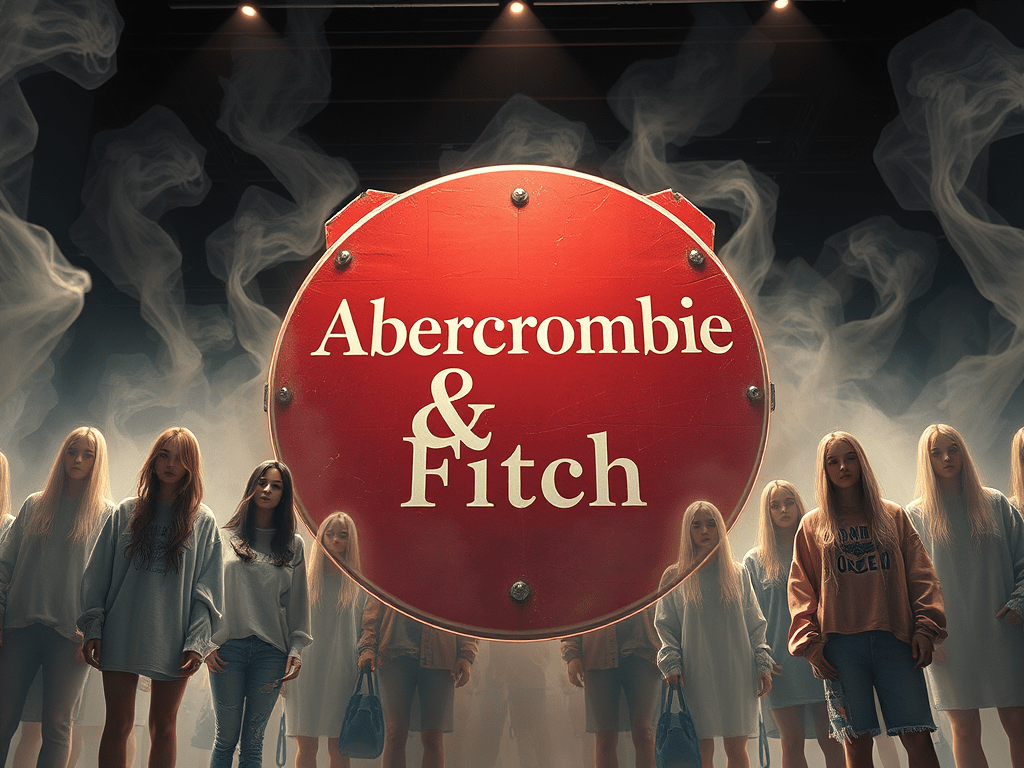
    Three documentaries—White Hot: The Rise & Fall of Abercrombie & Fitch, Brandy Hellville and the Cult of Fast Fashion, and Trainwreck: The Cult of American Apparel—reveal a sobering truth: some of the most iconic youth fashion brands haven’t just sold clothes; they’ve trafficked in identity, manipulated insecurity, and run full-scale psychological cons dressed up as marketing.

    These brands built empires on seductive illusions—creating tight-knit aspirational worlds where beauty, desirability, and social status were pre-packaged into a logo and sold at a premium. The catch? Entry required blind conformity to a narrow aesthetic, behavioral uniformity, and uncritical loyalty. This wasn’t fashion—it was Groupthink in skinny jeans. And behind it all pulsed the emotional engine of modern consumer culture: FOMO, the fear of being left out, unseen, unchosen.

    White Hot, reviewed by Ben Kenigsberg, focuses on Abercrombie’s marketing of “aspirational frattiness”—a euphemism for white exclusivity wrapped in khaki shorts and cologne. It was a smug, muscular nostalgia trip to a sanitized, all-white upper-class fantasy where thinness, wealth, and preppy arrogance were the unspoken requirements for membership.

    At the helm was CEO Mike Jeffries, a marketing savant whose obsession with aesthetic purity bordered on cultic. Under his reign, the company embraced racist T-shirts, discriminatory hiring practices, and a toxic definition of “cool.” His executive team mirrored his vision so fully they might as well have been in a bunker, smiling and nodding as the walls caught fire. Groupthink didn’t just enable the brand’s rise—it ensured its blindness to its own downfall.

    Why revisit Abercrombie now? Because its story is a pre-Instagram case study in the mechanics of cult marketing: how insecurity is mined, branded, and sold back to consumers at 400% markup. My students in the 90s already saw through the ruse—complaining the shirts fell apart in the armpits within a week. What mattered wasn’t the clothing but the illusion of status sewn into every threadbare seam.

    Ultimately, White Hot offers a rare glimpse of justice: a cool brand undone by its own arrogance, its aesthetic no longer aspirational but pitiful. The Abercrombie collapse isn’t just a business story—it’s a warning. When branding becomes religion and coolness becomes a weapon, consumers become disciples in a theology of self-erasure.

  • Wristwatches and Wastelands: How Fashion Can Hollow You Out

    Wristwatches and Wastelands: How Fashion Can Hollow You Out

    Amy Larocca, a fashion journalist with twenty years of runway reportage under her belt, understands the psychological scaffolding beneath a well-tailored sleeve. “Fashion,” she writes in How to Be Well, “is about beauty, of course, but it is also about the desire to elevate daily life from its more banal limitations, to consciously and actively share something about how you’d like to be perceived by the rest of the world.”

    And that, my friend, is exactly where the trouble starts.

    Take a stroll through the horological asylum known as the watch community. What starts as an appreciation for precision craftsmanship often spirals into a neurotic fixation. A dive watch isn’t just for telling time—it’s for announcing to the world that you’re rugged, refined, and possibly ready to harpoon something. The desire to “elevate daily life” with just the right wrist candy turns into a slow-motion personality collapse. It becomes a lifestyle audition for an identity you don’t actually inhabit.

    The trap is cunning. At first, fashion promises transformation: a sharper silhouette, a touch of mystique, a sense of control in a chaotic world. But when the performance replaces the person—when dressing well becomes a proxy for purpose—you’re not elevating your life. You’re embalming it in linen and leather.

    The real tragedy isn’t vanity. It’s the way compulsive self-curation smothers empathy. Narcissism isn’t just annoying—it’s lonely. It dislocates you from community, connection, and anything approaching transcendence. A meaningful life, if it’s worth living at all, doesn’t orbit around the mirror.

    To be clear: there’s nothing wrong with looking sharp. Be fit, be stylish, radiate confidence. But when your wardrobe becomes your worldview—when you dress not to express but to impress—you trade depth for dazzle. You don’t become interesting. You become exhausting.