Tag: travel-tips

  • Aura Farming in the Age of the Priority Pass

    Aura Farming in the Age of the Priority Pass

    Zach Helfand’s New Yorker piece “The Airport-Lounge Wars” reads like the natural sequel to John Seabrook’s “How the Sports Stadium Went Luxe.” Both writers chart America’s drift into a soft feudalism—an economy built on velvet ropes, curated vanity, and the tyranny of creature comforts. Exclusivity is our reigning civic religion. Helfand opens with a thesis as blunt as a boarding announcement: “Airport lounges are about who gets in and who does not.” In today’s America, you must cultivate an aura—what my teenage daughters call “aura farming,” the strategic cultivation of mystique, importance, and manufactured nonchalance. Airports have become the perfect stage for this theater of status. You either inhabit the drab terminal with its cracked vinyl seats and public coughing contests, or you ascend to the glowing Xanadu behind frosted glass. My own family acts out the class divide: my wife and daughters breeze through TSA with their PreCheck halos while I shuffle through the cattle chute, sacrificing my bottled water, removing my belt, and enduring laptop shaming before rejoining them, a humbler, poorer man.

    These airport Xanadus have grown so seductive that some travelers go full pilgrim. One Malaysian businessman, drunk on his Priority Pass privileges, missed his flight to Kuala Lumpur and drifted through lounges for eighteen days, forging boarding passes like a monk copying sacred texts—until he was arrested and relocated to the Prison Lounge, where the amenities are famously lacking.

    Wanting a taste of this strange devotion, Helfand spent a week touring New York’s airport lounges with his own Priority Pass. At the HelloSky Lounge at JFK, he marinated in what historian Kevin James calls “an enhanced experience of stasis.” Translation: high-thread-count boredom. Even this, Helfand notes, is aspirational—CBS travel editor Peter Greenberg says lounges aim for nothing more noble than inspiring customers to murmur, “Well, it’s better than nothing.” Indeed, the holy trinity of “better than nothing” turns out to be fruit-infused water, padded leather walls, and chandeliers in the bathroom. Civilization marches on.

    Airports are designed to grind the soul down to a nub, so perhaps this “slightly better than nothing” aesthetic is our cultural Valium. A tranquilizer bubble for people waiting to be herded onto aluminum tubes. Pay the fee, flash the pass, and anesthetize the existential dread of a three-hour layover. As Helfand puts it, “Waiting can make one feel needy, like a baby.” Maybe that’s why lounges feel like nurseries for adults: dim lighting, soft chairs, snacks within arm’s reach. The more infantile we become, the grander the titles on the door—V.I.P., Admiral, Ambassador. It’s a fantasy nobility designed to distract us from the truth: we are tired, displaced, sleep-deprived, and longing for our beds, our routines, and—let’s be honest—our blankies.

  • I Am the Last Hands-Free Professor

    I Am the Last Hands-Free Professor

    The twins are home today—the high school’s closed for Veterans Day while my college closes for it tomorrow—so I left the house fifteen minutes early, a small luxury that spared me the traffic gauntlet. As I crossed campus, I spotted two young professors striding toward the Science Building. They could have been clones: mid-thirties, tall, lean, the same curated beard, and that monochrome uniform of urban intellect—black derby jackets, black jeans, black everything. It was as if an algorithm had dressed them.

    Each hand was occupied. Their left hands dangled a thermos and a lunch case like matching luggage; their right hands gripped identical strapped tech bags, no doubt cradling laptops and a faint sense of self-importance. Watching their synchronized march, I realized something about myself. After thirty-five years of teaching, I’ve never once looked professorial. My fatal flaw? Free hands. I move from car to office unburdened, thanks to my trusty backpack—functional, roomy, and entirely devoid of aesthetic ambition. It says less “professor” than “Wyoming park ranger with tenure.” But practicality has its own dignity.

    Until this morning, I’d never questioned my need to be unencumbered. Why not juggle a thermos, lunch case, and tech bag like everyone else? The answer reached back decades—to the zoo trips of childhood, when my mother insisted I bring a sweater “just in case.” I never needed it. I only needed freedom. That sweater haunted every outing, tied around my waist, falling in the dirt, collecting dust like a symbol of parental over-preparation. My whole day was spent managing it. Somewhere between those early years and now, the sweater evolved into the backpack—my lifelong protest against needless carrying.

    I could, I suppose, upgrade to a minimalist tech-sleek backpack that would make me blend in with the black-jacket brigade. But I won’t. I’ve made peace with my pack. It’s my declaration of independence—my refusal to let adulthood turn into perpetual sweater management.

  • The Accidental Tourist, Redux

    The Accidental Tourist, Redux

    Yesterday, we flew from LAX to Honolulu aboard a gargantuan United jet so large I half expected to see shag carpet and a spiral staircase to a smoking lounge. The thing was practically a flying condominium—wide-bodied, high-ceilinged, and just roomy enough to avoid triggering my usual claustrophobia. Even while pinned to the aisle seat as fellow passengers formed a stagnant TSA-themed flash mob to jam their overpacked luggage into the overhead bins, I managed to breathe.

    I passed the flight in my usual state of high-functioning dread, retreating into Jim Bouton’s Ball Four on Audible through my Sony noise-canceling headphones—the only legal form of sedation I can stomach at 35,000 feet. Forget reading, forget movies, forget chit-chat. Air travel reduces me to a vibrating vessel of cortisol unless I can disappear into the low, comforting drone of a narrator’s voice. It’s less entertainment and more emergency emotional triage.

    Mid-flight, I spotted a man in first class—reclined, smug, his chest puffed like a hawk surveying the terminal. He wore a Rolex Submariner, its gleaming bracelet catching the light like a flex. For a moment I considered violating my long-standing ban on watch bracelets. But then I re-centered myself. No, I thought. No shiny metal shackles. Stay true to your rubber-strap asceticism.

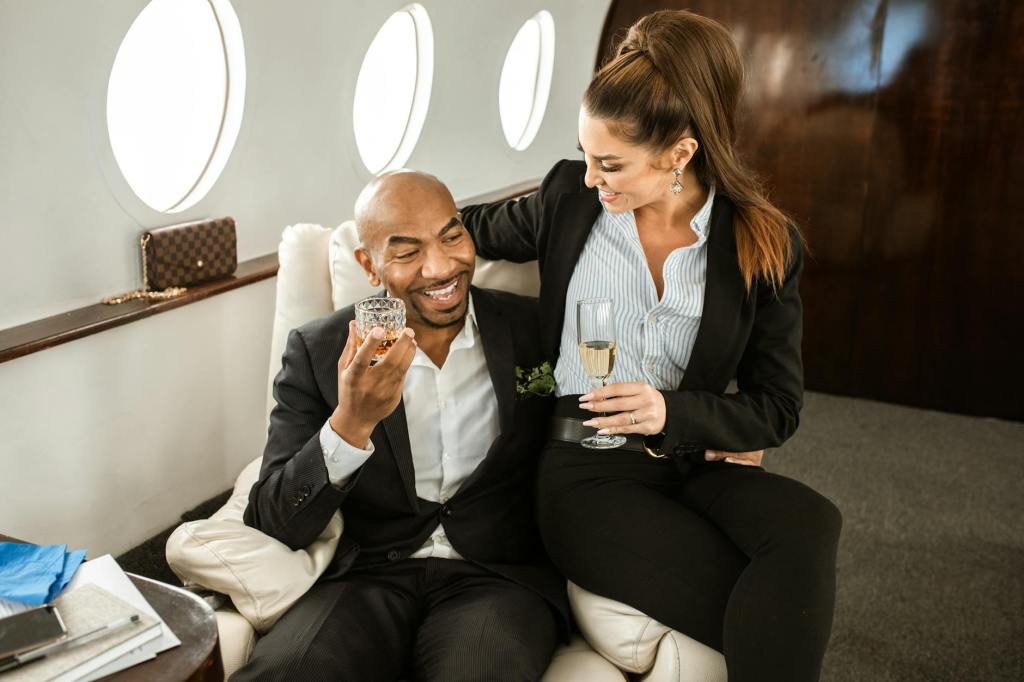
    As we deplaned and shuffled past the first-class cabin, it looked less like a luxury lounge and more like the aftermath of a Roman orgy. Gargantuan seats sat slumped under rumpled cashmere blankets, like spent emperors. Empty champagne flutes glistened in the overhead lights. Half-melted caviar pearls clung to fine china, and artisanal pizza crusts lay abandoned, their truffle oil sheen dulled by neglect. It was less aviation and more archaeological dig—excavating the indulgences of the airborne elite.

    After getting our luggage, we skipped the usual rental car shuttle chaos (unlike in Maui or Kauai) and simply walked across the street to pick up our reserved vehicle. It was almost… dignified.
    Pro Tip: Disconnect your Sony headphone app before navigating to the hotel, or your phone will whisper silent directions to your eardrums while you make wrong turns into private military roads.

    This morning’s Embassy Suites breakfast buffet was a competent affair—dark coffee, lukewarm eggs, and a waffle station overseen by a teenager with the haunted eyes of someone six minutes into an eight-hour shift. Still, it did the job. Sustenance secured.

    Before the trip, friends warned me that Oahu lacks the charm of the smaller islands. So far, I find that advice overstated. Yes, there are people. But they’re spread out, like tourists in a theme park operating at 60% capacity. Manageable. Tolerable. Occasionally amusing.

    What continues to fascinate me is the ABC Store phenomenon. Every island has them, and each one is a bustling shrine to overpriced macadamia nuts, sunburned tourists, and cold bottled water with just enough condensation to feel spiritual. They are the Walmarts of Waikiki, the cathedrals of caffeine and aloe, always stocked, always staffed by saints, always crawling with those of us trying to patch together a sense of stability while wearing flip-flops and SPF 70.

    As I sit here contemplating the beach and the impossibility of relaxing, I realize something: I don’t know how to vacation. I don’t know how to unplug. I don’t know how to vanish. Perhaps it’s time I reread Anne Tyler’s The Accidental Tourist and finally admit I’m the kind of man who travels with headphones, anxieties, and an internal spreadsheet of projected discomforts.