Tag: trump

  • College Essay Assignment: Kayfabe Nation—How Showbiz Spectacle Hijacked Reality

    College Essay Assignment: Kayfabe Nation—How Showbiz Spectacle Hijacked Reality

    Prompt:

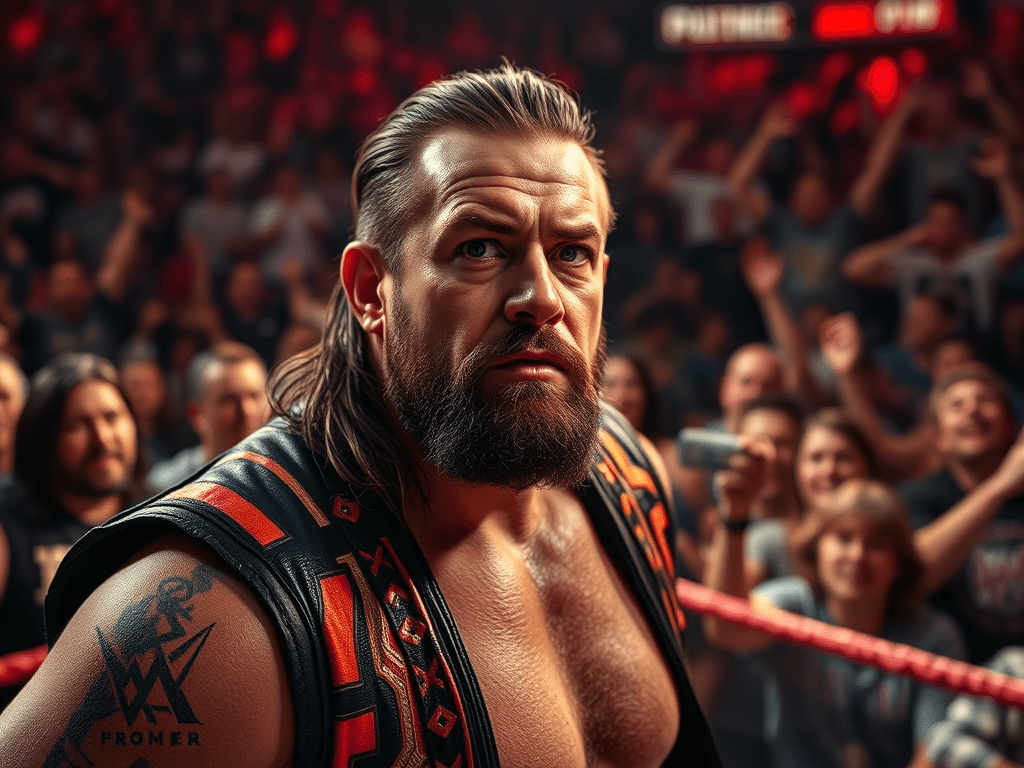
    In professional wrestling, “kayfabe” refers to the willing suspension of disbelief—the blurred line between what is real and what is scripted. Vince McMahon, long-time CEO of WWE, not only mastered kayfabe in the ring but arguably exported it to the broader American culture. From politics to social media, from reality TV to influencer culture, the logic of kayfabe—the performance of truth—has arguably infiltrated how we consume media, understand power, and participate in public life.

    In an 8-paragraph essay, make an argument about how kayfabe, as popularized by McMahon and WWE, has become a defining feature of American culture. Use examples from Mr. McMahon (Netflix docuseries), the book Ringmaster: Vince McMahon and the Unmaking of America by Abraham Riesman (optional), and draw on insights from at least two additional cultural texts (suggestions below) to support your claim.


    Essay Structure (8 Paragraphs)

    Paragraph 1 – Introduction

    • Define “kayfabe” and introduce Vince McMahon as a key architect of it.
    • Introduce your thesis: Kayfabe has escaped the wrestling ring and now defines American public life through… [insert core claims: performance, manipulation, spectacle, etc.]

    Paragraph 2 – McMahon’s Mastery of Kayfabe

    • Show how Vince McMahon blurred the line between reality and performance in wrestling.
    • Use specific examples from Mr. McMahon or WWE history: character reinvention, real-life scandals worked into storylines, etc.

    Paragraph 3 – Kayfabe in Politics

    • Explore how politicians use wrestling-style performance—outrage, heel turns, loyalty tests—to manipulate perception.
    • Draw connections to Trump, MTG, RFK Jr., or any public figure who uses theatricality as political currency.

    Paragraph 4 – Kayfabe in Influencer Culture and Social Media

    • Show how influencers perform personas for clicks, sponsorships, and attention.
    • Highlight “authenticity as a performance” (Instagram, TikTok, YouTube).
    • Connect to Sherry Turkle’s idea of “performing ourselves into being.”

    Paragraph 5 – Kayfabe and the Media

    • Explain how media outlets also engage in narrative performance, packaging news as conflict and drama.
    • Consider the structure of cable news or partisan commentary.
    • Tie in insights from The Social Dilemma if desired.

    Paragraph 6 – Why This Works: Spectacle, Identity, and Tribalism

    • Analyze why kayfabe culture thrives—people want characters, not nuance; certainty, not ambiguity.
    • Explore how kayfabe fuels tribal identity and short-circuits critical thinking.

    Paragraph 7 – Counterargument & Rebuttal

    • Some may argue kayfabe is just entertainment and audiences are in on the joke.
    • Rebuttal: Even when “in on the joke,” people act based on performance rather than truth—leading to real-world consequences (e.g., Jan. 6, vaccine conspiracies, celebrity cults).

    Paragraph 8 – Conclusion

    • Restate your thesis: Kayfabe is no longer a gimmick—it’s a governing principle.
    • Reflect on the dangers of living in a world where perception outweighs reality.
    • Optional: Suggest how we might reclaim discernment in a post-kayfabe culture.

    Suggested Sources

    • Netflix documentary: Mr. McMahon
    • Abraham Riesman’s Ringmaster: Vince McMahon and the Unmaking of America (excerpts or reviews)
    • Sherry Turkle’s TED Talk “Connected, but Alone?”
    • Clips from WWE (e.g., McMahon’s character arc, Trump’s WrestleMania appearance)
    • The Social Dilemma (Netflix)
    • Articles on political spectacle and “media wrestling” (e.g., Matt Taibbi’s Hate, Inc. or Jonathan Haidt on tribalism)

  • Trapped in the Sauna: When Bro Talk Becomes Brain Fog

    Trapped in the Sauna: When Bro Talk Becomes Brain Fog

    I’m 63, I live in the suburbs, and I like to sweat, laugh, and think—ideally all in the same day. I’ve got a soft spot for health and fitness talk, well-produced comedy, and podcasts where the ideas land harder than the punchlines. Back in the day, I gave Joe Rogan some ear time—especially when he had guests like Michael Pollan who could string together a sentence without referencing elk meat or hallucinogens. The show scratched a certain male itch: that longing for a tribal fire pit where you could grunt, swap kettlebell routines, and talk nonsense without getting side-eyed.

    I got it. I really did. There was a certain charm in the early years—the man cave as refuge, not bunker. A place for unapologetic masculinity that wasn’t trying to sell you a four-pack of testosterone supplements and a tactical flashlight.

    But then something changed. The man cave didn’t evolve—it ossified. It turned into a walled-off compound of grievance, smug anti-intellectualism, and half-baked conspiracy theories passed around like a tray of stale edibles. What once felt like a mixed bag of bro-science and genuine curiosity devolved into a middle-aged lunch table where the same unfunny comedians riff about whiskeys, bow hunting, and whether they’d survive a bear attack armed only with sarcasm and nicotine gum.

    So when I stumbled across Ghost Gum’s YouTube essay “The Collapse of the Joe Rogan Verse,” I hit play with morbid curiosity—and found it eerily validating. Turns out, I wasn’t alone in sensing that Rogan’s podcast had turned into a predictable, self-congratulatory echo chamber, where counterarguments go to die and every guest seems contractually obligated to flatter the host.

    The video’s roast of Tom Segura was especially brutal—and fair. Once the chubby, relatable everyman, Segura now floats in orbit around Planet Rogan, sneering at the unwashed masses like a guy who did keto once and now thinks he’s better than you. His comedy used to punch up; now it just punches down and preens.

    Comedy rooted in tribal loyalty becomes fan service, then becomes boring, then becomes embarrassing. What began as a countercultural clubhouse has curdled into a locker room thick with stale air and self-importance.

    Maybe Joe Rogan was once a necessary irritant to polite discourse, a reminder that the man cave had value. But too much time in that space without fresh air—and you forget it was never meant to be a throne room.

    Perhaps Joe Rogan’s unraveling podcast is just another cautionary tale of what happens when someone marinates too long in their own echo chamber and starts mistaking the sound of agreement for the sound of wisdom. Spend enough time surrounded by yes-men and protein powder, and eventually, you’re just getting high on your own supply—delirious with self-importance and blind to the rot setting in.

  • Welcome to the Age of the Algorithmic Snake Oil Salesman

    Welcome to the Age of the Algorithmic Snake Oil Salesman

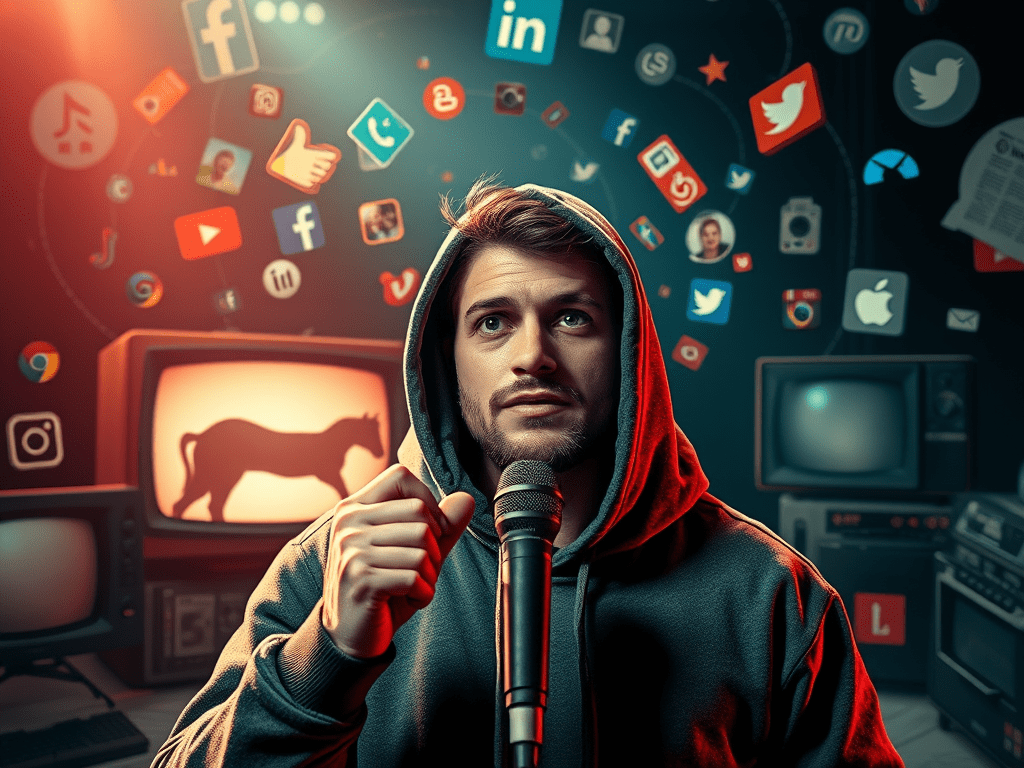
    In her clear-eyed and quietly blistering essay, “The ‘Mainstream Media’ Has Already Lost,” Helen Lewis paints a picture that should make any old-school news anchor break out in hives: a world where Joe Rogan has more political leverage than the sitting Vice President of the United States. Days before the 2024 election, Kamala Harris reportedly wanted to appear on Rogan’s podcast. He declined. Not out of spite or political protest, but simply because he could. That’s power. That’s the media landscape now.

    The term “mainstream media” has become a wheezing relic, a dusty VHS tape of a bygone era. The networks that once shaped public consensus now resemble aging bodybuilders—still flexing, but under the blinding fluorescents of a Planet Fitness instead of the Mr. Olympia stage. Meanwhile, Rogan and his ilk bench-press audiences of millions, all while wearing hoodies and sipping from branded tumblers. He doesn’t need legacy media. Legacy media needs him—and it’s already too late.

    Lewis reports that 54 percent of Americans now get their news from social media. Let that sink in. More than half the country is being spoon-fed their worldview by apps designed to addict, outrage, and silo. Instead of objective reporting, people now binge infotainment curated by opaque algorithms trained to fatten engagement at any cost. These feeds aren’t delivering news; they’re cultivating dopamine dependency.

    Welcome to the Age of the Algorithmic Snake Oil Salesman. The modern grifter doesn’t stand on a soapbox in a public square—he livestreams in 4K from a ring light-lit garage, selling supplements, conspiracies, and cultural resentment like they’re Girl Scout cookies. Facts are irrelevant. Performance is king. These charlatans don’t have to be right—they just have to be loud.

    Irony of ironies: these influencers wrap themselves in the cloak of “authenticity.” They curse, they rant, they “tell it like it is,” but their every inflection is calibrated for virality. Rage isn’t an emotion—it’s a marketing strategy. Performative outrage now passes for truth, and click-through rates replace credibility.

    As the mainstream media limps into irrelevance, it takes with it a few other quaint notions—like science. In this brave new world, you don’t need peer review when you have followers. Why believe the CDC when a ripped guy with a ring light and an Instagram handle ending in “.truth” tells you that vaccines are a globalist plot? The return of diseases like measles and tuberculosis—once considered conquered—are just collateral damage in the war on expertise.

    And with the fall of old-school journalism, our already threadbare civic discourse has collapsed into a gladiator arena of smug narcissists screaming at each other with all the subtlety of a demolition derby. Politeness is for chumps. Nuance is for cowards. The algorithm doesn’t reward thoughtful dialogue—it feeds on belligerence. Online, the dumbest guy in the room often gets the biggest microphone, because ignorance is loud, confident, and apparently good for ad revenue.

    Let’s not forget critical thinking, that delicate orchid now trampled under the steel-toed boots of clickbait and tribal rage. The marketplace of ideas has become a black market of weaponized talking points. People are no longer consuming information—they’re huffing ideological fumes. And like any good addict, they don’t want to quit. They want a stronger hit.

    Lewis doesn’t offer false hope. There’s no tidy ending where the media reclaims its place and truth triumphs in a feel-good montage. Instead, she suggests the comeback of reason, of trust in science, of civil discourse—will only happen the way all painful recalibrations happen: through crisis. It will take something even more catastrophic than COVID-19 to shock us back into reality. Only when the fantasy scaffolding collapses and we’re left staring at real, unfiltered chaos will the fever break.

    Until then, we scroll. We rage. We share. We follow. We spin deeper into silos. And we continue pretending that Joe Rogan isn’t the new Cronkite.

    But he is.