Tag: wellness

  • Why Your Watch Doesn’t Make You Happy Anymore

    Why Your Watch Doesn’t Make You Happy Anymore

    To understand the madness of the modern watch addict, you’d do well to consult Dopamine Nation by Stanford psychiatrist Anna Lembke, a book that should be shelved somewhere between philosophy, neuroscience, and quiet screaming. Her central thesis? In an age of relentless indulgence, the line between pleasure and pain is not only blurry—it’s the same neurological pathway. You’re not escaping pain with your latest acquisition. You’re feeding it.

    “The smartphone,” she writes, “is the modern-day hypodermic needle.” And the drug? Dopamine—delivered in neat little parcels: TikToks, tweets, memes, and yes, wrist shots of watches you don’t own (yet). If you haven’t met your poison of choice, don’t worry. It’s just a click away.

    Lembke makes the uncomfortable truth clear: The more dopamine hits we seek, the more our brain adapts by reducing our baseline pleasure response. What once thrilled you—your grail watch, your Rolex Explorer, your Seiko with the Wabi-Sabi patina—now barely registers. You’re not chasing pleasure anymore. You’re just trying to feel something.

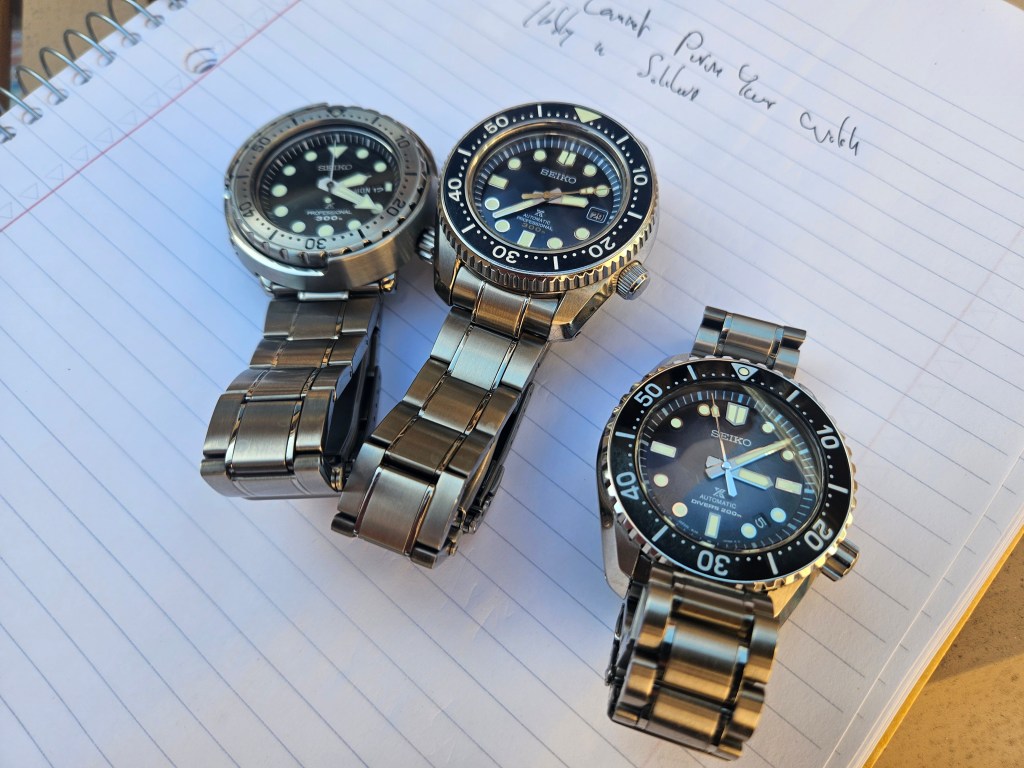
    Watch addicts, of course, understand this intimately. The pursuit of horological perfection starts out innocent enough: a G-Shock here, a vintage diver there. But soon you’re tumbling into the abyss of boutique limited editions and message board enablement, haunted by the need to stay relevant. Because here’s the twist: It’s not just about the watches. It’s about being seen. You post, you review, you flex because if you stop, you vanish. No new watches = no new content = digital extinction.

    And extinction, in a social-media world, feels like death.

    Lembke warns us that addiction thrives in secrecy, in the exhausting double life. The watch addict may present as a tasteful minimalist to family and friends, while secretly rotating 19 watches, five straps deep, waiting for the next “drop.” The addiction is fed by access, and we live in an access economy. New releases are no longer annual events—they’re hourly temptations. The vortex is bottomless. The supply creates the demand.

    Even worse, modern society normalizes this behavior. Everyone is scrolling. Everyone is upgrading. Our addiction to novelty is passed off as taste. Our frenzied consumption masquerades as identity. Lembke borrows from Philip Rieff to explain the deeper shift: “Religious man was born to be saved; psychological man is born to be pleased.” The modern watch collector doesn’t believe in salvation. He believes in configuration.

    But here’s the cruel irony: The more you seek to be pleased, the less capable you are of being pleased. In Lembke’s words: “Hedonism, the pursuit of pleasure for its own sake, leads to anhedonia—the inability to enjoy pleasure of any kind.”

    You can understand the watch addict’s feeble quest when you look at the Horological Dopamine Loop–the self-reinforcing cycle in which acquisition, posting, validation, and anticipation replace enjoyment. The watch no longer delivers pleasure; it merely resets the craving for the next hit.

    What’s the solution? A dopamine fast. Lembke prescribes it like a bitter medicine: Remove the source. Reset the brain. Let it reestablish homeostasis. For the watch addict, this means one thing: a watch fast.

    And yes—it’s brutal. I’ve been a watch obsessive for over twenty years. My longest fast? Six months. And I nearly went feral. New releases tempt. Friends enable. Algorithms whisper. Strap swaps and vintage reissues beckon like sirens. Even the FedEx truck starts to look like a personal tormentor.

    So you get creative. You stash watches in the safe and “rediscover” them. You buy new straps instead of new watches. You try to redirect the compulsion toward something productive: fitness, music, sourdough, monkish austerity. Anything but another chronograph.

    But the real cure, oddly enough, may be conversation—actual human connection. At watch meet-ups, we start out discussing bezels and spring bars, but within ten minutes we’re talking about life: real estate, parenting, knee surgeries, emotional burnout, dinner recipes. We talk for hours. But barely about watches.

    The truth slips out in these moments: we want to be free. We crave community more than we crave sapphire crystals. What began as a shared obsession has become a trap, and these conversations, paradoxically, offer relief from the very addiction that brought us together.

    Imagine a bunch of watch enthusiasts at a watch meet-up and we’re talking about everything but watches. Wrap your head around that.


  • How We Went from Breakfast Mascots to Political Tribes

    How We Went from Breakfast Mascots to Political Tribes

    A few nights ago, I watched Big Vape: The Rise and Fall of Juul, the four-part autopsy of a company that promised salvation from combustible cigarettes and instead managed to hijack a generation’s taste buds. Juul framed itself as a public-health crusader. What it actually built was a sleek delivery system for addiction, turbocharged by flavors engineered to lodge themselves deep in the dopamine circuitry of young brains.

    Former employees and users all pointed to the same thing: mango. Mango wasn’t just a flavor; it was an event. People didn’t vape mango casually. They marinated in it. Mango was the hook.

    Watching this, I was transported back to my own childhood and my first chemical romance: Cap’n Crunch.

    There was something about that unholy alliance of corn flour, palm oil, and brown sugar that short-circuited my will. I didn’t want moderation; I wanted saturation. My parents imposed limits, which only deepened my resolve to grow up as fast as possible so I could make my own enlightened dietary decisions—namely, Cap’n Crunch for breakfast, lunch, and dinner. I failed to notice the irony that a grown man subsisting on sugar cereal would represent not maturity but infantilization.

    Cap’n Crunch’s true genius wasn’t just sweetness. It was proliferation. The same cereal reappeared in endless costumes—Crunch Berries, Peanut Butter Crunch—each one offering the illusion of choice. King Vitamin was the most audacious iteration: Cap’n Crunch in a health halo, a masterclass in rebranding junk as virtue. Lipstick on a pig, poured into a cereal bowl.

    Then there were the mascots. Quisp the Martian. Quake the muscle-bound coal miner. As a child steeped in superhero comics and Hulk fantasies, I gravitated toward Quake. Strength. Power. Identity. I didn’t realize I was choosing a brand avatar, not a breakfast.

    Cereal companies were having a field day. We watched cartoons while eating the very product being advertised between scenes. It never occurred to us that we were being conditioned—trained to celebrate a non-nutritive food substance that dissolved teeth and rewired appetite. The Juul kids didn’t know it either. They thought they were buying into a sleek, adult lifestyle. What they were really purchasing was dependence, with a mango aftertaste.

    What troubles me now is that adults don’t seem any less susceptible.

    Today, many people consume political tribes the way we once consumed sugar cereal and flavored vapor. Politics has been repackaged as lifestyle branding—complete with slogans, merch, cosplay, and dopamine hits. The substance is thin. The stimulation is constant. Critical thinking is nowhere to be found.

    These aren’t political commitments; they’re identity snacks. Sugar rushes masquerading as convictions. Defense of one’s “views” consists of chanting talking points with the same reflexive loyalty I once reserved for Cap’n Crunch. No wonder the country feels like it’s in free fall. We haven’t grown up—we’ve just swapped mascots.

    We are a nation of adult children, hooked on political flavors the way kids were hooked on cereal and Juul users were hooked on mango. Politics has become a consumer product: addictive, polarizing, shallow, and wildly profitable. All dopamine. No nutrition.

  • My Rotator Cuff Injury Taught Me Patience and Restraint

    My Rotator Cuff Injury Taught Me Patience and Restraint

    I hesitate to say this out loud, for fear of angering whatever capricious deity oversees orthopedic recoveries, but my torn rotator cuff appears to have turned a corner.

    For the first time in five months, I’ve gone without ibuprofen. No chemical truce. No white tablets brokered between inflammation and denial. My range of motion has improved by more than sixty percent, and for two nights in a row I’ve slept without that familiar 4 a.m. arthritis ambush—just a bit of stiffness, the kind that registers as information rather than alarm.

    When discomfort does surface, I can quiet it with embarrassingly small interventions: lateral raises with a three-pound dumbbell, posterior-delt pulls using a resistance band anchored to a garage wall strut. Movements so light they feel like apologies. And yet—they work.

    Two weeks ago, an ultrasound revealed inflammatory fluid. The doctor promptly suggested the modern holy trinity: cortisone shot, MRI, and escalation. I declined all three. Why submit to a needle when the pain isn’t screaming? Why enter an MRI tube when claustrophobia turns it into a medieval punishment device? And why rush toward surgery when my rehab therapist, calm and unflappable, says I’ll heal just fine without it?

    So I stick with what got me here.

    Careful shoulder work. Kettlebell leg training. Trap shrugs. Slow, deliberate cleans. Reverse curls. Close-hand push-ups on my knees—humbling but honest. Anything that irritates the shoulder—dumbbell flyes, grand gestures, heroic nonsense—gets cut without appeal. I’ve become ruthless in the best way. No bargaining. No ego.

    Injury has a way of clarifying priorities. You don’t truly appreciate the orchestration of a whole body until one part goes rogue and holds the rest hostage. Healing teaches restraint. Progress rewards patience. And recovery, when it finally begins, feels less like triumph than like a quiet ceasefire—one you’re careful not to violate.

  • Discretionary Use Principle

    Discretionary Use Principle

    The Discretionary Use Principle begins with a simple but demanding claim: tools are not inherently good or bad, but they become harmful when used without judgment, proportion, or purpose. Whether we are talking about food, technology, or media, the decisive factor is not purity but discretion—our ability to choose deliberately rather than reflexively. The principle rejects both absolutism and indulgence. It argues instead for a calibrated life, one that privileges nourishment over stimulation, depth over convenience, while still recognizing that modern life occasionally requires shortcuts. This framework is especially useful when thinking about analog versus digital living, where moralized categories often replace careful thinking.

    It is wise to carve out a large, non-negotiable block of each day in which machines are politely but firmly excluded—no screens glowing like anxious faces, no notifications tugging at your sleeve, no algorithm whispering what to want next. Go hike where the trail refuses to optimize itself. Lift weights in a garage with nothing but an AM radio crackling like a distant campfire. Write dreams and grievances by hand in a clothbound notebook while Bach or Coltrane keeps time. This is the analog world, and it feeds parts of the nervous system that silicon cannot reach. In this sense, analog living resembles whole foods: salmon that still tastes like water and muscle, almonds that require chewing, blueberries that stain your fingers. The more time you spend here, the less bloated your spirit becomes. Digital life, by contrast, often behaves like ultra-processed food: frictionless, hyper-palatable, engineered for compulsive return, and strangely unsatisfying no matter how much you consume.

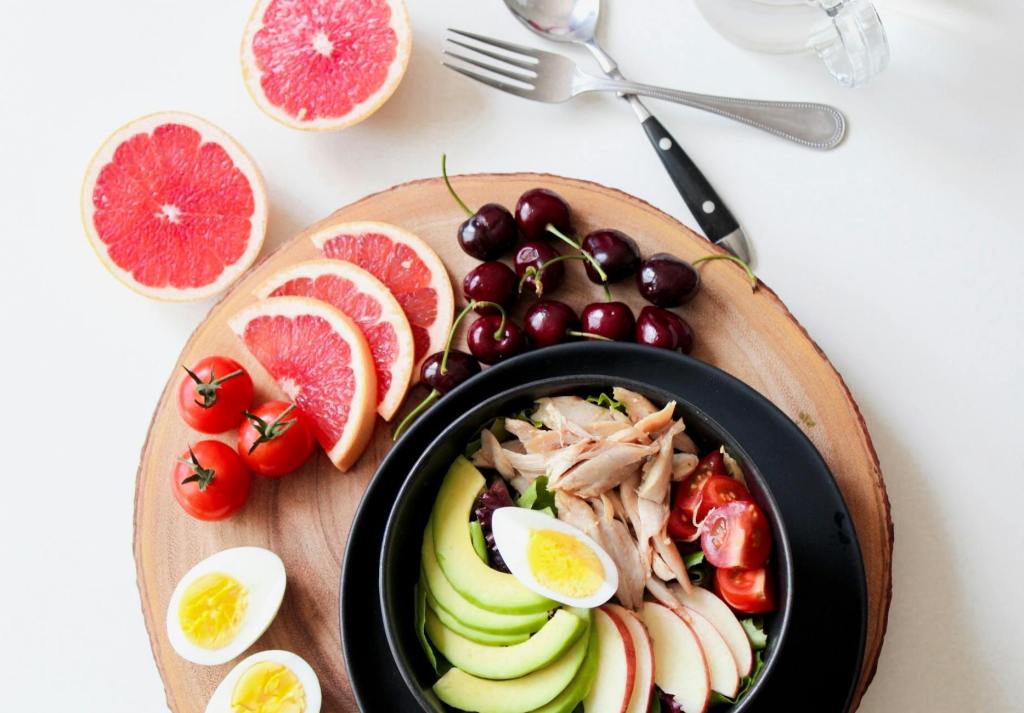
    That analogy works—until it doesn’t. Not all analog living is virtuous, just as not all “whole foods” are benign when eaten without restraint. A steady diet of eggs, clotted cream, or beef heart can quietly undo you. Likewise, not all digital experience is junk. There are serious conversations on social platforms, lucid Substack essays, and educational YouTube channels that sharpen rather than dull attention. The mistake comes when we moralize categories instead of exercising judgment. Ultra-processed food is not a single moral villain; “processed” names a method, not a fate. Steel-cut oats, frozen berries, tofu, canned beans, and whole-grain bread are processed and still nutritionally intact. Even within the ultra-processed aisle, a minimally sweetened protein bar is not the same organism as a fluorescent snack cake designed to bypass satiety. The real danger is not processing itself but the familiar cartel of refined starches, added sugars, industrial fats, flavor engineering, and low nutritional payoff.

    Seen through the Discretionary Use Principle, the lesson is neither to flee the digital world nor to surrender to it. Eat whole foods most of the time. Live analog for long, uninterrupted stretches. But do not shun all processed foods or digital tools out of misplaced virtue. Use them when discretion, efficiency, and purpose demand it. Health—nutritional or psychological—is not preserved by purity tests. It is preserved by attentiveness, proportion, and the ongoing discipline of choosing nourishment over convenience, again and again, without pretending that the choice will ever be automatic.

  • Diary of a Shoulder That Tried to Kill Me

    Diary of a Shoulder That Tried to Kill Me

    I posted a YouTube video confessing that my torn rotator cuff cured me of my watch addiction. I braced for scolding: “How dare you upload non-watch content?” I imagined angry horology fanatics clutching diver bracelets and pearl-clutching over my betrayal. Instead, the algorithm delivered mercy. The view count was business as usual. The comments, however, were a grim roll call of the maimed.

    They arrived like pilgrims to a shrine of damaged shoulders. Chronic pain veterans, many of them familiar names from the watch trenches, sent dispatches: stalled healing timelines, depression so thick it sits on your chest, isometric training as penance, and farewell notes to heavy lifting. A few newcomers drifted in, summoned by the wretched deltoid-algorithms that sort humanity into suffering tribes.

    Every story hit the same grim notes: rage, dread, self-pity, and nihilism. There it was again, that quiet void whispering, “Nothing matters anymore.” Nihilism is simply the rotator cuff of the soul—an internal tear that immobilizes you far longer than the physical one.

    I haven’t officially become a miserablist. Not yet. I still haunt my garage gym like a stubborn ghost. Goblet squats, double-hand swings, straight-leg deadlifts. Russian twists. A triceps exercise called Skull-crushers—named because the kettlebell would slam into your forehead if you lose focus for half a second. I use a twenty-pounder. I’m vain, not suicidal. My push-ups are a sort of prayer: on my knees, arms tucked like a sphinx, rising slowly as if coaxing life back into my triceps.

    This morning I feel a good soreness in my triceps, the soreness that whispers, “You’re still in the game.”

    Yesterday, mid-workout, two revelations hit me like kettlebells to the temple. First, the smoking gun: the injury didn’t come from ordinary training. It came from that medieval torture move known as the “lawnmower row.” You lean over and yank the kettlebell skyward like you’re trying to start a balky Briggs & Stratton. I blocked that memory for weeks—like someone trying to forget a bad romance.

    Second, I realized the injury was gentler in its early days. I know this because I still did “around-the-worlds”: passing a 70-pound kettlebell around my body in clockwise and counterclockwise orbits like a makeshift solar system. Yesterday, with a much lighter bell, I could barely scrape a half-circle before my left shoulder screamed mutiny. I didn’t just injure myself—I worsened it with the zeal of a true believer.

    So this December  of 2025 becomes a tightrope: train enough to fend off atrophy and rigidity, but not so much that the rotator cuff tears in half like wet parchment. This is the gospel of injury: moderation, humility, and the patience of a monk.

    If I were naïve enough to trust the publishing industry, I might dream of spinning this into a 70,000-word memoir. A blockbuster chronicling not only the physical agony but the psychological descent into pain-induced existentialism. The masses would see themselves in it. I might become rich. I might become famous. And yet, between two futures—a healthy shoulder and obscurity, or torn rotator cuff and celebrity cripple memoirist—I’d take the intact tendon every time. I’d rather be an anonymous man in a quiet garage than a limping prophet of pain and book deals.

  • Hope in the Form of a Lab Coat

    Hope in the Form of a Lab Coat

    For three months I slogged through shoulder pain armed with nothing but a self-diagnosis and stubborn pride. I refused to see a doctor. Why submit myself to some exhausted clinician who’d never lifted a kettlebell in his life and would prescribe the usual pablum—ice, rest, and advice I could have gotten from the comments section of Wikipedia?

    Then something happened that forced a reckoning. To compensate for the kettlebell exile, I doubled down on the Schwinn Airdyne—hour-long sessions of fan-bike misery that combine pedaling with lever rowing. I felt no pain… until a week before Thanksgiving. After a brutally satisfying session, a nerve fired down my arm like a live wire. The message was unmistakable: I had graduated from “irritation” to “we’re-squeezing-your-spinal-cord-for-fun.” Something was pinched, something was furious, and it was no longer optional.

    I made a YouTube video to announce the cosmic irony: my watch addiction was cured, but the cure was a torn rotator cuff. The floodgates opened. Dozens of comments poured in from people who had endured surgeries, magnets, injections, cortisone cocktails, or endless physical therapy. One old friend emailed: ten years of chronic pain, zero recovery, restricted motion for life. The road, it turns out, is paved with hope and ends in a ditch.

    It was clear: I didn’t need more voices, I needed data. I called Kaiser and booked an appointment. Someone would see me the day before Thanksgiving.

    That afternoon I met Dr. Cherukuri, a woman in her late thirties with the energy of someone who actually likes her profession. She examined my shoulder, commented that the bulge was visible even through my T-shirt, pressed around the joint, put me through a series of movements, and diagnosed left rotator cuff syndrome with left biceps tendinopathy. She ordered X-rays and an ultrasound and, pending results, believed three months of rehab could put me back together.

    She put me on Motrin three times a day for two weeks to bring the inflammation down—enough to make rehab possible. She also agreed I should continue kettlebell work for muscle maintenance. A doctor who understands the importance of preserving muscle mass? I nearly wept. The catch was predictable: no chest or shoulder presses, no biceps curls. My hypertrophy would be confined to legs, glutes, traps—maybe some trickle-down gains from rehab exercises if the gods were kind.

    She handed me a list of movements, which I combined with ones I learned from YouTube: cow-cat yoga pose, broomstick flexion, wall push-ups, wall flexion, forearm planks, plank shoulder taps, narrow-position knee push-ups, light dumbbell rotations, and more. Anything that required me to lift my arms overhead or behind me felt like sticking my shoulder into a hornet nest.

    The mandate was fifteen minutes of rehab every day. On kettlebell days, I’d slip the movements between lifts three days a week. The other four days were rehabilitation only—an entire week built around mending the wounded joint.

    Psychologically, the appointment was a relief. First, the diagnosis proved I wasn’t a lunatic or some melodramatic malingerer. Second, I needed structure. I needed a plan, a weapon—something to push against instead of drifting through pain, anxiety, and the unknowable. When I’m saddled with a problem, I don’t need platitudes; I need targets and artillery. Seeing the doctor was the moment I picked up a rifle instead of a white flag.

    But I was still blind. I had no idea how severe the tear was, whether rehab would work, whether I could heal without surgery, or how to navigate the distress of shoulder pain so sharp that turning my steering wheel wrong or sliding a backpack strap across my arm sent shockwaves that lingered for minutes.

    Going to a doctor was a necessary first step. But I still knew nothing. All I understood was how much I still needed to know if I hoped to climb out of this hole. The thirst for clarity, for diagnostic certainty, became my new obsession—one that bulldozed my watch addiction.

    My YouTube followers were devastated.
    “We need you back, bro. We need you to commiserate with us about the watch madness.”

    God bless them. They needed me to get better—not only for me, but for them, so we could suffer together in peace.

  • Anatomy of a Rotator Cuff Meltdown

    Anatomy of a Rotator Cuff Meltdown

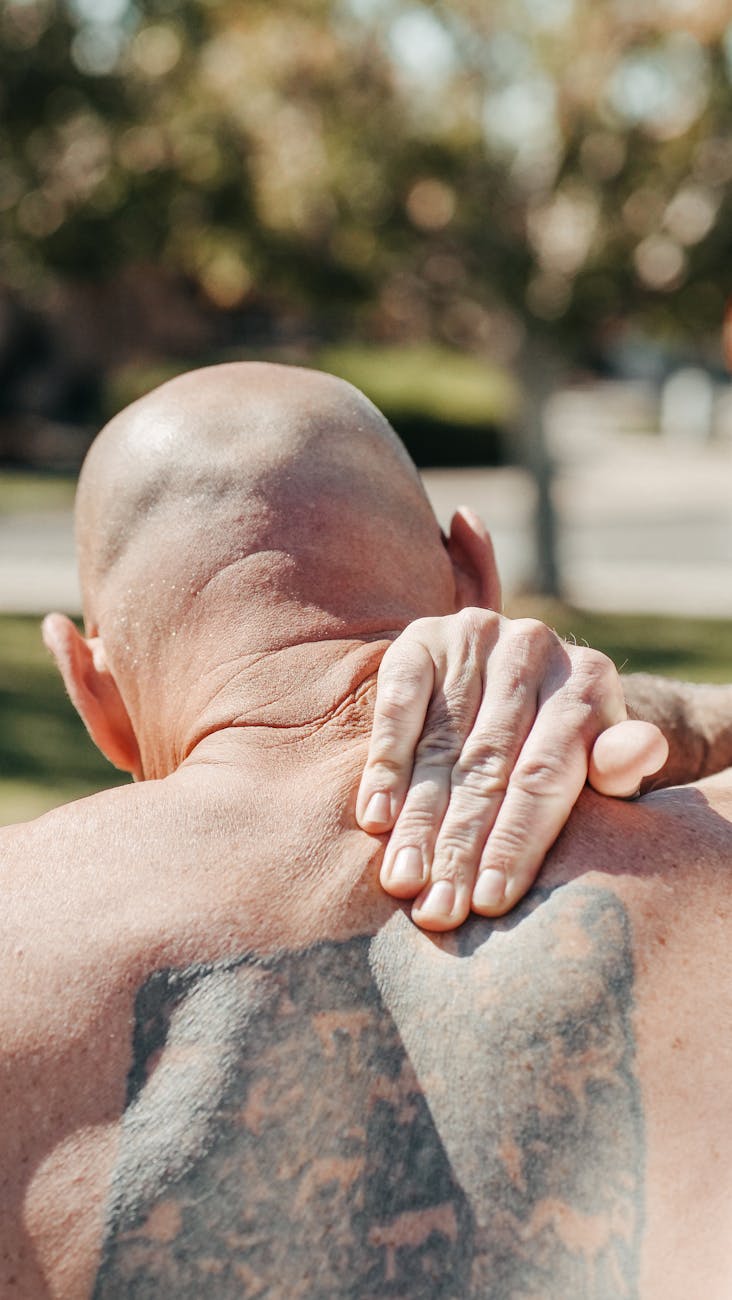
    A torn rotator cuff doesn’t just hurt—it becomes the project manager of your mood swings and mental health. Every everyday gesture gets interrogated like a crime scene: How high can I raise this arm? Which angle is the assassin? When will the orthopedic surgeon enter stage left and demand a sacrificial tendon? You find yourself mentally policing every muscle fiber in the chest, shoulders, and biceps—formerly your prized territories, now embargoed like Cold War no-man’s lands. And then comes the flashback reel: Was it the single-arm kettlebell press? The swing? The curl? Maybe it wasn’t a heroic injury at all, just the slow, bureaucratic decay of connective tissue over time—aging’s signature insult.

    The constant vigilance is corrosive. Shoulder injuries have support groups because sufferers eventually learn the catastrophic secret: it’s not the rotator cuff that breaks first—it’s the psyche. The shoulder, like the back and knees, is a psychological choke point. When it fails, it takes your mood, your sleep, and your sense of invincibility hostage. Physical rehab becomes inseparable from emotional rehab. The body limps, and the mind limps with it, muttering under its breath.

    It’s been three months and I’m starting to resent the job of being my own orthopedic babysitter. I’m grateful I can still sleep without feeling like someone is driving a railroad spike through my scapula. I have enough forward and lateral mobility to get dressed without a prayer circle. I can still train legs, glutes, and abs like a functioning primate. But the lesson is brutal: a torn rotator cuff grants no mercy, no sanctuary from overthinking, and no reprieve from the quieter forms of psychological sabotage.

    A torn rotator cuff is no country for sniveling, navel-gazing men. The challenge now is to un-snivel, un-navel-gaze, and rebuild myself without the luxury of denial.

  • A Diagnosis is a Weapon: My First Step Toward Shoulder Recovery

    A Diagnosis is a Weapon: My First Step Toward Shoulder Recovery

    Yesterday I met with a sports medicine physical therapist at Kaiser for the first time. The kind nurse took my vitals, and to my surprise my blood pressure wasn’t bad at all: 127 over 84. My blood pressure always spikes a bit at the doctor’s. 

    Then I met the sports doctor. She was affable, direct, and clearly passionate about her work. She examined my left shoulder, noted that the swelling was visible even through my T-shirt, pressed along the biceps groove, and tested my range of motion. After watching me perform several movements, she diagnosed me with rotator cuff syndrome and biceps tendinopathy. She immediately ordered an X-ray (results pending) and scheduled an ultrasound in five weeks to gather more detail. 

    Her initial verdict was cautiously optimistic: with proper rehab, she believes I can recover in three months. I told her that unlike my old gym injury—when I tore my rotator cuff doing heavy bench presses and spent nine months in purgatory—this one didn’t begin with trauma. I was simply doing my normal kettlebell chest presses, felt a little tightness, and woke up the next morning with a shoulder that felt like it belonged to someone else. That incident was three months ago. 

    She has me on Motrin three times a day to bring down the inflammation so I can tolerate the rehab movements. To my relief, she didn’t ask me to abandon muscle training; she understands the realities of aging and the need to protect lean mass. I just have to avoid chest presses, shoulder presses, and curls. My work will shift to legs, glutes, traps, and lat activation, with shoulder and pec stimulation coming indirectly through rehab. She gave a handout of exercises, some I can do and others I can’t. I also consulted some doctors who do shoulder rehab on YouTube and told her about some, and she agreed I could do them.

    So far, I have a long list of rehab exercises I can choose from: cat–cow yog pose, broomstick flexion, wall push-ups, wall flexion, planks, plank taps, narrow push-ups on the knees, light dumbbell rotations, and others. 

    Some overhead movements are currently impossible. Hanging from a chin-up bar, the internet’s magic cure, feels like medieval torture. 

    I’ll do the exercises that I can tolerate for fifteen minutes daily: integrated on kettlebell days, standalone on the rest. Also, on my non-kettlebell days, the doctor agrees I should take an hour-long walk.

    Psychologically, this appointment mattered. A diagnosis means I’m not inventing pain or collapsing mentally. It gives me a plan, an organizing principle, a weapon. When my body fails, I can live with discomfort; what I cannot tolerate is drifting in uncertainty. Seeing this doctor was the first step in taking back control.

  • How Ultra-Processed Foods Turn Us Into Weight-Gain Machines

    How Ultra-Processed Foods Turn Us Into Weight-Gain Machines

    Julia Belluz and Kevin Hall’s essay “It’s Not You. It’s the Food.” explores the way the food industry changes our biology so that we are not at fault, in terms of a failure of moral strength or self-discipline, for our weight gain. Rather, ultraprocessed food is. Even if we try to shun the “toxic food environment,” we will find such a move difficult for several reasons. For one, what is “toxic food”? The government, at best, has given us a vague definition. Do we look to influencers? They’re trying to sell supplements more than health. 

    To make their point, the authors use this analogy: “If large swatches of the population were being sickened by a poison released from an industrial plant, no one would suggest that the solution is to just offer home filters, wearables, and supplements. The only real path to restoring health would have to include mandating the removal of the poison from the environment.” 

    The truth is simple, and it’s brutal: You’re on your own: You have to fight like hell to remove ultraprocessed foods from your diet. Kevin Hall’s study shows the more UPFs you eat, the more weight you gain. And the converse is true: The less UPFs you eat, the more weight you lose, especially fat and without effort. 

    The authors observe that when people move to America, they get fat. The common denominator is leaving a low UPFs country to a highly concentrated one. These immigrants get fat and suffer obesity-related diseases. So much for the American Dream.

    Why are UPFs the villain? Because they mess with us–our biology, our hormones, our satiety signals, our gut biome. They turn us into Fat Machines. 

    In America’s rich UPF environment, 70% of available food calories “are deemed hyperpalatable and are in foods designed for the overconsumption that chronically sickens us. They’re also heavily marketed and cheap. Chronic disease hot spots are the most socioeconomically deprived, with food environments akin to toxic waste sites.”

    Knowing the enemy before us, we have to ask ourselves: What do we do? The authors argue that self-discipline doesn’t cut it. We need government regulation. The problem is that we could be dead before anything gets done. Another problem is that the FDA and other institutions don’t seem to have a handle on sound health these days, and even if they did, they’ve lost the trust of the public, many of whom like to cherry-pick their information inside their social media silos. 

    Nevertheless, the authors are adamant about this point: UPFs that “can drive overconsumption should be treated as recreational substances to which we must apply aggressive tax policies, front-of-pack warning labels, marketing restrictions and more, especially for foods marketed to children.”

    Notice the authors didn’t say all UPFs, only the ones designed for overconsumption. Some processed foods such as canned beans, high-protein, flax-seed whole-grain bread, liquid egg whites, and whey protein powder should be spared such government labels. 

    Should we wait for the government to help us in this regard? Probably not. Researcher Kevin Hill quit the N.I.H. after his UPFs studies were censored by the current administration. Not surprisingly, money is a big factor. The authors point out that the global food industry is worth $8 trillion, more than the oil and gas industry. There’s a lot of skin in the game for lobbyists who fund a plethora of politicians. 

    But the science is out: We’re not at fault for our fatness. Food Inc., which makes 70% of their food hyperpalatable for overconsumption to line their pockets, bears much of the blame. Also, failure of government leadership. 

    Brace yourself: Regardless of your economic status, you’re on your own. No one is going to save you. Eating in America is the Wild Wild West. 

  • Not All Ultra-Processed Foods Are Alike

    Not All Ultra-Processed Foods Are Alike

    New Yorker writer Dhruv Khullar opens “Why Is the American Diet So Deadly?” with a truth so obvious it ought to be printed on cereal boxes: Americans are eating themselves into an early grave. No other nation can match our national pride in oversized portions, recreational snacking, and ultra-processed food engineered to hit the brain the way a slot machine hits a Vegas tourist. When the rest of the world wants a modest meal, Americans want something that triggers the dopamine cannon.

    Enter Guillaume Raineri, a French transplant who arrived in Maryland when his wife took a job at the National Institutes of Health. In an earnest attempt to understand American nutrition, he enrolled in a paid diet study—essentially voluntarily entering a culinary escape room. For four weeks, he lived in a controlled environment, eating three meals a day totaling about two thousand calories per meal. 

    Weekdays were gentle on the palate: minimal processing, plenty of whole foods. Fridays, however, were an ambush—UPF theme nights featuring chicken nuggets and PB&J sandwiches, the American sacrament. Raineri’s body protested immediately: bloating, sluggishness, the kind of malaise that suggests your bloodstream is pleading for diplomatic immunity.

    When Khullar visited, study designer Kevin Hall explained the challenge: lumping all ultra-processed foods together is like putting canned kidney beans and gummy bears in the same moral category. Food processing yields genuine benefits—less spoilage, wider availability, and the ability to feed millions at scale—but conflating all UPFs blurs important distinctions. Nutrition heavyweight Walter Willett argues that the focus shouldn’t be on UPFs as a monolith but on overall dietary patterns, especially those rooted in plant-forward whole foods and Mediterranean sensibilities. The core question Hall explores is simple but unsettling: why do people, consciously or unconsciously, eat more when given UPFs?

    The findings aren’t comforting. Participants consuming UPFs ate about 500 more calories a day, experienced spikes in glucose and insulin, and gained weight. Whole-food diets did the opposite: reduced intake, increased satiety, healthier hormone profiles. This complicates the simplistic calories-in/calories-out theory that refuses to die, despite evidence showing that food quality shapes metabolism, hunger hormones, and how our bodies store energy. As Tufts nutrition dean Dariush Mozaffarian puts it, “The dirty little secret is that no one really knows what caused the obesity epidemic”—which becomes even more maddening when you realize Americans now consume slightly fewer calories than they did decades ago, yet obesity continues to climb. GLP-1 drugs may soon rewrite this script entirely.

    UPFs introduce another sinister twist: they don’t just fill our stomachs, they remodel our biology. They recalibrate taste receptors, blunt satiety signals, and create a psychological and physiological FOMO for even more snacks, flavors, and novelty. Some studies, like Willett’s more granular approach, show that UPFs behave differently depending on additives—some beneficial, some neutral, some metabolic chaos grenades. 

    And yet, none of this complexity prevents Americans from gorging on the worst offenders. Doritos, the poster child of engineered hedonism, sell more than a billion bags a year. When you calculate how many collective years of life are sacrificed for that neon-orange dust, you realize our species is perfectly capable of choosing pleasure over longevity.

    Meanwhile, Food Inc. behaves exactly like Big Tech: both industries manufacture addictive junk because attention and appetite are profitable. Social media mirrors the food system: endless junk content, engineered outrage, and influencers who peddle easy purity. YouTube is now overrun by self-anointed nutrition gurus who command you to eat only whole foods and flee all processing. With algorithms breathing down their necks, they don’t dare utter anything nuanced—like the fact that UPFs come in subcategories, some nourishing, some harmless, some devastating. Nuance doesn’t get clicks. Absolutism does.