Tag: wellness

  • The No-Watch Zone

    The No-Watch Zone

    Since early adolescence, I’ve belonged to physical culture. Training, lifting, macro-counting, controlled breathing—the rituals took hold when I was twelve and never left. My sacred spaces are wherever the work happens: the gym, the garage, the office corner cleared for punishment and repair. In these places I move iron, swing kettlebells, grind through bike intervals, and fold myself into the severe calm of power yoga. This is the body’s economy—strain, recovery, repeat.

    But I live another life as well.

    I live the timepiece life.

    Throughout the week I rotate watches the way other people rotate shoes. A watch completes the uniform. Without it, the day feels unfinished, like leaving the house without a belt or a sense of purpose.

    Eventually, anyone who inhabits both worlds confronts the same question:
    What watch do you wear when you train?

    My answer: none.

    I have no interest in marinating a watch in sweat until it develops the bouquet of a gym towel abandoned in a locker since the Bush administration. Yes, I’ve entertained the fantasy—the rugged masculinity of crushing a workout while a G-Shock absorbs the shock and the glory. But the fantasy fades quickly.

    Training, for me, is a No-Watch Zone.

    I wear a watch all day. I sleep with one. At some point, the wrist deserves parole. It needs air. It needs to remember what unmonitored existence feels like. Naked skin against the barbell. No weight, no strap, no quiet reminder of identity, status, or time itself.

    The No-Watch Zone is less a practical rule than a philosophical boundary. Sweat, strain, and the sharp chemistry of effort belong to the body alone, not to the artifact. Inside this space, there is no curation, no aesthetic, no signaling. Only breath, effort, fatigue, and the small private victory of continuing.

    And something unexpected happens.

    When the workout ends—shower taken, pulse settled—the act of putting the watch back on feels ceremonial. The wrist returns to civilization. The object regains its presence. Absence restores its meaning.

    Constant wear dulls a watch.

    A little separation makes it matter again.

  • Six Months with a Torn Rotator Cuff and a Reality Check

    Six Months with a Torn Rotator Cuff and a Reality Check

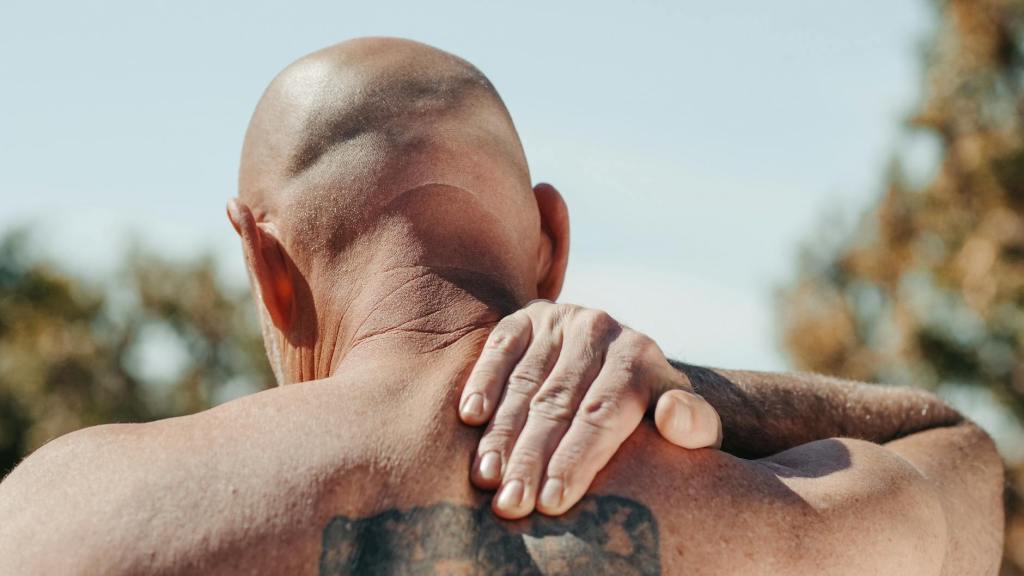
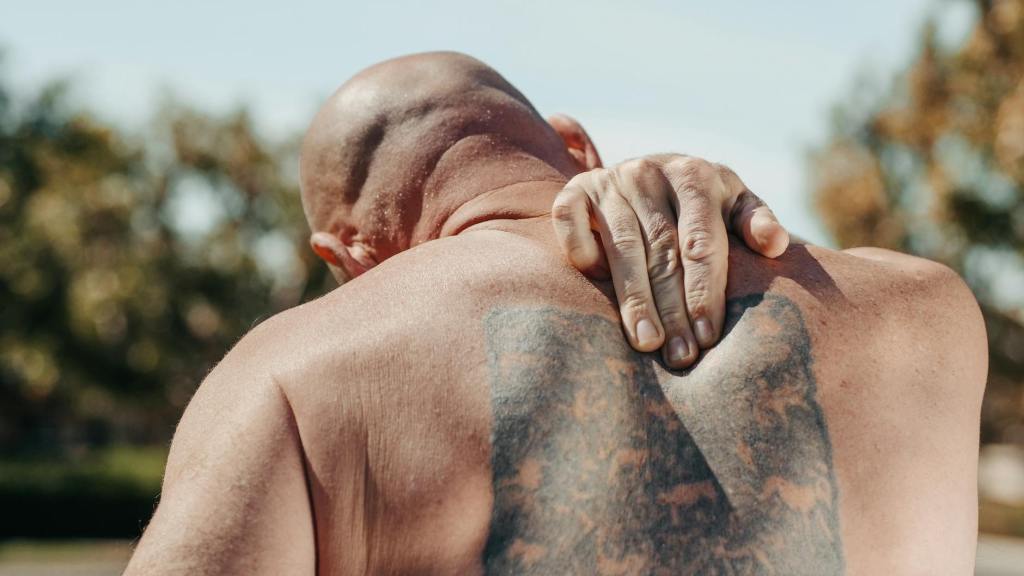
    Six months ago, I didn’t tear my left rotator cuff in a moment of heroism or catastrophe. There was no dramatic pop, no cinematic collapse. This was a slow, quiet betrayal—the accumulated result of too many kettlebell sessions, too much weight, and too few rest days. Overtraining doesn’t announce itself. It keeps a ledger. One day the bill comes due.

    The injury delivered more than pain. It delivered anxiety. Every movement carried a whisper of threat: one wrong reach, one careless angle, and the shoulder might unzip itself. I moved cautiously, slept poorly, and began a small, private relationship with fear. I visited the doctor, the physical therapist, and the ultrasound technician. I chose the conservative path—no MRI, no surgery—just the long road of rehab: light weights, resistance bands, patience.

    Subjectively, the progress is real. Mobility has improved. Pain has eased. I’d estimate I’m about 70 percent back. But the injury has one cruel habit: the 3 a.m. wake-up call of throbbing pain. Lying still is the enemy of a damaged shoulder. Arthritis settles in like a squatter. The strange irony is that movement helps. Blood flow is medicine. A light workout often feels better than rest, which violates every instinct you have when something hurts.

    The questions, however, remain. If full mobility returns in a few months, will the nighttime arthritis fade, or is this now part of the landscape? When I’m “healed,” does that mean I can return to moderate kettlebell presses, or is the future a permanent treaty with lighter loads and humility? Injury has a way of rewriting your contract with ambition.

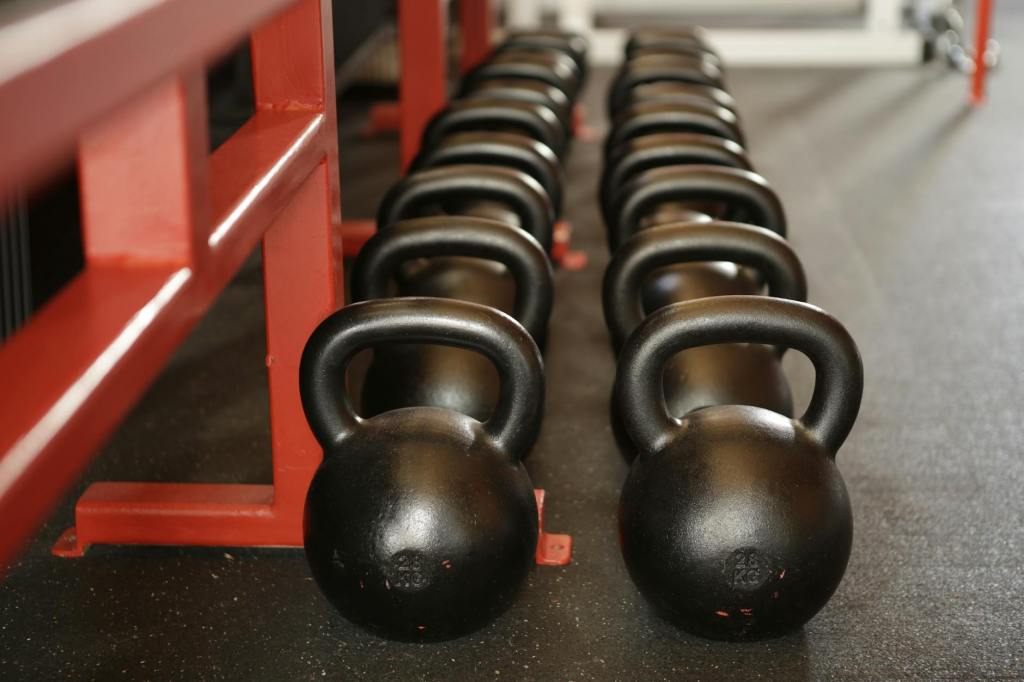
    My current training schedule reflects that renegotiation: two kettlebell sessions, two power yoga sessions, and two rounds a week on the Schwinn Airdyne—the machine I’ve come to call the Misery Machine. Kettlebells and yoga feel like disciplined bliss. The Airdyne feels like punishment administered by a research facility with questionable ethics. I’m less a human being and more of a lab rat. I don’t exercise on it so much as survive it.

    If the bike is the physical grind, the real psychological battle is food. I know what to eat. I actually crave healthy food. My staples read like a nutritionist’s love letter: buckwheat groats, steel-cut oats, chia, hemp, pumpkin seeds, molasses, soy milk. High protein. High magnesium. Clean and intentional.

    The problem isn’t what I eat. It’s how much—and why. Food is how my family connects. A couple nights a week means takeout. Mendocino Farms sandwiches that arrive with the caloric density of a small planet. Bread, desserts, shared indulgence. These moments feel like love, and they also keep me about thirty pounds heavier than I’d like to be.

    There’s a hard truth here that no diet book can soften: you can’t pursue food like a hobby and expect to look like a fitness model. Appetite has consequences. Pleasure has a price. At some point you stop negotiating with reality, make your choices, accept the outcome, and move forward without the luxury of self-pity.

    The shoulder, at least, is improving. Slowly. Imperfectly. But better.

  • Watch Hermit Mode

    Watch Hermit Mode

    At a certain point in the hobby, something subtle and irreversible happens: your internal rhythms begin to synchronize with the mechanical rhythms on your wrist. Time is no longer something you check; it is something you become. Welcome to Watch Hermit Mode—the state in which life is reorganized around precision, predictability, and the closed-loop efficiency of a well-regulated movement. The world outside is noisy, random, and inefficient. Your world is none of those things. Clothing becomes a uniform, routines run on fixed cycles, social invitations are flagged as system malfunctions, and discretionary hours are redirected toward higher-order maintenance: strap swaps, rotation optimization, wrist-time analytics, and the quiet satisfaction of knowing exactly how your collection is performing. Early mornings, early nights, and aggressive schedule defense are not quirks; they are operational strategy. What begins as efficiency slowly hardens into elective isolation. You are no longer merely wearing a machine. You are running its operating system.

    The symptoms appear gradually. First comes the 24-Hour Uniform Protocol. One outfit rules them all: sleep, gym, house, repeat. You go to bed in training shorts and a performance shirt, wake up in them, live in them, sweat in them, shower, and replace them with an identical specimen waiting like a spare part. Wardrobe changes are for amateurs and extroverts. You take quiet pride in your textile minimalism while lesser mortals stagger through multiple outfits a day like inefficient prototypes. Like a properly engineered movement, nothing in your system is ornamental. Every component has a function.

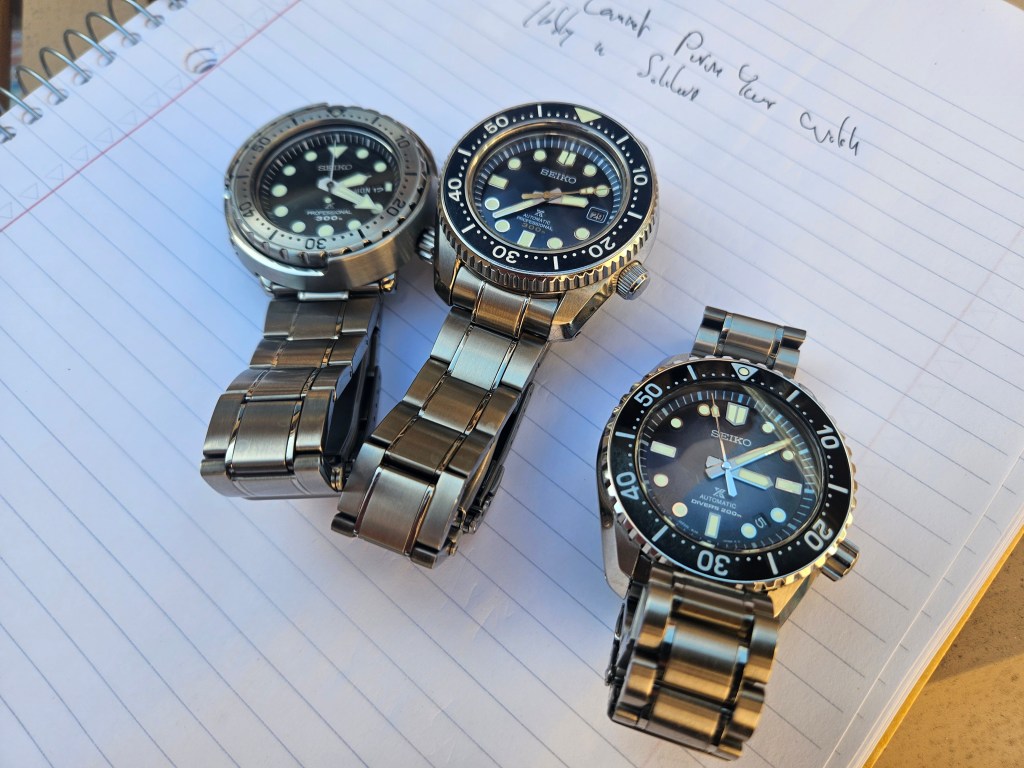
    Next comes the Saturday Night Diver Symposium. While your spouse and her friends are making custom concert signs for a desert music festival, you are at home performing strap swaps with surgical focus, refining a rotation calendar, and updating your annual wrist-time ledger. You know—without irony—that your Seiko Marine Master logged exactly 863 hours last year. This information feels important to you. It is less important to everyone else, who now watches you the way one observes a man who alphabetizes his spices by emotional significance.

    Your tolerance for human friction declines accordingly. Grocery shopping becomes a dawn operation conducted among the sleepwalking and the defeated. The early hour is not about convenience; it is about control. By the time the world wakes up, you have completed coffee, steel-cut oats, kettlebells, macro acquisition, and inventory storage. Bed at nine. Up at five. While the masses drift through their dreams, your system has already executed its morning cycle.

    The final stage is known domestically as Captain Cancel. Social plans are treated as hostile intrusions and neutralized with strategic intelligence: weather risks, parking deficiencies, epidemiological concerns, structural hazards, noise pollution, or the sudden discovery that a once-beloved comedian has not been funny since the Reagan administration. On the rare occasion you attend Taco Tuesday, you insert improvised ear protection, declare a medical issue, and Uber home to safety. The long-term result is operational peace. Invitations cease. The perimeter holds.

    If any of this feels familiar, the diagnosis is clear. You have optimized your life for accuracy, order, and solitude. The chaos of human variability has been replaced by the calm logic of regulated systems. In Watch Hermit Mode, you are not hiding from the world. You have engineered a better one—smaller, quieter, perfectly timed. The door is locked from the inside, the key discarded, and the movement is running beautifully.

  • Rome Wasn’t Built in a Day, and Neither Was a Better Body

    Rome Wasn’t Built in a Day, and Neither Was a Better Body

    Five months into a rotator cuff injury, my left shoulder now runs a morning protest movement. Today it was particularly militant. The arthritis pain was so loud it drowned out my writing, which is saying something, because writing is usually where I go to escape pain, not negotiate with it.

    The solution, as usual, was humility. I picked up light dumbbells and did slow lateral raises—nothing heroic, nothing Instagram-worthy. Just enough movement to get blood into the joint and remind it that we are still partners, not enemies. The pain eased. Ibuprofen helped too, but I’ve learned the hard lesson: skip it for a day, let the inflammation throw a party, and it takes hours to evict the guests.

    Rotator cuff arthritis is a mechanical problem disguised as a moral one. When the joint isn’t tracking well, the socket gets irritated, and the irritation becomes inflammation. Night makes it worse. While you sleep, the synovial fluid thickens into something closer to cold syrup. Morning arrives, and the shoulder feels like a rusty hinge. The cure is movement—gentle, persistent, unglamorous movement. Every time I loosen it up, the joint forgives me a little.

    Training now looks less like conquest and more like diplomacy. Two kettlebell sessions a week, mostly lower body, with some shrugs and narrow-stance knee push-ups—just enough upper-body work to maintain function without provoking rebellion. Power yoga is back three days a week, a return to the early-2000s era of Bryan Kest and Rodney Yee, now supplemented by the Man Flow Yoga channel. I modify poses for the shoulder, but once I settle into the rhythm, the familiar state returns—the quiet, steady current of yoga flow. At this point, the mental repair may be more important than the physical.

    The Schwinn Airdyne—the Misery Machine—has been demoted to one day a week. Left unchecked, I turn cardio into a courtroom, constantly trying to beat yesterday’s calorie output. Competition with yourself sounds noble until it becomes another form of anxiety.

    Underneath all of this sits the larger ambition: weight loss through appetite discipline. Easier declared than achieved. Two nights ago I dreamed I wanted to be lean again but could only get there through GLP-1 drugs (which I’ve never taken). Such a dream is what your subconscious imagines when it has lost faith in your willpower. I’m hovering around 230—solid in a T-shirt, but without the narrower waist that signals to the world (and to my lab results) that discipline has the upper hand. For me, that line is about 210.

    Physical self-improvement is rarely about aesthetics alone. It’s an attempt to become the kind of person who can choose the long-term over the immediate—the kind of person who doesn’t negotiate with every craving. Discipline isn’t punishment. It’s the architecture of a calmer life.

    This question of belief came back to me while watching the documentary Queen of Chess, about Judit Polgar, who fought her way through a male-dominated chess world. Her advice was simple: you have to believe in yourself. The line landed harder than expected.

    But belief doesn’t arrive on command. If your history includes abandoned goals and broken dietary programs, confidence isn’t a mindset—it’s a construction project. It’s built the only way durable things are built: small wins, repeated often enough that the brain stops arguing.

    Rome wasn’t built in a day. Neither is a shoulder. Neither is a waist. Neither is a self you trust.

  • Letting Go of the Bro Code

    Letting Go of the Bro Code

    My friend Lee retired at sixty-one, fled the tech industry, and landed in Santa Fe like a man stepping out of a chrysalis. The move gave him what he said his spirit had been begging for: a clean reinvention. These days he volunteers as a rescue worker at the local ski resort—hauling people out of trouble, useful again, awake in his body.

    My own retirement is eighteen months away, and I feel the same hunger for reinvention—but without the romance of relocation. My wife and kids aren’t uprooting, and neither am I. So if I’m going to change, the terrain has to be internal. I don’t need a new zip code; I need a new relationship with myself.

    Some of this craving is spiritual. Some of it is brutally practical. For the past five months I’ve been rehabbing a torn rotator cuff marinated in arthritis. I tried to negotiate with my kettlebell workouts—adjusting angles, trimming volume, pretending moderation would save me. It half-worked. What didn’t improve was the resentment. In fact, it metastasized.

    I know exactly how I got here. I overdid kettlebells—four days in a row, again and again—until my shoulder finally filed a formal complaint. Now the bells feel less like tools and more like accusations. I still want to train five or six days a week, but the thought of picking them up fills me with a low-grade fury. When resentment becomes chronic, it’s information. Ignoring it is how you end up injured and stubbornly proud about it.

    What I keep circling back to is yoga—specifically my mid-2000s era, when power yoga was my religion. Back when Bryan Kest and Rodney Yee videos taught me that yoga could be punishing, sweaty, and deeply satisfying. One hour. Total exhaustion. Muscles lit up, ego humbled, mind quiet. I want that again—not just the shape of it, but the mental state. I want to get lean. I want a diet that actually complements the practice: simple, semi-vegan, enjoyable. Yoga four days a week. The exercise bike on the others. Nothing heroic. Nothing destructive.

    Of course, underneath all of this is the same old human wish: character. I want a yoga lifestyle that reflects self-possession, self-discipline, and self-confidence—the real currencies of happiness. Not indulgence. Not macho theater. If I’m going to retire in the Southern California suburbs, fine. But I can’t be the retired guy slowly maiming himself in the garage, clinging to an identity that no longer serves him.

    Yoga never hurt me. Not once. It always left me clearer, calmer, and stronger in ways that mattered. As a lifetime weightlifter, I’m realizing I need to let go of the Bro-Coding and Bro-Signaling that once fed my pride. What is a real man, anyway? It isn’t someone chasing pump and punishment while overeating and limping through life. It’s someone fit, injury-free, and genuinely disciplined.

    Lee rescues skiers. I admire that. But before I can rescue anyone—before I can reinvent anything—I have to rescue myself first.

  • Why Your Watch Doesn’t Make You Happy Anymore

    Why Your Watch Doesn’t Make You Happy Anymore

    To understand the madness of the modern watch addict, you’d do well to consult Dopamine Nation by Stanford psychiatrist Anna Lembke, a book that should be shelved somewhere between philosophy, neuroscience, and quiet screaming. Her central thesis? In an age of relentless indulgence, the line between pleasure and pain is not only blurry—it’s the same neurological pathway. You’re not escaping pain with your latest acquisition. You’re feeding it.

    “The smartphone,” she writes, “is the modern-day hypodermic needle.” And the drug? Dopamine—delivered in neat little parcels: TikToks, tweets, memes, and yes, wrist shots of watches you don’t own (yet). If you haven’t met your poison of choice, don’t worry. It’s just a click away.

    Lembke makes the uncomfortable truth clear: The more dopamine hits we seek, the more our brain adapts by reducing our baseline pleasure response. What once thrilled you—your grail watch, your Rolex Explorer, your Seiko with the Wabi-Sabi patina—now barely registers. You’re not chasing pleasure anymore. You’re just trying to feel something.

    Watch addicts, of course, understand this intimately. The pursuit of horological perfection starts out innocent enough: a G-Shock here, a vintage diver there. But soon you’re tumbling into the abyss of boutique limited editions and message board enablement, haunted by the need to stay relevant. Because here’s the twist: It’s not just about the watches. It’s about being seen. You post, you review, you flex because if you stop, you vanish. No new watches = no new content = digital extinction.

    And extinction, in a social-media world, feels like death.

    Lembke warns us that addiction thrives in secrecy, in the exhausting double life. The watch addict may present as a tasteful minimalist to family and friends, while secretly rotating 19 watches, five straps deep, waiting for the next “drop.” The addiction is fed by access, and we live in an access economy. New releases are no longer annual events—they’re hourly temptations. The vortex is bottomless. The supply creates the demand.

    Even worse, modern society normalizes this behavior. Everyone is scrolling. Everyone is upgrading. Our addiction to novelty is passed off as taste. Our frenzied consumption masquerades as identity. Lembke borrows from Philip Rieff to explain the deeper shift: “Religious man was born to be saved; psychological man is born to be pleased.” The modern watch collector doesn’t believe in salvation. He believes in configuration.

    But here’s the cruel irony: The more you seek to be pleased, the less capable you are of being pleased. In Lembke’s words: “Hedonism, the pursuit of pleasure for its own sake, leads to anhedonia—the inability to enjoy pleasure of any kind.”

    You can understand the watch addict’s feeble quest when you look at the Horological Dopamine Loop–the self-reinforcing cycle in which acquisition, posting, validation, and anticipation replace enjoyment. The watch no longer delivers pleasure; it merely resets the craving for the next hit.

    What’s the solution? A dopamine fast. Lembke prescribes it like a bitter medicine: Remove the source. Reset the brain. Let it reestablish homeostasis. For the watch addict, this means one thing: a watch fast.

    And yes—it’s brutal. I’ve been a watch obsessive for over twenty years. My longest fast? Six months. And I nearly went feral. New releases tempt. Friends enable. Algorithms whisper. Strap swaps and vintage reissues beckon like sirens. Even the FedEx truck starts to look like a personal tormentor.

    So you get creative. You stash watches in the safe and “rediscover” them. You buy new straps instead of new watches. You try to redirect the compulsion toward something productive: fitness, music, sourdough, monkish austerity. Anything but another chronograph.

    But the real cure, oddly enough, may be conversation—actual human connection. At watch meet-ups, we start out discussing bezels and spring bars, but within ten minutes we’re talking about life: real estate, parenting, knee surgeries, emotional burnout, dinner recipes. We talk for hours. But barely about watches.

    The truth slips out in these moments: we want to be free. We crave community more than we crave sapphire crystals. What began as a shared obsession has become a trap, and these conversations, paradoxically, offer relief from the very addiction that brought us together.

    Imagine a bunch of watch enthusiasts at a watch meet-up and we’re talking about everything but watches. Wrap your head around that.

  • How We Went from Breakfast Mascots to Political Tribes

    How We Went from Breakfast Mascots to Political Tribes

    A few nights ago, I watched Big Vape: The Rise and Fall of Juul, the four-part autopsy of a company that promised salvation from combustible cigarettes and instead managed to hijack a generation’s taste buds. Juul framed itself as a public-health crusader. What it actually built was a sleek delivery system for addiction, turbocharged by flavors engineered to lodge themselves deep in the dopamine circuitry of young brains.

    Former employees and users all pointed to the same thing: mango. Mango wasn’t just a flavor; it was an event. People didn’t vape mango casually. They marinated in it. Mango was the hook.

    Watching this, I was transported back to my own childhood and my first chemical romance: Cap’n Crunch.

    There was something about that unholy alliance of corn flour, palm oil, and brown sugar that short-circuited my will. I didn’t want moderation; I wanted saturation. My parents imposed limits, which only deepened my resolve to grow up as fast as possible so I could make my own enlightened dietary decisions—namely, Cap’n Crunch for breakfast, lunch, and dinner. I failed to notice the irony that a grown man subsisting on sugar cereal would represent not maturity but infantilization.

    Cap’n Crunch’s true genius wasn’t just sweetness. It was proliferation. The same cereal reappeared in endless costumes—Crunch Berries, Peanut Butter Crunch—each one offering the illusion of choice. King Vitamin was the most audacious iteration: Cap’n Crunch in a health halo, a masterclass in rebranding junk as virtue. Lipstick on a pig, poured into a cereal bowl.

    Then there were the mascots. Quisp the Martian. Quake the muscle-bound coal miner. As a child steeped in superhero comics and Hulk fantasies, I gravitated toward Quake. Strength. Power. Identity. I didn’t realize I was choosing a brand avatar, not a breakfast.

    Cereal companies were having a field day. We watched cartoons while eating the very product being advertised between scenes. It never occurred to us that we were being conditioned—trained to celebrate a non-nutritive food substance that dissolved teeth and rewired appetite. The Juul kids didn’t know it either. They thought they were buying into a sleek, adult lifestyle. What they were really purchasing was dependence, with a mango aftertaste.

    What troubles me now is that adults don’t seem any less susceptible.

    Today, many people consume political tribes the way we once consumed sugar cereal and flavored vapor. Politics has been repackaged as lifestyle branding—complete with slogans, merch, cosplay, and dopamine hits. The substance is thin. The stimulation is constant. Critical thinking is nowhere to be found.

    These aren’t political commitments; they’re identity snacks. Sugar rushes masquerading as convictions. Defense of one’s “views” consists of chanting talking points with the same reflexive loyalty I once reserved for Cap’n Crunch. No wonder the country feels like it’s in free fall. We haven’t grown up—we’ve just swapped mascots.

    We are a nation of adult children, hooked on political flavors the way kids were hooked on cereal and Juul users were hooked on mango. Politics has become a consumer product: addictive, polarizing, shallow, and wildly profitable. All dopamine. No nutrition.

  • My Rotator Cuff Injury Taught Me Patience and Restraint

    My Rotator Cuff Injury Taught Me Patience and Restraint

    I hesitate to say this out loud, for fear of angering whatever capricious deity oversees orthopedic recoveries, but my torn rotator cuff appears to have turned a corner.

    For the first time in five months, I’ve gone without ibuprofen. No chemical truce. No white tablets brokered between inflammation and denial. My range of motion has improved by more than sixty percent, and for two nights in a row I’ve slept without that familiar 4 a.m. arthritis ambush—just a bit of stiffness, the kind that registers as information rather than alarm.

    When discomfort does surface, I can quiet it with embarrassingly small interventions: lateral raises with a three-pound dumbbell, posterior-delt pulls using a resistance band anchored to a garage wall strut. Movements so light they feel like apologies. And yet—they work.

    Two weeks ago, an ultrasound revealed inflammatory fluid. The doctor promptly suggested the modern holy trinity: cortisone shot, MRI, and escalation. I declined all three. Why submit to a needle when the pain isn’t screaming? Why enter an MRI tube when claustrophobia turns it into a medieval punishment device? And why rush toward surgery when my rehab therapist, calm and unflappable, says I’ll heal just fine without it?

    So I stick with what got me here.

    Careful shoulder work. Kettlebell leg training. Trap shrugs. Slow, deliberate cleans. Reverse curls. Close-hand push-ups on my knees—humbling but honest. Anything that irritates the shoulder—dumbbell flyes, grand gestures, heroic nonsense—gets cut without appeal. I’ve become ruthless in the best way. No bargaining. No ego.

    Injury has a way of clarifying priorities. You don’t truly appreciate the orchestration of a whole body until one part goes rogue and holds the rest hostage. Healing teaches restraint. Progress rewards patience. And recovery, when it finally begins, feels less like triumph than like a quiet ceasefire—one you’re careful not to violate.

  • Discretionary Use Principle

    Discretionary Use Principle

    The Discretionary Use Principle begins with a simple but demanding claim: tools are not inherently good or bad, but they become harmful when used without judgment, proportion, or purpose. Whether we are talking about food, technology, or media, the decisive factor is not purity but discretion—our ability to choose deliberately rather than reflexively. The principle rejects both absolutism and indulgence. It argues instead for a calibrated life, one that privileges nourishment over stimulation, depth over convenience, while still recognizing that modern life occasionally requires shortcuts. This framework is especially useful when thinking about analog versus digital living, where moralized categories often replace careful thinking.

    It is wise to carve out a large, non-negotiable block of each day in which machines are politely but firmly excluded—no screens glowing like anxious faces, no notifications tugging at your sleeve, no algorithm whispering what to want next. Go hike where the trail refuses to optimize itself. Lift weights in a garage with nothing but an AM radio crackling like a distant campfire. Write dreams and grievances by hand in a clothbound notebook while Bach or Coltrane keeps time. This is the analog world, and it feeds parts of the nervous system that silicon cannot reach. In this sense, analog living resembles whole foods: salmon that still tastes like water and muscle, almonds that require chewing, blueberries that stain your fingers. The more time you spend here, the less bloated your spirit becomes. Digital life, by contrast, often behaves like ultra-processed food: frictionless, hyper-palatable, engineered for compulsive return, and strangely unsatisfying no matter how much you consume.

    That analogy works—until it doesn’t. Not all analog living is virtuous, just as not all “whole foods” are benign when eaten without restraint. A steady diet of eggs, clotted cream, or beef heart can quietly undo you. Likewise, not all digital experience is junk. There are serious conversations on social platforms, lucid Substack essays, and educational YouTube channels that sharpen rather than dull attention. The mistake comes when we moralize categories instead of exercising judgment. Ultra-processed food is not a single moral villain; “processed” names a method, not a fate. Steel-cut oats, frozen berries, tofu, canned beans, and whole-grain bread are processed and still nutritionally intact. Even within the ultra-processed aisle, a minimally sweetened protein bar is not the same organism as a fluorescent snack cake designed to bypass satiety. The real danger is not processing itself but the familiar cartel of refined starches, added sugars, industrial fats, flavor engineering, and low nutritional payoff.

    Seen through the Discretionary Use Principle, the lesson is neither to flee the digital world nor to surrender to it. Eat whole foods most of the time. Live analog for long, uninterrupted stretches. But do not shun all processed foods or digital tools out of misplaced virtue. Use them when discretion, efficiency, and purpose demand it. Health—nutritional or psychological—is not preserved by purity tests. It is preserved by attentiveness, proportion, and the ongoing discipline of choosing nourishment over convenience, again and again, without pretending that the choice will ever be automatic.

  • Diary of a Shoulder That Tried to Kill Me

    Diary of a Shoulder That Tried to Kill Me

    I posted a YouTube video confessing that my torn rotator cuff cured me of my watch addiction. I braced for scolding: “How dare you upload non-watch content?” I imagined angry horology fanatics clutching diver bracelets and pearl-clutching over my betrayal. Instead, the algorithm delivered mercy. The view count was business as usual. The comments, however, were a grim roll call of the maimed.

    They arrived like pilgrims to a shrine of damaged shoulders. Chronic pain veterans, many of them familiar names from the watch trenches, sent dispatches: stalled healing timelines, depression so thick it sits on your chest, isometric training as penance, and farewell notes to heavy lifting. A few newcomers drifted in, summoned by the wretched deltoid-algorithms that sort humanity into suffering tribes.

    Every story hit the same grim notes: rage, dread, self-pity, and nihilism. There it was again, that quiet void whispering, “Nothing matters anymore.” Nihilism is simply the rotator cuff of the soul—an internal tear that immobilizes you far longer than the physical one.

    I haven’t officially become a miserablist. Not yet. I still haunt my garage gym like a stubborn ghost. Goblet squats, double-hand swings, straight-leg deadlifts. Russian twists. A triceps exercise called Skull-crushers—named because the kettlebell would slam into your forehead if you lose focus for half a second. I use a twenty-pounder. I’m vain, not suicidal. My push-ups are a sort of prayer: on my knees, arms tucked like a sphinx, rising slowly as if coaxing life back into my triceps.

    This morning I feel a good soreness in my triceps, the soreness that whispers, “You’re still in the game.”

    Yesterday, mid-workout, two revelations hit me like kettlebells to the temple. First, the smoking gun: the injury didn’t come from ordinary training. It came from that medieval torture move known as the “lawnmower row.” You lean over and yank the kettlebell skyward like you’re trying to start a balky Briggs & Stratton. I blocked that memory for weeks—like someone trying to forget a bad romance.

    Second, I realized the injury was gentler in its early days. I know this because I still did “around-the-worlds”: passing a 70-pound kettlebell around my body in clockwise and counterclockwise orbits like a makeshift solar system. Yesterday, with a much lighter bell, I could barely scrape a half-circle before my left shoulder screamed mutiny. I didn’t just injure myself—I worsened it with the zeal of a true believer.

    So this December  of 2025 becomes a tightrope: train enough to fend off atrophy and rigidity, but not so much that the rotator cuff tears in half like wet parchment. This is the gospel of injury: moderation, humility, and the patience of a monk.

    If I were naïve enough to trust the publishing industry, I might dream of spinning this into a 70,000-word memoir. A blockbuster chronicling not only the physical agony but the psychological descent into pain-induced existentialism. The masses would see themselves in it. I might become rich. I might become famous. And yet, between two futures—a healthy shoulder and obscurity, or torn rotator cuff and celebrity cripple memoirist—I’d take the intact tendon every time. I’d rather be an anonymous man in a quiet garage than a limping prophet of pain and book deals.