Tag: writing

  • SZA in Our House: Why My Daughters and I Sigh When Taylor Swift Comes On

    SZA in Our House: Why My Daughters and I Sigh When Taylor Swift Comes On

    In my freshman writing class, I recently staged a little spectacle about thesis statements. To illustrate contrast, I pulled out two cultural heavyweights: SZA and Taylor Swift. Hyperbole was the hook. My admiration for SZA was real; my critique of Swift was exaggerated for theatrical effect. Still, my tirade sounded more like a roast than a teaching tool:

    “While Taylor Swift may rack up 25% more Spotify streams than SZA, numbers don’t tell the whole story—unless, of course, you mistake a stadium chant for art. SZA sings with depth and raw emotion, while Swift wheezes through her catalog like an underfed Victorian orphan. SZA’s sound is bold, kaleidoscopic, and alive, drawing from the lush soul of the ’70s. Swift, meanwhile, serves up limp sonic garnish—music with the texture and excitement of a wilted celery stalk rescued from beneath the fridge. SZA makes adult art; Swift makes musical mac and cheese for the kid’s menu at Chili’s.”

    In reality, I don’t think Swift is a wasteland of celery stalks and Victorian wheezing. I admitted to my students that Swift is likely a good person, a competent artist, and that I wish her well. My guilt lingered, though. Bombast is a teaching trick, but sometimes the fire singes the wrong target.

    That guilt sharpened when I stumbled across Spencer Kornhaber’s “How Did Taylor Swift Convince the World That She’s Relatable?” over morning coffee. One line hit me like a cold shower: “The most consequential American singer of the past 20 years, Swift can claim commercial achievements that equal or surpass those of the Beatles, Madonna, and Michael Jackson.”

    Relatability is her true superpower. Swift has broadcast her heartbreaks, doubts, and longings in ways that make her sound like a big sister or Greek chorus to her fans’ lives. Her brand isn’t just pop—it’s therapy with a backbeat.

    Kornhaber nails it: “Listening to a Swift song is like eating a candy bar that transmits a personal essay into your memory. If you eat enough candy bars, it becomes a novel, and then a series of novels, and then (this is when you become a Swiftie) a virtual-reality, open-world video game you play with friends and strangers.” It’s a metaphor that could apply to any great artist. I thought of The Truman Show, where daily life becomes the commodity, the spectacle, the art.

    Swift deserves her accolades. She is a master craftsman of polished, radio-ready memoir-pop. But her songs still strike me as a touch bland, like a dependable frozen dinner—satisfying but forgettable. My twin daughters agree. When a Swift track seeps out of SiriusXM Coffee House, we sigh in unison and silently wish it were SZA.

  • When the Levees Broke, So Did the Nation

    When the Levees Broke, So Did the Nation

    The documentaries Hurricane Katrina: Race Against Time (Hulu) and Katrina: Come Hell and High Water (Netflix) are searing indictments as much as they are testaments to survival. They tell the story of a singular city—New Orleans, a cultural jewel—betrayed and abandoned by its own nation.

    Told through the voices of those who endured the storm in 2005, these films lay bare a fourfold sin against the people of New Orleans.

    First sin: red-lining. Decades of discriminatory housing policies corralled Black families into neighborhoods below sea level—neighborhoods left exposed to catastrophe—while white families secured higher, safer ground. Yet out of this coerced geography bloomed community, kinship, jazz, art, and a way of life so distinctive that New Orleans became not just a city but a state of mind.

    Second sin: neglect. The protective marshlands were carved away, the levees shoddily built, the safeguards ignored. What should have been natural resilience was dismantled piece by piece, until a storm became a man-made massacre.

    Third sin: abandonment. When the waters rose, thousands of citizens waited for rescue that never came. They suffered hunger, thirst, illness, despair. Bureaucracies paralyzed by incompetence and poisoned by political rivalry left them stranded—leaders too intent on humiliating one another to save lives.

    Fourth sin: defamation. Media outlets, infected with racism, painted Black survivors as looters and criminals while white survivors were depicted as resourceful and brave. Rumors of sniper fire and marauding gangs turned aid missions into militarized standoffs, with the National Guard pointing rifles at the very people they were sent to save. These lies fueled white vigilantes who hunted Black residents as if the collapse of law gave them license to kill.

    This fourfold betrayal is almost unbearable to watch, yet threaded through the grief is a resilient beauty: the music, the food, the language, the humor, the love of place that make New Orleans irreducible. Katrina remains one of America’s most shameful chapters—but also a reminder that the soul of New Orleans is larger than its wounds.

  • The Lobster That Lifted Kettlebells

    The Lobster That Lifted Kettlebells

    Last night, I slipped into a dream where I was less man and more detective cliché: trench coat, team at my side, the whole noir package. We prowled the tiled underworld of a health club, where women lay dead in the shower stalls. The air carried a rank perfume—pungent, briny, unmistakable. It was the signature of our quarry, The Alligator Man, a serial killer who apparently marinated in fish guts before slaughter.

    Our trap was absurd but effective. We laced another health club’s showers with his own scent, as if baiting him with eau de swamp monster. Sure enough, the predator slithered into the stall, and I lunged. But instead of the hulking brute I expected, I clutched a young, handsome man, small enough to vanish in a crowd. His boyish face said innocent; his stench said otherwise. I locked eyes with him and announced, with grim satisfaction, that he was evil—and that evil was about to rot in a cell forever.

    Then, with dream logic’s usual whiplash, I found myself at a holiday party with my family. My wife had crafted me a lobster costume: claws for hands, a scarlet exoskeleton, and a hat shaped like a boiled crustacean’s head. I looked like a seafood platter at a masquerade ball. I ate cake while dodging feline landmines—the hosts’ cats had redecorated the house with cat mess. The carpet was stained with these “accidents.” With cake fork in hand, I declared this exhibit A for my lifelong “no pets policy.”

    The party oozed past midnight into the pale gray of morning. Bored stiff and craving endorphins, I trudged home. Still zipped inside my lobster suit, I cranked up a kettlebell workout in the living room. My claws clacked as I swung iron, the sweat pooling beneath my polyester shellfish skin.

    Headlights swept across the window. My wife and twin daughters walked in. I assumed they, too, had abandoned the litter-box bacchanal. She spotted me mid-squat, lobster claws snapping, and didn’t so much as flinch. I worried she’d rage over my soaking her handmade costume in salt and sweat. Instead, she simply yawned, brushed past my lobster theatrics, and announced she was going to bed. Evil had been vanquished, cats had soiled carpets, and the lobster workout was apparently just another Tuesday in her world.

  • Typepad, R.I.P.: Obituary for a Dinosaur

    Typepad, R.I.P.: Obituary for a Dinosaur

    In 2006, I wandered into the Wild West of self-publishing and signed up with Typepad. Back then, blogs felt like a revolution: you could pour your obsessions straight into the digital void without begging gatekeepers for approval. I created three: Herculodge, where I indulged my radio fixation; The Breakthrough Writer, course content for my freshman comp class; and The Critical Thinker, the companion for my critical thinking students. Typepad cost me about $150 a year—a fair price for a soapbox in the dawn of the Blog Era.

    But by April 2025, my soapbox had turned into a rickety stool. Typepad was wheezing like a geriatric dinosaur stumbling into an unfamiliar world: constant downtime, glacial load times, the unmistakable stink of neglect. Research confirmed my suspicion—it had been sold, stripped for parts, and left to rot. I canceled my subscription. Out of nostalgia, I kept Herculodge in basic mode, mainly because its archive of radio reviews was still linked to Thomas Witherspoon’s venerable SWLing Post, a site that embodies everything good about radio: community, continuity, and voices across the airwaves.

    But in truth, Herculodge had gone dormant long ago. After the 2025 wildfires in Los Angeles, I went on a spree, bought a dozen radios, reviewed them all, and then, slowly, stopped. The flame flickered, and I moved on.

    Yesterday the official death notice arrived: “We have made the difficult decision to discontinue Typepad, effective September 30, 2025.” Translation: pull the plug, bury the dinosaur.

    This little obituary for Typepad drags me back to the Blog Era, when voices as sharp as Andrew Sullivan’s rose to the level of public intellectuals, while hobbyists like me tinkered in the shadows of niche obsessions, broadcasting to niche audiences. Blogs felt cozy, almost literary: you in a robe, cat on your lap, coffee steaming, ruminating about Virginia Woolf before hitting “publish.” Compare that to today’s Hot Take Era: dopamine-charged combatants spewing rage, preening for likes, and mistaking tribal points for thought.

    The end of Typepad is the end of that quieter world.

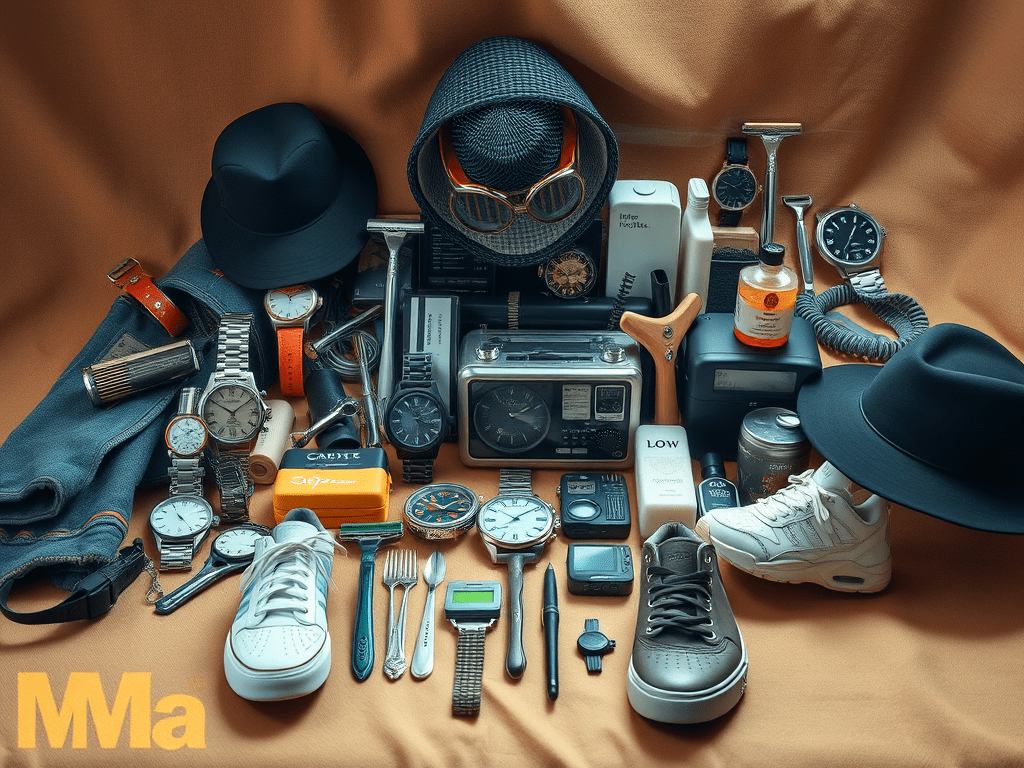
    I’ve since migrated to WordPress, which works better, loads faster, and hasn’t collapsed into irrelevance. I have mixed feelings about AI image generators: sometimes they hit the mark, but mostly they’re garish clip art pretending to be art. Still, I pay two hundred bucks a year to carve out a little order from the chaos, and it’s worth every cent. Cheaper than therapy, and with fewer platitudes.

    Typepad’s death isn’t tragic—it’s just the final shovel of dirt on an era already gone.

  • The Fallacy of False Priorities, Watch Edition

    The Fallacy of False Priorities, Watch Edition

    “The double-minded man is unstable in all his ways.” Guilty as charged. Case in point: my tortured relationship with FKM Divecore straps.

    The Notre Dame study had me spiraling—researchers tortured the material with solvents, heat, and abrasion until they squeezed out PFAS “forever chemicals” and then warned these might leach into human skin. Ever since, I’ve gone back and forth, back and forth, like a malfunctioning metronome, on whether to keep wearing the straps I love more than any other rubber I’ve tried in two decades of watch collecting.

    Of course, no one wants to think of their wristwear as a poison delivery system. But context matters. First, FKM is highly stable under real-world conditions; the lab tests were more horror show than practical scenario. Second, it’s the manufacturing process that endangers workers, not the end-user. Third, if we’re ranking PFAS risks, drinking unfiltered water, eating from PFAS-coated packaging, or cooking on scratched Teflon are solid tens on the risk scale, while wearing an FKM strap is a lonely little one. That’s the Fallacy of False Priorities: panic over the trivial while ignoring the obvious.

    Even so, the issue isn’t a Nothing Burger. Divecore’s own Paul admits handling FKM worries him, and he’s working on alternative materials—silicone, vulcanized silicone, HNBR—to protect his workers and reassure consumers. That’s just smart business.

    Meanwhile, I’m not without options. My strap drawer holds factory Seiko silicones and urethanes, plus top-tier Tropic straps made of vulcanized rubber. They’re fine, but none hold a candle to the sleek perfection of Divecore FKM. I tried swapping them in, but they feel like consolation prizes—serviceable, never glorious.

    So I made a deal with myself: enjoy my pristine FKMs for now, and when the new HNBR or silicone Divecore straps arrive, I’ll switch. Sounds reasonable. Except once you’ve let the idea of PFAS seeping into your skin lodge in your brain, it refuses to leave. I’ve written about it on Instagram, made a YouTube video, and now I’m stuck in an obsessive loop, second-guessing every strap change as though I were rewriting my will.

    Which brings me back to my original point: the double-minded man is unstable in all his ways. And right now, that man is staring at seven watches, toggling between glory and paranoia, wishing he could strap on peace of mind.

  • The Influenza of the Mind

    The Influenza of the Mind

    Last week, one of my teen daughters caught a cold. She shrugged it off with the stoicism of a soldier, and I barely noticed she was sick. Then my wife came down with it five days ago. It hit her harder, but she still managed to run errands, wrangle housework, and conquer the Everest of six laundry baskets stuffed with clothes that needed folding.

    Then there was me. Yesterday, after my afternoon nap, I felt aches and pains and immediately began writing my obituary. Sprawling out on the couch in the living room, I put on the docuseries The Kingdom on ESPN but had to close my eyes, then take another nap because I was “so unwell.” 

    Convinced I was succumbing to something sinister, I staggered into the kitchen and cooked dinner. The salmon, broccoli, and rice all came out overcooked—not because I was incapacitated, but because I was deep into Internet articles about PFAS “forever chemicals.” Nothing like a side of toxic paranoia with your charred protein.

    My family tolerated the burnt offering, attributing it to my alleged illness. But once I slumped onto the couch after dinner to watch Below Deck, I went full opera tenor: sighs, groans, complaints, the whole libretto of impending doom. My family, unimpressed, mocked me. “Illness always makes me morbid and lugubrious,” I explained, as if quoting from a Victorian diary.

    My daughters laughed. My wife rolled her eyes: “Here we go. The man flu.” I thought about citing research suggesting men actually suffer more with the flu, but even I knew I’d already overshared.

    “Maybe you’re just tired,” my wife said. “Maybe you shouldn’t work out tomorrow.”

    I declared that one missed workout would cause my muscles to shrivel like neglected houseplants. “I’m doomed,” I muttered, then retreated to bed before nine like a bereft invalid.

    This morning, I awoke braced for catastrophe—a full-blown cold, a fever, the Grim Reaper at my door. Instead, I felt…fine. Perfectly fine. My wife and daughter had been right. I wasn’t sick. I was just tired.

    The truth is, when I sense illness creeping in, I go from zero to tragic opera in seconds. I suffer from Influenza of the Mind, a performance illness that turns me into a paranoid man-baby. Last night’s theatrics were not the noble struggle of a fading patriarch, but the wailings of a melodramatic hypochondriac in need of nothing more than eight hours of sleep.

  • Classroom Playback: What a Football Player Taught Me About the Hedonic Treadmill

    Classroom Playback: What a Football Player Taught Me About the Hedonic Treadmill

    I’m starting a series I’m calling The Classroom Playback, where I revisit conversations from class discussions and reflect on how they challenged my assumptions. More often than not, I’ve found it isn’t the instructor who does the teaching—it’s the students. This is my first installment.

    I teach a college writing class to the athletic department—an eclectic mix of football bruisers, soccer strikers, volleyball hitters, and water polo warriors. Two days ago, in the context of an essay that addresses a generation of young men who don’t work or study but play computer games in their bedrooms, I introduced the concept of the hedonic treadmill, the cruel little loop in which humans adapt to pleasure until the buzz wears off and they need to crank the dial higher, faster, and louder, until finally the machine spits them out, exhausted and miserable.

    To make the point vivid, I shared a story from a former student. His older brother had dropped out of college, moved back in with mom, and made a religion out of lying in bed. His life consisted of Netflix marathons on a laptop, constant texts to his girlfriend, and a bong glued to his lips. A self-sedated sloth with Wi-Fi.

    So I asked my athletes, “Does this guy sound happy to you?”

    One of the football players, a psychology major with a grin as wide as the end zone, shot up his hand and said, absolutely—this guy was living the dream. No responsibilities, no alarms, no essays. Everyone, he insisted, would be content to live such a life.

    My jaw dropped. A psychology major dazzled by the ecstasy of permanent adolescence? I reminded him—gently but with a sharp edge—that life demands connection, structure, and purpose if humans are to flourish. Without it, the brain rots. He smiled, nodded, and conceded my point. But the nod was polite, the smile indulgent. I wasn’t sure I had actually shaken his conviction that the guy with the bong had cracked the code.

    After the football player declared his envy for the bong-hugging bed-dweller texting his girlfriend, I scanned the room and realized my grand metaphor had belly-flopped. My hedonic treadmill example didn’t land, to use modern parlance. What I intended as a cautionary tale of mental rot registered instead as a spa brochure: Netflix, weed, and endless texting looked less like disintegration and more like a vacation package.

    With fifteen weeks left in the semester, I’ve had to remind myself of two things. First: I can’t demolish their fantasies in one lesson. The hedonic treadmill requires repeat assaults, examples from all angles, until they feel—not just know—the despair of a life without meaning. Clearly, Bong Boy failed to deliver the emotional punch.

    Second: these kids belong to the “I’ll Never Buy a House” Generation. Their skepticism is hardwired. To them, the fantasy of collapsing in bed with Netflix and THC isn’t just laziness; it’s an antidote to the endless hustle culture they know they’ll never escape.

    Therefore, my football player presented me with a lesson: As an instructor, I can’t be myopic and teach ideas such as the hedonic treadmill from a limited point of view. I have to see things through my students’ eyes. 

    I’m close to sixty-four. My students are nineteen. If I want to reach them, I need to remember the golden rule of teaching—or sales, or persuasion of any kind: know your audience, speak to their anxieties, and try to see life through their eyes. Otherwise, you’re not a communicator—you’re just an old, out-of-touch crank with a lecture.

    I want to thank my football player for opening my eyes and reminding me that the classroom is instructional for both instructors and students alike. 

  • No Age Is for Cowards: Worry as Full-Time Employment

    No Age Is for Cowards: Worry as Full-Time Employment

    When I was six, my Grandma Mildred came to visit us at the Royal Lanai apartments in San Jose. This was around 1967. Like any neurotic little kid, I peppered her with endless questions about an upcoming event. Most of them revolved around food: what would we eat, would there be enough, and what if the deviled eggs ran out? Eventually, Grandma sighed and told me, “You worry too much.”

    Really? Another thing to worry about? Thanks, Grandma. Now I could add “chronic worrying” to my list of anxieties. Would it turn me into a puddle like the Wicked Witch? Would I self-destruct under the sheer weight of my own nerves?

    Flash forward fifty-eight years. Spoiler: I still worry like a professional. My bandwidth jams up with the dumbest obsessions—like finding the right rubber strap for my Seiko diver. I’ll lose sleep and dive so deep into Internet rabbit holes you’d think I was chasing doctorates in linguistics and ophthalmological physics simultaneously.

    Food isn’t any easier. Reading How Adam Smith Can Change Your Life, I encountered Hillel’s famous line: “If I am not for myself, who will be for me? If I am only for myself, who am I?” Roberts added that anyone who would sacrifice millions of lives to save a finger is “a monster of inhuman proportions.” Cue existential panic: If I chow down on Greek yogurt and whey protein while ignoring the industrial torture of animals, what kind of person does that make me?

    That question dredged up a memory. Years ago, while doing valet duty at my twins’ school, I chatted with Lucianna, a Brazilian parent. She told me about growing up on her uncle’s dairy farm, where calves were torn from their mothers so humans could have their milk. She remembered the calves wailing all night, a sound so haunting she’s sworn off dairy for life. Her story still rings in my ears.

    So here I am, designing my new plant-based meal plan: buckwheat groats, tofu, tempeh, nut butter, soy milk, a stack of supplements, and protein powder. I’m ready to begin. But, of course, my inner worry machine kicks in:

    • What about my omnivore family? My tofu will feel like an accusation on their dinner table.
    • What about my friends and relatives? I’ll be dismissed as a moral buzzkill, banished to the Lonely Dungeon.
    • What about vacations? Hunting for vegan options in Miami or Oahu will turn relaxation into reconnaissance.
    • What about protein and Omega-3s? My muscles will wither, my brain will curdle, and I’ll be left a vegan husk.
    • What about cheating? What if, in a moment of weakness, I scrape a lemon-pepper shrimp into my mouth while clearing plates? Then I’ll hate myself, because I’ll have violated both my morals and my macros.

    And so the worrying goes. Yet maybe this is the point. Doing the right thing rarely comes gift-wrapped in comfort. It comes with sweat, tension, and plenty of struggle.

    My grandfather once told me when he was eighty and drowning in doctor visits: “Old age is not for cowards.” I’ll amend that. No age is for cowards. Living—really living—means confronting fears, fighting cowardice, and resisting the bondage of compulsive worrying. And if anyone has the secret sauce for escaping this mental hamster wheel, I’m all ears.

  • Building a Bulwark Against Dopamine

    Building a Bulwark Against Dopamine

    Charles Duhigg, in The Power of Habit, insists that the real magic of self-improvement isn’t magic at all—it’s repetition, consistency, and time. Muscle memory married to good habits rewires the brain so that willpower stops being a daily knife fight. Instead, habits act as a bulwark, a fortification that keeps temptation outside the walls.

    Take my relationship with German Chocolate Cake. I adore it. But I eat it once a year because I never buy it. The thought of driving downtown, circling for parking, and elbowing through bakery lines kills the craving faster than broccoli. If people on TV are flaunting cake, I’ve trained myself to default to popcorn and an apple, which is like swapping bourbon for chamomile tea. Still, despite this culinary Maginot Line, I live fifteen pounds heavier than I want to be—proof that the fortress has weak spots.

    The Internet, however, is a stronger adversary than cake. Social media rewires the brain more ruthlessly than sugar. Twitter/X trained me to think in quips, Facebook taught me to beg for likes like a starving dog scratching at the door. I finally quit both. I post on Facebook once a month and promptly forget about it. I’m saner for it.

    But YouTube? That’s my heroin. I’ve been making watch-obsession videos for over a decade and built a modest following of 10,000. When a video pops, YouTube showers me with fireworks like a slot machine jackpot. When it flops, I get a scolding message: “This video isn’t bringing in as many of your subscribers as usual.” It’s the algorithm wagging its finger like a principal telling me I’ve failed society.

    YouTube has rewired my brain in both noble and grotesque ways. On the one hand, I’m sharper at public speaking, better at spinning essays into expositions, and more skilled at civil engagement with various personalities. On the other hand, I care too much about metrics, let them colonize my self-worth, and live half my life inside the algorithm’s funhouse mirror. I now inhabit parallel universes—the physical world and the YouTube world—fleeing one when the other displeases me.

    The problem is that the Internet’s temptations can’t be quarantined. My work machine is also my dopamine slot machine. One new tab, one click, and I’m plunging into a carnival of junk content, drenched in FOMO syrup and neon distraction. Cal Newport is right: when you toggle between focused work and dopamine junk food, the brain leaves behind a sticky residue that smothers concentration. I’ve felt that sludge firsthand, and I despise myself for swimming in it.

    As Duhigg notes, the brain is “constantly looking for ways to save effort” by making routines automatic. That’s useful for the monk who wakes at dawn to meditate, but disastrous for someone whose screen offers the New Tab to Nowhere. If only I could build a stronger bulwark against the carnival in my browser, I might actually live lighter, work deeper, and—dare I say it—be happier.

  • Why Ideas Still Matter in a World of Machines

    Why Ideas Still Matter in a World of Machines

    One of my colleagues, an outstanding writing instructor for more than two decades, has mapped out her exit strategy. She earned a counseling master’s degree, recently completed her life coach certification, and told me she no longer believes in the mission of teaching college writing. Assigning prompts to students who submit AI-generated essays feels meaningless to her—and reading these machine-produced pages makes her physically ill.

    Her words jolted me. I have devoted nearly forty years to this vocation, a career sustained by the assumption that teaching the college essay is an essential skill for young people. We have long agreed that students must learn how to shape chaos into coherence, confront questions that matter to the human condition, write with clarity and force, construct persuasive arguments, examine counterpoints, form informed opinions, master formats, cultivate an authorial voice, and develop critical thinking in a world overflowing with fallacies and propaganda. We also teach students to live with “interiority”—to keep journals, build inner lives, and nurture ideas. These practices have been considered indispensable for personal and professional growth.

    But with AI in the picture, many of my colleagues, including the one planning her departure, now feel bitter and defeated. AI has supplanted us. To our students, AI is more than a tool; it is a counselor, therapist, life coach, tutor, content-generator, and editor that sits in their pockets. They have apps through which they converse with their AI “person.” Increasingly, students bond with these “people” more than with their teachers. They trust AI in ways they do not trust professionals, institutions, or the so-called “laptop class.”

    The sense of displacement is compounded by the quality of student work. Essays are now riddled with AI-speak, clichés, hollow uniformity, facile expressions, superficial analysis, misattributed quotations, hallucinated claims, and fabricated facts. And yet, for the professional world, this output will often suffice. Ninety-five percent of the time, AI’s mediocrity will be “good enough” as workplaces adjust to its speed and efficiency. Thus my colleagues suffer a third wound: irrelevance. If AI can produce serviceable writing quickly, bypassing the fundamentals we teach, then we are the dinosaurs of academia.

    On Monday, when I face my freshman composition students for the first time, I will have to address this reality. I will describe how AI—the merciless stochastic parrot—has unsettled instructors by generating uncanny-valley essays, winning the confidence of students, and leaving teachers uncertain about their place.

    Still, I am not entirely pessimistic about my role. Teaching writing has always required many hats, one of which is the salesman’s. I must sell my ideas, my syllabus, my assignments, and above all, the relevance of writing in students’ lives.

    This semester, I am teaching a class composed entirely of athletes, a measure designed to help with retention. On the first day, I will appeal to what they know best: drills. No athlete mistakes drills for performance. They exist to prepare the body and mind for the real contest. Football players run lateral and backward sprints to build stamina and muscle memory. Pianists practice scales and arpeggios to ready themselves for recitals. Writing drills serve the same purpose: they build the foundation beneath the performance.

    My second pitch will be about the human heart. Education does not begin in the brain; it begins when the heart opens. Just as the athlete “with heart” outperforms the one without it, the student who opens the heart to education learns lessons that endure for life.

    I will tell them about my childhood obsession with baseball. At nine, I devoured every Scholastic book on the subject I could order through Independent Elementary. Many of my heroes were African-American players who endured Jim Crow segregation—forced into separate hotels and restaurants, traveling at great risk. I read about legends like Satchel Paige and Josh Gibson, barred from Major League Baseball because of their race. Through their stories, I learned American history not as dates and facts, but through the eyes of men I revered. My heart opened, and I was educated in a way my schoolteachers never managed.

    I will also tell them about my lost years in college. I enrolled under threat of eviction from my mother and warnings that without higher education, I faced a life of poverty. I loathed classrooms, staring at the clock until I could escape to the gym for squats, deadlifts, and bench presses. Yet in an elective fiction class, I discovered Kafka—how he transmuted his nightmarish inner life into stories that illuminated his world. Then Nabokov, whose audacious style made me long to write with the same confidence, more than I ever longed for a luxury car. If I could capture Nabokov’s authority, I thought, I would be like the Tinman receiving his heart. I would be whole.

    These changes did not come from professors, institutions, or—certainly—not AI. They came from within me, from my heart opening to literature. And yet, a sobering realization remains: the spark for me came through reading, and I see little reading today. I am not dogmatic—perhaps today’s students can find their spark in a documentary on Netflix or an essay on their phones. What matters is the opening of the heart.

    I cannot deny my doubts about remaining relevant in the age of AI, but I believe in the enduring power of ideas. Ideas—true or false—shape lives. They can go viral, ignite movements, and alter history.

    That is why my first assignment will focus on the Liver King, a grifter who peddled “ancestral living” to young men desperate for discipline and belonging. Though he was exposed as a fraud, his message resonated because it spoke to a generation’s hunger for structure and meaning. My students will explore both the desperation of these young men and the manipulations of Bro Culture that preyed upon them.

    Ideas matter. They always have. They always will. My class will succeed or fail on the strength of the ideas I put before my students, and I must present them unapologetically—defended with both my brain and my heart.