Tag: writing

  • When It comes to Swim Briefs the Size of a Hotel Mint, Maybe Opt Out

    When It comes to Swim Briefs the Size of a Hotel Mint, Maybe Opt Out

    Today’s New York Times article, titled “Skimpy Men’s Swimming Briefs Are Making a Splash,” offers a solemn dispatch from the front lines of GLP-1 drugs, but I would guess that men—having exhausted every form of visible self-optimization—are now expressing their Ozempic-enabled slenderness via tiny, Lycra-clad declarations of status. We’re talking male bikinis, or what I like to call the ego sling.

    Apparently, if you’re dropping $18,000 a year to chemically suppress your appetite and shed your humanity one subcutaneous injection at a time, you deserve the privilege of looking like a Bond villain’s pool boy. I suppose this is the endgame: pay to waste away, then wrap what’s left in a luxury logoed banana peel.

    Luxury houses, never ones to miss a chance to monetize body dysmorphia, are now marketing these second-skin briefs not as mere swimwear, but as power statements. To wear them is to say: “I’ve defeated fat, joy, modesty, and comfort in one fell swoop.”

    I’m almost 64. My aspirations remain high—ideally, I’d like to look like a special-ops operator on vacation in Sardinia. But I know my place. I wear boxer-style swim trunks, the cloth of the pragmatic and the semi-dignified. They’re not exciting, but neither is seeing a sun-leathered septuagenarian adjust a spandex slingshot over a suspicious tan line.

    There’s a difference between being aspirational and being delusional. The former means striving for vitality, strength, and energy. The latter means stuffing yourself into a satirical undergarment and pretending you’re 28 with a sponsorship deal.

    To my fellow older men: sculpt your body like it’s your spiritual obligation—but when it comes to swim briefs the size of a hotel mint, maybe opt out. Not every part of youth is worth reliving. Some of it deserves to be left in the chlorine-stained past, right next to Axe body spray and Ed Hardy tank tops.

  • The Manuscript Awakens: A Dugout Vision from the Collective Unconscious

    The Manuscript Awakens: A Dugout Vision from the Collective Unconscious

    Last night I dreamed I was striding across a wind-blown grassy knoll, the kind of landscape that smells faintly of unresolved ambitions and freshly cut ego. Out of nowhere—because where else do these things happen?—a panel of vaguely official-looking figures appeared, cloaked in bureaucratic smugness, and awarded me the managerial reins of a baseball team unlike any other: it was helmed, inexplicably yet inevitably, by Leonardo DiCaprio.

    Yes, that DiCaprio—Oscar-winner, yacht philosopher, professional man-child. He looked fantastic in cleats.

    Suddenly, the gentle slope of the grassy knoll rippled like a stage set being pulled away, and in its place emerged a full-fledged baseball diamond, etched into the earth as if by divine groundskeepers. The green gave way to precisely mowed outfield grass, bordered by crisp white chalk lines that glowed with supernatural brightness. Dugouts pushed up from the soil like subterranean bunkers, complete with splintered benches and battered Gatorade coolers. Bleachers unfolded in rows, metallic and sun-bleached, teeming with phantom spectators whose shadows twitched in anticipation. The air smelled of dust, pine tar, and something mythic.

    As I issued cryptic signals from a dugout made of dark oak and existential dread, DiCaprio tore around the bases with uncanny precision. But this wasn’t just sport. Oh no. With every base he stole, something stirred beneath the soil. From the Earth, like some hallucinatory literary harvest, lost manuscripts erupted like weeds on speed—scrolls, journals, forgotten novels. Some of them were mine, written decades ago in youthful fits of desperation and pretension. But they were no longer mine. They belonged to the collective unconscious, that vast psychic compost heap where dead dreams go to reincarnate as New York Times bestsellers or cult manifestos.

    As DiCaprio sprinted toward third, the text of the manuscripts began rewriting themselves, transforming into the ideological scripture of a new world order dictated by stolen bases and film star footwork.

    Enter Lanai, a high school friend I hadn’t seen since dial-up internet. She appeared on the dugout steps like a ghost of poor choices past and announced that she had reformed her life through the Quincy Jones Art Club, a kind of gospel-jazz cult devoted to self-mastery, syncopation, and the sacred key of B-flat minor.

    “You should join,” she said, her eyes glowing with the fervor of someone who had clearly renounced sugar, sarcasm, and casual sex.

    “I might,” I lied, “but I’m managing DiCaprio right now and the stakes are cosmically high.”

    Before she could argue, Quincy Jones himself descended like an archangel in a powder-blue zoot suit, easily seven feet tall, smelling faintly of vinyl records, Chanel Bleu, and omniscience. He shook my hand. Electricity pulsed through my forearm. His voice—equal parts gravel, genius, and benevolent threat—delivered a sermon about his artistic path: discipline, vision, excellence.

    I tried to listen. Truly. But my attention was being hijacked by the spectacle on the field: DiCaprio sliding into home as epic sentences unfurled from the ground like flaming banners, edited in real-time by forces unseen. The crowd roared, their faces blurred like a dream I was about to forget.

    And through it all, I wondered: Was I the manager, or just another rewriter of forgotten dreams?

  • The Last Tick: Breaking Up with My Watch Addiction

    The Last Tick: Breaking Up with My Watch Addiction

    Chapter 7 from The Timepiece Whisperer

    It struck me as odd—how unmoved I was by the Watch Master’s death. No sadness, no shock. Just a dry acceptance, like hearing the mail didn’t arrive. The man was in his late seventies, had chain-smoked his way through the golden age of studio recording, and looked like he’d been exhaling Marlboro ghosts for decades. Of course he died. It was inevitable, like quartz battery failure.

    And yet… I felt I should have felt more. But I was too deep in my own wrist-bound psychodrama. I wasn’t mourning a mentor—I was clawing for freedom from the slow, obsessive spiral of watch addiction. The Watch Master had passed the baton, and in his place stood a new sherpa on my horological hell-hike: Josh, the so-called Timepiece Whisperer.

    The next evening, Josh opened the door with a look that said get ready to be offended gently.

    “Bad news,” he said.

    I followed him into the kitchen. Same table. Same tension. He poured me a mug of mint tea, then hit me with it:

    “You want to add the Seiko Astron. I’ve thought about it. The answer is no. Absolutely not. You’re done. No more watches. Not now, not ever.”

    I blinked. “That’s… a bit harsh.”

    Josh didn’t blink. “It’s the truth. One more blue-dial beauty will not complete your collection—it’ll fracture it. You don’t wear formalwear. You don’t attend black-tie galas. That Astron won’t elevate your life—it’ll mock it. You’ll feel guilty for not wearing your other watches, they’ll collect dust and resentment, and you’ll spiral again. The result? Misery.”

    I looked at the floor. I already knew this. I’d said the same things to myself, in a dozen internal arguments that always ended with but maybe just one more…

    “You needed to hear it from someone else,” Josh said.

    “I hate myself for being so weak. I should have handled this alone.”

    He shrugged. “That’s what I’m here for. Left to your own devices, you’d still be googling ‘best summer watches for men over 60.’ I saved you a year of torment in two days. You’re welcome.”

    Then he pulled out a sugar cube shaped like a butterfly—absurdly whimsical for such a hardline intervention—and dropped it into my tea.

    “Close your eyes. Make a wish. Drink it down.”

    I did as instructed. The mint tea was scalding and sweet.

    He asked, “What did you wish for?”

    “That I be free from this watch-collecting hellhole and never go back.”

    He nodded. “Excellent wish.”

    I never saw Josh again.
    And I never bought another watch.

  • Vacation Nihilism: The Existential Price of That $28 Margarita

    Vacation Nihilism: The Existential Price of That $28 Margarita

    Vacation nihilism is the uniquely modern despair that creeps in when you’re supposed to be relaxing. You’re sprawled on a rental bed, digesting overpriced novelty food, staring at the ceiling fan, and asking yourself: What am I even doing with my life? The break from your daily routine doesn’t recharge you—it exposes you. With your rituals on hold, your ambitions start to look ridiculous, your projects meaningless, and your belief in humanity’s forward march into reason and tech-fueled glory? Laughable.

    You’re not wrong, entirely. The world has gone a bit mad. But your despair isn’t just philosophical—it’s biochemical. You’ve sabotaged your sleep schedule. You’ve eaten five experimental meals in three days and haven’t seen a vegetable since the airport salad bar. Your gut is staging a coup. You’re bloated, irritable, and haven’t had ten consecutive minutes alone since the trip began. Naturally, you begin to suspect your entire existence is a long-running joke with no punchline.

    Then comes the knock: Nihilism, that smug little parasite, invites himself in. And you’re too tired to fight him off. He plops down beside you and begins dismantling your life, piece by piece: your goals, your routines, your little morning affirmations—all reduced to performance art for an indifferent universe.

    For most people, this existential fog lifts after a few days back in the saddle. The routine reboots. Coffee tastes like salvation again. But not always. Sometimes you bring it back with you, like a psychological bedbug infestation. Tiny, persistent thoughts that burrow into your habits. Questions you can’t un-ask. You might look the same on the outside, but internally, the scaffolding is rusting.

    You went on vacation to unwind. Instead, you came back with nihilism spores. And no, TSA does not screen for them.

  • Meet the Timepiece Whisperer

    Meet the Timepiece Whisperer

    Chapter 6 of The Timepiece Whisperer

    At 6 a.m., I rose like a guilty priest on purge day and loaded my Honda Accord with a museum of failure. Each item whispered its own shame: busted radios that once sang, fans that blew nothing but despair, fossilized laptops gasping through Windows XP, iPads ghosted by iOS updates, a humidifier that wheezed its final death rattle in 2018, and a landmine of corroded batteries that could’ve earned me a write-up from the EPA.

    By 8:00, I was cruising down the 110 South, my car bloated with the technological detritus of a man who once believed that stuff—stuff!—might soothe an inner void. I exited Pacific Avenue and found myself crawling through a wasteland of rebar, chain-link fences, and brush thick enough to hide a body or two. It was less Los Angeles and more post-apocalyptic novella. A landscape haunted by discarded dreams and the occasional tented soul whose only offense was being born poor.

    After a slow-motion bounce over some railroad tracks, I veered down a bleak gravel path until I arrived at 8:50 to find a tarp flapping over what I assume someone dared to call a facility. It looked like a wedding tent designed by Satan’s party planner, squatting in front of a cinder-block warehouse that smelled like ozone and bureaucratic indifference.

    Ahead of me, a small line of sedans idled like supplicants outside a radiation baptism. Signs warned against bringing poisons, rotting food, firearms, explosives, and—oddly—crop waste. Another sign warned me not to exit my vehicle, eat, or drink, presumably because the combination of trail mix and lithium-ion residue could create a chemical lovechild that incinerated San Pedro.

    A silver SUV from Washington State attempted to cut the line, realized it had wandered into the wrong apocalypse, and peeled out in a plume of toxic dust that settled on our windshields like the aftermath of a low-budget nuke.

    By 9:00, the caravan had doubled. My rearview mirror showed a parade of shame stretching down the gravel like a funeral procession for the Age of Gadgets. Then she arrived—a smiling woman in an orange vest and clip-on radio. Clipboard in hand, she went car-to-car like a cheerful customs agent at the border of human depravity. When she got to me, I rattled off my cargo. Her nod was practiced. I suspect her real job was twofold: assess whether I was harboring illegal pesticides, and determine if I looked like the kind of man who’d stuff a body under an old humidifier.

    Eventually, I popped my trunk. Men in uniforms descended with the solemnity of pallbearers. They removed the items with clinical grace, not a single eyebrow raised at my hoarder shame. I thanked them. They nodded like undertakers who’d buried a thousand dreams before mine.

    Lighter by fifty pounds and several psychic burdens, I pulled away, my soul humming with moral superiority and the faint possibility of radiation poisoning. For a brief moment, I felt whole.

    Then came the craving.

    The Seiko Astron.

    The Watch Master had warned me. Had pleaded for restraint. But there it was again, the whisper in my mind, the itch in my wrist. By the time I got home, I was already spiraling. So I returned to the Watch Master’s house for counsel, but his front door was answered by a red-bearded mountain of a man who looked like he’d just wandered out of a Nordic crime novel.

    “Josh,” he said, extending a paw. “I’m the Timepiece Whisperer.”

    “What happened to the Watch Master?”

    “Dead. Stomachache. Went to bed and never woke up.”

    “And you’re… what, the sequel?”

    “That’s for you to decide.”

    Josh made me an iced coffee, honey and cinnamon. It tasted like guilt sweetened with denial.

    We sat at the kitchen table, a graveyard of coffee rings and philosophical despair.

    “So what’s troubling you, my friend?”

    “I’m almost sixty-four. I own seven watches. I want an eighth. Am I doomed?”

    He slurped his drink, crunched an ice cube, and nodded solemnly.

    “That depends. Are we talking about eight timepieces? Or eight identities, eight moods, eight regrets?”

    I blinked.

    He leaned forward. “If you’re still hunting, still haunted, then yes—eight is too many. You don’t have a collection. You have a symptom. But if you’ve made peace—if each watch has its rightful place in your little opera of masculinity—then eight is a symphony. A curated exhibit. A spiritual wardrobe.”

    Then he tilted his head. “The real question is: Are you wearing the watches, or are they wearing you?

    I wilted. I wanted to shrink into the upholstery.

    “I want the Astron to be the closer. I want to stop at eight. But history tells me I won’t. I go through the honeymoon, get bored, scratch the itch with another watch, and end up miserable. My collection isn’t a triumph. It’s a cry for help.”

    Josh chuckled, then howled, then nearly fell off his chair.

    “Now we’re getting somewhere. You think this is about timepieces? No, my friend. This is about you.”

    Then he called for backup.

    First came John, a zombie in slippers with bags under his eyes deep enough to hold grief. “Sell everything,” he said, “and get a Tudor Pelagos. End of story.” Then he stared at his slipper hole like it owed him money and shuffled off.

    Then came Gary, a cheerful human protein shake in a Lycra tracksuit.

    “Let the man buy the Astron,” he chirped. “Make it eight. Just get him a sponsor, a support group, maybe a hotline. The poor bastard needs this.”

    Then John stormed back, furious. “I said one watch!”

    Words escalated. Soon they were locked in a full-blown wrestling match, crashing into the walls like toddlers in a padded room. Josh laughed like a man watching Fight Club on loop and eventually threw both of them into the basement.

    He stood at the door, listening to the thumps and groans like it was jazz.

    “That,” he said, his eyes shining, “is the debate. One watch or many. Order or chaos. Simplicity or delirium.”

    I got up to leave.

    “What’s the rush?” he asked.

    “I’ve seen enough.”

    “You’ll be back.”

    “What makes you so sure?”

    Josh smiled. “Because you’re desperate.”

  • The Watch Hoarder’s Purge

    The Watch Hoarder’s Purge

    Chapter Five from The Watch Whisperer of Redondo Beach

    “You look miserable,” the Watch Master said, peering into the void of his backyard as we sat beneath a star-punched sky.

    “You can see me? It’s pitch black out here.”

    “I don’t need to see you. I can feel the gravitational pull of your despair. You’re radiating existential dread.”

    “That’s because you’ve assigned me an impossible task. Sell all my watches… and keep only one.

    “Baby steps, Cassandra.”

    At that moment, a neighbor’s cat slinked in like a ghost, coiled around the Master’s ankle, and began purring like a smug little engine. He ignored it entirely.

    “You need to begin The Purge.

    “The Purge? You mean like that movie where people commit murder once a year?”

    “No, not that kind of purge. Though honestly, your collection could use a bloodletting. I’m talking about the soul-cleansing purge. A lifestyle exfoliation. You can’t amputate your horological addiction in one go. You’ve got to build momentum. Start with the dead weight in your life.”

    He took a slow sip from a chipped mug of lukewarm coffee and gently nudged the cat away with the practiced detachment of a man who has done this a hundred times.

    “Begin,” he said, “with your eWaste.

    “My what?”

    “You heard me. Don’t pretend you’re not hoarding defunct electronics like some midlife tech raccoon. Old flat-screens, fossilized laptops, bargain-bin Bluetooth speakers, cracked tablets, prehistoric printers, derelict keyboards—stuff that died during the Bush administration.”

    “I have… some things,” I admitted, blood draining from my face.

    “Take it all to an eWaste center. Feel the rush. The purity. Like dominoes tipping, you’ll get hooked on getting rid of things. And before long, those watches will start looking like ankle weights chained to your past.”

    A wave of dizziness came over me.

    The Master raised an eyebrow. “What now?”

    “Everything you’re saying is true. And I think I’m going to faint.”

    He shrugged with the lazy grace of a man who’d long since graduated from giving a damn. “Change or don’t. Nobody’s twisting your arm. But if you’re still clutching that broken Casio from 2009 like it’s a family heirloom, maybe it’s time to rethink your priorities.”

    He stretched his limbs and let out an operatic yawn. Just then, a massive crow descended on the fence post, tilted its head like a Greek oracle, and let out a guttural, gravelly call: “Puuurge. Puuurge. Puuurge.”

    The Master didn’t flinch. He simply glanced at the bird and muttered, “Everyone wants a line in this story.”

    And with that, he dismissed me into the night—to wrestle with my demons and the unbearable burden of excess.

  • One Watch to Rule the Rest

    One Watch to Rule the Rest

    The next evening, under the same milky moonlight and sipping from a chipped mug that looked like it had survived a bar fight, the Watch Master laid it out:

    “If you want salvation,” he said, voice gravelly and smug, “you must walk through fire. And that fire, my friend, is called owning one watch. Not three. Not two. One.”

    He sipped, smirked, and let the pronouncement hang in the air like incense—or maybe judgment.

    My stomach dropped.

    “That would mean no Seiko Astron. Not only that, I’d have to sell six watches and keep just one.”

    He nodded slowly. “Your math is astounding.”

    “But… which one?”

    He tilted his head, as if I were asking him what color the sky was.

    “You already know.”

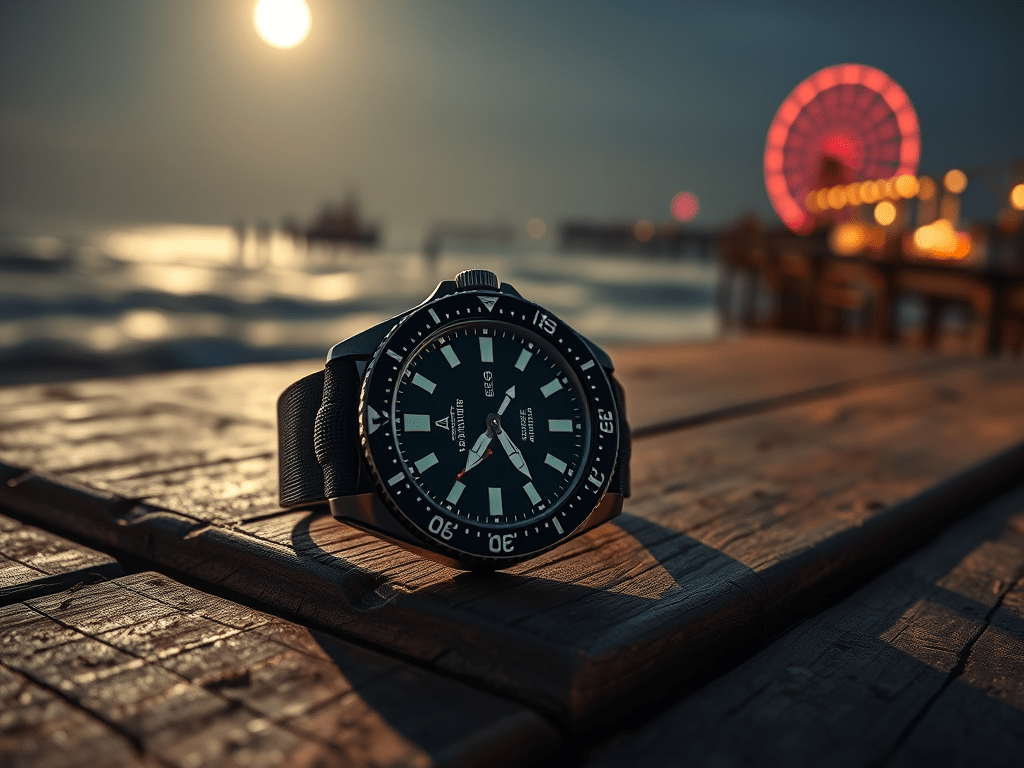
    Of course I did. There’s a photo of me on the Santa Monica Pier, the sun melting into the Pacific behind me, gulls circling overhead, breeze in my face, and on my wrist: the Seiko Uemura, black Divecore strap, rugged and unpretentious. That wasn’t just a picture. It was a mirror. That version of me looked content—anchored. Whole.

    I told the Watch Master about the photo. He nodded like a man who’d just heard someone read their own obituary correctly.

    “Every true addict has a signature watch,” he said. “But most of them are too busy playing collector cosplay to recognize it. Instead, they sabotage their joy, clutter their soul, and call it a ‘hobby.’ Worse, they bond with other broken men, enabling each other with dopamine high-fives. That’s where you are. The fray.”

    “So I’d have to cut ties… abandon my watch circle.”

    “Not a circle. A kennel. A cacophony of barked opinions and Instagram wrist shots. Remember: lie down with dogs, wake up with fleas.”

    “They’re not dogs. They’re human beings.”

    “Sure. Dogs with Venmo.”

    I sighed. “I don’t have many options, do I?”

    “You do,” he said. “You can become the bloated lounge demon from your dream, if that’s the life you want. Slathered in regret, bejeweled in denial.”

    “How do I get out?”

    He leaned in, eyes suddenly sharp.

    “You already know.”

    “Sell the six,” I said. “Feels like amputating my foot.”

    “Better to sell watches than sever limbs. Less blood.”

    “So I walk away. Keep the Uemura. Wear it like old jeans and just… let it be.”

    “You must die to be reborn,” he said, yawning like a lion after a kill. “But only if you want to. Telling people to choose life is exhausting. Go home. Sleep on it. Come back tomorrow.”

    And just like that, he vanished into the darkness of his sagging Victorian like a prophet with bedtime boundaries.

  • Hugh Hefner’s Watchbox from Hell

    Hugh Hefner’s Watchbox from Hell

    Chapter Three from The Watch Whisperer of Redondo Beach


    When I got home, I collapsed into a dream-heavy sleep—the kind you don’t choose but fall into like a trapdoor.

    I dreamed I was back with the Watch Master, only this time we were in a cave—his new lair, apparently—where flickering monitors lined the stone walls like cursed flat-screens. Each displayed a parallel universe, a version of me shaped entirely by my watch collection.

    One screen showed me with a massive, vulgar collection: gold bezels, diamond indices, stainless steel bracelets so chunky they could anchor a yacht. In that reality, I was obese. Bloated. A Las Vegas lounge lizard with a double chin, a sprayed-on tan, and a wig styled into a pompadour so high it had its own zip code. A gold-plated microphone dangled from my sweaty fingers as I crooned like Elvis, Tom Jones, and Michael Bolton—simultaneously. Around my neck: ropes of gold. On my wrist: a diamond-studded Rolex that practically screamed for an exorcism.

    When I opened my mouth to speak, no words came out—just a guttural, distorted sound, like a demon gargling battery acid. I had abandoned my family. I lived in a velvet-curtained grotto that looked like Hefner’s afterlife man-cave. I wasn’t just a parody of myself. I was a possession.

    That’s when I woke up—slick with sweat, lungs full of dread. But the nightmare wasn’t over. I could still feel him—it—the beast version of me, 300 pounds of ego and regret, pressing down on my mattress. The sag was real. I swear it. My bed bowed like I was hosting a sumo wrestler from the spirit world.

    Later that night, I sat at the Watch Master’s kitchen table and told him the whole thing while he sipped from a chipped mug under the soft glow of moonlight. His gaunt face lit up with delight. He laughed—not cruelly, but knowingly.

    “Textbook,” he said. “You’re a classic case. A fractured soul, split by overexposure to bezel lust. Watch addiction creates avatars. You’ve conjured a grotesque mirror of your worst impulses. The doppelgänger is real, and he’s hungry.”

    “What do I do?” I asked, sounding more like a haunted child than a man who once justified paying four figures for a dive watch he never actually dove with.

    The Master leaned back and cracked his neck like a man preparing to file a warranty claim on your soul. “You ever hear the saying, ‘You’ve got to go to hell before you get to heaven?’”

    I nodded.

    “Well,” he said, rising slowly, “That’s where you are. Right on schedule.”

    “Can you be more specific?”

    “Later. Right now, just hearing your dream has worn me out. It’s not just the nightmare—it’s you. Your whole aura is exhausting. You radiate crisis. Come back tomorrow, same time. We’ll discuss logistics.”

    And just like that, he disappeared down a hallway, leaving me with my own haunted watch box, and the question of whether I was still awake—or just in a deeper layer of the dream.

  • The Watch Potency Principle and the Man Who Couldn’t Count to Eight

    The Watch Potency Principle and the Man Who Couldn’t Count to Eight

    Chapter 2 from The Timepiece Whisperer of Redondo Beach

    The Watch Master accepted my Venmo transfer—five grand, no questions asked. He nodded like a monk receiving an offering, commending me for “putting my money where my mouth is,” as if throwing cash at the problem proved I was spiritually ready to shed my horological demons. Then he sent me home with a single directive: return the next night with all seven of my watches arranged in one box for evaluation.

    At precisely 10 p.m., under a bloated moon that cast an eerie glow across the red roof tiles of his dilapidated Redondo Beach bungalow, I stood in his living room. The Master’s pale, angular face looked freshly excavated from a tomb. He gestured for the box.

    He opened it. Seven divers—six Seikos and a lonely Citizen—gleamed under the yellowed light of a hanging stained-glass lamp.

    “Good,” he said, scanning the collection with the intensity of a mortician identifying a corpse. “All divers. That shows thematic restraint. You’re not a complete degenerate.”

    He picked up each Seiko, held it to his eye like a jeweler, then scoffed. “You baby these. When’s the last time you actually swam? Clinton administration?”

    He chuckled at his own joke, which I pretended not to hear.

    His bony fingers closed around the Citizen. “Hmm. Titanium case and bracelet. The others are all on straps. This inconsistency must be clawing at your OCD like a raccoon under drywall.”

    I nodded.

    “Sell it,” he said flatly. “It’s feeding your misery.”

    “But what about the Seiko Astron I’ve been eyeing? That one has a titanium bracelet too.”

    “Yes. And that’s not the least of your problems.” He sipped his black coffee—no cream, no joy. “You’re teetering on the edge of a collecting abyss. The Citizen’s already rotting your center. Add one more watch, and your soul will be lost to cluttered mediocrity.”

    “But the Astron—it’s beautiful,” I protested.

    “Of course it is,” he said, shrugging. “So is opium. Doesn’t mean you should buy a kilo.”

    I tried to recover. “It’s the Watch Potency Principle, right? The more watches you own, the more you dilute the power of each one.”

    He looked up sharply. “So you have read my work. Then why can’t you live by it? You recite the commandments, but break them before sunrise. Your brain and behavior are locked in bitter divorce.”

    “I just need a plan,” I said. “What do I do?”

    “Purge,” he said, as if uttering a sacred mantra.

    “Purge?”

    “Start with the titanium Citizen. Shed that one, then we’ll talk next steps.”

    “Our next move?”

    He sighed, pinched the bridge of his nose. “You’re exhausting. Come back tomorrow at ten sharp. And for God’s sake, don’t buy anything in the meantime.”

  • No One Gets Out of Here Alive

    No One Gets Out of Here Alive

    Chapter 1 of the Timepiece Whisperer of Redondo Beach

    Late one night, I found myself piloting my car through the hushed streets of Redondo Beach, past manicured lawns and hedges trimmed with neurosis, until I arrived at the blight in paradise: a hulking, lichen-tinged Victorian heap that looked like it had been shipped in from Transylvania on a dare. This was the home of the Watch Master—a reclusive oracle to the chronometrically cursed, a man whispered about in collector circles the way children whisper about the Boogeyman.

    The Master was once a studio guitarist in the ’70s, back when coke was a food group and solos could last nine minutes. He’d since traded fretboards for bezels, amassing a fortune in wrist candy—most of it gifted by rock gods in states of manic gratitude. Yet despite his vault of horological riches, he wore only a battered G-Shock Square with a scratched acrylic face that looked like it had survived a tour in Fallujah. He wore it like a monk wears a hair shirt.

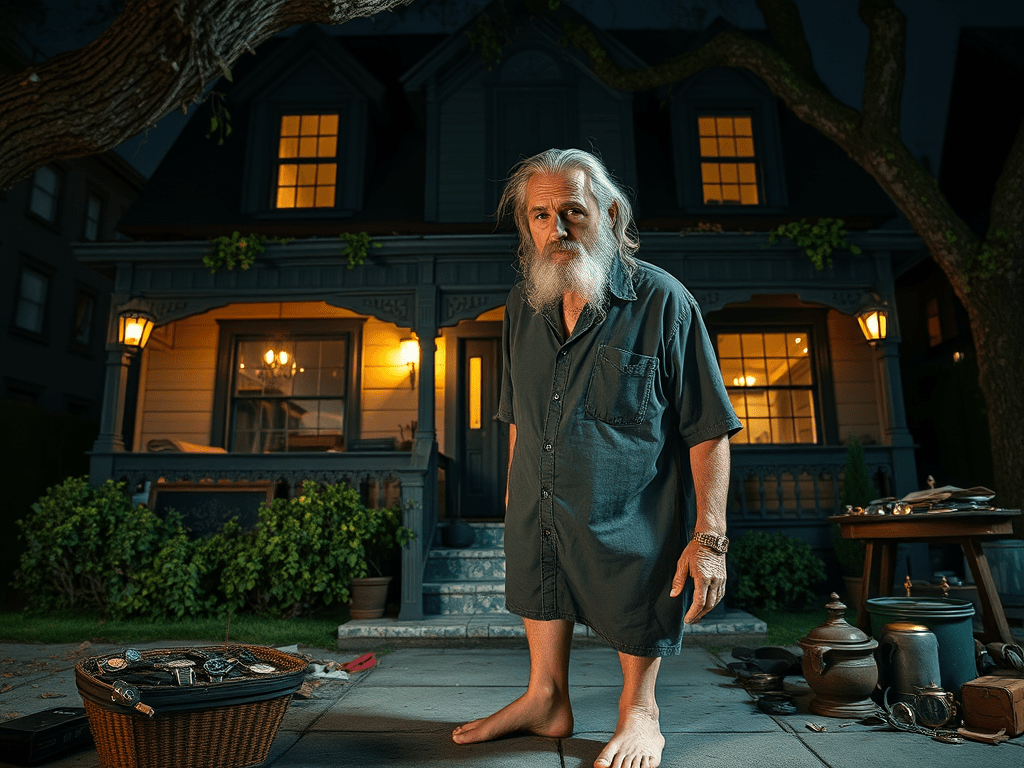
    He answered the door barefoot, his jeans collapsing around his ankles like they’d given up. A Led Zeppelin shirt sagged off his wiry frame, and his hair, silver and stubborn, was pulled back from a gleaming bald crown. His beard was a frizzled thicket, somewhere between Rasputin and an abandoned Brillo pad.

    “What’s your problem?” he asked, voice rough as gravel and just as warm.

    I didn’t flinch. “I own seven watches. That’s my limit. Any more and I spiral. Emotional collapse, obsessive thoughts, buyer’s remorse, the whole circus. But I saw a Seiko Astron—the blue-dial SSJ013J1—and now I need it. Crave it. Is there any way to prepare my psyche for an eighth watch without descending into madness?”

    He stared at me like I’d just asked if I could take up recreational black tar heroin “responsibly.”

    “You’re asking how to rationalize a relapse,” he said. “That’s like asking if there’s a polite way to punch yourself in the throat.”

    And with that, he opened the door wider and let me in.

    The Watch Master squinted at me through the porch light haze, as if sizing up a man who’d brought his own shackles and wanted help tightening them. He scratched his beard, winced like my  question had given him tinnitus, and finally spoke:

    “So let me get this straight. You’ve reached your personal watch ceiling—seven tickers, your magic number, your horological emotional support grid. And now you want to blow a hole in the hull with a satellite-synced Seiko spaceship that tells time in Tokyo, Toledo, and the twelfth ring of Saturn. And you’re asking me how to prepare your psyche for this?”

    He stepped back into the house and waved me in. “Come inside, pilgrim. I need a drink before I answer that.”

    Once in the dark-paneled den, surrounded by velvet paintings of Hendrix and a lava lamp that looked clinically depressed, he continued:

    “You don’t need an eighth watch. You need a spiritual bypass. The Seiko Astron isn’t a timepiece. It’s a cry for help dressed in sapphire crystal. You’re not telling time—you’re telling yourself a story: that the right watch will rescue you from restlessness. You’re like a man trying to fix a leaky roof with a diamond-encrusted hammer. Beautiful tool, wrong job.”

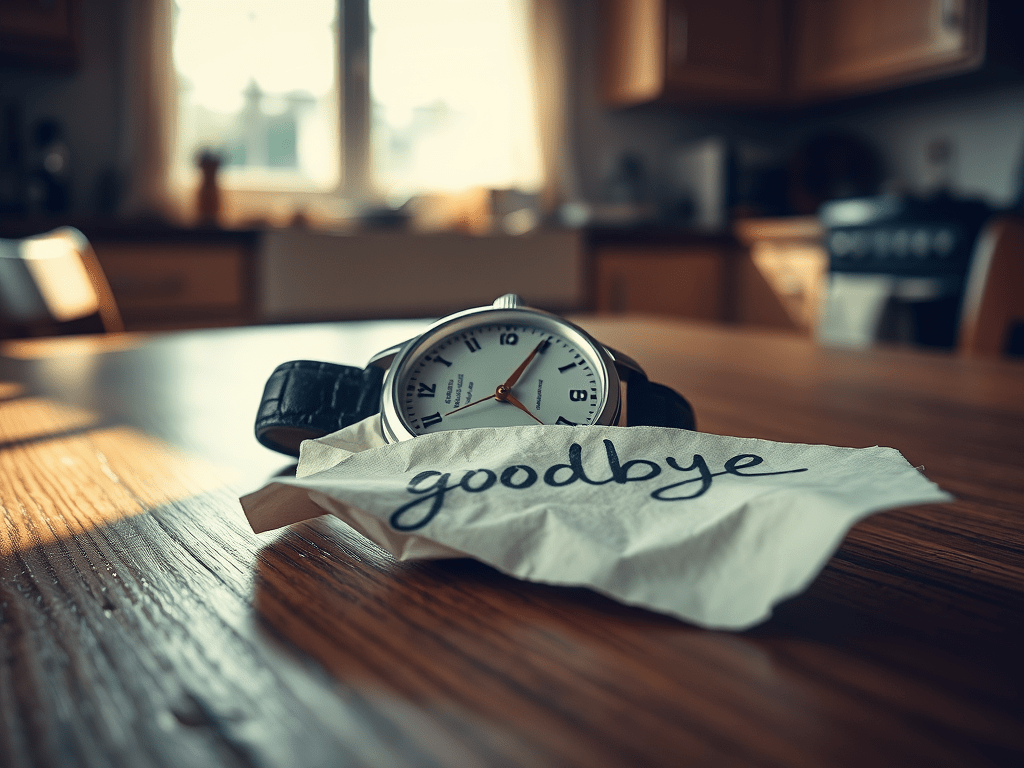
    He leaned in. “So if you must buy it, do this first: Write a eulogy for the peace of mind you once had at seven watches. Light a candle. Say goodbye to balance. Then hit ‘add to cart.’ And remember: when the remorse creeps in—and it will—just whisper to yourself what we all know in this house of horological horrors: No one gets out of here alive.

    I repeated the Watch Master’s words, “No one gets out of here alive.” Then I said, “I was told you could help me with my problem. All I’m asking is that you help prepare my psyche for an eighth watch. I want you to help me prepare for this Seiko Astron as an Exit Watch. I heard you could do this for me. I had assurances. I gave you five hundred dollars. I was expecting more than a scolding.”

    The Watch Master squinted at me through a cloud of sandalwood incense, scratched his sun-damaged scalp, and said:

    “Five hundred dollars gets you a scolding. A thousand gets you a metaphor. If you want catharsis, enlightenment, and a stable seven-watch rotation, you’re looking at premium pricing. And as for an Exit Watch?” —he let out a low chuckle— “That’s like asking a bourbon addict for one last glass to sober up.”

    He leaned closer, the scratched G-Shock catching a glint of porch light. “You don’t want an Exit Watch. You want absolution. And I don’t do sacraments—I do timekeeping.”

    “So you want more money.”

    “Of course. The five hundred was for the privilege to just see me. If you want an Exit Watch, that will cost you.”

    “The Astron is close to two grand.”

    “Peanuts. If you want to close this deal, pay me five grand, and I’ll make your troubles go away.”

    I was desperate. “Venmo or Paypal,” I said.

    “Now we’re talking.”