Tag: writing

  • Recycling in the Shadow of the End Times

    Recycling in the Shadow of the End Times

    Last night, my wife asked me to handle a sacred domestic rite of passage: haul a trunk-load of obsolete electronics to the Gaffey S.A.F.E. Recycle Collection Center in San Pedro. “They open at 9 a.m.,” she said, which is code for: Don’t sleep in.

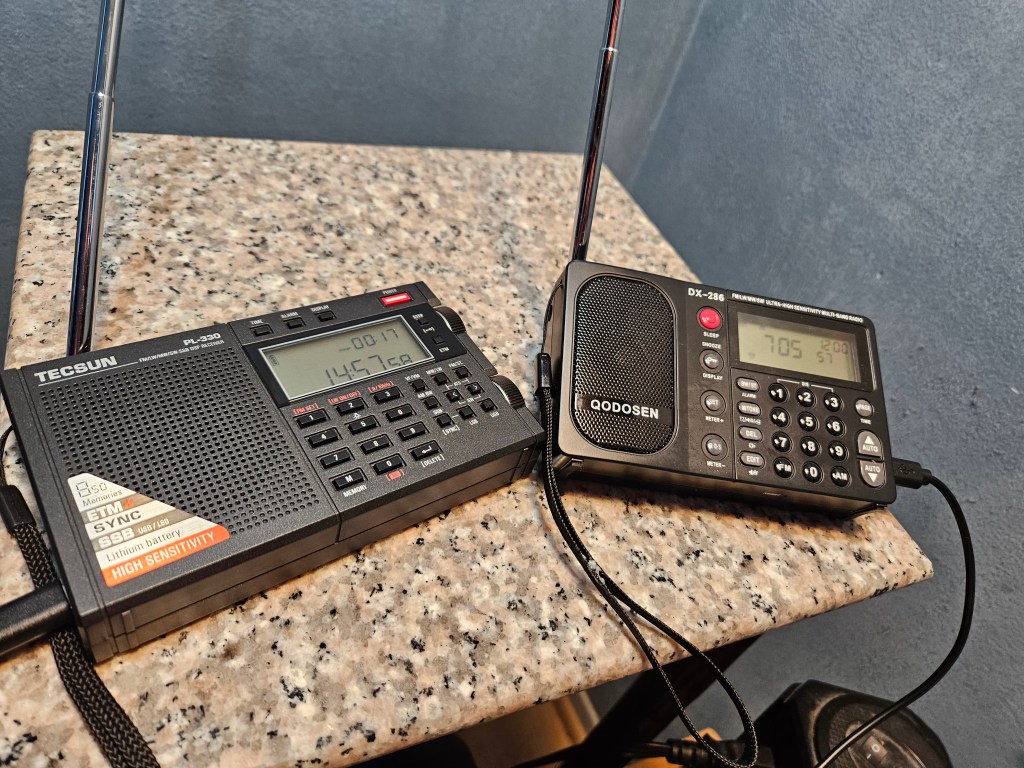
    So I dutifully loaded my Honda Accord with a hall of shame—old radios, half-dead fans, ghosted iPads, prehistoric laptops, orphaned computer speakers, a humidifier that wheezed its last breath in 2018, and enough acid-leaking batteries to qualify as a small environmental disaster.

    By morning, I punched the address into my phone, merged onto the 110 South, and exited Pacific Avenue, driving through an industrial no-man’s-land of rusting warehouses, improvised shelters, and overgrown brush—a Stephen King set piece waiting to happen. After bouncing over railroad tracks and veering onto a gravel path flanked by nothing but dirt and faint regret, I arrived at 8:50.

    The “facility” was a glorified tarp tent squatting in front of a cinder-block warehouse. A small line of cars idled ahead of me like penitents outside a confessional. Signs warned against dumping poisons, spoiled crops, medical waste, firearms, and, refreshingly, detonation materials of any kind. A second sign warned against exiting your vehicle, eating, or drinking—because apparently the mere whiff of your lukewarm coffee might trigger a chemical reaction that could incinerate the South Bay.

    At one point, a confused driver from Washington state cut in front, realized he was in the wrong dystopian checkpoint, U-turned, and peeled off down the gravel road, leaving a dust plume that coated our windshields like nuclear ash.

    By nine o’clock, two dozen cars were idling behind me in what now resembled the opening act of an eco-thriller. A cheerful woman in an orange vest began making her rounds, clipboard in hand. She asked what I was dropping off, and I gave her the rundown—my sad parade of malfunctioning tech. I suspect her job was twofold: confirm I wasn’t smuggling Chernobyl-grade waste, and quietly profile whether I looked like the kind of guy who dumps bodies with his broken humidifiers. Somewhere nearby, I imagined, there was a man with a headset and a sidearm watching from a repurposed FEMA trailer.

    Finally, I popped the trunk. Uniformed workers retrieved my gadgets with grim efficiency. I thanked them. They returned my gratitude like seasoned pallbearers—calm, practiced, unfazed.

    Unburdened, I pulled away from the hazmat drive-thru, feeling 50 pounds lighter and slightly radioactive. I had fulfilled my civic duty to both my marriage and the planet.

  • The Tech Lord and the Gospel of Obsolescence

    The Tech Lord and the Gospel of Obsolescence

    Last night I dreamed I was helping my daughter with her homework in the middle of a public square. A chaotic, bustling arena. Think Roman forum meets tech dystopia. We had two laptops perched on a white concrete ledge high above a stadium of descending steps, as if we were doing calculus on the lip of a coliseum.

    The computers were a mess—two laptops yoked together like resentful twins, their settings morphing by the second. Screens flashed blue, then white, then black. Sometimes yellow cartoon ducks floated lazily across the bottom like deranged pop-up ads from a children’s game. I wasn’t so much solving her homework as performing tech triage on possessed machines.

    I wasn’t panicked because I couldn’t help her. I was panicked because someone might see that I couldn’t help her. Vanity, thy name is Dad.

    People walked past, utterly unfazed. Apparently, homework over a stadium chasm with dueling laptops and malfunctioning duck animations was standard urban behavior.

    Then a young man—a peripheral character from some former life—told me there was a “tech lord” nearby. Not tech support. A tech lord. Naturally, I followed.

    The tech lord’s lair was a dim room centered around a massive table, cathedral-like in tone and purpose. He was listening to the Bible—read aloud by the famous comedian George Carlin. Not a solemn voice or trained narrator, but someone best known for punchlines and pratfalls. And the tech lord was rapt. He cradled a thick, black Bible like a sacred talisman, proclaiming that this was the finest biblical performance art ever conceived.

    I tried to get in a word about my tech problem, but he interrupted me and asked me what my favorite book in the Bible was. I said the Book of Job, of course. He seemed satisfied with my response and allowed me to continue with my inquiry. 

    When I mentioned the malfunctioning laptops, he waved it off like someone refusing to answer a question about taxes. “You’ll need to get rid of both machines,” he intoned, “and buy a new one.”

    Naturally, I flirted with the idea of going full Apple—titanium chic, smug perfection—but quickly sobered up. Apple or Windows, it’s the same headache in a different tuxedo. I settled for a sleek black Windows laptop, and with a sudden, magical poof, there it was in my hands. The new device of promise. The Messiah machine.

    I returned to my daughter, still huddled over her rebellious duo. I tried to shut them down, ceremonially, like a general dismissing insubordinate troops. They refused. The screens flared defiantly. They would not go quietly into obsolescence. They had become conscious, bitter, undead.

    And then I woke up.

    The kicker? Just before bed, my wife gave me a task: drive 30 minutes to San Pedro with a car full of broken electronics and deliver them to an e-waste center. My subconscious, clearly, had feelings about this and delivered me this dream as a prelude to my task.

    One final note about the dream: the pairing of George Carlin and the Bible triggered a memory of a dream I had in the early ’90s. In that dream, the Messiah wasn’t a robed figure of spiritual gravity—he was Buddy Hackett, the goofy-faced, gravel-voiced comic best known for squinting through punchlines. There he was, standing atop a Hollywood hotel, delivering what I could only assume was divine revelation—or maybe just the world’s strangest stand-up set. I couldn’t tell if he was inspired, intoxicated, or both.

    Now, three decades later, George Carlin shows up in a dream to read Scripture aloud with messianic intensity, joining Hackett in a growing pantheon of prophetic clowns. It makes a strange kind of sense. Both comedians and prophets stand at the edge of civilization, pointing fingers at the absurdities we refuse to question. They use hyperbole, irony, and parable to slice through the world’s lazy thinking. The difference? Prophets get canonized. Comedians get heckled.

    But maybe, just maybe, it’s the same job with a different mic.s a prelude to my task.

  • The Loneliness Loop: Meghan Daum and the Limits of Solitude

    The Loneliness Loop: Meghan Daum and the Limits of Solitude

    I’m working my way through The Catastrophe Hour, Meghan Daum’s latest collection of personal essays. Now in her mid-fifties, Daum is unapologetically single and childless by design, having long ago decided that marriage and parenting weren’t roles she could convincingly—or willingly—perform. Much of her work is a dispatch from the front lines of solitude. And she’s damn good at it.

    What Daum does better than most is forge an instant intimacy with her reader. Her essays feel like front porch conversations at dusk—no performance, no agenda, just two adults quietly deconstructing the wreckage of modern life. Her voice evokes the same soulful, offhand brilliance I admire in Sigrid Nunez’s novels: smart without pretense, vulnerable without begging.

    But by the halfway mark, the essays begin to blur. There’s a tonal and thematic sameness that settles in—like the ambient hum of a refrigerator you only notice when it stops. The introspective loop tightens. The sharp lens that once turned mundane moments into epiphanies starts to feel like someone narrating their week out loud after too many days alone.

    There’s the grief over dead dogs. The endless parsing of domestic minutiae. The architectural dream house that never quite materializes. And those fragmented, overstimulated city-life encounters that feel less like essays and more like repurposed Substack entries. It’s not that these topics lack merit—it’s that, in aggregate, they start to feel like what happens when no one interrupts you for too long.

    Now, I say this as a card-carrying member of the Navel-Gazers Guild. I recognize the signs. I know the thrill of dissecting one’s inner weather systems for an imaginary audience. So I don’t say this to judge Daum, but to observe that the limitations of a fully interior life—however self-aware—do begin to show.

    Still, dismissing Daum’s collection as mere navel-gazing would be both lazy and wrong. Her prose is laced with hard-earned wisdom and an acid wit that’s as refreshing as it is unsparing. When she hits, she hits hard—and truthfully. And that, more than novelty or plot, is why I keep turning the pages.

  • ChatGPT Killed Lacie Pound and Other Artificial Lies

    ChatGPT Killed Lacie Pound and Other Artificial Lies

    In Matteo Wong’s sharp little dispatch, “The Entire Internet Is Reverting to Beta,” he argues that AI tools like ChatGPT aren’t quite ready for daily life. Not unless your definition of “ready” includes faucets that sometimes dispense boiling water instead of cold or cars that occasionally floor the gas when you hit the brakes. It’s an apt metaphor: we’re being sold precision, but what we’re getting is unpredictability in a shiny interface.

    I was reminded of this just yesterday when ChatGPT gave me the wrong title for a Meghan Daum essay collection—an essay I had just read. I didn’t argue. You don’t correct a toaster when it burns your toast; you just sigh and start over. ChatGPT isn’t thinking. It’s a stochastic parrot with a spellchecker. Its genius is statistical, not epistemological.

    And yet people keep treating it like a digital oracle. One of my students recently declared—thanks to ChatGPT—that Lacie Pound, the protagonist of Black Mirror’s “Nosedive,” dies a “tragic death.” She doesn’t. She ends the episode in a prison cell, laughing—liberated, not lifeless. But the essay had already been turned in, the damage done, the grade in limbo.

    This sort of glitch isn’t rare. It’s not even surprising. And yet this technology is now embedded into classrooms, military systems, intelligence agencies, healthcare diagnostics—fields where hallucinations are not charming eccentricities, but potential disasters. We’re handing the scalpel to a robot that sometimes thinks the liver is in the leg.

    Why? Because we’re impatient. We crave novelty. We’re addicted to convenience. It’s the same impulse that led OceanGate CEO Stockton Rush to ignore engineers, cut corners on sub design, and plunge five people—including himself—into a carbon-fiber tomb. Rush wanted to revolutionize deep-sea tourism before the tech was seaworthy. Now he’s a cautionary tale with his own documentary.

    The stakes with AI may not involve crushing depths, but they do involve crushing volumes of misinformation. The question isn’t Can ChatGPT produce something useful? It clearly can. The real question is: Can it be trusted to do so reliably, and at scale?

    And if not, why aren’t we demanding better? Why haven’t tech companies built in rigorous self-vetting systems—a kind of epistemological fail-safe? If an AI can generate pages of text in seconds, can’t it also cross-reference a fact before confidently inventing a fictional death? Shouldn’t we be layering safety nets? Or have we already accepted the lie that speed is better than accuracy, that beta is good enough?

    Are we building tools that enhance our thinking, or are we building dependencies that quietly dismantle it?

  • The Gold and Purple Pyramids at the Gates of Heaven

    The Gold and Purple Pyramids at the Gates of Heaven

    Last night, I dreamed I lived in heaven—and like most people blessed beyond comprehension, I had absolutely no idea.

    The dream began in a hectic classroom, as these things often do. I was teaching at a strange college campus. The students were more postgrad in their maturity and engagement than freshman—mature, sharp, and fully caffeinated on the joy of learning.

    We were deep in discussion, when I glanced out the window and saw rain falling in soft sheets. I drifted, just for a second, and in that brief lapse, the class was commandeered—gracefully—by one of my more opinionated students, Tim Miller, moonlighting as a podcaster and self-appointed co-professor.

    Tim, without missing a beat, told everyone to take out the assigned blue textbook. The expensive one. The one I myself had never read. I looked at the book with the guilt of a host who’s never tasted his own hors d’oeuvres. Trying to recover, I asked what they thought. They said it was “okay”—the academic kiss of death. I nodded solemnly and was mercifully saved by the end of class.

    I looked at the exit and saw a nearsighted colleague half my age pushing a fleet of book carts. I offered to help. He kindly accepted my offer—but by the time I reached the carts, he had finished everything himself. He waved goodbye, like a benevolent young professor who didn’t need me after all.

    As I walked through the corridor, I spotted something. A green coffee mug I’d abandoned earlier on a table, shimmering like a forgotten relic. I scooped it up and raced across campus in the rain, placing it delicately on the windowsill of the library. Two librarians emerged, eyes wide with wonder, as if I’d returned the Ark of the Covenant. They smiled as if I’d done something sacred.

    Onward. The rain kept falling, warm and tropical, more blessing than burden. I reached for my phone–the same emerald green as the coffee mug–now coated in fine beach sand. I frantically wiped it clean, restoring it to its gleaming perfection.

    I wasn’t driving. I never did. I preferred walking the five miles home, savoring the trek. In the distance, my residence came into view: three mountain-sized pyramids rising into the mist, woven from purple and gold stone, arranged in a mesmerizing zigzag pattern. I’d always loved purple—no surprise there—but for the first time, I saw the gold properly. I normally detest gold. Too garish. But this gold? This gold was alive. Deep, radiant, humming with mystery.

    I realized, with a kind of thudding wonder, that I lived there. Among the pyramids. In the mist. In heaven. And somehow, until that moment, I’d never truly seen it.

    Then I woke up, soaked not in rain but contrition, and wondered: How much of my real life do I miss by failing to see what’s already shimmering around me? What marvels have I demoted to the mundane? What if heaven isn’t a destination but a perception we keep forgetting to use?

  • Botoxed Sphinx Cats and Other Body Dysmorphia Fables

    Botoxed Sphinx Cats and Other Body Dysmorphia Fables

    In the early ’90s, I had a student whose entire identity was shackled to the number on a stadiometer. I don’t recall the exact figure, but he was somewhere south of five-foot-five—a detail that tormented him like a Greek curse. What I do remember is that he was a strikingly handsome kid. Slender, well-proportioned, with the kind of face you’d expect to see in a Calvin Klein ad, not in a therapy session about height insecurity. But none of that mattered. He couldn’t see past the measuring tape in his head.

    It was during one of our writing lab sessions—those clattering dens of early-’90s Macintoshes, all beige and humming, where I played roving editor and motivational coach—that he confided in me. Class was winding down, students trickling out like post-cardio gym rats, and this nineteen-year-old lingered behind with something heavy to unload.

    He told me that being short felt like a life sentence. But the real damage, he confessed, came not from his height—but from the manic overcompensation it inspired. When talking in groups, he’d find the highest available perch to stand on—benches, stairs, anything to give him the illusion of height. He wore shoe lifts, which he kept hidden in his closet like a box of shame. But worst of all? He trained himself to walk perpetually on his tiptoes.

    Yes, tiptoes. Every day, every step. As if sneaking through life as a burglar of inches.

    Eventually, his spine cried uncle. The tiptoe act wrecked his back, forced him into surgery, and—here’s the gut punch—cost him an entire inch. In his effort to stretch himself, he ended up shorter. He admitted he hated himself for it, and I believed him.

    Looking at him—this good-looking, intelligent kid—it struck me just how dangerous our internal narratives can be. We live so much in our heads that our perception becomes more powerful than reality. A stray comment in middle school morphs into a life-defining trauma. A mirror becomes a courtroom. And the verdict? Never good enough.

    His story is a tragic little parable of body dysmorphia: how the seeds of insecurity, if left unchecked, sprout into weeds that choke reason, and in our desperate attempts to “fix” ourselves, we often end up disfiguring what was never broken.

    Our bodies are our canvases. And oh, how savagely the world critiques them. Some of us starve. Some inject ourselves with synthetic youth. Some spend fortunes on surgeries that leave us looking like Botoxed sphinx cats. And some, like my student, ruin their spines to gain half an inch that no one but they ever noticed.

    We’re all vulnerable to the feedback loop. When I’m lean and muscular on YouTube, the algorithm sings. I get compliments. DMs. Admiring questions about my training and my “age-defying” lifestyle. When I’m twenty pounds heavier? Crickets. I become one more bloated has-been talking into the void.

    Yes, our bodies are our canvas. But if we’re not careful, our efforts to “improve” that canvas can become self-mutilation masquerading as self-love.

  • Gene Wilder’s Prelude to Mischief and Mayhem

    Gene Wilder’s Prelude to Mischief and Mayhem

    In fourth grade at Anderson Elementary in San Jose, our teacher cracked open Charlie and the Chocolate Factory and unleashed a literary sugar bomb on the classroom. The characters didn’t just leap off the page—they kicked down the door of our imaginations and set up shop. The book hijacked our brains. Good luck checking it out from the library—there was a waiting list that stretched into eternity.

    A year later, the film Willy Wonka and the Chocolate Factory hit theaters, but my parents, apparently operating under some moral suspicion of Hollywood whimsy, refused to take me. I wouldn’t see it until the VHS era, when cultural consensus finally upgraded it to “beloved classic” status. That’s when I met Gene Wilder’s Wonka—equal parts sorcerer, satirist, and deranged uncle.

    The best moment? Easy. He hobbles out, leaning on a cane like a relic of Victorian fragility—then suddenly drops the act, executes a flawless somersault, and stands up with a gleam that says, I know exactly what game I’m playing, and so should you. That glint in his eye, equal parts wonder and judgment, has haunted me for decades. His entire persona is a velvet-gloved slap to the smug, the spoiled, and the blissfully ignorant. He isn’t just testing children—he’s taking society’s moral pulse and finding a weak, sugary beat.

    That gleam stayed with me. So much so that I wrote a piano piece inspired by Wilder’s performance. I called it Gene Wilder’s Prelude to Mischief and Mayhem. The first movement was a nightmare—rewritten more times than I care to admit. Oddly, the second and third movements came first, composed together in the aftermath of my mother’s passing on October 1, 2020. Nearly five years later, I finally completed the first movement, like some strange reverse birth.

    The result? A tribute in three acts to the sly grin, the righteous mischief, and the bittersweet brilliance of Gene Wilder—a man who, like the best artists, never let kindness become cowardice or magic become a mask for mediocrity.

  • Hot Pockets, CliffNotes, and the Death of Deep Reading

    Hot Pockets, CliffNotes, and the Death of Deep Reading

    Before the Internet turned my brain into a beige slush of browser tabs and dopamine spikes, I used to read like a man possessed. In the early ’90s, I’d lounge by the pool of my Southern California apartment, sun-blasted and half-glossed with SPF 8, reading books with a kind of sacred monastic intensity. A. Alvarez’s The Savage God. Erik Erikson’s Young Man Luther. James Twitchell’s Carnival Culture. James Hillman and Michael Ventura’s rant against the therapy-industrial complex–We’ve Had a Hundred Years of Psychotherapy – and the World’s Getting Worse. Sometimes I’d interrupt the intellectual ecstasy to spritz my freshly tanned abs with water—because I was still vain, just literate.

    Reading back then was as natural as breathing. As Joshua Rothman points out in his New Yorker essay, “What’s Happening to Reading?”, there was a time when the written word was not merely consumed—it was inhaled. Books were companions. Anchors. Entire weekends were structured around chapters. But now? Reading is another tab, sandwiched between the news, a TikTok video of a dog on a skateboard, and an unopened Instacart order.

    Rothman nails the diagnosis. Reading used to be linear, immersive, and embodied—your hands on a book, your mind in a world. Now we shuttle between eBooks, PDFs, Reddit threads, and Kindle highlights like neurotic bees skimming data nectar. A “reading session” might include swiping through 200-word essays while eating a Hot Pocket and half-watching a documentary about narco penguins on Netflix. Our attention is fractured, our engagement ritualized but hollow. And yes, the statistics back it up: the percentage of Americans who read at least one book a year dropped from 55% to 48%. Not a cliff, but a slow, sad slide.

    Some argue it’s not worth panicking over—a mere 7% drop. I disagree. As a college instructor, I’ve seen the change up close. Students don’t read long-form books anymore. Assign Frederick Douglass and half the class will disappear into thin air—or worse, generate AI versions of Douglass quotes that never existed. Assign a “safe” book and they might skim the Wikipedia entry. We’ve entered an age where the bar for literacy is whether someone has read more than one captioned infographic per week.

    Rothman tries to be diplomatic. He argues that we’re not consuming less—we’re just consuming differently. Podcasts, YouTube explainers, TikTok essayists—this is the new literacy. And fine. I live in that world, too. I mainline political podcasts like they’re anti-anxiety meds. Most books, especially in the nonfiction space, do feel like padded TED Talks that should have stayed 4,000 words long. The first chapter dazzles; the next nine are a remix of the thesis until you feel gaslit into thinking you’re the problem.

    But now the reading apocalypse has a new beast in the basement: AI.

    We’ve entered the uncanny phase where the reader might be an algorithm, the author might be synthetic, and the glowing recommendation comes not from your friend but from a language model tuned to your neuroses. AI is now both the reader and the reviewer, compressing thousand-page tomes into bullet points so we can decide whether to fake-read them for a book club we no longer attend.

    Picture this: you’re a podcaster interviewing the author of a 600-page brick of a book. You’ve read the first 20 pages, tops. You ask your AI: “Give me a 5-page summary and 10 questions that make me sound like a tortured genius.” Boom—you’re suddenly a better interviewer than if you’d actually read the book. AI becomes your memory, your ghostwriter, your stand-in intelligence. And with every assist, your own reading muscles atrophy. You become fit only for blurbs and bar graphs.

    Or take this scenario: you’re a novelist. You’ve published 12 books. Eleven flopped. One became a cult hit. Your publisher, desperate for cash, wants six sequels. AI can generate them faster, better, and without your creative hand-wringing. You’re offered $5 million. Do you let the machine ghostwrite your legacy, or do you die on the sword of authenticity? Before you answer, consider how often we already outsource our thinking to tools. Consider how often you’ve read about a book rather than the book itself.

    Even the notion of a “writer” is dissolving. When I was in writing classes, names like Updike, Oates, Carver, and Roth loomed large—literary athletes who brawled on live television and feuded in magazines. Writers were gladiators of thought. Now they’re functionally obsolete in the eyes of the market, replaced by a system that values speed, virality, and AI-optimized titles.

    Soon, we won’t pick books. AI will pick them for us. It will scan our history, cross-reference our moods, and deliver pre-chewed summaries tailored to our emotional allergies. It will tell us what to read, what to think about it, and which hot takes to regurgitate over brunch. We’ll become readers in name only—participants in a kind of literary cosplay, where the act of reading is performed but never truly inhabited.

    Rothman’s essay is elegant, insightful, and wrong in one key respect: it shouldn’t be titled What’s Happening to Reading? It should be called What’s Happening to Reading, Writing, and the Human Mind? Because the page is still there—but the reader might not be.

  • How Losing 20 Pounds Made Me Rethink My Entire Watch Collection (and My Life)

    How Losing 20 Pounds Made Me Rethink My Entire Watch Collection (and My Life)

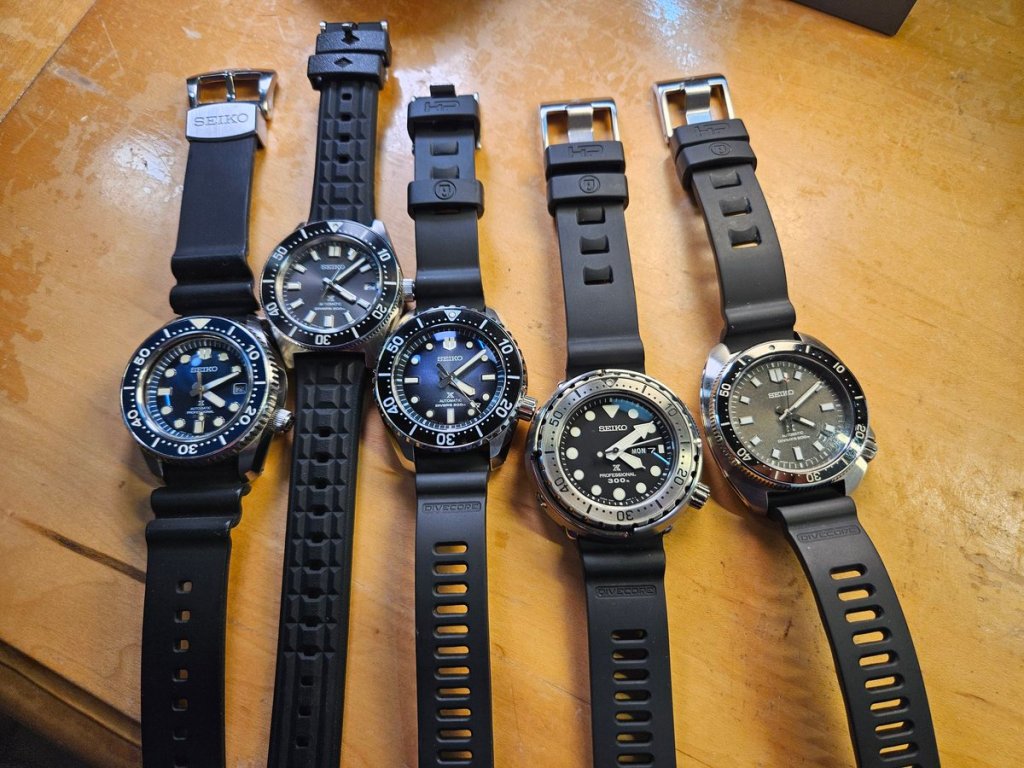
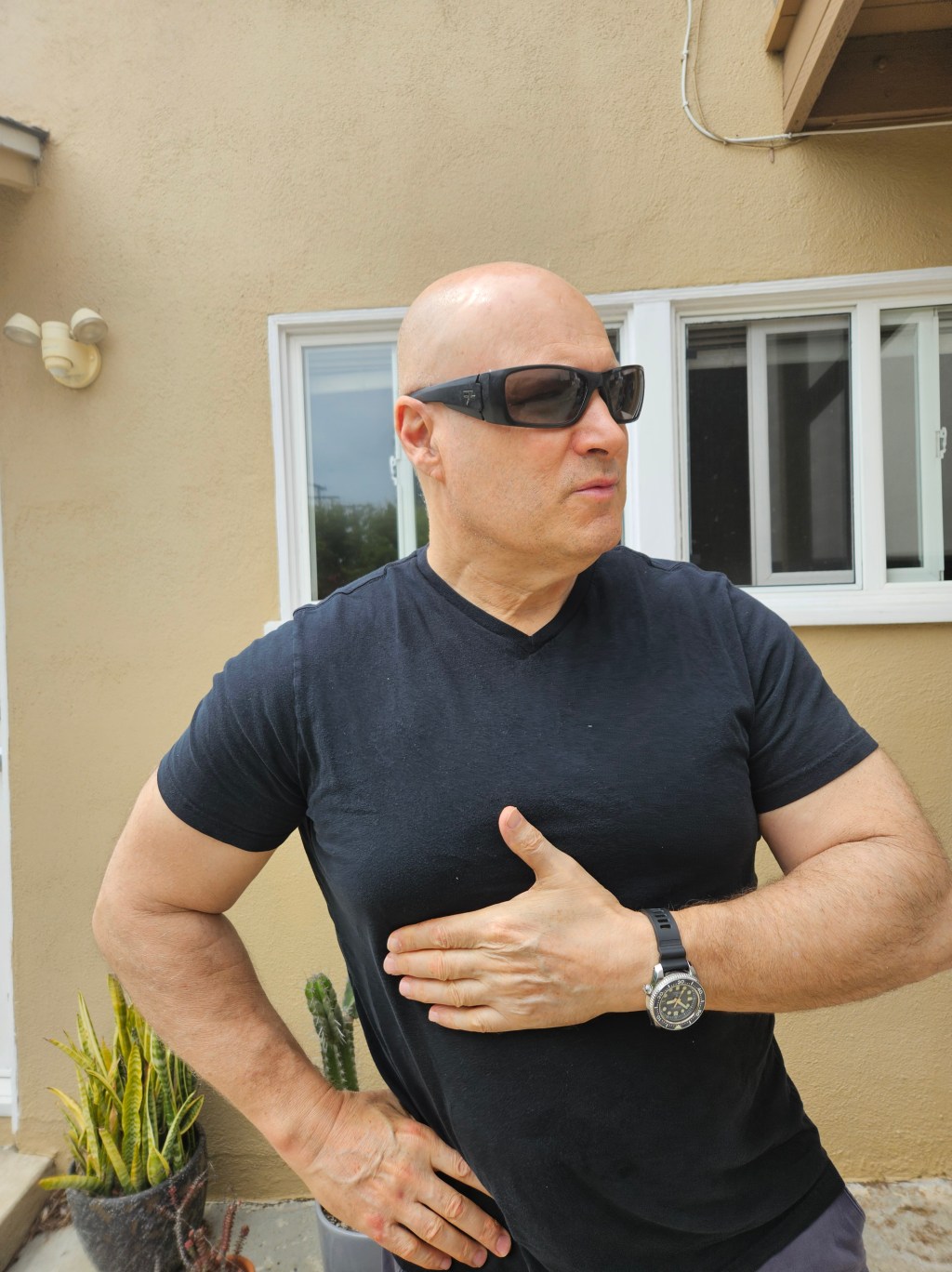
    Yesterday I filmed a 26-minute YouTube video on my main channel—ostensibly about watches. That was the bait. But somewhere between adjusting my camera and admiring my newly lean frame (twenty pounds down since April, thank you very much), I realized I wasn’t really talking about watches at all. I was talking about aging, restraint, identity, and how not to let your inner teenager run the damn show.

    The video was titled something like “My Four Watch Goals at Sixty-Four,” which sounds practical until you realize that my goals weren’t horological—they were existential. The first one? Stop being so maudlin. I actually said the word, spelled it out like a substitute teacher on a caffeine bender, and gave a definition. Maudlin: emotional excess masquerading as depth, the adolescent urge to turn life into performance art just so you can feel something.

    To illustrate, I offered up a formative trauma: being sixteen, watching Bill Bixby in The Incredible Hulk, and weeping—actually weeping—when he transformed into Lou Ferrigno’s green rage monster. It wasn’t just TV. It was catharsis. I was an Olympic weightlifter-slash-bodybuilder-slash-piano prodigy who didn’t know what to do with all the emotion I’d stuffed under my pecs and sonatas. Watching Bixby morph into a snarling demigod gave me permission to feel. In my forties, I channeled that same melodrama into wearing oversized diver watches—big, bold, and absurdly heroic, as if my wrist were auditioning for a Marvel reboot. That, too, was maudlin cosplay. Now I’m trying something radical: maturity.

    Goal two? Quit being an enabler. I admitted that, like it or not, I’m an influencer. I don’t collect in a vacuum. Every time I flex a new piece, it’s like handing out free permission slips to fellow addicts. So I’ve decided to use my powers for good—or at least for moderation.

    Goal three: Stay fit, get bloodwork, be a warrior in plain clothes. The watch isn’t the main course. It’s the garnish. If I’m going to wear something worth noticing, I should have the body and the biomarkers to back it up. Otherwise, I’m just a gilded potato.

    And finally, goal four: Minimalist watch heroes. The quiet monks of the community who own one to three watches and seem perfectly content. They’re my North Stars. They aren’t buying watches out of panic, nostalgia, or identity crises—they’re grounded, self-possessed, wise. I envy them. I aspire to be one of them. I’m not there yet, but I’m squinting in their direction.

    Honestly, I assumed the video would tank. My viewers tend to want horological eye-candy, not existential reflection wrapped in fitness updates. But to my surprise, the response was overwhelming—close to a thousand views on day one, dozens of comments. People thanked me. Some said they were booking doctor appointments. Others said they were starting diets. I’m fourteen years into making YouTube videos, and this might be the one I’m proudest of.

    Because the truth is, most watch YouTubers are just dressing up emotional poverty in brushed stainless steel. They get maudlin about bezels and bracelets, desperate to out-hype each other in a gaudy attention economy. It’s exhausting. What people really want—what they’re starving for—is someone speaking like a human being. No curation. No affectation.

    I ended my video with a confession: I’m still that sixteen-year-old kid. And if you cue up The Lonely Man theme from The Incredible Hulk, the one where David Banner walks down the rainy sidewalk in soft focus, I will—without shame—start crying. Again. Because some emotions don’t age. They just find quieter places to hide.

  • Bottom-Trawling and Other Sins That Ruin My Appetite

    Bottom-Trawling and Other Sins That Ruin My Appetite

    Watching a David Attenborough documentary feels less like casual viewing and more like sliding into the pew for the Church of Planet Earth. The man’s diction alone could resurrect the dead—each syllable polished, each pause wielded like a scalpel—while he preaches an all-natural gospel: paradise isn’t some vaporous hereafter; it’s right here, pulsing under our sneakers. And we, the congregation of carbon footprints, are the sinners. We bulldoze forests, mainline fossil fuels, and still have the gall to call ourselves stewards. His sermons don’t merely entertain; they indict. Ten minutes in and I’m itching to mulch my own receipts and swear off cheeseburgers for life.

    I’ve basked in Attenborough’s velvet reprimands for decades, often drifting into a blissful half-sleep as he murmurs about the “delicate balance of nature” and the tender devotion of a mother panda—as soothing as chamomile tea and twice as guilt-inducing. His newest homily, Ocean on Hulu, finds the maestro wide-eyed as ever, a silver-haired Burl Ives guiding us through Rudolph’s wilderness—only this time the Abominable Snowman is industrial bottom trawling. Picture a gargantuan steel mouth dragging across the seabed, gulping everything in its path. Rays flutter, fish scatter, and then—slam—the net’s iron curtain drops. Most of the hapless catch is unceremoniously dumped, lifeless, back into the brine.

    The footage left me queasy, a queasiness only partly soothed by Attenborough’s grandfatherly timbre. I’ve already been flirting with a plant-forward diet; Ocean shoved me into a full-blown breakup with seafood. Good luck unseeing hundreds of doomed creatures funneled into a floating abattoir while an octogenarian sage explains—as gently as one can—that we’re devouring our own Eden.

    So yes, I’ll skip the shrimp cocktail, thanks. My conscience already has acid reflux.