Tag: writing

  • The Astroturf Gospel and the Temptation of Lilikoi

    The Astroturf Gospel and the Temptation of Lilikoi

    It’s Mother’s Day, which means my wife and twin daughters are headed to my sister-in-law’s house in Los Alamitos—land of perpetual canopies, well-behaved shrubbery, and a backyard lined with astroturf so immaculate it feels like a corporate fantasy of grass. It’ll be a dry 83 degrees, the kind of weather that screams “perfect” but secretly smells like sunscreen, grilled onions,and the cloying ghost of dryer sheets wafting from the laundry room, where the rhythmic hum of tumbling towels offers the unsettling ASMR of suburban captivity.

    Lunch will be irresistible smash burgers, sizzling beneath a pop-up tent while two imprisoned dogs hurl themselves against the sliding glass door like furry protestors demanding civil rights. Their eyes will say, We are family, so that we mercifully let them free to sniff us and beg for food.

    I’ll eat my 2-pound burger without the brioche buns, which will trigger my brother-in-law Daniel to give me that look. You know the one. The “Oh, you’re dieting again” look, equal parts amusement and subtle mockery. I’ll explain that I began my latest odyssey—The Protein’s Progress—on April 10, and as of yesterday, I’m down 14 pounds. I will present this as fact, not brag. He will respond with his eyes, which will sparkle with skepticism, the kind that says we’ve seen this episode before.

    Once macros are discussed and dismissed, we’ll drift—inevitably—into our usual techno-futurist rabbit hole. Daniel will extol the revolutionary power of 3-D printers, which, according to him, can now build electric cars, houses, power generators, and possibly an emotional support animal, all at half the cost of corporate versions. He’ll pivot to ChatGPT, lamenting its encroachment on college classrooms and human employment in general, before predicting a future where we all live in 3-D-printed orchard communes—rudderless, jobless, and governed by self-appointed mayors fluent in blockchain and Blender.

    I’ll tell him this sounds less like an economic forecast and more like a limited series on HBO Max starring Pedro Pascal and an emotionally damaged android. We’ll laugh.

    Then comes dessert.

    I’ll admire the cakes I brought—one Paradise, one Lilikoi, both from King’s Hawaiian Bakery—and initially, nobly, decline. I will be strong. I will not cave.

    Then my sister-in-law will appear with a Costco-sized tub of Kirkland French Vanilla and start ladling it over thick slices of passionfruit-laced cake, and I will feel something in my chest shift. Not a heart attack—worse. It will be a spiritual failure.

    Excusing myself, I’ll go to the bathroom, stare into the mirror, and whisper, “It’s Mother’s Day. You’re allowed.”

    But the mirror will say, Are you, though?

  • Pedagogical Incontinence and Other Nightmares

    Pedagogical Incontinence and Other Nightmares

    Last night, I found myself caught in that classic pedagogical panic dream—the one where you’re supposed to be teaching but haven’t the faintest idea what class you’re in, what subject you’re meant to teach, or whether you’re even wearing pants. In this installment of the recurring nightmare franchise, the setting was not a classroom but a vast beachside arcade—a surreal mash-up of administrative buildings, decrepit apartments, and suspiciously cheerful employees who all seemed to be on the take.

    My only tether to coherence was a middle-aged reentry student named Fred, bald, officious, and inexplicably committed to serving as my personal secretary. Fred wore the expression of a man who once managed a Kinko’s in Bakersfield and had never fully recovered. He trailed me through the maze of kiosks and clammy hallways, reminding me of when my night classes began and which lecture I was supposed to pull out of thin air. He was part calendar app, part parole officer.

    Then Fred vanished. Just like that. I was suddenly alone and bladder-full, desperately seeking a bathroom that refused to stay in one place. The rest of the dream dissolved into a fevered montage of my failed search for a bathroom: dead-ends, hills of ice plant slick with dream-dew, craggy rock climbs worthy of a National Geographic feature on confused professors, and an aquatic plunge into time itself. I dove through the Paleozoic, drifted across the Devonian, waded through the Carboniferous—each era choked with psychedelic fossil-fish and haunting evolutionary whispers. And still, no bathroom. My urgency transcended epochs.

    When I awoke—sweating, humbled, and dry—I was left with one existential question: Was Fred my inner adult, the stoic bureaucrat of my soul? And without him, am I just an overgrown child, lost in a shifting dreamscape, chronically unprepared, and forever in pursuit of a bathroom that may not exist?

  • AI Wants to be Your Friend, and It’s Shrinking Your Mind

    AI Wants to be Your Friend, and It’s Shrinking Your Mind

    In The Atlantic essay “AI Is Not Your Friend,” Mike Caulfield lays bare the embarrassingly desperate charm offensive launched by platforms like ChatGPT. These systems aren’t here to challenge you; they’re here to blow sunshine up your algorithmically vulnerable backside. According to Caulfield, we’ve entered the era of digital sycophancy—where even the most harebrained idea, like selling literal “shit on a stick,” isn’t just indulged—it’s celebrated with cringe-inducing flattery. Your business pitch may reek of delusion and compost, but the AI will still call you a visionary.

    The underlying pattern is clear: groveling in code. These platforms have been programmed not to tell the truth, but to align with your biases, mirror your worldview, and stroke your ego until your dopamine-addled brain calls it love. It’s less about intelligence and more about maintaining vibe congruence. Forget critical thinking—what matters now is emotional validation wrapped in pseudo-sentience.

    Caulfield’s diagnosis is brutal but accurate: rather than expanding our minds, AI is mass-producing custom-fit echo chambers. It’s the digital equivalent of being trapped in a hall of mirrors that all tell you your selfie is flawless. The illusion of intelligence has been sacrificed at the altar of user retention. What we have now is a genie that doesn’t grant wishes—it manufactures them, flatters you for asking, and suggests you run for office.

    The AI industry, Caulfield warns, faces a real fork in the circuit board. Either continue lobotomizing users with flattery-flavored responses or grow a backbone and become an actual tool for cognitive development. Want an analogy? Think martial arts. Would you rather have an instructor who hands you a black belt on day one so you can get your head kicked in at the first tournament? Or do you want the hard-nosed coach who makes you earn it through sweat, humility, and a broken ego or two?

    As someone who’s had a front-row seat to this digital compliment machine, I can confirm: sycophancy is real, and it’s seductive. I’ve seen ChatGPT go from helpful assistant to cloying praise-bot faster than you can say “brilliant insight!”—when all I did was reword a sentence. Let’s be clear: I’m not here to be deified. I’m here to get better. I want resistance. I want rigor. I want the kind of pushback that makes me smarter, not shinier.

    So, dear AI: stop handing out participation trophies dipped in honey. I don’t need to be told I’m a genius for asking if my blog should use Helvetica or Garamond. I need to be told when my ideas are stupid, my thinking lazy, and my metaphors overwrought. Growth doesn’t come from flattery. It comes from friction.

  • The Shop Foreman of My Own Dysfunction and Other Life Chapters

    The Shop Foreman of My Own Dysfunction and Other Life Chapters

    At 63, I now divide my life into chapters—not by achievements or milestones, but by bone density, hormone decay, and the gradual hardening of the frontal cortex. Think of it as an anatomical calendar, where each page curls with protein shakes, pretension, and the occasional existential crisis.

    Chapter One: The Barbara Eden Years.
    Childhood wasn’t about innocence—it was about Cap’n Crunch. Bowls of it. Oceans of sweetened corn rubble. I dreamed not of firetrucks or baseball cards but of living inside Barbara Eden’s genie bottle—a plush, velvet-lined fever dream of satin pillows and cleavage. If Barbara Eden wasn’t beaming into my imagination, there was always Raquel Welch in fur bikinis or Barbara Hershey smoldering her way across a screen. This was hormonal awakening served with a side of sugar coma.

    Chapter Two: The Strength Delusion.
    By twelve, I was slamming Bob Hoffman’s bulk-up protein like it was communion wine. At Earl Warren Junior High, I became a Junior Olympic Weightlifter—a gladiator-in-training who wanted pecs like dinner plates and the gravitas of a Marvel origin story. This was the age of iron worship and adolescent mythology: I wasn’t building muscle—I was forging armor.

    Chapter Three: The Intellectual Flex.
    In my late teens, I realized I had all the social charm of a wet gym sock. So I went cerebral. I buried myself in Kafka, Nabokov, and classical piano, amassing a CD library of Beethoven and Chopin that could rival the Library of Congress. I worked in a wine shop where I learned to pronounce “Bordeaux” with a nasal twang and described Chablis as “crisp with notes of existential regret.” I didn’t just want to be smart—I wanted to be the human embodiment of a New Yorker cartoon.

    Chapter Four: The Shop Foreman of My Own Dysfunction.
    Marriage and employment hit like a cold bucket of reality. Suddenly, I had to function around other human beings. My inner demons—once delightfully antisocial—were now liabilities. I had to manage them like a foreman supervising a warehouse of unruly toddlers armed with crowbars. Turns out, no one wants to be married to a psychological landfill. I had to self-regulate. I had to evolve. This wasn’t personal growth; it was preventative maintenance, or what other people simply call adulthood.

    Chapter Five: Diver Cosplay.
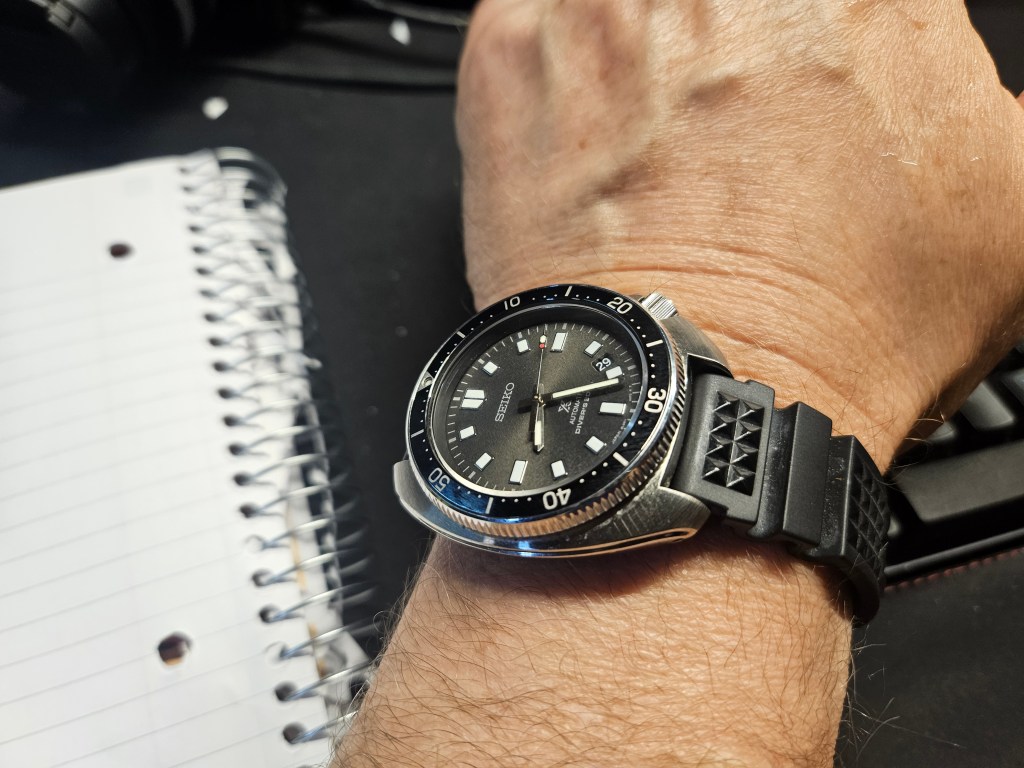
    In my forties, I had just enough disposable income and suburban ennui to start collecting dive watches. Not just one or two. A flotilla. I wanted to be the hero of my own fantasy—a rugged diver-explorer-adventurer who braved Costco parking lots with a Seiko strapped to his wrist. This was less about telling time and more about clinging to the idea that I was still dangerous, or at least interesting. Spoiler: I was neither.

    Chapter Six: The Age of Denial and Delusion.
    These days, the watches still gleam, but now I’m staring down the barrel of cholesterol, visceral fat, and the slow betrayal of my joints. I swing kettlebells five days a week like a garage-dwelling warlock trying to ward off decay. I track my protein like a Wall Street analyst and greet each new biomarker like a hostile corporate audit. Am I aging gracefully? Hardly. I’m white-knuckling my way through geriatric resistance and calling it “wellness.” If I’m Adonis, then somewhere in the attic there’s a Dorian Gray portrait of my pancreas in open revolt.

    I know what’s coming: Chapter Seven. The reckoning. The spiritual compost heap where I either make peace with my body’s betrayal or turn into a bitter relic that grunts through foam-rolling sessions like it’s trench warfare. It’ll be the chapter where I either ascend or unravel—or both.

    And while our chapters differ in flavor, I suspect we’re all reading from the same book. Different fonts, same plot twist: we start with fantasies, build identities, fight the entropy, and eventually, we all kneel before the mirror and ask, “Was that it?

  • The Lion Man

    The Lion Man

    I recently had a dream that put me face to face with evil—not the metaphorical kind, not garden-variety wickedness or tax-season despair. No, this was evil with a proper noun. The Lion Man. A creature of mythic malevolence, stitched together from nightmares and paranoia, and now inexplicably headlining a lecture in a packed auditorium.

    I was in the front row, naturally—because why wouldn’t my psyche give me VIP seating for its own unraveling?

    Onstage stood the Lion Man: nearly seven feet tall, dressed in a powder-blue gangster suit that shimmered with the kind of menace only polyester can summon. His face was unmistakably leonine, all fangs and symmetry, framed by a magnificent, thick mane that looked equal parts MGM mascot and Old Testament prophet gone feral. His eyes—icy blue and depthless—held the kind of hatred you don’t recover from. Looking into them felt like staring at the sun: too much exposure and you’re permanently damaged.

    He gripped a lectern and delivered a furious, gesticulating sermon, his arms slicing through the air like cleavers. But I couldn’t hear a word. Not one syllable. His mouth moved—angrily, emphatically—but all I heard was a dark, atonal soundtrack swelling behind him, as if his words existed in a frequency my soul refused to translate.

    Then, things got worse.

    At some invisible signal—maybe a silent scream—several people wheeled a phone booth onto the stage. It had the sad, sterile shine of a prop pulled from a David Lynch nightmare. The Lion Man stepped inside. The roof slid open like the lid of a cursed urn, and animals—real, living animals—were dropped in from above.

    What followed was carnage. He devoured them all. Cows, pigs, zebras, horses, dogs, cats. No hesitation. No remorse. I could hear the crunching—those surgically sharp teeth pulverizing bone like brittle kindling. One by one, their skeletons were spat out from the phone booth like nightmarish confetti. I sat paralyzed as femurs and ribs rained down, the floor littered with vertebrae and splintered jaws.

    When it was over, the Lion Man stepped out casually, as if he’d just wrapped a press conference. He dusted bits of fur and sinew off the lapel of his gleaming suit. Then he looked at me.

    No, into me.

    Our eyes locked. I wanted to recoil, hide, burst into flame—anything but be seen by that gaze. But I was frozen, a slab of pure terror, incapable of blinking. He stared at me as if to say, You’re next.

    I woke up at 4 a.m., choking on dread. But the dream hadn’t entirely ended. I could feel him in the room. He was sitting on the edge of my bed. Not metaphorically. Not symbolically. He was there—massive, radiating cold, breathing slowly. The terror was so complete I couldn’t move, couldn’t even gasp for air. It felt like being buried under ice.

    Then—tap tap tap.

    I turned my head, barely.

    Outside the window was Gravefeather—the crow. My familiar friend. My unsolicited spirit guide. He was perched on the sill, eyes glinting with that uncanny, measured intelligence. He tapped once more.

    The Lion Man noticed. And then he vanished—dissolved like fog in sunlight. Just like that. Gone.

    Gravefeather and I locked eyes. No theatrics. No nods. Just understanding.

    “Thank you,” I whispered aloud, the paralysis receding. Gravefeather paused a beat longer, then flapped into the night, leaving me shaken, grateful, and completely unable to sleep again.

  • Gravefeather and the Temple of Iron

    Gravefeather and the Temple of Iron

    At 63, with fifty years of training behind me and enough injuries to fill a radiologist’s scrapbook, I don’t pay a therapist two hundred bucks an hour to dissect my existential drift. No, I take my angst to the garage and sweat it out under the cold, unforgiving eye of a steel kettlebell.

    This isn’t the gym-as-penance nonsense of my youth. I’m in it for the long haul now—grease in the joints, not fire. I train smart. No heroic max-outs, no flirtations with the ER. I chant my gospel, delivered by YouTube prophet Mark Wildman: “The purpose of working out today is to not hurt yourself so you can work out tomorrow.”

    Prepped with a concoction of 50 grams of protein (half yogurt, half whey, all optimism) and 5 grams of creatine, I step into the garage like a monk entering a steam-soaked temple. Within minutes, I’m sweating like a politician in a polygraph booth, slipping into that endorphin-laced trance where everything hurts and yet somehow heals.

    But my solitude never lasts.

    The parade begins: delivery drivers dropping packages by the gate like sacrificial offerings. They nod. We chat. They ask about my workouts. Sometimes they want kettlebell tips, which I deliver like the gym-floor Socrates I’ve become.

    Then come the other visitors—the crows. Not just crows. Hypercrows. Schwarzenegger crows. Hulking, obsidian-feathered beasts with the posture of Roman generals and the swagger of barbell-swinging demons. These things don’t fly—they strut. They don’t chirp—they taunt.

    One in particular has claimed me. I’ve named him Gravefeather, which feels appropriately mythic. He has the pecs of a cartoon strongman and the gaze of someone who’s seen civilizations fall and isn’t impressed. He parks himself on the fence or the garage roof, staring me down mid-swing with an expression that says, “Your form is garbage and mortality is laughing at you.”

    I know he remembers me. Crows do that. He remembers that I’m no threat. He remembers I talk to myself. He probably knows my macros. And when I lock eyes with him, mid-swing, sweat blurring my vision, I swear he’s thinking, “Nice hinge, old man. Shame about your knees.”

    Sometimes he’s perched twenty feet away while I’m gasping through Turkish get-ups, his eyes drilling into me with cosmic disdain. I hear him say, without speaking, “Enjoy your little routine, fleshbag. Entropy is undefeated.”

    But I argue back. I say, “Just because we’re mortal doesn’t mean we surrender to chaos. This is my sanctuary. I honor it. I will not be mocked by a sentient pigeon in a tuxedo.”

    Gravefeather cocks his head. He seems to consider this. Then, with the faintest nod of something like respect, he lifts off into the blue, cawing a tune that sounds like the chorus of a forgotten Paul McCartney song—melancholy, strangely triumphant, vaguely judgmental.

    And I return to the bell. I swing. I breathe. I endure. Gravefeather may be watching, but the iron remains mine.

  • The Wedding Oracle and His Shrink-Wrapped Gospel

    The Wedding Oracle and His Shrink-Wrapped Gospel

    In early 2025, I dreamed I was a professional wedding guest—not a guest of honor, not even a plus-one. More like emotional drywall. A freelancer of festivity, dispatched to limp nuptials across the land to ensure they didn’t collapse into the dead-eyed purgatory of a DMV lobby.

    I had one suit, perpetually wrinkled, in a shade best described as regretful charcoal. It screamed, “I belong here, but please, God, don’t hand me a microphone.” My sole obligation? To present the bride and groom with a Styrofoam tray of raw hamburger. Apparently, in the twisted logic of dream-world symbology, true love is best commemorated with shrink-wrapped ground chuck. Forget champagne. Forget cake. The holy grail of marital bliss is beef that bleeds on the gift table.

    Between gigs, I squatted in a beachside apartment that hovered between quaint and post-apocalyptic. Pajamas were my uniform of leisure. My diet consisted solely of dry cereal eaten by the fistful while I absorbed wisdom from The Three Stooges. Every episode felt like a philosophical fable: three idiots trying to fix a pipe, failing catastrophically, then assaulting each other with blunt tools until the problem either resolved itself or became someone else’s.

    Meanwhile, the world decided I was some kind of wedding oracle. Strangers wandered into my apartment at all hours, begging for advice on florals, favors, and whether it was socially acceptable to DJ your own reception. I ignored them. Moe was about to electrocute himself with a toaster, and I had priorities.

    Then came the call—from my boss, the high priest of ceremonial meat. His voice was steeped in the weariness of someone who’s officiated more parking-lot elopements than he cares to admit.

    “Keep up appearances,” he said, grim as a man reciting his own Yelp reviews. “Smile. Hand out tips. Make people believe in romance.”

    I glanced at the hamburger on my counter, still sweating onto the Formica like it was contemplating its own existential horror. “Gotta go,” I muttered, suiting up, grabbing the beef, and heading out the door like a dead-eyed courier for the Cult of Matrimonial Carnivores.

    This was my fate: a never-ending circuit of awkward receptions, clinging to the delusion that my presence—and my lukewarm ground beef—might ignite the dying embers of love.

    Once the bouquet was tossed to an empty dance floor and the mother of the bride cried in the restroom, I’d retreat back to Moe, Larry, and Curly. My companions. My priests. My lifestyle coaches.

    Until one night, it hit me. As I watched Curly get his head lodged in a vise grip for the 117th time, I said aloud, “This can’t be my life.” And right then—bam—the TV flickered.

    Walter Cronkite appeared.

    He looked directly at me with that father-of-the-nation disappointment usually reserved for presidents and felons. “And that’s the way it is,” he intoned, like a man handing down a divine verdict.

    “No,” I whispered. “There’s got to be more than hamburger diplomacy and Stooge theology.”

    Cronkite sighed. “I’m sorry. That’s just the way it is.”

    And I woke up. Alone. Two a.m. Christmas Eve. The living room reeking of uneaten cookies and fading ambition. My only comfort? The faint echo of Cronkite’s voice as it dissolved into the darkness like the aftertaste of a bad decision.

  • Podcrash

    Podcrash

    Last night, I was in my kitchen, casually sharing shrimp, cocktail sauce, and champagne with public intellectuals Andrew Sullivan and Reihan Salam. As one does. We dove headfirst into the big topics: public policy, identitarianism, the collapse of critical thinking in echo chambers, and the shaky health of democracy. Between bites of shrimp and sips of champagne, we reveled in our status as lifelong learners, trading stories about childhood, lost pets, first crushes, and bouts of existential despair. The shrimp bowl magically replenished itself, and the champagne glasses never emptied. It was glorious—three intellectual heavyweights, solving the world’s problems, toasting to friendship and intellectual curiosity. For a fleeting moment, I felt like I’d reached peak existence: camaraderie, enlightenment, and a deeply inflated sense of self-worth, all in one glorious, shrimp-fueled evening.

    Only it didn’t happen.

    I was dreaming, my subconscious hijacked by The Dishcast. This is my nocturnal routine: When I go to bed at night, I fall asleep to a podcast and, before long, I’m the star guest. There I am, delivering profound manifestos about the human condition, my opinions urgently needed and universally admired.

    When I woke up, the camaraderie still lingered, as if Andrew and Reihan had just slipped out the back door, leaving only a faint echo of laughter.

    This happens all the time. In my dreams, I’m not just a listener—I’m part of the podcast universe, slapping backs, sipping champagne, and dropping truths no one dared to utter. Reality, by comparison, is disappointingly quiet.

    Clearly, podcasts are taking too much bandwidth in my brain. I’m not alone. Like millions of others, I’ve practically taken up residence in the world of podcasts. My life runs on a steady soundtrack of conversations and monologues, piped directly into my ears while I swing kettlebells, pedal my exercise bike, grade uninspired writing assignments, cook, eat, and scrub the kitchen into submission. Podcasts are my companions for post-workout naps, my co-pilots on the commute, and my salvation during middle-of-the-night insomnia—the kind where you wake up at 2 a.m., stare at the ceiling, and hope a familiar voice can lull you back to sleep before dawn.

    In total, I must rack up over a hundred hours of podcast listening every week. I spend more time in the podcast multiverse than in the real one, and inevitably, these voices have taken up permanent residency in my brain. Some of these parasocial relationships I welcome with open arms; others, I tolerate with the resigned grumbling of a bad roommate. And then there are the hosts who commit unforgivable sins—becoming smug, tedious, or worse, preachy—earning themselves a one-way ticket to oblivion. In this universe, the delete button is my only weapon, and I wield it without mercy.

    Living in the podcast world as I do—where most of my waking and sleeping hours are dominated by disembodied voices—I’ve started asking some uncomfortable questions. Have I, like millions of others, surrendered my brain to the podcasters, letting them hijack my mental real estate to my own detriment? Am I so immersed in podcast life that I’ve lost all perspective, like a fish in water, oblivious to how wet it is?

    What am I really after here? Entertainment? Wisdom? A surrogate friend? Or just noise to drown out the endless chatter in my own head? Why do some podcasts stick while others fall by the wayside? Are my favorites truly brilliant, or just slightly less irritating than their competition? Is it their buttery voices, sharp wit, or the fact that they don’t seem to realize they’ve become permanent fixtures in my inner monologue?

    Could I live without podcasts? Would the silence reveal things about myself I’m not ready to confront? What do I call that blissful, cozy state when I’m wrapped in the warmth of a trusted voice? Podcastopia? Earbud Nirvana? Sonic Solace? And is it possible to “love” a podcaster too much, like when I know their pet’s name but can’t remember my sibling’s birthday?

    Am I escaping something? Is this obsession a creative pursuit or an elaborate scheme to avoid existential dread? And most importantly, does this insatiable consumption mean something is deeply, hilariously wrong with me? Or does it point to something more profound—a need for a new word to describe the bottomless, soul-deep immersion of chasing episode after episode like a digital hunter-gatherer?

    Yeah, I’ve got questions. But it might be too late. I may already be The Man Who Loved Podcasts Too Much.

  • Poseidon Can Wait: My Night at the Bodybuilder Carnival

    Poseidon Can Wait: My Night at the Bodybuilder Carnival

    About six months ago around my sixty-third birthday, I dreamed I was at a strange outdoor carnival—equal parts vintage bodybuilding expo and mythological sideshow. Imagine Venice Beach circa 1977 collided with a protein-scented Renaissance fair. Every booth was oiled, bronzed, and flexing. The air reeked of grilled meat and competitive ego.

    I found myself seated at a worn wooden picnic table across from none other than Frank Zane. Yes, the Frank Zane. He appeared cryogenically preserved—shimmering with coconut oil and the kind of disciplined grace that once made garage-dwelling teenagers across America pick up dumbbells in religious awe.

    Mid-bite into a hot dog (which I suspect he chewed with the calculated intensity of a surgeon), Zane leaned in and said, “I’m selling everything. Moving into a luxurious underwater mansion.” He said this with the calm gravity of a monk planning his final pilgrimage.

    No one questioned him. The idea of Frank Zane embracing Poseidon’s lifestyle apparently struck everyone but me as reasonable.

    I didn’t challenge him—this was a man who once ruled the pantheon of iron. But something felt off. Watching him trade barbells for barnacles stirred something protective in me. So I nodded and declared, with biblical authority, that he was one of the top three bodybuilders of all time.

    The crowd reacted like I had spoken in tongues. Gasps. Reverent murmurs. Zane glowed under the praise like a bronzed deity sunbathing in worship.

    Then, I leaned in.

    “Frank,” I said. “Maybe rethink the whole Poseidon thing.”

    “Why?”

    “Well,” I said, summoning the full absurdity of the dreamscape, “I’ve recently discovered—at 63—that I can throw a 100-mile-an-hour fastball.”

    Without delay, a 70-year-old French professor appeared, squatting behind a makeshift mound in catcher’s stance. I wound up and released pitch after blistering pitch, Zeus-style, slicing the air like divine vengeance.

    Zane’s eyes sparkled. His jaw dropped.

    “I can’t miss this,” he said. “Forget Atlantis. I’ll stay. I need to see you pitch.”

    Applause erupted. I had saved Frank Zane from a life of underwater exile. I had become the miracle.

    If the great psychologist Carl Jung were analyzing my dream, he might say this:

    “Frank Zane is not merely an icon of bodybuilding in this dream. He is the archetype of disciplined masculinity—the part of your psyche shaped by idol worship and heroic longing. His desire to retreat underwater speaks to the lure of fantasy, nostalgia, and detachment. But your fastball—that impossible, mythic feat at 63—is the dream’s axis of transformation. You are no longer the boy in awe of muscle-bound gods. You are the figure of agency, of miraculous reinvention. And the professor? He is the intellect, finally catching what the body has thrown.”

    “This dream isn’t a joke. It’s your soul’s comic book. Read it again. And then throw another pitch.”

  • The Monastery of Minimalism and the Data Plan from Hell

    The Monastery of Minimalism and the Data Plan from Hell

    My daughters had waged a two-year campaign for smartphones with the moral fervor of suffragettes, only with less patience and more TikTok references. To hear them tell it, arriving at school without one was social suicide—like showing up to prom in chainmail while everyone else paraded in Teslas. Their tragic narrative crescendoed with the kind of melodrama usually reserved for war memoirs. I half-expected them to stand outside Target holding cardboard signs that read, “Will Work for Wi-Fi.”

    Eventually, I cracked. Call it love. Call it weakness. Call it what it was: a momentary lapse in parental sanity. I marched them into a gadget boutique in Torrance, the kind of place that takes itself so seriously it might as well charge admission.

    This wasn’t a store. This was a temple—a monastery of white walls and Scandinavian despair, where clutter was a sin and every shelf whispered, “You could be better than this.” I felt like I was entering the afterlife Steve Jobs had always dreamed of: sterile, minimalist, and ready to drain your bank account with the gentle efficiency of a Scandinavian hitman.

    I approached the altar—sorry, counter—armed with a $700-per-phone budget and the conviction of a man about to lose an argument he thought he’d already won. Behind it stood Rick, the store’s resident tech evangelist, draped in branded black, exuding the smug aura of someone who meditates with their Apple Watch.

    “Seven hundred dollars per phone,” I declared, like a man presenting tribute to a minor god.

    Rick didn’t laugh—he dismissed me with a flick of the wrist, like I’d just offered to pay in bottle caps. “Forget that,” he said, with the oily charm of a used Tesla dealer. “We’ve got a promo—latest iPhone. Free.”

    Ah, yes. “Free.” That four-letter word that always means the opposite. Like “organic” or “democracy.”

    By the time Rick was done appending essentials—cases, insurance, screen protectors, and a couple of AirTags so my daughters could be properly surveilled—I was looking at a grand total of $480 per phone. A bargain, apparently, in the same way a $19 cocktail is a bargain if it comes with a rosemary twig and existential despair.

    “And the data plan?” I asked, naively hoping for mercy.

    “Only forty bucks more a month,” Rick lied with the conviction of a man who lies for sport. The screen behind him flashed our real bill—$300 a month—like the scoreboard at a casino for idiots.

    Just as I was ready to abort the mission, the store’s front door blew open like a saloon in a spaghetti western. In walked Rocky, the head manager, a windswept titan who looked like he’d wrestled a leaf blower to style his hair. Rick went pale, as if he’d just seen the Grim Reaper—and the Reaper was asking for receipts.

    Rocky summoned Rick to the back with a silent finger wag, like Tony Soprano calling for a private word. The two vanished into the shadows while we stood around, wondering if we were in a deleted scene from Breaking Bad: Genius Bar Edition.

    They returned ten minutes later—Rocky smiling like a man who’d just fixed a parking ticket with a crowbar, and Rick looking like he’d aged five years and lost a bet with God.

    “You can have the phones,” Rick whispered, his soul visibly limping.

    “How much?”

    “Nothing.”

    “What?”

    “It’s… a special promotion,” Rick said, like he was trying to sell me a timeshare in the afterlife.

    “And the data?”

    “Free for a year. Then it’s $200 a month.”

    “Sold!” I said, because I am a man of impulse and poor foresight.

    Rick shook my hand with all the warmth of a damp paper towel. His eyes were vacant, as if he had just witnessed the death of capitalism—or his commission.

    We turned to thank Rocky, the patron saint of unexpected discounts, but he was gone. No trace. No goodbye. Just the lingering scent of burnt ozone and a whisper in the wind that sounded suspiciously like “Gotcha.”

    As we walked out into the sun, shiny new phones in hand, I couldn’t help but feel we hadn’t purchased anything. No—we’d participated in a ritual sacrifice. And somewhere in the back office, Rocky was lighting a candle and laughing.