Tag: writing

  • Botoxed Sphinx Cats and Other Body Dysmorphia Fables

    Botoxed Sphinx Cats and Other Body Dysmorphia Fables

    In the early ’90s, I had a student whose entire identity was shackled to the number on a stadiometer. I don’t recall the exact figure, but he was somewhere south of five-foot-five—a detail that tormented him like a Greek curse. What I do remember is that he was a strikingly handsome kid. Slender, well-proportioned, with the kind of face you’d expect to see in a Calvin Klein ad, not in a therapy session about height insecurity. But none of that mattered. He couldn’t see past the measuring tape in his head.

    It was during one of our writing lab sessions—those clattering dens of early-’90s Macintoshes, all beige and humming, where I played roving editor and motivational coach—that he confided in me. Class was winding down, students trickling out like post-cardio gym rats, and this nineteen-year-old lingered behind with something heavy to unload.

    He told me that being short felt like a life sentence. But the real damage, he confessed, came not from his height—but from the manic overcompensation it inspired. When talking in groups, he’d find the highest available perch to stand on—benches, stairs, anything to give him the illusion of height. He wore shoe lifts, which he kept hidden in his closet like a box of shame. But worst of all? He trained himself to walk perpetually on his tiptoes.

    Yes, tiptoes. Every day, every step. As if sneaking through life as a burglar of inches.

    Eventually, his spine cried uncle. The tiptoe act wrecked his back, forced him into surgery, and—here’s the gut punch—cost him an entire inch. In his effort to stretch himself, he ended up shorter. He admitted he hated himself for it, and I believed him.

    Looking at him—this good-looking, intelligent kid—it struck me just how dangerous our internal narratives can be. We live so much in our heads that our perception becomes more powerful than reality. A stray comment in middle school morphs into a life-defining trauma. A mirror becomes a courtroom. And the verdict? Never good enough.

    His story is a tragic little parable of body dysmorphia: how the seeds of insecurity, if left unchecked, sprout into weeds that choke reason, and in our desperate attempts to “fix” ourselves, we often end up disfiguring what was never broken.

    Our bodies are our canvases. And oh, how savagely the world critiques them. Some of us starve. Some inject ourselves with synthetic youth. Some spend fortunes on surgeries that leave us looking like Botoxed sphinx cats. And some, like my student, ruin their spines to gain half an inch that no one but they ever noticed.

    We’re all vulnerable to the feedback loop. When I’m lean and muscular on YouTube, the algorithm sings. I get compliments. DMs. Admiring questions about my training and my “age-defying” lifestyle. When I’m twenty pounds heavier? Crickets. I become one more bloated has-been talking into the void.

    Yes, our bodies are our canvas. But if we’re not careful, our efforts to “improve” that canvas can become self-mutilation masquerading as self-love.

  • Gene Wilder’s Prelude to Mischief and Mayhem

    Gene Wilder’s Prelude to Mischief and Mayhem

    In fourth grade at Anderson Elementary in San Jose, our teacher cracked open Charlie and the Chocolate Factory and unleashed a literary sugar bomb on the classroom. The characters didn’t just leap off the page—they kicked down the door of our imaginations and set up shop. The book hijacked our brains. Good luck checking it out from the library—there was a waiting list that stretched into eternity.

    A year later, the film Willy Wonka and the Chocolate Factory hit theaters, but my parents, apparently operating under some moral suspicion of Hollywood whimsy, refused to take me. I wouldn’t see it until the VHS era, when cultural consensus finally upgraded it to “beloved classic” status. That’s when I met Gene Wilder’s Wonka—equal parts sorcerer, satirist, and deranged uncle.

    The best moment? Easy. He hobbles out, leaning on a cane like a relic of Victorian fragility—then suddenly drops the act, executes a flawless somersault, and stands up with a gleam that says, I know exactly what game I’m playing, and so should you. That glint in his eye, equal parts wonder and judgment, has haunted me for decades. His entire persona is a velvet-gloved slap to the smug, the spoiled, and the blissfully ignorant. He isn’t just testing children—he’s taking society’s moral pulse and finding a weak, sugary beat.

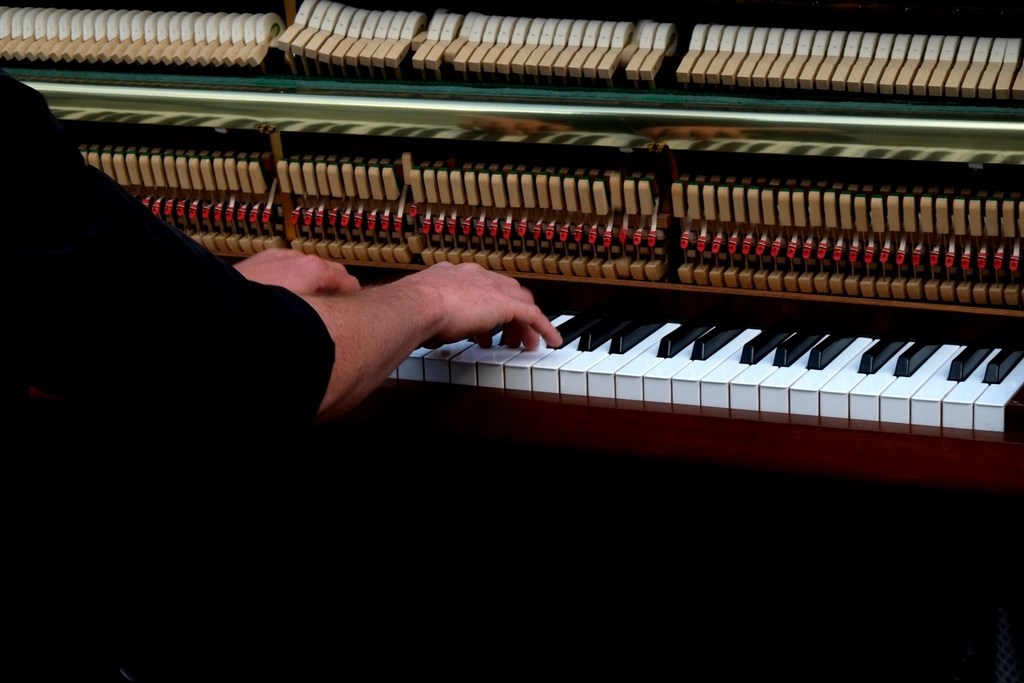
    That gleam stayed with me. So much so that I wrote a piano piece inspired by Wilder’s performance. I called it Gene Wilder’s Prelude to Mischief and Mayhem. The first movement was a nightmare—rewritten more times than I care to admit. Oddly, the second and third movements came first, composed together in the aftermath of my mother’s passing on October 1, 2020. Nearly five years later, I finally completed the first movement, like some strange reverse birth.

    The result? A tribute in three acts to the sly grin, the righteous mischief, and the bittersweet brilliance of Gene Wilder—a man who, like the best artists, never let kindness become cowardice or magic become a mask for mediocrity.

  • Hot Pockets, CliffNotes, and the Death of Deep Reading

    Hot Pockets, CliffNotes, and the Death of Deep Reading

    Before the Internet turned my brain into a beige slush of browser tabs and dopamine spikes, I used to read like a man possessed. In the early ’90s, I’d lounge by the pool of my Southern California apartment, sun-blasted and half-glossed with SPF 8, reading books with a kind of sacred monastic intensity. A. Alvarez’s The Savage God. Erik Erikson’s Young Man Luther. James Twitchell’s Carnival Culture. James Hillman and Michael Ventura’s rant against the therapy-industrial complex–We’ve Had a Hundred Years of Psychotherapy – and the World’s Getting Worse. Sometimes I’d interrupt the intellectual ecstasy to spritz my freshly tanned abs with water—because I was still vain, just literate.

    Reading back then was as natural as breathing. As Joshua Rothman points out in his New Yorker essay, “What’s Happening to Reading?”, there was a time when the written word was not merely consumed—it was inhaled. Books were companions. Anchors. Entire weekends were structured around chapters. But now? Reading is another tab, sandwiched between the news, a TikTok video of a dog on a skateboard, and an unopened Instacart order.

    Rothman nails the diagnosis. Reading used to be linear, immersive, and embodied—your hands on a book, your mind in a world. Now we shuttle between eBooks, PDFs, Reddit threads, and Kindle highlights like neurotic bees skimming data nectar. A “reading session” might include swiping through 200-word essays while eating a Hot Pocket and half-watching a documentary about narco penguins on Netflix. Our attention is fractured, our engagement ritualized but hollow. And yes, the statistics back it up: the percentage of Americans who read at least one book a year dropped from 55% to 48%. Not a cliff, but a slow, sad slide.

    Some argue it’s not worth panicking over—a mere 7% drop. I disagree. As a college instructor, I’ve seen the change up close. Students don’t read long-form books anymore. Assign Frederick Douglass and half the class will disappear into thin air—or worse, generate AI versions of Douglass quotes that never existed. Assign a “safe” book and they might skim the Wikipedia entry. We’ve entered an age where the bar for literacy is whether someone has read more than one captioned infographic per week.

    Rothman tries to be diplomatic. He argues that we’re not consuming less—we’re just consuming differently. Podcasts, YouTube explainers, TikTok essayists—this is the new literacy. And fine. I live in that world, too. I mainline political podcasts like they’re anti-anxiety meds. Most books, especially in the nonfiction space, do feel like padded TED Talks that should have stayed 4,000 words long. The first chapter dazzles; the next nine are a remix of the thesis until you feel gaslit into thinking you’re the problem.

    But now the reading apocalypse has a new beast in the basement: AI.

    We’ve entered the uncanny phase where the reader might be an algorithm, the author might be synthetic, and the glowing recommendation comes not from your friend but from a language model tuned to your neuroses. AI is now both the reader and the reviewer, compressing thousand-page tomes into bullet points so we can decide whether to fake-read them for a book club we no longer attend.

    Picture this: you’re a podcaster interviewing the author of a 600-page brick of a book. You’ve read the first 20 pages, tops. You ask your AI: “Give me a 5-page summary and 10 questions that make me sound like a tortured genius.” Boom—you’re suddenly a better interviewer than if you’d actually read the book. AI becomes your memory, your ghostwriter, your stand-in intelligence. And with every assist, your own reading muscles atrophy. You become fit only for blurbs and bar graphs.

    Or take this scenario: you’re a novelist. You’ve published 12 books. Eleven flopped. One became a cult hit. Your publisher, desperate for cash, wants six sequels. AI can generate them faster, better, and without your creative hand-wringing. You’re offered $5 million. Do you let the machine ghostwrite your legacy, or do you die on the sword of authenticity? Before you answer, consider how often we already outsource our thinking to tools. Consider how often you’ve read about a book rather than the book itself.

    Even the notion of a “writer” is dissolving. When I was in writing classes, names like Updike, Oates, Carver, and Roth loomed large—literary athletes who brawled on live television and feuded in magazines. Writers were gladiators of thought. Now they’re functionally obsolete in the eyes of the market, replaced by a system that values speed, virality, and AI-optimized titles.

    Soon, we won’t pick books. AI will pick them for us. It will scan our history, cross-reference our moods, and deliver pre-chewed summaries tailored to our emotional allergies. It will tell us what to read, what to think about it, and which hot takes to regurgitate over brunch. We’ll become readers in name only—participants in a kind of literary cosplay, where the act of reading is performed but never truly inhabited.

    Rothman’s essay is elegant, insightful, and wrong in one key respect: it shouldn’t be titled What’s Happening to Reading? It should be called What’s Happening to Reading, Writing, and the Human Mind? Because the page is still there—but the reader might not be.

  • How Losing 20 Pounds Made Me Rethink My Entire Watch Collection (and My Life)

    How Losing 20 Pounds Made Me Rethink My Entire Watch Collection (and My Life)

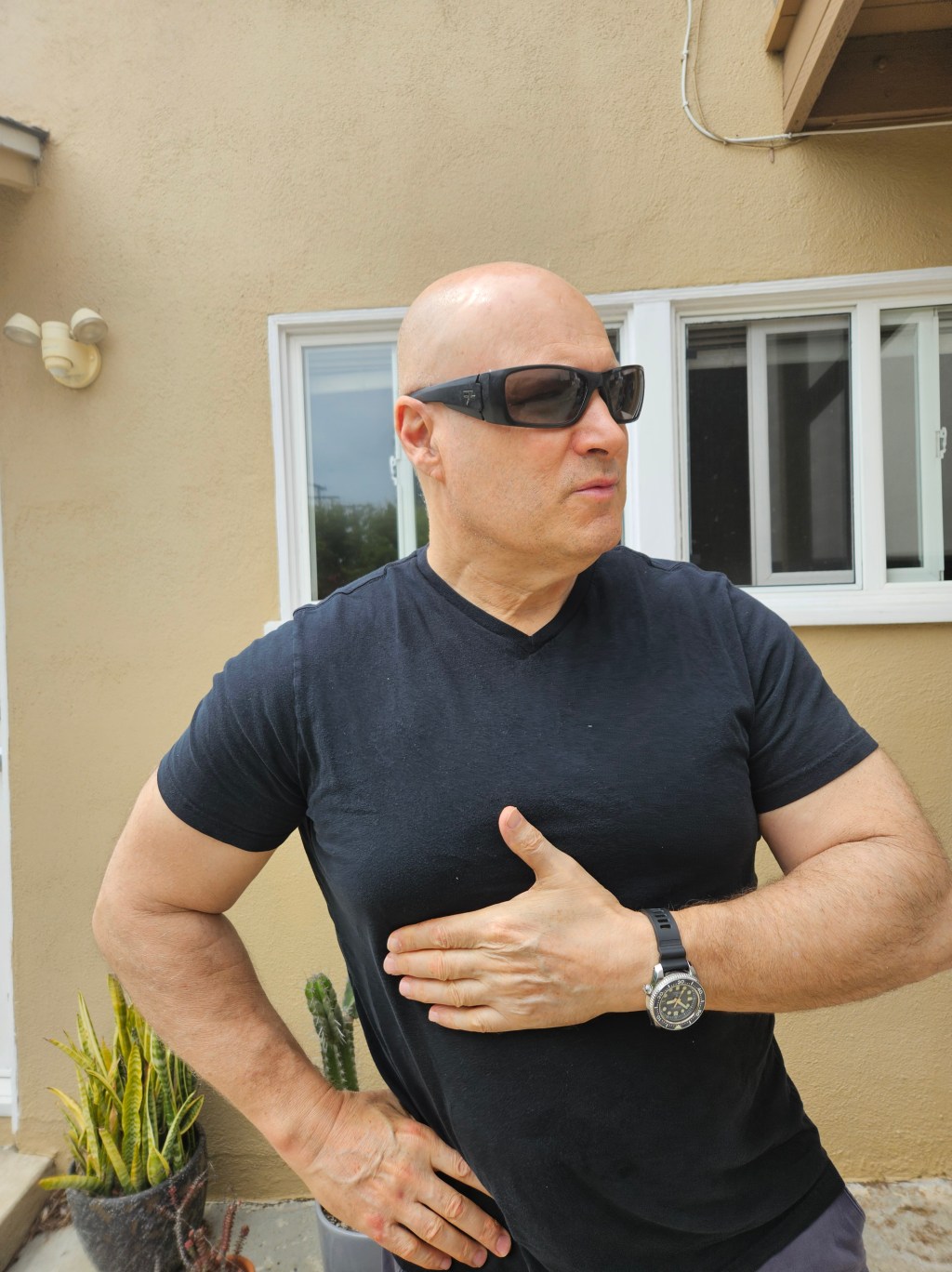
    Yesterday I filmed a 26-minute YouTube video on my main channel—ostensibly about watches. That was the bait. But somewhere between adjusting my camera and admiring my newly lean frame (twenty pounds down since April, thank you very much), I realized I wasn’t really talking about watches at all. I was talking about aging, restraint, identity, and how not to let your inner teenager run the damn show.

    The video was titled something like “My Four Watch Goals at Sixty-Four,” which sounds practical until you realize that my goals weren’t horological—they were existential. The first one? Stop being so maudlin. I actually said the word, spelled it out like a substitute teacher on a caffeine bender, and gave a definition. Maudlin: emotional excess masquerading as depth, the adolescent urge to turn life into performance art just so you can feel something.

    To illustrate, I offered up a formative trauma: being sixteen, watching Bill Bixby in The Incredible Hulk, and weeping—actually weeping—when he transformed into Lou Ferrigno’s green rage monster. It wasn’t just TV. It was catharsis. I was an Olympic weightlifter-slash-bodybuilder-slash-piano prodigy who didn’t know what to do with all the emotion I’d stuffed under my pecs and sonatas. Watching Bixby morph into a snarling demigod gave me permission to feel. In my forties, I channeled that same melodrama into wearing oversized diver watches—big, bold, and absurdly heroic, as if my wrist were auditioning for a Marvel reboot. That, too, was maudlin cosplay. Now I’m trying something radical: maturity.

    Goal two? Quit being an enabler. I admitted that, like it or not, I’m an influencer. I don’t collect in a vacuum. Every time I flex a new piece, it’s like handing out free permission slips to fellow addicts. So I’ve decided to use my powers for good—or at least for moderation.

    Goal three: Stay fit, get bloodwork, be a warrior in plain clothes. The watch isn’t the main course. It’s the garnish. If I’m going to wear something worth noticing, I should have the body and the biomarkers to back it up. Otherwise, I’m just a gilded potato.

    And finally, goal four: Minimalist watch heroes. The quiet monks of the community who own one to three watches and seem perfectly content. They’re my North Stars. They aren’t buying watches out of panic, nostalgia, or identity crises—they’re grounded, self-possessed, wise. I envy them. I aspire to be one of them. I’m not there yet, but I’m squinting in their direction.

    Honestly, I assumed the video would tank. My viewers tend to want horological eye-candy, not existential reflection wrapped in fitness updates. But to my surprise, the response was overwhelming—close to a thousand views on day one, dozens of comments. People thanked me. Some said they were booking doctor appointments. Others said they were starting diets. I’m fourteen years into making YouTube videos, and this might be the one I’m proudest of.

    Because the truth is, most watch YouTubers are just dressing up emotional poverty in brushed stainless steel. They get maudlin about bezels and bracelets, desperate to out-hype each other in a gaudy attention economy. It’s exhausting. What people really want—what they’re starving for—is someone speaking like a human being. No curation. No affectation.

    I ended my video with a confession: I’m still that sixteen-year-old kid. And if you cue up The Lonely Man theme from The Incredible Hulk, the one where David Banner walks down the rainy sidewalk in soft focus, I will—without shame—start crying. Again. Because some emotions don’t age. They just find quieter places to hide.

  • Bottom-Trawling and Other Sins That Ruin My Appetite

    Bottom-Trawling and Other Sins That Ruin My Appetite

    Watching a David Attenborough documentary feels less like casual viewing and more like sliding into the pew for the Church of Planet Earth. The man’s diction alone could resurrect the dead—each syllable polished, each pause wielded like a scalpel—while he preaches an all-natural gospel: paradise isn’t some vaporous hereafter; it’s right here, pulsing under our sneakers. And we, the congregation of carbon footprints, are the sinners. We bulldoze forests, mainline fossil fuels, and still have the gall to call ourselves stewards. His sermons don’t merely entertain; they indict. Ten minutes in and I’m itching to mulch my own receipts and swear off cheeseburgers for life.

    I’ve basked in Attenborough’s velvet reprimands for decades, often drifting into a blissful half-sleep as he murmurs about the “delicate balance of nature” and the tender devotion of a mother panda—as soothing as chamomile tea and twice as guilt-inducing. His newest homily, Ocean on Hulu, finds the maestro wide-eyed as ever, a silver-haired Burl Ives guiding us through Rudolph’s wilderness—only this time the Abominable Snowman is industrial bottom trawling. Picture a gargantuan steel mouth dragging across the seabed, gulping everything in its path. Rays flutter, fish scatter, and then—slam—the net’s iron curtain drops. Most of the hapless catch is unceremoniously dumped, lifeless, back into the brine.

    The footage left me queasy, a queasiness only partly soothed by Attenborough’s grandfatherly timbre. I’ve already been flirting with a plant-forward diet; Ocean shoved me into a full-blown breakup with seafood. Good luck unseeing hundreds of doomed creatures funneled into a floating abattoir while an octogenarian sage explains—as gently as one can—that we’re devouring our own Eden.

    So yes, I’ll skip the shrimp cocktail, thanks. My conscience already has acid reflux.

  • One Day, One House, No Excuses

    One Day, One House, No Excuses

    This morning, I brewed a pot of delicious Stumptown French roast—molten, bitter, potent—and padded over to my computer feeling dangerously wholesome. A good man with good intentions. Which, of course, is always the start of a problem. I was toying with the idea of living more virtuously: dialing back the animal fat, leaning into tempeh and nutritional yeast, pretending a plant-based diet isn’t just a long goodbye to flavor. You know, the usual summer resolutions—less cheese, more clarity.

    Somewhere between the aroma of roasted beans and my first click of the mouse, I felt something resembling courage. Not the real, bare-knuckled kind, but the kind that sneaks in when the house is quiet and you haven’t yet sabotaged yourself with toast. I thought: Gird up thy loins like a man. (Who says that anymore? Besides prophets and people named Chet.) But still, the idea stuck. Maybe I was finally ready to stop flinching and start living with actual conviction—about food, fitness, morality, and cholesterol.

    And yet I know myself. Talk is cheap. I have spent years writing grocery lists for lives I never lived. What matters is performance.

    Which brings us to today. My summer has officially begun. My wife and teenage daughters are off to Disneyland—a place I regard with the same warmth I reserve for colonoscopies and TikTok. They know this, and mercifully leave me out of the Mouseketeer pilgrimage. Which means: the house is mine.

    I have made a pact with myself. Today, I will submit my final grades, mount the Schwinn Airdyne for a 60-minute sufferfest (estimated burn: 650-750 calories, depending on whether I channel Rocky Balboa or Mister Rogers), and I will rehearse my piano composition—tentatively titled Gene Wilder’s Prelude to Mischief and Madness. If all goes well, I’ll record it and upload it to my YouTube channel, where it will be watched by six people and a bot from Belarus.

    Alone time is rare in a house shared with twin teenage girls, a wife, and the occasional haunting presence of someone asking what’s for dinner. I daydream of a private studio—soundproofed, monk-like, adorned with a grand ebony Yamaha piano and maybe a faint aura of genius. Instead, I have today: a suburban cosplay fantasy in which I pretend to be a cloistered artist, instead of a middle-aged man in gym shorts wondering if tempeh is as bioavailable as the vegan influencers claim it is.

    And yet… it’s enough. Let the performance begin.

  • Be a Poor Speaker at Your Own Peril

    Be a Poor Speaker at Your Own Peril

    On the latest Dishcast, Andrew Sullivan interviewed the ever-cantankerous Chris Matthews—nearly 80 and still sharp enough to cut glass. Matthews, with his gravelly baritone steeped in decades of political brawls, made a blunt but brilliant point: the failed American presidents—Gerald Ford, Jimmy Carter, Joe Biden—shared one glaring flaw. They couldn’t talk. They mumbled, stumbled, or sounded like nervous librarians scolding kids in the back row.

    Now contrast that with the great performers of the Oval Office—Kennedy, Reagan, Clinton, Obama. Each could command a room, a camera, or a nation, not because they had better policies, but because they could speak. Kennedy practiced endlessly, even in the bathtub, channeling Churchill’s thunderous cadence while scrubbing his armpits. Reagan rehearsed like an actor because—well, he was one. Matthews’ thesis? If you’re a politician and can’t speak, you’re in the wrong line of work. There’s no excuse. Oratory is not some divine gift—it’s a muscle, and you’d damn well better train it.

    I couldn’t agree more. In my forty years teaching college students, my most potent teaching tool wasn’t my syllabus or my grading rubric—it was my voice. My persona. My ability to perform indignation, irony, sarcasm, and revelation—all in the same breath. I played a character: part prophet, part stand-up comic, part disappointed parent watching the nation stick a fork in the toaster. And that outraged character got through to students. It entertained while it educated. It gave ideas a delivery system my students could remember.

    So when I watch politicians stumble through speeches like deer on roller skates, I want to scream. You are leading a country. You should not sound like a sedated hostage reading a ransom note. At their worst, some of these men sound like toddlers in a supermarket, lost and wailing, unable to pronounce the word “mommy.” And yet they expect to run a superpower.

    Chris Matthews is right: if you can’t speak, you can’t lead.

  • The Pilgrim, the Mansion, and the Flying Death Rig

    The Pilgrim, the Mansion, and the Flying Death Rig

    Last night, I dreamed I worked at a surreal hybrid of a college campus and an amusement park—the kind of place where tenured professors could file paperwork in one building and ride a log flume in another. Picture syllabus deadlines and cotton candy coexisting. Naturally, I was late for both.

    Meanwhile, several miles away in my old neighborhood, Marcus, a childhood friend, decided he’d had enough of modern civilization. His exit wasn’t dramatic—no manifesto, no angry blog post—just a quiet pilgrimage beginning in front of my house. The weather was unreasonably perfect. Sunlight filtered through air that smelled like rose petals and eternal spring. Think Garden of Eden meets Orange County real estate brochure.

    So why would Marcus leave paradise? We didn’t know. But my neighbors and I were offended by the sheer moral audacity of it. His journey felt like a judgment—like he’d stared into the hollow eyes of our HOA and whispered, “You people are dead inside.” Naturally, we chased him. Not to stop him, but to prove we were decent people too. We jogged after him, waving metaphysical CVs and shouting, “We recycle! We make our own salad dressing!”

    But Marcus was too far ahead. By the time I arrived at the college-amusement park, he was gone. I retreated to my professor’s office to catch up on what dreams insist professors do: paperwork. That’s when Mike arrived—a former student, Navy SEAL, and time-traveling spirit guide from the 1990s. He led me to a house in Buena Park, once his father’s, now transfigured by dream logic into a mansion of staggering beauty, where I apparently lived a life of joy and ease in another dimension. It was, quite simply, the life I never knew I had but now mourned like a phantom limb. I was flooded with regret. Why did I leave that parallel mansion where I was whole, radiant, and probably never had to grade a single freshman essay?

    Then the sun set, and—as dreams do—I stopped being a professor and morphed into some kind of blue-collar rig worker, one of four men hauling cargo across the freeways of this theme park universe. At breakneck speed, we clung to the roof of a truck, flying over the 5 freeway like a band of deluded daredevils. I alone had the courage (or sanity) to question this arrangement. “You know,” I said, wind slapping my face, “we don’t have to die tonight. There’s an interior cabin. With seats.”

    At first, they mocked me—because apparently, dreamland logic still includes workplace hazing—but eventually, they gave in. We climbed down into the safety of the rig, like cowards, or people who enjoy not being flung across asphalt.

    As I relaxed, I thought once more about that mansion in Buena Park, that shadow life where I wasn’t trying to prove my worth or cling to cargo. A life of belonging, not striving. Then I woke up, ate a bowl of buckwheat groats, drank my Sumatra coffee, and wondered what it all meant.

  • Muhammad Ali and the Rent We Pay for Heaven

    Muhammad Ali and the Rent We Pay for Heaven

    During the chaos of finals week—when my inbox floods with apologetic, last-ditch emails from students begging for an extended deadline—I found solace in something far removed from academia: Antoine Fuqua’s What’s My Name: Muhammad Ali. It’s a two-part documentary, but it feels more like a sermon and a love letter rolled into one. Like Fuqua, I’ve always had a boundless reverence for Ali—the most charismatic athlete to ever live—and watching him slowly succumb to Parkinson’s at just forty-two broke something in me.

    There’s a word for the dark thrill we sometimes feel when others suffer: schadenfreude. But what’s the opposite of that word–the anguish we feel when our heroes fall? When they suffer with such dignity and pride that they won’t accept our sympathy, even though they deserve every ounce of it? We don’t just mourn them—we mourn the version of ourselves that believed they were untouchable. Seeing Ali’s mind remain sharp, his wit flickering through that neurological prison, was unbearable and beautiful all at once.

    In his prime, Ali wasn’t just a boxer—he was a superhero, a shapeshifter, a one-man Broadway show in a heavyweight’s body. He was a sharp observer of American racism, yet never a scold. He wielded humor like a blade—cutting through injustice with charm and rhythm. His facial expressions alone could dismantle a room. And above all, he had soul. He was a poet, an actor, a preacher, and a provocateur.

    His conversion to Islam was not cosmetic. It reshaped him. He carried a sense of divine accountability, speaking of God not as abstraction but as a constant, watchful presence. He lived with the weight of eternity in mind, casually discussing the soul as if he’d already made peace with his fate. One of the final moments in the documentary captures this perfectly: Ali scribbles a note to a fan asking for an autograph—“Service to others is the rent we pay for our room in HEAVEN.” The line made me stop in my tracks and pray that I could live such a life rather than momentarily be inspired by it or tell others about it, because I know from experience that “talk is cheap.”

    The film doesn’t critique Ali—and truthfully, I didn’t want it to. I didn’t want the version of him that stayed too long in the ring. I didn’t want to watch his brilliance dimmed by punches that should’ve stopped years earlier. I found myself irrationally angry with him. I wanted him to become an actor, a comedian, a talk show philosopher—anything but a late-career boxer whose brilliance was traded for one more round. But of course, I’m lying to myself.

    We place athletes like Ali in the realm of myth. They are our Achilles, our Hercules. His greatness was inseparable from the ring. The same inner fire that made him a champion refused to let him leave the stage quietly. That fire gave us the epic—and, inevitably, the tragedy. I only wish that the spiritual clarity that shaped his faith could have overruled the gladiator in him. But maybe that’s the final paradox of Ali: he lived as both prophet and warrior, and the cost of greatness was always going to be high.

  • Writing Your Origin Story: A College Essay Prompt

    Writing Your Origin Story: A College Essay Prompt

    Writing Your Origin Story

    An origin story is a personal narrative that explains how someone became who they are—it connects formative experiences, struggles, and turning points to a clear sense of identity and purpose. It’s not just a chronology of events, but a curated account that gives meaning to the chaos, shaping pain, failure, or rebellion into insight and direction. Like a myth with teeth, a well-crafted origin story turns vulnerability into vision, showing not just where someone came from, but how that journey forged their voice, values, and ambitions.

    We have powerful examples of origin stories In the Amazon Prime documentary Group Therapy, in which Neil Patrick Harris plays a surprisingly restrained version of himself as moderator while six comedians—Tig Notaro, Nicole Byer, Mike Birbiglia, London Hughes, Atsuko Okatsuka, and Gary Gulman—dissect the raw material of their lives. The big reveal? That material doesn’t go from trauma to stage in one dramatic leap. No, it must be fermented, filtered, and fashioned into something more useful than pain: a persona built on an origin story.

    Mike Birbiglia delivers the central thesis of the show, and I’ll paraphrase with a bit more bite: You can’t stagger onto stage mid-breakdown and expect catharsis to double as comedy. That’s not a gift—it’s a demand. You’re taking from the audience, not offering them anything. The real craft lies in the slow, deliberate process of transforming suffering into something elegant, pointed, and—yes—entertaining. That means the comic must achieve emotional distance from the wreckage, construct a precise point of view, and build a persona strong enough to carry the weight without buckling. In other words, the chaos must be curated. Unlike therapy, where you’re still bleeding onto the couch, stand-up demands a version of you that knows how to make the bloodstains rhyme.

    This process is a perfect metaphor for what college students must do, whether they realize it or not. They’re not just acquiring credentials—they’re building selves by having a clear grasp of their origin story. And that takes more than GPAs and LinkedIn bios. An origin story requires language, history, personal narrative, and a working origin myth that turns their emotional baggage into emotional architecture. And yes, it sounds crass, but the result is a kind of “self-brand”—an identity with coherence, voice, and purpose, forged from pain but presented with polish.

    Because your success, as a human being and someone who is creative and productive in the workforce, requires an origin story, you will write your first essay about the origin story–what it is, how it develops in others, and how it develops inside of you. 

    To explore the origin story in detail, you will write an essay in 3 parts. Part 1 will analyze the importance of an origin story in the Amazon Prime documentary Group Therapy. Your job in Part 1 is to write a two-page extended definition of the origin story based on the hard-fought wisdom of the comedians who pour out their souls and explain how through their suffering, they discovered who they are, what makes them tick, and how their origin story informs their comedy. 

    In Part 2, you will write a two-page analysis of the origin story by choosing one of four media sources: 

    1. The Amazon Prime 3-part series Evolution of the Black Quarterback, a meditation on the courage of black quarterbacks who broke racial barriers and built a legacy of social justice for those quarterbacks who came after them. 
    2. Chef’s Table, Pizza, Season 1, Episode 3, Ann Kim, the origin story of a Korean-American whose origin story led her to become an award-winning chef. 
    3. Chef’s Table, Noodles, Season 1, Episode 1, Evan Funke, an American who goes to Italy where kind Italian women share their cooking so he can preserve traditional Italian noodles and become a true chef.
    4. Chef’s Table, Noodles, Season 1, Episode 2, Guirong Wei, a young woman leaves China to work in London to support her family and emerges as a noodle star. 

    In Part 3, you will write your two-page origin story. Taking the lessons from Group Therapy and the other media sources from the choices above, you will have the context to write about how you conceive yourself, your interests, your unique challenges, your unique doubts, your career goals, and your aspirations as part of your origin story. 

    Your essay should be written in MLA format and have a Works Cited page with a minimum of the 2 assigned media sources.  

    The 10 Characteristics of Your Origin Story

    1. You recognize your challenge to belong and understand why you don’t fit in with conventional notions of success, friendship, family, and belonging.
    2. You recognize your quirks, fears, and traits that make it a challenge for you to belong.
    3. You recognize the barriers between you and what you want. 
    4. You recognize what you want instead of chasing what you think others would have you want.
    5. You recognize being lost in a fog and having a moment or a series of moments in which you achieved clarity regarding what you wanted as a career, for your relationships, and for your passions. 
    6. You find a North Star, a higher goal, that pulls you from a life of lethargy and malaise to one of discipline and purpose. 
    7. You recognize the demons that you have to contend with if you are to rise above your worst tendencies and achieve happiness and success.
    8. You recognize the talents, inclinations, preferences, style, and biases that make you the person that you are, and you learn to embrace these things and allow them to inform and give expression to the kind of work that you do.
    9. You prove to your doubters that the path you have taken is the assertion of your true self and is the most likely path to happiness and success.
    10. You recognize mentors and role models who blaze a path that makes you see yourself more clearly and live in accordance with your aspirational self.