Last night I dreamed I was at the Aspen Institute, where I took the stage as a guest speaker while snowflakes pirouetted past the classroom windows like bored ballerinas. Dozens of young writers—already published, already duped—sat before me, waiting to be enlightened. I told them the truth their publishers had concealed with a smile and a contract: the marketing promises were fairy dust, the royalty checks were jokes, and their “book deals” were little more than elaborate scams. They would earn a pittance, and the betrayal would sting worse than any bad review.
Some of them glared at me like I’d just blasphemed against their gods, but others—emboldened by rage—shouted the names of their novels and memoirs into the snowy air. A nineteen-year-old tech billionaire from India cried out the title of his memoir: The Gunther Effect. I made him repeat it three times, as if conjuring a spell, so the words wouldn’t slip away. Against my better judgment, I was intrigued.
By popular demand, I returned for a second sermon. This time, I was flanked by professors and “established” writers who knew the game as well as I did. Their lectures weren’t brilliant, but they didn’t have to be. For me, just focusing on one speaker, narrowing the scattered kaleidoscope of my mind into a single lens, felt like mental hygiene—a purging of the Internet’s endless distractions. I thought, This is what I miss: the monastic joy of being a student, concentrating on one voice instead of chasing dopamine scraps.
And slowly, the room shifted. The students began to understand that my colleagues and I weren’t cynics but keepers of the ugly gospel. We had the keys to the vault, the passwords to real power. We were the Priests and Priestesses of Light and Success, consecrated by disillusion. Hands shot up like candles in a vigil, their questions burning against the snowfall outside, and we were exalted, gratified, almost holy in the glow of their hunger.
Yesterday I braved my cousin Pete’s 75th birthday blowout in Studio City, dragging my wife and one of my twin daughters along for the ordeal. Like a fool, I skipped the Google Maps pre-check. The punishment: three lane closures on the 405. What should have been a breezy forty-minute jaunt became a 95-minute death march in a metal box. I joked that Pete should’ve hired a therapist specifically for the traumatized survivors of Southern California traffic—“Welcome, let’s unpack your freeway PTSD before the cake is served.”
The party itself was bigger than I bargained for—150 guests orbiting around a swimming pool, lubricated by a taco bar, hummus hills, pita plains, and charcuterie slabs that could feed a small country. A band of four septuagenarians hacked out Beatles and Stones covers with the enthusiasm of men reliving their garage-band glory years.
I chatted with cousins and one of the guitarists, but inevitably the conversation veered into my professional life: “So, Jeff, what about AI in the classroom?” I gave them my stock answer: AI is a double-edged sword. It can turn us into lazy bots outsourcing our brains—or, on the bright side, it can make my grading life less of a grammar police beat. I explained that AI gives every student a free grammar tutor, a perk I never thought I’d live to see. And yes, I confessed my own guilty pleasure: I write a sprawling Nabokovian memo, feed it to the machine, and tell it, “Sharpen this. Add acid wit.” What comes back is so tight and sly that I want to light a candle in gratitude.
Left unsupervised, AI churns out limp, hollow paragraphs—Shakespeare’s “sound and fury, signifying nothing.” But with a solid draft and precise marching orders, it can take my word-bloated gasbaggery and spin it into crisp, surgical prose. The tool is neither angel nor demon; the sin or virtue belongs to the user.
Of course, I also sinned in the culinary department. My “moderation” consisted of three or four thick slabs of brie smothered with figs and crackers, plus a couple of carne asada tacos. I had a token bite of my daughter’s birthday cake, which was so sweet it could have stripped paint, but that was restraint by default, not discipline. I’m certain I left Pete’s bash two pounds heavier.
The drive home was mercifully shorter—just an hour—though Google still had the gall to insist the 405 was the “fast” route, lane closures and all. Let’s just say the 405 and I are on a trial separation for at least a year.
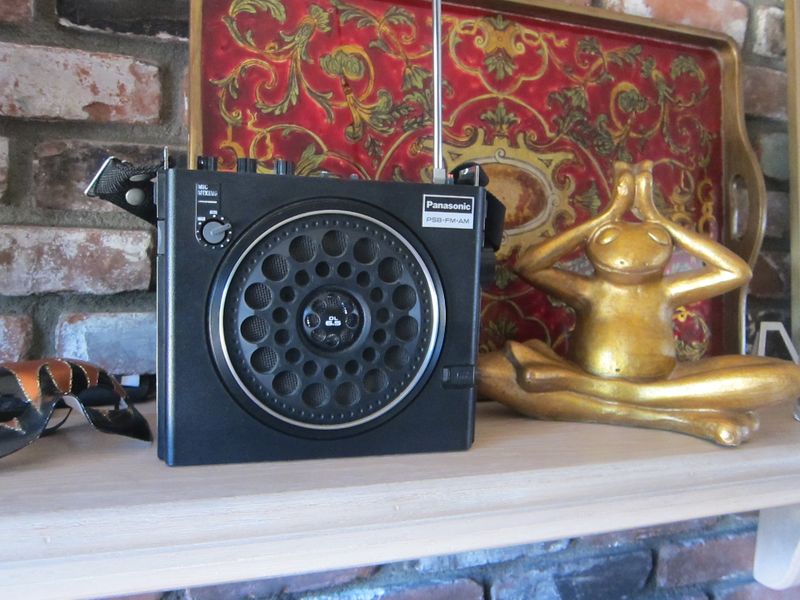
When I got bit by the radio bug in 2004 and bought every Grundig, Eton, Kaito, and Tecsun being released, I started my radio education. At the time, I also bought some vintage Panasonic, Sony, and Telefunken radios.
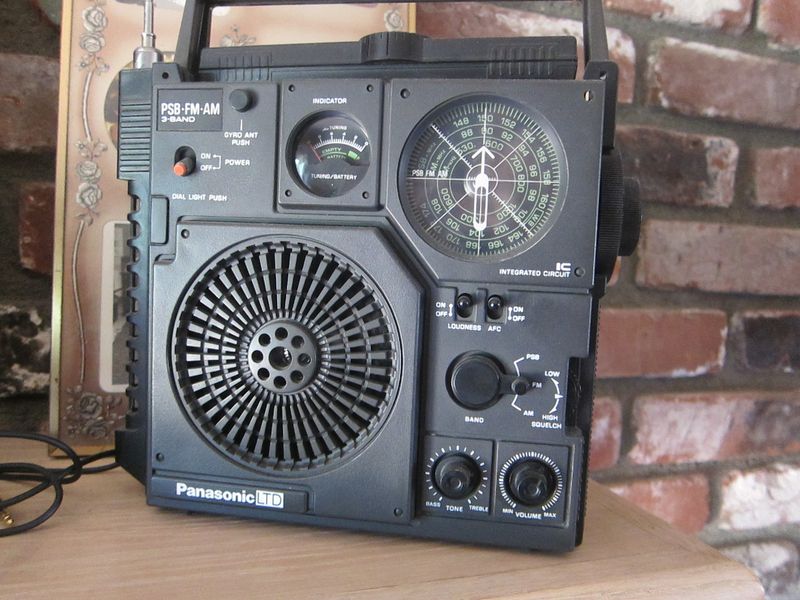
Has my passion died? Not really. Here’s the thing. I’ve got what I want. And I know my limitations regarding my tech skills, so I only use my mint Panasonic RF-888 shown below when I want a taste of vintage glory. My beloved Panasonic RF-877 “GI-Joe Radio” (top of the post) shown has amazing FM/AM reception but its sound is intermittent due to oxidization inside the pot. I may have to hire someone to clean it out.
I’m resigned to the fact that while I have the best modern radios for suiting my listening needs, none of them have the majesty of a Panasonic RF-2200 or a lesser priced GE Super Radio II.
In any event, here’s my current collection:
The C.Crane SW Radio plays in my workout den/office. I wanted it in my bedroom but its FM antenna too easily hooked on my elbow when I was getting up in the dark, so back in the den it went. Strengths: FM and loud sound. Weaknesses: None.
C.Crane 2E plays in the kitchen. I bought this a year ago evidencing that I’ll still buy a new radio if I am confident that it is an upgrade to what I already own. The 2E proves to be better than its previous incarnation in terms of sound and FM reception but only by a hair. Weakness: Like all my radios, 640 AM is too strong in Torrance and gets overload in the sound of squawking goose. I gave up on 640 and now listen to Leo Laporte podcasts.
C. Crane Plus in the girls’ bathroom. Nearly as good as the 2E. Ed bought this for me for 7 dollars at Fryes. My greatest radio deal ever.
Tivoli Songbook in the master bathroom. It’s small so it fits on the tiny bathroom table. FM is fine. AM is subject to interference.
Sangean WR-2 plays in the master bedroom. I love that its earbud jack is in the front. FM is great. AM is above average. Problems: The on-off button sometimes needs to be pressed 3-5 times to operate, a condition that can be improved with a Q-Tip dab of Deoxit.
So there you have it. I still love my radios. I don’t buy them much anymore, not because I’ve lost my passion but because I’ve got what I want. Related articles
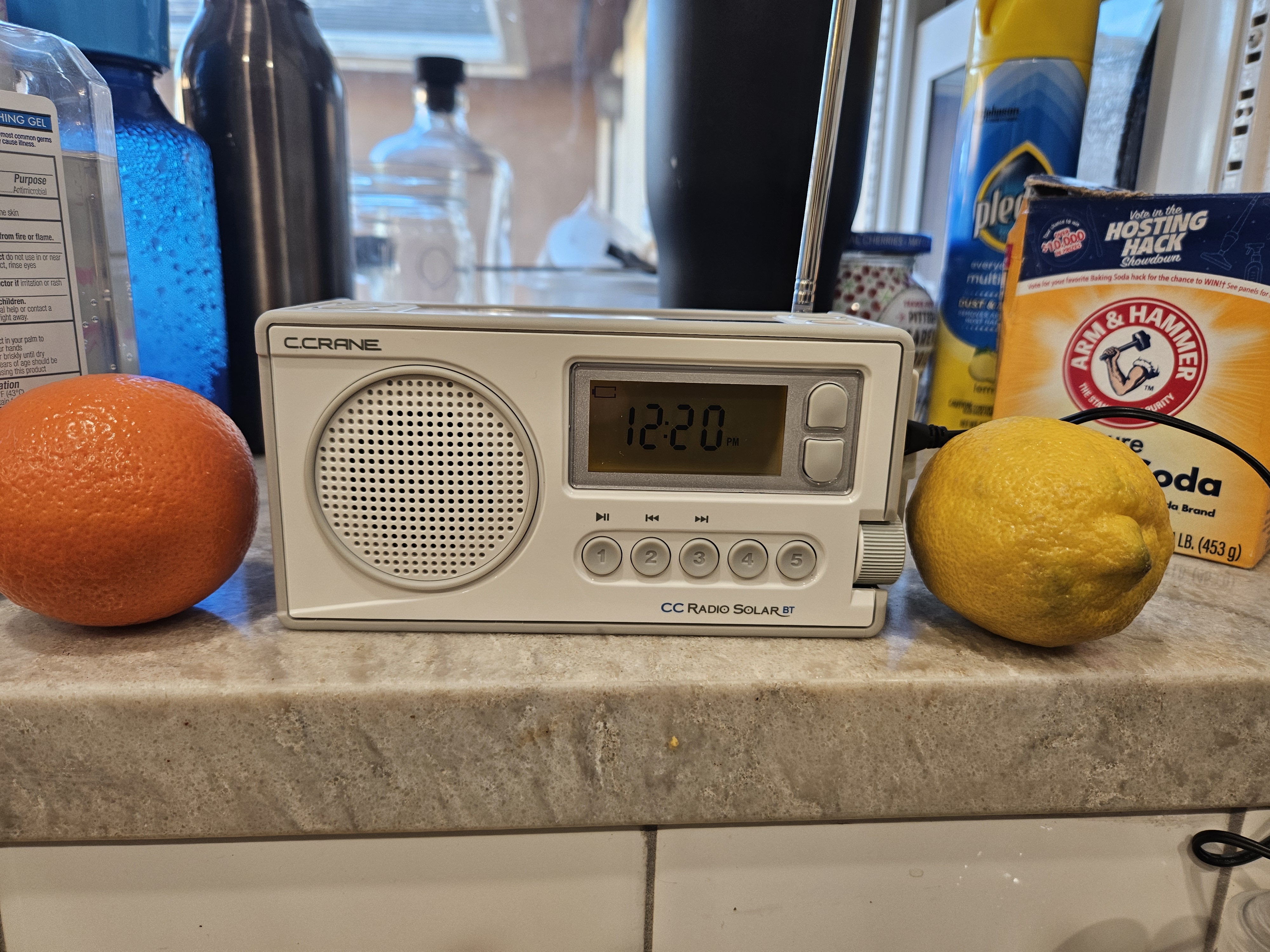
The C. Crane Solar Radio, paired with the optional AC adapter, arrived on Day 9 of the Los Angeles fires—perfect timing for some disaster preparedness. My first impression? Surprisingly compact and, dare I say, stylish. Its buttons and controls are refreshingly intuitive, a rare quality in emergency gadgets that usually look like they were cobbled together by paranoid survivalists.
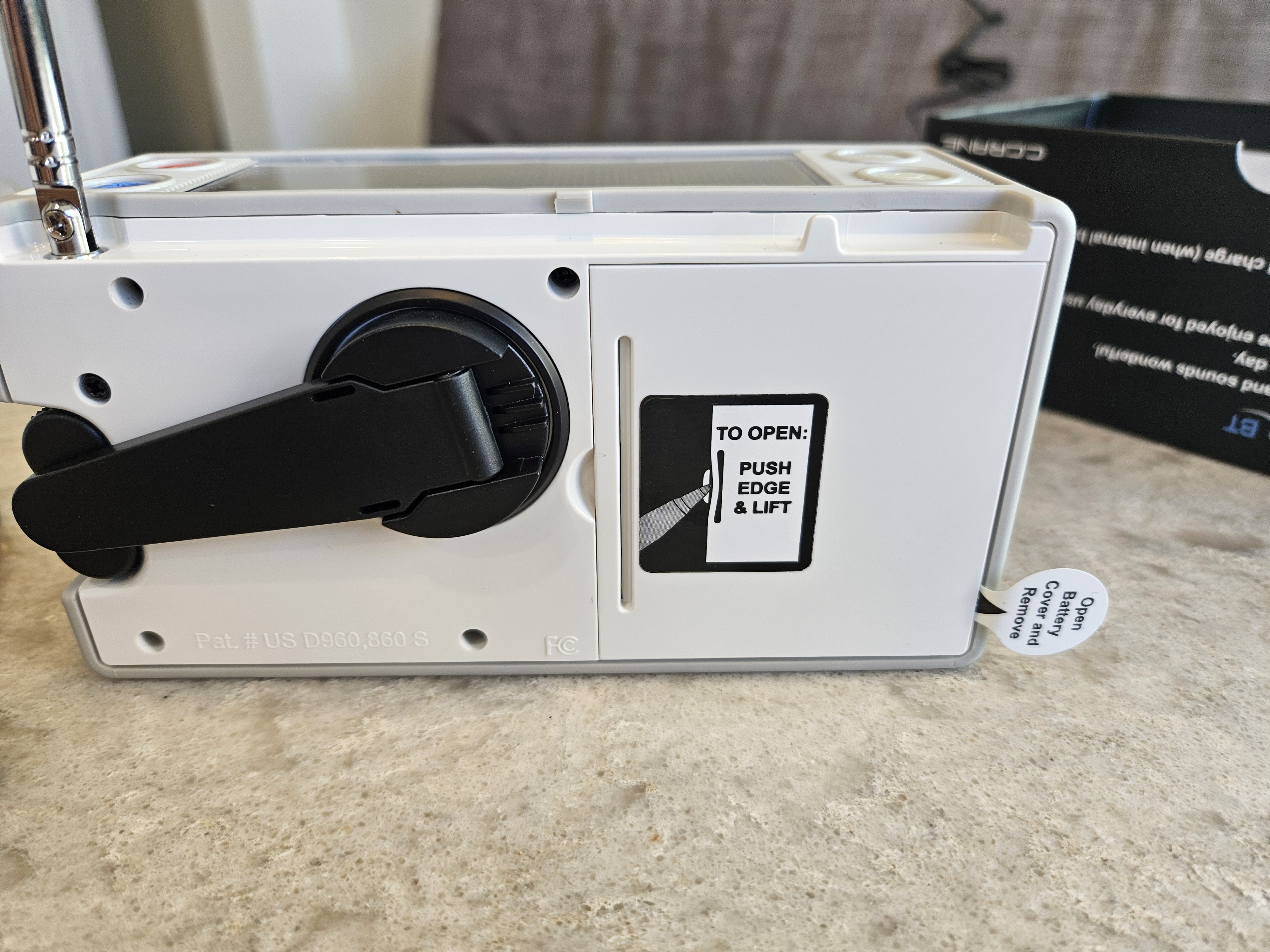
Then I met the battery door—a stubborn slab of plastic that wouldn’t budge. My fingers failed, so out came the Swiss Army knife, turning what should’ve been a simple battery swap into minor surgery.
Once powered up (on batteries, to avoid interference), I tested FM reception. Not bad. It’s sensitive, though slightly weaker than my Sangean PR-D12 when pulling in 89.3, a notoriously tricky station here in Torrance. Still, it handled it well. KUSC 91.5, though, was a lost cause—same as the PR-D12. Odd, since during my obsessive radio blogging days in the mid-2000s, 91.5 was crystal clear. Maybe it’s not the radios. Maybe it’s today’s electromagnetic smog choking the airwaves.
Later that evening, as I tackled the dishes, the FM sound impressed me. 89.3 came through loud and clear, delivering crisp voices on the news.
AM performance? Initially disappointing—distant, hollow, like voices echoing from a well. My friend Mark reminded me that modern homes are electronic war zones. Between Wi-Fi routers, smart devices, and God knows what else, AM hardly stands a chance.
But then I tweaked the settings. Switching the bandwidth filter from 2.5kHz to 4kHz transformed the AM performance. Suddenly, it shined.
The speaker is pleasant but modest. This is a small radio, after all. Luckily, the hidden High Power Audio Mode (press buttons 1 and 5) gives it a subtle boost—not exactly concert hall quality, but enough to rise above kitchen noise.
Where the C. Crane Solar Radio really excels is in its power versatility—two battery types, a solar panel, and a hand crank. Practical, yet it doesn’t scream apocalypse gear.
So, where does it fit in my collection? The PR-D12 stays in the garage for kettlebell workouts. The Solar Radio earns a spot over the kitchen sink, likely becoming my wife’s go-to. With solid FM performance, customizable AM tuning, and thoughtful design, the C. Crane Solar Radio gets the details right—and comes out a winner.
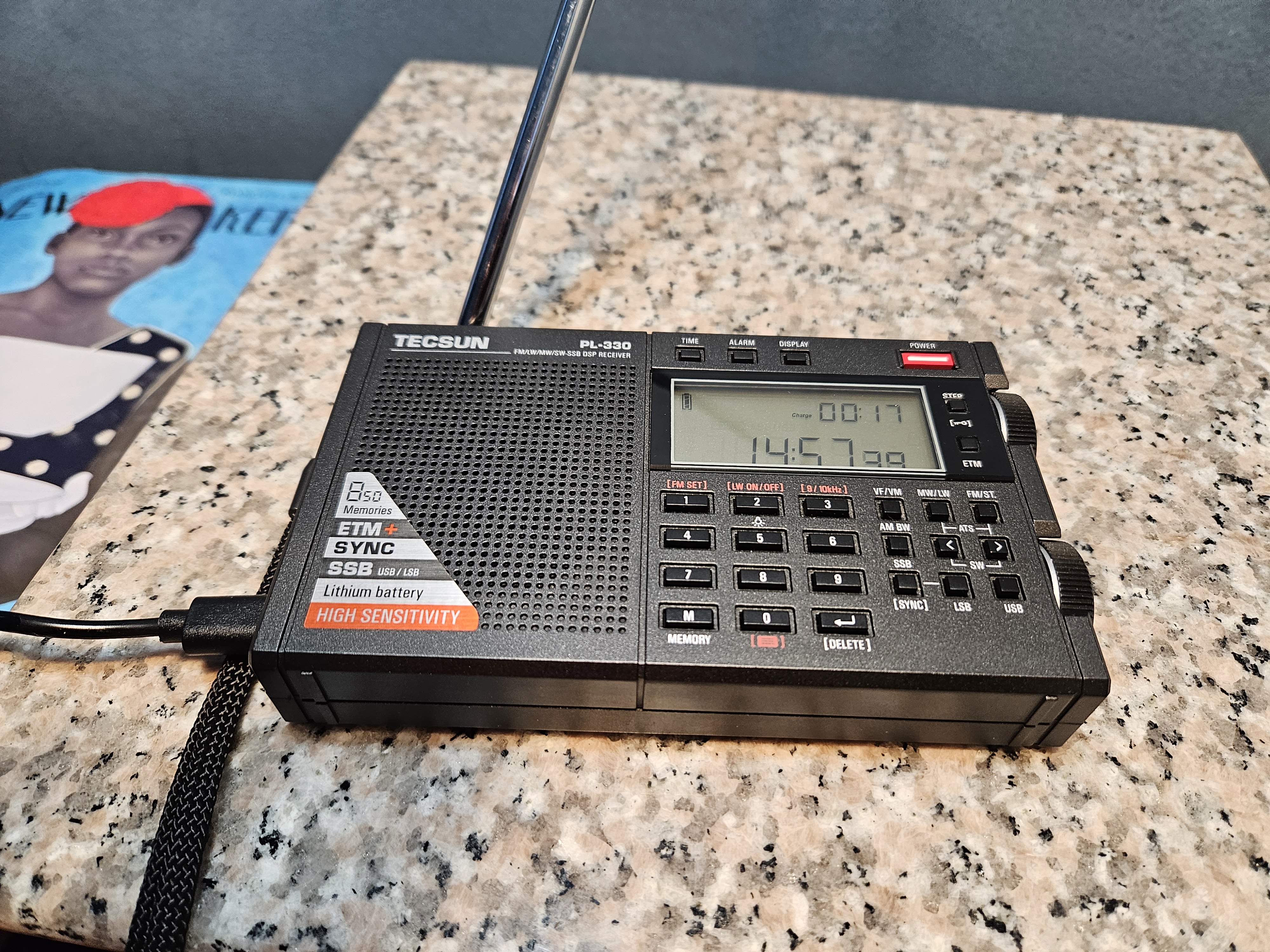
Let’s get one thing straight: I had no business buying the Tecsun PL-330. None. I already own the Tecsun Four Horsemen—660, 680, 880, and 990—all brilliant in their own right, all lovingly hoarded. I even own the Qodosen DX-286, a small-footprint miracle that punches above its weight with a speaker that sounds like it’s packing 3 watts of sonic muscle, though the specs remain elusive. That radio even beats the Tecsuns on AM shielding, filtering out the urban electrical swamp that makes most radios wheeze and crackle like they’re being exorcised.
And yet… the PL-330, a compact, .25-watt whisper of a radio, somehow seduced me. Maybe it was the open-box discount—$50 for a radio with a good reputation and a slightly rumpled box? Resistance was futile. I hit “Buy Now” faster than a dopamine junkie in a Black Friday frenzy.
I didn’t even need the manual. Owning this many Tecsuns means I’m essentially fluent in Tecsunese. Clock setting? Presets? I could do it blindfolded while flossing.
But let me be honest: The PL-330 is sleek. It has the crisp, militaristic geometry of something NASA might issue to interns. The buttons are snug and precise, unlike the Qodosen’s oversized, Playskool-style layout that screams “Designed by someone who just discovered ergonomics last Tuesday.”
That said, Qodosen wins on practicality—it has a kickstand. The PL-330, bafflingly, does not. A design oversight or a cruel joke? We may never know.
I don’t dabble in shortwave, but word on the street is that the 330 handles it like a champ. For FM, both radios are impressively sensitive, but I give a hair-thin edge to the Qodosen. On AM, the Qodosen’s clarity and noise control make it the better choice. For music, the Qodosen delivers a richer, more textured experience. But for talk radio, the PL-330 is sharper and cleaner—great for absorbing Madeleine Brand or NPR in the quiet of dawn.
Verdict? The Qodosen stays bedside, loyal and boomy. The PL-330 earns a home in the master bath or kitchen, a quiet companion for 5 a.m. when the world still sleeps.
Did I need it? Absolutely not. Am I keeping it? Absolutely.
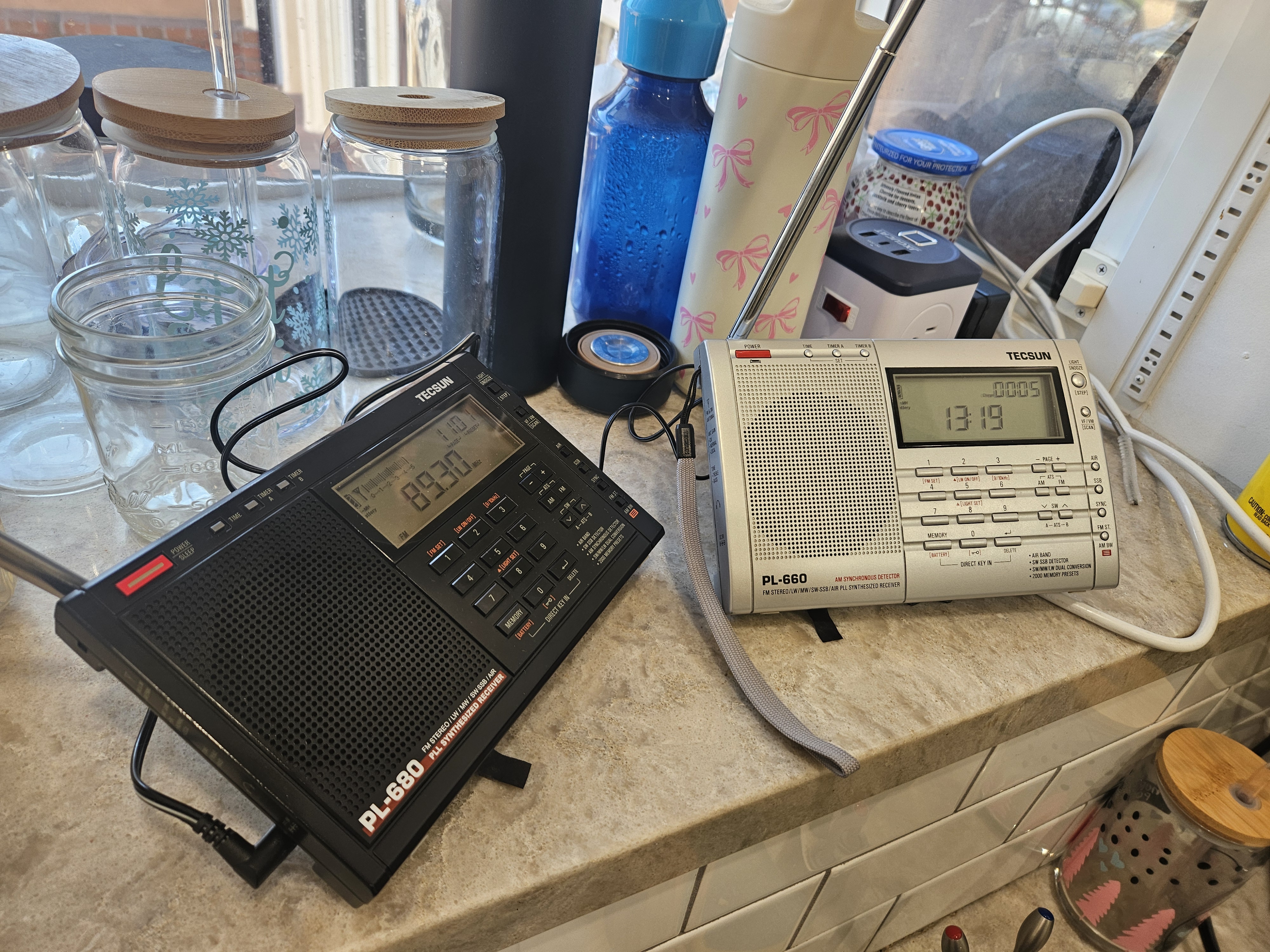
I’m fully aware that my love for radios borders on the irrational. When I see a certain type—say, the Tecsun PL-680 or PL-660—something in my brain short-circuits. I’m instantly enchanted, as if I’ve just glimpsed an old friend across a crowded room, and at the same time, I’m comforted, as if that friend just handed me a warm cup of coffee and told me everything was going to be alright.
A radio isn’t just a device; it’s a symbol, though I haven’t quite worked out of what exactly. Maybe it represents the art of slowing down—of sitting in a quiet room, wrapped in a cocoon of music or in the company of voices so familiar they feel like beloved houseguests. Or maybe it’s something more primal, a sanctuary against the chaos of the world, a frequency through which I can tune out the profane and tune into something sacred.
The word that comes to mind when I hold a radio is cozy—but not in the kitschy, scented-candle, novelty-mug kind of way. This is deeper than that, more akin to the Dutch word gezelligheid—a term that encompasses coziness, warmth, companionship, and the ineffable comfort of simply being. Radios don’t just play sound; they create atmosphere. They transport me back to Hollywood, Florida, sitting on the porch with my grandfather, the air thick with the scent of an impending tropical storm, the crackle of a ball game playing in the background like a heartbeat of another era.
Many have abandoned radio for the cold efficiency of streaming devices and smartphones. I tried to do the same for over a decade. I failed. Because gezelligheid—that feeling of simple, enduring pleasure—isn’t something you can replace with an algorithm. Some things, no matter how old-fashioned, still hum with life.
If you’re like me, listening to classical music on your Tecsun PL-990 or PL-880 while reading a book is a real pleasure. You could listen to the same radio station on a computer or streaming device and it wouldn’t feel the same.
Your preference for listening to content on a high-performance radio rather than an Amazon streaming device likely stems from a combination of tactility, ritual, and authenticity.
Tactility and Presence – Your radios are physical instruments with dials, knobs, and antennas, requiring interaction to fine-tune the signal. This act of engagement makes the listening experience feel more intentional, compared to simply clicking on a streaming app.
Ritual and Skill – Tuning into a hard-to-get FM station on a high-performance radio, especially under varying atmospheric conditions, feels like an acquired skill. When reception is challenging, getting a clean signal feels like a small victory—something a streaming device doesn’t provide because it simply works or doesn’t.
Authenticity and Directness – With FM radio, you’re receiving a direct broadcast, a real-time transmission from a tower to your receiver, unmediated by algorithms, compression, or internet connectivity. It feels like you’re catching a live signal out of the air, whereas streaming feels filtered through corporate infrastructure.
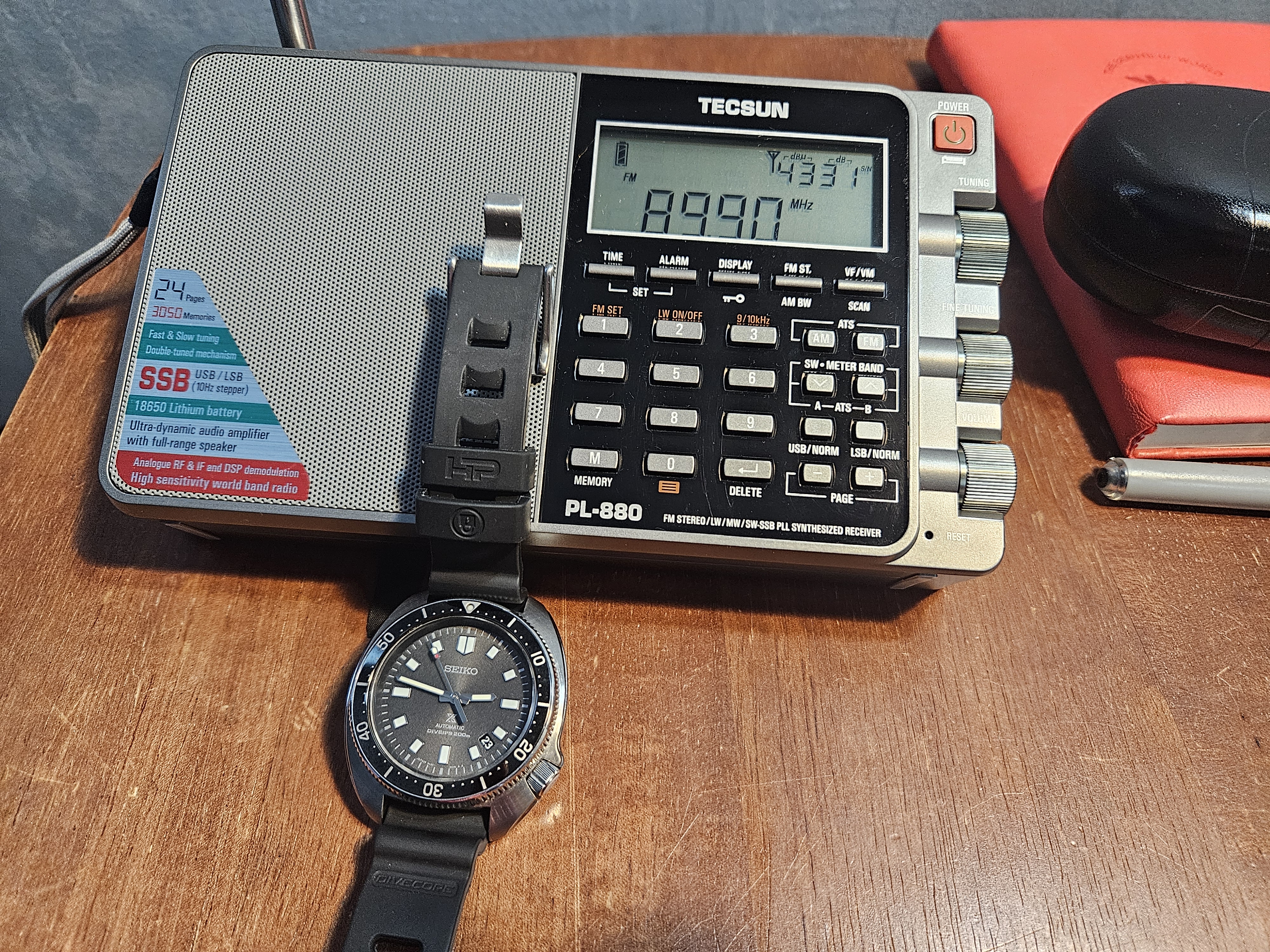
Immediacy and Atmosphere – FM radio has static, subtle signal fluctuations, and environmental influence—all of which make the sound feel more alive compared to a clinically perfect digital stream. There’s a romance in the imperfection, much like the sweep of a mechanical watch’s second hand versus the precise ticking of a quartz.
Connection to Your Watch Preferences:
If you’re a radio person, you may also be a watch enthusiast, in which case there’s a strong parallel between your love for high-performance radios and mechanical watches:
Mechanical watches and FM radios require physical mechanisms to operate—whether it’s gears and springs or ferrite antennas and signal processing. Quartz watches and streaming services, on the other hand, rely on microchips, batteries, and external data to function.
Both require skill and engagement—adjusting a radio for the best reception is akin to winding a watch, adjusting its timing, or understanding its movement. There’s an art to it.
Both provide a sense of tradition and independence—A mechanical watch keeps ticking without batteries, just as an FM radio pulls a signal out of the air without needing an internet connection. Both feel like they give you a direct, unfiltered experience rather than a pre-packaged digital one.
Your attachment to radio over streaming—and mechanical over quartz—likely comes from a deeper appreciation for analogue, self-sufficient technology that requires a human touch. It’s about the process as much as the result.
Against every shred of common sense I possess, I’ve joined several Tecsun radio forums—a decision akin to a sugar addict moving into Willy Wonka’s Chocolate Factory and sleeping under the chocolate river. It’s not just unwise; it’s a slow, delicious path to ruin. Within minutes, the forum zealots were chanting in unison: “You must own a PL-660 or PL-680! These are relics from the Pre-DSP Glory Era, back when Tecsun radios were free from the infernal chuffing, muting, and choppy tuning that plague DSP models. Think smooth analog cruising versus a hyper-caffeinated, turbocharged sports car.” Naturally, I bit the bait.
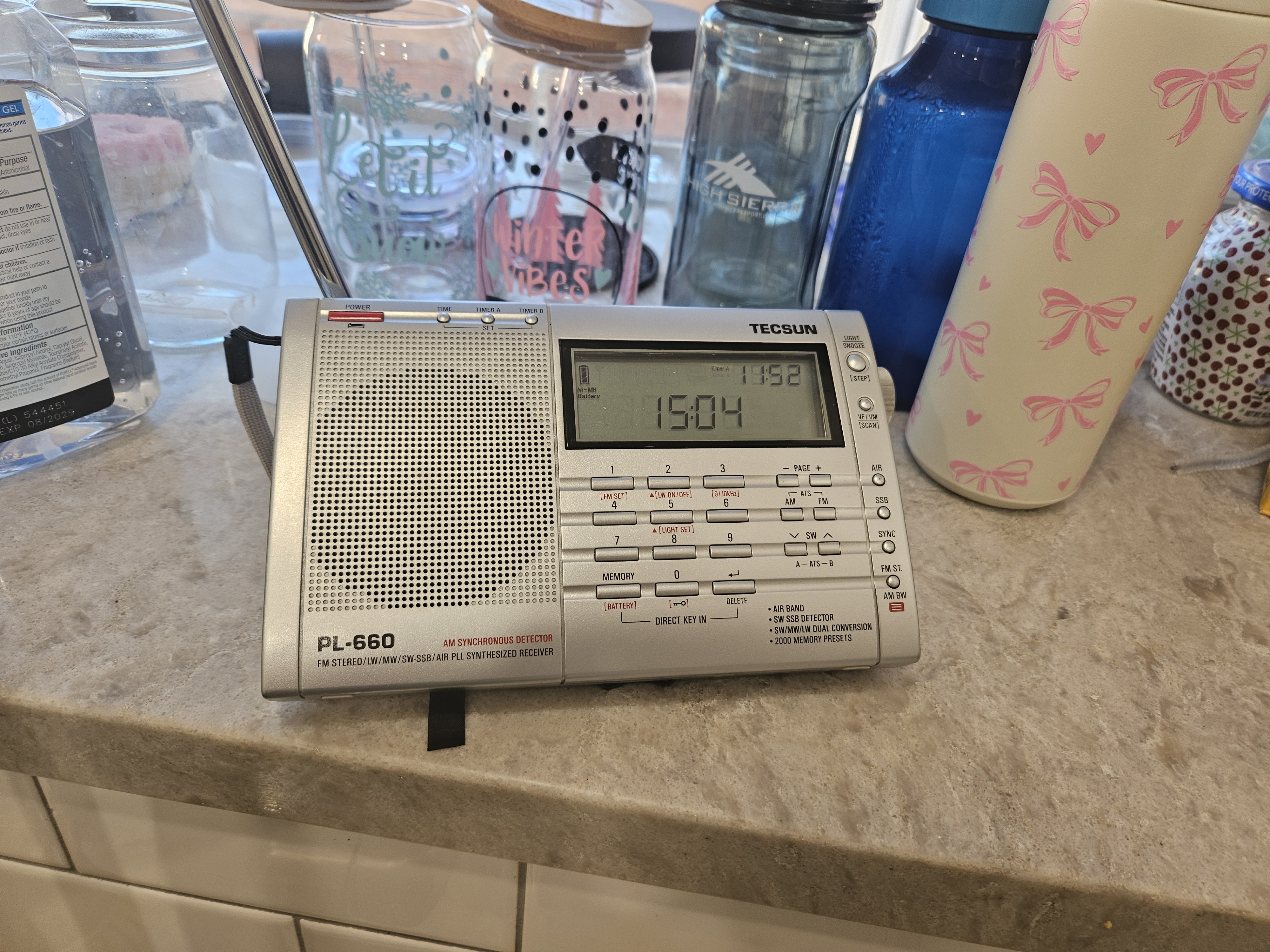
The timing was serendipitous—or dangerous, depending on your perspective. During the height of my radio obsession, circa 2008, I owned a black Tecsun PL-660, and it was the crown jewel of my collection. But, as is the curse of all obsessions, I sold it during a fleeting moment of sanity, a decision that haunted me. When the January 2025 Los Angeles Fires reignited my passion for radios—because what better time to tinker with antennas than during a climate apocalypse?—the one radio I truly mourned was the PL-660.
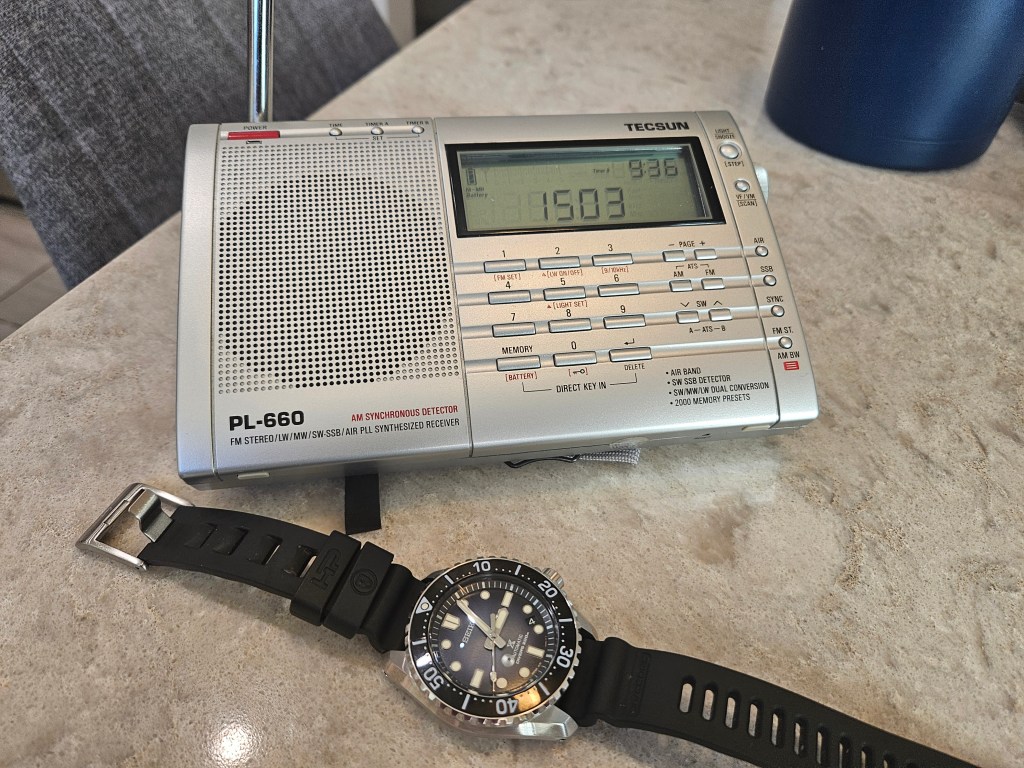
Enter eBay, the Pandora’s box of impulse purchases. I tracked down a silver PL-660 from a seller in Canada. At $68, it felt like a steal. Add $30 for shipping, tax, a Tecsun adapter from Anon-Co, and four AA rechargeable batteries, and suddenly my “steal” was a $140 splurge. But what’s money when you’re reuniting with a long-lost love?
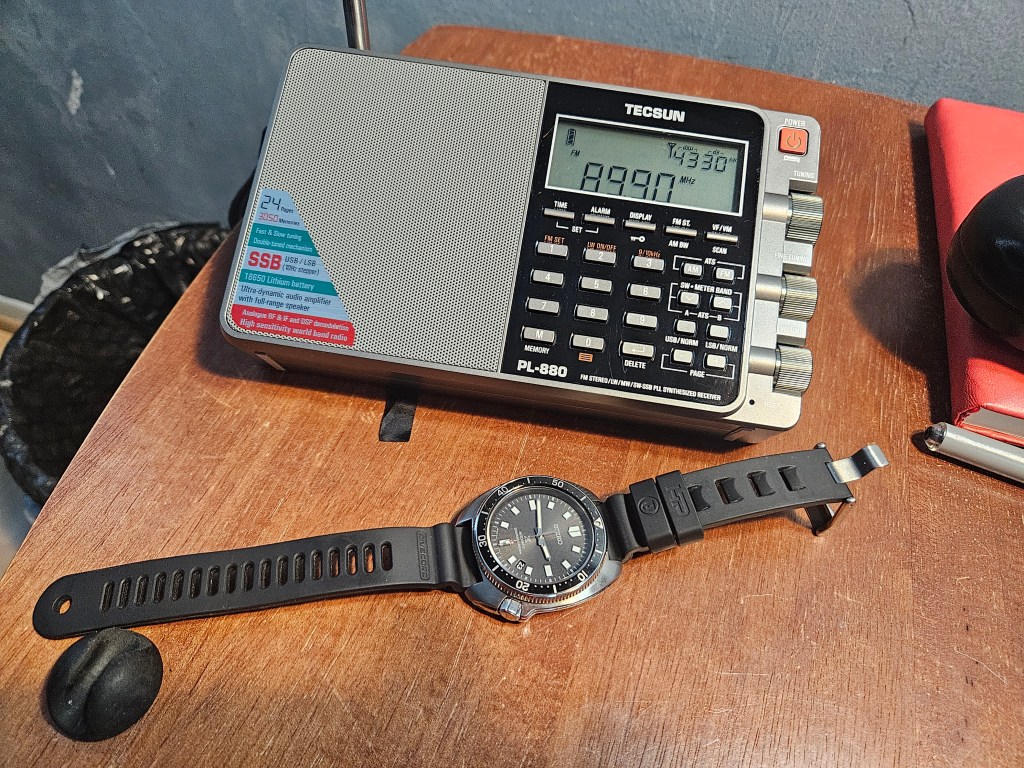
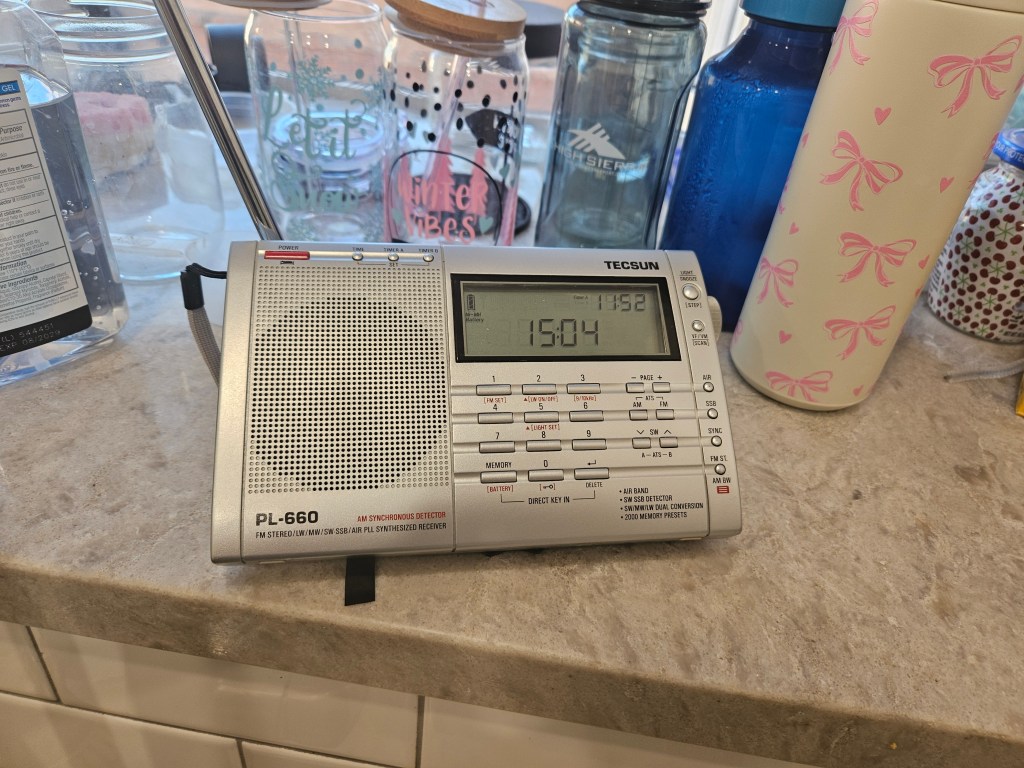
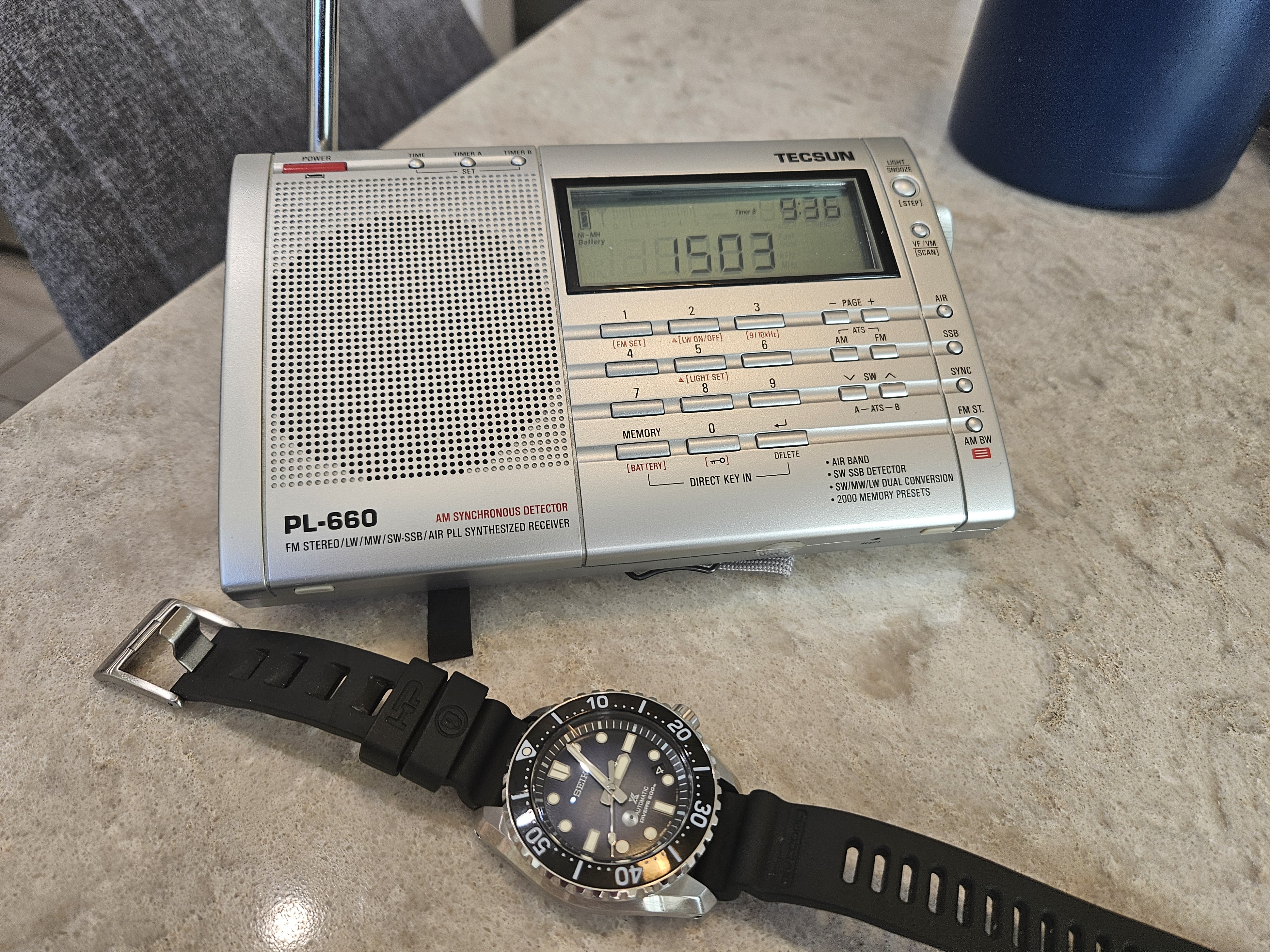
When the silver PL-660 arrived, it was nearly pristine, as if frozen in time. The box, manual, and accessories were all there, minus the adapter. I tested its AM and FM performance and, unsurprisingly, found it nearly indistinguishable from my PL-880—a radio I’d been coddling like a newborn in my bedroom. Sure, the 880’s speaker has a richer timbre, but the 660 holds its own. AM reception? The 660 might edge out the 880, but given the ever-shifting electrical interference in my house, testing it felt like comparing snowflakes in a blizzard. FM? Practically identical.
And yet, here’s the kicker: I prefer the PL-660. Why? Nostalgia, for starters. It’s been 15 years since I last held one, and its reunion felt like meeting an old friend who hasn’t aged a day. But it’s more than sentimentality. The PL-660 exudes Pre-DSP mystique, wearing its analog pedigree like a hero’s badge of honor. Add to that the rumors swirling on the forums about the PL-680 taking its final lap before extinction, and I developed a textbook case of FOMO.
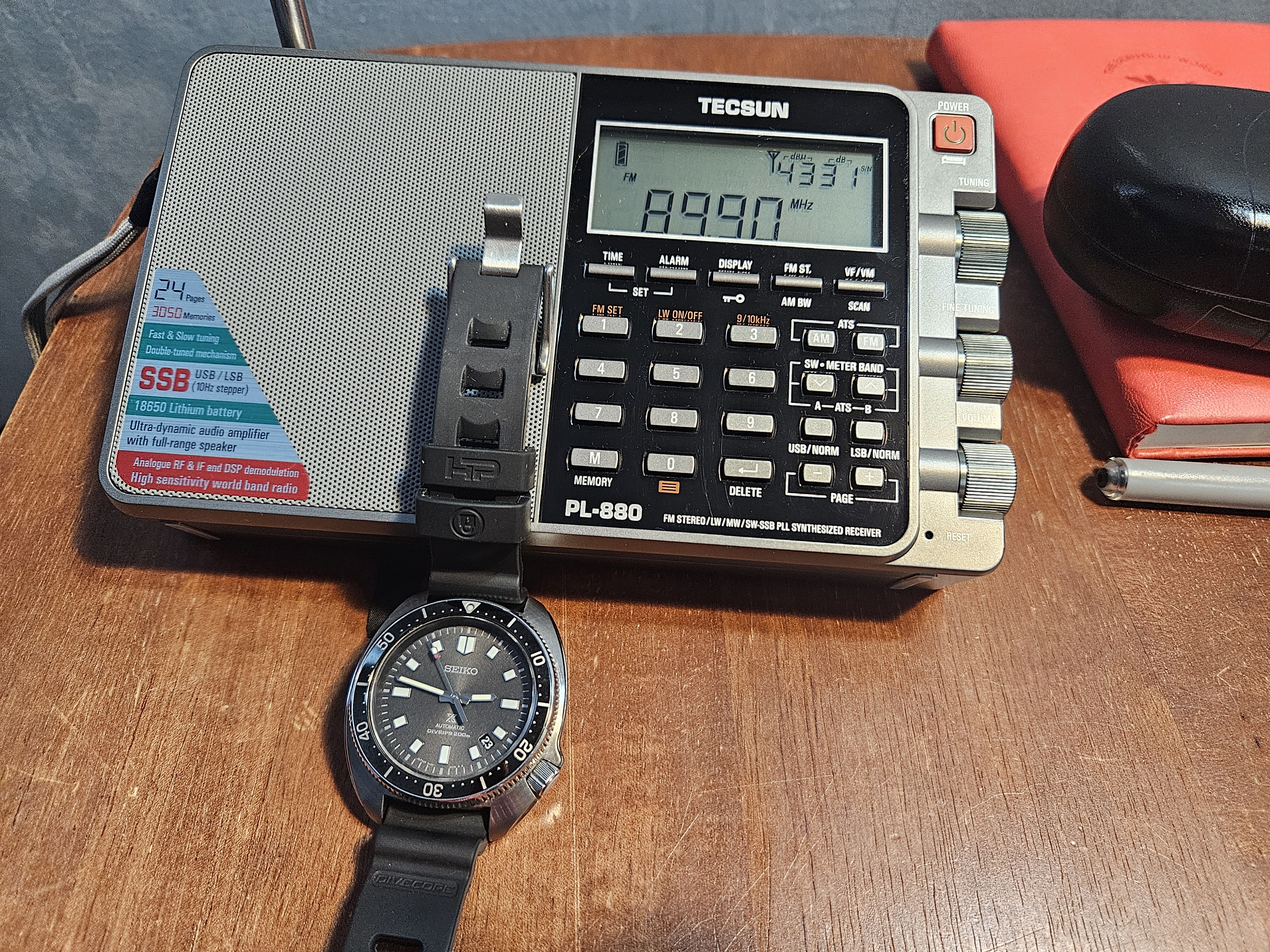
Aesthetically, the 660 is a triumph. The PL-880, while a solid performer, looks like it was designed by two committees: one in charge of the radio chassis, the other tasked with slapping on an oversized speaker as an afterthought. In contrast, the PL-660 feels like it was forged from a single, unified block of silver (or black, if you’re lucky enough to find one). It’s monolithic, almost talismanic, with a heft that whispers, “This is not a toy.” Holding it feels like gripping a miniature obelisk of radio perfection.
Naturally, I’m already scheming to buy a second PL-660 or perhaps its sibling, the PL-680, to keep as a “backup”—because if you love a radio enough, redundancy becomes an art form. And, because I can never leave well enough alone, I know I’ll spend the coming weeks obsessively swapping locations, putting the 660 in the bedroom, then the kitchen, then back again, until my brain short-circuits. Who needs stability when you can have perpetual indecision?
In fact, I barely made it to my office to write this without feeling pangs of longing for the 660, which I’d left momentarily in the kitchen. Thirty minutes apart, and I was already waxing poetic about its brilliance, muttering, “Dude, you really love radios.” And it’s true—I do. Probably too much. But that’s the magic of radios: they’re not just devices; they’re companions, time machines, and portals to a world that feels more tactile and real than anything on your smartphone.
Do I still love my PL-880? Of course. It’s a marvel of engineering, a steady presence in my life. But the PL-660? That’s my muse, my reminder of why I fell in love with radios in the first place. The 660 isn’t just a radio; it’s a reflection of who I am—an overthinking, signal-chasing, nostalgia-driven mess. And I wouldn’t have it any other way.
I wanted a Tecsun in my bedroom—not some soulless streaming device, but a real radio, one with warmth, charm, and that inexplicable magic that only live broadcasts can offer. The idea was simple: a companion for afternoon naps and late-night reading sessions set to the soothing sounds of classical or jazz. After all, what better antidote to our algorithm-driven existence than the analog embrace of a good radio?
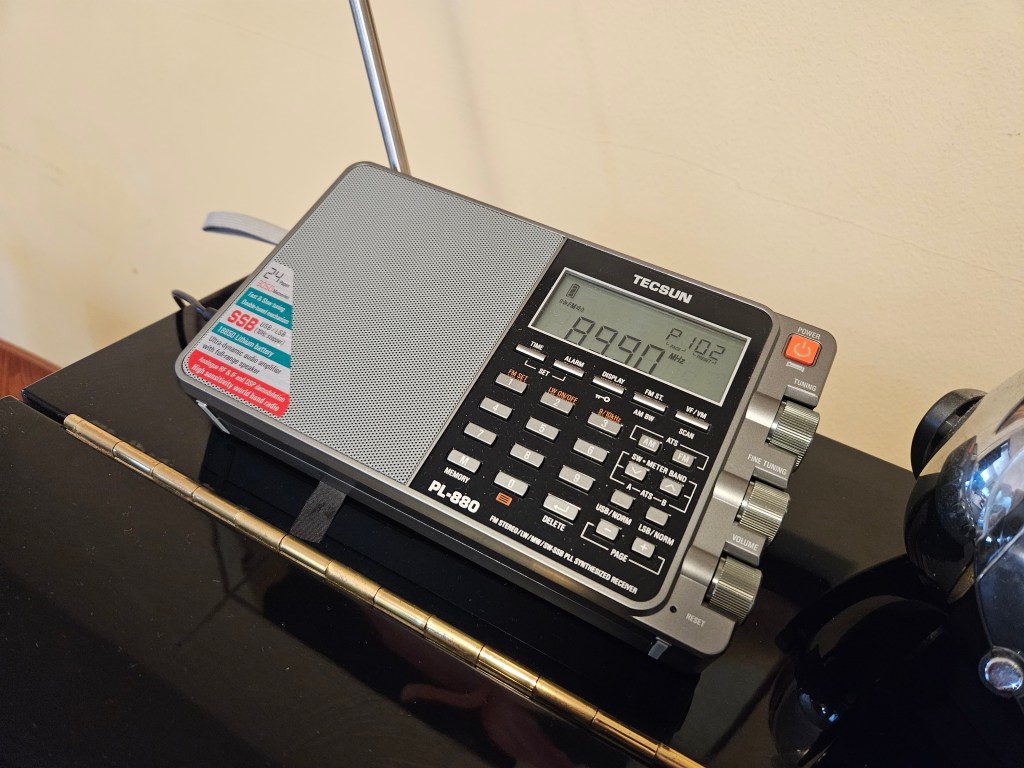
Back in my radio-obsessed heyday around 2008, I foolishly sold my beloved Tecsun PL-660. Call it hubris, call it a lapse in judgment, but I’ve regretted it ever since. To atone, I snagged a used PL-660 for the kitchen and, for my bedroom sanctuary, opted for a Tecsun PL-880—a model lauded as a minor deity among radios.
Now, let’s talk about my brief but painful dalliance with the PL-990. I ordered it from the reputable Anon-Co, expecting greatness, only to be greeted by an AM band as dead as a doorknob. Heartbreaking. Back it went, and in its place came the PL-880, slightly used but fully tested. And let me tell you, the speaker on the 880 is a revelation—warmer and more inviting than the 990’s. It’s like stepping into a cozy jazz club versus a sterile concert hall.
The 880 arrived ready for action, with AM and FM defaults already set to North American standards—no fiddling required. On “DX” mode, the AM band delivers stunning clarity with zero floor noise or interference. It’s a joy to listen to, unlike 95% of the radios cluttering the market that barely rise above the status of glorified paperweights. FM performance is similarly impressive, though 89.3 gave me a little attitude when placed too close to the wall. A quick relocation to the bed or a spot away from the wall solved that, but the rest of the FM dial? Flawless. KCRW 89.9, in particular, comes through like it’s broadcasting from my nightstand, even while the battery charges.
Speaking of AM, charging compromises its pristine reception, so I stick to battery power for those late-night AM sessions. Setting presets and navigating pages took a bit of patience—about 15 minutes of trial and error—but the interface is intuitive enough that even if you mess it up, direct entry is a breeze.
In short, the PL-880 does exactly what I hoped it would: it fills my room with rich, crystal-clear sound, providing a listening experience that feels both luxurious and intimate. Sure, the PL-990 looks great and has fantastic build quality, but for my purposes, the 880 checks every box at a fraction of the cost. Why throw extra cash at a feature set I don’t need?
Here’s the thing about being radio-obsessed: a radio isn’t just a gadget. It’s a companion, a quiet presence that connects you to a wider world while anchoring you in your own space. The PL-880 is just that—a welcome friend who’s already earned its place in my home.
The following is from my now defunct Herculodge blog. I realized when I did radio testing again in 2025 that RFI (radio frequency interference) is a far greater challenge than it was in 2008. I need to play my radios on batteries, not AC adapters, and keep them away from walls, which is a shame because I really want the Sangean HDR-19, a wall adapter-only radio, which has gone up in price about $80 since even a couple of months ago.
Since the Los Angeles Fires tore through Southern California in January 2025, I realized my household was embarrassingly underprepared for live news coverage. Streaming devices and smart speakers suddenly felt flimsy when the sky turns orange. I needed something sturdier, more reliable—like a good, old-fashioned radio.
Enter Sangean, a brand I trusted a decade ago. I fondly remembered their radios delivering a warm, bass-heavy sound—pleasant, if not exactly hi-fi. My ancient PR-D4 still hums along in the garage, proof that Sangean builds workhorses. So, naturally, I picked up their new DSP-chip PR-D12, curious to see how it stacked up against its analog ancestor.
The verdict? The D12 is brighter and more balanced than the D4, though the warmth I loved has cooled a bit. FM reception is a mixed bag. From Torrance, Pasadena’s 89.3 comes in strong with three bars and crystal clarity on the D12. On the D4? Same signal strength but with a thin veil of static, unless I awkwardly angle the antenna like I’m searching for alien life.
But then things get weird. 91.5, my go-to classical station, sings smoothly on the D4 but sputters on the D12—two weak bars and static, no matter how I threaten the antenna.
AM? Forget it. 640 AM is listenable but laced with floor noise on both radios. I twist and turn the radios to align the internal ferrite antennas like I’m cracking a safe, but the noise stays. Worse, AM talk radio voices sound like they’re broadcasting through a burlap sack. Long-term listening? Not a chance.
What the D12 does have going for it is user-friendliness. Four preset pages with five slots each make navigating stations painless—perfect for my wife, who refuses to wrestle with complex manuals that read like an SAT prep book. She’s happy with 89.3 and 89.9 blasting clear and loud, so the D12 earns its spot in the kitchen.
Still, I can’t shake the feeling I need something more commanding, like the soon-to-arrive Tecsun PL-990x. Maybe it’ll crack the code on AM audio bliss. Until then, the PR-D12 holds the line—solid, if not inspiring.
Moderate recommendation.
Update:
I told my fellow radio enthusiast friend Gary about how I could not listen to the AM sound on the PR-D12 or my PR-D4, and he expressed the same sentiment. He said the only AM he can listen to from his vast radio collection is his now defunct C.Crane CC Radio-SW, which is a clone of the Redsun RP-2100. This made me sad because many years ago I enjoyed listening to AM on my Redsun RP-2100, but I fried it when I put the wrong AC adapter in it. Getting good AM sound out of a radio is hard these days.
Second Update:
Three days after writing this review, I moved the PR-D12 to the garage where it sounds great on AM so I blame the kitchen, not the PR-D12.










 Cinemorphosis