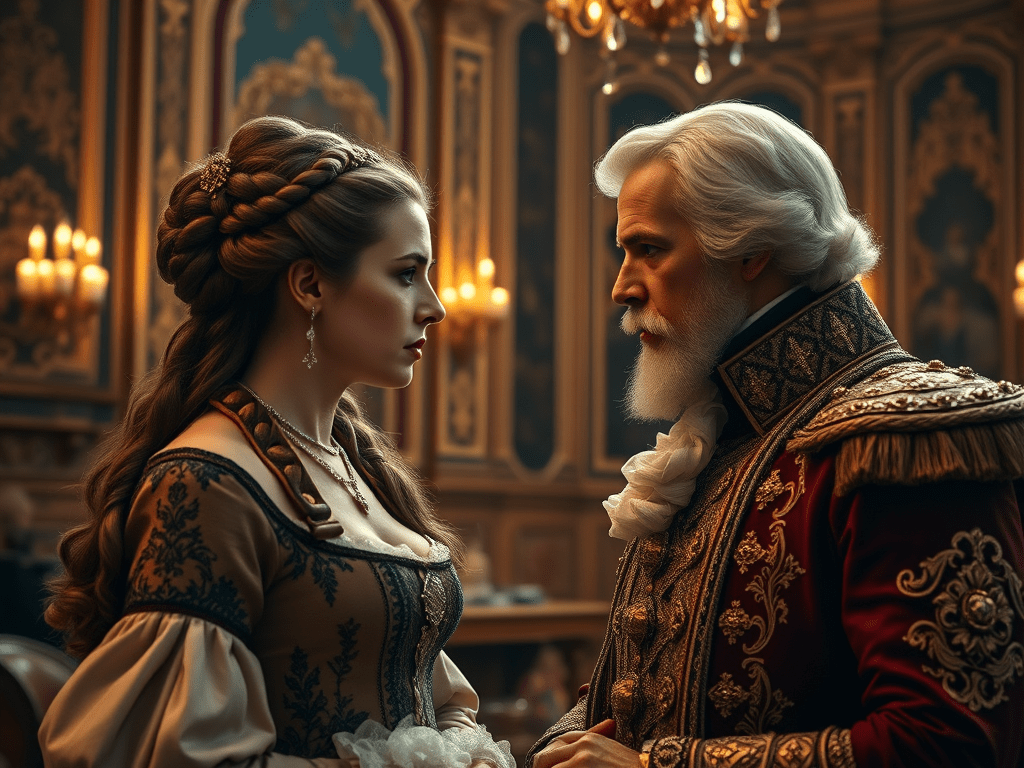
If you had told me to watch a period drama about the turbulent love life of Peter III and Catherine the Great—one mostly confined to the gilded chambers of a Russian palace—I would have laughed, pointed to my rain gutters, and insisted I had more pressing matters to attend to. And yet, The Great did something miraculous: it took that seemingly dreary premise and spun it into one of the sharpest, most unexpected love stories I’ve ever seen on television.
Elle Fanning’s Catherine enters the series practically vibrating with resentment, married off to a narcissistic, gluttonous man-child of an emperor played by Nicholas Hoult, whose Peter III treats ruling Russia like an all-you-can-eat buffet of debauchery. He’s selfish, crude, and revels in excess, while she’s a self-serious, idealistic reformer, convinced she’s been cursed with a fool for a husband. On paper, theirs should be a tale of mutual disdain, and indeed, for a while, it is. But then something bizarre and wonderful happens: they fall in love—not with doe-eyed, saccharine declarations, but in a way that feels both tragic and inevitable. They fall in love despite themselves.
Peter, the arrogant peacock, starts showing unexpected flashes of vulnerability, betraying an almost boyish need to be seen and understood. Catherine, the self-righteous revolutionary, finds herself drawn to his wit, his strange charm, and his surprising capacity for change. They spar like intellectual gladiators, their verbal fencing as much foreplay as it is battle. This is where The Great sets itself apart from every predictable romance that’s ever clogged up a TV screen: the dialogue—crafted with Tony McNamara’s signature razor-sharp wit—isn’t just ornamental, it’s the very foundation of their attraction. They fall in love through language, through their relentless, biting exchanges that crackle with intelligence, irony, and reluctant admiration.
Over three seasons, The Great delivers the most gut-wrenching, wickedly funny, and beautifully tragic love story I’ve ever seen—a romance built on war, wit, and the deeply human, utterly irrational act of loving someone against your better judgment.
 Cinemorphosis
Leave a comment