Category: TV and Movies

  • A College Degree in Applause

    A College Degree in Applause

    When Oprah Winfrey signed off for the last time, she offered a distilled insight after decades of televised confessionals and couch-bound catharsis: beneath our surface differences, we all want the same thing—to be heard and, more importantly, to be affirmed. Not merely listened to, but validated, as if our words must pass through some invisible tribunal and emerge stamped: This life matters. This mind is not wasted inventory.

    She was right, though even that admission feels like an understatement. The appetite for validation is not a polite preference; it’s a metabolic demand. We don’t just want to speak—we want to land. We want our sentences to strike the listener with enough force that they nod, recalibrate, maybe even quote us later as if we were a minor authority in the ongoing project of making sense. We want to believe that our thoughts improve the room, that our presence upgrades the conversation from background noise to something resembling signal.

    Of course, the engine driving this hunger isn’t entirely noble. Scratch the surface and you’ll find insecurity jittering beneath the skin, narcissism preening in the mirror, tribal instincts scanning for applause from the right audience. We want to be right, but more than that, we want to be seen being right. Yet it would be too easy—and too smug—to reduce this to vanity alone. There’s another current running underneath. Human beings, for all their posturing, are wired for cooperation. We build moral systems, knowledge systems, entire civilizations on the premise that sharing ideas might actually improve the collective condition. So the same impulse that craves applause also aspires—sometimes sincerely—to contribute something of value. We may be peddling clichés, hallucinations, or the occasional insight, but the urge to be heard persists like a drumbeat.

    After nearly forty years of teaching writing, I’ve had a front-row seat to this performance. I’ve enjoyed the privilege—let’s call it what it is—of having a voice that people were required to listen to. Now, as that authority begins to fade at the edges, I’m left examining the machinery that made it feel necessary in the first place. My students will tell you they’re here for practical reasons: a degree, a job, a paycheck that doesn’t insult them. Fair enough. But beneath that utilitarian script, I suspect another motive is quietly at work. They want to matter intellectually. They want their ideas to carry weight, to be received not as filler but as substance.

    I can see it because I can reverse-engineer myself at eighteen. Put me back in that position—blank slate, open catalog—and I’d choose political science without hesitation. Not because it guarantees employment—it doesn’t—but because it offers a stage. A chance to sound sharp, to read densely, to write with the kind of authority that might make a professor pause and think, there’s something here. The fantasy isn’t wealth; it’s recognition. Money pays the bills, but it doesn’t applaud. It doesn’t lean forward when you speak.

    And without that recognition—without the sense that your mind registers on someone else’s radar—life begins to feel like static. Content generated, scattered, and forgotten. A digital smear. Noise mistaken for presence.

    Which is why so many of us operate under a quiet affliction I’d call Intellectual Visibility Panic: the nagging fear that no matter how carefully we assemble our thoughts, they will evaporate on contact—unheard, unvalued, and unremembered. It’s not dramatic enough to ruin your day, but it’s persistent enough to shape your choices. It nudges you toward certain majors, certain careers, certain performances of self. It whispers that time is running out, that if you don’t establish your voice soon, it will dissolve into the background hum.

    And so we speak. We write. We posture. We refine. Not just to communicate—but to leave a trace strong enough that someone, somewhere, might stop and say: that was worth hearing.

  • Weaklings Anonymous and the Gospel of Disappointment

    Weaklings Anonymous and the Gospel of Disappointment

    Like millions of Americans, I was taught that The Brady Bunch wasn’t just a sugary sitcom fantasy—it was a blueprint for how families should work. Polyester-clad harmony, avocado-colored kitchens, and life lessons that landed with the gentle thud of a sitcom laugh track. But why, decades later, does the Brady house at 11222 Dilling Street remain one of the most photographed homes in America? Why has the show’s popularity only exploded since its 1974 cancellation? And most baffling of all—why do people still worship at the altar of Sherwood Schwartz’s pastel-hued utopia?

    In The Way We All Became the Brady Bunch, Kimberly Potts excavates this cultural phenomenon, tracing its roots to Schwartz’s other fantasy fiefdom—Gilligan’s Island. Both shows peddled the same delusion: you could toss together any group of mismatched personalities, and through teamwork, pluck, and a catchy theme song, everything would turn out just fine. In reality, unresolved resentment doesn’t dissolve neatly before a commercial break, and a shared kitchen doesn’t magically make step-siblings love each other. But Schwartz wasn’t interested in reality—he was selling optimism in Technicolor.

    Sherwood Schwartz was America’s high priest of idealism, a man who saw divorce rates skyrocketing and decided to counterprogram with an unshakably cheerful alternative. His blended family would work, dammit, and they would thrive in a sun-drenched suburban utopia filled with pep talks and hugs. 

    I was raised on a steady diet of optimism—the kind ladled out with a smile and a moral. Captain Kangaroo read The Little Engine That Could as if perseverance were a law of physics. Comic books ran Charles Atlas ads promising that a few earnest reps with a dining chair would convert me from sand-kicked weakling into a suburban Hercules. The message was simple and intoxicating: try hard, get strong, win life.

    Even then, a small, skeptical voice whispered from the back row. I owe that voice to The Monkees.

    October 16, 1967—the day irony introduced itself with a slapstick flourish. I was five, planted in front of a Zenith, watching “I Was a 99-lb. Weakling,” blissfully certain the universe kept its promises. Then Micky Dolenz—my favorite Monkee—was humiliated on the beach by Bulk, a Speedo-wrapped monument played by Dave Draper. Bulk didn’t just flex; he annexed. He took Brenda—the beach goddess—as if she were part of the trophy case.

    Micky’s response was textbook American faith in self-improvement: join Weaklings Anonymous, submit to punishing workouts, and chug something resembling fermented goat sorrow. He sells his drum set to finance the transformation. The montage promises redemption; the protein slurry promises absolution. The contract seems clear: suffer now, triumph later.

    And then the script commits treason. On the eve of Micky’s muscular revenge, Brenda has a revelation—muscles are passé. She abandons Bulk for a bespectacled reader of Remembrance of Things Past. Apparently, Proust outcompetes pecs. The beach crowns a new champion: not the strong, not the striving, but the well-read.

    I remember the exact sensation—like a floor giving way under a small, unsuspecting life. The lesson landed with the grace of a dropped anvil: effort does not guarantee outcome. You can sweat, sacrifice, and swallow liquefied goat tragedy, and still lose the girl to a man who wins by turning pages. I didn’t have the vocabulary for irony, but I felt it enter my system—cool, patient, and permanent.

    Yet the story planted a second, more stubborn truth: the heart does not consult the intellect. Intellectually, I absorbed the lesson—life is not a ledger; virtue doesn’t always pay. Emotionally, I defected. I still wanted to look like Dave Draper. In the mind of a five-year-old, the world offered a clean binary: become Draper or remain a tomato skewered by four toothpicks. The moral could lecture all it wanted. The body had already cast its vote.

  • The Night My Biceps Filed for Divorce

    The Night My Biceps Filed for Divorce

    My pride as a lifelong bodybuilder—still clinging to relevance in my sixties—met its demise one evening on the couch, where I lay in a slovenly posture and glazed-over eyes while watching the movie Road House. Calling it a film feels charitable. It’s more like a glossy shrine to the male physique, starring a Jake Gyllenhaal so surgically chiseled he looks as if Michelangelo started carving David, lost patience, and decided to make him punch strangers for a living.

    Gyllenhaal plays a brooding bouncer in Key West, a man whose job description consists of protecting a bar and its luminous owner, played by Jessica Williams, from the usual parade of cinematic degenerates. This inevitably summons the film’s apex predator: Conor McGregor, who appears less like a human being and more like a shaved grizzly bear that discovered performance enhancers and never looked back. Veins bulge with the enthusiasm of overinflated garden hoses. His performance oscillates between feral animal and man who hasn’t blinked since the Obama administration, and it’s oddly mesmerizing.

    The plot is a rumor—thin, fleeting, and functionally irrelevant. A stranger rides into town, restores order with his fists, and exits in a cloud of testosterone and broken cartilage. But let’s not pretend narrative is the point. The camera worships muscle with the reverence of a Renaissance chapel. Biceps gleam. Lats ripple. Every slow-motion shot feels like a commercial for pre-workout powder and substances that come in unmarked vials. This isn’t storytelling; it’s a two-hour flex.

    Somewhere between Gyllenhaal’s forty-seventh shirtless entrance and McGregor’s latest snarl—delivered like a man hydrated exclusively by rage—I reached for my phone. Not to check the time. To search McGregor’s diet. Because this spectacle doesn’t entertain; it indicts. It shines a harsh fluorescent light on your own soft edges and whispers, You, sir, are a sentient pudding cup.

    At sixty-two, I knew I wasn’t about to carve myself into Gyllenhaal’s likeness. But I was still in the fight—kettlebells in the garage four days a week, the exercise bike on the others. My diet remained high-protein, though compromised by opportunistic snacking. The result: less Greek statue, more a compact, perspiring version of Larry Csonka in a Hawaiian shirt, lingering too long at the Grand Wailea buffet.

    I entertained fantasies of becoming a skinny version of myself. Replace kettlebells with yoga. Trade meat-heavy sandwiches for two plant-based meals a day of steel-cut oats, bell peppers, and tofu. But a chorus of old convictions intervened: maintain the protein intake, preserve the muscle, defend the territory. Five servings of “bioavailable protein” a day. No surrender. Somewhere along the way, fitness had ceased being about health and hardened into doctrine.

    I hadn’t competed since finishing runner-up in the 1981 Mr. Teenage San Francisco, but the mindset endured: life as contest, existence as proving ground. That belief wasn’t accidental. It was inherited. My father—infantryman turned engineer—treated life like a problem to be solved and a battle to be won.

    In the early 1960s, stationed in Anchorage, he found himself competing with another suitor—John Shalikashvili—for my mother’s affection. When Christmas interrupted the contest, my father refused the ceasefire. He cut his holiday short, intent on beating his rival back to Alaska. His vehicle—a pale 1959 Morris Minor—chose that moment to revolt, its fuel system failing with impeccable timing.

    Lesser men would have conceded. My father reached for ingenuity. Lacking a proper part, he improvised with a prophylactic and a paperclip, fashioning a grotesque but functional fix. It was absurd. It was desperate. It worked. He made it to Seattle, boarded the ferry, and arrived in Alaska forty-eight hours ahead of his rival.

    Nine months later, I entered the world—the byproduct of competitive instinct, mechanical improvisation, and what must surely be the most unorthodox application of latex in automotive history. In that moment, my father didn’t just win a race. He set a standard: adapt, outmaneuver, prevail. And decades later, as I sat watching sculpted demigods on screen, I realized that standard was still quietly running my life.

  • One Pose After Another

    One Pose After Another

    In her essay “The Popcorn Resistance of ‘One Battle After Another,’” Hope Reeves announces her lineage with the solemnity of inherited doctrine: she is the daughter of two members of the Weathermen, the radical group that inspired the film’s insurgents. What follows is less a review than a grievance. Reeves objects that Paul Thomas Anderson’s rebels are not revolutionaries but caricatures—“deranged agitators” who seem to exist only to detonate things and themselves. Where her parents possessed, in her telling, a rigorous political philosophy—a diagnosis of America’s ailments and a plan for cure—Anderson offers chaos without a syllabus. The film, she complains, squanders its moment on spectacle. It refuses to function as a generational bugle call. It gives us handsome actors, grotesque enemies, and no promise of redemption.

    The complaint reveals more about the critic than the film. Reeves commits a projection error dressed as moral seriousness. She presumes the movie’s job is to ratify her preferred politics and then faults it for failing to salute. This is not a failure of the film; it is a failure of categories. Anderson is not staging a seminar in revolutionary theory. He is staging a wake for our appetite for performance. His rebels are ridiculous on purpose—left and right alike—because the subject is not ideology but cosplay: the human need to wear a cause like a costume and mistake the costume for a self.

    In Anderson’s world, commitment looks less like conviction than intoxication. The characters lurch from pose to pose, from slogan to slogan, as if chasing a high that keeps evaporating. The cycle is the point: one performance after another, one hit after another, each promising meaning and delivering only momentum. Politics here is not a program but a habit—tribal, theatrical, and chemically gratifying. We are not persuaded; we are stimulated. We do not think; we refresh.

    Reeves wants a call to action. Anderson offers a diagnosis. He shows a culture that confuses noise for purpose and ritual for agency, a culture that keeps returning to the stage because the stage is the only place it feels alive. The film does not rescue its characters because rescue would flatter us. Instead, it holds up a mirror and refuses to blink. It is not the movie Reeves wanted. It is the movie that understands the room.

  • “I Am the Frogman”: The Last Shout Before the Door Seals

    “I Am the Frogman”: The Last Shout Before the Door Seals

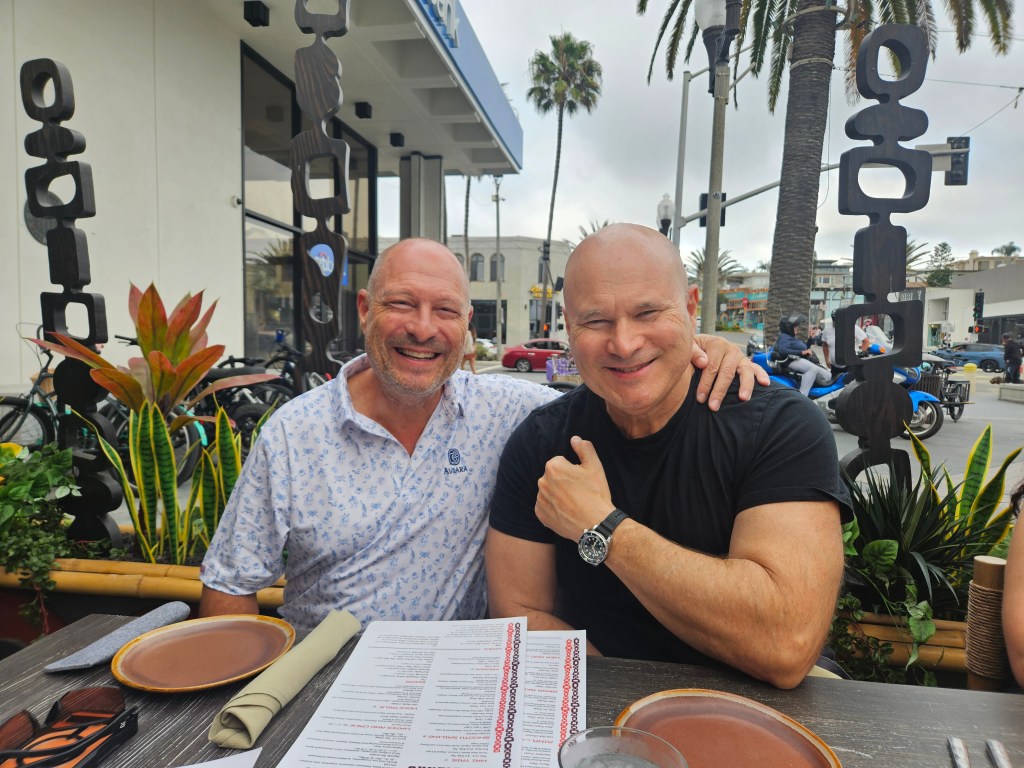
    I’ve spent more than a decade documenting my watch obsession on YouTube—a pursuit that begins as hobby and ends, if you’re not careful, as behavioral conditioning. You think you’re making videos. You’re actually being trained. The algorithm dispenses rewards and punishments with clinical indifference: views, comments, silence. You adapt. Of course you adapt. That’s the job now.

    The trouble is that the algorithm has no interest in truth, balance, or restraint. It prefers spectacle. It rewards the emotional range of a teenager who’s just discovered caffeine: hyperbole, dread, euphoria, FOMO, regret—delivered with the urgency of a man announcing the end of civilization via bezel insert. You wake up one morning and discover you’ve succumbed to Algorithmic Persona Drift—a slow mutation in which your public self becomes a louder, shinier, more hysterical version engineered for attention rather than accuracy.

    Feed it, and it feeds you back. The cycle tightens. Every video must be more decisive, more apocalyptic, more “this changes everything.” You produce manifestos. You narrate epiphanies. You analyze your own obsession with the intensity of a man dissecting his own heartbeat. The result is predictable: you become a caricature of yourself—recognizable, marketable, and faintly absurd.

    If you can tolerate that, the system will reward you. The numbers rise. The revenue trickles, then flows. You build a small empire out of controlled exaggeration. But there comes a moment—quiet, unwelcome—when you no longer recognize the man delivering the lines. The performance has outgrown the person. At that point, the decision presents itself with unpleasant clarity: keep feeding the machine and let it finish the job, or step away and salvage what remains of your voice.

    That’s one exit.

    The other is less dignified. You don’t leave; you are expelled. The causes are familiar—burnout, self-disgust, ennui, health—but the most decisive is also the least negotiable: age. You wake up one day and realize the tempo has changed. The rhythms that once animated you now sound distant, like music leaking from another room. The new release, the hyped drop, the celebrity of the week—none of it lands with the old voltage. Mortality has entered the conversation and lowered the volume.

    You try to resist. You tell yourself enthusiasm is a choice. But the gap widens anyway. You find yourself oddly relieved that you no longer care about bracelet articulation or dial gradients or the fever dream that the “perfect collection” is one purchase away. The brotherhood reveals itself for what it always was: half fellowship, half support group. You no longer feel the urge to compare scars from impulse buys, to laugh at the madness, to whisper—half-serious, half-hopeful—that this watch will finally cure you.

    For me, the separation was unmistakable. Twenty years dissolved into a blur of rotating bezels and contingency divers. Then, at sixty-three, something tapped my shoulder. Not a crisis. A correction. The obsession didn’t die; it simply lost its authority. Desire dimmed, replaced by a quiet recognition that watches are exquisitely engineered ways of losing to time.

    The feeling calls to mind a scene from Battlestar Galactica: a traitor sealed behind glass, the airlock hissing, the crew watching with solemn finality. Not melodrama—procedure. That’s aging. Not tragic, not cruel—inevitable. At some point, those still inside the illusion of endless tomorrows begin to edge away from those who have seen the horizon contract.

    A pane descends. It isn’t hostile. It’s accurate.

    You tap the glass, wave, try to rejoin the cockpit of youthful urgency. You even lift your wrist—your hulking G-Shock Frogman—and make your case. “Look,” you want to say, “I’m still in it.” But the seal has set. Reentry is not part of the design.

    What remains is less dramatic and more demanding: dignity. Accept the season you’re in. Build meaning instead of inventory. Offer something useful to those still racing ahead, even if they don’t yet see why it matters. They will. Everyone does, eventually.

    The algorithm fades. The noise recedes.

    And you are left, at last, with a quieter, harder question: not what you want next—but who you intend to be without the applause.

  • The Business Model of Suffering and Abuse on Reality TV

    The Business Model of Suffering and Abuse on Reality TV

    We were discussing their current essay assignment: an excavation of cruelty masquerading as inspiration in the TV show The Biggest Loser. The facts alone read like satire written by a misanthrope: contestants more than 200 pounds overweight were pushed through eight-hour training days, incinerating close to 8,000 calories while being rationed roughly 800. Add caffeine pills, a chorus of screaming trainers, and the steady drip of public humiliation, and you have less a fitness program than a stress test for organ failure. That none of the contestants died feels less like good management and more like statistical luck. That millions watched—enthusiastically—says something unflattering about us.

    I show them Fit for Life documentary, which functions as a kind of aftermath report. Former contestants speak with the clarity that only distance provides. They describe trauma, yes, but also something more complicated: the show gave them structure, purpose, a narrative. It brutalized them and, perversely, steadied them. Most gained the weight back. Some now lean on GLP-1 drugs, their appetites chemically negotiated into submission. But all of them remember the same thing—the mercilessness was not incidental; it was the engine.

    I asked my students why I had assigned this essay. What, exactly, were they supposed to uncover?

    At the micro level, we peeled back the familiar myths. The cult of self-discipline—so comforting in its simplicity—lets us ignore biology, environment, and the sheer stubbornness of appetite. Bodies become symbols: power or failure, virtue or laziness, depending on who’s looking. We noted the obvious but rarely confronted statistic—most Americans are overweight—and the uncomfortable reality that GLP-1 drugs may be the only intervention that consistently works at scale.

    Then the room shifted. One student volunteered that she was on a GLP-1. The first weeks were a gauntlet of nausea and vomiting, but now the drug—Mounjaro—had quieted her hunger to a whisper. Thirty pounds gone in two months. Another student offered a counterpoint that landed harder: her father had been one of the exceptions. The drug didn’t help him lose weight. It helped him lose kidney function. As she spoke, she mentioned he was now on dialysis. The room absorbed that in silence. Miracle and risk, side by side, no clean narrative available.

    So we zoomed out.

    To design a show that courts physical danger and guarantees humiliation—for ratings, for merchandise, for the grotesque satisfaction of watching someone crack—is not an accident. It’s a business model. That’s the first kind of evil: deliberate, calculated, fully aware. Cynical evil. The producers know exactly what they’re doing. They understand the cruelty, and they monetize it.

    The second kind is quieter and more common. It belongs to the audience. Viewers sense the moral problem—on some level they know this is exploitation—but they file that knowledge away so it won’t interfere with their evening entertainment. They watch, they flinch, they keep watching. Call it willed ignorance. A cultivated habit of not asking questions that might ruin the pleasure.

    I told them, half-serious but not really joking, that if we were ranking things, cynical evil is a ten. Willed-ignorant evil sits comfortably at a seven—less flamboyant, more pervasive.

    Something clicked. The word evil—unfashionable, blunt, almost embarrassing in academic settings—cut through the fog. The discussion woke up. Students leaned in, argued, confessed discomfort, revised their positions in real time. The assignment stopped being an exercise and became a lens.

    That was the moment worth noticing. Sometimes you have to pull the camera back. Stop pretending the essay is about structure and sources and let students see the larger architecture: what the topic reveals about us, what it demands we confront, and why it matters that we do.

  • Tragedy Laundering in the Age of Vibes

    Tragedy Laundering in the Age of Vibes

    Shirley Li takes aim at what she calls the CliffNotes treatment of classic films—works shaved down, sweetened up, and repackaged for audiences who want the aura of culture without the burden of confronting it. Shakespeare, once a blood-soaked anatomist of ambition and ruin, now gets rinsed through the aesthetic of Taylor Swift. In this new register, tragedy doesn’t end in death; it stalls just long enough for a handsome savior to materialize on cue. Consider “The Fate of Ophelia,” where despair is airbrushed into rescue, and consequence dissolves into a soft-focus finale. The title lingered with me because I’d joked to my students a month earlier that I’d heard the song on Coffee House and found it embarrassingly overwrought—an avalanche of sentiment masquerading as profundity.

    Hollywood, never one to miss a profitable dilution, has joined the exercise. Emerald Fennell’s take on Wuthering Heights and Maggie Gyllenhaal’s reworking of Bride of Frankenstein into The Bride! arrive pre-softened, their rough edges filed down to avoid drawing blood. The originals demanded something of the audience—patience, discomfort, moral stamina. The remakes offer a tour: quick, glossy, and politely unchallenging.

    Li names the trend with surgical accuracy: “the rise of CliffNotes Cinema—watered-down transformations that offer glossy but thin summaries of the originals and strip away the challenging material that helped turn them into cultural mainstays in the first place.” That sentence does the autopsy. What’s left after the procedure is a body that looks intact from a distance but has been emptied of organs.

    Should we be alarmed? Yes, because the sweetness isn’t accidental; it’s diagnostic. These remakes signal a culture inching toward infantilization—hungry for reassurance, allergic to ambiguity, and convinced that gravity can be outsourced to wardrobe. Give the audience a fairy tale that flatters its appetites, but dress it in canonical clothing so it can pretend it just attended a seminar. Call this Tragedy Laundering: the conversion of moral difficulty into marketable comfort, where death becomes a scheduling inconvenience and ambiguity a branding problem.

    A culture marinated in TikTok loops, cute-animal dopamine, and the immaculate emotional arcs of Taylor Swift’s pop maximalism will predictably resist the adult weather systems of the classics. It wants its cod liver oil chased with honey—and increasingly, it wants the honey first, the oil omitted. The result is a literature of safety: all vibe, no verdict; all sheen, no sting.

  • The Sovereign Appetite: How Wealth Devours the Soul

    The Sovereign Appetite: How Wealth Devours the Soul

    In “What I Learned About Billionaires at Jeff Bezos’s Private Retreat,” filmmaker Noah Hawley dissects the moral corrosion that accompanies extreme wealth—a corrosion fueled not by scarcity but by excess. The old adage comes to mind: the more you feed the demon, the hungrier it gets. Only now the demon eats without consequence, outside the jurisdiction of any moral law. The rules that bind ordinary people—limits, restraint, accountability—simply dissolve. In their place emerges what can only be called the Sovereign Appetite Doctrine: an unspoken creed in which desire, once backed by sufficient capital, becomes its own justification, rendering restraint unnecessary and morality negotiable.

    Hawley’s invitation to a 2018 Bezos retreat in Santa Barbara offered a front-row seat to this phenomenon. What he encountered was not insight but spectacle: a carousel of TED Talk-style presentations untethered from any coherent theme, a parade of ideas without consequence or urgency. These talks did not enlighten so much as signal—a kind of intellectual flex, as obligatory to the setting as Wagyu skewers and caviar. Surrounded by this polished emptiness, Hawley found himself asking the only honest question available: “Why am I here?”

    The retreat itself bordered on the absurd. His wife slipped on wet grass and broke her wrist; he and his children contracted hand, foot, and mouth disease, their faces erupting in red blisters. It was less a summit of visionaries than a fever dream of excess, where discomfort and decadence coexisted without irony.

    Bezos, at the time, still seemed to believe in performance. Clad in a tight T-shirt, laughing a little too hard, projecting a curated affability, he appeared invested in being seen as morally intact. There was effort in the act—a sense that the audience still mattered. He had not yet fully surrendered to the Sovereign Appetite Doctrine.

    But, as Hawley notes, that restraint has since evaporated. Today, figures like Bezos, Mark Zuckerberg, and Elon Musk no longer perform for approval. They have crossed into something colder and more insulated. In Hawley’s words, “They float in a sensory-deprivation tank the size of the planet, in which their actions are only ever judged by themselves.”

    Here lies the true seduction of wealth. It is not the acquisition of luxury goods but the eerie power of living in a world where everything is “effectively free.” Loss—the very mechanism that gives life weight—disappears. When nothing can be meaningfully lost, nothing can be meaningfully gained. Stakes vanish. Experience flattens. Life becomes curiously hollow, a theater without tension. This is the Infinite Buffer Effect: wealth so vast it absorbs every setback, neutralizing consequence and draining life of narrative shape.

    And yet, this emotional flattening coincides with a grotesque expansion of power. The wealthy, insulated from consequence, begin to experience a counterfeit omnipotence. They act without friction and, in doing so, lose the ability to perceive others as real. As Hawley writes, “If everything is free and nothing matters, then the world and other people exist only to be acted upon, if they are acknowledged at all.”

    At this point, they no longer inhabit the same moral universe as the rest of us. Cause and effect no longer apply in any meaningful way. They have become full converts to the Sovereign Appetite Doctrine.

    The word that clarifies this condition is solipsism—not as an abstract philosophy but as a lived reality. The world contracts until only the self remains vivid. Everything else fades into backdrop. Hawley shows how extreme wealth accelerates this contraction. When “everything is free and nothing matters,” the presence of other people—their inner lives, their suffering—loses its immediacy. Power without resistance breeds a dangerous illusion: that one’s actions carry no moral weight. Others become instruments, props, scenery. Empathy atrophies. Reality itself begins to feel negotiable. The self expands to fill the entire field of meaning, mistaking insulation for sovereignty.

    Hawley closes by contrasting today’s ultra-wealthy with the robber barons of the Gilded Age. However ruthless, those earlier figures “engaged with the world around them.” Today’s elite, by contrast, drift above it, severed from consequence, history, and meaning. They suffer from what Hawley calls “a disassociation from the reality of cause and effect, from meaning, and history.”

    This is not freedom but its grotesque parody—a form of plutocratic dissociation in which the individual floats outside shared reality, unbound not only from constraint but from significance itself.

    It is no accident that Hawley, the creator behind Fargo, can render this psychological landscape with such precision. He has long been fascinated by characters who drift beyond moral gravity. Here, he turns that same lens on the most powerful figures in our world—and what he reveals is not triumph, but a slow and chilling disappearance of the human.

  • Essay Prompt: The Seduction of a Frictionless Life

    Essay Prompt: The Seduction of a Frictionless Life

    In this assignment, you will examine how a life engineered for maximum convenience and instant gratification can lead not to fulfillment, but to misery, emotional flattening, and a diminished sense of humanity.

    To develop your analysis, you will work with two texts:

    • “Our Longing for Inconvenience” by Hanif Abdurraqib
    • Twilight Zone episode “A Nice Place to Visit”

    Both works explore the dangerous allure of a frictionless existence—one in which effort, struggle, and delay are removed in favor of ease and immediate satisfaction.


    Your Task

    Write a 1,000-word argumentative essay that develops a clear, original thesis responding to the following central question:

    How do these two works show that a frictionless life seduces us into surrendering our humanity, and why does this surrender ultimately lead to dissatisfaction or misery?


    Required Elements

    Your essay must include:

    1. A Strong Thesis

    • Make a specific, arguable claim about frictionless living
    • Avoid summary; take a position
    • Your thesis should address:
      • seduction (why we want convenience)
      • consequence (what it costs us)

    2. Comparative Analysis

    • Analyze both sources in depth
    • Show how they converge and/or diverge in their critique
    • Use specific examples:
      • Abdurraqib’s concept of convenience and authenticity
      • The protagonist’s experience in The Twilight Zone episode

    3. Conceptual Focus

    Your essay must engage at least two of the following ideas:

    • Dehumanization
    • Emotional flattening
    • Loss of meaning or purpose
    • Passive consumption vs. active engagement
    • The illusion of happiness

    4. Evidence and Commentary

    • Integrate specific references from both works
    • Explain how each example supports your argument
    • Avoid plot summary—focus on interpretation

    5. Counterargument and Rebuttal

    • Acknowledge a reasonable opposing view:
      (e.g., convenience improves quality of life)
    • Refute it with clear reasoning and evidence

    Writing Expectations

    • Length: 1,000 words
    • Tone: Analytical, precise, and assertive
    • Avoid clichés and vague generalizations
    • Prioritize clarity, specificity, and strong prose

  • Frank Sinatra Sings the Epistles

    Frank Sinatra Sings the Epistles

    Adam Gopnik, in “St. Paul Remade Human History. How Did He Do It?”, answers a parlor question—who matters most?—with a man who never met Jesus in the flesh and still managed to run the table. Paul, Gopnik says, is “the Most Unforgettable Character It Ever Met,” which is one way of saying he took a minor Jewish sect and scaled it into a two-millennia franchise. Not bad for a writer whose archive could fit in a carry-on.

    The record is thin and, at points, suspicious. Of thirteen letters, only seven pass the authenticity test; the rest look like fan fiction with good handwriting. The Acts of the Apostles reads less like sober history than like a travelogue pitched to Roman investors—Romans good, Jews troublesome, Christians reassuringly adjacent to Rome. It also airbrushes the argument between Paul and James, Jesus’s brother, into a polite agreement, because nothing ruins a new religion like founders who won’t share a table.

    Then comes the Roman catastrophe—the Jewish War, the Temple reduced to memory—and the scramble among sects to survive. Paul does more than survive; he pivots. He takes a local messianic movement and repackages it for export: portable, universal, and politically legible. The man who pulls off this trick also carries the best origin story in religious literature—a blinding encounter on the road to Damascus that converts a persecutor into a salesman with divine backing. If you were storyboarding a faith, you’d keep that scene.

    The letters themselves are a mood swing with footnotes. Paul boasts like a prizefighter and then calls himself “the least of the apostles.” He commands, cajoles, contradicts, confesses. He is competitive enough to crown himself and humble enough to kneel in the same paragraph. He admits a “thorn in the flesh”—a chronic deficit he can’t shake—and then turns it into a credential. He advises missionary pragmatism with the line that could double as a consulting slogan: be all things to all people. The man can pivot.

    Gopnik’s most useful correction is cinematic. Don’t picture Paul as a monk scratching doctrine by candlelight. Picture him as an action lead—shipwrecks, jailbreaks, debates that feel like bar fights in Greek. He travels, argues, survives. He makes the faith mobile—“almost single-handedly,” Gopnik writes—while the original disciples eye him like a franchisee who’s rewriting the menu. It’s the kind of role that once tempted Frank Capra to imagine a film starring Frank Sinatra—Old Blue Eyes as the apostle who sang a religion into the world.

    What Paul omits is as telling as what he proclaims. He is strangely quiet about Jesus’s earthly biography—the family, the miracles, the Nativity tableau that later Christianity will frame and hang in every living room. Gopnik suggests the omission is a feature, not a bug. Keep the myth foregrounded and the particulars backstage, and your message travels better. If you doubt it, look at how newer movements grow: the story glows brighter when the details stay conveniently out of focus.

    Then there’s the thornier matter of Paul’s rhetoric about Jews. After the Holocaust, readers have worked hard to domesticate him into a universalist who welcomes everyone to the table. Gopnik reminds us that some passages resist that makeover, cursing the old covenant with language that doesn’t sit politely at interfaith dinners. The effort to sanitize Paul tells you as much about us as it does about him.

    Scholars, understandably, keep trying on different Pauls. There’s the Roman Paul, smoothing edges for empire; the Hellenistic Paul, speaking in a philosophical key; the Jewish Paul, wrestling with a tradition he both extends and overturns. You can find these costumes neatly hung in Paul Within Paganism, edited by Chantziantoniou, Frederiksen, and Young. Try them all on; none quite fits.

    One thread, however, doesn’t fray: Paul’s apocalyptic urgency. The end is near—soon enough to matter, soon enough to act. Whether he believed it literally or deployed it rhetorically is the kind of question historians love and time refuses to answer. Urgency, after all, is useful even when it’s wrong.

    Gopnik’s final warning is against turning Paul into a greeting card. Yes, he writes the line about love that weddings can’t resist. He also draws hard boundaries with a zeal that would make a modern brand manager blush. Christianity spreads not just on the strength of its compassion but on the clarity of its lines. Inclusion, it turns out, travels well when it knows exactly what it excludes.

    Paul refuses to settle into a single portrait. He is the contradiction that works—the salesman who believes, the believer who markets, the penitent who boasts. If Capra had made that Sinatra film, it might have been the truest version: a man with a voice big enough to carry a room, and a restlessness big enough to carry a religion. Love, sung loud enough, can sound like doctrine. And doctrine, delivered with enough conviction, can change the world.