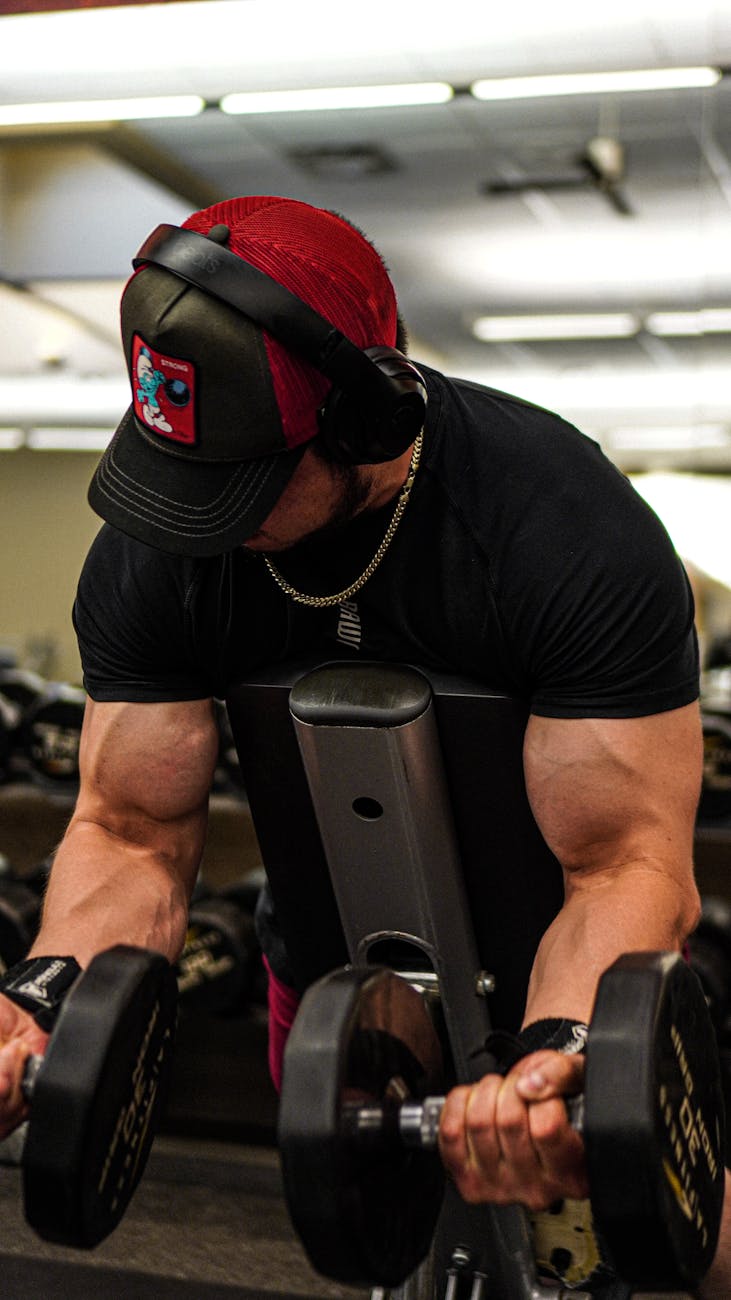
My pride as a lifelong bodybuilder—still clinging to relevance in my sixties—met its demise one evening on the couch, where I lay in a slovenly posture and glazed-over eyes while watching the movie Road House. Calling it a film feels charitable. It’s more like a glossy shrine to the male physique, starring a Jake Gyllenhaal so surgically chiseled he looks as if Michelangelo started carving David, lost patience, and decided to make him punch strangers for a living.
Gyllenhaal plays a brooding bouncer in Key West, a man whose job description consists of protecting a bar and its luminous owner, played by Jessica Williams, from the usual parade of cinematic degenerates. This inevitably summons the film’s apex predator: Conor McGregor, who appears less like a human being and more like a shaved grizzly bear that discovered performance enhancers and never looked back. Veins bulge with the enthusiasm of overinflated garden hoses. His performance oscillates between feral animal and man who hasn’t blinked since the Obama administration, and it’s oddly mesmerizing.
The plot is a rumor—thin, fleeting, and functionally irrelevant. A stranger rides into town, restores order with his fists, and exits in a cloud of testosterone and broken cartilage. But let’s not pretend narrative is the point. The camera worships muscle with the reverence of a Renaissance chapel. Biceps gleam. Lats ripple. Every slow-motion shot feels like a commercial for pre-workout powder and substances that come in unmarked vials. This isn’t storytelling; it’s a two-hour flex.
Somewhere between Gyllenhaal’s forty-seventh shirtless entrance and McGregor’s latest snarl—delivered like a man hydrated exclusively by rage—I reached for my phone. Not to check the time. To search McGregor’s diet. Because this spectacle doesn’t entertain; it indicts. It shines a harsh fluorescent light on your own soft edges and whispers, You, sir, are a sentient pudding cup.
At sixty-two, I knew I wasn’t about to carve myself into Gyllenhaal’s likeness. But I was still in the fight—kettlebells in the garage four days a week, the exercise bike on the others. My diet remained high-protein, though compromised by opportunistic snacking. The result: less Greek statue, more a compact, perspiring version of Larry Csonka in a Hawaiian shirt, lingering too long at the Grand Wailea buffet.
I entertained fantasies of becoming a skinny version of myself. Replace kettlebells with yoga. Trade meat-heavy sandwiches for two plant-based meals a day of steel-cut oats, bell peppers, and tofu. But a chorus of old convictions intervened: maintain the protein intake, preserve the muscle, defend the territory. Five servings of “bioavailable protein” a day. No surrender. Somewhere along the way, fitness had ceased being about health and hardened into doctrine.
I hadn’t competed since finishing runner-up in the 1981 Mr. Teenage San Francisco, but the mindset endured: life as contest, existence as proving ground. That belief wasn’t accidental. It was inherited. My father—infantryman turned engineer—treated life like a problem to be solved and a battle to be won.
In the early 1960s, stationed in Anchorage, he found himself competing with another suitor—John Shalikashvili—for my mother’s affection. When Christmas interrupted the contest, my father refused the ceasefire. He cut his holiday short, intent on beating his rival back to Alaska. His vehicle—a pale 1959 Morris Minor—chose that moment to revolt, its fuel system failing with impeccable timing.
Lesser men would have conceded. My father reached for ingenuity. Lacking a proper part, he improvised with a prophylactic and a paperclip, fashioning a grotesque but functional fix. It was absurd. It was desperate. It worked. He made it to Seattle, boarded the ferry, and arrived in Alaska forty-eight hours ahead of his rival.
Nine months later, I entered the world—the byproduct of competitive instinct, mechanical improvisation, and what must surely be the most unorthodox application of latex in automotive history. In that moment, my father didn’t just win a race. He set a standard: adapt, outmaneuver, prevail. And decades later, as I sat watching sculpted demigods on screen, I realized that standard was still quietly running my life.
 Cinemorphosis
Leave a comment