Tag: life

  • The Visitor from the Abyss

    The Visitor from the Abyss

    On a bright spring afternoon in Southern California in 1998, my writing class was dissecting evil with the clinical confidence of people who believed it could be contained in literature. We were discussing The Painted Bird, a novel so saturated with human cruelty that it feels less like fiction and more like a dare. The room hummed with theories—evil as social construct, evil as pathology—until my students quietly dismantled the abstraction. They believed in evil not as metaphor, but as presence. Ghosts. Demons. Things seen and not forgotten.

    One single mother spoke of something that crawled beneath her bed at night. She said it plainly, without theatrics, which made it worse. Another student, a nurse in her forties who worked long shifts at UCLA, waited until after class. “I have a story,” she said, as if announcing a diagnosis that required privacy.

    She didn’t look like someone given to fantasy. She was compact, practical, her thick glasses enlarging eyes worn down by long hours and human frailty. Her stories usually involved difficult patients or her childhood in rural Louisiana—earthbound things. But as she began, her voice shifted, acquiring a distant cadence, as if she were tuning into a frequency not meant for daylight.

    She was six or seven at the time, roaming the backwoods with her cousin Carmen. No supervision, no schedule, no adult intervention. Their days were filled with the idle cruelty of children left alone too long—tormenting small animals, inventing games that escalated from mischief into something darker. There were no witnesses, no consequences, and so no brakes.

    Until one afternoon.

    They were inside the farmhouse, a sagging structure with a porch that complained with every step. The screen door creaked open. A man walked in and sat down in the living room as if he owned the place.

    But he wasn’t a man.

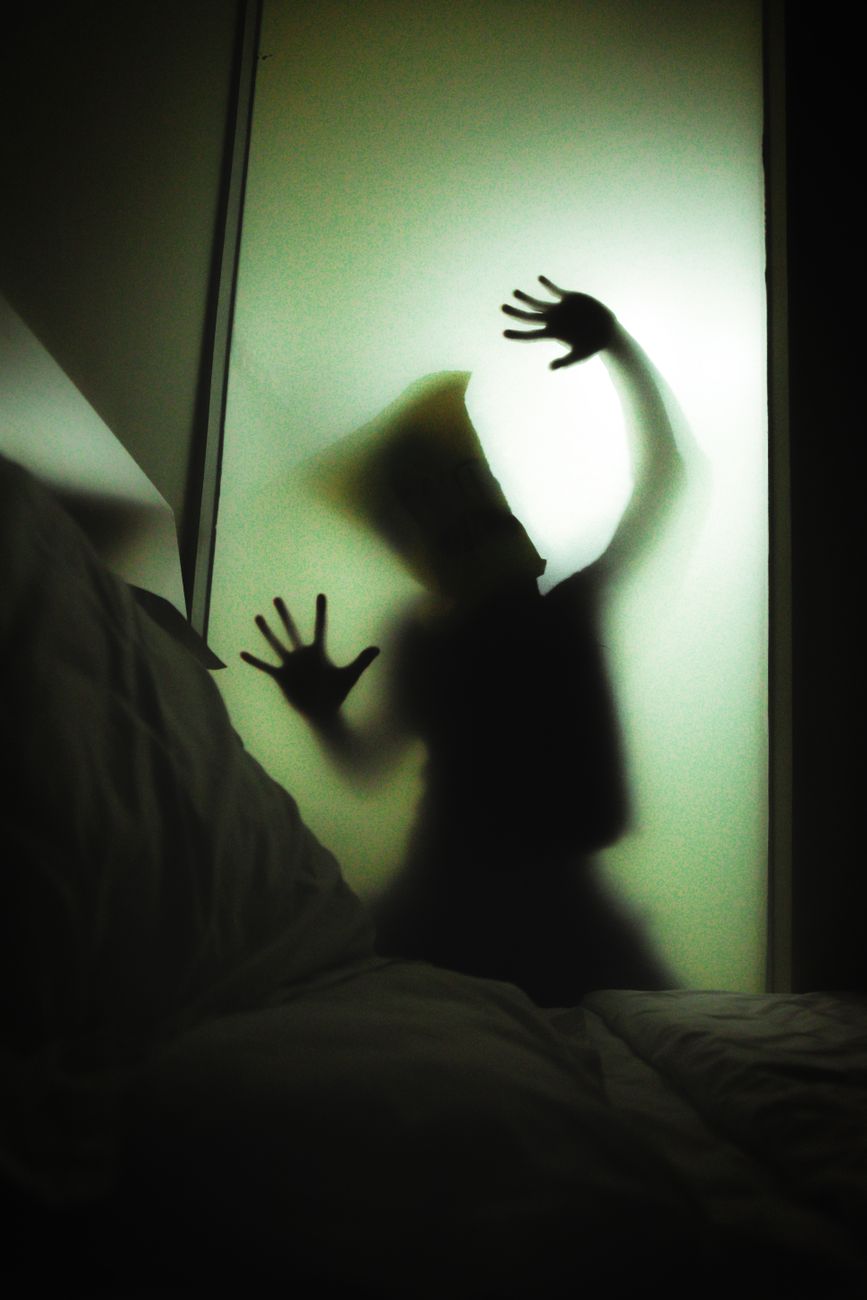
    She struggled to describe him without sounding ridiculous. He wasn’t clothed, but that detail felt irrelevant. His body was covered in coarse, matted fur. His skin—if it could be called that—had the pallor and texture of a rodent. Behind him trailed a long, muscular tail that slid along the floor and flicked against the doorframe like a living whip. He looked like something assembled from nightmare logic: a giant rat that had decided to stand upright and enter a house.

    The girls didn’t run. They couldn’t. Fear locked them in place, as if the room itself had thickened.

    He began to speak.

    For hours—she was certain it lasted hours—he sat in that chair and talked. His voice was low and abrasive, as if it scraped its way into the room. He told stories about the things he had done, the damage he had caused, the harm he had perfected. Time lost its structure. The afternoon stretched into something shapeless and suffocating.

    Then he turned his attention to them.

    “I’ve seen how bad you girls are,” he said. “I’ve seen what you’ve been doing.”

    And then he began to list their offenses. Not generalities—details. Every small cruelty, every secret act they had committed when no one was around. Things no adult had witnessed. Things no one could have reported.

    “I’m going to recruit you,” he said. “I’m going to make you mine.”

    The threat didn’t rise in volume. It settled into the room, thick and toxic, like something you could breathe in and never fully expel. His eyes stayed on them the entire time, unblinking, patient, certain. He described what would happen if they continued, not in vague moral warnings, but in precise, almost administrative terms—consequences rendered as inevitabilities.

    The girls sat frozen, their bodies no longer their own.

    And then, as casually as he had entered, he stood up and left. The tail followed him out like an afterthought, sliding across the threshold and disappearing into the heat.

    Silence rushed back into the house.

    Carmen finally whispered, “Did you see that?”

    My student nodded. Speech had abandoned her.

    From that day forward, their lives snapped into alignment. No more cruelty. No more experimentation with harm. They went to church. They prayed. They obeyed. Not out of virtue, but out of fear sharpened into obedience. Whatever had visited them had not suggested a path—it had enforced one.

    I would have preferred to dismiss the story as delusion, but that option didn’t fit the teller. This was a woman trained to assess reality, to separate symptom from fabrication. She spoke without embellishment, without the slightest interest in persuading me. She wasn’t selling a story; she was reporting an event that had rearranged her life.

    It unsettled me more than I expected.

    At the time, I was living alone in a condo in Redondo Beach, the kind of place that feels harmless until night gives it edges. One evening, I had a dream about the Cowardly Lion from The Wizard of Oz. Only this version had shed all pretense of cowardice. He chased me, snarling, his face twisted into something feral and wrong.

    I woke up, but the dream didn’t fully release me.

    At the foot of my bed, I felt it—presence. Not a thought, not a leftover image, but something that occupied space. The lion-man sat there, immense, silent, undeniable. Fear pinned me in place. Breathing became an effort, as if the air itself had thickened in protest.

    After several long seconds, I forced movement into my body. I stood, walked up the stairs on unsteady legs, poured a glass of water like someone performing a ritual they barely believed in. When I returned, I flooded the room with light, turned on the television, filled the silence with noise until the presence thinned and finally dissolved.

    Like pain receding from a crushed hand—slow, stubborn, but eventually gone.

    What stayed was the recognition.

    Evil is not just an idea we debate in classrooms or confine to novels. It has a way of presenting itself—not always dramatically, not always visibly, but with enough force to alter how you move through the world. Once you’ve felt it, even briefly, it leaves a residue. A knowledge that doesn’t argue its case. It simply waits, somewhere just beyond the edge of explanation.

  • A College Degree in Applause

    A College Degree in Applause

    When Oprah Winfrey signed off for the last time, she offered a distilled insight after decades of televised confessionals and couch-bound catharsis: beneath our surface differences, we all want the same thing—to be heard and, more importantly, to be affirmed. Not merely listened to, but validated, as if our words must pass through some invisible tribunal and emerge stamped: This life matters. This mind is not wasted inventory.

    She was right, though even that admission feels like an understatement. The appetite for validation is not a polite preference; it’s a metabolic demand. We don’t just want to speak—we want to land. We want our sentences to strike the listener with enough force that they nod, recalibrate, maybe even quote us later as if we were a minor authority in the ongoing project of making sense. We want to believe that our thoughts improve the room, that our presence upgrades the conversation from background noise to something resembling signal.

    Of course, the engine driving this hunger isn’t entirely noble. Scratch the surface and you’ll find insecurity jittering beneath the skin, narcissism preening in the mirror, tribal instincts scanning for applause from the right audience. We want to be right, but more than that, we want to be seen being right. Yet it would be too easy—and too smug—to reduce this to vanity alone. There’s another current running underneath. Human beings, for all their posturing, are wired for cooperation. We build moral systems, knowledge systems, entire civilizations on the premise that sharing ideas might actually improve the collective condition. So the same impulse that craves applause also aspires—sometimes sincerely—to contribute something of value. We may be peddling clichés, hallucinations, or the occasional insight, but the urge to be heard persists like a drumbeat.

    After nearly forty years of teaching writing, I’ve had a front-row seat to this performance. I’ve enjoyed the privilege—let’s call it what it is—of having a voice that people were required to listen to. Now, as that authority begins to fade at the edges, I’m left examining the machinery that made it feel necessary in the first place. My students will tell you they’re here for practical reasons: a degree, a job, a paycheck that doesn’t insult them. Fair enough. But beneath that utilitarian script, I suspect another motive is quietly at work. They want to matter intellectually. They want their ideas to carry weight, to be received not as filler but as substance.

    I can see it because I can reverse-engineer myself at eighteen. Put me back in that position—blank slate, open catalog—and I’d choose political science without hesitation. Not because it guarantees employment—it doesn’t—but because it offers a stage. A chance to sound sharp, to read densely, to write with the kind of authority that might make a professor pause and think, there’s something here. The fantasy isn’t wealth; it’s recognition. Money pays the bills, but it doesn’t applaud. It doesn’t lean forward when you speak.

    And without that recognition—without the sense that your mind registers on someone else’s radar—life begins to feel like static. Content generated, scattered, and forgotten. A digital smear. Noise mistaken for presence.

    Which is why so many of us operate under a quiet affliction I’d call Intellectual Visibility Panic: the nagging fear that no matter how carefully we assemble our thoughts, they will evaporate on contact—unheard, unvalued, and unremembered. It’s not dramatic enough to ruin your day, but it’s persistent enough to shape your choices. It nudges you toward certain majors, certain careers, certain performances of self. It whispers that time is running out, that if you don’t establish your voice soon, it will dissolve into the background hum.

    And so we speak. We write. We posture. We refine. Not just to communicate—but to leave a trace strong enough that someone, somewhere, might stop and say: that was worth hearing.

  • Normal Until It Isn’t: The Slow Collapse of a Social Life

    Normal Until It Isn’t: The Slow Collapse of a Social Life

    We acclimate to our routines the way a room acclimates to its own stale air—gradually, without protest—until the familiar starts to smell like something we’d refuse if it were new. Habit acquires the authority of identity. It tells us, “This is who you are,” and we nod, relieved not to argue. Then, occasionally, a crack opens. Something in the routine reveals itself as not just unusual, but quietly unhealthy. Six months ago, I noticed the crack: I have no active friendships. I can inventory names—P and T nearby, four sightings a year if the calendar is feeling generous; A an hour away, a phone call that arrives annually like a polite comet—but these are museum pieces, not relationships you live inside. By the only definition that matters—people you see and speak with regularly—I am operating at zero. I’ve built a life that functions without friends and then congratulated myself for the efficiency.

    I can dress the solitude up as a lifestyle. I can cite Laurie Metcalf and her apparent ease living alone, as if borrowing her poise could underwrite my own. But the analogy collapses on contact. Solitude is not the same as isolation, and thriving alone doesn’t imply the absence of active ties. The rationalization is elegant; it’s also evasive.

    What unsettles me is not the label—“friendless” is a blunt instrument—but the salience of it, the way the fact refuses to stay abstract. It lands on my family. A husband and father who lives in the Friendless Zone quietly shifts the social burden onto his wife and children. Every conversation, every need for connection, every idle hour leans on them. That’s not intimacy; it’s overreliance dressed as closeness. No one signs up to be an entire ecosystem.

    This wasn’t always the rhythm. Before marriage, my life had edges and movement. Meals with colleagues that stretched into second coffees, movies that required coordination, parties that produced stories, landline conversations that ran until your ear ached and you didn’t notice. Then 2010 arrived with twins and a schedule that ate the clock. Bottles, dishes, carpools, appointments—the logistics of care are relentless and, to be clear, necessary. Friendship became the expendable line item. I trimmed it “for now,” and “for now” matured into a policy.

    I’m not assigning blame. If anything, the demands of family life offered my inner recluse a beautifully plausible alibi. He’d been waiting for a reason to stay home; parenthood handed him a portfolio of them. The cave felt efficient, even virtuous. And then it felt normal. Now it feels narrow. Part of me still enjoys the quiet—the control, the absence of social friction. Another part sees the cost: fewer perspectives, fewer checks on your own thinking, fewer chances to be surprised into being more than you currently are.

    If I map the trajectory, my life  breaks into three eras: having friends and taking them for granted; losing friends and not noticing the loss; being without friends and finally noticing. Awareness is not a solution. It’s a diagnosis that arrives without a prescription. There’s no switch I can flip to become the convivial man who collects invitations like business cards. There is only the discomfort of seeing clearly—and the obligation to decide whether clarity is something you act on or merely admire.

  • The Night My Biceps Filed for Divorce

    The Night My Biceps Filed for Divorce

    My pride as a lifelong bodybuilder—still clinging to relevance in my sixties—met its demise one evening on the couch, where I lay in a slovenly posture and glazed-over eyes while watching the movie Road House. Calling it a film feels charitable. It’s more like a glossy shrine to the male physique, starring a Jake Gyllenhaal so surgically chiseled he looks as if Michelangelo started carving David, lost patience, and decided to make him punch strangers for a living.

    Gyllenhaal plays a brooding bouncer in Key West, a man whose job description consists of protecting a bar and its luminous owner, played by Jessica Williams, from the usual parade of cinematic degenerates. This inevitably summons the film’s apex predator: Conor McGregor, who appears less like a human being and more like a shaved grizzly bear that discovered performance enhancers and never looked back. Veins bulge with the enthusiasm of overinflated garden hoses. His performance oscillates between feral animal and man who hasn’t blinked since the Obama administration, and it’s oddly mesmerizing.

    The plot is a rumor—thin, fleeting, and functionally irrelevant. A stranger rides into town, restores order with his fists, and exits in a cloud of testosterone and broken cartilage. But let’s not pretend narrative is the point. The camera worships muscle with the reverence of a Renaissance chapel. Biceps gleam. Lats ripple. Every slow-motion shot feels like a commercial for pre-workout powder and substances that come in unmarked vials. This isn’t storytelling; it’s a two-hour flex.

    Somewhere between Gyllenhaal’s forty-seventh shirtless entrance and McGregor’s latest snarl—delivered like a man hydrated exclusively by rage—I reached for my phone. Not to check the time. To search McGregor’s diet. Because this spectacle doesn’t entertain; it indicts. It shines a harsh fluorescent light on your own soft edges and whispers, You, sir, are a sentient pudding cup.

    At sixty-two, I knew I wasn’t about to carve myself into Gyllenhaal’s likeness. But I was still in the fight—kettlebells in the garage four days a week, the exercise bike on the others. My diet remained high-protein, though compromised by opportunistic snacking. The result: less Greek statue, more a compact, perspiring version of Larry Csonka in a Hawaiian shirt, lingering too long at the Grand Wailea buffet.

    I entertained fantasies of becoming a skinny version of myself. Replace kettlebells with yoga. Trade meat-heavy sandwiches for two plant-based meals a day of steel-cut oats, bell peppers, and tofu. But a chorus of old convictions intervened: maintain the protein intake, preserve the muscle, defend the territory. Five servings of “bioavailable protein” a day. No surrender. Somewhere along the way, fitness had ceased being about health and hardened into doctrine.

    I hadn’t competed since finishing runner-up in the 1981 Mr. Teenage San Francisco, but the mindset endured: life as contest, existence as proving ground. That belief wasn’t accidental. It was inherited. My father—infantryman turned engineer—treated life like a problem to be solved and a battle to be won.

    In the early 1960s, stationed in Anchorage, he found himself competing with another suitor—John Shalikashvili—for my mother’s affection. When Christmas interrupted the contest, my father refused the ceasefire. He cut his holiday short, intent on beating his rival back to Alaska. His vehicle—a pale 1959 Morris Minor—chose that moment to revolt, its fuel system failing with impeccable timing.

    Lesser men would have conceded. My father reached for ingenuity. Lacking a proper part, he improvised with a prophylactic and a paperclip, fashioning a grotesque but functional fix. It was absurd. It was desperate. It worked. He made it to Seattle, boarded the ferry, and arrived in Alaska forty-eight hours ahead of his rival.

    Nine months later, I entered the world—the byproduct of competitive instinct, mechanical improvisation, and what must surely be the most unorthodox application of latex in automotive history. In that moment, my father didn’t just win a race. He set a standard: adapt, outmaneuver, prevail. And decades later, as I sat watching sculpted demigods on screen, I realized that standard was still quietly running my life.

  • The Futility of Resisting Chronological Drift Syndrome

    The Futility of Resisting Chronological Drift Syndrome

    Eight years ago, at a funeral—an appropriate venue for truth disguised as humor—my cousin, a retired ophthalmologist and former hospital administrator, told me his greatest challenge in retirement was finding enough time to spend his money. It landed as a joke with a faint echo of confession. Back then, he was still visible—still a man whose time, opinions, and presence registered on the social radar.

    Now, in his mid-seventies, the joke has curdled. He tells me the most striking feature of aging is not pain, not decline, but disappearance. People look past him as if he were a smudge on the lens he once spent a career perfecting. He has entered Graylight Erasure: still present in the room, but no longer illuminated by attention, interest, or acknowledgment. The body remains; the spotlight moves on.

    I’ve tried to account for this vanishing act, and the first culprit is economic. Consumer culture is a young man’s game—desire, impulse, upgrade, repeat. When you fall out of that loop, you don’t just lose purchasing power; you lose narrative value. You become a spectator in a drama that no longer requires your participation. This is Market Exit Obsolescence: the quiet demotion that occurs when you age out of the demographic worth seducing. The ads stop speaking to you, and soon enough, so do people.

    The second cause is more primitive: denial. Aging is bad for morale. It interrupts the fantasy that time is generous and endings are negotiable. Youth is a fever dream in which mortality is a rumor; old age is the nutrition label you avoided reading—the one that ruins the snack. An older person carries inconvenient data: limits, deadlines, the unadvertised fine print of being alive. And no one likes a walking disclosure statement.

    So the culture develops a reflex. Call it the Mortality Contagion Effect—the quiet recoil from those who remind us, without trying, that the clock is not decorative. As if proximity might transmit the condition. As if attention were a kind of exposure.

    My cousin didn’t lose his competence, his intelligence, or his history. He lost his audience. And in a culture that equates attention with existence, that loss feels less like aging and more like erasure.

    Watching my cousin—healthy, financially well-off, and increasingly ignored—I see what aging really delivers: Chronological Drift Syndrome. It’s the moment you realize the culture has shifted into a higher gear while you’re still driving the same well-maintained car. The rhythms change, the references mutate, the priorities rebrand overnight, and suddenly you’re not wrong—you’re just out of sync. You haven’t stopped moving; the world has simply sped past you and called it progress.

    As you age, you may attempt to resist this growing misalignment with youth culture. You may try to make yourself youthful with potions, makeovers, and pharmaceuticals, but these measures will soon backfire. You will find that fighting Chronological Drift Syndrome is a bit like sprinting on a moving walkway that’s headed the other way—you burn calories, attract attention, and end up exactly where you started, only louder and slightly winded. The harder you try to keep up—deploying borrowed slang, auditioning for trends, nodding along to references you Googled ten minutes earlier—the more you resemble a man trying to crash a party he once hosted. 

    Desperation has a smell, and it pairs poorly with youth culture, which detects inauthenticity the way a smoke alarm detects toast. The irony is brutal: the effort to remain relevant is what renders you ridiculous. The more elegant move is to step off the conveyor, plant your feet, and accept the drift with a straight back and a sense of humor. Dignity, unlike trends, ages well.

  • The Appetite Recursion Loop

    The Appetite Recursion Loop

    Looking back, I can trace a clean, ugly line connecting my love of watches and my love of food: appetite, indulgence, anger, shame. It’s not a lifestyle. It’s a loop. I want more than I should, I give in, I punish myself for giving in, and then I reset the machine and start again. Call it the Appetite Recursion Loop—a closed system where desire feeds indulgence, indulgence feeds shame, and shame reloads desire with fresh ammunition. It feels inevitable because, most days, it is.

    Appetite and chaos are my factory settings. In the early ’90s, when I lived in a bachelor pad that smelled like basil and ambition, my Navy SEAL friend Mike would call and say, “McMahon, I can hear you chewing through the phone. Every time I call, you’re eating. What is it now, Fat Face?”

    “Angel hair pasta with pesto.”

    “Sounds dangerous. I’m coming over.”

    And he would—arriving just in time to annihilate whatever I’d cooked. His metabolism ran on military drills and Pacific swells; mine ran on fantasy and carbohydrates. He burned calories like a wildfire. I cultivated them.

    He once called with an offer: Santa Barbara, surfing, and a setup with a friend of his girlfriend’s. “Now can you surf?” he asked.

    That’s how I found myself on excursions that had nothing to do with waves and everything to do with spectacle.

    Mike lived with his father, Bob—a former Marine with a foghorn voice and a temper that could peel paint. Their daily routine was a ritualized war: shouting about lawns, garages, groceries—two men chesting up like rival roosters while spit flew. Five minutes later, ceasefire. We’d pile into Mike’s Toyota for Mongolian beef with Social Distortion rattling the doors. Back home, John Wayne on the TV, Bob opening his gun safe “in case the Duke needs backup.” To me, this wasn’t dysfunction. It was familiar. It was home.

    I was raised in a house where anger was the native language. Fathers barked, belts translated. When rage is your baseline, it’s like living with your brain tuned permanently to a Death Metal station. Eventually, you stop hearing it. You call it normal. It isn’t.

    I know that now because I married a woman fourteen years younger than me, and we have twin teenage daughters who have no interest in Death Metal Dad. They want something closer to Smooth Jazz—Bach, Earth, Wind & Fire—anything that doesn’t rattle the drywall. They’re right. Rage isn’t masculinity. It’s intoxication. A sloppy, corrosive one.

    My version of sobriety isn’t about alcohol. It’s about anger. That means tracking triggers like a customs agent. One of the biggest? New watches. Shiny objects flip a switch. The Death Metal station hums back to life. Desire spikes, anxiety follows, and then comes the familiar hangover: self-reproach with a side of irritability. I become a joyless man—Grandma Sour Pants in sneakers. My family doesn’t want to be around me. Frankly, neither do I.

    Money isn’t the problem. I can afford the watches. What I can’t afford is the noise. I own eight pieces worth about fifteen grand, and even that feels like mental bookkeeping—rotations, rationalizations, inventory control for a hobby that was supposed to be fun. If I owned twelve, I’d need a project manager and a therapist. My watch friends say, “Life is short. Buy what you want.” That’s not wisdom. That’s indulgence wearing a tie. A man-child with a credit card is still a man-child—and no man-child is happy. He buys to outrun loneliness, and the purchases lose every race.

    Ninety-five percent of my buys were impulsive. Which means ninety-five percent were evidence—exhibits entered into the case against my maturity. I sold most of them at a loss, not because I needed the cash, but because I needed to feel like I wasn’t owned by my own impulses.

    I’m a product of the Me-Generation—California, ’70s, self as deity. Stories I Only Tell My Friends captures it perfectly: the Counterculture as the Worship of the Self—whatever the Self wants, the Self gets. No brakes, no compass. Malibu as a sunlit laboratory for beautiful people making terrible decisions. When desire becomes sacred, reality becomes optional—and the bill comes due.

    When I see a watch I love, my brain lights up like I’ve just taken a hit of something illegal. Desire surges. Then anger—because the loss of control is the real offense. I don’t want rehab for watches. I want a hobby that fits inside reality instead of dragging me out of it. Pleasure without compulsion. Enjoyment without obsession. A life without permanent FOMO.

    And here’s the final punchline: even writing this makes me nostalgic for being sixteen in Santa Monica and Malibu in 1976. I start looking backward like Lot’s wife, feel the salt forming, the Death Metal station warming up again. That’s my cue. Change the channel.

    Which is why I wonder if the shift to the G-Shock Frogman was an attempt at self-surgery—a clean cauterization of the need for more. A reset. My G-Shock friends laugh. The Frogman isn’t the cure, they say. It’s Act One of a new addiction.

    If they’re right, then “I Am the Frogman” isn’t transformation.

    It’s mythology.

    And I’m the one who wrote it.

  • Cognitive Lag Drift Meets the Frogman’s Calm

    Cognitive Lag Drift Meets the Frogman’s Calm

    Camp Flog Gnaw sounds like the name of an enormous toothy cartoon monster, but it was a weekend-long bacchanal of sound and sweat for my wife and our twin daughters, two days of music and mayhem baked under the unforgiving Los Angeles sun. My wife braved the trip on Friday and came home looking like a survivor of a maritime disaster, muttering that leaving Dodger Stadium traffic was like trying to escape a collapsing pyramid. She begged me to handle Sunday drop-off and assured me they would Uber home like civilized people. Armed with a “Fast Pass” for the 110 North, I engaged Google Maps, which promptly betrayed me and sent me barreling into downtown—an urban obstacle course specifically engineered to destroy men my age. Pedestrians sprang into the street like feral pigeons, daring me to earn a manslaughter charge. Driverless Waymo cars drifted past me with pastel-lit antennae, cheerful like clown hearses guiding me into the underworld. The lanes themselves seemed painted by committee: solid, dashed, turning, not turning, red, green, “maybe stop,” “maybe don’t”—a psychedelic optical exam administered at 20 mph.

    I began to notice a quiet but unsettling shift in my driving. Two hazards arrived at the same time, like conspirators who had compared notes. First, the road itself had changed. It no longer presented information—it assaulted me with it. Screens glowed, dashboards pulsed, alerts chimed, and every passing car seemed to flash some new digital signature. The highway had become a carnival of LEDs.

    Second—and less forgiving—was what was happening inside my own head. My processing speed had slowed just enough to matter. Not dramatically. Not catastrophically. Just enough to turn split-second decisions into small negotiations. And driving is no place for negotiation. The convergence of these two developments created Cognitive Lag Drift: the subtle but consequential slowing of mental processing speed that impairs real-time decision-making in high-stakes environments like driving, where milliseconds matter.

    The result was a kind of sensory overload paired with cognitive lag—a bad marriage. What used to feel like a calm, controlled glide now felt like I was trying to play a video game while someone flicked the lights on and off in rapid succession. The margin for error hadn’t changed. I had.

    Driving was no longer serene. It was a test I hadn’t agreed to take.

    And yet—strangely—on my wrist sat a counterargument. My Casio G-Shock Frogman did not flash, negotiate, or editorialize. It did not offer lane suggestions, heart rate, moral encouragement, or existential commentary. It simply displayed the time in large, unapologetic numerals, like a monk who has taken a vow of clarity. No animations. No alerts. No betrayal. In a world where every screen demands interpretation, the Frogman delivers a verdict: 5:42. That’s it. No subtext, no narrative arc, no committee-painted ambiguity. The road may have turned into a casino of stimuli and my brain into a cautious bureaucrat, but the watch remains a quiet tyrant of precision. I glance down and feel, for a fleeting second, that order is still possible—that somewhere in this strobe-lit madness, truth can be reduced to a number that does not argue back.

    When I finally dropped off my wife and daughters, I whispered a confession to my wife: “I’m done with this. I think I’m giving my Accord to you, and the other car to the girls. I’m retiring from the driving game.” They didn’t laugh; they’ve seen cracks in the armor. I’m a high-strung man, and at sixty-four, the neurons don’t fire like they used to. I can still handle a five-mile radius around my house—my personal demilitarized zone—but pull me into the wilds of Los Angeles traffic and I’m ready to hang up my driver’s jersey. Downtown LA isn’t a city. It’s a gladiatorial arena where the young come to dominate, and I say to myself, “This is no country for old men.”

  • When Theft Becomes a Fashion Statement

    When Theft Becomes a Fashion Statement

    In his Atlantic essay “Theft Is Now Progressive Chic,” Thomas Chatterton Williams takes a scalpel to a peculiar strain of moral vanity—the kind that treats petty theft as a political accessory. His targets include Jia Tolentino and Hasan Piker, figures who flirt with the idea that swiping lemons from Whole Foods, sharing passwords, or hopping paywalls is not merely harmless but faintly heroic. Williams calls it what it is: a breezy contempt for the social contract dressed up as rebellion. When small theft is rebranded as civic virtue, even Vicky Osterweil, the author of In Defense of Looting, begins to look like the sober one in the room.

    I confess the whole thing landed on me with the sting of belated education. I had not realized there were circles where breaking the law could be laundered into moral performance. Apparently, this is not an isolated glitch but a trend. The next day, another Atlantic writer, Graeme Wood, weighed in with “Something Is Happening to America’s Moral Code,” invoking James C. Scott’s notion of “anarchist calisthenics”—those small acts of rule-breaking meant to keep the spirit of rebellion limber. Wood’s diagnosis is less romantic: a set of half-formed ethics, offered with confidence and examined with indifference.

    What came to mind was Rob Henderson’s idea of “luxury beliefs”—ideas that burnish the speaker’s status while exporting the costs to people who can’t afford them. Consider the casual encouragement of shoplifting. In theory, it’s a minor jab at corporate excess. In practice, it lands on the backs of people like my students—working-class college kids who clock retail hours to pay for what they own.

    They tell me what it looks like on the floor. Managers instruct them not to intervene—too risky, too litigious. So they stand there, professionally inert, as merchandise walks out the door. The result isn’t liberation; it’s demoralization. They watch others take what they themselves budget and sweat to buy. And the losses don’t evaporate into the ether—they reappear as higher prices, a quiet tax that falls hardest on those already counting dollars.

    This is the part that doesn’t make it into the manifesto. It’s easy to romanticize petty theft when you’re insulated from its consequences. It’s harder to maintain the pose when you’re the one absorbing the cost.

    There’s a particular kind of intellectual decay that sets in when smart people talk only to one another, applauding the cleverness of their own provocations. The room gets warmer, the ideas get softer, and reality is politely asked to wait outside. I’ve admired Tolentino’s work for its sharpness and nuance. But there’s a difference between insight and indulgence, and when the latter starts masquerading as the former, credibility takes a hit.

    At some point, the performance of rebellion stops looking brave and starts looking careless. And the people paying for it are the ones least invited to the conversation.

  • The Frogman and the Music of Atlantis

    The Frogman and the Music of Atlantis

    My junior year of high school was my “Deacon Blues” year. I wore it like a religious creed. The song played, and I nodded along as if I’d been admitted to some nocturnal order of the misunderstood. Only decades later did I realize the joke was on me. The narrator isn’t a tragic hero; he’s a suburban man with a good stereo and a better imagination, building a flattering alternate reality to anesthetize his boredom. What I mistook for transcendence was mood lighting. I wasn’t ascending; I was dimming the room.

    Satire thrives on mockery because it exposes the soft spots we’d rather not touch. But self-mockery can metastasize. It can turn your life into a punchline so comprehensive that nothing is left standing—not even the truth that your choices matter. High stakes persist whether you acknowledge them or not. We are, to put it plainly, creatures who want more than a clever story about ourselves. We want something that holds when the music stops.

    For that, I have to go back a year. I was a sophomore who encountered “Zoom,” written by Lionel Richie and Ronald LaPread of The Commodores. The song arrived like a quiet command. You can hear the Gospel in its bones—the upward pull, the refusal to collapse into self. The voice in “Zoom” isn’t asking for a better seat at the table; it’s asking for the table to be remade so everyone can eat. It’s not self-improvement. It’s a prayer for shared elevation.

    I remember where I was when it came on—KSFX, KSOL—the speakers on my Realistic Radio Shack clock radio doing their best, the world suddenly holding its breath. I stopped. Not figuratively. I stopped. The song spoke to my heart: Be better. Not for your reputation, not for your résumé—for people. That’s a different order of demand.

    That same year, “Voyage to Atlantis” by The Isley Brothers performed a similar operation. It promised return—home not as geography but as fidelity, as a place you carry and keep. Between those two songs was a paradox I could feel even if I couldn’t name it: you root yourself in a clean intention, and from that grounding you rise. No theatrics required. No persona. Just alignment.

    Listening to them felt like church without the building. Something gathered. Something clarified. You left with less noise and more direction.

    What is music, after all, if not the part of life that refuses translation and still manages to tell the truth?

    Which brings me to an embarrassment I’ll risk anyway: in watch circles, we talk about a “grail” watch that will “sing” on the wrist. It’s a ridiculous phrase—until it isn’t. Because this hulking slab of resin I’m wearing—the G-Shock Frogman—does something adjacent to that metaphor. It doesn’t produce music. It points to it. It behaves like a reference, a small, stubborn reminder that there is a cleaner version of me available if I’d like to stop auditioning and start choosing.

    The Frogman is not an upgrade. It’s an accusation shaped like a tool. It suggests a man with a steadier pulse, a man less interested in narrating his life and more interested in living it. A man who could hear “Zoom” and “Voyage to Atlantis” and respond the way that sophomore did—by stopping, by listening, by letting the moment ask something of him.

    I don’t need to recover youth. I need to recover that pause—the willingness to be addressed by something better and not immediately turn it into a story about myself.

    The songs didn’t change. I did.

    The question is whether I can change back.

  • The Horological Substitution Effect

    The Horological Substitution Effect

    I’ve long suspected that my late-night commiseration with other men about watches was not fellowship but camouflage. We called it passion—dial textures, lume performance, the moral superiority of mechanical over quartz—but beneath the jargon was something quieter and more embarrassing: loneliness.

    Lately, a more unsettling thought has taken hold. My transformation into the Frogman—the resin-clad apostle of atomic time—may not be about horology at all. It may be an attempt to imagine myself as a man who exudes the kind of charisma that draws an abundance of real friendships. Not forum acquaintances. Not usernames. Real people who might, inexplicably, choose to spend time with me.

    I have a name for this pathology: the Horological Substitution Effect. It’s the quiet exchange a man makes when real connection feels too risky—he trades the messy, unpredictable labor of friendship for the controlled ritual of online hobby talk. The watch becomes a proxy for intimacy. The forum becomes a stage where vulnerability is replaced with specifications. It looks like connection. It feels like connection. It isn’t.

    My suspicions hardened into something closer to fact when my wife began sending me short videos of comedy skits about a subject that has no business being funny: the epidemic of friendless adult men. The jokes land with the precision of an indictment. Get off your ass. Build a life that includes other human beings. Not for amusement. For survival. For the family.

    The problem is I don’t know how.

    My friendships didn’t end dramatically. They dissolved. Quietly. Gradually. Like hair circling a drain until there’s nothing left to catch. I haven’t met a friend for a movie and a meal in over a decade. Solitude didn’t arrive as a crisis; it moved in, rearranged the furniture, and declared itself permanent. Worse, it feels justified. I operate under a private assumption so efficient it barely needs words: no one would choose this. Why would they? Friendship is an investment, and I’ve already decided I’m a bad bet. Rejection is neatly avoided by never extending the invitation. It’s surrender, dressed up as self-respect.

    If I trace the origin, I land somewhere around 2005. Dinner with my cousin in downtown Los Angeles. Afterward, he wanted me to follow him to Silver Lake for coffee and more conversation. It wasn’t the original plan, just a spontaneous thought. I felt the anxiety spike, sharp and immediate. Dinner had been the contract; anything beyond it felt like a breach. I went along, but badly. He noticed. He never asked again. He went on to build a life dense with friendships, a calendar that requires pruning. I refined a different skill: leaving early. It’s part of my neurosis and a condition called Extension Anxiety Reflex: the immediate surge of discomfort triggered when a social encounter exceeds its original scope, prompting withdrawal, compliance-with-resistance, or emotional shutdown. The reflex prioritizes escape over connection, often at the exact moment intimacy might begin.

    I inherited the inclination to not maintain friendships. My parents spent the last decades of their lives without friends. My father outsourced social contact through his second wife but never rebuilt what he’d lost. My mother claimed acquaintances the way a diner claims rapport with a waiter—polite, transactional, ultimately imaginary. Loneliness wasn’t diagnosed in our house; it was modeled. It wore the mask of normalcy. I didn’t choose to avoid friendships so much as follow a script. 

    My parents weren’t bad people. They were self-involved, chemically dependent, emotionally unavailable. My father once told me, with the bluntness of a man who had stopped editing himself, that if he could do it over again, he wouldn’t have children. People recoil at that. I didn’t. It sounded like a sentence I’d already been living. My mother oscillated between warmth and collapse, her depressions so severe she vanished into hospitals while I vanished into my grandparents’ home. Childhood became less a place to grow than a place to endure.

    So I adapted. I became self-sufficient. I entertained myself. I removed the need for others before they could remove themselves from me. Isolation wasn’t a failure; it was a system—efficient, predictable, safe.

    In my twenties, desire disrupted the system. I wanted relationships, so I built a version of myself that could secure them. Talkative. Confident. Funny. A man with timing. It worked. Women believed in the performance. So did I. But the performance had no depth. It couldn’t support anything real. Relationships collapsed under the combined weight of my anxiety and self-absorption. I could attract; I could not attach. I had charisma without the anchor: the ability to generate attraction through confidence, humor, and social fluency while lacking the emotional grounding required to sustain a relationship. I could initiate connection but could not stabilize it, resulting in repeated relational collapse.

    That hasn’t entirely changed. I can still be charming in controlled doses. Colleagues enjoy me in passing. I generate conversation the way a barista generates foam—pleasant, temporary, decorative. But conversation is not friendship. Friendship requires escalation. Risk. The unthinkable act of asking someone to step outside the script and spend time with you. That’s where the system fails. I assume the answer will be no, so I never ask the question. It’s a perfect loop: I avoid rejection by guaranteeing isolation.

    This morning, sitting in my car waiting to take my daughters to school, I nearly performed another ritual. I reached for my watch, ready to photograph it for Instagram—a small sacrifice to the gods of trivial validation. For a moment, I considered it. Then the idea turned on me. The absurdity was too clean to ignore. As if a watch photo could compensate for a hollow social life. As if attention could masquerade as connection. It felt like eating sugar to cure hunger and calling the crash nourishment.

    So I sat there instead.

    I thought about those videos my wife keeps sending. They’re funny the way a diagnosis is funny—because it’s accurate. She’s worried. She should be.

    The truth is not complicated. It’s just unflattering. I have built a life optimized to avoid risk, and in doing so, I have optimized it to avoid connection. And here’s the irony that would be funny if it weren’t so exact: as the self-appointed Frogman—the man of action, the avatar of decisiveness—I am acutely aware of the contradiction. The Frogman is not a watch; it is an aspiration. Like Steely Dan’s suburbanite Deacon, dreaming of escape through saxophone and whiskey, I imagine a version of myself that moves, acts, engages—a man who shows up, who serves, who answers the call.

    A man who doesn’t leave early.