Camp Flog Gnaw sounds like the name of an enormous toothy cartoon monster, but it was a weekend-long bacchanal of sound and sweat for my wife and our twin daughters, two days of music and mayhem baked under the unforgiving Los Angeles sun. My wife braved the trip on Friday and came home looking like a survivor of a maritime disaster, muttering that leaving Dodger Stadium traffic was like trying to escape a collapsing pyramid. She begged me to handle Sunday drop-off and assured me they would Uber home like civilized people. Armed with a “Fast Pass” for the 110 North, I engaged Google Maps, which promptly betrayed me and sent me barreling into downtown—an urban obstacle course specifically engineered to destroy men my age. Pedestrians sprang into the street like feral pigeons, daring me to earn a manslaughter charge. Driverless Waymo cars drifted past me with pastel-lit antennae, cheerful like clown hearses guiding me into the underworld. The lanes themselves seemed painted by committee: solid, dashed, turning, not turning, red, green, “maybe stop,” “maybe don’t”—a psychedelic optical exam administered at 20 mph.
I began to notice a quiet but unsettling shift in my driving. Two hazards arrived at the same time, like conspirators who had compared notes. First, the road itself had changed. It no longer presented information—it assaulted me with it. Screens glowed, dashboards pulsed, alerts chimed, and every passing car seemed to flash some new digital signature. The highway had become a carnival of LEDs.
Second—and less forgiving—was what was happening inside my own head. My processing speed had slowed just enough to matter. Not dramatically. Not catastrophically. Just enough to turn split-second decisions into small negotiations. And driving is no place for negotiation. The convergence of these two developments created Cognitive Lag Drift: the subtle but consequential slowing of mental processing speed that impairs real-time decision-making in high-stakes environments like driving, where milliseconds matter.
The result was a kind of sensory overload paired with cognitive lag—a bad marriage. What used to feel like a calm, controlled glide now felt like I was trying to play a video game while someone flicked the lights on and off in rapid succession. The margin for error hadn’t changed. I had.
Driving was no longer serene. It was a test I hadn’t agreed to take.
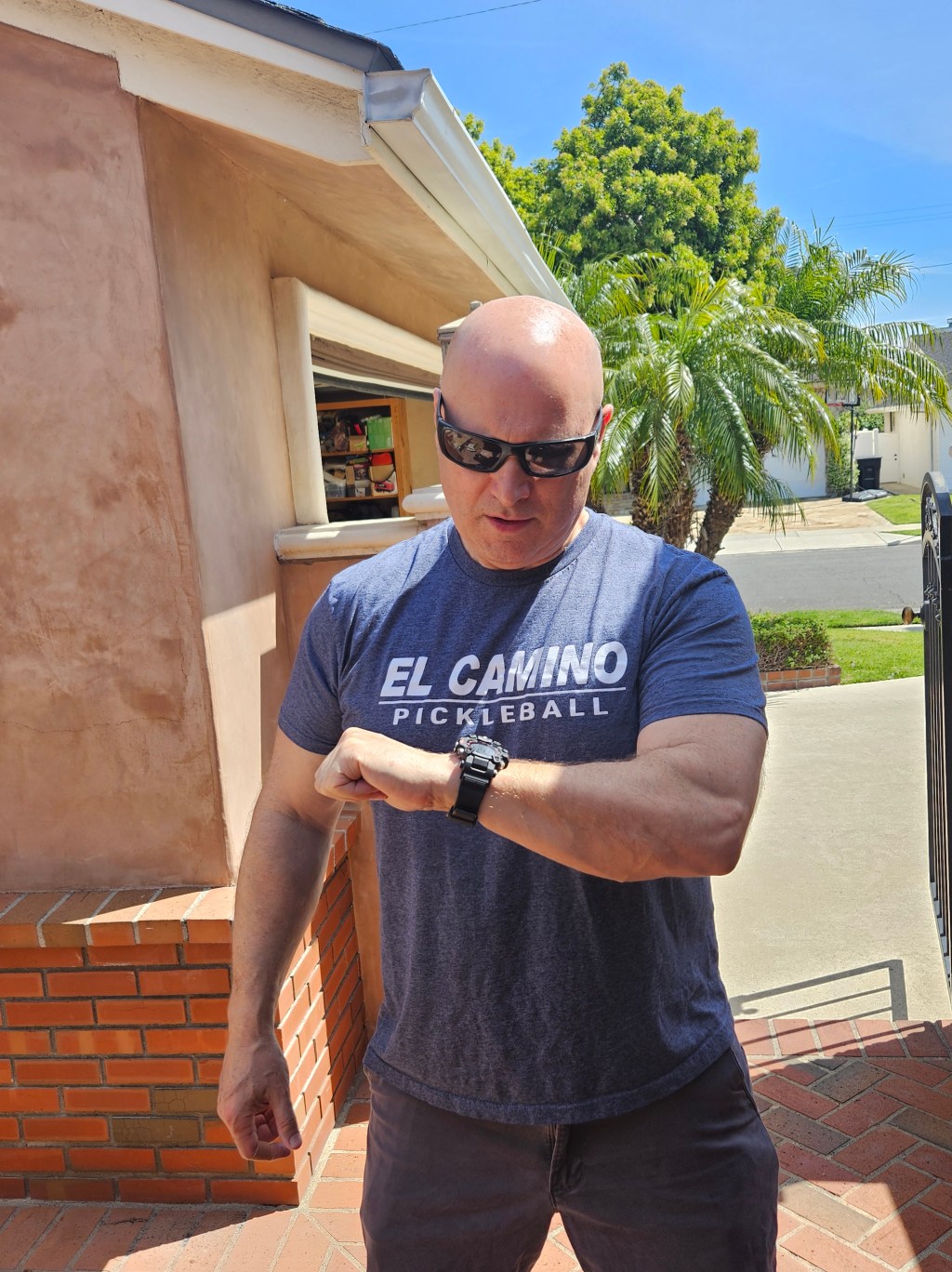
And yet—strangely—on my wrist sat a counterargument. My Casio G-Shock Frogman did not flash, negotiate, or editorialize. It did not offer lane suggestions, heart rate, moral encouragement, or existential commentary. It simply displayed the time in large, unapologetic numerals, like a monk who has taken a vow of clarity. No animations. No alerts. No betrayal. In a world where every screen demands interpretation, the Frogman delivers a verdict: 5:42. That’s it. No subtext, no narrative arc, no committee-painted ambiguity. The road may have turned into a casino of stimuli and my brain into a cautious bureaucrat, but the watch remains a quiet tyrant of precision. I glance down and feel, for a fleeting second, that order is still possible—that somewhere in this strobe-lit madness, truth can be reduced to a number that does not argue back.
When I finally dropped off my wife and daughters, I whispered a confession to my wife: “I’m done with this. I think I’m giving my Accord to you, and the other car to the girls. I’m retiring from the driving game.” They didn’t laugh; they’ve seen cracks in the armor. I’m a high-strung man, and at sixty-four, the neurons don’t fire like they used to. I can still handle a five-mile radius around my house—my personal demilitarized zone—but pull me into the wilds of Los Angeles traffic and I’m ready to hang up my driver’s jersey. Downtown LA isn’t a city. It’s a gladiatorial arena where the young come to dominate, and I say to myself, “This is no country for old men.”


Leave a Reply