Like millions of Americans, I was taught that The Brady Bunch wasn’t just a sugary sitcom fantasy—it was a blueprint for how families should work. Polyester-clad harmony, avocado-colored kitchens, and life lessons that landed with the gentle thud of a sitcom laugh track. But why, decades later, does the Brady house at 11222 Dilling Street remain one of the most photographed homes in America? Why has the show’s popularity only exploded since its 1974 cancellation? And most baffling of all—why do people still worship at the altar of Sherwood Schwartz’s pastel-hued utopia?
In The Way We All Became the Brady Bunch, Kimberly Potts excavates this cultural phenomenon, tracing its roots to Schwartz’s other fantasy fiefdom—Gilligan’s Island. Both shows peddled the same delusion: you could toss together any group of mismatched personalities, and through teamwork, pluck, and a catchy theme song, everything would turn out just fine. In reality, unresolved resentment doesn’t dissolve neatly before a commercial break, and a shared kitchen doesn’t magically make step-siblings love each other. But Schwartz wasn’t interested in reality—he was selling optimism in Technicolor.
Sherwood Schwartz was America’s high priest of idealism, a man who saw divorce rates skyrocketing and decided to counterprogram with an unshakably cheerful alternative. His blended family would work, dammit, and they would thrive in a sun-drenched suburban utopia filled with pep talks and hugs.
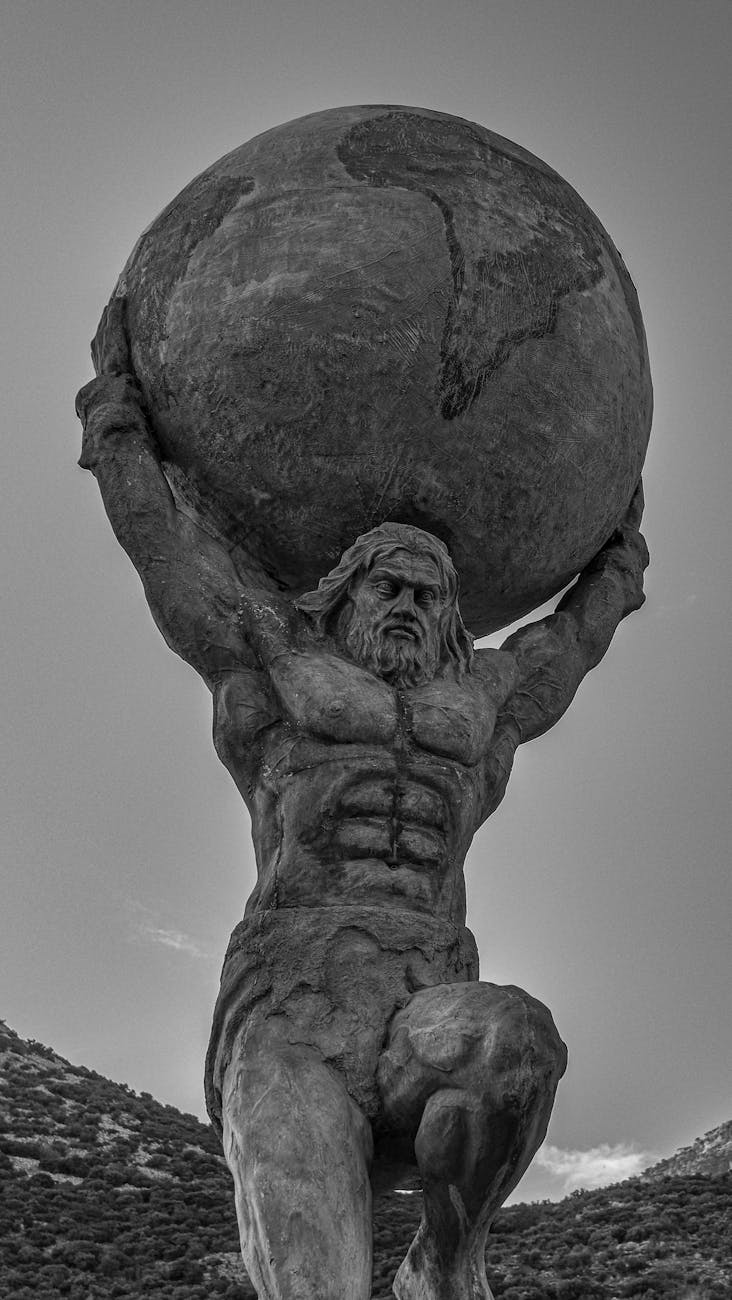
I was raised on a steady diet of optimism—the kind ladled out with a smile and a moral. Captain Kangaroo read The Little Engine That Could as if perseverance were a law of physics. Comic books ran Charles Atlas ads promising that a few earnest reps with a dining chair would convert me from sand-kicked weakling into a suburban Hercules. The message was simple and intoxicating: try hard, get strong, win life.
Even then, a small, skeptical voice whispered from the back row. I owe that voice to The Monkees.
October 16, 1967—the day irony introduced itself with a slapstick flourish. I was five, planted in front of a Zenith, watching “I Was a 99-lb. Weakling,” blissfully certain the universe kept its promises. Then Micky Dolenz—my favorite Monkee—was humiliated on the beach by Bulk, a Speedo-wrapped monument played by Dave Draper. Bulk didn’t just flex; he annexed. He took Brenda—the beach goddess—as if she were part of the trophy case.
Micky’s response was textbook American faith in self-improvement: join Weaklings Anonymous, submit to punishing workouts, and chug something resembling fermented goat sorrow. He sells his drum set to finance the transformation. The montage promises redemption; the protein slurry promises absolution. The contract seems clear: suffer now, triumph later.
And then the script commits treason. On the eve of Micky’s muscular revenge, Brenda has a revelation—muscles are passé. She abandons Bulk for a bespectacled reader of Remembrance of Things Past. Apparently, Proust outcompetes pecs. The beach crowns a new champion: not the strong, not the striving, but the well-read.
I remember the exact sensation—like a floor giving way under a small, unsuspecting life. The lesson landed with the grace of a dropped anvil: effort does not guarantee outcome. You can sweat, sacrifice, and swallow liquefied goat tragedy, and still lose the girl to a man who wins by turning pages. I didn’t have the vocabulary for irony, but I felt it enter my system—cool, patient, and permanent.
Yet the story planted a second, more stubborn truth: the heart does not consult the intellect. Intellectually, I absorbed the lesson—life is not a ledger; virtue doesn’t always pay. Emotionally, I defected. I still wanted to look like Dave Draper. In the mind of a five-year-old, the world offered a clean binary: become Draper or remain a tomato skewered by four toothpicks. The moral could lecture all it wanted. The body had already cast its vote.
 Cinemorphosis
Leave a comment