One afternoon, drifting into a post-workout nap after a particularly glorious kettlebell session, I heard a famous writer tell a popular podcaster that nobody reads books anymore.
Nobody.
Not even him.
He explained that social media had colonized his attention span. Years of feeding his narcissism to the digital machine had apparently consumed whatever brain cells were once responsible for sustained reading. There was something startling about hearing this confession from a public intellectual. It was like hearing a Michelin-starred chef announce that he now survives entirely on vending-machine burritos.
The timing could not have been worse.
I had recently completed writing a collection of fifteen stories. I had spent years dragging them through countless revisions, rescuing them from weaker incarnations, sanding rough edges, amputating dead passages, and rebuilding them sentence by sentence until they finally resembled what they were supposed to become. I was absurdly proud of them. I glowed with satisfaction. My pecs still felt inflated from kettlebell presses, and my literary vanity was enjoying a similar state of expansion.
Then reality barged into the room.
Nobody reads anymore.
A bestselling author now sells perhaps ten thousand copies and celebrates as though he has conquered Gaul. An obscure author such as myself sells precisely zero. The arithmetic was not encouraging. My glow dimmed. My pumped-up ego suffered a rapid deflation.
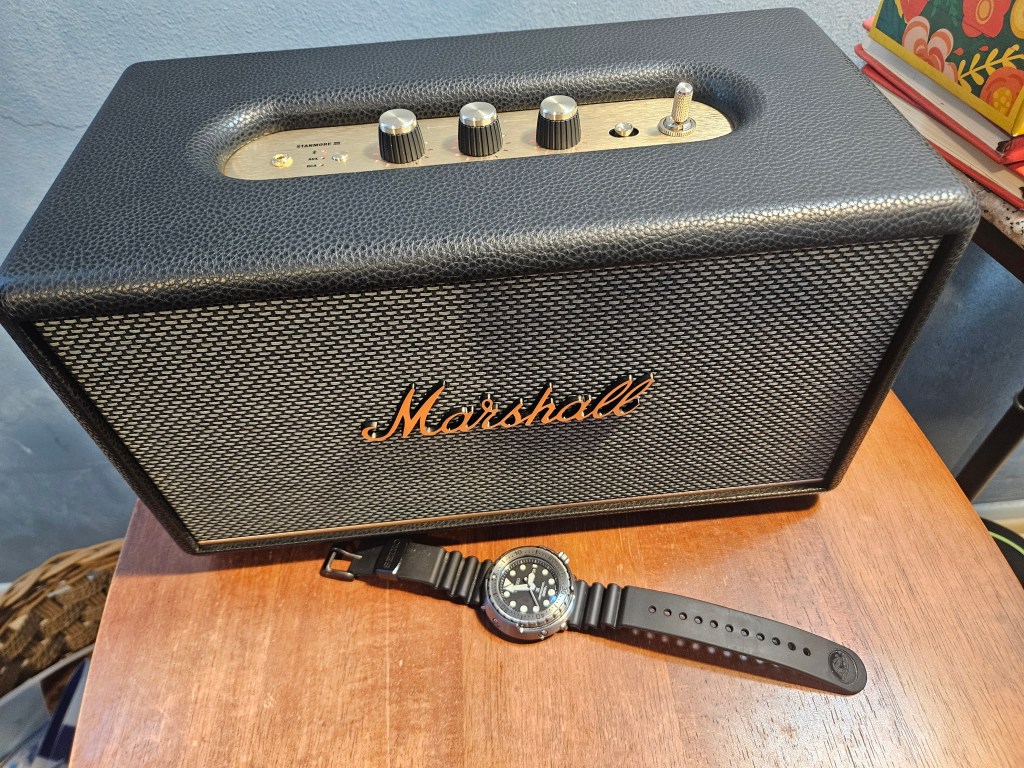
That evening I climbed into bed feeling mildly bereaved. I instructed my smart speaker to play classical music. It responded by offering business reports. I asked again. It played ZZ Top. I asked a third time. More ZZ Top. By the tenth attempt, after what felt like a hostage negotiation, it finally surrendered and delivered Johann Sebastian Bach.
As the music drifted through the room, I picked up several books.
I didn’t care about any of them.
I tried another.
Nothing.
I opened my Amazon wishlist and scrolled through hundreds of titles accumulated over years of optimism. History. Biography. Philosophy. Literature. Politics. Books I had once believed would transform my life.
I wanted none of them.
It wasn’t exactly boredom. It wasn’t exactly depression. It was something murkier—a kind of spiritual flatness. An intellectual anemia.
Part of my mood may have stemmed from guilt. My wife and twin daughters were exploring London and Paris. I had stayed behind. The long flights felt intolerable, and if I was honest, my curiosity about Europe had faded. I had wandered its streets decades earlier. Returning now felt like rereading a novel whose plot I already knew. The enchantment was gone.
I comforted myself with thoughts of an upcoming family trip to Miami. A five-hour flight I could survive. Noise-canceling headphones would seal me off from humanity, and I could retreat into the biography of some legendary athlete. Sports biographies had become my literary comfort food. They soothed me while jet engines roared and the earth drifted by thirty thousand feet below.
Seeking rescue from my malaise, I purchased a discounted book for a dollar.
A dollar.
Even at that price I felt overcharged.
The subject was humanity’s search for belonging and meaning. On paper this sounded promising. In practice it felt like an essay stretched onto a medieval torture rack until it reached book length. Every chapter seemed padded with repetition and filler. The author’s central insight could have fit comfortably on a cocktail napkin.
I abandoned it after a few pages.
Disgusted with both the book and myself, I opened YouTube.
Then salvation arrived.
The algorithm presented a kettlebell instructor demonstrating an exercise called thrusters.
The movement was brutal: a clean, followed by a squat, followed by an overhead press. It looked demanding, athletic, and slightly insane.
My ennui evaporated instantly.
I wrote the word “thrusters” into my Google Docs notebook.
One word.
That was all it took.
Suddenly I was excited about tomorrow. I could picture myself waking before dawn, walking into the garage, and attempting this new movement. The anticipation generated more enthusiasm than hundreds of books, dozens of streaming shows, and an entire internet overflowing with content.
This realization disturbed me.
I was sixty-four years old. By all cultural expectations, I should have been entering the season of deep reading and contemplation. I should have been savoring great books the way aristocrats savor caviar. Instead, I was ricocheting around the house like a Labrador retriever waiting for someone to throw a tennis ball.
The truth was difficult to deny. At this stage of my life, only a handful of things reliably pierced the fog. Discovering a beautiful chord progression on the piano. Finding a new kettlebell movement. Learning some technique that made me eager to wake up the next morning.
Had YouTube not delivered that single word to me—thrusts—I might have spent the entire day wandering through a desert of boredom.
That is what unsettled me most.
Not that I couldn’t find a book I wanted to read.
Not that Europe no longer called to me.
Not even that writers themselves were abandoning books.
What unsettled me was how little it took to reignite my enthusiasm. One word on a screen. One exercise. One tiny challenge awaiting me at dawn.
At sixty-four, after all my reading, writing, teaching, traveling, and philosophizing, the thing that saved the day was not Bach, literature, or civilization.
It was a kettlebell.
A simple piece of iron kept me anchored to the tangible world of effort, fatigue, and discipline. Somewhere along the way, I realized that my mental health depended on thousands of kettlebell swings, goblet squats, cleans, and presses performed each week in the garage. That modest space had become my monastery, my therapist’s office, and my refuge. There, amid the clank of iron and the rhythm of controlled exertion, I could process the absurdities, anxieties, and distractions of modern life. The garage was the one place where the noise of the world receded and reality reasserted itself.
The next day while enjoying the small thrill of introducing new kettlebell movements into my workout—single- and double-handed thrusters, reverse-lunge thrusters, and offset cleans—I had a podcast murmuring in the background, as I usually do. Few pleasures rival the discovery of a new exercise. It is like finding a hidden room in a house you thought you knew by heart.
The podcast featured Bill Maher interviewing Sam Levinson, the creator of Euphoria. Levinson spoke candidly about addiction, explaining that his own began at age eleven with pharmaceuticals. Addiction, he said, would be a central theme in Euphoria’s final season because it had become one of the defining forces of modern life.
Levinson then turned to OnlyFans. He described an industry generating revenues comparable to major entertainment sectors while gradually degrading many of the people who participate in it. The descent, he suggested, is often incremental. A few suggestive photos become a stream of content. The stream becomes a livelihood. The livelihood becomes an identity. Before long, the dream of escaping the drudgery of a conventional job transforms into something more unsettling. You become both entrepreneur and product. You begin exploiting yourself for an audience whose appetite is never fully satisfied. The result is a kind of spiritual erosion. The person becomes hollowed out, exhibiting many of the same compulsive traits associated with addiction.
Maher agreed and argued that most people fail to grasp how profound a cultural shift OnlyFans represents. He said we now live in a “masturbation economy.”
As I worked through a set of offset cleans, his observation lingered in my mind.
I have spent the past several years reading about declining rates of dating, sex, marriage, and face-to-face social interaction among younger generations. Increasingly, many people appear content to retreat into simulations of intimacy that deliver pleasure without requiring vulnerability, compromise, rejection, or genuine connection.
I was reminded of a stand-up routine by Chris Rock. Reflecting on his divorce, infidelity, and pornography addiction, Rock explained that therapy helped him recognize the damage pornography had done to his ability to connect with other people. His provocative way of describing it was that pornography had made him “autistic”—not in the clinical sense, but in the sense that he had become trapped inside his own head, detached from the emotional realities of those around him.
Listening to Maher and Levinson, I found myself wondering whether this condition had escaped the boundaries of individual pathology and become cultural.
What if the isolated, screen-mediated existence once associated with addiction is becoming normal?
What if more and more people prefer substitutes to relationships, simulations to experiences, and curated fantasy to the friction of actual human life?
What if the dystopia is not approaching but has already arrived?
As someone who teaches critical thinking and spends an unhealthy amount of time searching for the defining themes of modern culture, I immediately began thinking about how I might frame this discussion in a classroom.
Maher’s terminology, “the masturbation economy,” works perfectly on television. It grabs attention. It provokes. It entertains.
But in a college classroom, I would probably use a different phrase.
I might call it the Solitary Consumption Economy or the Self-Gratification Marketplace.
Students could then examine the argument that platforms like OnlyFans are not merely examples of personal empowerment but symptoms of a larger cultural shift toward self-exploitation, alienation, dopamine dependency, and emotional isolation.
Viewed this way, OnlyFans is not an anomaly. It is the logical extension of several trends that have been developing for decades.
One precursor is the modern obsession with optimization.
Why endure the messiness of courtship when technology can deliver a carefully curated fantasy tailored to your preferences?
Why invest time in building a relationship when digital alternatives can be scheduled conveniently between deadlifts and protein shakes?
Why risk rejection when algorithms offer endless affirmation?
Optimization culture promises efficiency in every domain of life. The problem is that many of life’s most meaningful experiences are inherently inefficient. Friendship, romance, family, and community require patience, sacrifice, awkwardness, misunderstanding, and compromise. Remove those elements and you often remove the humanity as well.
A second precursor is the social conditioning produced by the pandemic.
Many people discovered that life could be organized around isolation. Work from home. Food delivered. Entertainment streamed. Social interaction filtered through screens. For some, this arrangement felt less like an emergency measure than a permanent upgrade. Why drive across town? Why spend money on gas? Why risk discomfort when one can remain safely cocooned inside a personalized digital environment?
The result is a culture increasingly comfortable with substitutes.
And the phenomenon extends far beyond sexuality.
Today people seek fitness coaching, nutritional guidance, therapy, cooking instruction, financial advice, and life direction through screens. Entire industries now exist to provide virtual versions of activities once rooted in face-to-face relationships and local communities.
As I thought about all this, I was reminded of an episode of Lost in Space that haunted me as a child.
The episode, “The Promised Planet,” aired in 1968.
The Robinson family arrives on a planet populated by perpetual teenagers. The inhabitants speak in fashionable slang, dance compulsively, and embrace a culture of endless stimulation. New arrivals are placed in individual booths where a machine bombards them with loud music and psychological conditioning until they become compliant members of the tribe.
One of the victims is Penny Robinson.
After undergoing the process, she stands on a platform, swaying mindlessly to the music while parroting clichés about being “with it” and “cool.” Her father watches in horror. He sees that his daughter has not merely adopted new habits. She has surrendered her individuality. She has become a consumer of slogans and sensations.
The scene terrified me as a child.
Watching it today is even more unsettling.
Written nearly sixty years ago, the episode feels less like science fiction than prophecy. Its creators anticipated a world in which overstimulation, conformity, and technological manipulation would become normal features of everyday life. They imagined a generation pacified not by force but by pleasure.
The frightening possibility is that they were not predicting some distant future.
They were describing us.
The Solitary Consumption Economy may simply be the latest chapter in a story that began long ago—a story in which technology gradually teaches us to prefer stimulation over connection, convenience over community, and fantasy over reality.
The question is not whether a culture of solitary consumption can generate wealth.
Clearly it can.
The question is whether a civilization can flourish when increasing numbers of its citizens spend their lives alone inside their heads, consuming experiences engineered to feel more vivid while becoming steadily more detached from reality itself.
I was hardly immune to the condition. I felt myself being slowly absorbed into a culture that inflamed the passions with dazzling digital spectacles while leaving the spirit flattened, restless, and curiously numb. At times I felt like Penny Robinson in Lost in Space, trapped inside the conditioning booth on The Promised Planet. The machine bombarded her with stimulation until she surrendered her individuality and emerged smiling, dancing, and repeating fashionable clichés. The horror of the episode was not that Penny was physically imprisoned. It was that she no longer wanted to leave. I sometimes wondered whether the same process was happening to me, only with algorithms instead of loud music, screens instead of booths, and an endless stream of digital amusements replacing the hypnotic dance floor.
Fortunately, I had a few anchors that kept me from drifting into the hypnotic current.
The first was kettlebells.
Kettlebells transported me to a world before algorithms, influencers, and engagement metrics. The moment I gripped the handle, I ceased being a sixty-four-year-old college instructor and became a caveman engaged in urgent labor. I was shoving boulders aside to widen the entrance of my cave before a storm arrived. I was lifting the twelve-foot wing of a dying pterodactyl so I could retrieve the spear I had hurled moments earlier to save my life. There was no room for existential angst while trying not to drop fifty pounds of cast iron on your foot.
Then there was the piano.
If kettlebells connected me to my inner caveman, the piano connected me to my inner funeral director.
Whenever I sat at the keyboard, I found myself composing the same melancholy piece over and over again. At least that is what my family claims.
“Dad, all your songs sound the same.”
Of course they do.
I am not composing individual songs. I am contributing to the great collective symphony of human sadness known in German as Weltschmerz—the sorrow that comes from recognizing the gap between the world as it is and the world as it ought to be.
Some people spend thousands of dollars each year discussing their Weltschmerz with therapists. I process mine through an ebony Yamaha upright. It is considerably cheaper, and unlike a therapist, the piano never asks me how that makes me feel.
The piano allowed me to grieve.
Not merely for myself, but for the world.
For all its absurdities, vanities, and self-inflicted wounds.
Then there was my exercise bike.
Technically, it is called a Schwinn Airdyne AD7.
I prefer its proper name:
The Misery Machine.
The Misery Machine operates according to a simple principle: the harder you work, the more enthusiastically it punishes you for your ambition.
Most cardio equipment is cooperative. You pedal. It politely accepts your effort.
The AD7 is different.
The AD7 takes your effort as a personal insult.
Its giant fan wheel generates wind resistance proportional to your exertion, creating a relationship that feels less like exercise and more like a blood feud.
The machine seems to say:
“Oh, you think you’re in shape? You think you’re going to dominate this workout? Let’s investigate that claim.”
Pedaling is only the beginning.
Your arms must simultaneously push and pull large moving levers, transforming the experience into a full-body interrogation. Before long your legs are burning, your shoulders are aching, and your lungs are negotiating surrender terms.
The machine possesses an almost supernatural ability to match your suffering dollar for dollar. Every attempt to overpower it simply persuades it to become more difficult.
After a hard session, I stagger away drenched in sweat, humbled, exhausted, and oddly grateful, as though I have survived a mugging administered by a highly competent physical therapist.
I have considered quitting the AD7 many times.
It consumes an alarming amount of energy.
Its location does not help.
Wedged between the living-room wall and the sofa, it places me on public display for my family. There I sit shirtless, wearing gym shorts, with a towel wrapped around my head to prevent sweat from pouring into my eyes. I look less like a disciplined athlete than a man experiencing a minor psychological crisis.
The real embarrassment, however, lies in the elaborate fantasies I invent to motivate myself.
My goal is always the same: burn at least seven hundred calories in under an hour.
To achieve this, my brain constructs increasingly ridiculous scenarios.
Suppose I reach four hundred calories by the thirty-minute mark.
In that case, all my colleagues receive half a million dollars tax-free.
Naturally, they are watching me on a giant monitor.
A scrolling ticker beneath the screen provides real-time analytics:
Calories Per Hour: 842
Fatigue Level: Severe
Probability of Reaching 400 Calories at 30 Minutes: 98%
Probability of Reaching 770 Calories at 60 Minutes: 89%
Butt Fatigue: Catastrophic
Confidence Level: Medium
My colleagues watch nervously from their homes.
“If he hits the target,” one exclaims, “I’ll finally be able to buy a house!”
Another is already browsing beachfront property.
A third is planning an early retirement.
Meanwhile, I continue pedaling through escalating misery, carrying the financial hopes and dreams of people who do not know they are participating in my delusion.
This, I suppose, is my version of mental gamification.
Some people use productivity apps.
Some use motivational speakers.
I imagine an audience of financially desperate coworkers depending on my ability to survive a torture device disguised as an exercise bike.
And somehow, absurd as it is, it works.
Another reason I can’t quit the AD7 is that a part of me craves the punishment.
It is difficult to overstate humanity’s appetite for self-inflicted suffering. Pain, like pleasure, has a way of making us feel intensely alive. In a culture that anesthetizes us with endless consumption, relentless marketing, algorithmic manipulation, and data mining, punishment can feel strangely restorative. At least it cuts through the fog.
To put it more simply, without the punishment administered by my exercise bike, I would be bored.
And boredom is no trivial enemy.
It reminds me of Father John Misty’s song “Bored in the USA.” The narrator is a weary casualty of consumer culture, a man who has purchased so many products that he has gradually become one himself. Somewhere along the way, he misplaced the larger ambitions and romantic ideals of his youth. The life he was promised never arrived. In its place he received subscriptions, pharmaceuticals, and a collection of possessions that stare back at him with perfect indifference.
He feels cheated.
He wants a refund on the Faustian bargain he signed decades earlier, but he suspects the return policy has expired. To cope, he medicates himself. The pills help him endure the boredom, depression, and low-grade despair of modern life, but they cannot cure them. He is a man drowning in ennui, anhedonia, and spiritual exhaustion.
I recognize those enemies.
I can hear them rattling the doorknob.
They arrive disguised as apathy, distraction, and the temptation to stop caring. They whisper that effort is pointless, that curiosity is overrated, that another hour of scrolling might somehow satisfy the hunger that scrolling itself created.
So I fight back.
I sit at the piano and pound out another melancholy composition dedicated to the great human tradition of Weltschmerz. I swing kettlebells until my lungs burn and my forearms ache. I climb aboard the AD7 and pedal through fresh layers of misery.
I do these things with a mixture of fear and fury, hoping that boredom, anhedonia, and despair will decide there are easier victims elsewhere and leave me in peace for another day.





 Cinemorphosis