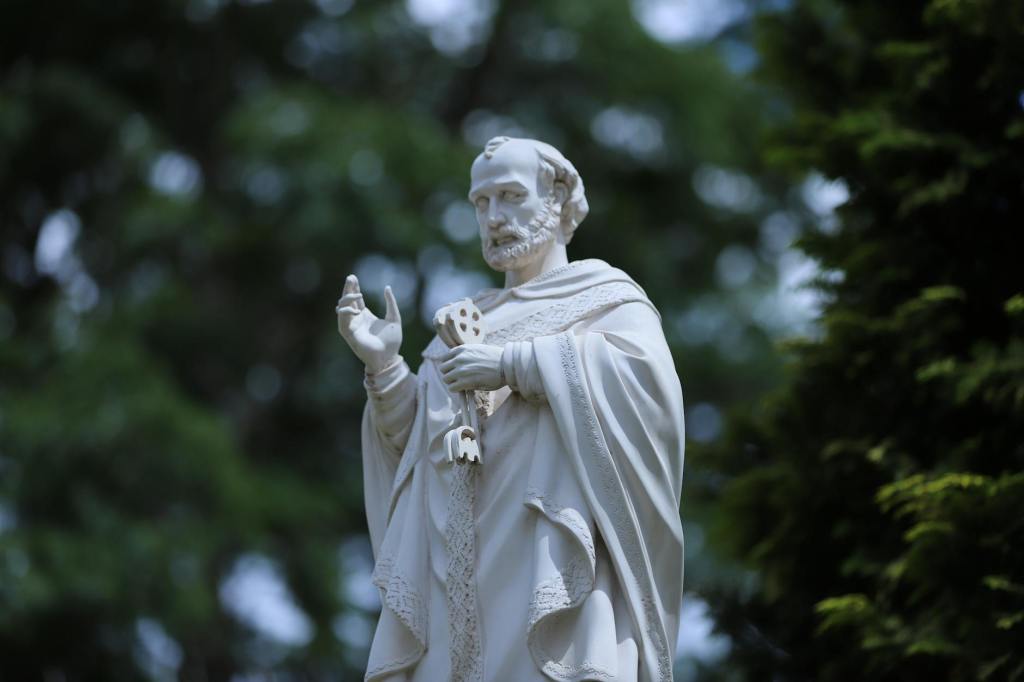
Adam Gopnik, in “St. Paul Remade Human History. How Did He Do It?”, answers a parlor question—who matters most?—with a man who never met Jesus in the flesh and still managed to run the table. Paul, Gopnik says, is “the Most Unforgettable Character It Ever Met,” which is one way of saying he took a minor Jewish sect and scaled it into a two-millennia franchise. Not bad for a writer whose archive could fit in a carry-on.
The record is thin and, at points, suspicious. Of thirteen letters, only seven pass the authenticity test; the rest look like fan fiction with good handwriting. The Acts of the Apostles reads less like sober history than like a travelogue pitched to Roman investors—Romans good, Jews troublesome, Christians reassuringly adjacent to Rome. It also airbrushes the argument between Paul and James, Jesus’s brother, into a polite agreement, because nothing ruins a new religion like founders who won’t share a table.
Then comes the Roman catastrophe—the Jewish War, the Temple reduced to memory—and the scramble among sects to survive. Paul does more than survive; he pivots. He takes a local messianic movement and repackages it for export: portable, universal, and politically legible. The man who pulls off this trick also carries the best origin story in religious literature—a blinding encounter on the road to Damascus that converts a persecutor into a salesman with divine backing. If you were storyboarding a faith, you’d keep that scene.
The letters themselves are a mood swing with footnotes. Paul boasts like a prizefighter and then calls himself “the least of the apostles.” He commands, cajoles, contradicts, confesses. He is competitive enough to crown himself and humble enough to kneel in the same paragraph. He admits a “thorn in the flesh”—a chronic deficit he can’t shake—and then turns it into a credential. He advises missionary pragmatism with the line that could double as a consulting slogan: be all things to all people. The man can pivot.
Gopnik’s most useful correction is cinematic. Don’t picture Paul as a monk scratching doctrine by candlelight. Picture him as an action lead—shipwrecks, jailbreaks, debates that feel like bar fights in Greek. He travels, argues, survives. He makes the faith mobile—“almost single-handedly,” Gopnik writes—while the original disciples eye him like a franchisee who’s rewriting the menu. It’s the kind of role that once tempted Frank Capra to imagine a film starring Frank Sinatra—Old Blue Eyes as the apostle who sang a religion into the world.
What Paul omits is as telling as what he proclaims. He is strangely quiet about Jesus’s earthly biography—the family, the miracles, the Nativity tableau that later Christianity will frame and hang in every living room. Gopnik suggests the omission is a feature, not a bug. Keep the myth foregrounded and the particulars backstage, and your message travels better. If you doubt it, look at how newer movements grow: the story glows brighter when the details stay conveniently out of focus.
Then there’s the thornier matter of Paul’s rhetoric about Jews. After the Holocaust, readers have worked hard to domesticate him into a universalist who welcomes everyone to the table. Gopnik reminds us that some passages resist that makeover, cursing the old covenant with language that doesn’t sit politely at interfaith dinners. The effort to sanitize Paul tells you as much about us as it does about him.
Scholars, understandably, keep trying on different Pauls. There’s the Roman Paul, smoothing edges for empire; the Hellenistic Paul, speaking in a philosophical key; the Jewish Paul, wrestling with a tradition he both extends and overturns. You can find these costumes neatly hung in Paul Within Paganism, edited by Chantziantoniou, Frederiksen, and Young. Try them all on; none quite fits.
One thread, however, doesn’t fray: Paul’s apocalyptic urgency. The end is near—soon enough to matter, soon enough to act. Whether he believed it literally or deployed it rhetorically is the kind of question historians love and time refuses to answer. Urgency, after all, is useful even when it’s wrong.
Gopnik’s final warning is against turning Paul into a greeting card. Yes, he writes the line about love that weddings can’t resist. He also draws hard boundaries with a zeal that would make a modern brand manager blush. Christianity spreads not just on the strength of its compassion but on the clarity of its lines. Inclusion, it turns out, travels well when it knows exactly what it excludes.
Paul refuses to settle into a single portrait. He is the contradiction that works—the salesman who believes, the believer who markets, the penitent who boasts. If Capra had made that Sinatra film, it might have been the truest version: a man with a voice big enough to carry a room, and a restlessness big enough to carry a religion. Love, sung loud enough, can sound like doctrine. And doctrine, delivered with enough conviction, can change the world.


Leave a Reply