Since the COVID lockdown, most of my teaching has migrated online. Even now, roughly three-fourths of my courses remain in the digital realm, where students encounter me less as a flesh-and-blood professor pacing beneath fluorescent lights and more as a disembodied presence living inside Canvas announcements, discussion boards, and video lectures recorded in my home office.
To my surprise, retention rates remain strong. That fact alone suggests online learning serves a real need for many students whose lives resemble logistical hostage situations involving jobs, childcare, commutes, aging parents, unstable work schedules, and economic exhaustion. For these students, online education is not a luxury. It is the only doorway left open.
Still, online learning clearly is not for everyone.
Today’s Los Angeles Times article, “‘I felt like I wasn’t learning’: Community college students struggle with online education” by Adam Echelman, highlights several genuine problems now reshaping higher education.
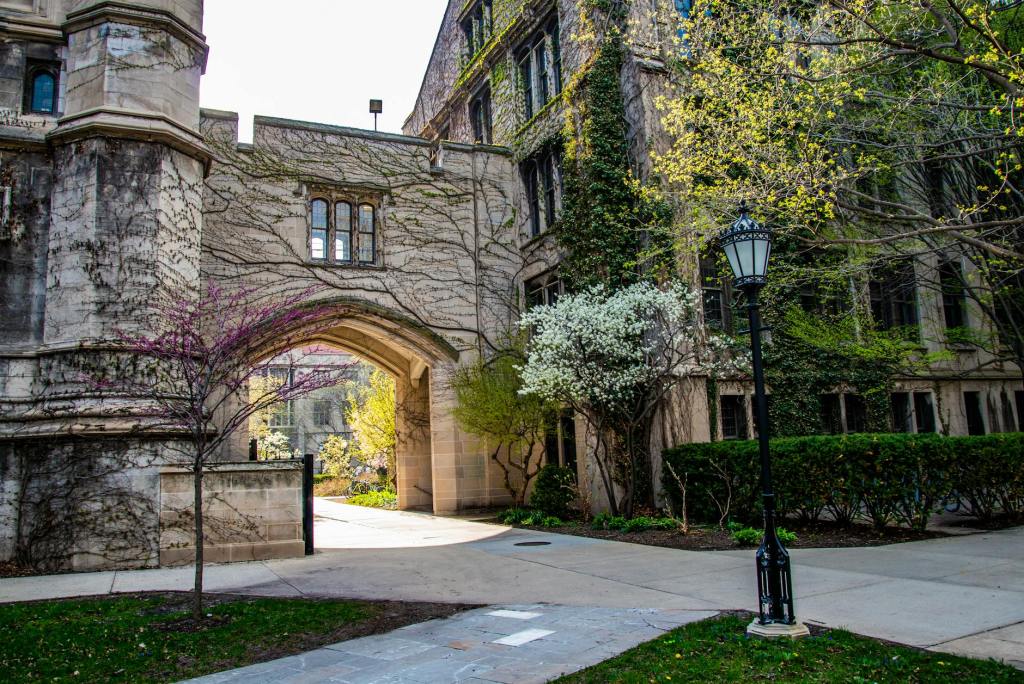
First, nearly 40 percent of community college classes are online, leaving many campuses eerily underpopulated. I see this myself every time I walk across campus beneath giant stretches of empty concrete where student traffic once resembled an airport terminal. Some days the college feels less like a thriving institution of learning and more like the abandoned set of a post-apocalyptic indie film where only the squirrels still believe enrollment is healthy.
Second, online education is highly vulnerable to AI-assisted academic dishonesty. Entire assignments can now be outsourced to machines with frightening ease. Students who once copied homework from friends can now summon instant essays, summaries, reflections, and discussion-board responses generated in seconds by software that never sleeps and never complains about deadlines. Academic rigor has unquestionably been destabilized.
Third, many students experience profound disorientation in online courses. They sit alone at glowing screens trying to decode unfamiliar interfaces, navigate modules, interpret assignment instructions, and manage deadlines without the immediate human structure of a physical classroom. Some students thrive in this environment. Others feel psychologically untethered, as though they have been dropped into an educational escape room with no map and unreliable Wi-Fi.
All of these criticisms contain truth.
But I still feel compelled to defend online education because face-to-face instruction creates its own formidable barriers that critics often romanticize away.
Many students simply do not possess the time, transportation, money, childcare, emotional bandwidth, or scheduling flexibility necessary to attend traditional classes several times a week. Others suffer from social anxiety so severe that walking into a crowded classroom feels less like entering a learning environment and more like arriving for public execution. Some students experience the same confusion staring at a printed syllabus that others experience navigating Canvas. Confusion is not unique to online learning; it is part of learning itself.
And AI has disrupted all education, not merely online education.
The fantasy that we can restore some pristine pre-pandemic classroom paradise by dragging everyone back into physical seats ignores reality entirely. Face-to-face classes are also saturated with AI. Students use it in dorm rooms, libraries, cafeterias, parking lots, and sometimes while sitting directly in front of us pretending to take notes. The disruption is universal.
We are living through a historical transition in which educators are desperately trying to preserve critical thinking, reading, writing, and job preparation while technological conditions mutate faster than institutional bureaucracy can respond. No one possesses perfect answers. Anyone claiming otherwise is selling nostalgia disguised as certainty.
But I remain optimistic.
Online teaching continues improving. Faculty are becoming more sophisticated in course design, communication, engagement strategies, video instruction, accessibility, and platform navigation. We are learning how to create clearer modules, more interactive coursework, better communication systems, and stronger student support structures. In many cases, students now receive the best aspects of both worlds: the flexibility of online access combined with increasingly refined teaching methods.
And flexibility matters enormously.
For many community college students, education is squeezed into the margins of adult survival. They complete assignments after ten-hour shifts, during lunch breaks, inside parked cars, while supervising children, or late at night after the household finally quiets down. Critics who romanticize the traditional campus experience often imagine eighteen-year-olds strolling across ivy-covered quads discussing philosophy beneath oak trees. Community college reality is far less cinematic. It involves exhaustion, economic pressure, and scheduling warfare.
All of higher education is undergoing massive disruption simultaneously:
- AI is transforming intellectual labor.
- Student attention spans are changing.
- Economic pressures are intensifying.
- Online teaching technologies are improving.
- Work and family demands are growing more brutal.
Under these conditions, demanding a wholesale return to “the old ways” feels less like wisdom and more like denial.
The old world is not coming back.
That does not mean standards should collapse or that online learning is automatically superior. It means education must evolve alongside the lives students actually live rather than the lives institutions nostalgically wish they still lived.
Online education will continue improving because necessity drives innovation with ruthless efficiency. Likewise, our understanding of how to create meaningful, rigorous, and humane education in the AI Age will continue evolving. We are not witnessing the death of learning. We are witnessing the painful reconstruction of it.
The task now is not retreat. It is adaptation.
It is time to move forward rather than cling romantically to a vanished academic world that technology, economics, and history have already left behind.


Leave a Reply