In “Our Longing for Inconvenience,” Hanif Abdurraqib diagnoses a modern sacrilege: we have streamlined the sacred. Love, once a slow collision of timing, nerve, and chance, has been repackaged as a swipe—faces flicked past like clearance items in a digital aisle. Courtship now resembles an online shopping spree, complete with filters, wish lists, and the quiet suspicion that you’re not choosing so much as being A/B tested. It raises an unflattering question: are we still falling in love, or have we become compliant participants in a well-designed experiment? Convenience has done what convenience always does—it removed the friction and took some of the humanity with it. What remains is efficient, scalable, and faintly hollow.
The backlash has a name—call it frictionmaxxing. People, starved for something earned, are reintroducing resistance on purpose: analog rituals, delayed gratification, tasks that refuse to collapse into a tap. There’s nostalgia for the Before Convenience Times, when the self felt hammered into shape rather than 3D-printed from preference settings. The mythology is simple: meaning requires effort; effort requires inconvenience.
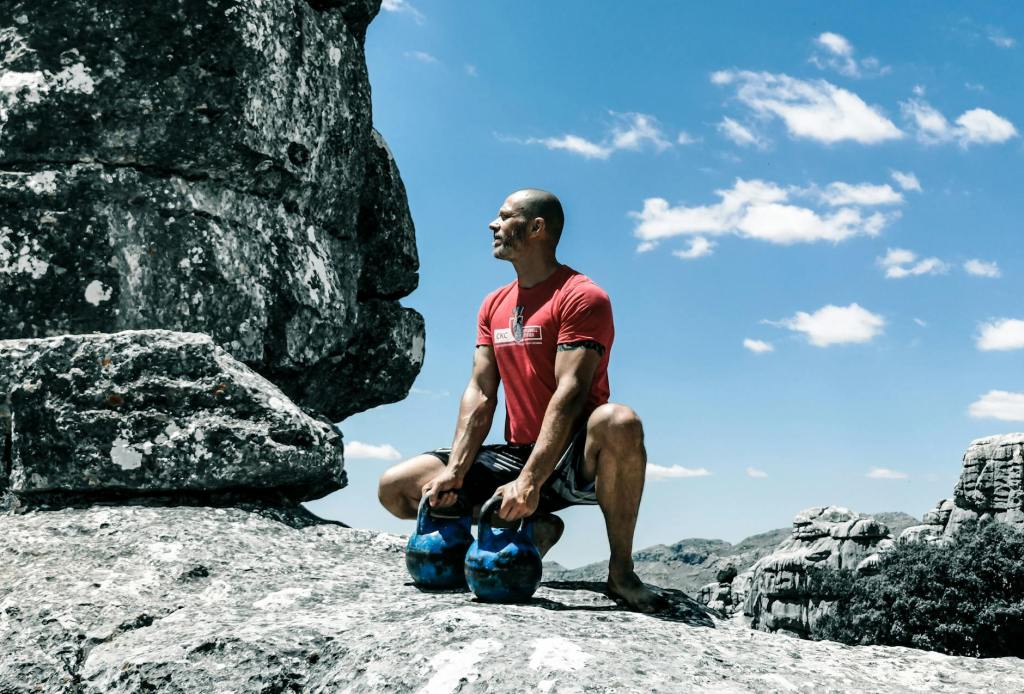
I’m not moved by the usual props—turntables, VCRs, the museum of obsolete plastic. That feels like cosplay. But I do recognize the pull in two places of my own life that refuse to fake it: my acoustic Yamaha upright piano that answers only to touch and time, and my kettlebells that don’t care about my feelings or my notifications. Both demand presence. Both punish distraction. They’re small, stubborn antidotes to the screen’s narcotic ease.
Abdurraqib’s warning is less about gadgets than about posture. Convenience doesn’t just lubricate life; it reclines it. We become passive, distractible, pleasantly numb—a polite version of Friedrich Nietzsche’s Last Man, optimized for comfort and allergic to striving. The tragedy isn’t that we have tools; it’s that the tools quietly train us to avoid anything that resists us.
Here’s the confession that ruins the tidy narrative: I don’t need to blame screens for my preference for ease. I came that way. Given the choice between puttanesca and a bowl of oatmeal with protein powder, I will choose the path that requires fewer verbs. I love puttanesca in theory—the garlic, the brine, the argument it makes on the tongue. I do not love it enough to perform the liturgy required to summon it. Convenience didn’t corrupt me; it recognized me.
The same instinct flared when at forty-eight I became a father–twins, no less. The prospect of nights broken into fragments, of diapers and pacing and the long choreography of care, filled me with a very modern dread: the dread of interruption. I complained. My cousin Garrett, who has the inconvenient habit of being right, told me that the friction is the bond—that the lost sleep and the repetition are not bugs but features, the forge where attachment is made. I believed him. Belief, however, did not improve my mood at three in the morning.
None of this is going away. Convenience will continue to refine itself into invisibility, and our hunger for something earned will continue to nag at us like a conscience we can’t quite uninstall. The only workable response is not purity but partition: carve out blocks of time that refuse assistance, that insist on effort, that return you to the body and the task. Live, briefly, off the grid of your own habits.
The irony, of course, is waiting for us with a smile. Give it six months and there will be a frictionmaxxing app to schedule your inconvenience, optimize your resistance, and remind you to be authentic at 4:30 p.m. You’ll tap “confirm,” and somewhere a server will congratulate you for choosing friction the convenient way.


Leave a Reply