Tag: technology

  • “I Am the Frogman”: The Last Shout Before the Door Seals

    “I Am the Frogman”: The Last Shout Before the Door Seals

    I’ve spent more than a decade documenting my watch obsession on YouTube—a pursuit that begins as hobby and ends, if you’re not careful, as behavioral conditioning. You think you’re making videos. You’re actually being trained. The algorithm dispenses rewards and punishments with clinical indifference: views, comments, silence. You adapt. Of course you adapt. That’s the job now.

    The trouble is that the algorithm has no interest in truth, balance, or restraint. It prefers spectacle. It rewards the emotional range of a teenager who’s just discovered caffeine: hyperbole, dread, euphoria, FOMO, regret—delivered with the urgency of a man announcing the end of civilization via bezel insert. You wake up one morning and discover you’ve succumbed to Algorithmic Persona Drift—a slow mutation in which your public self becomes a louder, shinier, more hysterical version engineered for attention rather than accuracy.

    Feed it, and it feeds you back. The cycle tightens. Every video must be more decisive, more apocalyptic, more “this changes everything.” You produce manifestos. You narrate epiphanies. You analyze your own obsession with the intensity of a man dissecting his own heartbeat. The result is predictable: you become a caricature of yourself—recognizable, marketable, and faintly absurd.

    If you can tolerate that, the system will reward you. The numbers rise. The revenue trickles, then flows. You build a small empire out of controlled exaggeration. But there comes a moment—quiet, unwelcome—when you no longer recognize the man delivering the lines. The performance has outgrown the person. At that point, the decision presents itself with unpleasant clarity: keep feeding the machine and let it finish the job, or step away and salvage what remains of your voice.

    That’s one exit.

    The other is less dignified. You don’t leave; you are expelled. The causes are familiar—burnout, self-disgust, ennui, health—but the most decisive is also the least negotiable: age. You wake up one day and realize the tempo has changed. The rhythms that once animated you now sound distant, like music leaking from another room. The new release, the hyped drop, the celebrity of the week—none of it lands with the old voltage. Mortality has entered the conversation and lowered the volume.

    You try to resist. You tell yourself enthusiasm is a choice. But the gap widens anyway. You find yourself oddly relieved that you no longer care about bracelet articulation or dial gradients or the fever dream that the “perfect collection” is one purchase away. The brotherhood reveals itself for what it always was: half fellowship, half support group. You no longer feel the urge to compare scars from impulse buys, to laugh at the madness, to whisper—half-serious, half-hopeful—that this watch will finally cure you.

    For me, the separation was unmistakable. Twenty years dissolved into a blur of rotating bezels and contingency divers. Then, at sixty-three, something tapped my shoulder. Not a crisis. A correction. The obsession didn’t die; it simply lost its authority. Desire dimmed, replaced by a quiet recognition that watches are exquisitely engineered ways of losing to time.

    The feeling calls to mind a scene from Battlestar Galactica: a traitor sealed behind glass, the airlock hissing, the crew watching with solemn finality. Not melodrama—procedure. That’s aging. Not tragic, not cruel—inevitable. At some point, those still inside the illusion of endless tomorrows begin to edge away from those who have seen the horizon contract.

    A pane descends. It isn’t hostile. It’s accurate.

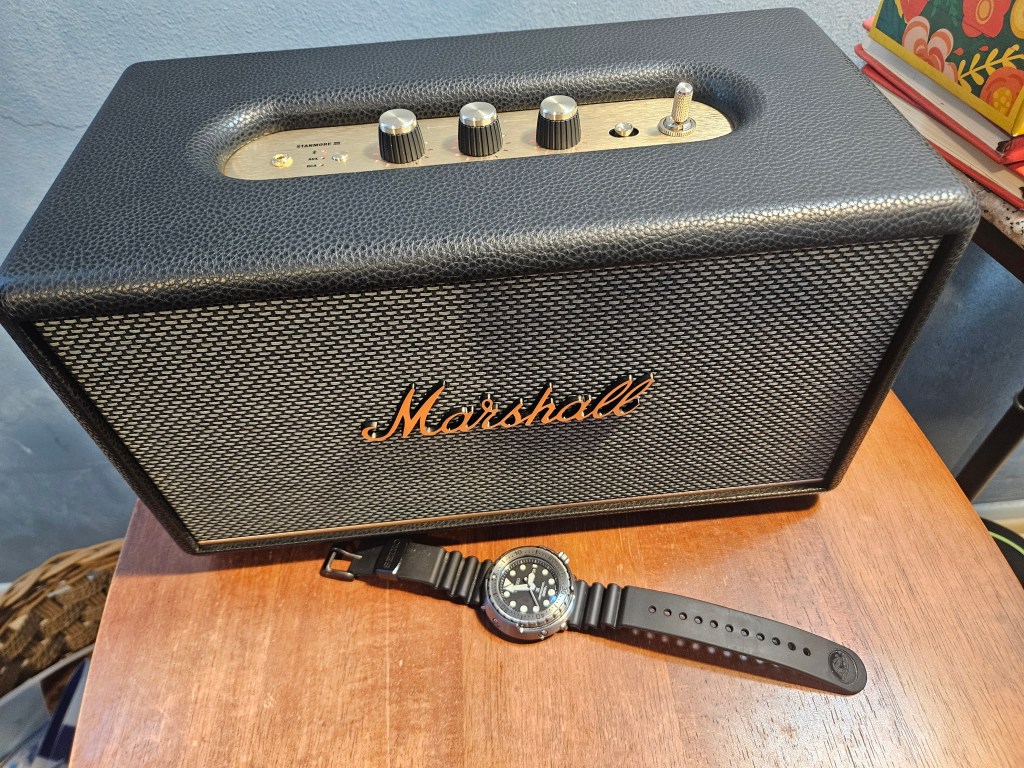
    You tap the glass, wave, try to rejoin the cockpit of youthful urgency. You even lift your wrist—your hulking G-Shock Frogman—and make your case. “Look,” you want to say, “I’m still in it.” But the seal has set. Reentry is not part of the design.

    What remains is less dramatic and more demanding: dignity. Accept the season you’re in. Build meaning instead of inventory. Offer something useful to those still racing ahead, even if they don’t yet see why it matters. They will. Everyone does, eventually.

    The algorithm fades. The noise recedes.

    And you are left, at last, with a quieter, harder question: not what you want next—but who you intend to be without the applause.

  • Famous for Nothing: The Rise of Validation Maximalism

    Famous for Nothing: The Rise of Validation Maximalism

    In the early 2000s as the media landscape was changing, Paris Hilton was known to be famous for being famous. Her appeal wasn’t the substance behind the glitter but the glitter itself, to borrow a metaphor from F. Scott Fitzgerald’s short story “Winter Dreams.” This condition of being famous for being famous created FOMO in a new generation who wanted to follow Hilton’s path. This desire to be famous for being famous is a pathology, an infantile dream of instant validation and attention without having any substance. A life of meaning is disdained while a life of confectionary hype becomes the dopamine hit for a child. 

    This desire for fame without doing anything other than being famous became part of a new era, the Age of Validation Maximalism: the compulsive pursuit of attention, recognition, and social proof as ends in themselves, where the quantity of admiration replaces the quality of accomplishment.

    What Hilton embodied as a cultural anomaly has since been industrialized by platforms like Instagram and TikTok. Their algorithms do not reward substance; they reward engagement velocity—clicks, likes, shares, watch time. In this system, meaning is irrelevant unless it can be measured, and what can be measured is almost always surface-level reaction. 

    Validation Maximalism becomes not just a personal pathology but a structural inevitability. The algorithm functions like a slot machine for attention: it amplifies whatever triggers the quickest response, whether that is outrage, titillation, or empty spectacle. Over time, users internalize this logic, optimizing themselves for visibility rather than substance. The result is a feedback loop in which the pursuit of validation reshapes identity itself, producing a generation that doesn’t just seek attention—it is engineered to depend on it.

    Because content creators emphasize Validation Maximalism over intellectual rigor, we consume “information” in the realm of fitness, consumer goods, culture, and politics that is seriously compromised because it is fine-tuned to the algorithm more than accuracy and nuance. Consuming this compromised content, we exist in a symbiotic relationship with the content creators. We exist in a sort of algorithmic co-dependency: a feedback loop in which creators optimize content for engagement metrics while audiences reward that optimization with clicks and attention, locking both parties into a system where visibility outranks truth. Such a co-dependency impedes our growth and infantizes us.

    Infantilization is the predictable outcome of this arrangement: a steady shrinking of our cognitive and moral range until we prefer ease over effort and reaction over reflection. When information is engineered for instant reward, we lose the habit of sustained attention; nuance feels like friction, and we avoid it. Our judgment softens into reflex—likes, shares, quick takes—while the harder work of weighing evidence and tolerating ambiguity atrophies. We become dependent on external cues to tell us what to think and feel, outsourcing discernment to the feed.

    Over time, this produces a citizen who is easily steered, impatient with complexity, and suspicious of anything that doesn’t deliver a fast emotional payoff. The result isn’t just weaker thinking; it’s a diminished self—one trained to consume rather than to understand, to react rather than to reason.

    Wanting to be famous for being famous looks harmless at first—a glossy ambition, a shortcut to attention—but it functions like a cultural solvent. When visibility becomes the highest good, every other standard—truth, craft, character—gets thinned to fit the feed. Institutions begin to mirror the metric: news chases clicks, fitness chases spectacle, politics chases virality. Individuals follow suit, curating selves for applause rather than substance, measuring worth in impressions rather than impact. The result is a society that knows how to amplify but not how to evaluate, quick to react and slow to understand. Treating fame as an end in itself isn’t just a personal quirk; it’s a pathology that scales, replacing meaning with metrics and leaving us loud, visible—and curiously empty.

  • Frictionmaxxing in the Age of Ease

    Frictionmaxxing in the Age of Ease

    In “Our Longing for Inconvenience,” Hanif Abdurraqib diagnoses a modern sacrilege: we have streamlined the sacred. Love, once a slow collision of timing, nerve, and chance, has been repackaged as a swipe—faces flicked past like clearance items in a digital aisle. Courtship now resembles an online shopping spree, complete with filters, wish lists, and the quiet suspicion that you’re not choosing so much as being A/B tested. It raises an unflattering question: are we still falling in love, or have we become compliant participants in a well-designed experiment? Convenience has done what convenience always does—it removed the friction and took some of the humanity with it. What remains is efficient, scalable, and faintly hollow.

    The backlash has a name—call it frictionmaxxing. People, starved for something earned, are reintroducing resistance on purpose: analog rituals, delayed gratification, tasks that refuse to collapse into a tap. There’s nostalgia for the Before Convenience Times, when the self felt hammered into shape rather than 3D-printed from preference settings. The mythology is simple: meaning requires effort; effort requires inconvenience.

    I’m not moved by the usual props—turntables, VCRs, the museum of obsolete plastic. That feels like cosplay. But I do recognize the pull in two places of my own life that refuse to fake it: my acoustic Yamaha upright piano that answers only to touch and time, and my kettlebells that don’t care about my feelings or my notifications. Both demand presence. Both punish distraction. They’re small, stubborn antidotes to the screen’s narcotic ease.

    Abdurraqib’s warning is less about gadgets than about posture. Convenience doesn’t just lubricate life; it reclines it. We become passive, distractible, pleasantly numb—a polite version of Friedrich Nietzsche’s Last Man, optimized for comfort and allergic to striving. The tragedy isn’t that we have tools; it’s that the tools quietly train us to avoid anything that resists us.

    Here’s the confession that ruins the tidy narrative: I don’t need to blame screens for my preference for ease. I came that way. Given the choice between puttanesca and a bowl of oatmeal with protein powder, I will choose the path that requires fewer verbs. I love puttanesca in theory—the garlic, the brine, the argument it makes on the tongue. I do not love it enough to perform the liturgy required to summon it. Convenience didn’t corrupt me; it recognized me.

    The same instinct flared when at forty-eight I became a father–twins, no less. The prospect of nights broken into fragments, of diapers and pacing and the long choreography of care, filled me with a very modern dread: the dread of interruption. I complained. My cousin Garrett, who has the inconvenient habit of being right, told me that the friction is the bond—that the lost sleep and the repetition are not bugs but features, the forge where attachment is made. I believed him. Belief, however, did not improve my mood at three in the morning.

    None of this is going away. Convenience will continue to refine itself into invisibility, and our hunger for something earned will continue to nag at us like a conscience we can’t quite uninstall. The only workable response is not purity but partition: carve out blocks of time that refuse assistance, that insist on effort, that return you to the body and the task. Live, briefly, off the grid of your own habits.

    The irony, of course, is waiting for us with a smile. Give it six months and there will be a frictionmaxxing app to schedule your inconvenience, optimize your resistance, and remind you to be authentic at 4:30 p.m. You’ll tap “confirm,” and somewhere a server will congratulate you for choosing friction the convenient way.

  • Your Electric Tea Kettle Isn’t Broken–Your Circuit Is Maxed Out

    Your Electric Tea Kettle Isn’t Broken–Your Circuit Is Maxed Out

    For three years, my kitchen and I lived in quiet harmony. The outlets behaved. The appliances coexisted. The breaker, that silent arbiter of domestic peace, stayed in its lane.

    Then the electric tea kettle staged a coup.

    It began innocently enough. I’d flip the switch to boil water—an act so mundane it barely registers as effort—and suddenly half the kitchen would go dark. The microwave surrendered. The toaster went mute. The refrigerator went dark. The breaker, like a bouncer tired of excuses, shut everything down with a single decisive click.

    At first, I suspected treachery in the wiring. Then I wondered if the breaker had grown old and irritable. But the evidence pointed, with increasing clarity, to the most polite appliance on the counter: the electric kettle.

    When I removed the kettle from the equation, the kitchen returned to its former civility. No trips. No outages. No drama. The tyrant had been identified.

    Here’s what I learned, and what most people don’t realize:

    An electric kettle is one of the most power-hungry appliances in your kitchen.

    As your electric kettle ages, its heating element becomes less efficient and it draws more amperage than it did originally. 

    I live in an old house that probably has a 15-amp circuit. My house needs an upgrade that includes dedicated 20-amp kitchen lines. 

    Most electric kettles draw around 1500 watts. On a standard 120-volt circuit, that’s roughly 12 to 13 amps—nearly the entire capacity of a typical 15-amp circuit.

    In other words, when you turn on an electric kettle, you’re not adding a polite guest to the party. You’re inviting a heavyweight who immediately eats most of the food and demands the stereo.

    For years, my kitchen tolerated the kettle. Then, seemingly overnight, it didn’t. Nothing dramatic changed. No sparks, no smoke, no cinematic failure.

    What changed was margin.

    Circuits don’t fail like lightbulbs. They drift. A little more load here. A little more resistance there. Maybe the kettle’s heating element aged and became less efficient, drawing slightly more current. Maybe I added a device or two without noticing. Maybe the breaker itself became more sensitive after years of heat cycles.

    Individually, these are minor shifts. Together, they push the system past its limit.

    Before:

    The circuit was operating just under capacity.

    Now:

    The kettle pushed it just over.

    And breakers don’t negotiate. They enforce.

    At this point, a reasonable person might reach for a surge protector. That would be a mistake.

    Surge protectors guard against voltage spikes—lightning, grid fluctuations, the occasional electrical tantrum. They do not increase how much power a circuit can handle.

    Plugging a kettle into a surge protector is like giving a sumo wrestler a nicer chair. It doesn’t make him lighter.

    My solution, for now, is a stovetop kettle.

    It feels like a step backward, but it’s actually a step sideways. The load shifts away from a single electrical circuit and spreads out through the stove. No breaker trips. No negotiations with the grid. Just water, heat, and a whistle that doesn’t require a reset button.

    There’s even a strange side benefit: boiling water now takes a minute of attention. You wait. You listen. The process regains a small measure of dignity.

    This summer when my electrician friend visits from Dallas, I’ll upgrade the kitchen circuits. Modern kitchens are built for modern demands—multiple 20-amp lines, distributed loads, appliances that can coexist without staging a power struggle.

    In other words:

    I’m not fixing the kettle. I’m upgrading the system that failed to contain it.

    If your breaker trips when you use an electric kettle, the problem is probably not mysterious, and it’s probably not dangerous—assuming the breaker is doing its job.

    It’s arithmetic.

    • Electric kettle: ~1500 watts
    • Circuit capacity: limited
    • Other appliances: already drawing power

    Add them together, and something has to give.

    We like to think our homes are stable, predictable systems. But they’re more like negotiations—between demand and capacity, convenience and constraint.

    My kettle didn’t break my kitchen. It revealed it.

  • The Kryptonite Effect of Screens in Education

    The Kryptonite Effect of Screens in Education

    In her Atlantic essay “What Happened After a Teacher Ditched Screens,” the author examines a belief so widely accepted it rarely gets questioned: that more technology automatically improves learning. Dylan Kane, a seventh-grade math teacher, bought into that belief for over a decade. His students worked on Chromebooks, navigating a custom-built math site while monitoring software kept them from drifting into games or distractions. It was a tightly managed digital ecosystem—efficient on paper, persuasive in theory.

    Then Kane pulled the plug.

    This wasn’t a minor adjustment; it was a small act of rebellion. Nearly ninety percent of school districts now issue laptops or tablets, sold on the promise of “personalization”—the idea that technology can tailor instruction to each student’s needs, close learning gaps, and adapt to different cognitive styles. It’s an elegant theory, especially attractive to those whose reputations and revenue depend on merging education with technology.

    But in Kane’s classroom, the theory collapsed under the weight of actual human behavior. Screens didn’t personalize learning; they colonized attention. Students stared at them the way gamblers stare at slot machines—fixed, hypnotized, and detached from the room. Class discussion withered. The teacher’s voice, once the organizing force of the classroom, lost every round to the glowing rectangle. When attention becomes a zero-sum game, the screen doesn’t negotiate. It wins.

    Kane’s frustration deepened when he read Jared Cooney Horvath’s The Digital Delusion, which argues that increased technology use correlates with declining student performance. So Kane ran an experiment: he removed the Chromebooks for a month. What he discovered was not subtle. Students began paying attention again. Participation returned. Assignment completion jumped from 45 to 62 percent. Writing equations by hand—slow, deliberate, mildly inconvenient—forced students to see their own thinking unfold. The inconvenience turned out to be the point. Learning, it seems, benefits from friction.

    I’ve been teaching college writing for over thirty-five years, and I’ve seen my own version of this “kryptonite effect.” Smartphones siphon attention. Laptops become portals to games, sports, and anything but the task at hand. I’ve watched students drift out of the room without leaving their seats. The screen doesn’t just distract; it competes, and it usually wins.

    And yet, my experience isn’t a simple indictment of technology. Between 2018 and 2019, I ran a structure that worked. We met twice a week: one day for lecture and discussion, the other as a writing lab. During lab sessions, students wrote on desktops or their own laptops, working through scaffolded assignments. I read their drafts in real time, helping them revise thesis statements and sharpen arguments. The dynamic shifted. I wasn’t a distant lecturer; I was a coach moving from desk to desk. Students completed work on campus instead of procrastinating at home. Completion rates improved, not because of the machines themselves, but because of how they were used.

    The pandemic ended that model. My courses shifted to a hybrid format—one meeting a week—and the lab disappeared. I’ve been reluctant to surrender precious face-to-face time to silent writing sessions. But I’m beginning to wonder if I’ve been too cautious. If Kane is right about the power of attention, perhaps the most effective use of class time is not more talking, but more doing.

    What Kane’s experiment ultimately reveals is not that technology is useless, but that it is context-dependent. A math classroom, built on sequential problem-solving, may suffer when screens fracture attention. A writing classroom, structured around drafting and revision, may benefit from them under the right conditions. The mistake is not using technology. The mistake is treating it as a universal solution.

    If I were back to teaching two days a week, I wouldn’t hesitate. One day for discussion. One day for writing in a lab. Not because technology is inherently good, but because, in that setting, it serves the work instead of sabotaging it.

  • RAMageddon and the Art of Not Buying Another Laptop

    RAMageddon and the Art of Not Buying Another Laptop

    At home, my technology situation is already bordering on the absurd. I own a three-month-old Mac Mini with 32 gigs of RAM—a machine so overqualified for my needs it might file a grievance with HR. I also have a one-year-old Acer Chromebook 516 GE with 8 gigs of RAM and a generous 16-inch display. Around the house lurk a few older laptops assigned to my daughters, though “assigned” is generous. They sit abandoned behind desks like forgotten relics while the real action unfolds on their phones.

    And yet, I find myself eyeing two more 14-inch laptops: the Asus Zenbook Ultra 9 and the Lenovo Chromebook Plus 14.

    Need has nothing to do with it.

    But if I were desperate for a rationalization, I could cite Hana Kiros’ recent Atlantic essay, “If You Need a Laptop, Buy It Now,” which reads less like consumer advice and more like a dispatch from a looming tech famine. According to the piece, RAM demand has gotten so out of hand that “RAM harvesters” are allegedly stripping memory from display units at Costco—a detail so dystopian it sounds like a deleted scene from Mad Max: Silicon Valley. Prices tell the same story: a 64GB stick of RAM that cost $250 in September now flirts with four figures.

    The culprit, of course, is the AI gold rush. As Amazon, Alphabet, Meta, Microsoft, and Oracle collectively torch half a trillion dollars chasing artificial intelligence, a staggering portion of that budget is devoured by memory. The result is a shortage so acute that gamers—never known for understatement—have dubbed it “RAMageddon.”

    The downstream effect is predictable: laptops, phones, anything with memory will creep upward in price. Kiros calls it the “AI tax,” which sounds polite until you realize you’re the one paying it.

    Right now, temptation is priced with surgical precision. The Asus Zenbook 12 OLED Ultra 9—32GB RAM, 1TB SSD—sits at $1,399, practically daring me to mistake desire for foresight. The Lenovo Chromebook Plus 14, with its surprisingly stout 8GB of RAM, hovers at $659, whispering sweet nothings about practicality.

    I could buy one. I could buy both.

    But panic buying has a smell, and I recognize it. It smells like 2020, like empty shelves and people hoarding toilet paper as if civilization were one flush away from collapse. I’ve lived through that particular madness once. I don’t need a sequel starring RAM.

    So I’ll hold the line. The Mac Mini will continue to perform its quiet heroics. The Acer Chromebook will do its job without complaint. And I will resist the urge to confuse market anxiety with personal necessity—at least until the next wave of technological hysteria rolls in.

  • Dessert from the Department of Cybersecurity

    Dessert from the Department of Cybersecurity

    Yesterday I endured my college’s annual cybersecurity training program, a ritual as joyful as renewing your driver’s license at the DMV. The course came complete with a quiz—an “opportunity,” they called it—to demonstrate that I had absorbed the essential lesson of modern digital survival: pause before you click.

    The training was earnest, repetitive, and soaked in the bureaucratic optimism that a thirty-minute slideshow can transform ordinary humans into elite cyber-defense agents. The core commandment appeared again and again like scripture: use common sense and do not click suspicious emails.

    I completed the training, collected my imaginary gold star, and moved on with my day.

    The following morning the universe presented its practical exam.

    An email arrived addressed to everyone in my department. The subject line screamed with theatrical desperation: “Please! I need some assistance!” The sender was a student who had never taken my class, never spoken to me, and almost certainly had no idea who I was. Attached to the email were several transcripts, as if she had dumped a stack of paperwork onto the digital sidewalk.

    Her message contained a four-paragraph narrative describing the tragic injustice that had befallen her: she had not been admitted to the university of her dreams. She wanted me—a total stranger—to read the attachments and vouch for her qualifications. The request carried the confident tone of someone who had mistaken mass-emailing professors for a reasonable life strategy.

    My reaction was immediate and uncharitable. This was not a cry for help. This was hubris wearing sweatpants. The entire message radiated a level of absurd entitlement that made the delete key glow with moral clarity.

    So I deleted it.

    Later that day I was in the garage swinging kettlebells, grunting my way through a set, when a thought crept into my mind. What if this email had been the cybersecurity department’s final exam? Perhaps after forcing me through their mandatory training, they had decided to test whether I would actually apply the lesson.

    Pause before you click.

    Did I pass because I exercised common sense?

    Possibly.

    But if I’m honest, I passed because the email offended me. Its sheer stupidity triggered the one defensive system that never fails: irritation. Suspicion might falter. Curiosity might betray you. But righteous annoyance is a powerful cybersecurity tool.

    So thank you, Department of Cybersecurity. You were not content to burden me with a half-hour training session. You also sent along dessert.

    And I did exactly what you hoped I would do with it.

    I sent it back to the kitchen.

  • The G-Shock Frogman and the Bureaucratic State

    The G-Shock Frogman and the Bureaucratic State

    Over the past forty-eight hours, DHL has sent me approximately two dozen updates about my G-Shock Frogman GWF-1000. Each message arrives with the urgency of a geopolitical crisis, as if the watch were a sensitive diplomatic asset being escorted through a chain of unstable regimes.

    Update received.
    Status changed.
    Action required.

    At one point, a text informed me that I needed to verify my identity—name, address, confirmation that I am indeed the lawful civilian awaiting a rubber-strapped amphibious instrument. I complied immediately. Filled out the form. Submitted the data. Received confirmation.

    Case closed, I thought.

    Case not closed.

    The Frogman is now stranded in customs, apparently under suspicion of either espionage, tariff evasion, or unauthorized aquatic activity.

    I contacted DHL customer service. A courteous representative informed me that my shipment would be “investigated” and that I should expect an email within a few hours. At this stage, I am waiting to learn what additional documentation, declaration, or ceremonial tribute will be required before the watch is released back into the general population.

    The order was placed eleven days ago through Sakura. I’ve purchased from them before without incident. This time, however, the experience feels less like shipping and more like applying for a mid-level government clearance. Whether the delay is caused by tariffs, enforcement changes, or the invisible hand of bureaucratic entropy, I cannot say.

    What I do know is that the process introduces a new emotional variable into overseas buying: friction. Not the minor inconvenience of delay, but the slow accumulation of uncertainty—the growing suspicion that any international purchase may evolve into a procedural endurance event.

    Buying a watch is supposed to generate anticipation.

    This generates vigilance.

    The promise of modern commerce is frictionless efficiency: click, ship, deliver. What I’m experiencing is its bureaucratic inverse. Identity verification. Clearance holds. Investigation windows. Status alerts arriving like play-by-play commentary from a logistics obstacle course.

    This isn’t tracking.

    This is surveillance—of my own anxiety.

    I appear to be suffering from Customs Suspense Syndrome: a condition in which a routine shipment becomes a serialized drama of ambiguity and delay. The buyer no longer follows a package; he refreshes a timeline the way a patient checks for lab results, searching for signs of life.

    Ordering a watch should not feel like running a gauntlet.

    Yet here we are.

    This is not frictionless commerce.

    This is American Gladiators: Customs Edition.

  • Obsolescence With Benefits: Life in the Age of Being Unnecessary

    Obsolescence With Benefits: Life in the Age of Being Unnecessary

    Existential Redundancy is what happens when the world keeps running smoothly—and you slowly realize it no longer needs you to keep the lights on. It isn’t unemployment; it’s obsolescence with benefits. Machines cook your meals, balance your passwords, drive your car, curate your entertainment, and tuck you into nine hours of perfect algorithmic sleep. Your life becomes a spa run by robots: efficient, serene, and quietly humiliating. Comfort increases. Consequence disappears. You are no longer relied upon, consulted, or required—only serviced. Meaning thins because it has always depended on friction: being useful to someone, being necessary somewhere, being the weak link a system cannot afford to lose. Existential Redundancy names the soft panic that arrives when efficiency outruns belonging and you’re left staring at a world that works flawlessly without your fingerprints on anything.

    Picture the daily routine. A robot prepares pasta with basil hand-picked by a drone. Another cleans the dishes before you’ve even tasted dessert. An app shepherds you into perfect sleep. A driverless car ferries you through traffic like a padded cell on wheels. Screens bloom on every wall in the name of safety, insurance, and convenience, until privacy becomes a fond memory you half suspect you invented. You have time—oceans of it. But you are not a novelist or a painter or anyone whose passions demand heroic labor. You are intelligent, capable, modestly ambitious, and suddenly unnecessary. With every task outsourced and every risk eliminated, the old question—What do you do with your life?—mutates into something colder: Where do you belong in a system that no longer needs your hands, your judgment, or your effort?

    So humanity does what it always does when it feels adrift: it forms support groups. Digital circles bloom overnight—forums, wellness pods, existential check-ins—places to talk about the hollow feeling of being perfectly cared for and utterly unnecessary. But even here, the machines step in. AI moderates the sessions. Bots curate the pain. Algorithms schedule the grief and optimize the empathy. Your confession is summarized before it lands. Your despair is tagged, categorized, and gently rerouted toward a premium subscription tier. Therapy becomes another frictionless service—efficient, soothing, and devastating in its implication. You sought human connection to escape redundancy, and found yourself processed by the very systems that made you redundant in the first place. In the end, even your loneliness is automated, and the final insult arrives wrapped in flawless customer service: Thank you for sharing. Your feelings have been successfully handled.

  • Bezel Clicks and Sentence Cuts: On Watches, Writing, and the Discipline of Precision

    Bezel Clicks and Sentence Cuts: On Watches, Writing, and the Discipline of Precision

    I am a connoisseur of fine timepieces. I notice the way a sunray dial catches light like a held breath, the authority of a bezel click that says someone cared. I’ve worn Tudor Black Bays and Omega Planet Oceans as loaners—the horological equivalent of renting a Maserati for a reckless weekend—exhilarating, loud with competence, impossible to forget. My own collection is high-end Seiko divers, watches that deliver lapidary excellence at half the tariff: fewer theatrics, just ruthless execution. Precision doesn’t need a luxury tax.

    That same appetite governs my reading. A tight, aphoristic paragraph can spike my pulse the way a Planet Ocean does on the wrist. I collect sentences the way others collect steel and sapphire. Wilde. Pascal. Kierkegaard. La Rochefoucauld. These writers practice compression as a moral discipline. A lapidary writer treats language like stone—cuts until only the hardest facet remains, then stops. Anything extra is vanity.

    I am not, however, a tourist. I have no patience for writers who mistake arch tone for insight, who wear cynicism like a designer jacket and call it wisdom. Aphorisms can curdle into poses. Style without penetration is just a shiny case housing a dead movement.

    This is why I’m unsentimental about AI. Left alone, language models are unruly factories—endless output, hollow shine, fluent nonsense by the ton. Slop with manners. But handled by someone with a lapidary sensibility, they can polish. They can refine. They can help a sentence find its edge. What they cannot do is teach taste.

    Taste precedes tools. Before you let a machine touch your prose, you must have lived with the masters long enough to feel the difference between a gem and its counterfeit. That discernment takes years. There is no shortcut. You become a jeweler by ruining stones, by learning what breaks and what holds.

    Lapidary sensibility is not impressed by abundance or fluency. It responds to compression, inevitability, and bite. It is bodily: a tightening of attention, a flicker of pleasure, the instant you know a sentence could not be otherwise. You don’t acquire it through mimicry or prompts. You acquire it through exposure, failure, and long intimacy with sentences that refuse to waste your time.

    Remember this, then: AI can assist only where judgment already exists. Without that baseline, you are not collaborating with a tool. You are feeding quarters into a very expensive Slop Machine.