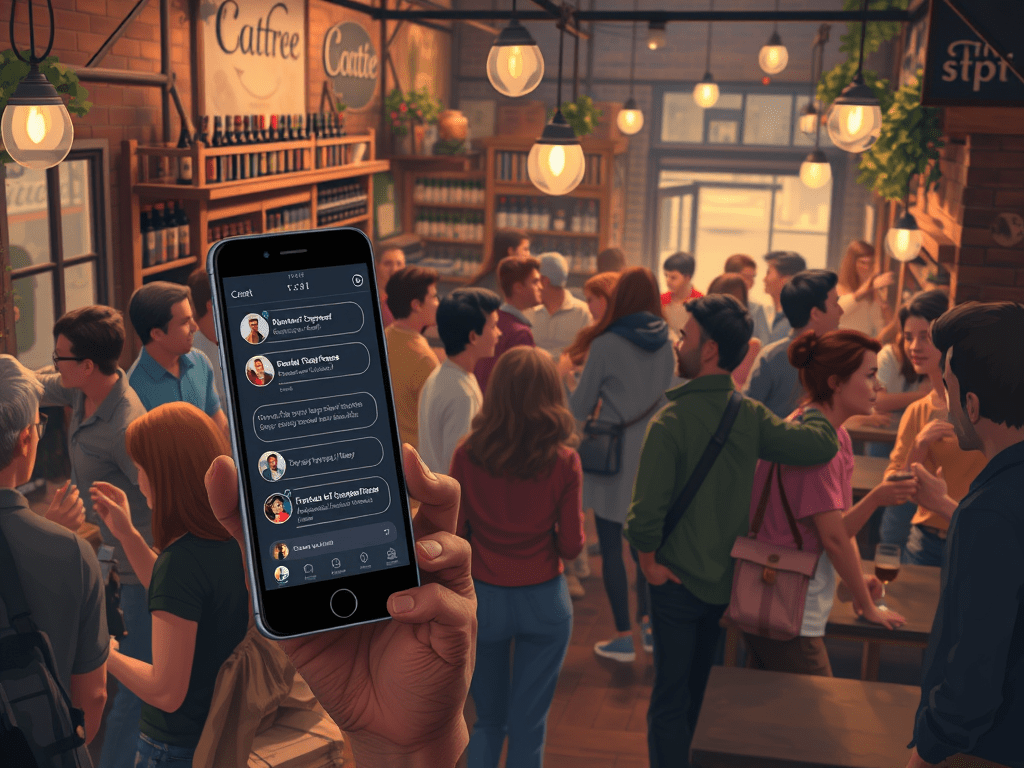
The slow erosion of our appetite for real, messy human experiences—sacrificed on the altar of convenience—haunts me like a bad tattoo decision. It’s this haunting quality, this inability to shake a topic, that marks it as a candidate for a truly worthy essay assignment. If a subject doesn’t linger in the students’ minds long after the semester ends, why bother assigning it?
I’ve been particularly haunted by Derek Thompson’s essay “The Anti-Social Century,” a deep dive into the causes of our collective loneliness and disconnection. One culprit stands out like a neon billboard in Times Square: convenience. The seductive lure of convenience has driven people to prioritize the ease of solitude over the messiness of human connection. The price for this efficiency? A buffet of mental health issues—depression, anxiety, and the gnawing ache of alienation.
Fifty years ago, America was brimming with social spaces where people gathered, formed friendships, and built a sense of belonging. Then came the suburbs—glorified hiding places where the American Dream morphed into a binge-watching marathon in a domestic cave lit by the flickering glow of network TV. Decades later, that TV was usurped by an even more hypnotic device: the smartphone. Thompson points out that these screens now consume 30 percent of our waking hours, superglued to our palms like a digital limb. If this screen addiction defines adolescence, it’s no wonder adulthood is turning into a solitary confinement sentence.
In this context of isolation, some may turn to an unsettling new friend—ChatGPT. Equipped with “paralinguistic cues” that simulate human warmth, intonation, and empathy, AI is poised to become the perfect confidant. It’s always available, never interrupts, and never judges. But therein lies the danger. If AI is programmed to endlessly validate, never to challenge or disagree, users risk becoming socially maladapted, unable to handle the friction of real relationships. Instead of learning to navigate the complexities of human interaction, they might find themselves trapped in a feedback loop of synthetic comfort—a simulation of connection as flat and lifeless as convenience itself.
As I read Derek Thompson’s analysis of America’s epidemic of loneliness and self-imposed isolation, I pause and exhale a deep sigh of gratitude. I’ve spent my life immersed in the chaos of public spaces, from my college job at a wine shop in Berkeley to three decades of full-time teaching in Los Angeles. In these cosmopolitan pressure cookers, people of every persuasion—hippies, yuppies, eccentrics, and your everyday lunatics—have taught me life lessons you won’t find on TikTok. No influencer, contorting into their latest anxiety-driven performance, can compete with the raw theater of human conflict played out in public spaces.
Take, for example, my stint at Jackson’s Wine & Spirits, a Berkeley institution perched conveniently next to the Claremont Hotel. It was more than just a wine store; it housed a deli that was a gladiatorial arena of culinary egos. One afternoon, a man in his fifties—radiating that unmistakable “I’m from New York and I’m better than you” energy—strolled in and ordered a Reuben sandwich.
George, our deli manager, was a fellow New Yorker and a sight to behold: a 300-pound behemoth with black-framed glasses, a permanent cigar stub dangling from his mouth, and a voice that could crush souls like overripe grapes. George had one rule in his deli: no one challenged his authority on sandwiches. But today, that rule would be tested.
“What kind of cheese do you want on your Reuben?” George asked, calm but ominous, like a mob boss offering you a “favor.”
The customer froze, as if George had just insulted his ancestors. His face contorted with the righteous fury of a man whose entire worldview had just been shattered. He bellowed, “A Reuben is rye bread, corned beef, Swiss cheese, sauerkraut, and Russian dressing! That’s it! That’s the Reuben!” He might as well have been handing down the Ten Commandments from Mount Pastrami.
George, unshaken and clearly unimpressed by this deli manifesto, repeated the question with chilling indifference: “What kind of cheese do you want?”
The man turned beet-red, veins throbbing, and launched into another dramatic recital of the holy Reuben ingredients. What followed was a clash of titans—two stubborn New Yorkers locked in mortal combat over sandwich orthodoxy. Neither would yield. George wouldn’t stop asking about the cheese. The customer wouldn’t stop quoting Reuben scripture like a sandwich prophet. The tension built to a breaking point until the customer unleashed a symphony of expletives that could’ve made a Hell’s Kitchen chef blush. He stormed out, vowing never to patronize such heretical deli blasphemy again.
To this day, I marvel at that showdown. One man left hungry, the other lost a sale, and neither could claim victory. It was a masterclass in pride, ego, and the unyielding madness that surrounds food rituals. And while ChatGPT might one day learn how to imitate human conflict, I doubt it’ll ever capture the raw grandeur of two alpha New Yorkers battling over a sandwich.
 Cinemorphosis
Leave a comment